Using AI to help find answers to common skin conditions
Artificial intelligence (AI) has the potential to help clinicians care for patients and treat disease — from improving the screening process for breast cancer to helping detect tuberculosis more efficiently. When we combine these advances in AI with other technologies, like smartphone cameras, we can unlock new ways for people to stay better informed about their health, too.
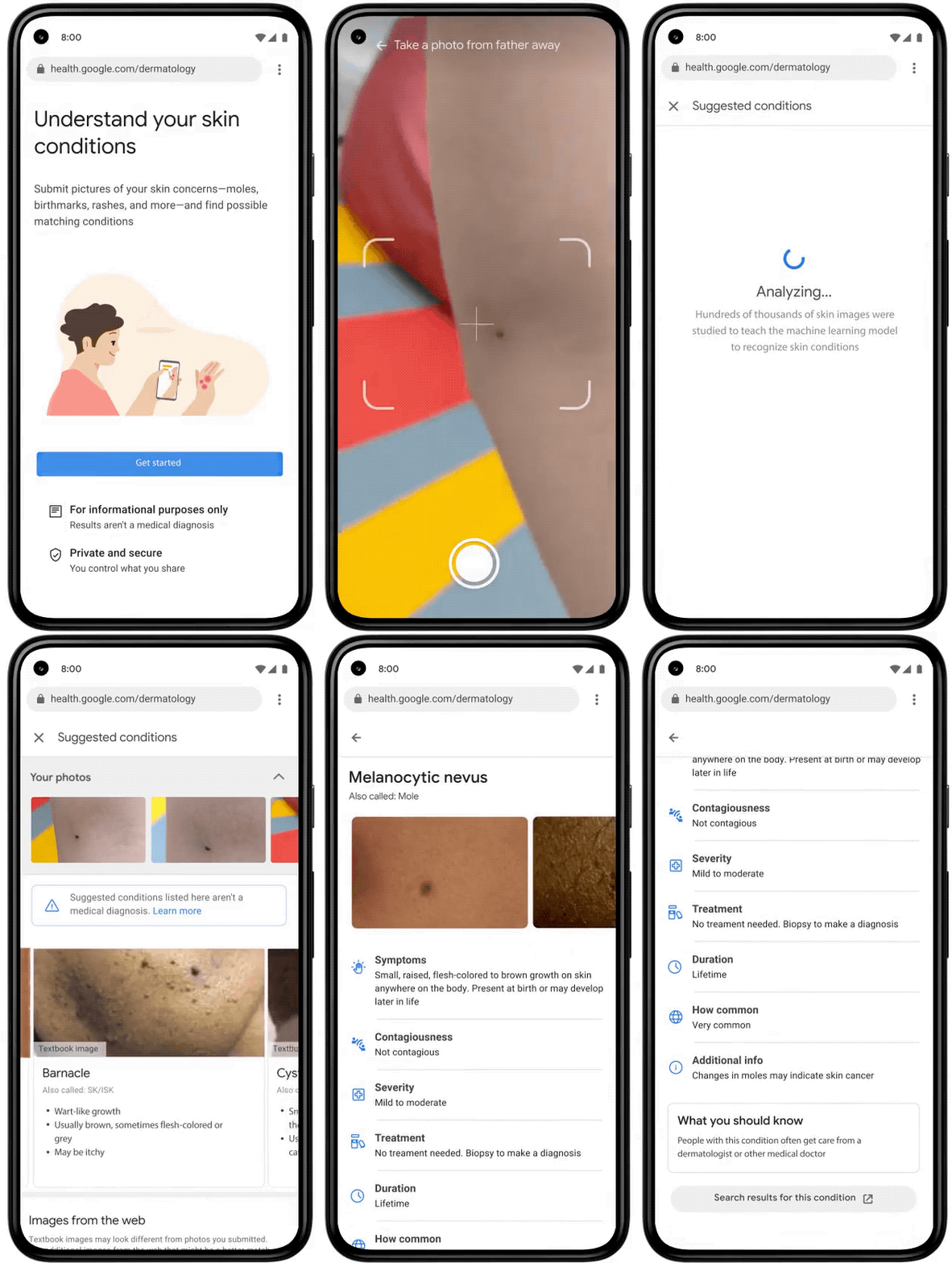
Today at I/O, we shared a preview of an AI-powered dermatology assist tool that helps you understand what’s going on with issues related to your body’s largest organ: your skin, hair and nails. Using many of the same techniques that detect diabetic eye disease or lung cancer in CT scans, this tool gets you closer to identifying dermatologic issues — like a rash on your arm that’s bugging you — using your phone’s camera.
How our AI-powered dermatology tool works
Each year we see almost ten billion Google Searches related to skin, nail and hair issues. Two billion people worldwide suffer from dermatologic issues, but there’s a global shortage of specialists. While many people’s first step involves going to a Google Search bar, it can be difficult to describe what you’re seeing on your skin through words alone.
Our AI-powered dermatology assist tool is a web-based application that we hope to launch as a pilot later this year, to make it easier to figure out what might be going on with your skin. Once you launch the tool, simply use your phone’s camera to take three images of the skin, hair or nail concern from different angles. You’ll then be asked questions about your skin type, how long you’ve had the issue and other symptoms that help the tool narrow down the possibilities. The AI model analyzes this information and draws from its knowledge of 288 conditions to give you a list of possible matching conditions that you can then research further.
For each matching condition, the tool will show dermatologist-reviewed information and answers to commonly asked questions, along with similar matching images from the web. The tool is not intended to provide a diagnosis nor be a substitute for medical advice as many conditions require clinician review, in-person examination, or additional testing like a biopsy. Rather we hope it gives you access to authoritative information so you can make a more informed decision about your next step.
Tackling tuberculosis screening with AI
Today we’re sharing new AI research that aims to improve screening for one of the top causes of death worldwide: tuberculosis (TB). TB infects 10 million people per year and disproportionately affects people in low-to-middle-income countries. Diagnosing TB early is difficult because its symptoms can mimic those of common respiratory diseases.
Cost-effective screening, specifically chest X-rays, has been identified as one way to improve the screening process. However, experts aren’t always available to interpret results. That’s why the World Health Organization (WHO) recently recommended the use of computer-aided detection (CAD) for screening and triaging.
To help catch the disease early and work toward eventually eradicating it, Google researchers developed an AI-based tool that builds on our existing work in medical imaging to identify potential TB patients for follow-up testing.
A deep learning system to detect active pulmonary tuberculosis
In a new study released this week, we found that the right deep learning system can be used to accurately identify patients who are likely to have active TB based on their chest X-ray. By using this screening tool as a preliminary step before ordering a more expensive diagnostic test, our study showed that effective AI-powered screening could save up to 80% of the cost per positive TB case detected.
Our AI-based tool was able to accurately detect active pulmonary TB cases with false-negative and false-positive detection rates that were similar to 14 radiologists. This accuracy was maintained even when examining patients who were HIV-positive, a population that is at higher risk of developing TB and is challenging to screen because their chest X-rays may differ from typical TB cases.
To make sure the model worked for patients from a wide range of races and ethnicities, we used de-identified data from nine countries to train the model and tested it on cases from five countries. These findings build on our previousresearch that showed AI can detect common issues like collapsed lungs, nodules or fractures in chest X-rays.
Applying these findings in the real world
The AI system produces a number between 0 and 1 that indicates the risk of TB. For the system to be useful in a real-world setting, there needs to be agreement about what risk level indicates that patients should be recommended for additional testing. Calibrating this threshold can be time-consuming and expensive because administrators can only come to this number after running the system on hundreds of patients, testing these patients, and analyzing the results.
Based on the performance of our model, our research suggests that any clinic could start from this default threshold and be confident that the model will perform similarly to radiologists, making it easier to deploy this technology. From there, clinics can adjust the threshold based on local needs and resources. For example, regions with fewer resources may use a higher cut-off point to reduce the number of follow-up tests needed.
The path to eradicating tuberculosis
The WHO’s “The End TB Strategy” lays out the global efforts that are underway to dramatically reduce the incidence of tuberculosis in the coming decade. Because TB can remain pervasive in communities, even if a relatively low number of people have it at a given time, more and earlier screenings are critical to reducing its prevalence.
We’ll keep contributing to these efforts — especially when it comes to research and development. Later this year, we plan to expand this work through two separate research studies with our partners, Apollo Hospitals in India and the Centre for Infectious Disease Research in Zambia (CIDRZ).

What’s new for Wear
Today, we’re sharing the biggest update to Wear ever – built with your preferences in mind. We’ve been hard at work in three areas: building a unified platform with Samsung, delivering a new consumer experience and providing updates to your favorite Google apps.
A unified platform

Helping all your devices work better together
Phones are at the center of our digital lives. When purchasing a phone these days, we’re buying not only a phone, but also an entire ecosystem of devices that are all expected to work together — such as TVs, laptops, cars and wearables like smartwatches or fitness trackers. In North America, the average person now has around eight connected devices, and by 2022, this is predicted to grow to 13 connected devices.
Today, we’re sharing how we’re helping make your Android phone, and all the devices connected to it, work even better together.
Pair your devices in one tap
Fast Pair helps make it easier and faster to connect to Bluetooth devices around you. So far, people have used Fast Pair over 36 million times to connect their Android phones with Bluetooth accessories from Sony, Microsoft, JBL, Philips, Google and many other popular brands.
In the coming months, we’re bringing Fast Pair to even more devices such as Beats headphones as well as cars from BMW and Ford. With a single tap, you can pair your Android phone to your favorite accessories whether it’s earbuds, speakers, wearables or cars.
Turn on your TV and find entertainment faster
Whether it’s under the couch cushions, behind your nightstand or in your refrigerator, TV remotes are often mysteriously lost. And even when you finally find it, typing a password with a remote control can be a frustrating and time-consuming process.
We’re making it easier to navigate your TV by building remote-control features directly into your Android phone, so you can watch your favorite show even if your actual remote is missing. And when you need to type a complex movie title or password, you can save time and use your phone’s keyboard to enter the text.
Android 12 Beta: Designed for you
From the beginning, Android has always been about personalization and allowing you to select the device, service and experience that’s right for you. By providing an open ecosystem that gives you choice, Android has grown to more than 3 billion active devices around the world.
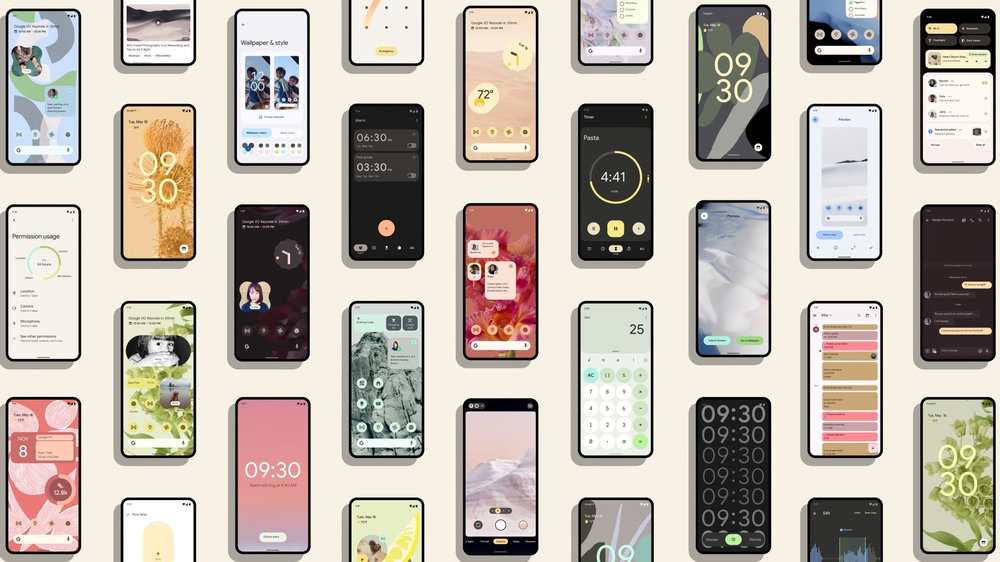
Android 12 builds on everything you love about Android, and focuses on building a deeply personal phone that adapts to you, developing an operating system that is secure by default and private by design, and making all your devices work better together.
Today, we’re releasing the first beta of Android 12, and giving you a look into some of the features that will be available in future releases.
Your photos, your memories, your way
We capture photos and videos so we can look back and remember. But having all your photos — of loved ones, screenshots, selfies — mixed together makes it hard to rediscover important moments. In fact, most of the 4 trillion photos stored in Google Photos are never viewed.
To make it easier to look back, we’re using AI to power new features that resurface meaningful moments and bring your memories to life — while giving you control over what you relive.
New types of memories, personalized to you
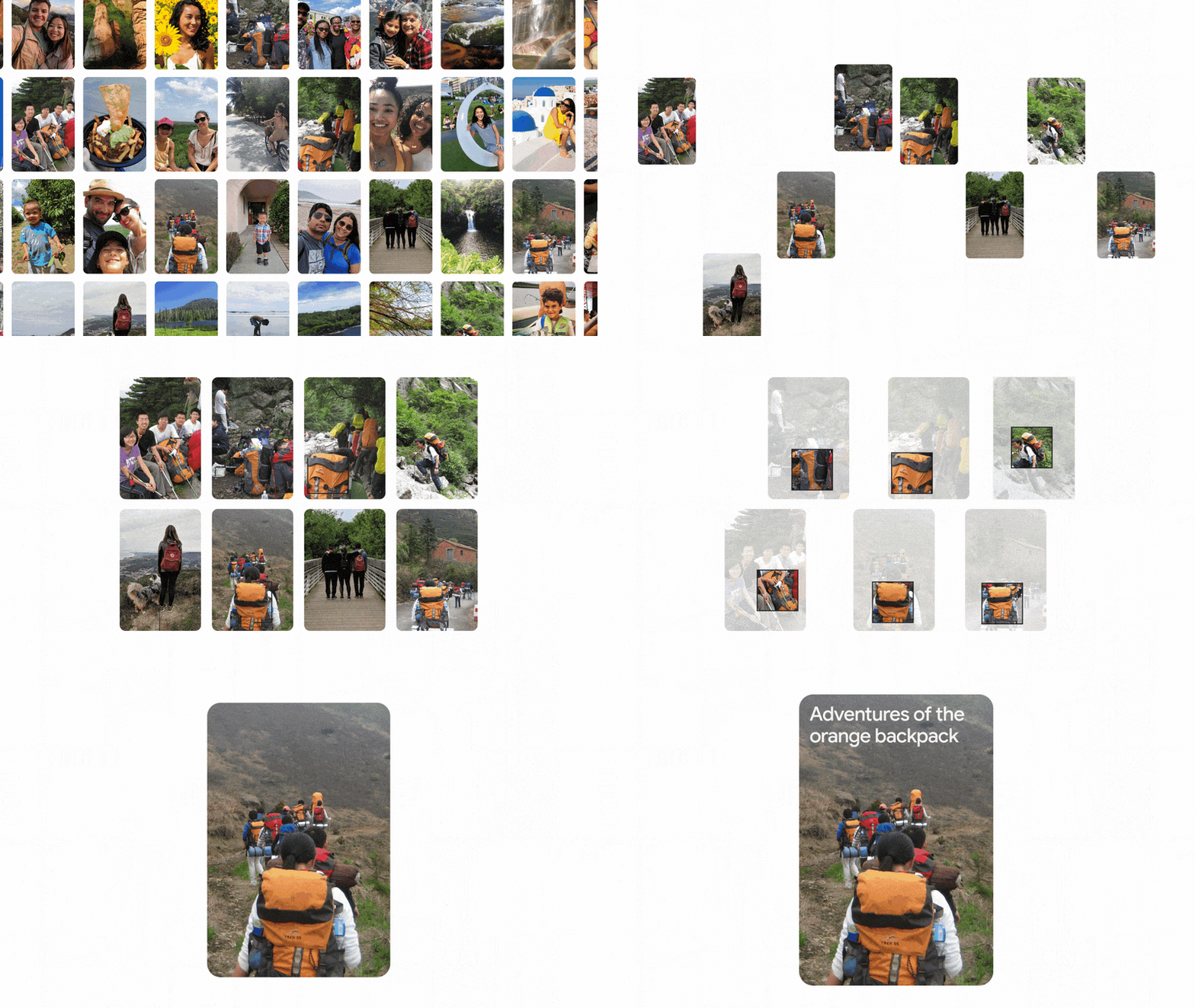
With Memories, you can already look back on important photos from years past, recent highlights, moments with your loved ones, your favorite activities and more. Using machine learning, we can now go beyond resurfacing photos based on themes to doing so based on not-so-obvious visual patterns in your photos. Starting later this summer, when we find a set of three or more photos that share things like shape or color, we’ll highlight these little patterns for you in your Memories. For example, one of our engineers received this collection featuring photos he snapped of his favorite orange backpack.

Search, explore and shop the world’s information, powered by AI
AI advancements push the boundaries of what Google products can do. Nowhere is this clearer than at the core of our mission to make information more accessible and useful for everyone.
We’ve spent more than two decades developing not just a better understanding of information on the web, but a better understanding of the world. Because when we understand information, we can make it more helpful — whether you’re a remote student learning a complex new subject, a caregiver looking for trusted information on COVID vaccines or a parent searching for the best route home.
Deeper understanding with MUM
One of the hardest problems for search engines today is helping you with complex tasks — like planning what to do on a family outing. These often require multiple searches to get the information you need. In fact, we find that it takes people eight searches on average to complete complex tasks.
With a new technology called Multitask Unified Model, or MUM, we’re able to better understand much more complex questions and needs, so in the future, it will require fewer searches to get things done. Like BERT, MUM is built on a Transformer architecture, but it’s 1,000 times more powerful and can multitask in order to unlock information in new ways. MUM not only understands language, but also generates it. It’s trained across 75 different languages and many different tasks at once, allowing it to develop a more comprehensive understanding of information and world knowledge than previous models. And MUM is multimodal, so it understands information across text and images and in the future, can expand to more modalities like video and audio.
Imagine a question like: “I’ve hiked Mt. Adams and now want to hike Mt. Fuji next fall, what should I do differently to prepare?” This would stump search engines today, but in the future, MUM could understand this complex task and generate a response, pointing to highly relevant results to dive deeper. We’ve already started internal pilots with MUM and are excited about its potential for improving Google products.
Information comes to life with Lens and AR
People come to Google to learn new things, and visuals can make all the difference. Google Lens lets you search what you see — from your camera, your photos or even your search bar. Today we’re seeing more than 3 billion searches with Lens every month, and an increasingly popular use case is learning. For example, many students might have schoolwork in a language they aren’t very familiar with. That’s why we’re updating the Translate filter in Lens so it’s easy to copy, listen to or search translated text, helping students access education content from the web in over 100 languages.

Working with merchants to give you more ways to shop
We want to help people discover, learn about and shop for the products they love — whether those products come from a big-box retailer, new direct-to-consumer brands or the mom-and-pop shop down the street. We’re supporting an open network of retailers and shoppers to help businesses get discovered and give people more options when they’re looking to buy. Two concrete steps we’ve taken to support discoverability for all merchants are eliminating commission fees and making it free for sellers on Google.
To show you the most relevant shopping information, we must have a deep understanding of the products that appear across Google and in the world around us — from images and videos to online reviews and inventory in local stores. That’s why today we shed some light on the technology behind our Shopping Graph: our most comprehensive, real-time dataset about products, inventory and merchants.
The Shopping Graph is a dynamic, AI-enhanced model that understands a constantly-changing set of products, sellers, brands, reviews and most importantly, the product information and inventory data we receive from brands and retailers directly — as well as how those attributes relate to one another. With people shopping across Google more than a billion times a day, the Shopping Graph makes those sessions more helpful by connecting people with over 24 billion listings from millions of merchants across the web. It works in real-time so people can discover and shop for products that are available right now.

Get around and explore with 5 new Google Maps updates
From the very beginning, we built Google Maps to help you connect with the real world. In 2007, we introduced Street View, the first imagery platform to show you panoramic views of streets all over the world — from Tokyo to Tonga. A year later, we let you throw away your printed directions and get real-time navigation directly from your phone. And three years ago, we were the first to launch Live View and bring AR to navigation at scale. Thanks to our deep knowledge about the world and powerful AI advancements, we’ve spent the last 16 years bringing helpful information and experiences just like these to the map. Today at Google I/O, we’re announcing five new updates so you can more easily navigate, explore and get things done.
Reduce hard-braking with routing updates
Imagine you’re driving to meet a friend. As you approach a busy intersection, the traffic slows suddenly and you have to slam on your brakes. According to research from experts at the Virginia Tech Transportation Institute, these hard-braking moments — incidents along a route that cause a driver to sharply decelerate — can be a leading indicator of car crash likelihood. Soon, Google Maps will reduce your chances of having hard-braking moments along your drive thanks to help from machine learning and navigation information.
Here’s how it works: Every time you get directions in Maps, we calculate multiple route options to your destination based on several factors, like how many lanes a road has and how direct a route is. With this update, we’ll take the fastest routes and identify which one is likely to reduce your chances of encountering a hard-braking moment. We’ll automatically recommend that route if the ETA is the same or the difference is minimal. We believe that these changes have the potential to eliminate 100 million hard-braking events in routes driven with Google Maps each year, so you can rely on Maps to get you from A to B quickly — but also more safely.
Walk this way with enhancements to Live View and detailed street maps
If you’re getting around on foot, we’ve got you covered with augmented reality in Live View. If you’re exploring a new neighborhood, you’ll be able to access Live View instantly — right from the map — and see helpful details about the shops and restaurants around you, like how busy they are, recent reviews and photos. We’ll also display helpful new street signs for complex intersections so you know exactly what road you’re on and which way to go. And if you’re traveling, Live View will tell you where you are in relation to places like your hotel — so you can always find your way back to home base.
Our detailed street maps feature, which launched last August, will soon be available in 50 more cities by the end of this year — including Berlin, São Paulo, Seattle, and Singapore. With the help of AI and our understanding of cityscapes around the globe, you can see where sidewalks, crosswalks and pedestrian islands are, along with the shape and width of a road to scale. This information can help pedestrians plan the most accommodating route, especially if they’re using a wheelchair or stroller.

webinar NFT GRATUITO su aspetti legali fiscali e valutazione delle opere
IL 20 Maggio 2021 verrà organizzato un webinar gratuito sul recente fenomeno degli NFT Non Fungible Token con il quale intendiamo fornire ai partecipanti dei primi strumenti che ne permettano…
L’articolo webinar NFT GRATUITO su aspetti legali fiscali e valutazione delle opere scritto da YOUR_DIGITAL_VOICE! proviene da Assodigitale.
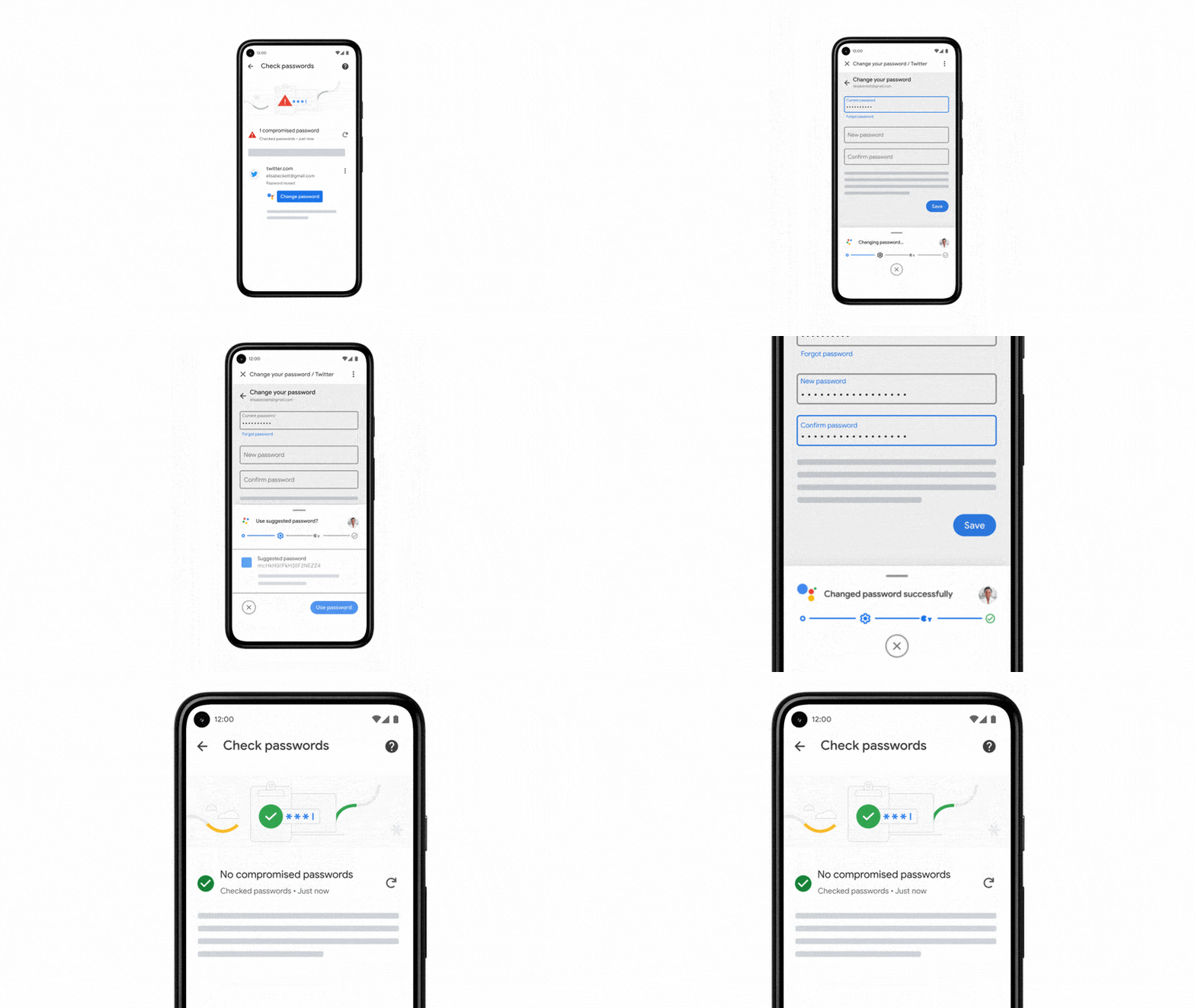
Fix your passwords in Chrome with a single tap
Memorizing passwords is hard. That’s why many of us use the same password across multiple sites. But this practice poses a huge risk, since it only takes one password breach to expose your account data from many different sites.
Not only that: changing passwords is itself a tedious task. You have to navigate to the site, sign in, find the account settings, open the password page — and then save it. Rinse and repeat on all your favorite sites, and that’s a lot of work.
The good news is that Chrome comes with a strong password manager built-in. It’s been checking the safety of your passwords for a while now. And starting today, whenever Chrome detects a breach, it can also fix any compromised passwords quickly, and safely.
Warning you about stolen passwords — and fixing them, too
Going forward, Chrome will help you change your passwords with a single tap. On supported sites, whenever you check your passwords and Chrome finds a password that may have been compromised, you will see a “Change password” button from Assistant. When you tap the button, Chrome will not only navigate to the site, but also go through the entire process of changing your password.

More ways we’re making every day safer with Google
Every day, we focus on making sure you’re in control of your data by building products that are secure by default and private by design. At this year’s I/O, we’re introducing new features and technologies to keep you safer with Google.
Putting you in control of your data
Privacy is personal. That’s why we make it easy for you to choose thesettings that are right for you — whether that’s one place to manage settings in your Google Account, Auto-Delete options, or controls that appear in context when you’re using our products. We announced a number of new controls today:
- Quick delete in Search.We’re introducing a new, “quick delete” option to delete the last 15 minutes of your Search history with a single tap from the Google Account Menu.
- A passcode protected Locked Folder in Photos.Have you ever handed your phone to show someone a photo, but worried they might scroll to a personal or sensitive image — like a photo of your passport or a surprise gift? “Locked Folder” is a new feature in Google Photos — a passcode-protected space where select photos can be saved separately. These photos won’t show up as you scroll through your grid or in shared albums. This feature is coming to Google Pixels first, and more Android devices throughout the year.
- Location History reminders in your Maps Timeline.Now, when you see places you’ve visited in your Timeline, we’ll remind you that it’s because you turned on Location History — which you can easily turn off right there in your Timeline.
We’re also introducing new, industry-leading transparency and permission features on Android 12. The new OS includes a Privacy Dashboard where you will see a timeline of when apps accessed your camera, microphone, or device location. We’ve also added indicators that show when your camera or microphone are in use, as well as easy toggles to disable access to both across your device. And you can now choose to share your approximate location with an app instead of a precise one.
Building products that are secure by default
As recent high-profile third-party security incidents show, your information isn’t private if it’s not secure. With AI-driven technologies that protect billions of users around the world, our products are secure by default: every day, we block 100 million phishing attempts and 15 billion spam messages in Gmail and encrypt 4 billion photos. And Safe Browsing on Chrome and most other browsers helps keep the rest of the Internet secure, automatically protecting more than 4 billion devices.
One of the biggest security risks is still the continued reliance on passwords — they’re often easy to crack, used across multiple sites, or stolen in phishing attacks. That’s why we’ve been working towards a password-free future — focusing on safer ways to authenticate your identity and building multiple layers of protection into your Google Account, like automatic enrollment in 2-step verification.
But because passwords are still required for most online accounts, we’ve also continued to improve our Password Manager, built directly into Chrome, Android and now iOS, to help you create, remember, save and auto-fill passwords across the web. Today, we announced new enhancements to Password Manager:
- A new tool that makes it easy to import passwords from other password managers.
- Deeper integrations with Chrome and Android to seamlessly fill your passwords across sites and apps, regardless of whether you’re on desktop or on mobile.
- Password Alerts that automatically warn you if we detect one of your saved passwords has been compromised via a third party breach.
- A smart way to fix compromised passwords in Chrome with a simple tap. For supported sites and apps, whenever Password Manager finds a password that may have been compromised, you’ll see a “change password” button from Assistant. When you tap the button, the Assistant will not only navigate to the site, but also go through the entire process of changing your password. This feature is available on Android devices and will be rolling out to more sites and apps in the future.
Making our products private by design
We’ve pioneered new computing technologies like Federated Learning (invented by Google researchers in 2016) that make it possible to deliver helpful experiences while protecting individual data and privacy. We’ve also led on DifferentialPrivacy, which powers some of our most helpful features and products, from our COVID-19 Community Mobility Reports to traffic predictions in Maps, without revealing individual user data. And this expertise guides our work on broader industry initiatives, like the open-source Privacy Sandbox.
Now, we’re continuing that work with Android’s Private Compute Core, which keeps your information safe and private for a number of popular AI-driven features like Live Caption (which displays captions based on audio), Now Playing (which tells you the song that’s playing) and Smart Reply (which suggests short responses to messages and emails). For these features, the audio and language processing happens exclusively on your device. Like the rest of Android, Private Compute Core is open source — it’s fully inspectable and verifiable by the security community.
We’ll continue our work to make every day safer with Google with new controls, advanced security, and privacy-preserving technologies.

Unveiling our new Quantum AI campus
Within the decade, Google aims to build a useful, error-corrected quantum computer. This will accelerate solutions for some of the world’s most pressing problems, like sustainable energy and reduced emissions to feed the world’s growing population, and unlocking new scientific discoveries, like more helpful AI.
To begin our journey, today we’re unveiling our new Quantum AI campus in Santa Barbara, California. This campus includes our first quantum data center, our quantum hardware research laboratories, and our own quantum processor chip fabrication facilities. Here, our team is working to build an error-corrected quantum computer for the world.
Our new Quantum AI campus in Santa Barbara, CA will include our first quantum data center, new research laboratories, and quantum processor fabrication facilities.
Google began using machine learning 20 years ago (for spell checking in Search), and led the deep learning revolution 10 years ago (advancing neural nets, the leading approach to modern AI). These advances in AI and other technologies have enabled many of the incredible applications we’re seeing today. As we look 10 years into the future, many of the greatest global challenges, from climate change to handling the next pandemic, demand a new kind of computing.
To build better batteries (to lighten the load on the power grid), or to create fertilizer to feed the world without creating 2% of global carbon emissions (as nitrogen fixation does today), or to create more targeted medicines (to stop the next pandemic before it starts), we need to understand and design molecules better. That means simulating nature accurately. But you can’t simulate molecules very well using classical computers. As you get to even modestly sized molecules, you quickly run out of computing resources. Nature is quantum mechanical: The bonds and interactions among atoms behave probabilistically, with richer dynamics that exhaust the simple classical computing logic.
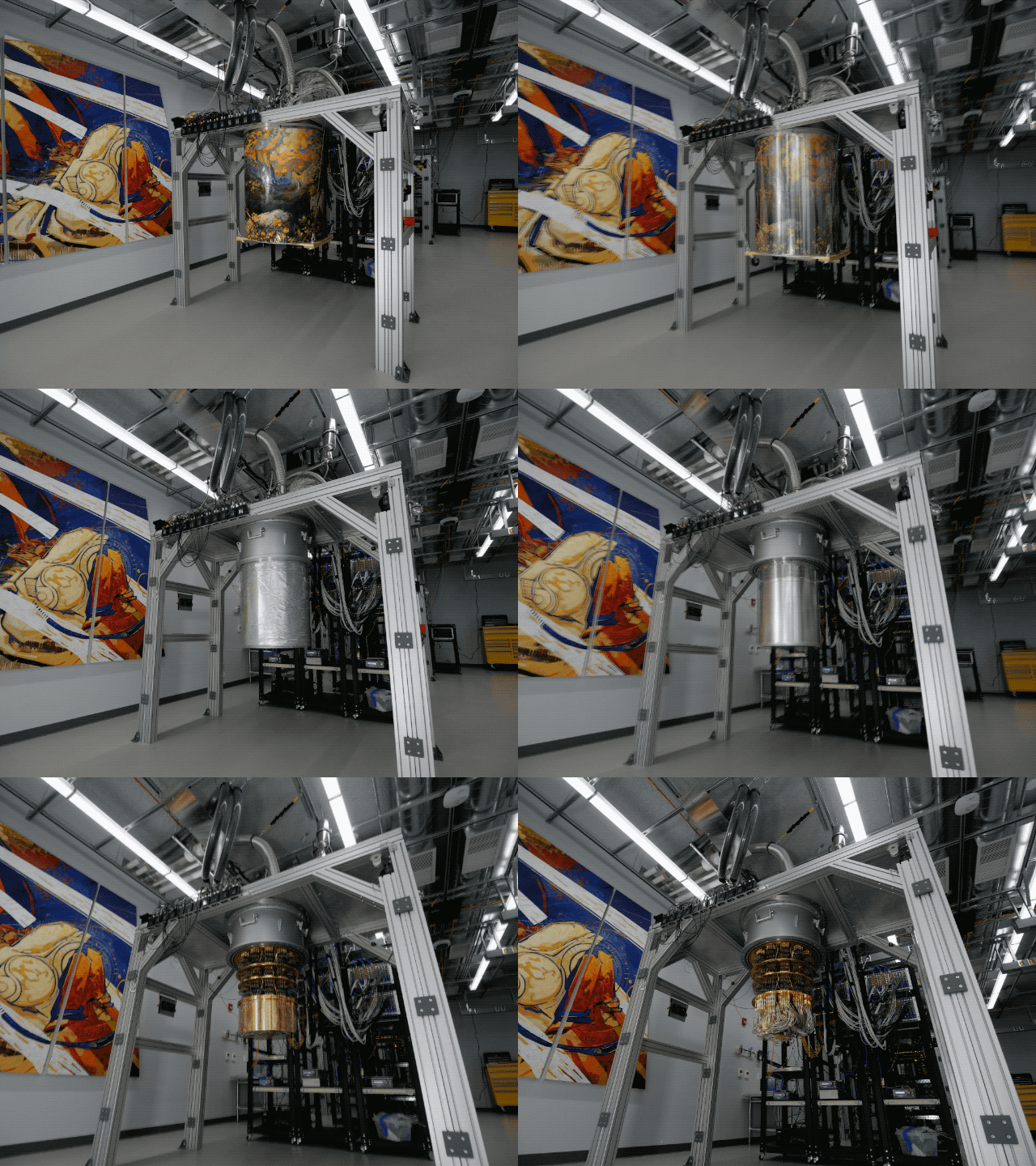
The inside of our cryostats, like the ones found in the Quantum AI campus, are some of the coldest places in the universe, reaching temperatures around 10 milliKelvin
This is where quantum computers come in. Quantum computers use quantum bits, or “qubits,” which can be entangled in a complex superposition of states, naturally mirroring the complexity of molecules in the real world. With an error-corrected quantum computer, we’ll be able to simulate how molecules behave and interact, so we can test and invent new chemical processes and new materials before investing in costly real-life prototypes. These new computing capabilities will help to accelerate the discovery of better batteries, energy-efficient fertilizers, and targeted medicines, as well as improved optimization, new AI architectures, and more.
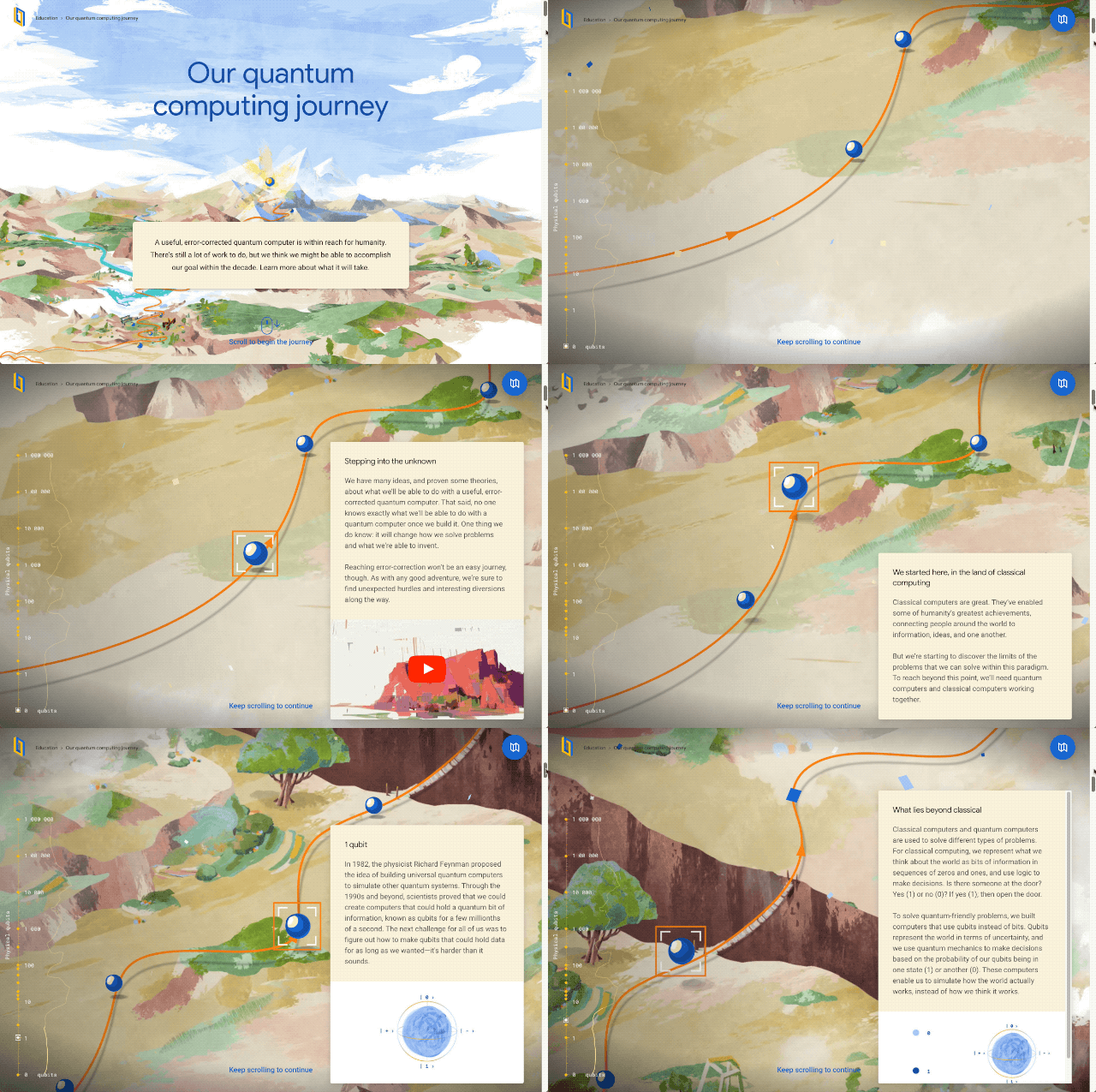
Our journey to build an error-corrected quantum computer within the decade includes several scientific milestones, including building an error-corrected logical qubit.
To reach this goal, we’re on a journey to build 1,000,000 physical qubits that work in concert inside a room-sized error-corrected quantum computer. That’s a big leap from today’s modestly-sized systems of fewer than 100 qubits.
To get there, we must build the world’s first “quantum transistor” — two error-corrected “logical qubits” performing quantum operations together — and then figure out how to tile hundreds to thousands of them to form the error-corrected quantum computer. That will take years.
To get there, we need to show we can encode one logical qubit — with 1,000 physical qubits. Using quantum error-correction, these physical qubits work together to form a long-lived nearly perfect qubit — a forever qubit that maintains coherence until power is removed, ushering in the digital era of quantum computing. Again, we expect years of concerted development to achieve this goal.
And to get THERE(!), we need to show that the more physical qubits participate in error correction, the more you can cut down on errors in the first place — this is a crucial step given how error-prone physical qubits are. We’re doing that research right now on our Quantum AI campus.
Already we run quantum computers that can perform calculations beyond the reach of classical computers. To continue this journey towards a useful error-corrected quantum computer and provide humanity with a new tool tuned to the way nature works, we’re assembling an amazing team to invent the future of computing together right here, right now, at Google’s Quantum AI campus.

LaMDA: our breakthrough conversation technology
We’ve always had a soft spot for language at Google. Early on, we set out to translate the web. More recently, we’ve invented machine learning techniques that help us better grasp the intent of Search queries. Over time, our advances in these and other areas have made it easier and easier to organize and access the heaps of information conveyed by the written and spoken word.
But there’s always room for improvement. Language is remarkably nuanced and adaptable. It can be literal or figurative, flowery or plain, inventive or informational. That versatility makes language one of humanity’s greatest tools — and one of computer science’s most difficult puzzles.
LaMDA, our latest research breakthrough, adds pieces to one of the most tantalizing sections of that puzzle: conversation.