Artificial intelligence (AI) has the potential to help clinicians care for patients and treat disease — from improving the screening process for breast cancer to helping detect tuberculosis more efficiently. When we combine these advances in AI with other technologies, like smartphone cameras, we can unlock new ways for people to stay better informed about their health, too.
Today at I/O, we shared a preview of an AI-powered dermatology assist tool that helps you understand what’s going on with issues related to your body’s largest organ: your skin, hair and nails. Using many of the same techniques that detect diabetic eye disease or lung cancer in CT scans, this tool gets you closer to identifying dermatologic issues — like a rash on your arm that’s bugging you — using your phone’s camera.
How our AI-powered dermatology tool works
Each year we see almost ten billion Google Searches related to skin, nail and hair issues. Two billion people worldwide suffer from dermatologic issues, but there’s a global shortage of specialists. While many people’s first step involves going to a Google Search bar, it can be difficult to describe what you’re seeing on your skin through words alone.
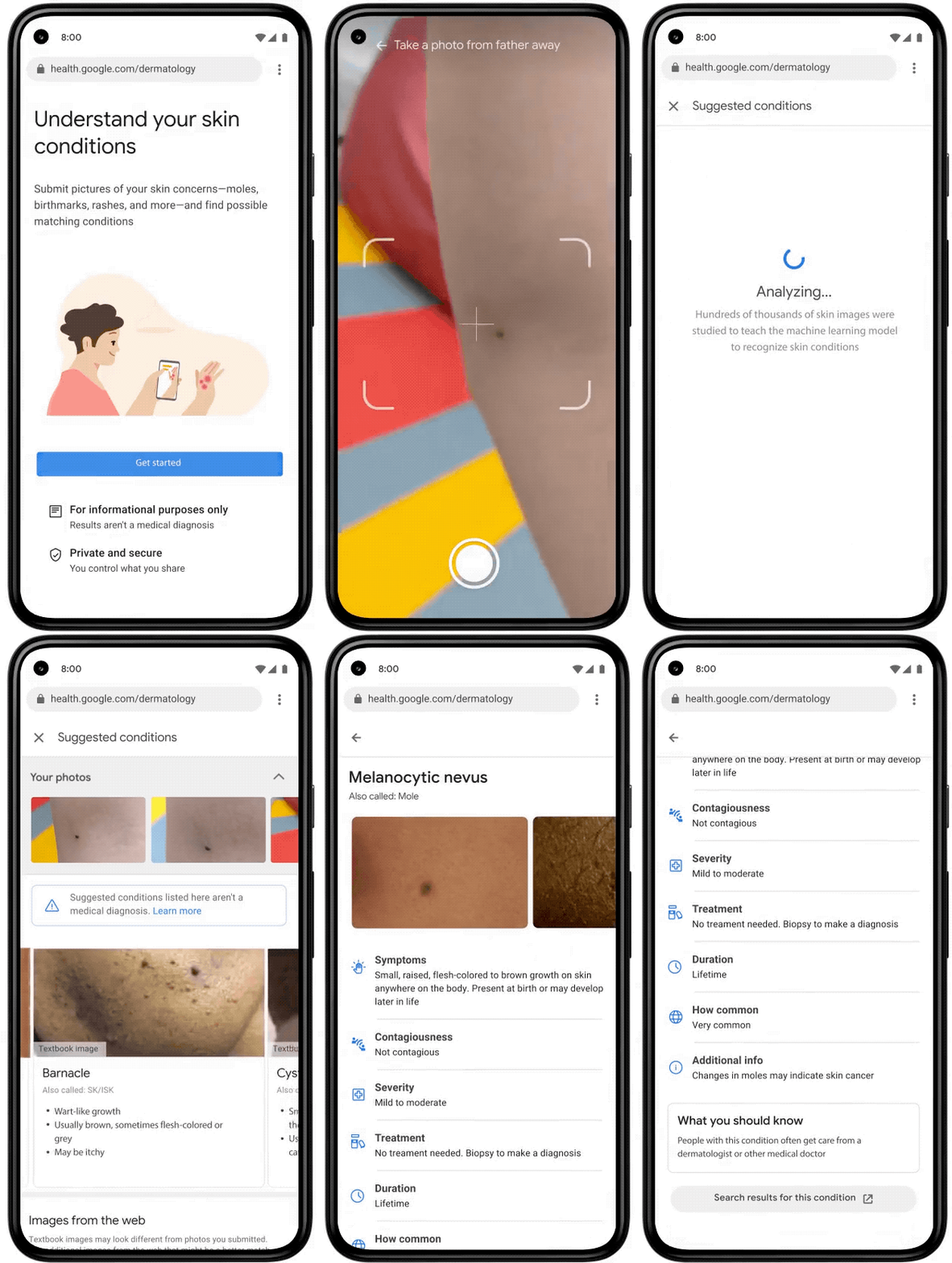
Our AI-powered dermatology assist tool is a web-based application that we hope to launch as a pilot later this year, to make it easier to figure out what might be going on with your skin. Once you launch the tool, simply use your phone’s camera to take three images of the skin, hair or nail concern from different angles. You’ll then be asked questions about your skin type, how long you’ve had the issue and other symptoms that help the tool narrow down the possibilities. The AI model analyzes this information and draws from its knowledge of 288 conditions to give you a list of possible matching conditions that you can then research further.
For each matching condition, the tool will show dermatologist-reviewed information and answers to commonly asked questions, along with similar matching images from the web. The tool is not intended to provide a diagnosis nor be a substitute for medical advice as many conditions require clinician review, in-person examination, or additional testing like a biopsy. Rather we hope it gives you access to authoritative information so you can make a more informed decision about your next step.