
What B2B Marketers Can Learn from Stand-Up Comedy
Stand-up comedians need to make a connection with their audience. It starts with getting attention, then stoking interest, developing a rapport, and ultimately provoking a reaction.
To do it right, you need empathy, knowledge of your audience, creativity…oh, and a spark that makes you unique.
B2B marketers: Does any of the above sound familiar? I’ve been a professional marketer and an amateur comedian for over a decade, and it’s surprising how much the two inform each other.
Here are just a few lessons that B2B marketers can learn from standup.
Keep It Real
In the early 19th century, standup comedy depended on wordplay and absurdism. For example: “Take my wife…please!” or “The other night I shot an elephant in my pajamas… how he got into my pajamas, I’ll never know.”
As the art form of standup has evolved, however, personal observations with a unique point of view (more on that later) have become more popular. Here’s a classic bit from Ellen Degeneres as she dissects the minutiae of her life:
For marketers, keeping it real means being honest and sincere with your audience. It could even mean not being afraid to show flaws or own up to mistakes. Look for ways to bring the audience behind the scenes to meet the people behind the brand.
I like the way Stacey Marx from AT&T Business brings her personal life into her content, as in this post, “Gold Medal Advice: SMB Lessons from a World-Class Coach.” The personal touch elevates the content and makes it unique.
Adjust to Your Audience
Telling a marketer to know their audience is like telling a comedian to… well… know their audience. It’s not a radical new technique; it’s part of the toolkit. At the same time, it’s easy to think of your own culture, background and thought processes as universal. That’s one of the reasons comedy can be so hard to translate.
One famous example is when Jimmy Carter told a joke to break the ice at a college in Japan. He was gratified when, after a brief translation from his interpreter, the crowd erupted in laughter! It wasn’t until later that the interpreter confessed that what he said was, “The president has told a funny story. Please laugh.”
For marketers and comedians alike, the only way to truly get in your audience’s head is to do the research. Putting out the same message for audiences with different cultural backgrounds is a path fraught with peril.
This Jerry Seinfeld bit — a superbly clever American Express commercial — illustrates the point precisely:
Alternate Storytelling with Quick Jabs
John Mulaney and Mitch Hedberg are two of my favorite comedians, and for wildly different reasons. John is the master at telling longer stories, taking a few minutes to set the scene, not rushing to a punchline. Here’s an example (with some strong language, be warned):
On the other side of the spectrum, Mitch Hedberg is the undisputed master of the one-liner. “I don’t have a girlfriend. But I do know a woman who’d be mad at me for saying that.” Or, slightly longer, “One time, this guy handed me a picture, he said ‘Here’s a picture of me when I was younger.’ Every picture is of you when you were younger! ‘Here’s a picture of me when I’m older.’ Woah, lemme see that camera.”
Just as there’s room in comedy for the Mulaneys and Hedbergs, there’s room in marketing for both long-form narratives and short, punchy taglines. Invest the same energy into each one, and you’ll resonate with a wider audience.
Develop a Unique Voice
In the ’80s, there was a brief stand-up fad of weird, extreme voices. For example…
Thankfully, it was a short-lived trend, but it does illustrate how memorable a unique voice can be. Anyone who has heard Bobcat Goldthwait, Gilbert Gottfried, Judy Tenuta or Sam Kinison will never mistake them for someone else. On the flip side, the junkyard of comedy is strewn with the careers of bland comedians who were indistinguishable from each other.
In marketing, it’s easy to slide into a kind of homogeneous, safe, “professional-sounding” corporate speak. Don’t make waves, use — I mean, utilize — the right jargon, and you can avoid offending anyone. The problem is, you’re also unlikely to avoid affecting anyone, too. Make your brand voice personable, lively and unique, and you will have something no competitor can copy.
Serious Business Can Be Funny
All of the above can help you as a marketer address, connect with, and affect your audience. But there’s one other thing that comedians do that marketers should do more often: Be funny. There’s plenty of room in B2B marketing for actual comedy, and those who do it well tend to be rewarded. And hey, if Intel can do it, so can you.
Want more B2B marketing tips? Check out our report on the State of B2B Influencer Marketing.
The post What B2B Marketers Can Learn from Stand-Up Comedy appeared first on B2B Marketing Blog – TopRank®.

Samsung amplia la sua gamma di Smart Monitor

Ayos HCS: un Home Connectivity Server per gestire il proprio network

Iliad, ecco le nuove offerte Flash 120 5G e Giga 80

Instagram down in Italia: cosa è successo?

Tekken 7, riparte il torneo Online con molte novità

WhatsApp, i messaggi vocali accelerati disponibili per tutti

Come Rendere La Consulenza Finanziaria Più Attraente Per Gli Investitori Più Giovani
La prima volta che ho sentito la parola “Bitcoin” è stato nel 2016, dopo che ho chiesto a un compagno di classe del mio corso di cinese la domanda un…
L’articolo Come Rendere La Consulenza Finanziaria Più Attraente Per Gli Investitori Più Giovani scritto da YOUR_DIGITAL_VOICE! proviene da Assodigitale.
Google News Showcase, now on desktop
Last year we announced the launch of Google News Showcase, our product and licensing program that pays publishers for bringing their voice and curation into Google’s news products. Backed by a $1 billion investment, we’ve so far launched the product in the U.K., Australia, Germany, Brazil, Argentina, Italy, Czechia and India. Ninety percent of the publishers signed up for News Showcase in more than a dozen countries represent local, regional or community newspapers.
Since we launched, we’ve also released new features like Extended Access, which gives News Showcase readers more opportunities to read select paid content from our publisher partners to show them the value of high-quality news.
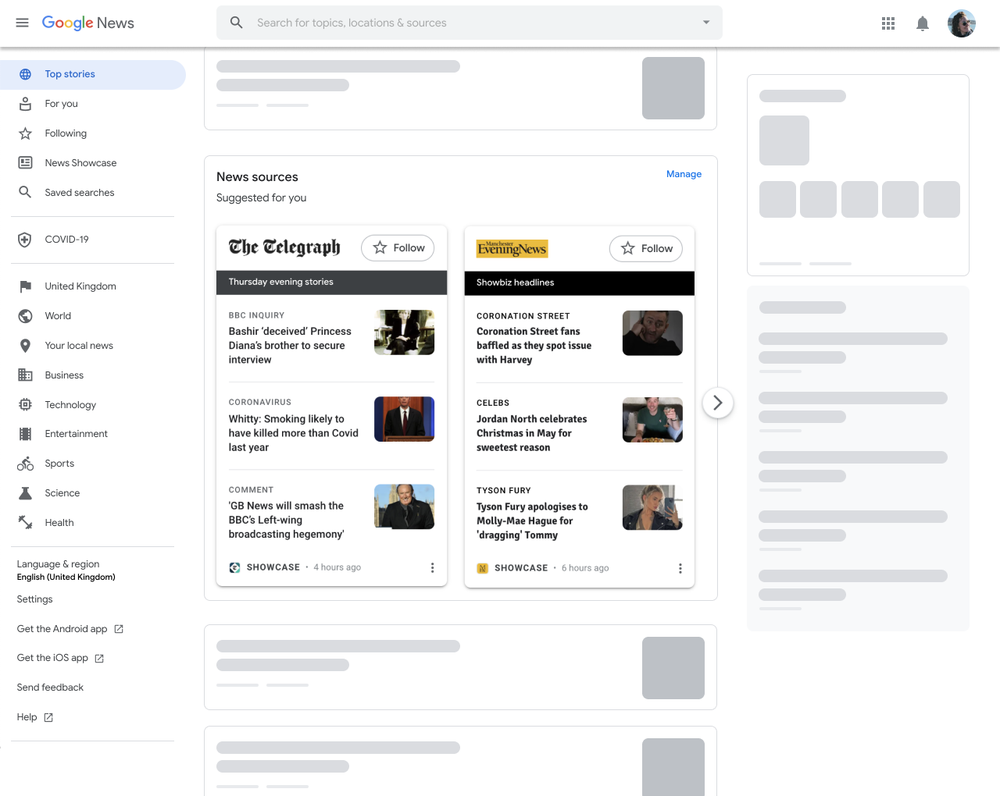
Today, we’re announcing a few new features for News Showcase. First, we’re rolling out News Showcase for desktop users of Google News (via news.google.com/showcase). Now every user of Google News, regardless of what device they’re using, can see enhanced story panels from our News Showcase partners. This feature is available in the eight countries where we’ve currently launched News Showcase.
Here’s how readers and publishers will see News Showcase panels working on desktop:
Most people will see News Showcase panels right on their Top Stories page, the first page they land on in Google News. Here, right below the top stories of the day, we’ve added a new carousel containing the latest News Showcase panels from publishers they already follow, as well from publishers they might be interested in.

4 things to know about Google Photos’ storage policy change
Six months ago, we announced a change to our High quality storage policy that allows us to keep pace with the growing demand for storage and build Google Photos for the future. On Tuesday, June 1, we’ll start rolling out this change so that any new photos and videos you back up will count toward the free 15GB of storage that comes with every Google Account or the additional storage you’ve purchased as a Google One member.
Before this happens, we want to recap what we announced back in November — and share a couple new things — to make the transition easier.
Your existing High quality photos and videos are exempt from this change: Any photos or videos backed up in High quality before June 1, 2021, will not count toward your Google Account storage. These photos and videos will remain free and exempt from the storage limit.
You have a personalized estimate of how long your storage may last:Your estimate takes into account how frequently you back up photos, videos and other content to your Google Account. We estimate that more than 80 percent of you should still be able to store roughly three more years of memories in High quality with your free 15GB of storage. As your storage nears 15GB, we will notify you in the app and follow up by email. If you don’t see an estimate, you may not have uploaded many photos and videos to Google Photos, you may be close to your storage limit (making it difficult to predict how many months your remaining storage will last) or your account is provided through work, school, family or another group.
The 2021 Doodle for Google national finalists are here
I’ve worked on the Doodle team at Google for more than five years — and I believe this year’s theme, “I am strong because…” is our most powerful prompt to date. And not just because of the unprecedented pandemic and growing social movements and conversations we’ve seen sweep our nation and world over the last year. This theme also presents an opportunity to not only honor, but also celebrate a more general beautiful truth that we sometimes don’t talk about enough: kids are strong and resilient. And that strength is boundless and inspiring.
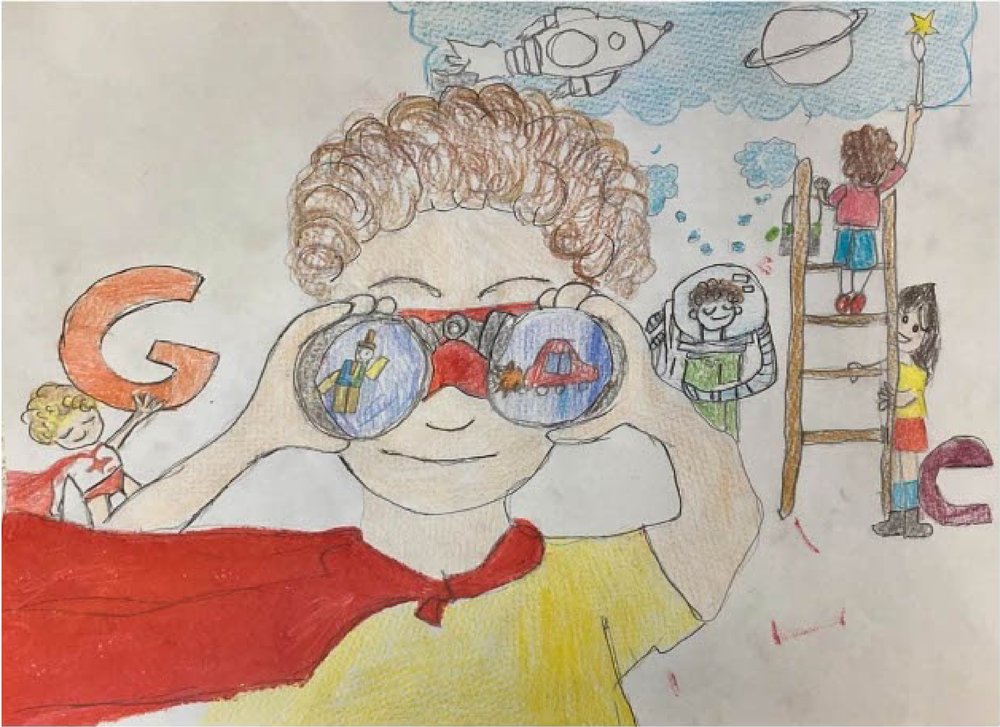
We kicked off the 13th annual Doodle for Google contest back in January and invited K-12 students across the country to submit their artistic interpretations of “I am strong because…”. We received tens of thousands of submissions from students in all 50 states, as well as Washington D.C., Guam, Puerto Rico and the U.S. Virgin Islands. After carefully reviewing all the submissions, we announced our 54 state winners and opened up public voting on our website. And today, we’re happy to share that the votes are in, the judges have deliberated and drum roll please…we’re ready to announce our five national finalists for the 2021 Doodle for Google contest!
Our finalists were chosen based on a combination of public voting and our judging criteria, including artistic merit, creativity and how well participants communicated the theme in their artwork and written statement. We’re supremely grateful to each of these artists for trusting us with their inspiring stories of inner strength. Meet our finalists:

A Googler’s fight against the “model minority” myth
Editor’s note: Charlene Wang, an associate product manager for Google Play Ads, recently published a book on combating Asian American stereotypes. We sat down with Charlene to talk about her book.
Three years ago, Charlene Wang drafted a letter to her brother Warren in Taipei. He was preparing to move to the United States for college, and she wanted to give him advice. Specifically, she wanted him to know what to expect about the stereotypes that Asian people face in America, and her suggestions for how to navigate those harmful expectations while staying true to himself. “I wanted to share all the things I wish someone had told me when I first came here,” she says.
Eventually, her letter became a book: “Model Breakers: Breaking Through Stereotypes and Embracing Your Authenticity,” which was published in April of this year.
The title is a reference to the pervasive and harmful myth of the “model minority” — the stereotype that Asian American people are naturally smart, studious, successful and docile. While that might sound positive on its surface, the myth is damaging in numerous ways. It pigeonholes Asian people into the stereotype of being hardworking, but lacking the people skills necessary to be good leaders. It groups all Asian people — people from diverse backgrounds and cultures from more than 50 countries — into a monolithic, homogenous group under the assumption that all Asian people have the same advantages or face the same challenges. And the model minority myth also acts as a racial wedge, perpetuating inequality by pitting people of color against one another. “That’s why we used ‘Model breaker,’ since it’s basically breaking up that model minority myth and turning it into something positive,” Charlene says.
In the book, Charlene explores the challenges she encountered as an Asian immigrant facing racist stereotypes upon moving to the U.S., as well as how she healed from these experiences and found her voice in spite of it all.
One example: After she founded a company in 2016, she had an opportunity to pitch to an investor. But when it was her turn to pitch, he shut her down before she finished. “I introduced myself and I didn’t even get to say what I was working on,” she recalls. He told her to take an ESL course and learn to speak English. “He didn’t even let me finish. And then I didn’t say anything because I didn’t know I could. I didn’t know how.”
Over time she says she learned how to speak up for herself when she faced similar situations. A year later, she was invited to attend a conference to help entrepreneurs craft their pitches. She noticed that the person who had invited her seemed to doubt her qualifications. “I knew I needed to do something different,” she recalls. “I knew that if I didn’t speak up this time I would be repeating the story, so I wanted to stop the pattern.” She called him out, explained why he was wrong to doubt her — and then she became the most popular speaker at the conference. She says he sent her a long apology email after, acknowledging his error. “He apologized for how he made me feel, and he acknowledged that he has his biases, and he underestimated how much age, or sex, or even other biases hurt you,” she says. The experience was eye-opening for her. “I think that moment really changed the way I think about my voice and my story,” Charlene says. It further motivated her to help others understand the power of their voice and story as well.

Join us for Google for Games Developer Summit 2021
With a surge of new gamers and an increase in time spent playing games in the last year, it’s more important than ever for game developers to delight and engage players. To help developers with this opportunity, the games teams at Google are back to announce the return of the Google for Games Developer Summit 2021on July 12th-13th.
Hear from experts across Google about new game solutions they’re building to make it easier for you to continue creating great games, connecting with players and scaling your business. Registration is free and open to all game developers.
Register for the free online event at g.co/gamedevsummit to get more details in the coming weeks. We can’t wait to share our latest innovations with the developer community.
Kevin Espiritu’s Epic Gardening grew a business online
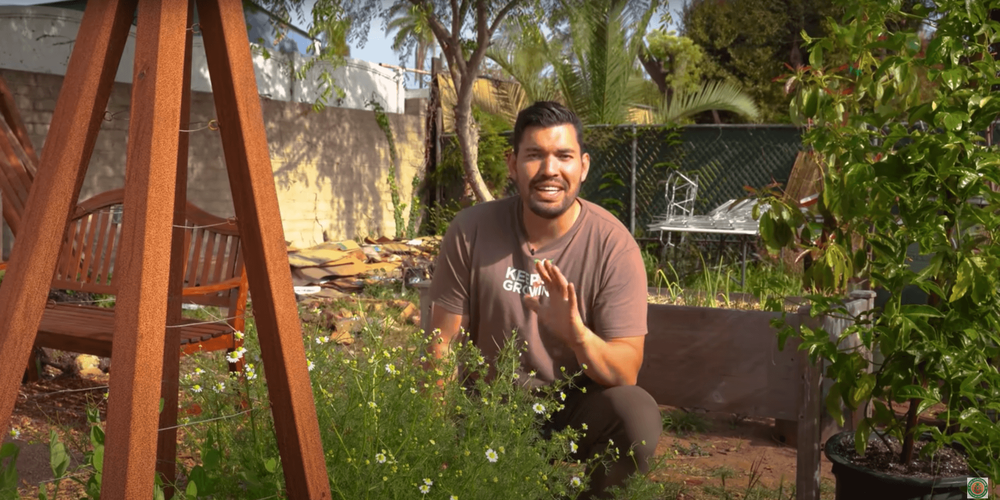
Kevin Espiritu never expected to be a gardener. As an accounting student at UC Santa Barbara, he supported himself by playing online poker. “When I graduated,” he said, “I didn’t know what I wanted to do.” Kevin spent looking at screens, playing professional poker and video games, and realized he needed to do something to “reset” himself. When his brother came home from college, the two decided to spend a summer gardening.
Epic Gardening began as a blog where Kevin shared the cultivation techniques, strategies and tools and he had acquired. And from this garden, Kevin grew a thriving business. At Epic Gardening, he cultivated an enormous social media following, including over 1 million YouTube subscribers. Epic Gardening aims to educate 10 million people worldwide on how to start their gardens right in their backyards. I sat down with Kevin to discuss where his passion came from and how he grew his audience.

Pixel artists show what ‘progress’ means to them
Photos by Natalia Mantini, MaryV and Tim Kellner
In her latest piece, “A gente mora por cima e abaixo do perigo,” June Canedo documents her family’s immigration from Brazil. “The many lessons from my home place and family, which I interpret into objects, are markers of my movement,” she explains. “Often forward but with many detours along the way.”