B2B Marketing News: Top B2B Pain Points, Influencer Types Survey, Zoom’s New Events Platform, & The KPIs That Matter
B2B Marketer Pain Points, Performance, and Priorities for the Year Ahead: B2B Marketing Monitor
54 percent of B2B brands face difficulty connecting with customers on the emotional level needed to increase brand engagement, while only 22 percent of B2B enterprises say they excel when it comes to customer experience (CX) — two of several findings of interest to digital marketers in recently-released survey data. MarketingProfs
Micro Influencers Still À La Mode in 2021
From micro and macro to mega, non-paid, affiliate and celebrity, the influencer types that enterprise marketers prefer working with runs the gamut, however the overwhelming majority — some 90 percent — want to work with micro-influencers who have between five and 100,000 followers, up from 77 percent in 2020, according to newly-released study data. [Survey]MarketingCharts
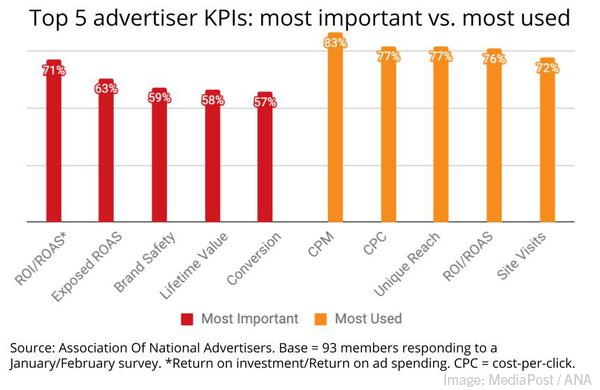
ANA Releases ‘KPIs That Matter,’ Finds The Most Important Ones Aren’t Always The Most Used
Cost per mille (CPM), cost per click (CPC) and unique reach are the top three key performance indicators (KPIs) marketers use, while those found to be the most important include return on investment (ROI), exposed return on advertising spend (ROAS) and brand safety metrics, according to recently-released survey data from the Association of National Advertisers (ANA). MediaPost
Post-IDFA Alliance finds iOS 14.5 triggered up to 21% growth in Android ad spending
Early figures have shown that between 63.5 and 83.2 percent of Apple mobile users have chosen not to be tracked for advertising, which has led to a 21 percent increase in ad spending for rival mobile operating system Android, according to recently-released mobile marketing report data. VentureBeat
Social Users Demand Relevance In Advertising, Study Finds
Some 59 percent of Twitter users say they remember those in-feed ads which are contextually relevant to the content surrounding them, with 46 percent preferring in-feed ads to open web alternatives — two of several findings of interest to online marketers in newly-released survey data. MediaPost
How the pandemic changed worldwide ad spending
Digital advertising will for the first time account for more than 60 percent of overall global ad spending, and is expected to court the 70 percent mark by 2025, according to recently-released forecast data, also showing 2021 ad spending that is predicted to be up 20.4 percent from 2020 levels. eMarketer

LinkedIn Shares New Insights Into Evolving Market Shifts as a Result of COVID-19
Some 70 percent of buyers want to continue to work remotely at least half of the time, while 67 percent of sales managers have encountered unforeseen difficulties maximizing remote team efficiency — two of numerous findings of interest to digital marketers in recently released report data. Social Media Today
Zoom announces all-in-one events platform
Zoom has announced a summer release of its Zoom Events virtual experiences platform, which will offer an array of features for ticketed virtual events, as the firm looks to serve the ongoing virtual event market. 80 percent of U.S. users said that they expect to have virtual experiences available even when in-person options are offered, according to Zoom survey data. MarTech
YouTube Previews Upcoming Improvements for YouTube Studio, Including Auto-Generated Title Suggestions
Google’s YouTube video platform has shared previews of forthcoming feature additions to its Creator Studio, including easier Google Drive integration, mobile publishing improvements, and multiple upload templates, the video firm recently announced. Social Media Today
Google Announces New Features for App Advertisers
Google has shared information about several new features aimed at mobile app advertisers, including in-app events from within Google Analytics, easier deep-linking, and new data-driven attribution (DDA) information, the search giant recently announced. Search Engine Journal
ON THE LIGHTER SIDE:
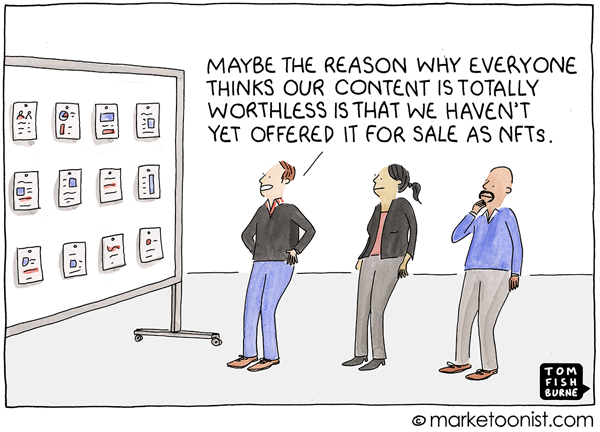
A lighthearted look at “the NFT bandwagon” by Marketoonist Tom Fishburne — Marketoonist
Prabhakar Raghavan Isn’t CEO of Google—He Just Runs the Place — Wired
TOPRANK MARKETING & CLIENTS IN THE NEWS:
- Lee Odden — What’s Trending: The New SEO and the Case for Content Marketing — LinkedIn
- LinkedIn — 4 ways B2B marketers can successfully combine brand and purpose — Ad Age
- Lee Odden — Pubcon Masters Group Workshops and Trainings Florida 2021 — Pubcon
Have you come across your own top B2B marketing story from the past week of industry news? Please let us know in the comments below.
Thanks for taking the time to join us for the TopRank Marketing B2B marketing news, and we hope that you’ll return again next Friday for more of the week’s most relevant B2B and digital marketing industry news. In the meantime, you can follow us at @toprank on Twitter for even more timely daily news.
The post B2B Marketing News: Top B2B Pain Points, Influencer Types Survey, Zoom’s New Events Platform, & The KPIs That Matter appeared first on B2B Marketing Blog – TopRank®.

Accordo tra ESA e Telespazio per Internet sulla Luna

Prime Now di Amazon chiude i battenti anche in Italia

Bonus Connettività, i beneficiari sono clienti di serie B?

TikTok aggiunge nuove funzioni contro il cyberbullismo

New grants help Australian teachers build digital skills
In a world where technology is evolving rapidly, it’s vital that Australian teachers have the knowledge and access to the resources they need in order to equip students for the future.
For the past ten years, we’ve been contributing to these efforts through Google’s Educator Professional Development Grants program providing teachers with skills and tools to confidently teach computational thinking and computer science concepts. In that time, over 20,000 teachers have benefited from the practical professional development workshops.
This year, our grants aim to bring digital technologies training to teachers in regional and remote communities where access to these opportunities can sometimes be limited.
We’re excited to announce 19 winners across Australia:
The impact of PD Grants for Educators
It’s been inspiring to see teachers build their skills and watch the impact this has had in local communities.
”The ongoing provision of the Google Educator PD grants (3 years) has resulted in us being able to build a solid reputation in the North Queensland region as a provider of excellent quality Digital Technologies Teacher Professional Development,” said Leanne Cameron, a Senior Lecturer at James Cook University. “Additionally, the participants have learnt that they will continue to be supported and updated into the future.”
Last year, COVID-19 delayed many of the ‘hands on’ workshops. But awardees found innovative ways to deliver training safely and sometimes remotely. James Cook University overcame the challenges presented by the pandemic to hold a series of virtual sessions with indigenous students from remote areas, who were able to join from local learning hubs.
Once restrictions had eased, the university was able to bring a group of teachers together from the remote community schools to discuss the curriculum and conduct ‘train the trainer’ sessions.
“These teachers have now gone back into their communities to share what they have learnt, supported by the workshop leaders in optional weekly online sessions that will continue until the end of the current semester,” said Leanne.
In 2021 James Cook University hopes to use their Educator Grant to offer practical workshops that will complement the more theoretical offerings of last year.
Facebook supplica gli utenti iPhone di non disattivare il tracciamento pubblicitario, in USA accetta solo il 4%

Ricordate l’aggiornamento di iOS alla versione 14.5? Quello che aggiungeva l’opzione di disattivare con facilità il tracciamento pubblicitario? Ne avevo parlato il 29 aprile scorso.
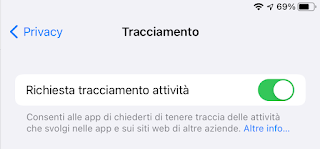
Quest’opzione, chiamata AppTrackingTransparency, consente la disattivazione globale andando in Impostazioni – Privacy – Tracciamento e spegnendo Richiesta tracciamento attività e consente la disattivazione per una singola app andando in Impostazioni, toccando l’app e disattivando Consenti tracciamento.
Facebook, che vive fondamentalmente di tracciamento pubblicitario, non l’ha presa bene e ha lanciato una campagna contro l’opzione anti-tracciamento, con pubblicità sui principali giornali statunitensi e una pagina online che presenta una rassegna di piccoli imprenditori digitali che usano il tracciamento pubblicitario di Facebook per trovare i propri clienti e che, dice Facebook, verranno messi in crisi da questa decisione di Apple.

Gli utenti hanno reagito piuttosto eloquentemente: secondo i dati raccolti dalla società di analytics Flurry, solo il 4% degli utenti iPhone statunitensi ha acconsentito al tracciamento attivando l’opzione Richiesta tracciamento attività oppure attivando Consenti tracciamento per una specifica app. A livello mondiale gli utenti che hanno accettato il tracciamento sono il 12%.
Il dato, basato su un campione abbastanza significativo, può essere interpretato in due modi.
Il primo è che alla gente la privacy interessa. Specialmente quando è facile da mantenere e quando per perderla bisogna fare qualcosa, invece di perderla in automatico e passivamente.
Il secondo è che la gente è semplicemente pigra e quindi accetta qualunque impostazione predefinita. Come prima accettava il tracciamento pubblicitario perché era il default, oggi accetta di non essere tracciata per lo stesso motivo.

Le centomila password più usate e quindi da evitare, offerte dal National Cyber Security Centre britannico e da Haveibeenpwned.com
Una volta tanto posso segnalare un archivio strapieno di password, pubblicato su Internet, senza che ci sia alcun pericolo di sicurezza informatica. Anzi, questo archivio è stato pubblicato allo scopo di aumentare la sicurezza.
Si tratta infatti della raccolta delle centomila password più popolari, classificate dal sito Have I Been Pwned (pronunciato powned) di Troy Hunt, che raccatta su Internet gli elenchi di password rubate e li analizza per vedere quali password vengono utilizzate maggiormente dagli utenti.
L’elenco è scaricabile qui presso il National Cyber Security Centre britannico.
Se una delle vostre password figura in questo elenco, la raccomandazione dell’NCSC è di cambiarla immediatamente. La ragione di questa raccomandazione così tassativa è in questo post dell’ente: in sintesi, gli aggressori sanno benissimo quali sono le password più usate e quindi tentano di entrare nei sistemi o di rubare account provando prima di tutto queste password popolari.
Certe password, fra l’altro, sono molto popolari: nelle compilation di password rubate collezionate da Troy Hunt la password 123456 è stata trovata 23 milioni di volte. Persino una password abbastanza insolita (in apparenza) come oreocookie compare oltre 3000 volte.
Elenchi come questi rafforzano la sicurezza anche in modo preventivo: possono essere infatti usati come base per delle denylist, ossia degli elenchi di password che gli utenti non possono proprio usare nel sistema informatico nel quale operano.
Queste sono le prime venti password più popolari secondo questa classifica: ci sono alcuni classici senza tempo, come le intramontabili qwerty e password, e spiccano quelle “originali” come 1q2w3e4r5t (primi cinque caratteri della prima e seconda fila di tasti).
123456
123456789
qwerty
password
111111
12345678
abc123
1234567
password1
12345
1234567890
123123
000000
iloveyou
1234
1q2w3e4r5t
qwertyuiop
123
monkey
dragon

PornHub usa un’IA per rimasterizzare vecchi film erotici
Two Googlers meet for the first time at I/O
Mike Pegg has never missed an I/O. “There’s a magic about it,” he says. “It’s sort of like seeing Google come to life, right?” Mike leads Developer Relations for the Google Maps Platform team, and when we spoke via Google Meet a few days before I/O, he was gearing up to present at the conference from his Bay Area home. Gearing up, literally.
“My tech check for my AMA will happen…right here,” he says looking around his desk at home. “I literally had a suitcase sent to me with all my camera gear and microphones. I even bought some ethernet cabling so I’m not competing with my son’s gaming on our WiFi!”
While Mike’s AMA would broadcast from his home, up until recently he thought he wouldn’t physically make it to I/O this year. Then he heard there would be a (small) audience. “I was so excited to take part, I just wanted to help out in whatever way I could.” Speakers who would be on stage at the Mountain View campus nominated colleagues to be audience members — and Mike was one of about 35 Googlers selected to sit in the audience at I/O.
As was Lamon Bethel, a visual designer. Unlike Mike, Lamon had never been to I/O — in fact, he’d never been to the Mountain View campus. Based in San Francisco, he’s only been working at Google for about nine months. “The invite was sort of mysterious,” Lamon says. “It was like a Friday or Saturday and I was going through my inbox and there was this totally nondescript, cryptic email saying I’d been nominated to sign up to attend I/O.” At first he thought it was a joke — he was so new at Google, and he wasn’t a developer. He signed up anyway and soon enough, found out that he would be on site for I/O with the small audience group.
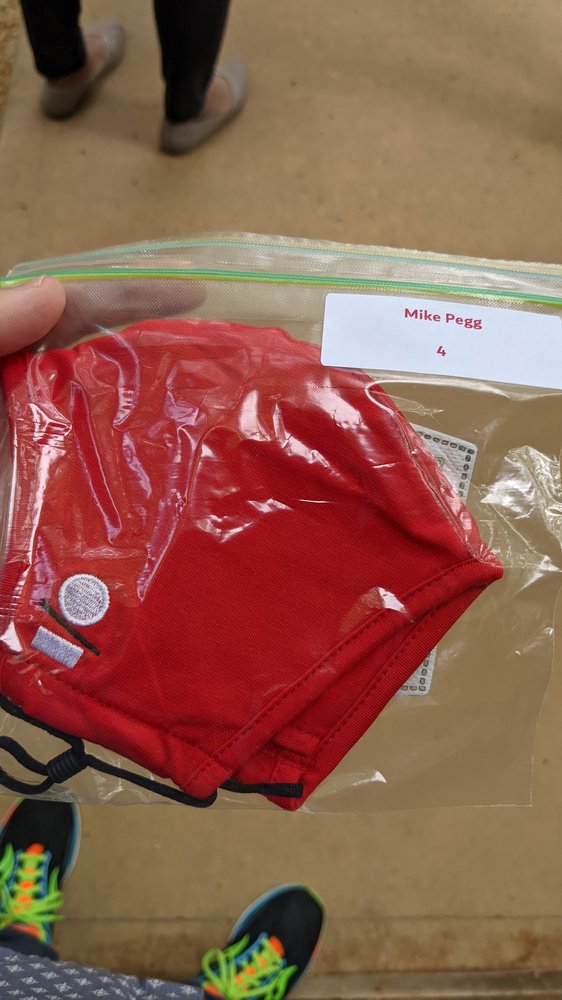
Audience members each received face masks upon arrival.
Lamon would be diving head first into the world of Google — as well as into the now-unique experience of seeing so many people at the same time. “It was energizing just to be in touch with all the I/O folks throughout the planning process,” he said before the event. “When I’m actually in the presence of other people, and seeing the presenters…I’m so curious what that will feel like!”
When I talked to Mike and Lamon a few days before I/O, it was the first time they “met,” though they knew they would both be in the audience. They don’t work in the same department, so it’s likely that even if they’d been working in offices this year, their paths wouldn’t have crossed. But both of them said they couldn’t wait to be on site at I/O, experiencing an event happening in front of them, in real life.
Of course, they were also just looking forward to meeting. “I can’t wait to meet you, Lamon!” Mike said during our call. “This will be so cool. It will almost be like your first day at Google.”
By all accounts, it was a good one. “The energy of the speakers, the audience members was great — it was such a seamless day,” Lamon says. Lamon got to meet coworkers for the first time, and Mike was reunited with people he’s worked with for years. “It was pretty special to not only reconnect, but also experience the magic of the I/O keynote together!”
And Lamon and Mike also met — in person — even though they were seated at different stages. “But when we had breaks and during lunch and breakfast, we found time to connect,” Lamon says. “He’s someone that I feel like I’ll always have this really unique bond with after having gone through that I/O experience together,” Mike says.

Giant cranes and video games: How I/O went digital
There’s a sign on the wall behind Andrew Rossi’s desk that’s been impossible to ignore during video calls lately. The placard counted down the days until I/O 2021 — and as event lead for Consumer Apps at Google, Andrew is part of a huge team behind the whole production. While it now reads “0,” the purposefully placed sign was visible during the many virtual meetings he had with people all across Google in the run-up to an entirely different kind of I/O.

Demi Lovato e l’intraducibile “them/they”
ANSA ha pubblicato un tweet linguisticamente disastroso a proposito dell’annuncio di Demi Lovato di essere una persona non binaria e di chiedere, come fanno molte persone non binarie, che si usi they e them al posto di he/him o she/her come suo pronome: “La cantante Demi Lovato ha rivelato di essere non-binaria e ha chiesto di rivolgersi a lei con il pronome ‘voi’ o ‘loro’. In un video e un messaggio Twitter ha spiegato di essere “orgogliosa” di questo cambiamento.”
La cantante Demi Lovato ha rivelato di essere non-binaria e ha chiesto di rivolgersi a lei con il pronome ‘voi’ o ‘loro’. In un video e un messaggio Twitter ha spiegato di essere “orgogliosa” di questo cambiamento. #ANSA https://t.co/u6dwz47NTJ
— Agenzia ANSA (@Agenzia_Ansa) May 19, 2021
Come traduttore, come madrelingua inglese e come persona che per lavoro e affetti segue le questioni di identità di genere, il tweet di ANSA mi ha fatto accapponare la pelle. È assolutamente sbagliato tradurre il they chiesto da Demi Lovato con voi o con loro. Inoltre fare un tweet tutto al femminile proprio quando una persona chiede di non essere citata al femminile è una dimostrazione di insensibilità davvero imbarazzante.
Metto subito in chiaro una cosa: chiunque venga qui a commentare che si tratta di “stupidaggini gender” e di “resa al politically correct” riceverà un accompagnamento immediato alla porta. Le sfumature dell’identità di genere possono essere difficili da capire, ma sono assolutamente reali. La biologia e la natura non sono in bianco e nero, zero e uno, e sarebbe ora di metterselo in testa per non fare la figura di quelli che vogliono continuare a credere che il Sole giri intorno alla Terra quando i dati dicono che non è così. E non si tratta di opinioni o di “scelte personali”: chi si trova con un disagio di identità di genere non ha scelto di averlo, esattamente come voi non avete “scelto” di essere, che so, eterosessuali o biondi o alti. Se non vi è chiaro, provate a informarvi.
Detto questo, qui mi dedico soprattutto alla questione linguistica, che è spiegata egregiamente da Licia Corbolante qui: il they/them delle persone non binarie non è affatto un “voi” o un “loro”. È un pronome singolare, non plurale, e in inglese si usa per indicare una persona senza specificarne il genere. È un uso intraducibile in italiano, dove abbiamo solo lui o lei e siamo quasi sempre costretti a specificare il genere della persona che stiamo citando (anche se esistono delle buone soluzioni, parziali ma facili da mettere in pratica).
Prevengo un’obiezione politico-linguistica inevitabile: no, non è una cosa introdotta di recente. Il they singolare esiste, in inglese, da circa seicento anni. L’unica novità è che è stato adottato anche dalle persone non binarie e accolto con questa accezione nei dizionari (Merriam-Webster, 2019). E se la cosa vi scandalizza perché non ve l’hanno insegnata a scuola, beh, è ora di aggiornarsi, tutto qui. L’ho fatto anch’io.
Per i sostenitori della teoria del complotto gender per sovvertire le fondamenta linguistiche e incrinare la famiglia, a parte un invito a crescere invece di fare i bambini invasati, cito qualche esempio di they singolare proveniente da tempi non sospetti:
- and every one to rest themselves betake — William Shakespeare
- I would have everybody marry if they can do it properly — Jane Austen
- it is too hideous for anyone in their senses to buy — W. H. Auden
- a person can’t help their birth — W. M. Thackeray
- no man goes to battle to be killed.—But they do get killed — G. B. Shaw
E per finire:
- If you love somebody, set them free — Sting
Questa costruzione può sembrare dissonante per i non madrelingua, ma è perfettamente normale, tanto che molti madrelingua nemmeno si accorgono di usarla. No one has to go if they don’t want to è decisamente più idiomatico ed eufonico di No one has to go if he or she doesn’t want to.
Altra obiezione frequente: usare il they anche per il singolare crea confusione fra singolare e plurale, quindi è inaccettabile, si dice. Scusate, ma avete considerato che you fa esattamente la stessa cosa?
Oltretutto questa critica arriverebbe da un pulpito decisamente ipocrita, dato che per esempio in italiano è sempre più diffuso l’uso di gli non solo per indicare indifferentemente una o più persone, ma anche per indicare una o più donne. Eppure non vedo orde con torce e forconi chiedere il ritorno per legge del le e del loro per evitare di essere travolti dalla confusione di genere.
E che dire dell’uso del lei in italiano come forma di cortesia verso gli uomini? Anche qui non vedo nessuno strillare che a furia di dare loro del lei, i maschi diverranno tutti effeminati. Beh, ci aveva provato un certo dittatorucolo circa cent’anni fa, ma non è andata particolarmente bene.
Quindi ANSA come avrebbe potuto scrivere il suo tweet in maniera non imbarazzante? Per esempio così: “L’artista Demi Lovato ha rivelato di essere una persona non-binaria e ha chiesto che si usi il pronome ‘they’. In un video e un messaggio Twitter ha spiegato di “provare orgoglio” per questo cambiamento.”
Visto? Non è difficile. Basta volere, e basta avere un po’ di rispetto per gli altri.
Questo articolo vi arriva gratuitamente e senza pubblicità grazie alle donazioni dei lettori. Se vi è piaciuto, potete incoraggiarmi a scrivere ancora facendo una donazione anche voi, tramite Paypal (paypal.me/disinformatico) o altri metodi.
16 updates from Google I/O that’ll make your life easier
Part of our mission is to help make your daily life easier. At I/O this year, we shared news about a wide range of products and services that’ll do just that, from starting your car with your phone to searching your screenshots using Google Lens. Here are just a few of the features you should keep an eye out for.
Quickly view your notifications, invoke Google Assistant on Android.
Android 12 includes the biggest design change since 2014. We rethought the entire experience, from the colors to the shapes, light and motion, and made it easier to access some of the most used features:
- To invoke Google Assistant wherever you are, long press the power button.
- Swipe down to view your new notification shade, an at-a-glance view of all your app notifications in one place.
- And to make it easier to access everything you need, Google Pay and Device Controls have been added to your customizable quick settings.
Manage your privacy settings more easily on Android.
On top of the new design changes, we’ve also launched a new Privacy Dashboard, giving you easy access to your permissions settings, visibility into what data is being accessed and the ability to revoke permissions on the spot. You also have new indicators that let you know when apps are using your microphone and camera, as well as a way to quickly shut off that access. And we’ve added new microphone and camera toggles into quick settings so you can easily remove app access to these sensors for the entire system. Learn about new privacy controls in Android 12.
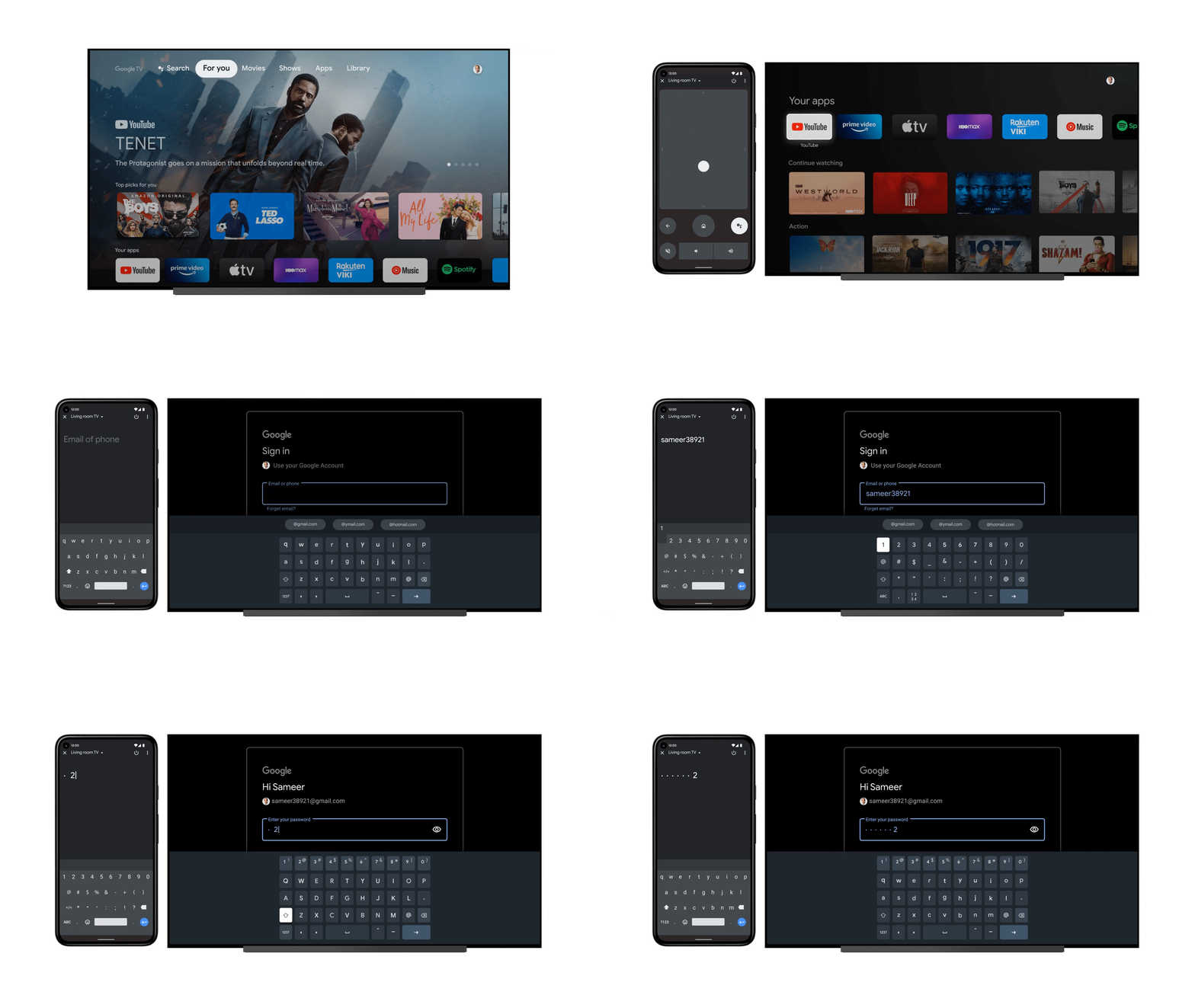
Change the channel with your phone.
Lost your TV remote? Don’t sweat it — we’re building remote-control features directly into your Android phone. Another bonus: If you need to enter a long password to log into one of your many streaming services subscriptions, you can save time and use your phone’s keyboard to enter the text. This built-in remote control will be compatible with devices powered by Android TV OS, including Google TV, and it’ll roll out later this year. Learn more about how we’re helping your devices work better together.
Innovating and advocating for accessible classrooms
We’re continually working to improve access to inclusive tools, from building two free screen readers into Chromebooks to providing voice typing and live captions with Google Workspace for Education. But as far as we’ve all come in bringing accessible teaching and learning tools into our classrooms, there is always more to do about digital inclusion.
Today, on Global Accessibility Awareness Day, we at Google want to celebrate the great work that teachers have done to bring acceptance and inclusion into their schools — while we commit ourselves to more innovation with and for people with disabilities in the future.For example, we’re celebrating people like Chang-Dong Ryu, who teaches history at Seohyun Middle School in South Korea. Ryu is blind, and uses Google Classroom’s accessibility features to teach his students deeper lessons about acceptance and ability. “What I can do best is teach my students that value that comes with being ‘different,’” Ryu told us in a video we shared in February. “That way, when my students meet new friends and colleagues with visual impairments, they will accept them into their community as equals.”
We’re continuing to tell more stories of educators and students with disabilities, and show more representation across our community, as we build with and for people with disabilities.
Building a more inclusive Chrome OS
In keeping with our goal to learn from users of our accessibility tools, and to give people with disabilities an even playing field, we continue to build new tools for accessibility in Google for Education solutions, with and for people with disabilities. Here are a selection of the latest features, all available on your Chromebook today:
Live captioning:Chrome Browser now has a Live Caption feature that automatically provides real-time captions for media with audio. The live captioning works with social media and video sites, podcasts and radio content, personal video libraries (such as Google Photos) and embedded video players. For students with hearing disabilities, the captions help improve accessibility of online content. In a noisy classroom environment, or one where students need to keep volume low on their school devices, the captions are helpful for any students. To turn on Live Caption, go to Chromebook settings, then “Accessibility.”
Mouse panning: Chrome OS now offers centered mouse panning. This means that when students and teachers with vision disabilities are using the full-screen magnifier, they can now move the viewport while keeping the mouse or trackpad close to, or directly on, the center of the screen. This makes it much easier to navigate around the screen, as users don’t need to move the mouse to the edge of the screen to move the zoomed-in area – much better for accessing all learning content.
Activating ChromeVox:For users of ChromeVox, the screen reader that’s built into Chromebooks, the first time they open up a Chromebook, after 20 seconds of inactivity, they’ll hear audio and visual instructions for activating ChromeVox. For students and teachers who need screen readers but haven’t yet used ChromeVox, there is a new tutorial available after turning on the screen reader for the first time, and is available in ChromeVox settings. The instructions are very helpful for getting started without hesitation.
Image descriptions on Android:For people who use screen readers on Chromebooks, the “get image descriptions” feature provides descriptions of unlabeled images, such as those that don’t have alt text. This feature will soon be brought to Android devices. When students with vision disabilities are using Chromebooks or Android phones or tablets to access online content, they’ll be able to have a better understanding of the images they come across, similar to their sighted classmates.
Forced colors:For students using the Chrome Browser on Windows who need high contrast in order to read text and see image details, Chrome now supports Windows’ OS level high contrast settings. The extension lets people choose filters to adjust color contrast, flip black and white or remove colors altogether.
Enhanced Select-to-speak:As mentioned in Chromebook’s 10th birthday post, new features let students and teachers speed up, slow down and pause the reading voice in real-time, and easily jump to different sections of text. Students with disabilities —or anyone who needs help comprehending a challenging reading assignment — can use these new Select-to-speak features to listen at their own pace.
To learn more about the accessibility tools built into Chromebooks and Google Workspace for Education, check out edu.google.com/accessibility, share this one pager, watch video tutorials on accessibility features, or learn more on our Help Center.
10 Ways to Drive Revenue through Content Marketing by Joe Pulizzi
Huge congratulations to Joe Pulizzi on the release of the completely updated and expanded edition of Content Inc. Also thanks to Joe for contributing one of the handful of guest posts we’ve ever accepted here at TopRank’s B2B Marketing Blog. Along with thousands of other marketers, I’ve learned a lot from Joe and you will too.
Read on to discover 10 ways you can drive revenue for your business through content marketing from the Godfather of Content Marketing himself:
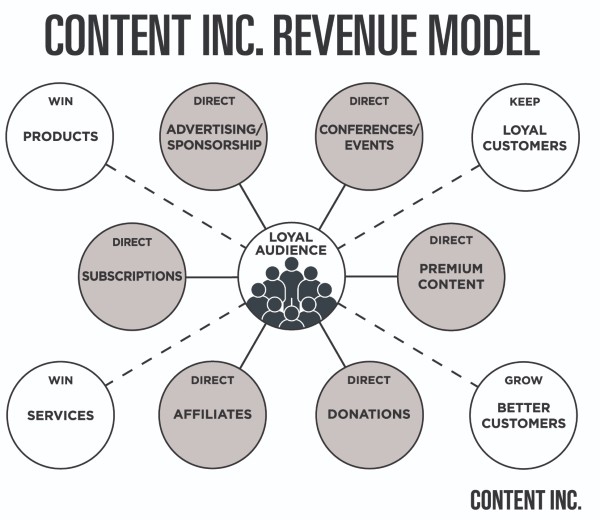 Whether you are a marketing professional, content entrepreneur or a media executive, driving revenue from an audience is always the same. Once you build a loyal and trusting audience through your content marketing or media strategy, there are 10 different ways to generate revenue: six direct sources and four indirect sources.
Direct revenue options are generally aligned with media models. Indirect sources are considered the result of content marketing strategies. Regardless of what you “perceive” your organization to be, a smart content marketing professional should consider all 10 sources as options when building a content asset.
Direct Revenue Options
The six different methods by which companies can directly generate revenues from an audience group include advertising/sponsorship, conferences and events, premium content offerings, donations, affiliate sales, and subscriptions.
- Advertising/Sponsorship
The most popular method of driving direct revenues is through advertising and sponsorship programs—companies willing to pay you for direct access to your audience.
Traditional Advertising
Tested by time, traditional advertising still works very well, especially for those organizations with loyal, niche audiences.
- How to Cook That. Ann Reardon, the YouTube baking queen who now has more than 4 million subscribers to her YouTube channel How to Cook That, makes the majority of her revenues from YouTube advertising royalties. With very few resources, Ann was able to differentiate her message by focusing on what she calls “impossible food creations.”
- Morning Brew. The Morning Brew is a daily email newsletter built for millennials that combines business and lifestyle content with a quirky attitude. Each newsletter includes content-based advertising from brands written in the same style as the newsletter. Since its launch, the Morning Brew has added a number of targeted email newsletters and podcasts, increasing revenue from $3 million in 2018 to more than $20 million in 2020.
Sponsorships
While an advertisement generally involves interrupting a user’s experience with a product or content promotion, a sponsorship entails underwriting a piece of content, generally by one company. The benefits of sponsorships include getting leads (through a sponsored download) and/or achieving brand awareness (by sponsoring a podcast or television program).
- Content Marketing Institute. CMI favored a sponsorship model over an advertising model for the majority of its products. This included sponsored research reports, e-books, and webinars.
- Media Voices. UK-based Media Voices started as a weekly podcast designed for publishers in 2016. After launching at approximately $600 per sponsorship, it has evolved the model and charges about $3,000 per sponsorship today.
- Conferences and Events
According to CMI/MarketingProfs research, approximately 7 in 10 enterprises create and manage their own events. Some of these are small client gatherings, while others are full-scale events with exhibition halls and concurrent sessions. Revenues are mostly driven through paid event registration or sponsorships, such as parties or exhibition space.
- The Chicken Whisperer. Andy Schneider grew the Chicken Whisperer platform into a book, a magazine (with more than 60,000 subscribers), and a radio show, which has now run for more than seven years with more than 20,000 weekly subscribers. But sponsored road shows are a core part of his revenue mix.
- Inkers Con. After launching multiple bestselling books and a popular book publishing training course, Alessandra Torre created the event Inkers Con Authors Conference. “If you can make it through that first year, the second year [is] so much easier. We made all of our mistakes in the first year, and it still ended up being a fantastic event,” says Torre. The 2019 physical conference sold 400 tickets, while the 2020 virtual event sold 750 tickets at $245 per person.
- Lennox Live. Lennox is one of the largest manufacturers of heating and air-conditioning equipment in the world. Every year, the event attracts the leading contractors and distributors from across the United States, offering education around technology, marketing, and business practices. Exhibiting partners include companies such as Honeywell, Cintas, and Fluke. Lennox generates revenue directly from attendee fees, as well as from more than a dozen manufacturing and service partners.
- Premium Content
Premium content packages come in a number of forms, including direct-for-sale content products and syndicated content opportunities.
Content Products
- Digital Photography School (DPS). Darren Rowse launched DPS as the leading source for beginning photographers, showing them how they can get the most out of their picture-taking skills. DPS generates millions per year by developing premium e-books and specialty reports for direct sale. DPS’s premium content sales have become core to the company’s monetization strategy.
- BuzzFeed (Tasty). One of the ways BuzzFeed monetizes is through customized cookbooks. BuzzFeed launched Tasty: The Cookbook, a hard-copy book that buyers can customize to fit their tastes. Just a few weeks after initial launch, BuzzFeed sold more than 100,000 copies of the cookbook.
Syndicated Content
Content syndication happens when third-party websites pay a fee to publish original created content.
- Red Bull. Red Bull’s “Content Pool” contains thousands of videos, photographs, and pieces of music to which media companies and content producers can purchase rights, directly from Red Bull.
- Scott Adams. The Dilbert creator is now a multimillionaire who draws revenue through speaking and writing books, in addition to comic strips. Adams got his start by syndicating the popular Dilbert cartoon to newspapers and websites around the globe.
- Donations
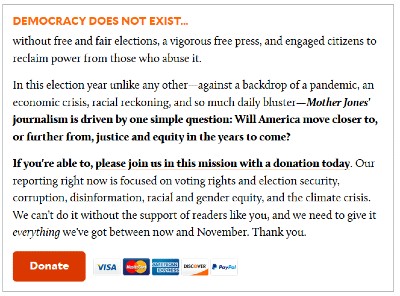
Generally, donations to subsidize an organization’s publishing work best for not-for-profit and cause organizations.
- Pro Publica. Pro Publica is a nonprofit organization that uses its funding to develop investigative journalism. Founded by Paul Steiger, former managing editor of the Wall Street Journal, Pro Publica employs more than 50 journalists and received its major funding from the Sandler Corporation, which committed funding for multiple years at Pro Publica’s launch. Pro Publica also accepts ongoing donations from anyone that believes in the organization’s cause.
- Mother Jones. Like Pro Publica, Mother Jones receives most of its funding through direct reader donations (Figure 18.2), and it includes a call to action at the end of every article.
- Cards Against Humanity. In 2013, the card game ran a “Give Cards Against Humanity $5 Sale,” where they asked their audience for 5 dollars in exchange for absolutely nothing. They made over $70,000 without selling a thing.
Microfunding
- Kickstarter/Go Fund Me. Retired US Army officer Brian Stehle dreamed of writing a children’s book, but he needed funds to pay for the up-front production. Brian turned to Kickstarter, asking friends and family to donate the $4,200 in startup costs. It only took a few days for Brian to achieve his goal. Now his children’s Christmas book, One Day Off, is a reality.
- Creator Coins. Creator coins or token allows the owner to control and coordinate the value of their brand and content across all networks. Companies like Rally.io mint a coin on the Ethereum (ERC-20) network and then give access to the owner to share the coin with their community. Most times, the coins give the audience get access to unique prizes or events, but as the network grows, some coins begin to collect significant value. We’ve had great success with our own creator coin, $TILT coin, and partnered with Rally for the roll out. This is in the early stages, but there is true potential in this space. NFTs (non-fungible tokens) like these have already taken off in the art space on sites such as SuperRare, MakersPlace and OpenSea.
- Affiliate Sales
Affiliate income works like this: if you click on my affiliate link and sign up for the products and services I recommend, then I earn a commission.
- Entrepreneurs On Fire (EOF). EOF is the popular podcast series run by John Lee Dumas. John promotes a number of companies that pay an affiliate fee to John on either click or actual product sale. EOF publishes revenues and profits every month.
- The Wirecutter. The Wirecutter, the gadget and deal listing site, was purchased by the New York Times in 2016 for $30 million. The site makes a little bit of money every time it sells a product recommended on the site. These deals add up. In 2015, it generated more than $150 million from affiliate revenues.
- BuzzFeed. According to the Wall Street Journal, BuzzFeed collected more than $300 million in 2019 solely from affiliate links.
- Subscriptions
Subscriptions differ from premium content in that subscriptions, paid for by the consumer, promise to deliver content over a period of time (generally a year).
- Copyblogger. After selling its software products division, Brian Clark focused Copyblogger’s revenue on education and training, creating Copyblogger Pro, an annual membership program that includes foundational training, monthly advanced marketing master classes, and ongoing coaching for $495 per year.
- Agency Management Institute. Owner Drew McLellan has a number of revenue drivers for his business, including sponsorships and events. The main lever is an annual membership where agency owners get the opportunity to meet with other agency owners in private meetings throughout the year. There are multiple levels of membership, with the highest at $3,000 per year.
- The Hub. Launching the site initially as a UK Facebook group, Laura Moore and Laura Davis created The Hub, a membership site for social media managers. “We targeted 50 members for the first three months, but exceeded 100,” says Moore. They completed their first year as a membership site with approximately $300,000 in income.
Indirect Revenue Options
While direct revenue options have been traditionally considered part of the media company model, indirect revenues fall under the approach known as content marketing. This means you don’t make money directly from the content, but from the effect of the content over time.
- Product Sales
- Chili Klaus. Claus Pilgaard, aka Chili Klaus, is one of the best-known celebrity figures in Denmark, all because of the extraordinary way he talks about chili peppers. Claus’s YouTube videos have garnered millions of views, including one where Claus conducts the Danish National Chamber Orchestra playing “Tango Jalousie” while eating the world’s hottest chili peppers. That video alone has seen more than 5 million views. From this success, Claus has launched a suite of successful products under the brand “Chili Klaus,” including chili chips, chili sauce, chili licorice, and dozens of other products.
- Indium Corporation. Indium, a global manufacturing company headquartered in upstate New York, develops and manufactures materials used primarily in electronics assembly. At its core, the company develops soldering materials to keep electronic components from coming apart. Rick Short, Indium’s director of marketing communications, knew that Indium employees had more knowledge about industrial soldering equipment than just about any other company in the world. This makes sense. Soldering is the knowledge area where Indium manufactures most of its products. Indium believed that if it published its expertise on a regular basis, it would draw in new customers and have opportunities to sell more products. Today Indium’s blog From One Engineer to Another is the company’s leading driver of new product sales.
- Missouri Star Quilt Company. Jenny Doan is the cofounder of the Missouri Star Quilt Company, a quilt shop in Hamilton that boasts the largest selection of precut fabrics in the world. To spur sagging sales, Jenny created quilting video tutorials to post on YouTube. The videos have driven new traffic to the shop’s website, gaining an average of 2,000 online sales per day and making it the world’s largest supplier of precut fabrics (worth almost $200 million a year).
- MrBeast. After developing one of the most successful YouTube channels in history with over 50 million subscribers, MrBeast (aka Jimmy Donaldson) launched MrBeast Burger in over 300 locations simultaneously.
- Services Sales
- Game Theory. Today Matthew Patrick’s Game Theory brand has more than 8 million subscribers. From this success, Matthew launched Theorists Inc., a specialty consulting firm that works with large brands that want to be successful on YouTube. Theorists Inc. has been hired directly by some of the biggest YouTube stars on the planet to help them attract more viewers, as well as has been hired by a number of Fortune 500 companies. Even the mighty YouTube itself hired Theorists to consult directly on helping YouTube retain and grow its audience numbers.
- Smart Simple Marketing. Sydni Craig-Hart launched Smart Simple as a marketing consulting firm with her husband, Will, in 2006. Today Smart Simple is one of the leading marketing agencies focused on diversity issues. How did it get there? “We’ve actually produced 439 [content-based] programs over the last 14 years,” says Sydni. That kind of consistent delivery led to a weekly email newsletter with more than 30,000 subscribers:
- Loyalty Revenue

Of all the revenue drivers of this approach, loyalty is the oldest of them all, and it is still extremely important today. Organizations of all sizes originally launched print magazines to keep customer loyalty over time.
- John Deere’s The Furrow Magazine. John Deere launched The Furrow magazine in 1895. It is still published today, produced in print and digital format in 14 different languages and distributed to 40 countries. The Furrow has always focused on how farmers can learn the latest technology to grow their farms and businesses. Over the past 100 years, just a handful of the articles have been about John Deere products and services.
- Harley-Davidson’s The Enthusiast magazine. Harley-Davidson Motorcycles has one of the most loyal followings in the world. One reason is its print and digital magazine, The Enthusiast (formerly HOG magazine). The magazine, first published in 2016, is now sent every quarter to 650,000 customers.
- Increased Yield on Current Customers
Once acquiring a customer, innovative companies leverage customer data to deliver targeted and consistent publications to, in essence, create better customers over time.
- thinkMoney from TD Ameritrade. Some investing services are conservative and buttoned-down, especially in complex derivatives markets, but thinkMoney follows a different approach. It takes the subject of investing seriously, but it doesn’t take itself with the grim seriousness of many Wall Street firms. Instead, thinkMoney embraces a “sophisticated simplicity” approach that’s edgy without being flippant, and witty without being irreverent. Research from T3, thinkMoney’s publisher, found that those who read the magazine trade five times more often than those who do not.
- Fold Factory. Trish Witkowski, CEO of Fold Factory, has become a celebrity in the direct mailing industry through her regular video show, The 60-Second Super Cool Fold of the Week, where she details amazing examples of print direct mail. In 2020, Trish hit the 500th episode of the series, which marked 10 years of production and the creation of 500 different T-shirts, which she sells. The Fold Factory videos have been directly responsible for more than $750,000 in revenue.
The most successful content creators leverage not one, but multiple streams of revenue. Whether you consider yourself a marketer or part of a media company, we are all publishers. Just as an investor diversifies a portfolio with multiple stocks and/or mutual funds, content creators need to diversify the revenue streams generated from their content and audience building.
 Joe Pulizzi’s new book, Content Inc.: Start a Content-First Business, Build a Massive Audience, and Become Radically Successful (with Little to No Money) Is Available Now.
Joe is also the founder of The Tilt, a newsletter dedicated to helping content creators find a business model.
The post 10 Ways to Drive Revenue through Content Marketing by Joe Pulizzi appeared first on B2B Marketing Blog – TopRank®.