Robinhood, le criptovalute trainano le vendite dopo l’IPO
Tratto da MarketWall – InvestoPro — I ricavi di Robinhood, la nota app di trading online, salgono nel primo trimestre dopo lo sbarco a Wall Street grazie alla spinta delle…
L’articolo Robinhood, le criptovalute trainano le vendite dopo l’IPO scritto da Paolo Brambilla proviene da Assodigitale.

Come spendere Bitcoin
Bitcoin è una forma di moneta digitale o elettronica. Non è qualcosa che una persona può mettere in tasca. Inoltre, i Bitcoin non possono essere tenuti in banca o ritirati…
L’articolo Come spendere Bitcoin scritto da YOUR_DIGITAL_VOICE! proviene da Assodigitale.

Il Mercato Centrale, dopo Firenze, Roma e Torino, arriva a Milano il 2 settembre
Il Mercato Centrale si presenterà alla città con un grande evento di apertura giovedì 2 settembre. “Milano è il nostro progetto più grande e impegnativo di sempre, oserei dire quello più ambizioso.…
L’articolo Il Mercato Centrale, dopo Firenze, Roma e Torino, arriva a Milano il 2 settembre scritto da Paolo Brambilla proviene da Assodigitale.
B2B Marketing News: New B2B Intent Data Research, More Marketers Changing Digital Strategy, & LinkedIn’s New Video Meetings & Profile Ratings
Almost Half of B2B Orgs Say It’s Become More Difficult to Close Deals
Finalizing B2B deals has become more difficult since the pandemic began, with some 46 percent of B2B organizations citing buying decisions being placed on hold as the primary cause, while 43 percent said that their organization viewed buyer re-prioritization as the top reason, followed by budget cutting, according to recently-released survey data. MarketingCharts
Marketing’s Tech-tonic Shift: 90% Have Changed Their Digital Strategies [Salesforce Study]
66 percent of marketing leaders expect revenue growth in the coming 12 to 18 months, with the top portions of B2B marketing budgets being spent on advertising, tools and technology, account based marketing (ABM), content, and staffing, according to newly-released survey data of interest to digital marketers. MediaPost
LinkedIn Adds Ratings & Reviews to User Profiles
Microsoft-owned LinkedIn has begun offering both reviews and ratings to user profiles, with a new services profile element that can now include a range of past client review and ratings features, and users initially receiving 20 review invitation credits, LinkedIn (client) recently announced. Search Engine Journal
Marketers Come Up Short In Perceived Value, Study Shows
Marketers see their department as coming in sixth when it comes to experiencing a lack of respect within their organization, behind sales, production, operations, human resources, and accounting, according to recently-released study data. MediaPost
TikTok Announces New Partnerships with Vimeo and Canva to Streamline Content Creation
Short-form social video platform TikTok has released new integration to its TikTok Ad Manager that expands ad-building options to more easily incorporate content from creation platforms Canva and Vimeo, the firm recently announced. Social Media Today
Google Removes The Rich Result Type From The Performance Reports
Google has removed the more generic form of its rich result search appearance data from its Search Console programming API — finalizing a move first mentioned in May, as the search giant has moved to providing more refined and less general breakout data, Google recently announced. SEO Roundtable
Twitter is Testing a New Option Which Would Enable You to Remove Specific Followers from Your Audience
Twitter has begun testing a method for users to less conspicuously remove unwanted followers from an account’s audience — an alternative to a brute force blocking approach that may offer digital marketers a more subtle solution, the firm recently announced. Social Media Today
LinkedIn Launches Native Video Meetings
LinkedIn has released new options for users to hold one-on-one video meetings directly within its platform, utilizing parent company Microsoft’s Azure Communication Services technology to provide a slew of powerful video conferencing features, with additional functionality such as screen sharing and virtual backgrounds planned for future updates, the firm recently announced. Search Engine Journal
SMT Expert Series: Keren Baruch Discusses LinkedIn Content Trends and Creator Tools [Interview]
Social Media Today recently interviewed LinkedIn’s Keren Baruch, who offered a range of insight into Creator Mode and other recent LinkedIn (client) content creation tools of interest to digital marketers. Social Media Today
The Biggest Benefits of Intent Data for B2B Marketers [Survey]
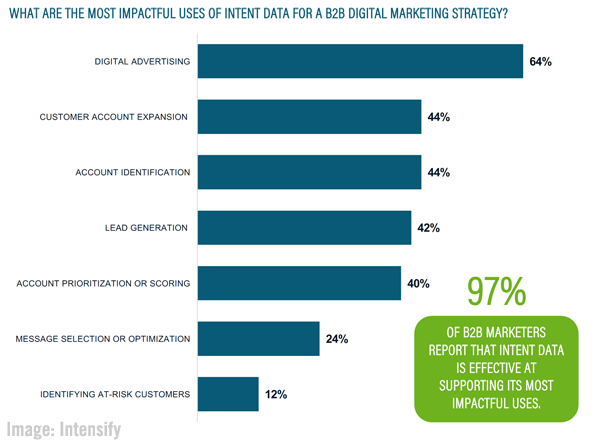
64 percent of B2B marketers say that digital advertising is the highest performing use case for intent data, followed by 44 percent who said customer account expansion was the most impactful use, and the same percentage who noted that account identification was the best usage scenario — one of several statistics of interest to online marketers contained in newly-released intent data survey results. MarketingProfs
ON THE LIGHTER SIDE:
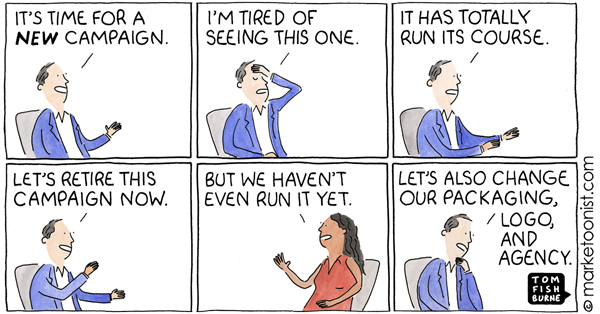
A lighthearted look at the “brand fatigue and brand consistency” by Marketoonist Tom Fishburne — Marketoonist
The Netflix-Experience Is The New B2B Standard — Forbes
TOPRANK MARKETING & CLIENTS IN THE NEWS:
- Lane R. Ellis / TopRank Marketing — 5 Top Customer Service Articles of the Week 8-16-2021 — Shep Hyken
- Lane R. Ellis — 10 Ways to Step Up Your Marketing and Brand Building by Using the Best Tools Available — Small Business Trends
- Lee Odden — Q4 PPC Planning: SMB B2B Tactics — Clix
Have you found your own B2B marketing news item from the past week of industry news? Please drop us a line in the comments below.
Thank you for joining us for this week’s TopRank Marketing B2B marketing news, and we hope you’ll return again next Friday for more of the week’s most relevant B2B and digital marketing industry news. In the meantime, you can follow us at @toprank on Twitter for even more timely daily news.
The post B2B Marketing News: New B2B Intent Data Research, More Marketers Changing Digital Strategy, & LinkedIn’s New Video Meetings & Profile Ratings appeared first on B2B Marketing Blog – TopRank®.

Come cambiare la foto profilo su Amazon Prime Video

Netflix, le migliori 5 serie TV originali uscite nell’estate 2021

Boston Dynamics presenta i robot che fanno parkour, ma c’è il trucco; Tesla annuncia il robot umanoide “ammansito”
Boston Dynamics ha pubblicato un altro video di robot umanoidi che compiono movimenti sempre più sofisticati, in questo caso facendo addirittura parkour con precisione sovrumana.
Parkour is the perfect sandbox for the Atlas team to experiment with new behaviors. Through jumps, balance beams, and vaults, we push Atlas to its limits to discover the next generation of mobility, perception, and athletic intelligence.
Sul palco della conferenza è stato presentato anche un simulacro fisico del Tesla Bot, ma si tratta soltanto di un mock-up tridimensionale non funzionante. Secondo Elon Musk i primi esemplari di prova saranno pronti l’anno prossimo. Staremo a vedere. Intanto ho finalmente trovato il cosplay perfetto per il mio fisico.

Facebook deve cedere Instagram e WhatsApp!

Tesla Bot, cosa sappiamo dei robot umanoidi di Elon Musk

Podcast del Disinformatico RSI 2021/08/20: Codici QR: brutti, ma astuti e puliti

Questa umile macchia d’inchiostro riesce a sopravvivere a molti danneggiamenti perché usa la correzione d’errore: della matematica piuttosto complessa, sviluppata nel 1960 da Irving Reed e Gustave Solomon presso un centro di ricerca militare del MIT, in Massachusetts, che include nella mappa di puntini alcuni dati di controllo. Questi dati dicono cosa ci deve essere scritto nei puntini precedenti. Se quei puntini non sono leggibili, per esempio perché sono stati danneggiati, cancellati o coperti, la correzione d’errore permette di ricostruire l’informazione mancante. Questo è molto utile negli ambienti nei quali si usano i codici QR, che sono soggetti a graffi, ammaccamenti, cancellazioni e abrasioni.
Semplificando moltissimo, immaginate che i dati da proteggere siano i numeri 1, 3, 5 e 11: la correzione d’errore aggiunge l’informazione “il totale dei numeri precedenti deve essere 20” e quindi se uno dei numeri risulta illeggibile è possibile dedurlo. Questo è solo un esempio grossolano: la matematica della correzione d’errore nei codici QR è molto, molto più complessa, ma il concetto di base è lo stesso.
Resistenza ai danni e matematica militare: niente male, per un semplice quadratino stampato, vero?
Questa correzione d’errore ha anche una conseguenza estetica poco conosciuta: siccome i dati registrati nei codici QR sono appunto ricostruibili anche se il codice è parzialmente danneggiato, è possibile produrre dei “danneggiamenti” artistici: per esempio, si può inserire un logo al centro o in un angolo del codice per personalizzarlo o abbellirlo, oppure si possono cambiare alcuni colori o inserire dei simboli all’interno dei quadratini di riferimento, e il codice risulterà leggibile lo stesso.

Il prezzo di questa miglioria estetica è una minore resistenza dei codici QR “artistici” ai danneggiamenti, ma se l’ambiente in cui vengono usati non è troppo ostile è un compromesso accettabile.
I codici QR possono inoltre contenere moltissime informazioni: fino a 7089 numeri oppure 4296 caratteri alfanumerici o 1817 simboli Kanji o Kana. Per fare un esempio concreto, due soli codici QR conterrebbero tutte le parole di questo podcast. Un bel passo avanti, rispetto alla ventina di caratteri dei vecchi codici a barre.
Robusto, capiente, compatto, economico e facile da stampare ovunque e da leggere con gli smartphone: non sarà un capolavoro di estetica, ma il codice QR fa bene il proprio lavoro e inquina molto meno delle soluzioni alternative, come per esempio i microchip usa e getta. Soprattutto, ci dà un’occasione per scoprire quanta complessità matematica e informatica c’è dietro gli oggetti apparentemente più semplici che usiamo tutti i giorni.
Fonti aggiuntive: Gizmodo, Forbes.

Ripples Nigeria and the power of geojournalism
In 2015, Samuel Ibemere and his colleagues founded Ripples Nigeria, an online newspaper that aims to bring data journalism into the mainstream. And they’re particularly focused on geojournalism: the harnessing of earth data to accurately report on big stories and important changes in the environment. “The media sector cannot stand by idly while other industries in Africa are contributing to help protect the environment,” Samuel tells us. As well as bringing geojournalism into the mainstream in Nigeria, the hope is that it will also help track climate change.
In 2021, Ripples Nigeria received funding from the Google News Initiative Innovation Challengefor its latest project, Eco-Nai+, Nigeria’s first digital geojournalism platform. The Keyword sat down over Google Meet with Chinedu Obe Chidi, Assistant Editor of Ripples Nigeria, Programme Director of Ripples Centre for Data and Investigative Journalism (RCDIJ) and Team Lead of Eco-Nai+ to find out more about the work being done.
How would you define geojournalism and its importance today?
Geojournalism uses scientific data on the earth to report the environment. It’s a fusion of journalism and earth sciences to create a brand of journalism that allows us to have objective, visual, measurable, interactive yet broadly accessible coverage of issues surrounding the environment. Without it, people could still write about the environment. But by relying on technical tools — like image geotagging and authoritative open data sources like Google Earth — we can better communicate from a scientific perspective how best to interpret changes to the environment. It’s about getting more informed, more reliable coverage of issues like rising sea levels, droughts, rainfall, erosion — the many issues tied to the question of climate change, where technical reporting is vital.
What’s the origin story behind Ripples Nigeria?
In 2014, two slightly unrelated developments acted as a pull on a group of young Nigerian professionals in the media space. After years of struggle, Nigeria finally entered the internet age – and the media industry rushed to take advantage of new digital opportunities. With that, investigative and data journalism became even more important, helping resolve local and global concerns around corruption, illiteracy, diseases and the environment.
Ripples Nigeria was a product of these fundamental shifts. Realizing the gaps and opportunities at the time, the plan was to build a fiercely independent multimedia platform that would rise to speak truth to power, stay committed to the ideals of solution journalism and become Nigeria’s most influential news source.
Can you tell us about your initial work in data journalism?
We’ve been focusing on data journalism for the past five years. There’s a huge lack of familiarity with the subject on the continent and the more esoteric area of geojournalism is even newer to writers and editors. In 2017, we set up Ripples Centre for Data and Investigative Journalism (RCDIJ) to equip journalists, primarily through our Data Journalism Masterclass, to effectively and accurately embark on data reporting and investigative stories in key areas like the environment. The Masterclass, in its third year now, has graduated more than one hundred journalists.
How does Project Eco Nai+ use data?
We rely on three main sources of data. First, we work with user-generated data from those most impacted by environmental changes, like farmers and other rural workers. We thought that if we could get these people to tell their own stories — what things within their natural operating environment were like five to 10 years ago versus today, for instance — they could contribute valuable data to the platform and help document these changes. Second, we use authoritative sources of data such as Google Earth, data from meteorological agencies, and other third-party official or trusted open data sources. Third, we use data collected by people we deploy to the field — researchers, analysts, data collectors, data and investigative journalists — who look at the environment in different communities where irregularities or changes have attracted our interest. These three sources represent a very broad data set that will form the rich database of Eco-Nai+ digital platform.
The Ripples Nigeria team
What do the next few years look like for Ripples Nigeria?
Beyond creating Nigeria’s first geojournalism digital platform with Eco Nai+, we want to launch Nigeria’s first geojournalism lab, a center where journalists can access our tools, training and resources. It’s about empowering journalists across the country to be “geojournalists in practice,” and contributing collectively to more accurate, responsible reporting on the environment. Eventually, we intend to scale the project to cover journalists across the African continent.
Ultimately, we want to be able to mobilize different interest groups across Africa to buy into the idea of using data to protect the environment. Yes, we’re well aware of our commercial objectives, but as a social enterprise, we believe that at its core — at a time when climate action is needed and fast — Eco-Nai+ is about much more than profit; it is about lasting social impact. We believe that our social mobilisation agenda is good for the country, good for the continent, good for the industry and good for the environment.

Amazon, negli USA arrivano i supermercati fisici?

OnlyFans, da ottobre niente più video sessualmente espliciti

Sicurezza IoT: scoperte nuove vulnerabilità legate ai dispositivi WiFi Realtek
Pixel and Android Enterprise connect National Australia Bank
Supporting the mobility needs of our employees has long been a top priority at National Australia Bank. As the IT team for a leading bank in Australia, we want our colleagues across all levels of the company to have secure access to the information they need.
When recently evaluating our device strategy, we wanted to reduce the time and costs of supporting legacy devices and multiple platforms. Pixel devices managed with Android Enterprise have been key to this strategic shift, benefiting our customer support teams who spent much of the last year working from home while continuing to support our customers remotely.
Rapidly enabling teams
The IT team issued more than 2,000 Pixel devices to our customer contact teams, enabling them to continue serving customers remotely at the start of the pandemic. Vodafone helped rapidly launch the solution, using zero-touch enrollment to quickly set up devices with the necessary applications and configurations.
With zero-touch enrollment, each Pixel setup was 20 minutes faster than our previous device enrollments, saving our IT team and colleagues over 500 hours during the initiative. With our communication and collaboration apps available right out of the box, our teams could get to work right away to help customers.
Our contact center teams use Pixel devices that are fully managed, which allows us to provide the necessary security controls, and wipe and re-enroll them when transferred to a new employee. Branch Managers use Pixels with the work profile, separating work and personal applications. This gives employees the ability to use the device in a personal capacity while our IT team manages and ensures data security over the work profile.
Our IT team has received positive feedback from employees about their experience with the work profile. The simplicity and clear separation between work and personal profiles is a great benefit for those who want to build better balance into their day. Moreover, our IT admins have the security tools necessary to safeguard critical data.
With managed Google Play, we have flexibility to assign the needed apps to our managed devices, whether they’re fully managed or using the work profile, through the admin console. Providing our teams the flexibility to assign apps to the right teams is a major time saver and ensures everyone has the resources they need. Branch managers can look up customer service records or answer a ping more quickly from their Pixel, instead of returning back to their desk and logging back on to their desktop computer. Android Enterprise has been a catalyst in a more mobile and responsive environment for our various teams.
Simplified management and security
Given the security requirements of the financial services industry, protecting customer data and preventing leakage is critical. Pixel security updates from Google provide a reliable cadence of ongoing protection as threats evolve, and the work profile hits the right balance between security and privacy for our teams.
The combination of zero-touch enrollment, consistent security updates and integration with device management tools has been a driving force for our IT team. We see Android Enterprise as a key component to our mobility strategy, providing the flexibility and security our teams require.