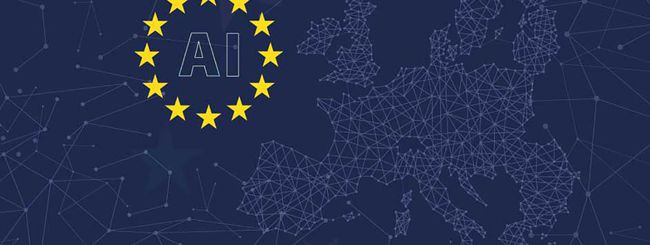
L’UE pronta a porre dei limiti all’uso indiscriminato dell’IA
L’Unione Europea vuole porre dei limiti all’uso dell’intelligenza artificiale nel Vecchio Continente. E’ quanto emerge dalla bozza della nuova proposta di legge che la Commissione europea presenterà la prossima settimana, trapelata nelle scorse ore. Il regolamento sulla IA mira a vietare i sistemi ad alto rischio per la sorveglianza di massa, salvo alcune eccezioni correlate alla tecnologia del riconoscimento facciale per la lotta contro il terrorismo e la tutela della sicurezza pubblica.
Our commitment to COVID-19 vaccine equity
Read this post in Spanish. // Blog en español aquí.
As more people have access to the COVID-19 vaccine, we’re making it easier to learn why, when and where you can get immunized. Today, you can now find vaccination locations on Google Maps and Search in the U.S., Canada, France, Chile, India and Singapore.
Still, there’s a lot of work ahead to make sure everyone who wants to get vaccinated can. In the U.S., COVID-19 has disproportionately impacted Black and Latino populations, yet these groups have lower rates of vaccinations. Vaccines may be harder for people to access based on factors like where they live, how far they have to drive to a vaccination site, and if they have reliable internet access to book an appointment. And globally, it could be years before some countries even have enough vaccines.
Overcoming the pandemic will require a coordinated effort on a global scale. To do our part, today we’re announcing that we’re providing 250,000 COVID-19 vaccinations to countries in need, helping fund pop-up vaccine sites in the U.S., and committing an additional $250 million in Ad Grants to connect people to accurate vaccine information.
Securing vaccines for people around the world
Today, Gavi, The Vaccine Alliance, launched a drive for additional funding to secure vaccines for low and middle-income countries. Google.org is funding vaccinations for 250,000 people and providing Gavi with pro bono technical assistance to accelerate global distribution. We’re also kicking off an employee giving campaign, and both the Gavi Matching Fund and Google.org will match each donation to triple the impact.
Since February, we’ve been providing vaccine-related insights to help Gavi better educate communities about the COVID-19 vaccine. They’ve used that information to create educational content that reaches more than half a million people each day. We’re now committing $15 million in Ad Grants to help Gavi build on these efforts and amplify their fundraising campaign.
Funding pop-up vaccine sites and making it easier to book appointments
Nearly a quarter of people in the U.S. are now vaccinated. Yet we know that vaccination rates vary by geography and community. Reaching everyone will require partnerships with community-based organizations and local health centers that have on-the-ground expertise and the trust of the people they serve.
Google.org is providing $2.5 million in grant funding to Partners in Health, Stop the Spread and Team Rubicon, who are working directly with over 500 community-based organizations to serve Black, Latino and rural communities. This funding will go toward efforts like pop-up vaccination sites.
To make sure more people — especially those with limited internet access — can sign up for a vaccine,Google Cloud is launching an expanded virtual agent as part of itsIntelligent Vaccine Impact solution (IVIs). People will be able to schedule vaccine appointments and ask common questions through a virtual agent, in up to 28 languages and dialects, via chat, text, web, mobile or over the phone.
Committing $250 million to connect communities to trusted vaccine information
Since the beginning of the pandemic, hundreds of Google employees have helped organizations connect people with up-to-date information — particularly in communities that are not typically reached by mainstream public service announcements.
For example, we’re working with UnidosUS on a bilingual vaccination campaign that to date has reached more than two million people in hard-hit communities in Miami, Chicago, Houston, New York City and Los Angeles. We’ve conducted research with the World Health Organization (WHO) on what information improves vaccine confidence, and governments worldwide are using these insights to inform their public service announcements.
To expand this work, we’re committing an additional $250 million in Ad Grants to governments, community and public health organizations, including the WHO, that will fund more than 2.5 billion vaccine-related PSAs. This brings our total commitment for COVID-related public service announcements to more than $800 million.
As we’ve learned throughout the pandemic, no one is safe from COVID-19 until everyone is safe. Getting vaccines to everyone around the world is a challenging, but necessary, undertaking. We’ll keep doing our part and working together until we get there.
Tune in to YouTube on May 8 at 5 p.m. PST / 8 p.m. EST for Vax Live: The Concert to Reunite the World, a fundraising campaign to vaccinate health workers working on the frontlines of the pandemic.
Nuestro compromiso con la equidad de la vacuna COVID-19
Read this post in English. // Blog en inglés aquí.
A medida que más personas tienen acceso a la vacuna contra el COVID-19, estamos haciendo más fácil aprender por qué, cuándo y dónde pueden vacunarse. Hoy en día, puedes encontrar ubicaciones de vacunación en Google Maps y en búsquedas de Google en los Estados Unidos, Canadá, Francia, Chile, India y Singapur.
Aún así, queda mucho trabajo por delante para asegurarnos de que todos los que quieran vacunarse puedan hacerlo. En los Estados Unidos, COVID-19 ha afectado de manera desproporcionada a las poblaciones Afroamericanas y Latinas, aun así estos grupos tienen índices más bajos de vacunación. Las vacunas pueden ser más difíciles de acceder para personas debido a factores como el lugar donde viven, la distancia que deben conducir hasta un lugar de vacunación y si tienen acceso confiable a Internet para reservar una cita. Y a nivel mundial, podrían pasar años antes de que algunos países incluso tengan suficientes vacunas.
Superar la pandemia requerirá un esfuerzo coordinado a escala mundial. Para hacer nuestra parte, hoy anunciamos que estamos proporcionando 250,000 vacunas contra el COVID-19 a países que las necesitan, ayudando a financiar sitios emergentes de vacunas en los Estados Unidos y comprometiendo $250 millones adicionales en Ad Grants para conectar a las personas con información precisa sobre la vacuna.
Asegurando vacunas para personas en todo el mundo
Hoy, Gavi, The Vaccine Alliance, lanzó una campaña para obtener fondos adicionales para asegurar vacunas para países de ingresos medianos y bajos. Google.org está financiando vacunas para 250,000 personas y proporcionando a Gavi asistencia técnica gratuita para acelerar la distribución mundial. También estamos iniciando una campaña de donaciones para empleados, y tanto Gavi Matching Fund como Google.org igualarán cada donación para triplicar el impacto.
Desde febrero, hemos estado proporcionando información relacionada con las vacunas para ayudar a Gavi a educar mejor a las comunidades sobre la vacuna contra el COVID-19. Han utilizado esa información para crear contenido educativo que llega a más de medio millón de personas cada día. Ahora estamos comprometiendo $15 millones en Ad Grants para ayudar a Gavi a aprovechar estos esfuerzos y ampliar su campaña de recaudación de fondos.
Financiando sitios temporales de vacunación y haciendo más fácil la reservación de citas
Casi una cuarta parte de las personas en los Estados Unidos ahora están vacunadas. Sin embargo, sabemos que los índices de vacunación varían según la geografía y la comunidad. Llegar a todos requerirá una asociación con organizaciones comunitarias y centros de salud locales que tengan experiencia en el terreno y la confianza de las personas a las que sirven.
Google.org está proporcionando $2.5 millones en subvenciones a Partners in Health, Stop the Spread y Team Rubicon, que están trabajando directamente con más de 500 organizaciones comunitarias para servir a las comunidades afroamericanas, latinas y rurales. Este financiamiento se destinará a esfuerzos, como sitios de vacunación emergentes.
Para asegurarse de que más personas, especialmente aquellas con acceso limitado a Internet, puedan inscribirse para recibir una vacuna,Google Cloud está lanzando un ampliado agente virtual como parte de suSolución de impacto de vacuna inteligente (IVI). Las personas podrán programar citas para vacunas y hacer preguntas comunes a través de un agente virtual, en hasta 28 idiomas y dialectos, a través de chat, texto, web, móvil o por teléfono.
Compromiso de $250 millones para conectar a las comunidades con información confiable sobre vacunas
Desde el comienzo de la pandemia, cientos de empleados de Google han ayudado a las organizaciones a conectar a las personas con información actualizada, especialmente en comunidades a las que no suelen llegar los anuncios de servicios públicos convencionales.
Por ejemplo, estamos trabajando con UnidosUS en una campaña de vacunación bilingüe que hasta la fecha ha llegado a más de dos millones de personas en las comunidades más afectadas en Miami, Chicago, Houston, Nueva York y Los Ángeles. Hemos realizado una investigación con la Organización Mundial de la Salud sobre qué información mejora la confianza en las vacunas, y los gobiernos de todo el mundo están utilizando estos conocimientos para informar sus anuncios de servicio público.
Para expandir este trabajo, estamos comprometiendo $250 millones adicionales en Ad Grants a gobiernos, organizaciones comunitarias y de salud pública, incluida la OMS, que financiarán más de 2,500 millones de anuncios de servicio público relacionados con vacunas. Esto eleva nuestro compromiso total para los anuncios de servicio público relacionados con COVID a más de $800 millones.
Como hemos aprendido durante la pandemia, nadie está a salvo del COVID-19 hasta que todos estén a salvo. Llevar las vacunas a todo el mundo es un reto desafiante, pero necesario. Seguiremos haciendo nuestra parte y trabajando juntos hasta que lleguemos a lograrlo.
Sintoniza YouTube el 8 de mayo a las 5 p.m. PST / 8 p.m. EST para ver Vax Live: The Concert to Reunite the World, una campaña de recaudación de fondos para vacunar a los trabajadores de la salud que prestan servicios en la primera línea de la pandemia.

I chip scarseggeranno anche nel 2022? TSMC mette le mani avanti
La penuria di chip che si è iniziata a verificare lo scorso anno all’inizio della pandemia da COVID-19 è destinata a proseguire anche per tutto il 2022, con conseguenze tutt’altro che positive per le grandi aziende tech che producono dispositivi dotati di processori, da Apple a Qualcomm, passando per AMD e, a catena, migliaia di altre aziende, non ultime quelle che producono console e che da mesi stanno facendo i conti con una produzione rallentata.

Instagram, maggior controllo sul numero dei like
Instagram ha intenzione di testare una soluzione per dare alle persone un maggiore controllo sul counter dei like. La società ha annunciato un “piccolo test globale” che presenterà agli utenti tre opzioni: scegliere di non vedere il conteggio sui post di nessuno, disattivarli per i propri post soltanto o mantenere l’esperienza originale, che mostra il numero dei “mi piace” sotto tutti i contenuti caricati sul sito. L’azienda ha anche detto di essere al lavoro su un’esperienza simile per Facebook, ma non ha fornito dettagli su come potrebbe essere.
JYSK boosts frontline teams with Android Enterprise
Editor’s note: Flemming Thøgersen is Team Manager and Stinus Stoumann Hoeks is Senior IT Consultant of IT Client Infrastructure for JYSK, an international retailer based in Denmark.
JYSK is an international home retailer with Scandinavian roots, and our mission is to make it easy to furnish every room in any home. With more than 3,000 stores in 51 countries and a strong online presence, JYSK always has great selections and service, no matter how customers want to shop.
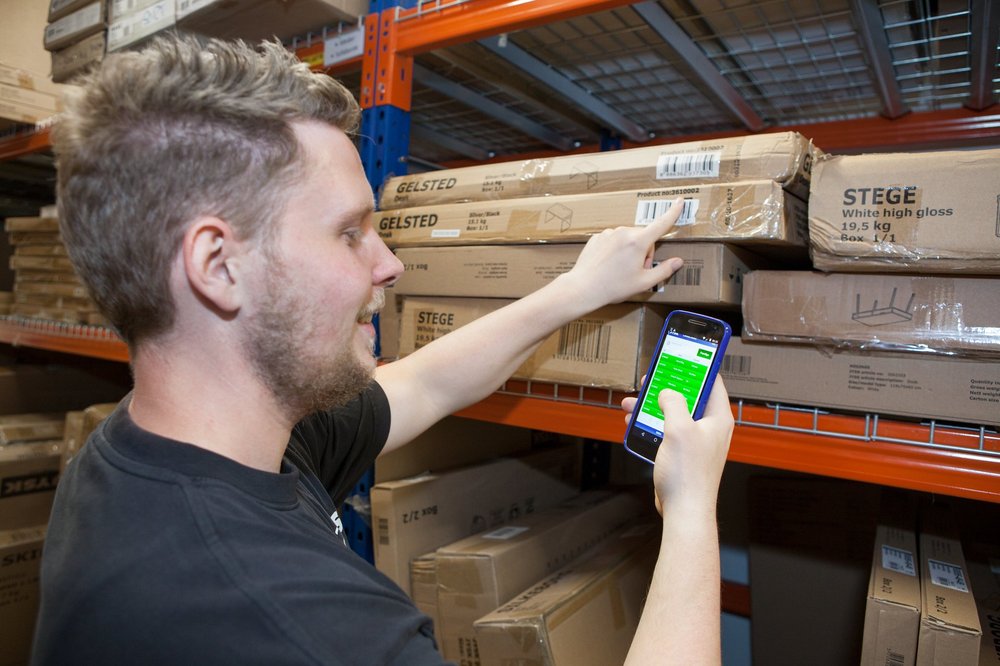
Android Enterprise has been key to sustaining our retail operations during the COVID-19 pandemic and giving our frontline retail workers more powerful digital tools. Our store colleagues use smartphones to enhance the in-store customer experience through quickly fulfilling click-to-collect orders and answering customer questions with ready access to our digital services. We’re also using dedicated Android tablets to gather customer feedback for continually improving our support.
Enhancing the in-store experience
Android smartphones are central to our digital retail strategy, with a deployment of over 10,000 devices across our stores. They’re essential for keeping our retail store electronic shelf labels updated with the latest product information. These digital displays on our product shelves show the item price, description and other helpful information for our customers. We use our Android devices to link each electronic shelf label to its merchandise with an NFC tag.
With mobility being so critical to a consistent digital initiative, we place high value on the enrollment and management experience. Device setup through Android Enterprise is simple and streamlined with zero-touch enrollment — this enabled our IT team to quickly enroll devices and apply the key configurations at scale. It’s a streamlined process and reduces the complexities and potential errors that can occur with manual device setup.
Our IT admins use managed Google Play for enterprise app distribution, which has been invaluable for ensuring our teams have the internal communication, productivity and inventory apps available on their Android devices. Employees access JYSK inventory systems on their Android smartphones to answer in-store customer questions about the merchandise. They are able to check for the availability of JYSK products on our web store, looking up pricing information and giving the customers the answers they need right away. The devices are also essential for staying in touch with colleagues in store and across the company, and connecting to other essential JYSK internal services.

Hometalk builds a DIY home improvement community
What better place than a website to bring together people, projects and professionals? That’s what Miriam Illions thought when she co-foundedHometalk in 2011. When the site went live, she waited for the homeowner–contractor matchups to begin. Then, something interesting happened.
“DIYers flocked to the platform and started sharing their own ideas,” Miriam recalls. Over the course of about 18 months, she notes, “We saw this incredible uptick in people who were interested — not in hiring somebody to do things for them — but in doing it themselves.”
LinkedIN aiuta i genitori in smart working
La pandemia che attanaglia il mondo ormai da oltre un anno, hanno reso lo smart working una pratica assai diffusa. In tanti stanno proseguendo le proprie mansioni a distanza direttamente da casa, una soluzione che consente a molti genitori anche di occuparsi dei figli, spesso in didattica a distanza. Proprio l’incertezza relativa alle scuole, con gli istituti che vengono chiusi e riaperti senza soluzione di continuità, stanno costringendo molti genitori a prolungare i periodi di smart working, anche se le aziende magari sono tornate a regime.

La nuova Serie A 5G di OPPO arriva in Italia
Il 5G in Italia è sempre più economico e questo anche grazie ad OPPO. Dopo aver tirato fuori dalla manica un tris di assi come la serie di smartphone FIND X3, il colosso cinese ha lanciato oggi nel nostro Paese i nuovi smartphone della famiglia Serie A, la lineup middle level del brand, che include tre modelli: OPPO A94 5G, OPPO A74 5G e OPPO A54 5G.
Brave New World: The Model for B2B Marketing Success, Post-Pandemic
“The new normal.”
I believe that’s what we would call the opposite of a compelling lede. Nobody wants to hear that phrase anymore, I know it. While that may be the case, it’s an unavoidable truth that our world does, and will, look different in many ways following a globally disruptive pandemic.
Savvy business and marketing leaders are already planning proactively for what lies ahead. They’re assessing what’s changed in the past year, analyzing trends and indicators, and optimizing their strategies to thrive within an altered economic and social environment.
We’re here to help. Read on for research and recommendations that will help you equip your B2B organization for maximum success going forward.
5 Keys to Success in a Brave New World of B2B Marketing
If the last year has taught us anything, it is to expect the unexpected. But that doesn’t mean marketers can’t plan intelligently. While we may still be in a period of flux, the reshaped business environment is coming into focus.
Core fundamentals remain the same: Build awareness, build trust, build loyalty. Be the best answer. Deliver customer experiences that differentiate.
The way we go about accomplishing these things, however, will not be the same. Here are a few key areas I recommend prioritizing and aiming to optimize.
1 — Rethink Marketing Events and Experiences
In-person events will gradually return in some capacity, but even if you value the networking and promotional opportunities these occasions provide, the smart move is not to wait.
Rethink how you deliver experiences, and double down on digital engagement. Collaborate and orchestrate with friendly parties in the same way as partnering organizations do in bringing physical events to life. Bring influencers to your audiences in new ways, turning them into your keynote speakers.
With hybrid workplaces likely to be a permanent reality, much attention is being paid to creating equity and shared experiences for employees both remote and on-site. We should be thinking about audiences and business prospects under this same paradigm, because traveling for meetings or industry events will be substantially less common for a long while – if not forever.
2 — Focus on Doing a Few Things Extremely Well
No business has limitless resources. Spreading your chips too thinly will lead to sub par returns across the board. Instead, decide where you want to truly excel, and channel your full energy into it.
Recently our Joshua Nite wrote about how to create a podcast that rises above the noise. He rightfully points out that, while there is an enormous appetite for the format, there is also a staggering abundance of options. The stakes are high for breaking through.
Joshua’s recommended set of steps is not overly complicated, but does require real investment – of time, budget, and creativity. At TopRank Marketing, we’ve seen our clients and plenty of other B2B brands achieve stellar results through podcasting, but it takes an aligned vision and full buy-in.
The same goes for influencer marketing, building communities, shooting video/live-streams, or creating any content resource for your audience.
If you’re not going to do it right, why bother?
3 — Executive Thought Leadership: The Face of the Franchise
In sports, the “face of the franchise” refers to a superstar player, broadly associated with their team by fans at large. They sell jerseys and tickets. Marketers for these teams wisely play up these magnetic attractions in promo materials.
I’m not saying your CEO is Mike Trout. But company leaders get to where they’re at for a reason, and many brands can benefit from elevating these respected executive voices.
Executive thought leadership is a fast-rising strategic emphasis, and with good reason. According to LinkedIn*:
- 86% of people say they expect CEOs to publicly speak out about societal challenges
- 56% of professionals say a business executive’s presence on social media positively influences their purchase decision?
- 66% say they would be more likely to recommend a company or brand if they followed a company executive on social media
We’ve said it before, we’ll say it again: people do business with other people, not with brand logos. When executives are active and outspoken with their perspectives and industry commentary, it helps put a human face behind the company’s values and expertise. This mattered to customers before the pandemic, and it will surely matter even more in the aftermath.
“The pandemic has forced everyone to rethink how they do business, from doctors to data centers,” Ken Brown, Director of Corporate Communications at Nvidia, told VentureBeat. “After a year of fear and uncertainty, people will look to those who clearly understand how technology can fuel the recovery and deliver exciting new capabilities. Thought leadership is all the more important during these transitional times, to show the way forward.”
Our CEO and co-founder Lee Odden shared his insights on the why and how of effective thought leadership on a recent episode of LinkedIn’s Live with Marketers, and also compiled a list of 20 ways to build executive credibility and thought leadership here on the blog.
4 — Bring More Context to Your Content Marketing
People have grown progressively less and less patient with sales and marketing messages that don’t speak to them directly, or don’t pertain to their situations. Now, after enduring an endless barrage of “unprecedented times” jargon, the need to break through with a clear, meaningful, relevant message is more vital than ever.
Leadspace recently provided a primer on contextual marketing on their blog, where Jim Hopkins describes the approach as “taking segmentation and personalization and putting it on steroids.” It’s a shift from pitching products and services —even in a personalized way — to solving very specific problems for different segments of your audience. Making this practical requires sophisticated analysis and application of customer data, as well as a strategic commitment to quality-over-quantity when it comes to reaching business prospects. (Much like when it comes to marketing tactics, via tip #2.)
Not every business needs to adopt a full-on ABM strategy, but it’s getting harder and harder to succeed in B2B through broad, blanket messaging.
5 — Empower Marketing as the Central Driver of Growth
In March, Janet Balis published a great article at Harvard Business Review highlighting 10 truths about marketing after the pandemic. They’re all insightful and on-point (and several support the recommendations above), but this final one strikes me most:
Old truth: Marketing is important for growth.
New truth: Marketing is at the center of the growth agenda for the full C-suite.
“Covid-19 has created a leadership culture of immediate collaboration focused on the urgent need for resilience,” Balis writes. “Marketing now has the opportunity to seize an ongoing central role in that dialogue, thereby driving the organization’s broader growth and innovation agenda.”
Don’t let this opportunity slip away. Now is the time for marketing to take the lead and drive the business forward on a foundation of strong customer intel and a central emphasis on customer experiences.
If you’re eager to put your own marketing growth and innovation agenda into action, and looking for some help taking things to the next level, we can help. Reach out to TopRank Marketing and let’s chat.
* Disclosure: LinkedIn Marketing Solutions is a TopRank Marketing client
The post Brave New World: The Model for B2B Marketing Success, Post-Pandemic appeared first on B2B Marketing Blog – TopRank®.

Gli album su Spotify si scaricano anche da desktop
L’ultimo aggiornamento dell’app ufficiale di Spotify per desktop è in fase di rollout e tra le novità che gli utenti apprezzeranno di sicuro ci sarà la possibilità di scaricare interi album musicali e ascoltarli anche in assenza di connessione internet, ovunque ci si trovi.

Come riscattare un mese gratis su DAZN
Il blackout di domenica scorsa che ha colpito la piattaforma DAZN proprio mentre erano in corso le partite di Serie A Inter-Cagliari e Verona-Lazio è ancora ben stampato nelle menti dei tifosi, soprattutto alla luce del fatto che la piattaforma di streaming prenderà il posto di Sky come principale broadcaster del campionato italiano fino al 2024.

Il tempo vola con Timelapse in Google Earth
 |
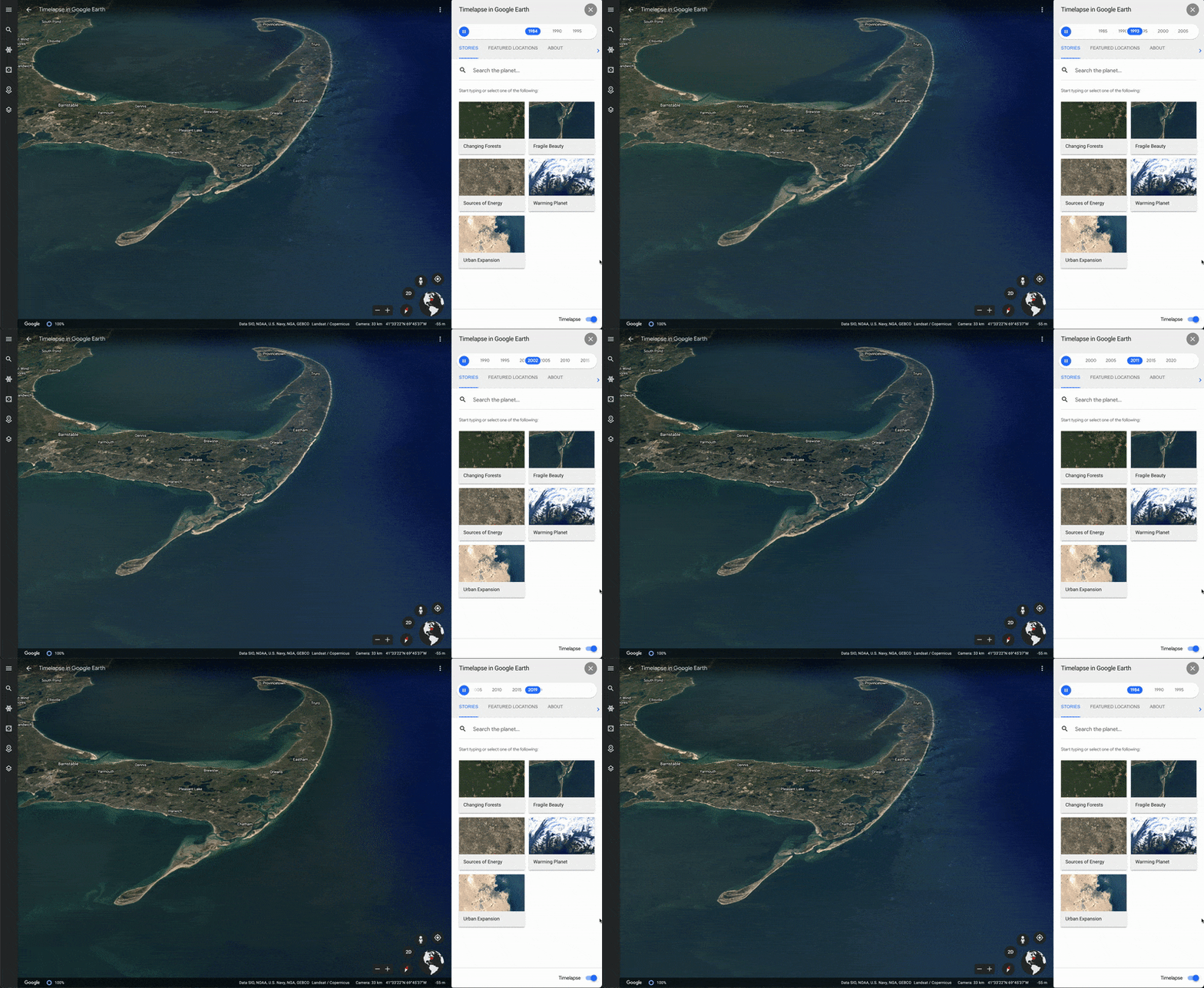
| Abbiamo analizzato 20 milioni di immagini satellitari dal 1984 al 2020, identificato e rimosso artefatti nelle immagini. Abbiamo quindi calcolato un unico pixel rappresentativo per ogni posizione del pianeta, 37 volte di più, per produrre la nostra esperienza Timelapse su tutto il mondo, priva di nuvole. |
Come userete Timelapse?
Timelapse per il prossimo decennio
3 ways Liza Goldberg uses Timelapse to explore the planet
Liza Goldberg has a big-picture view of climate change — and it all started with satellite imagery. In high school she started an internship at NASA, where she built a program that used satellite imagery and Google Earth Engine, a platform for geospatial analysis, to monitor the loss of mangrove forests. This gave her a whole new perspective of planetary changes.
“I was seeing the world through a different lens,” Liza says. “Without images, it’s hard to visualize what things like urbanization, deforestation, wildfires and rise in temperatures mean to our planet — just using statistics and data doesn’t get the message across. I wanted to bring a new perspective to others.” Liza is now a freshman at Stanford University and runs Cloud to Classroom, a program that uses satellite imagery to help teach students around the world about climate change.
Today, that birds-eye view of the planet is available to even more people with the launch of Timelapse in Google Earth. For the first time, 24 million satellite photos from the past 37 years have been embedded directly into Google Earth, creating an explorable view of our planet over time. Now anyone can watch time across the globe. And that perspective can be enough to inspire anyone to take action — just like it inspired Liza.
“If we want to solve climate challenges, the bottom line is we need to take this information out of scientific papers and put it into the hands of the public so they can make positive change in their local areas,” Liza adds.
As someone who has spent a lot of time looking at satellite imagery of the Earth, Liza has a few pointers for how to explore the planet with Timelapse and put these changes into context. She shares some of her tips here:
Zoom in on your community
If you’re a teacher, reporter, student or just someone exploring Timelapse, start looking at the places you care about. Use the search bar function to zero in on a region you know really well — whether it’s the city you grew up in, the place your grandparents are from or where you spent your summers growing up. Seeing the changes at a more personal level contextualizes what global environmental change actually means right now and what it could mean in the future of your local community.
Time flies in Google Earth’s biggest update in years
For the past 15 years, billions of people have turned to Google Earth to explore our planet from endless vantage points. You might have peeked at Mount Everest or flown through your hometown. Since launching Google Earth, we’ve focused on creating a 3D replica of the world that reflects our planet in magnificent detail with features that both entertain and empower everyone to create positive change.
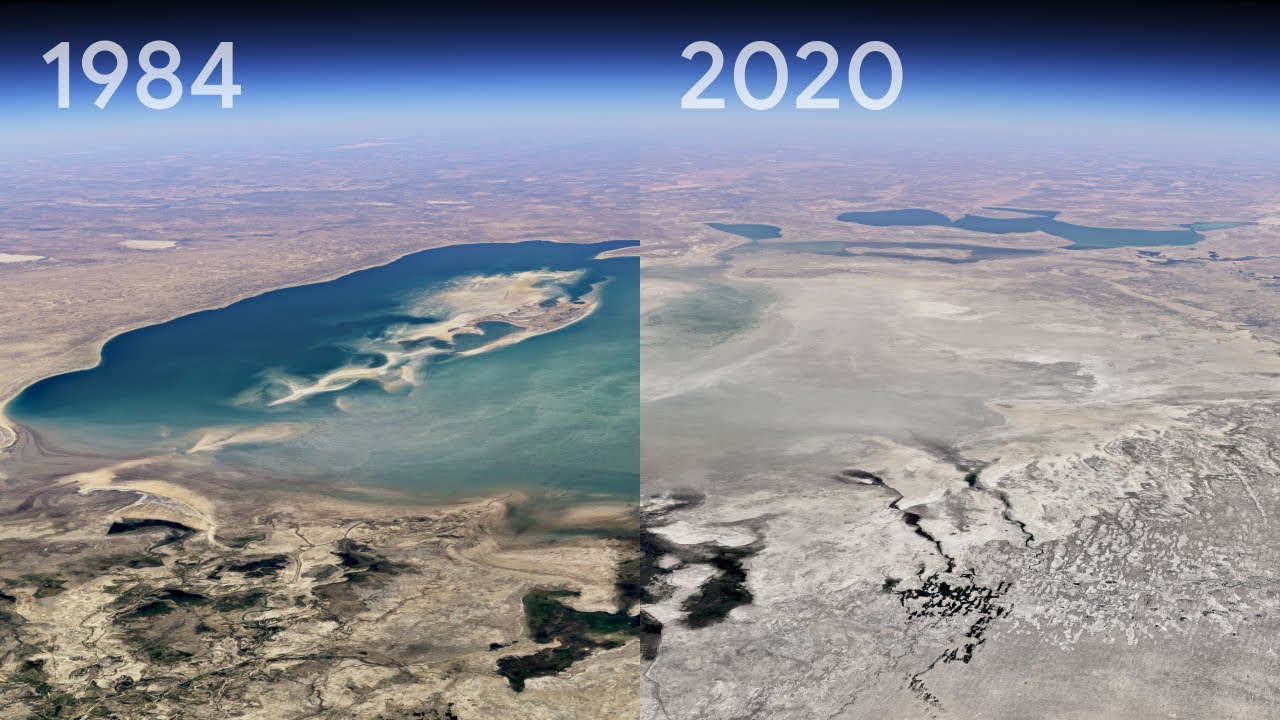
In the biggest update to Google Earth since 2017, you can now see our planet in an entirely new dimension — time. With Timelapse in Google Earth, 24 million satellite photos from the past 37 years have been compiled into an interactive 4D experience. Now anyone can watch time unfold and witness nearly four decades of planetary change.
Our planet has seen rapid environmental change in the past half-century — more than any other point in human history. Many of us have experienced these changes in our own communities; I myself was among the thousands of Californians evacuated from their homes during the state’s wildfires last year. For other people, the effects of climate change feel abstract and far away, like melting ice caps and receding glaciers. With Timelapse in Google Earth, we have a clearer picture of our changing planet right at our fingertips — one that shows not just problems but also solutions, as well as mesmerizingly beautiful natural phenomena that unfold over decades.
To explore Timelapse in Google Earth, go to g.co/Timelapse — you can use the handy search bar to choose any place on the planet where you want to see time in motion.
Or open Google Earth and click on the ship’s wheel to find Timelapse in our storytelling platform, Voyager, to see interactive guided tours. We’ve also uploaded more than 800 Timelapse videos in both 2D and 3D for public use at g.co/TimelapseVideos. You can select any video you want as a ready-to-use MP4 video or sit back and watch the videos on YouTube. From governments and researchers to publishers, teachers and advocates, we’re excited to see how people will use Timelapse in Google Earth to shine a light on our planet.
Understand the causes of Earth’s change
We worked with experts at Carnegie Mellon University’s CREATE Lab to create the technology behind Timelapse, and we worked with them again to make sense of what we were seeing.
As we looked at what was happening, five themes emerged: forest change, urban growth, warming temperatures, sources of energy, and our world’s fragile beauty. Google Earth takes you on a guided tour of each topic to better understand them.
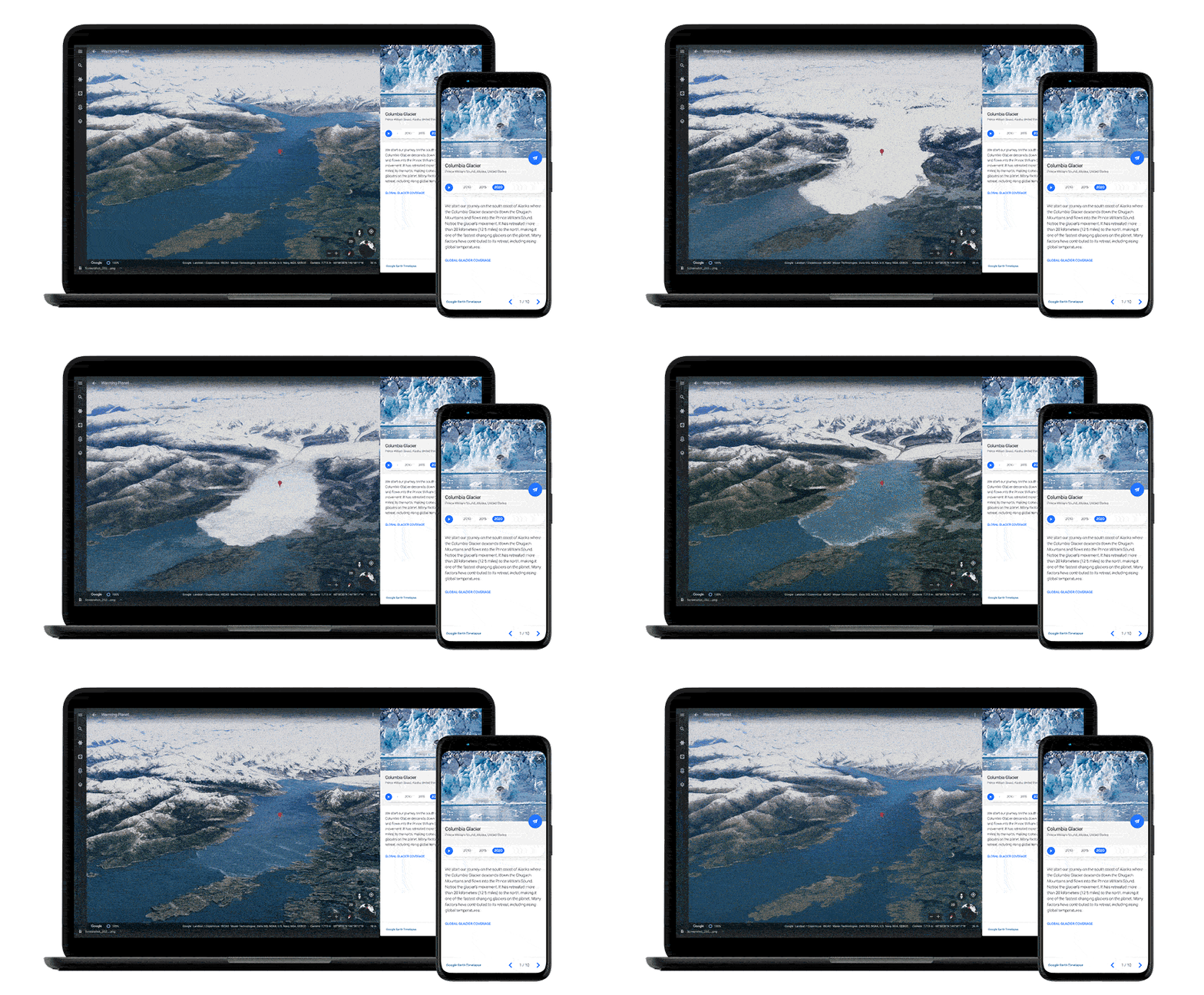
Timelapse in Google Earth shows the rapid change on our planet in context through five thematic stories. For example, the retreat of the Columbia Glacier in Alaska is captured in the “Warming Planet” tour.
Putting time on Earth in the palm of our hand
Making a planet-sized timelapse video required a significant amount of what we call “pixel crunching” in Earth Engine, Google’s cloud platform for geospatial analysis. To add animated Timelapse imagery to Google Earth, we gathered more than 24 million satellite images from 1984 to 2020, representing quadrillions of pixels. It took more than two million processing hours across thousands of machines in Google Cloud to compile 20 petabytes of satellite imagery into a single 4.4 terapixel-sized video mosaic — that’s the equivalent of 530,000 videos in 4K resolution! And all this computing was done inside our carbon-neutral, 100% renewable energy-matched data centers, which are part of our commitments to help build a carbon-free future.
As far as we know, Timelapse in Google Earth is the largest video on the planet, of our planet. And creating it required out-of-this-world collaboration. This work was possible because of the U.S. government and European Union’s commitments to open and accessible data. Not to mention their herculean efforts to launch rockets, rovers, satellites and astronauts into space in the spirit of knowledge and exploration. Timelapse in Google Earth simply wouldn’t have been possible without NASA and the United States Geological Survey’s Landsat program, the world’s first (and longest-running) civilian Earth observation program, and the European Union’s Copernicusprogram with its Sentinel satellites.
What will you do with Timelapse?
We invite anyone to take Timelapse into their own hands and share it with others — whether you’re marveling at changing coastlines, following the growth of megacities, or tracking deforestation. Timelapse in Google Earth is about zooming out to assess the health and well-being of our only home, and is a tool that can educate and inspire action.
Visual evidence can cut to the core of the debate in a way that words cannot and communicate complex issues to everyone. Take, for example, the work of Liza Goldberg who plans to use Timelapse imagery to teach climate change. Or the 2020 award-winning documentary “Nature Now” that uses satellite imagery to show humanity’s growing footprint on the planet.
Timelapse for the next decade to come
In collaboration with our partners, we’ll update Google Earth annually with new Timelapse imagery throughout the next decade. We hope that this perspective of the planet will ground debates, encourage discovery and shift perspectives about some of our most pressing global issues.