
Our new animated series brings data centers to life
If you rely on the internet to search for the answer to a burning question, access work documents or stream your favorite TV show, you may have wondered how you can get the content you want so easily and quickly. You can thank a data center for that.
Which may make you wonder: What exactly is a data center, and what is its purpose?
Google’s Discovering Data Centers series of short animated videos has the answers. As host of this series, I invite you to join us and learn about these expansive, supercomputer-filled warehouses that we all rely on, yet may know little about.
Each video in this series helps peel back the layers on what makes data centers so fascinating: design, technology, operations and sustainability. There are times you click Start on Google Maps, edit a Google Doc or watch a YouTube video on how to fix something. By watching this series, you’ll better understand how Google’s data centers get you and billions of other users like you to that content quickly, securely and sustainably.
Discovering Data Centers will help you understand:
- How data centers play a critical role in organizing your and the world’s information.
- Data center design and how data centers are built to be sustainable.
- Our core principles, which show you can depend on us to be available 24/7.
As the second season of our series gets underway, upcoming topics include:
- How hundreds of machines at a data center store data.
- How our network allows data to travel through and between data centers within seconds.
- How encryption of data works to help secure every packet of data stored in our data centers.
To watch this series and see how data centers benefit you, visit our website. Check back monthly for new episodes where I’ll continue to reveal all the layers that make a data center hum.
Click through the images below to read episode descriptions and take a peek at the engineering marvels that are today’s data centers.

FIFA 22, rivelati i rating dei top player compresi Messi e CR7

WhatsApp, nuovi dettagli sulle chat effimere anche di gruppo

Netflix, serie TV e film in uscita tra il 13 e il 19 settembre
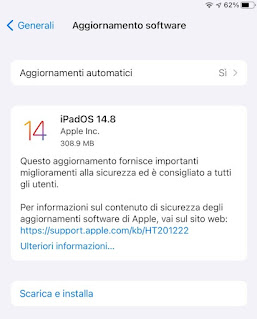
Aggiornate immediatamente i vostri dispositivi Apple: sono usciti aggiornamenti d’emergenza

Se avete un dispositivo Apple di qualunque genere (iPhone, iPad, Mac e Apple Watch), aggiornatelo subito. Apple ha rilasciato o sta rilasciando aggiornamenti d’emergenza per bloccare una vulnerabilità che consente di mettere a segno un attacco invisibile senza richiedere alcuna azione da parte della vittima.
L’attacco consente di attivare telecamere e microfono, registrare messaggi, SMS, mail e chiamate vocali (comprese quelle cifrate con app come Signal).
La versione 14.8 di iOS/iPadOS, la versione 11.6 di macOS, la versione 14.7 di tvOS e la versione 7.6.2 di watchOS risolvono il problema.
Apple ha informazioni sulla falla e sugli aggiornamenti a questi URL:
- https://support.apple.com/it-it/HT201222 (come scaricare gli aggiornamenti in generale)
- https://support.apple.com/it-it/HT212807 (iOS e iPadOS)
- https://support.apple.com/en-us/HT212804 (MacOS Big Sur)
- https://support.apple.com/en-us/HT212806 (watchOS)
La vulnerabilità, denominata CVE-2021-30860, è stata scoperta da Citizen Lab, riguarda iMessage e viene sfruttata per esempio per iniettare un malware, denominato Pegasus, che è stato sviluppato dalla società israeliana NSO Group ed è già stato usato per penetrare negli iPhone di vari attivisti politici in modo completamente invisibile.
Anche se non siete dissidenti o attivisti, il fatto che esista questa vulnerabilità è ora di dominio pubblico e quindi è presumibile che verrà sfruttata anche dalla criminalità informatica comune per attacchi su bersagli meno sensibili. In altre parole, per colpire anche utenti comuni.
L’attacco, spiega Citizen Lab, viene lanciato semplicemente mandando un SMS alla vittima. L’SMS contiene un allegato che ha l’estensione GIF ma è in realtà un PDF malformato. Questo PDF malformato causa un crash di IMTranscoderAgent sul dispositivo (dovuto a un integer overflow nella libreria CoreGraphics di rendering delle immagini), e il crash consente l’esecuzione di codice malevolo sul dispositivo attaccato.
Preparatevi a una certa attesa, perché tutti stanno scaricando gli aggiornamenti ed è prevedibile che i server di Apple siano leggermente sovraccarichi.
Fonti aggiuntive: TechCrunch, Ars Technica, New York Times.
Questo articolo vi arriva gratuitamente e senza pubblicità grazie alle donazioni dei lettori. Se vi è piaciuto, potete incoraggiarmi a scrivere ancora facendo una donazione anche voi, tramite Paypal (paypal.me/disinformatico) o altri metodi.
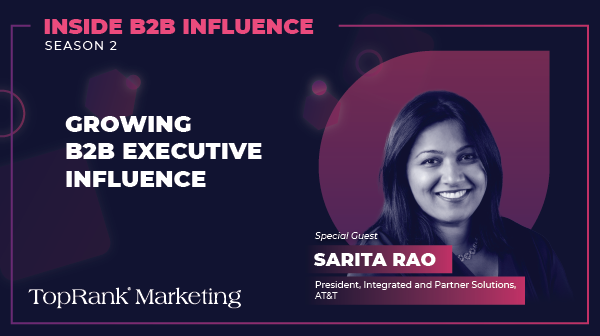
Inside B2B Influence: Sarita Rao of AT&T on Growing B2B Executive Influence with Social Media
Inside B2B Influence is a podcast and video series that goes behind the scenes of B2B marketing and highlights insights with top business executives on marketing for B2B companies. We’re doing our best here at TopRank Marketing Blog to elevate the practice of growing influence within and outside of B2B brands to drive thought leadership, create demand and grow revenue.
Episode 16 of Inside B2B Influence features a discussion with Sarita Rao (@saritasayso), who is President, Integrated and Partner Solutions at AT&T. Sarita contributed her expertise to the State of B2B Influencer Marketing Report last year and I have been following her closely (and learning) on LinkedIn and Twitter ever since.
For any senior executive wondering about how they might best use social networks to better connect with their staff and company employees, customers, prospects and the industry at large, Sarita is a great example of what you should do.
While the brand she works for and the level of seniority she’s achieved impart a certain level of general business influence, Sarita earns even more influence about the topics she cares about most on a daily basis. She’s a living example of how to build thought leadership and influence around the things she’s passionate about and engages on through social content.
To learn more about how a senior executive at a Fortune 11 company is able to be so effective on social channels, I invited Sarita to the Inside B2B Influence show. We talked about a range of topics from the value senior executives bring to their teams, customers and the business when they are active on social channels to smart advice for up and coming women business leaders.
Highlights of this episode of Inside B2B Influence with Sarita include:
- What prepared Sarita best for her current leadership role
- How social media engagement has impacted her career
- Advice for B2B executives on becoming more social online
- Advice for women who aspire to senior business leadership roles
- Insights into collaboration tools and technology for interacting with current and prospective customers
- Tips on making connections with employees more human
- How Sarita is helping to redefine customer experience at AT&T
- An example of what real human conversation and interaction looks like in today’s business world
- The importance for today’s modern sales or marketing leaders to be active on social channels
You can listen to episode 16 (How B2B Executives Can Grow Influence with Social Media) of the Inside B2B Influence podcast here:
Watch the full video of my interview with Sarita here:
Transcript – Inside B2B Influence Episode 15: Optimizing B2B Marketing with Influence
You have had an incredible career at AT&T. What in particular prepared you most for your current role as President, Integrated and Partner Solutions?
Sarita: You know honestly, I think it’s that I love this job. It’s like accumulation of all the things I’ve done. So I’ve been with AT&T gosh, 30 years. Thank you for not mentioning that, I just did though. But I’ve been with the company for over 30 years and I’ve had everything from sales to program management to marketing. And if I think of my last job in marketing, it really taught me about taking the complexity out of what we do in a technology environment. It can be rather complex.
I think things are complex when we make them complicated. There are simple ways to approach just about everything. @saritasayso
My team has both direct and indirect sales and we take some of our more value added services and really help our customers get through the complexity of network transformation. So I will tell you it’s a collection of everything. It’s taught me the importance of taking something big and making it something understandable. And I think that’s as important whether you’re doing it in marketing or whether you’re doing it in sales. I’d really say that in this job, where I actually helped launch the wholesale business so I also have that segment, feels like I’m coming home to a good group of corporate citizens and we have the opportunity to move the needle. So, it’s really a collection of multiple things.
You are pretty active on social networks like LinkedIn and you’ve become a business influencer with thousands of followers. Do you feel being publicly active on social networks and in the industry played any part in your career advancement either in terms of visibility, networking or knowledge?
Sarita: Right. I appreciate the compliment, I’m not sure about the influencer part. I do social for a couple of different reasons: One, it’s to connect my team, right? Across my career AT&T whether we’re on a direct team together now, or part of the larger AT&T ecosystem, staying connected is really important to me. I think that helps in many different ways.
I would tell you consistency for social media is important, but if I think of what I do today, since I have both indirect and direct sales, it’s a great way to connect with my customer base as well, for them to see what we’re up to. So I see multiple advantages of social.
Social Media is great way to amplify the work that your team is doing and frankly, our next generation of leaders. @saritasayso
During this pandemic, I will tell you, I used Twitter more to stay connected with the team because we were also remote from one another. I kind of joke that we weren’t socially distant, we’re physically distant. I found things like Twitter as a quick way to connect with the team, because you didn’t have those hallway conversations anymore and so forth. So I probably upped my game a little bit in social for Twitter, but each one of the platforms is, you know better than anyone, has a different purpose and a different reason.
While the number of business leaders active on social channels has grown, not everyone is comfortable with “being out there”. What advice can you share for business and sales executives who want to be more active on social networks?
Sarita: First I think you have to have the innate desire, right? Because then you’re going to be consistent and you’re going to speak with passion about things that you’re interested in. I don’t think you can be on social and be robotic about it. It has to be the authentic you. But you also need to remember each of these platforms is meant for something else.
I don’t do Facebook. Facebook is very personal, right? I don’t do business content on Facebook. Do I stay in touch with some friends via Facebook? Yes.
LinkedIn is a different experience, Twitter is different and so forth. So there are different ways that I think, as a leader or in that business world, you’ve got to think about what you want to be and how you want to be out there on social.
And then for me, there’s a couple of different ways that you can build your brand because that’s effectively what you’re doing on social media. First and foremost: personal and professional, they go hand in hand. It can be difficult to separate your personal life from your professional life, but make sure the content that you’re putting up there represents your best self. Again, I go back to, remember what the platform is for, I think that’s important.
You have to speak to be heard. @saritasayso #executiveinfluence
You have to speak to be heard, right? Ultimately, social media is going to give you a platform to share your ideas and connect with others.
It’s also a fantastic way to get a temperature, right? Some of the surveys that you can do of what folks are thinking outside of your world, especially in an environment where we’ve all been a little secluded from each other. I like using some of the different social polls and so forth as we’re thinking about, “how do you get back to work?” It’s a nice way to reinforce some of the thinking.
It’s important to always be yourself, to be authentic and not be robotic. @saritasayso #executiveinfluence
It’s important to always be yourself, to be authentic and not be robotic. I think that’s really important. Determine the right platforms. What’s the one you’re most comfortable with? What you can do on Twitter is very different than what you can do on LinkedIn. Make sure you’re investing in the platforms that can get the message that you want, put out there.
I love the use of hashtags, but let’s make sure they’re relevant. Let’s just not use hashtags and emojis for the sake of using hashtags and emojis, but make sure they’re really relevant. The reason why you’re using a hashtag is to connect in that conversation. It’s not just to put a hashtag out there. So let’s make sure you’re using the right hashtag.
They say content is king, but context is just as important. @saritasayso #executiveinfluence
They say content is king, but context is just as important. There’s a ton of content out there, but not all of it’s being consumed. So make sure you’re in the right context as well. I think those are some of the things that I would suggest folks look at. One of the things I had the good fortune to learn as I was starting my social journey was that social media is really a combination of art and science. So success really depends on the commitment you want to put towards it. But whatever commitments you’ve put towards it, make sure you’re consistent about it. That’s some of the advice that I’d have.
According to data reported by LinkedIn, 60% of marketing professionals are women as are 52% of CMOs. As a successful woman with a background in sales and marketing leadership, what advice can you share with other women in business who aspire to your level of success?
Sarita: Great numbers, by the way, I did not know those. It’s great progress and yes, there’s always room for more growth, but that’s a fantastic direction. It’s been really exciting seeing in social media, a lot of the changes and movement of some really strong marketing leaders, so that that’s been exciting.
I think from an advice perspective, first and foremost, I would say think broadly. Don’t limit your thinking. Think broadly, ask those questions. Which, to me, is really having that element of never ending curiosity.
Curiosity is just so important. Because you just never know what you’re going to uncover and when you ask those questions. @saritasayso #executiveinfluence
I loved going into marketing. I have an accounting degree by the way. So I remember when they asked me if I would look at marketing, I’m like, I have an accounting degree. And what that opened myself up to is that I always had to ask questions because I didn’t know the answer. And even when I know the answer, or I think I know the answer, I learned even more. So to me, curiosity is just so important. Because you just never know what you’re going to uncover and when you ask those questions, it allows folks to think about that answer. And sometimes they’re learning something in that too. There’s a great conversation always to be had there.
And then be agile. People think of agile as a process word. To me, being agile is the fact that you’re constantly ready to move, make quick and easy movements. It doesn’t have to be these huge, massive shifts. Sometimes we wait to make these big, massive shifts. Sometimes it’s just tweaks and adjustments along the way.
It is really is about thinking broadly, having that never ending curiosity and then being agile. I think those are the three pointers I would give, not just in the marketing world, but, in a career overall.
As we start to emerge from COVID, what unique tools or initiatives are you using to interact with current and prospective customers?
Sarita: All of them, right? Everything from what we’re on right now, whether it be Zoom or WebEx or Microsoft Teams, pick the one that you feel the most comfortable for those engagements.
I will tell you with those conversations, because I don’t have to get on a plane and pack my luggage, unpack my luggage, do all that other fun stuff. I can actually see more customers now, which is fantastic. I just picked up a global team, they’re in 26 different countries and I got to meet them all sooner, versus getting on a plane to go see all of them. We found different creative things to go do.
Even with our customers we do this. We have an advisory council and when we meet with our customers, we’re in meeting all day and they’re giving us insights and we’re showing them what we’re about to go look at. They’re giving us their feedback so we can kind of shape our product portfolio with their insights. But in the evenings, we’re still doing the social hour, right? Something we would have done when we were all in person. There’s something very rewarding about that.
We had a celebrity chef do a client dinner. About 20 clients were on this. And we got invited into their homes. That wouldn’t have happened before. So we got invited into their homes and they brought their family on the journey with them, which again, we wouldn’t have had that opportunity before.
So yes, trust me, I miss and crave face-to-face meetings. During this little bit of a break we had right before the Delta variant, we were back in our briefing center and it was absolutely exciting to go meet with one of our partners. We were face-to-face and we took the photos and did that stuff. And we advanced a lot of our conversations. So, it was a different conversation than some of the other experiences, but I will tell you, they both have their charm to them.
I see it as an exciting opportunity from a hybrid work perspective. I think customers are far more open. They’re not waiting for us to get on a plane to visit with them. And I think the team as well. @saritasayso
So, I see it as an exciting opportunity from a hybrid work perspective. I think customers are far more open. They’re not waiting for us to get on a plane to visit with them. And I think the team as well. Think about everything our teams have gone through, each of us as humans has gone through, many people homeschooling their children. To know that we could build an environment where they could still do that and still be very present at work and be really comfortable…I mean, if a dog was barking in one of our backgrounds right now, we wouldn’t say cut video, right and start again? This is us, right? And I think there’s something very charming about that.
All relationships have an emotional component whether they’re with industry experts or your own teams. For many, those relationships are happening through online meetings. How are you and your teams making digital more human?
Sarita: Absolutely. I have done a cheese tasting at 5:30 in the morning because that worked well in Asia. Right. It was a great way to bond with the team. Cheese at 5:30 in the morning not so much. If you think about it, during the first couple of months of the pandemic we all built our home office space and tried to find the place we could all be at home. We upgraded our cameras, we figured out the microphones, we hung guitars and ukuleles in the background. We started personalizing the space, right?
There’s this great Twitter handle called room rater (@ratemyskyperoom) where they rate the rooms and so forth. I think we all became conscious of that. I think one of the best selling books on Amazon during the first month of the pandemic was, I don’t remember the name of the book, but about reading and looking at the titles of the books on people’s bookshelves.
So we have that element and then many folks have kind of also managed to become teachers to their children and many adopted new pets and many just spent more time with their family and we’ve invited each other into our homes. We’ve had people comment on the space that we’re in. During the pandemic I was traveling between Dallas and where my family lives in Chicago. Folks knew where I was simply by looking at my background.
So it all did become personal. But if I think of what I encouraged my team to do first and foremost, I asked them to set boundaries. It’s really easy to be in front of these machines hour after hour after hour. I always ask them when they’re kind of working from home to take a moment to disconnect. And if you can’t disconnect, take that moment to go for a walk maybe while being on a call. That’s okay. Maybe we even take a moment to turn the camera off so you can have that time. Setting boundaries has been kind of an important guidance for my team.
Some parts of the organization did “no meeting Friday”. You actually saw a lot of folks on social media talk about doing a no meeting Friday. I’ll tell you when I came into more of a customer facing organization, I’m like maybe we alleviate video because ultimately if your customer is available Friday, we should be available Friday. The business doesn’t shut off. So I think no meeting Friday is something that has nuances to it.
I think you have to set a stressless tone. If someone’s child comes in a room or, or a dog is barking, you know, I see as a good sign that I have fewer people apologizing for that. @saritasayso
I think you have to set a stressless tone. If someone’s child comes in a room or, or a dog is barking, you know, I see as a good sign that I have fewer people apologizing for that. They now know it’s okay. I think that’s really important to set that stressless tone and take a vacation. You still need to take a vacation, right? Even if we were in the world of lockdown where you couldn’t travel as much, just a day away, a two days away is still really important. Find something, to go off and do and take your mind off of work.
For me also staying connected to coworkers, to family, friends that was really important. I used to love walking by someone’s office. I was just talking to someone earlier today where he was like, “you’d always pop out of your office, you’d ask a question”. He goes, “I feel somewhat disconnected from that”. I’m like, there’s still ways to go do that. I used to do this way back when I first started with the company. When we first went to a full go home environment is I would do howdy calls where I would just pick up the phone and call someone to say hello. I think folks like that. Something else, I have gone through so much stationary during the pandemic, a lot of handwritten notes. I think there’s something kind of special about getting those. We lost that art. Sometimes getting those handwritten notes was nice as well. It was another way that I tried to stay connected.
Customer experience is a focus and key differentiator for most B2B companies. How are you redefining the customer experience at ATA&T to build trust and deepen relationships?
Sarita: I would tell you when the pandemic first started, small businesses really struggled. And continue to with the open and close environments. One of the best examples I have of how we leveraged social media for our customers is our efforts with small business. As they were going through some of their challenges, we looked across our business to say, what can we go do to help? There’s an agency within AT&T as part of our Warner media family, Fullscreen, and, there were at a slow period. So the employees there got together and they built the social media playbook. So you have this professional agency building a playbook on how you establish your social media environment when people can’t come into your store and see your products and services.
They showed us this and this is beautiful. It’s a high cost for a small business to get that advice. It’s not just about opening Instagram and wallah, you’re there. There is a science to this as we talked about earlier. So we took that playbook and we offered it to our customers, to the community at no cost by any means. And that was just a fantastic tool. And we used social media to get that playbook out there to thousands and thousands of customers. That’s one way.
We also had different customers connect in different webinar experiences so they could learn from one another. I think those were a couple of the key ways.
We definitely used our digital space. We created an area specifically for small businesses within our AT&T business environment. We created a handbook on how you build a virtual business. How do you take your physical to your virtual business and so forth and shared that as well. So what we tried to do is, was take some of the things that larger companies have more easy access to and make those available to smaller businesses.
One of my favorite phrases from the pandemic, I remember a team member said, “Sarita we’re in this together”. I remember hearing that and I’m like, you’re absolutely right. We are in this together. @saritasayso
One of my favorite phrases from the pandemic, I remember a team member said, “Sarita we’re in this together”. I remember hearing that and I’m like, you’re absolutely right. We are in this together. And then I heard that phrase time and time again, and I’m like, wow, did we hear it from them or did they hear it from us? But the beautiful thing was that everybody embraced it. So it’s one of my favorite phrases, we’re in this together.
In the State of B2B Influencer Marketing Report, you shared a quote about the importance of authenticity and that people naturally trust other people more than brands. You also mentioned, “Working with credible B2B influencers can help build brand authority through real, human conversations and interactions.” Can you share an example of what “real, human conversations and interactions” looks like?
Sarita: We brought Barbara Corcoran on to help us. She has done a series of webinars, we’re still doing them and I encourage folks to go watch them. You can’t get more real. Barbara also brought her friends in, like Rachel Ray. So someone that’s both inspirational and aspirational, right.
If you have somebody that is going out there to start that business, they’ve seen these individuals grow those businesses. What I loved about Barbara is we always offered up a Q and a section and it was like, “well, I’m thinking about starting this”. And she just said, you’re too late. You’re too late if you don’t start now. So she was directive and motivational as well. We’ve seen how Barbara has built so many successful businesses through her work. So I think it was a very relatable and it was somebody, again, that simplified something that was rather complex. She brought emotion.
Folks say this isn’t emotional. It is emotional. So she brought emotion into it and she brought a sense urgency where urgency was required. And this wasn’t anything that we charged our customers for. This was about us contributing to the community because that’s what small businesses are about, right? It’s the community. So I think Barbara was just a huge hit and just so incredibly authentic. That’s what I really liked. And I think that’s the power in bringing the right influencers on board.
How important do you think it is for sales leaders to be active on social networks and build community?
Sarita: Yeah. I think it’s key that you have to have a sort of full cadre of what your plan is. But social media, in my opinion, is one of the most important aspects of marketing. It provides incredible benefits but you have to know where you’re reaching your customers and where your customers are. For me the focus is, as you know, is LinkedIn and Twitter. I don’t use many of the others because that’s not where my team is or my customers are. So I think that’s going to be really important that you know where you reach your customers depending on your business. There’s others, where Instagram is going to be really important for that business. So just make sure you understand where you should be telling your story. I think staying active and up to date is important and staying relevant and the messaging of today is really important.
Social media, in my opinion, is one of the most important aspects of marketing. @saritasayso #executiveinfluence
I think it’s anywhere, right? Social really goes anywhere from awareness to consideration until the customer is ready to buy. So there’s multiple ways of looking at it. So I think it’s definitely relevant. I think you see more brands investing in social for their messaging because you get that broader reach and you get a greater return from that perspective. But again, remember to be active where your customer base. If you’re using it for customer acquisition remember to be active where your customers are.
More brands investing in social for their messaging because you get that broader reach and you get a greater return. @saritasayso #executiveinfluence
Thank you Sarita!
You can find Sarita on Twitter, LinkedIn and you can learn more about AT&T Business on their website.
Be sure to stay tuned to TopRank Marketing’s B2B Marketing Blog for our next episode of Inside B2B Influence where we’ll be answering the B2B marketing industry’s most pressing questions about the role of influence in business to business marketing.
You can also download The State of B2B Influencer Marketing Report featuring insights from a survey of hundreds of B2B marketers plus case studies and contributions from marketing executives at brands including AT&T Business, Adobe, LinkedIn, IBM, Dell, SAP and many more.
The post Inside B2B Influence: Sarita Rao of AT&T on Growing B2B Executive Influence with Social Media appeared first on B2B Marketing Blog – TopRank®.

Vow about that: It’s wedding season on Search
We tend to think about “proposal season” as timed to the winter holidays, or big days like New Year’s Eve and Valentine’s Day. The actual proposal peak, though? September. With the exception of 2020, every year for the last five years, search interest in marriage proposals has peaked every September in the U.S. Who knows whether it’s the smell of pumpkin spice lattes or the new school year, but for whatever reason, this is when Americans these days prefer to get down on one knee.
To celebrate all the new fiancés out there, we’re taking a look at some of the trending wedding-related searches of the past year.
Give me a ring
If you’re curious what people who are thinking about taking that next step are searching for, take a look at some of these proposal-related searches over the past year in the U.S.
Top questions on marriage proposals
-
How to propose to a girl?
-
What knee do you propose on?
-
How soon is too soon to propose?
-
Should I propose before or after dinner?
-
How to get your boyfriend to propose?

Nintendo riduce il prezzo di Nintendo Switch in Europa
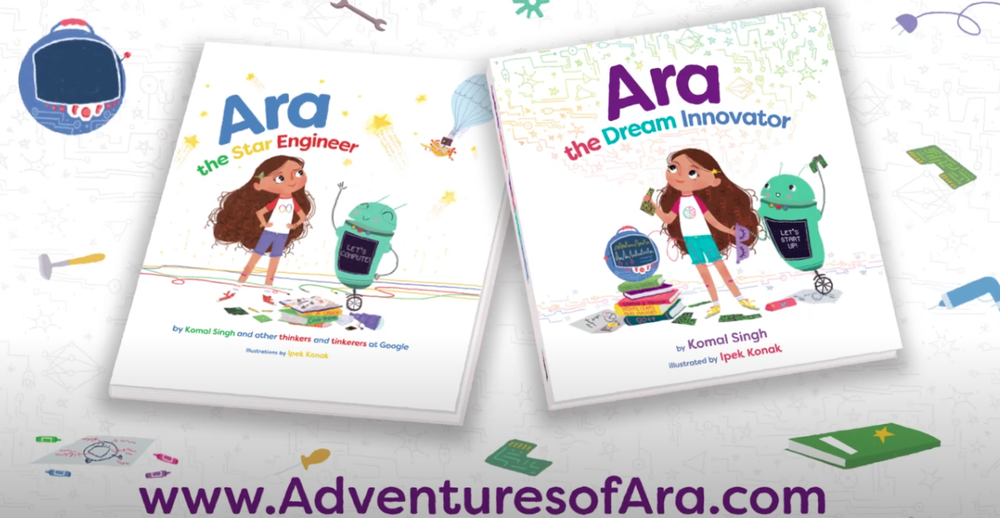
Komal Singh wants kids to see themselves in her books
In 2018, Komal Singh published “Ara the Star Engineer,” a children’s book about a little girl who becomes interested in coding. Komal, an engineering program manager at Google, wanted to give girls an example of what they could be. Since then, she’s been exploring ways technology can make books more diverse for kids. “I set up my own team and I was pitching my ideas,” she says. “It was like setting up a little startup of my own. And while I was going through this process of building and pitching and scaling, I realized, whoa — we should write a book about this!”
Enter “Ara the Dream Innovator,” a new book published by PageTwo Books, illustrated by Ipek Konak and authored by Komal. The latest in the series finds Ara coming up with her own innovation, and trying to make sure it’s inclusive “FTW” (which stands for “for the world”). Of course, Komal had plenty of real-life experience to serve as inspiration.
Were you interested in tech at all when you were little?
I grew up in India in the ‘80s, and my father was an engineer. He would use everyday things to instill curiosity in us. If we were sitting under a fan he would ask, “How many rotations a minute do you think the fan is doing?” That’s what got me interested in the sciences. I really liked logic and coding, which is what eventually drew me to computer science.
Do you find yourself having similar conversations with your kids?
Yes! I have two kids, a 7-year-old daughter and a 3-year-old son, and I try to find opportunities to make them curious about science and the world around them.I’ll ask them “if you could fill your lunch box with atoms, how many would fit in there?” Or I’ll ask if they want to come up with an algorithm for getting ready for school.
What have you been working on since your first book?
Both books were inspired by my own experiences. So with the first book, it was something my daughter said — that she thought only men were engineers because that’s what she saw — that triggered it. After publishing the first book, I wanted to see how I could take storytelling to bigger heights with the help of technology, so I set up a 20 Percent Project, which is when Google invites employees to spend 20% of their working hours on passion-related assignments aligned with some of their work goals.
Our team used AI models to morph popular characters in media to look like underrepresented children, so these kids could see themselves represented in books. For instance, we found that AI models didn’t recognize photos of children with alopecia, because they hadn’t been trained on that dataset. We don’t want kids to be left behind and not see themselves reflected in children’s literature. This technology could better represent the whole spectrum of people, and hopefully one day it could be used to broaden characters in children’s movies and books.

Komal’s 20 percent team is using AI to make characters that all kids can see themselves in.
The process of taking ideas and turning them into reality inspired the second book. Not only what it’s like to build something from an idea, but also about making sure your innovations are inclusive and equitable.
What does Ara build?
She builds a “dream decoder,” which captures your dreams, because that’s when she has all her best ideas. She then founds a startup with her droid DeeDee to make sure the dream decoder works for all kinds of children around the world, like children who have disabilities or children from different ethnic backgrounds.
What does your daughter think of the new book?
She loves how Ara builds a team of her own and tries to make her team diverse — she likes that idea of having all sorts of people on a team. She’s fascinated by that.
Do we meet any new characters?
We meet some real-life women founders! A big focus is to diversify characters so young BIPOC readers can see themselves represented. And one cool thing is, and this was unintentional, one of them is Maayan Ziv, the founder of an accessibility focused tech startup — and she happens to be in the current Google for Startups class.
There are also Ara’s friends, the Super Solvers, a really diverse group. It was enlightening creating our Indigenous Super Solver; we really wanted to get her right. Neither the illustrator or I are Indigenous, so I reached out to an Indigenous Googler, and she was so helpful. Looking at the first version, she was like “this looks like if a Westerner designed it.” And rightly so! That was such a check of our bias.
What’s the hardest part of writing a book?
The second book was easier because I had a path, but the expectations were much higher! But it was really my conviction that such books need to exist, that children need to have these books, that pushed me. I read somewhere that inspiration is a prerequisite to learning, and these books are not about teaching children to code or launch a startup — they’re about teaching them they can code, they can launch a company.
Do you know what’s next for Ara?
My new role in responsible AI for Media is influencing the next book: I want to explain AI to children and parents and families in a way they understand, and also the importance of tackling bias in AI so we can make sure AI systems are fair.

Better Finance in difesa degli azionisti di minoranza in tutta Europa
L’Associazione Slovena dei Piccoli Azionisti (VZMD), insieme alla Federazione Europea degli Investitori e degli Utenti dei Servizi Finanziari (BETTER FINANCE), organizza ancora una volta una conferenza internazionale sugli investimenti e…
L’articolo Better Finance in difesa degli azionisti di minoranza in tutta Europa scritto da Paolo Brambilla proviene da Assodigitale.

Epic Vs Apple, una sentenza pilatesca mette fine alla guerra?

WhatsApp, presto la funzione per chi non ama i messaggi vocali

Anime anni ’80 su Prime Video: 5 serie da non perdere

Android 12, la versione stabile in arrivo questo ottobre?

Podcast del Disinformatico RSI 2021/09/10: Documenti Office infettanti, allarme WhatsApp non cifrato, occhiali Facebook, chiavette USB “pesanti”

È disponibile il podcast di questa settimana de Il Disinformatico della Rete Tre della Radiotelevisione Svizzera, condotto da me insieme ad Alessio Arigoni. Questi sono gli argomenti trattati, con i link ai rispettivi articoli di approfondimento:
- Attacchi informatici usando documenti Office, l’allerta di Microsoft
- Allora, i messaggi di WhatsApp sono cifrati e privati o no? Panico da ProPublica
- Arrivano gli occhiali “smart” di Facebook. Ma non chiamateli così. Anzi, non nominate Facebook
- Domande da nerd: pesa di più una chiavetta USB piena di dati o una vuota?
Questo podcast, insieme a quelli delle puntate precedenti, è a vostra disposizione presso www.rsi.ch/ildisinformatico (link diretto) ed è ascoltabile anche tramite feed RSS, iTunes, Google Podcasts e Spotify.
Buon ascolto!