Come risparmiare su eBay con le offerte della settimana: la guida definitiva

Wiko, tre offerte per celebrare la Festa dei nonni

Google, nuovo tool per personalizzare l’immagine del profilo

Dopo i pagamenti, digitali anche documenti d’identità e patente

ORDINE GIORNALISTI AL VOTO: PEC E RID, TEMPI STRETTI PER METTERSI IN REGOLA
Il 20 e 21 ottobre dalle ore 10 alle ore 20 si voterà online per eleggere i nuovi rappresentanti del Consiglio nazionale e regionale dell’Ordine dei giornalisti. Ma attenzione, per…
L’articolo ORDINE GIORNALISTI AL VOTO: PEC E RID, TEMPI STRETTI PER METTERSI IN REGOLA scritto da Paolo Brambilla proviene da Assodigitale.

Abriendo caminos: New pathways for Latino-owned businesses
Ver abajo versión en español
At the United States Hispanic Chamber of Commerce, which I have the honor to lead as president and CEO, helping Latino-owned businesses succeed is at the center of our mission. Our responsibility to the more than 4.7 million Latino-owned businesses and our growing network of 260 local chambers and business associations nationwide is to pursue and advocate for inclusive economic growth and development that build shared prosperity.
We represent the fastest-growing group of entrepreneurs in the U.S., and we don’t take that responsibility lightly. The number of Latino business owners has grown by 34% over the last 10 years compared to just 1% for all other businesses, according to a recent study by the Stanford Latino Entrepreneurship Initiative, and much of this growth has been driven by Latinas. These new businesses are invigorating, highlight our potential and are what motivates me everyday.
In 2020, with the arrival of the COVID-19 pandemic, our chambers became emergency rooms for small businesses. We quickly mobilized and awarded hundreds of thousands of dollars in grants directly to Latino owners and our local chambers to provide assistance. These funds were a lifeline for Latino businesses to keep the lights on, make payroll, rent and meet other critical needs.
We also provided technical assistance, established online resource hubs in English and in Spanish and graduated more than 200 Latino-owned small businesses through our accelerator program.
Last year was also our most active year in Washington, D.C. We raised $850 billion to provide assistance for our Latino small business members. We advocated for access to the Paycheck Protection Program (PPP) for both Latino-owned businesses and 501(c) (6) Chambers of Commerce.
As we take a moment to reflect on our progress to date, we have our eyes on the future. There is no denying that the world has dramatically changed, and we need to adapt and thrive, not just to survive. And technology is driving change forward faster than ever before.
We got a glimpse of the transformational power of technology through our partnership with Google last year. We collaborated to provide extra funding and Grow with Google curriculum support to 40 of our chambers across the country. Together, we trained 10,000 Latino small businesses and the initial results and impact we’ve seen is truly remarkable.
Google and the United States Hispanic Chamber of Commerce share a deep commitment to economic opportunity, development and advocacy for Latinos. This is why today, we are sharing that Google will be making a $5 million investment in Latino-owned businesses and community organizations. Together we are also unveiling a new Latino-owned attribute that will be available across Google Search, Maps and Shopping. All this is part of Google’s $15 million investment in economic equity for Latinos.
Building more resilient Latino businesses
Today, we are deepening our partnership with Google with an additional investment that will allow us to create Grow with Google digital resource centers and train an additional 10,000 Latino business owners on how to use digital tools to grow their business. This work is critical to setting up Latino business owners for success for the long haul. These new skills, training and resources will help them be competitive in today’s digital economy and allow us to help aspiring entrepreneurs to think digital-first.
Google.org is also providing funding to support the Latino Community Foundation’s Entrepreneurship Fund, an initiative that strengthens Latino-led small businesses and micro-entrepreneurs across California. It will directly invest in 150+ micro-entrepreneurs to support the tireless work of street vendors, cleaning services, landscapers, childcare providers and other micro-entrepreneurs. For Latino-owned businesses, running a business is often a family affair, and the Entrepreneurship Fund will increase and improve the online presence for Latino-owned small restaurants through the creation of websites and social media accounts designed and managed by youth participating in tech skills building programs.
This is in addition to Google’s ongoing support of nonprofits through $3 million in donated ads to Latino organizations. This includes the Hispanic Access Foundation, which uses Google.org’s support to advertise internships for Latino college students, fundraise for DACA fee scholarships, and more — all in service of enabling more Latinos in the U.S. to achieve economic success.
Identify and buy from Latino-owned businesses
Today, we are partnering with Google to unveil a Latino-owned attribute that will be available on Search, Maps and Shopping, in the coming weeks, so businesses can easily identify as Latino-owned on Google. This update builds on the Black-owned, Veteran-owned and Women-owned business attributes, and is another way people can support diverse businesses across Google’s products and platforms.

How advertising technology is helping power our digital economy
Advertising technology (or ‘ad tech’ as it’s known) is helping support our digital economy and has given Australian businesses and publishers new ways to reach their customers and grow their audiences online.
The innovation of technologies like ad tech has provided a lifeline for many businesses during the pandemic, and an online ecosystem for businesses to compete and thrive. While our global, national and local economies continue to experience considerable impacts from COVID-19, we know that many businesses are looking to recover — and for many, that recovery will be enabled by digital technologies.
New research from PwC Australia, commissioned by Google Australia, has identified the way in which ad tech services have led to job creation and helped small businesses to grow and reach a global audience.
And while the economic benefits are clear, the ad tech industry remains largely misunderstood, perhaps due to how dynamic and multifaceted it is. We want to play a part in helping Australians better understand how the broader ad tech ecosystem works, and the ways in which it is enabling innovation, jobs and creative competition across the digital economy. So, let’s start with the basics.
What is ad tech?
Advertising technology services are used extensively. Everyone from government, to media organisations, corporates, and small businesses use it to get their message across and reach their audiences. Ad tech is essentially the umbrella of software and tools that help agencies and brands to target, deliver and measure their online campaigns — and allow online businesses and content creators to maximise ad revenues by connecting advertisers to their audiences. Ad technology enables advertisers to reach the right consumer, at the right time, making for a more efficient online advertising experience.
How did we get here?
The advertising industry continues to evolve as the digital economy evolves. It started with billboards on our roads and paid placements with print newspapers, TV commercials, magazines and radio — before expanding to online news sites and other services with the rise of the Internet. As the Web grew, so did the number of digital publishers across different verticals including food, travel, sports, lifestyle, entertainment and news. As consumers divided their time across a long list of websites, the question became: how could advertisers and publishers connect with each other at scale effectively? This is where ad tech came in.
As technology evolved so did ways to reach new audiences, including through mobile apps and other Internet connected devices. The arrival of ad tech innovation has helped businesses and publishers grow their revenue streams. This trend has been accelerated by COVID-19 and the rise of our digital economy which has motivated more people and businesses to do business online. That’s how we got here – but where we are going will help to define our digital future.
How does ad tech help our economy?
The growth of online ad tech services has helped businesses to scale and achieve results in the most cost-effective and efficient way. This is particularly true for small and medium-sized enterprises (SMEs). It doesn’t matter if you are a budding start-up or running a fully-fledged operation — ad tech evens out the playing field and encourages a dynamic marketplace.
PwC estimates that the existence and use of Google’s advertising technology directly supports more than 15,000 full-time equivalent jobs and contributes $2.45 billion in gross value add (GVA) to the Australian economy each year.
These tools are helping businesses and advertisers to save time, reduce costs and grow their reach in the face of increased competition and large barriers to entry associated with traditional forms of advertising. In fact, of those surveyed by PwC, almost three in four businesses that use our ad tech services observed these benefits.
And on average, respondents indicated that 28 per cent of their advertising media is targeted at overseas markets — allowing businesses from all corners of Australia, including rural communities, to communicate directly to the people that matter to them.
What role does Google have to play?
Google is proud to help millions of Australians every year navigate our increasingly digital world. Australian businesses choose Google’s products because they work seamlessly to deliver business value and drive economic growth in Australia — no matter the size of your business or the industry you operate in.
The rise of Google’s ad tech has allowed SMEs across Australia to compete against larger businesses through an accessible and affordable platform, improving efficiency and reducing the friction of scaling globally.
People use Google’s ad tech to reach new channels and opportunities which they wouldn’t otherwise have access to or could afford, and it is important that regulation in the industry ensures that these businesses can continue to be the bedrock of Australia’s digital economy.
Google is not alone — there are many companies working together and in competition to support the growth of a healthy digital ads ecosystem across different technologies — from web display, to apps, to connected TV and more.
Together, the ad tech industry is supporting a universe of Australian creators, publishers and business owners who underwrite the useful digital content and services that Australians enjoy everyday on the free and open Web. It’s powering our digital economy forward and helping people to find their passion, build their audience and grow their own way – important work that Google is proud to be a part of.
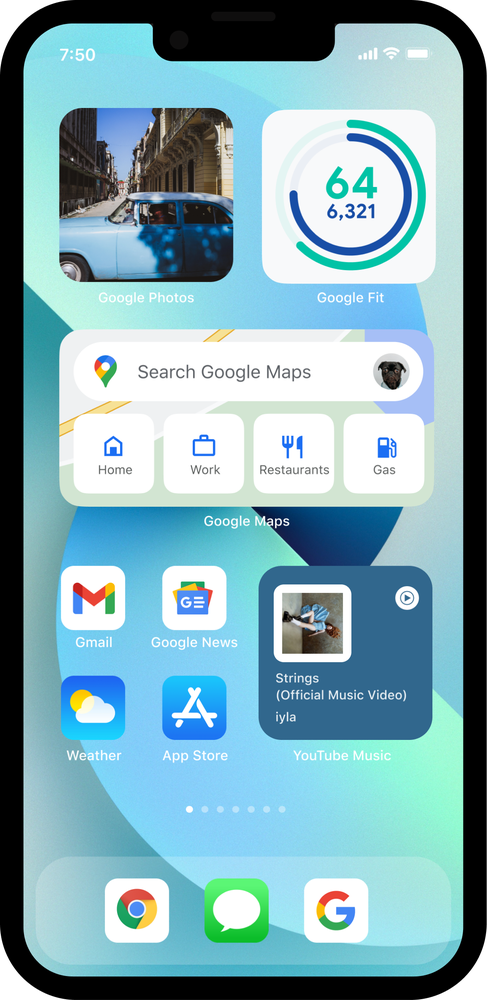
Bring the best of Google to your iPhone 13
Just got the new iPhone 13? Check out these tips to help you bring the best of Google to iOS.
Personalize your Home Screen
We know how important it is to get your Home Screen just right — and you can personalize it with our selection of widgets. With the right combination, you’ll never even have to leave your Home Screen to catch up on the latest.
For example, you can search the web, keep an eye on your commute, review your latest workout, and rock out to your favorite playlist all at once with our Google app, Google Maps, Google Fit and YouTube Music widgets.

HUAWEI student developers: crescere in una community di sviluppatori

Instagram sospende il progetto per social under 13

Get creative with Google Illustrations
A picture is worth a thousand words, as the saying goes. And that’s definitely true online, where often we choose a single picture to represent our digital identities. On Google, a single image acts as a reflection of you across a variety of products, like when you send an email, write a comment on a document or share your location with your family on Maps.
Of course, people have different preferences of how they want to be represented digitally. Some prefer a photo of themselves, others might select a pet, and there are those who choose an object that might show a hobby or causes they support. But for some people, there isn’t an option that’s a good fit for them. Access to technology, social context or privacy concerns might prevent them from using an actual photo as a profile picture.
To give everyone more safe, creative and personalized options for profile pictures, we are introducing new Google Illustrations. Google Illustrations are a collection of customizable images that anyone can use to design the image of their choice to represent them across most Google products.

How Influencers & Best Answer Content Help B2B Marketers Dominate in Search #CMWorld
Great content isn’t so great if it’s not easy to find. And findable content isn’t so effective if it’s not trusted.
Content is the reason search engines began and yet many B2B content marketers are not taking full advantage of opportunities to attract customers that are actively looking. Instead, the content marketing function at many B2B companies is more about creating content and not so much about promoting it.
Where Has the Marketing in Content Marketing Gone?
The problem with content marketing that focuses mostly on content creation is that the marketing is missing. Sure, B2B brands can throw advertising at their new content to attract visitors – but do B2B buyers love clicking on ads?
Fewer than 1 in 5 US adults trust social media ads. eMarketer
Compare the experience of clicking on an ad vs. seeing relevant information that answers the question behind the search effort? There’s an argument to be made that clicking on an organic search result and seeing content that credibly and effectively provides answers to the questions a buyer has, is a much better search experience than ads driving visitors to a landing page.
Of course there’s nothing wrong with running ads in on social networks or on search engines . If done well, it can be highly effective. But B2B marketers that limit the discovery of their content to advertising are missing the opportunity to create are more meaningful and trusted experience for buyers.
By optimizing the search experience for both findability and credibility, B2B content marketers can help their brands be the best answer for the questions that drive customers to use search engines. And not only search, but any source of information discovery.
A better search experience is not limited to simply ranking for popular keywords. Connecting interested buyers with the information they need, wherever they are in their journey, means an intentional effort to create findable, credible content that buyers can trust and benefit from.
So how can B2B marketers optimize for search and customer experience with their content?
Say hello to E.A.T. Expertise, Authoritativeness and Trustworthiness
Here’s a deeper explanation of E.A.T., but basically it represents important characteristics of content that Google is looking for when deciding the most relevant and helpful content to show searchers. In other words, what content is the best answer for your customers?
Experts on E.A.T. and SEO like Lily Ray have produced substantial content on what to do and what not to do when it comes to E.A.T and search engine optimization. Within the array of tactics marketers can take to demonstrate expertise, authoritativeness and trustworthiness, there is a distinct opportunity for B2B marketers to consider how key opinion leaders, industry experts and influencers can play a role in their content.
When it comes to content and B2B influencers, we’ve covered that story from A to Z over the past 9 years or so. B2B marketers know that partnering with influencers creates a number of advantages:
- Industry experts can add credibility to brand content
- Influencers can help lesser known B2B brands build their exposure and credibility in the marketplace more quickly
- Trusted influencers can help B2B brands c0-create more authentic content that resonates with buyers
- Influencer partners can help B2B brands create more content than they could on their own
- Key opinion leaders can drive conversations about topics important to brands and their customers through content
- Influencers can help create and promote brand content to new audiences that ignore traditional tactics like ads
- B2B brands that develop relationships with the experts in the industry that customers listen to can realize important marketing objectives like increased advocacy for the brand and its solutions
Those are just some of the reasons B2B brands engage with influencers. But what about the SEO value of the expertise, authority and trust that influencers can bring to content marketing?
That’s exactly what I’ll be presenting on this week at Content Marketing World 2021.

Here’s my session info and a link to a detailed description on the Content Marketing World conference website.
Thursday, September 30th – 2:45pm – 3:15pm (Eastern) Room 26:
How B2B Content Marketers Can Dominate in Search: Be the Best Answer
Are you a B2B marketer that has worked with influencers?

Join other B2B marketers sharing their experience and insights for the 2021 State of B2B Influencer Marketing Report. This survey provides B2B marketers with all sizes and levels of experience working with influencers the opportunity to help elevate the practice of influencer marketing in B2B. Take the Survey today and get early access to the Report plus some great incentives.
The post How Influencers & Best Answer Content Help B2B Marketers Dominate in Search #CMWorld appeared first on B2B Marketing Blog – TopRank®.

The future of attribution is data-driven
In the face of a changing privacy landscape, marketers need new measurement approaches that meet their objectives and put users first. This is why we’ve invested in new tools to help you future-proof your measurement.
One critical tool is machine learning, which can be used to fill the gaps in observed data and unlock new insights into consumer behavior. For example, conversion modeling powered by machine learning allows you to preserve measurement even when cookies or other identifiers aren’t present. Data-driven attribution in Google Ads takes this a step further. It uses advanced machine learning to more accurately understand how each marketing touchpoint contributed to a conversion, all while respecting user privacy.
As the industry continues to evolve, last-click attribution will increasingly fall short of advertisers’ needs. The most successful marketers will switch to a data-driven approach. While Google Ads offers data-driven attribution, some advertisers haven’t been able to use it due to minimum data requirements or unsupported conversion types. To help all advertisers take advantage of better attribution and improve their performance, we’re removing the data requirements and adding support for additional types of conversions. With these improvements, we’re also making data-driven attribution the default attribution model for all new conversion actions in Google Ads.
Better performance with better attribution
Unlike other models, data-driven attribution gives you more accurate results by analyzing all of the relevant data about the marketing moments that led up to a conversion. Data-driven attribution in Google Ads takes multiple signals into account, including the ad format and the time between an ad interaction and the conversion. We also use results from holdback experiments to make our models more accurate and calibrate them to better reflect the true incremental value of your ads. And like all of our measurement solutions, we respect people’s decisions about how their data should be used and have strict policies against covert techniques, like fingerprinting, that can compromise user privacy.
Advertisers around the world have seen better results by switching to data-driven attribution. When combined with automated bidding strategies, data-driven attribution can drive additional conversions at the same cost-per-acquisition. This is because our systems can better predict the incremental impact a specific ad will have on driving a conversion, and adjust bids accordingly to maximize your ROI.
Data-driven attribution allows us to assign the right credit to every touchpoint. With automated bidding and data-driven attribution, we’ve seen an 18% reduction in cost of sales over last-click.
Since we moved our search and display campaigns in Google Ads to data-driven attribution, we’ve seen an 8% increase in overall incremental conversions with an 8% lower cost per lead.
More campaigns, more advertisers
Today, data-driven attribution supports Search, Shopping, Display and YouTube ads. But we know that data-driven attribution can improve advertiser performance, regardless of campaign or conversion type. That’s why we’re adding support for more conversion types, including in-app and offline conversions. We’re also removing the data requirements for campaigns so that you can use data-driven attribution for every conversion action.
We’ll roll out data-driven attribution as the default model starting in October and plan to have it in all Google Ads accounts by early next year. You’ll still have the option to manually switch to one of the five rule-based attribution models. With these upgrades, data-driven attribution can help every advertiser clearly understand the full value of their Google Ads campaigns.
This is one example of our commitment to helping you make every marketing dollar count, even as the industry continues to shift. We’ll continue to work to use advances like machine learning to bring you measurement tools that deliver performance while also respecting user privacy.

7 giorni di Samsung: una settimana di offerte da non perdere