SayPal ti paga se citi il nome di un prodotto mentre parli

Avvertenza: leggete questo articolo fino in fondo prima di saltare a conclusioni affrettate.
Avete mai avuto la sensazione che il vostro telefonino vi ascolti e vi proponga pubblicità sulla base di quello che dite? Non è così; si tratta soltanto di pubblicità mirata, generata sulla base di dove siete, vicino a chi siete, che siti visitate, che informazioni cercate e altri dati personali. Ma ora è stata annunciata un’app che estende questo concetto: SayPal. La trovate presso Saypal.app.
SayPal, infatti, vi paga per citare nomi di marche celebri nelle vostre conversazioni. A differenza del tracciamento pubblicitario convenzionale, inoltre, vi avvisa subito di quanto avete incassato con ciascuna menzione della marca, e l’incasso va a voi, non a chissà chi.
Una volta concessi i permessi, SayPal vi ascolta tramite il microfono del telefonino e adopera sofisticate tecniche di intelligenza artificiale ed elaborazione del linguaggio naturale per identificare le parole chiave.
SayPal include inoltre un wallet Bitcoin, sul quale vengono accreditati automaticamente gli incassi.
Come vi siete sentiti leggendo questa descrizione? Tentati di monetizzare le vostre conversazioni o inorriditi all’idea di essere costantemente ascoltati o i vedere che i vostri amici si convertono a SayPal e cominciano a parlarvi intercalando citazioni di marche famose in cambio di soldi?
È esattamente questo lo scopo di SayPal, che non esiste se non come provocazione da parte di Matt Reed, “tecnologo creativo” presso redpepper e già autore di altre burle digital come il Rickroll per Zoom e lo Zoombot che crea un ”gemello” virtuale da far partecipare alle riunioni online. Se continuiamo ad accettare la sorveglianza commerciale, SayPal rischia di essere un’anticipazione profetica di quello che ci aspetta nel nostro futuro iperpubblicitario.
A chance encounter led this researcher to Google
Welcome to the latest edition of “My Path to Google,” where we talk to Googlers, interns and alumni about how they got to Google, what their roles are like and even some tips on how to prepare for interviews.
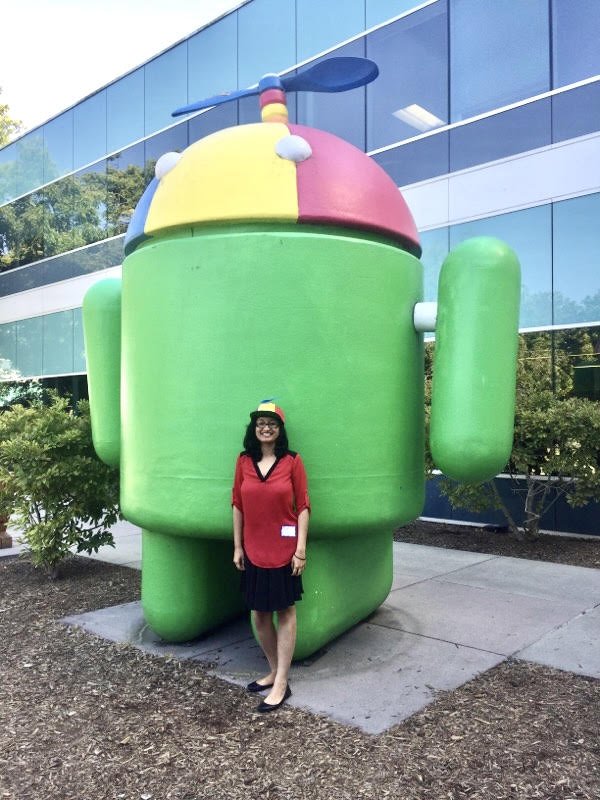
Today’s post is all about Preeti Talwai, an architecture student turned user experience researcher. Preeti shares how her initial reluctance about tech faded as she realized how many different types of roles there are in the space.
What’s your role at Google?
I work as a user experience (UX) researcher on the AI User Experience (AIUX) team in Google Research. Our team studies changes in society and science and creates product concepts in close collaboration with research scientists and UX folks across the company.
My focus is on early-stage, foundational research that tries to unpack big questions about human behavior and needs. With early-stage work, we’re often working with technologies that aren’t built yet and may be very new to users. For example, one of my favorite projects was studying people’s personal goals for a year and helping teams understand how technology can better support those goals.
What does your typical day look like right now?
When I’m planning research, there’s a lot of collective strategizing with other teams and my UX colleagues. When I’m conducting a study, my days usually involve a number of sessions with participants. When I’m synthesizing data, it’s a lot of “heads-down” time punctuated by ongoing sharing and collaboration with my team. And when I’m sharing the insights and working to put them into action, my days involve meetings and presentations.
Can you tell us about your decision to apply to work at Google and your path to your current role?
I always felt a pull towards design, so I decided to study architecture in college and went on to do a design research/architectural theory degree. Honestly, I never thought I’d work in tech and was actually against that idea at first. I had a very narrow understanding of tech jobs, and I was pretty sure they weren’t for me. The first time I became interested in Google was at the end of grad school.
I accidentally walked into a networking event after a class at the business school on campus, and I heard a panelist say she worked for Google’s Real Estate and Workplace Services division. I was surprised that something relevant to architecture existed at Google, and I stuck around until the end of the event to meet her. I sent her my resume, and though a role on her team didn’t work out, my information ended up getting passed along to a UX research manager who offered me a role as a research assistant. I decided to take this year-long contract role to test-drive a tech career, and, to my own surprise, loved it. After my contract, I transferred to a full-time role on my current team.
My path to Google has been meandering and unpredictable. I have always been drawn to understanding human stories and shaping people’s experiences, but I didn’t know the job I had been describing was called “UX research” until I graduated from college. I’ve found that my non-traditional background has opened doors to unique types of research and teams at Alphabet that I may not have otherwise known to look for.

Future-proof your measurement with privacy-safe solutions
Getting the most out of your marketing investments requires a clear understanding of what actions people take after interacting with your ads. In today’s evolving privacy landscape, growing your business calls for new approaches to measurement that preserve advertising performance and also put the user first.
Now’s the time to adopt new privacy-safe techniques to ensure your measurement remains accurate and actionable. And while this can seem daunting, we’re here to help you succeed in a world with fewer cookies and other identifiers with new ways to respect user consent, measure conversions and unlock granular insights from your sites and apps.
Here’s a preview of some of the product launches we’ll be sharing at Google Marketing Livestream on May 27th.
Easier options for working with consented data
Getting started with privacy-safe measurement requires building a foundation of first-party data. Investing in a strong tagging infrastructure helps you make the most of the data your consumers share with you and lets you accurately measure your campaign performance.
As consumers seek increased control over how their data is used, your methods for respecting their consent choices will also need to evolve. For advertisers operating in the European Economic Area and the U.K., Consent Mode helps you achieve this by adjusting how Google tags operate based on user consent choices for ads cookies or analytics cookies. When users don’t consent to cookies, Consent Mode will use conversion modeling to recover, on average, more than 70% of ad-click-to-conversion journeys, ensuring that you continue to measure the complete performance of your media in a privacy-safe way.
To make it easier for your website to integrate with Consent Mode, we’ll soon enable implementation directly from your Google Tag Manager account, where you’ll be able to modify and customize tag behavior in response to users’ consent preferences. Accurate measurement that accounts for people’s consent choices doesn’t have to be complicated, and our new solutions make sure that it isn’t.
More first-party conversion data means better measurement
A strong sitewide tagging and first-party data foundation enables measurement solutions to work together to collectively provide you with the most comprehensive reporting and optimization. Building on this foundation, we’ve developed an additional privacy-safe way to help you preserve accurate measurement when fewer cookies are available.
Enhanced conversions allow tags to use consented, first-party data to give you a more accurate view of how users convert after engaging with your ads. You’ll also be able to get the data you need to unlock performance insights, like conversion lift, and improve measurement in cases when your ad is shown on one device and the user converts on another. Your first-party data is hashed to protect user privacy and ensure security, and you’ll receive aggregated and anonymized conversion reporting.
Advertisers currently testing enhanced conversions are already seeing positive results. U.K.-based retailer ASOS set up enhanced conversions across Search and YouTube to help them close measurement gaps due to browser restrictions and cross-device behavior. This enabled them to measure conversions that would otherwise not have been captured and improved return on ad spend (ROAS) with a recorded sales uplift of 8.6% in Search and 31% in YouTube.
Enhanced conversions helped establish a strong measurement foundation, off of which we can better measure the impact of our YouTube buys.
Machine learning unlocks new insights in Google Analytics
In addition to using modeling for more complete conversion measurement and optimization, modeling can also help you get deeper customer insights from your behavioral analytics data. Last year we announced the new Google Analytics, which uses machine learning to surface relevant marketing insights, such as a significant change in your campaign performance or the likelihood of your customers making a purchase.
Soon, we’ll extend Google’s advanced machine learning models to behavioral reporting in Analytics. For example, if there is incomplete data in your User Acquisition report due to cookies not being available, we’ll now use modeling to help fill gaps for a more complete view of the number of new users your campaigns have acquired. With or without cookies, you’ll be able to enhance your understanding of the customer journey across your app and website and use those insights to improve your marketing.
Coming next
We’re continuing to invest in next-generation privacy solutions to help advertisers navigate ongoing industry changes and preserve accurate conversion measurement.
You can find out the latest information about these new privacy-safe measurement solutions at Google Marketing Livestream 2021 on Thursday, May 27 at 8:00 a.m. PT / 11:00 a.m. ET.

Scholarships for underrepresented leaders in journalism
Editor’s note: The Google News Initiative is supporting diversity, equity and inclusion scholarships at three of the industry’s top executive education programs: the Sulzberger Executive Leadership Program at Columbia University, the Media Transformation Challenge at Poynter Institute and the Executive Program in News Innovation and Leadership at CUNY. This post is authored by the director of the Sulzberger Program, Corey Ford.
Representation at the highest levels of leadership in journalism is essential to an equitable, well-functioning democracy that truly reflects the lived experiences of all people. Right now, the journalism industry is falling well short of having the right diversity of perspectives in the room at the leadership level to properly make the strategic, editorial, product and budgetary decisions to ensure that our collective stories are being properly told. This must change.
As an executive education program that trains senior leaders of respected news organizations, the Columbia Sulzberger Program has a responsibility to help those organizations deepen their bench of leaders from underrepresented backgrounds. Besides encouraging news organizations to sponsor and nominate leaders from underrepresented backgrounds, we think it is important to provide both a path for underestimated leaders to apply to the Sulzberger program directly and a way to fund their tuition and travel to attend. Thanks to the support of the Google News Initiative, that path is now open.
Today I am announcing that Google News Initiative will be sponsoring four scholarships, including tuition and travel, for leaders from groups typically underrepresented in journalism to attend the upcoming 2021 Sulzberger Executive Leadership Program at Columbia Journalism School.

Buon compleanno Xbox: il marchio quest’anno compie 20 anni

Amazon assolta: non dovrà pagare 250mln di tasse al Lussemburgo

Tesla non accetterà BitCoin: l’annuncio di Musk e le conseguenze

PlayStation 5, Sony aumenterà la produzione in estate
Investing in Black-led startups and investment firms
My venture capital job places me at the intersection of burgeoning technologies and funding new businesses. As general counsel of Alphabet’s CapitalG, I’m responsible for our fund’s legal work, and I work with the growth team to help our portfolio companies accelerate the growth of their businesses.
I’ve also had the privilege to lead an Alphabet-wide team focused on investing in Black-led VC funds, startups and organizations supporting Black entrepreneurs. As racial equity is inextricably linked to economic opportunity, last year, Google committed to making an investment to promote increased capital access and wealth generation in the Black community.
My team is responsible for allocating these funds among the many well-deserving potential recipients. This cross-Alphabet team, including people from Google, CapitalG and GV, met with numerous Black-led venture capital firms and Black entrepreneurs to identify recipients of the funds and better understand their needs.
Through this process, it was apparent that funding alone isn’t enough. So teams across Google and Alphabet have come together to provide the identified Black-led VC firms and their portfolio companies access to Alphabet’s people, network and technologies, as well.
Helping Black entrepreneurs get access to capital
To date, we have committed $60 million of capital to Black-led organizations and we’ll provide access to a suite of support for them and for their portfolio companies. Teams from across Alphabet will continue to work together to identify and invest in additional Black-led organizations, and Google will invest an additional $40 million in Black-led startups and investment firms by the end of the year.
We hope Google’s commitments prompt more investments from the industry and create a larger pool of capital to put dollars in the hands of Black founders. For example, since we announced the U.S. recipients of the $5 million Google for Startups Black Founders Fund in October, these founders have collectively raised over $25 million in capital from investors outside of Google.
Here are the organizations to which we have committed $60 million in capital to date:
Black-led venture capital firms:
-
Collab Capital:an Atlanta-based fund for Black founders seeking capital, who value profitability, ownership and optionality.
-
Concrete Rose:a Bay Area-based investment fund focused on using financial and social capital to build exceptional early-stage companies and close gaps for underrepresented talent.
-
Noemis Ventures:a New York-based fund focused on early-stage companies in the fintech, marketplace and AI sectors.
-
Plexo Capital: a Bay Area-based investment firm which makes direct investments in diverse startups.
-
Reign Ventures: a New York and Miami-based early-stage venture capital firm that focuses on investments in consumer tech and software companies founded by women and people of color.
-
Slauson & Company:a Los Angeles-based fund set up to invest in the next generation of entrepreneurs driving economic inclusion.
Black-led startups:
-
CityBlock Health: a New York-based startup focusing on providing care to Medicaid and dual-eligible patients.
-
Translation / UnitedMasters: a New York-based creative brand advertising agency focused on the intersection of brands with music, sports and popular culture.
Access to Alphabet’s people, network and technologies
Beyond funding, we’re providing these recipients with access to Alphabet training and advising sessions to help them grow their businesses. CapitalG uses a very similar approach to help hyper-growth stage companies overcome the biggest challenges as they get bigger. Along with leaders across Alphabet, Google for Startups, Cloud for Startups and Partnership Solutions, we have put together a suite of offerings that include Google Ads and Cloud support, weekly office hours and one-on-one advising with Alphabet leaders.
Other initiatives include Google-facilitated training programs focused on founder development, access to Google’s machine-learning training program taught by Google engineers and sales training. In addition to tactical support, each of these organizations is taking part in our speaker series and virtual social events to foster connections between fund managers, portfolio companies and the Alphabet family.
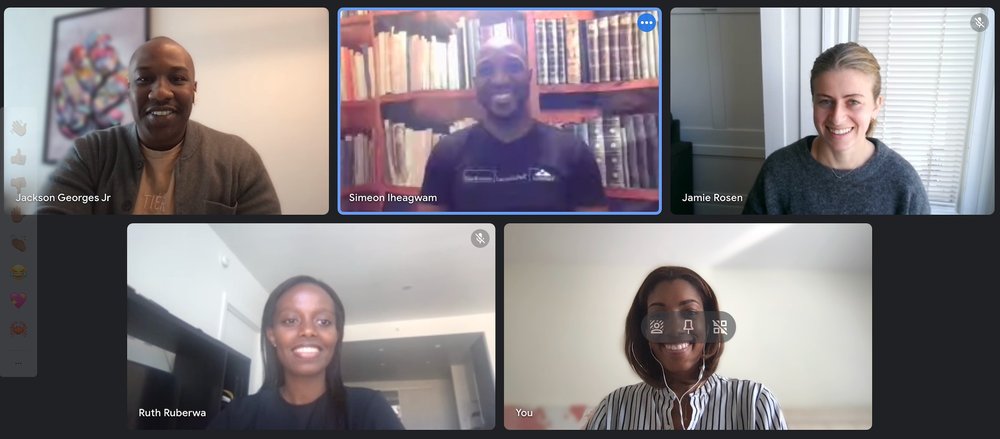
Jackson Georges Jr and Jamie Rosen from CapitalG, along with Ruth Ruberwa and Kristin Sills from Google, kick off our partnership with Simeon Iheagwam, Founder and Managing Partner of Noemis Ventures.
Together, we hope these new investments and access to Alphabet’s knowledge and network will help Black founders and Black-led VC firms grow their businesses and create sustained economic impact for their communities and the world at large.

More support for the COVID-19 crisis in Latin America
The COVID-19 pandemic has hit Latin America especially hard. Even as vaccines begin to slowly become available around the region, infection and death rates remain alarmingly high and several countries are grappling with a severe humanitarian crisis.
As the situation has taken a turn for the worse, we at Google have asked ourselves what more we can do as a company to help COVID-19 relief efforts throughout Latin America. Whether it’s ensuring that people get the reliable information they need to keep their families healthy and safe, or providing financial support for the hardest-hit communities, we know there is always more we can do.
Today we’re announcing that Google is providing $33 million in new funding for Latin America, including $3 million in grants from Google.org, our philanthropic arm. The first is a $1.5 million grant for UNICEF, to support the urgent needs in Argentina, Chile, Colombia, Mexico and Peru for more than 580,000 people through health, nutrition and water, hygiene and sanitation programs. The second is a $1 million grant for Amigos do Bem in Brazil to help get food supplies and clean drinking water to more than 8,500 families in need. In addition, we’re distributing $500,000 among other nonprofits across Latin America to get aid to communities in need.
Today’s announcement also includes increased Ad Grants support for public health information campaigns in Latin America. We’re making available an additional $30 million in Ad Grants to the Pan American Health Organization through the WHO, local health authorities and nonprofits to help spread accurate and useful information on vaccines and how to stay safe.
This support builds on over $6 million in Google.org grants for education, economic recovery and relief efforts across Latin America since the pandemic began, including a recent $1 million grant for Gerando Falcões in Brazil to provide families in need with food supplies. More than 1,000 Googlers have also contributed over $380,000 in donations and company match to support the Gerando Falcões initiative.
We know that one of the biggest ways we can help is through our core information products like Search, Maps and YouTube. Our COVID-19 information panels on Search and YouTube are available throughout Latin America in Spanish and Portuguese, providing reliable and timely content for our users. We also recently announced vaccination sites in Search and Maps in Brazil, Chile and Mexico, and we’re working to do the same in other countries in the region as well.
On YouTube, we’re taking steps to raise up authoritative information and reduce coronavirus misinformation, while also teaming up with creators and health experts to clarify facts and dispel myths about COVID-19. And throughout the pandemic Google for Education has provided online education solutions to some 37 million monthly active teachers and students in Latin America.
Google will continue to work with local governments, partners and communities to give everyone the tools they need to stay healthy and safe, and fight for a better tomorrow. We’re inspired by these organizations on the front lines, and are grateful for the opportunity to contribute to their efforts.

Resident Evil Village: pregi e difetti della versione PC

Google, sanzione da oltre 100 milioni dall’Antitrust

TikTok rimuove 500mila account italiani di minori di 13 anni

How The FA used tech to get the ball rolling
For millions of football fans across the U.K. and around the world, the return of live matches in the English Premier League was a long-awaited milestone in the recovery from the COVID-19 pandemic.
Enter Project Restart: the nickname given to the Premier League’s attempts to resume the season while ensuring the safety of players and fans. But with self-distancing as one of the key preventive measures against COVID-19, how could the safety of players be ensured when they’re interacting on the pitch? We at The Football Association (FA) were proud to have partnered with the Premier League to help in this aspect of the project.
A critical area addresses the challenge of ensuring players can interact at peak levels while observing the self-distancing norms still recommended by health authorities. To do this, we created a new analysis of thousands of hours of match play, and used machine learning technology to tell us about contact risk during a 90-minute football match.
We looked at all 380 games from the 2018/19 Premier League season, and the 288 pre-lockdown games from the 2019/20 Premier League season. Incredibly, this showed us over 40 billion interactions between players, captured in 100 million video frames which collectively made up 10 terabytes of data. Even the longtime players, coaches, and fans among us were staggered by how much goes on, even in one game.
Our system tracked players on the field at a rate of four-one hundreths of every second, ensuring we could analyse every interaction for concern about possible exposure. We employed the Exponential Model, developed by Danish public health academics, which at the time was considered the most accurate modelling of virus transmission during a football match.
The model focuses on the 1.5 metre radius around each player, paying strict attention to the two second rate of decay, or half life, that COVID particles typically have in infecting a person in certain environmental conditions. Staying on the safe side, we employed a simplified model, which considered a player that is within two metres of an infected player during the half-life of the virus to be 100% exposed.
As you may have guessed, all of this work involved gathering and analysing a tremendous amount of data from multiple sources, on some of the most advanced computing available. Working with Google Cloud, we used Google BigQuery to store the data and run a built-in machine learning model based on the simplified Model. BigQuery looked at an average of 145,000 rows of data per game analysed, examining every frame of tracking data for distance between all pairs of players on the pitch throughout an entire match. This fast and powerful toolset was critical to our success.
What we concluded was good news: During a 90-minute football match, players spent on average a total of 90 seconds within a two-metre proximity of each other. Include goalkeepers into the calculation, and the average time decreases to 70 seconds.
In other words: the risk factor of exposure to players was considered low, and we therefore determined that it was safe to keep the ball rolling. To be sure, players continue to be tested for symptoms of COVID infection before games, but this interaction data provides us with a critical level of reassurance.
It’s great news, but it also reminds us that vigilant awareness and rigorous analytic insight help ensure not just a successful return to play, but a broader sense of confidence about the future of Premier League Football. We’re building on a proud heritage of innovation, camaraderie and looking out for each other — the true heart of sport.