5 giochi da non perdere per Nintendo Switch
Internet in tilt per qualche ora, tutta colpa di una singola azienda. Come è possibile?
Martedì scorso (8 giugno) moltissimi siti Internet sono diventati inaccessibili per circa un’ora: siti governativi, Amazon, Reddit, Twitch, Hulu, PayPal, Vimeo e molte testate giornalistiche.
Alcuni giornali hanno parlato frettolosamente di attacco hacker, senza alcuna prova a sostegno, per poi correggere il tiro. La ragione reale, infatti, è stata molto, molto più banale.

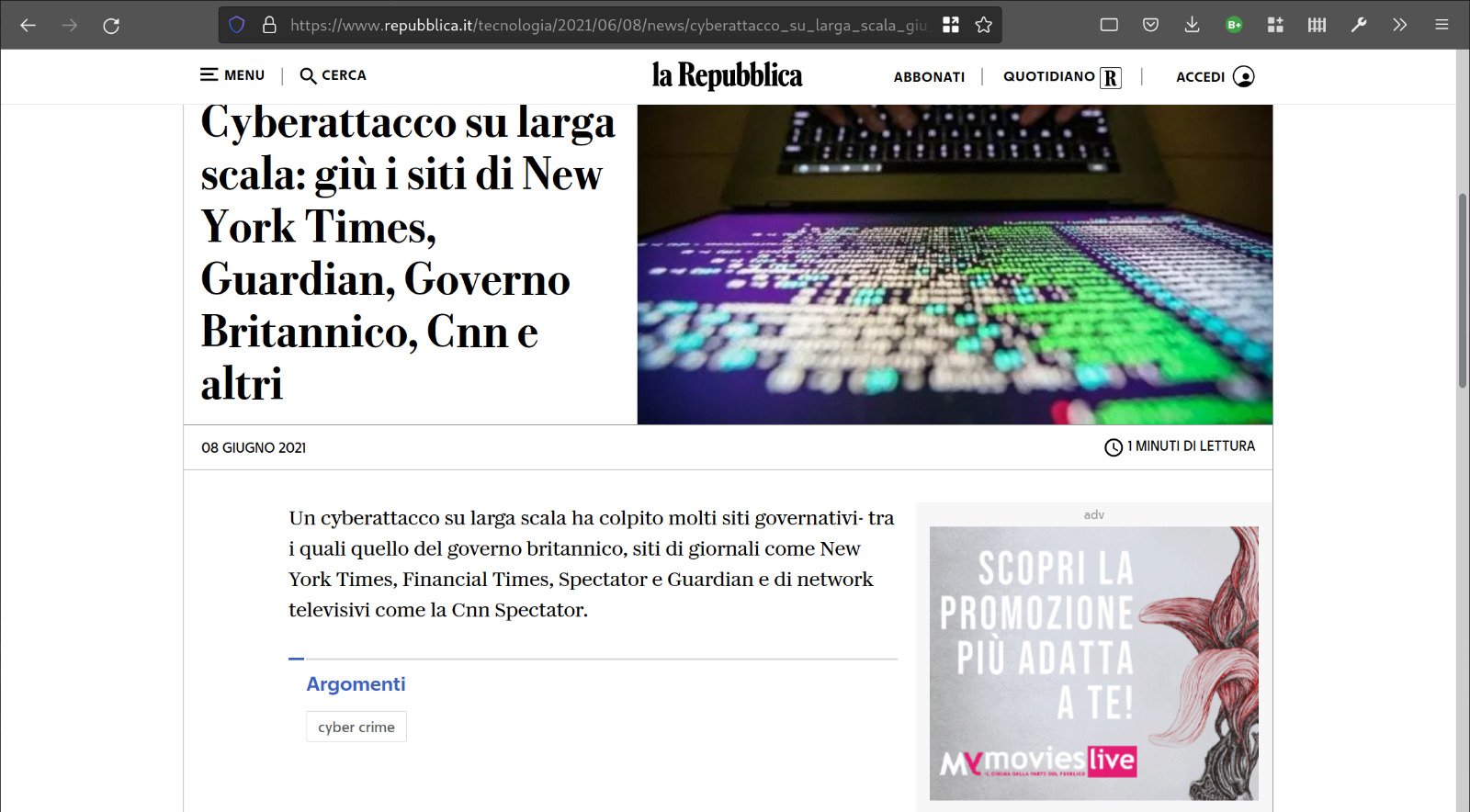
Incredibilmente banale: il collasso è stato causato da una singola azienda, Fastly, che è andata a gambe all’aria. Già questo è imbarazzante, ma non è finita: Fastly è crollata per colpa di un singolo utente.
Sul serio: un utente di Fastly ha cambiato le proprie impostazioni, ed è venuta giù buona parte di Internet. Come è possibile?
Fastly è un fornitore statunitense di edge cloud o cloud perimetrale: un servizio che rende più veloce il caricamento dei siti, li protegge contro gli attacchi informatici e li aiuta quando ci sono picchi di traffico da parte di visitatori. Ê uno di una rosa piuttosto ristretta, che include nomi come Amazon Web Services e Cloudflare. Praticamente tutti i siti Internet si appoggiano a questi fornitori, per cui l’idea che Internet sia in grado di sopportare un attacco nucleare, come si diceva al suo debutto, è ormai un mito da seppellire.
Uno dei clienti di Fastly ha appunto cambiato le proprie impostazioni su Fastly, in maniera assolutamente legittima, e così facendo ha attivato un bug che era presente in un aggiornamento software che Fastly aveva diffuso ai propri clienti a metà maggio. Il bug ha fatto sì che l’85% della rete di Fastly desse errore.
Per fortuna i tecnici di Fastly hanno capito rapidamente la causa del problema e nel giro di una cinquantina di minuti scarsi sono riusciti a rimettere in funzione il 95% della propria rete. L’azienda si è scusata e ha spiegato in dettaglio cosa è successo in questa cronologia degli eventi e in questo rapporto tecnico.
L’unica cosa rimasta inspiegata è l’identità del cliente di Fastly che ha involontariamente fatto crollare mezza Internet. Non so voi, ma se l’avessi fatto io lo metterei nel curriculum.
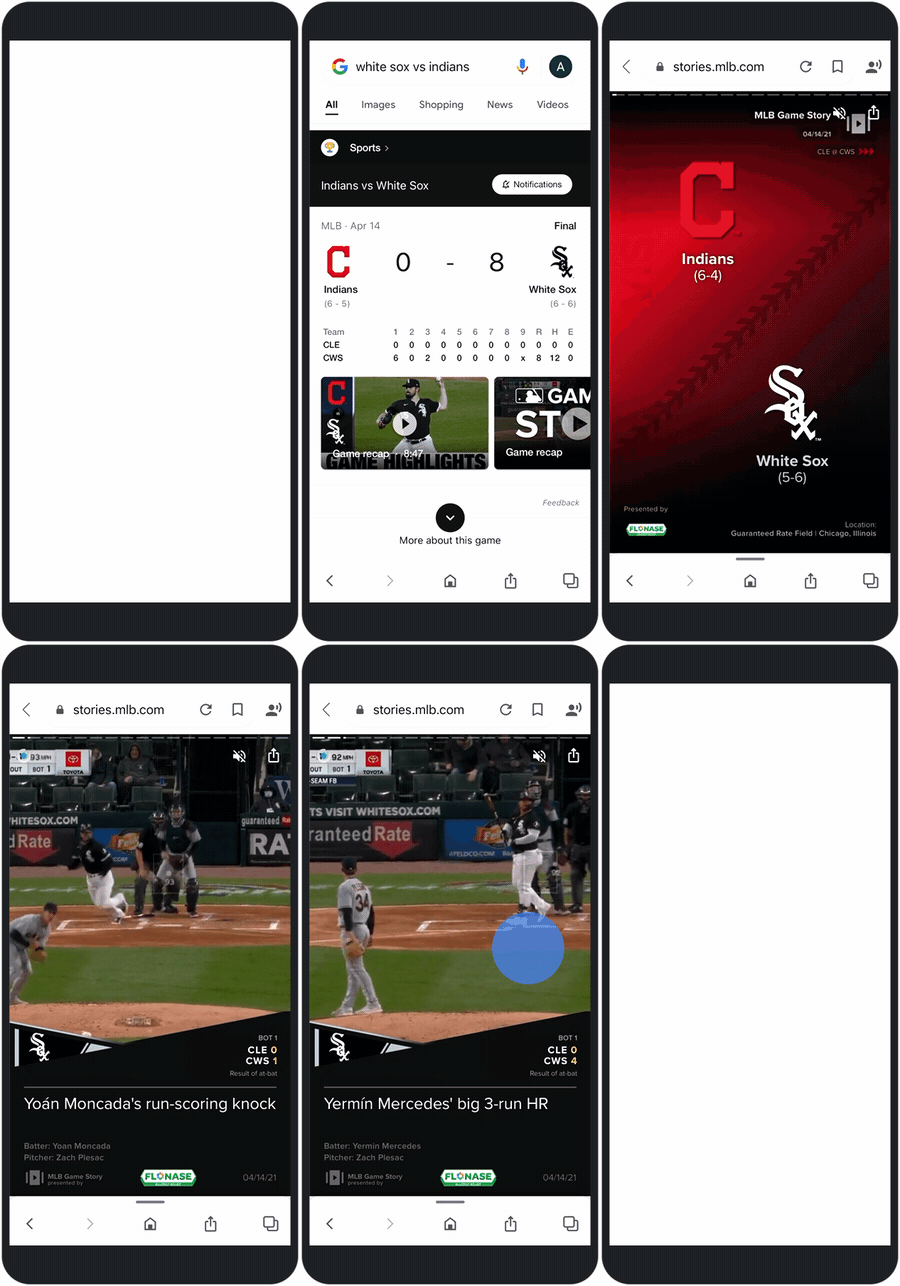
Catch all the big plays with sports web stories
Aren’t able to catch the game and watch your favorite team live? We’ve all been there before. But now, when you come to Google looking for the latest updates on your favorite team or game scores from around the league, with Google Web Stories you can also instantly catch up on the big moments and in-game action you might have missed. And with the start of UEFA EURO 2020 just around the corner, football fans in countries across Europe, Africa and Asia can also get in on the action — just search for your team or the name of the tournament.
Web Stories is an online tappable storybook curated with videos, GIFs and images, bringing you real-time, in-game sports highlights easily accessible from Google Search. Through collaborations with sports leagues and broadcasters from around the world, you can quickly catch up on what you have missed, or re-watch key plays in just a few taps. You can already find these Web Stories for some of the world’s most popular sports leagues including baseball, basketball, cricket, golf, hockey and now football. With the addition of more leagues and broadcasters in the coming months, soon you’ll have access to even more great sports content.
Samsung annuncia la nuova linea di monitor HD per il 2021
L’UE contro le Big Tech per il mercato degli assistenti vocali

Python 3.10: le novità in arrivo
Electronic Arts annuncia Battlefield 2042 con un trailer spettacolare

El Salvador legalizza i bitcoin, è la prima Nazione al mondo
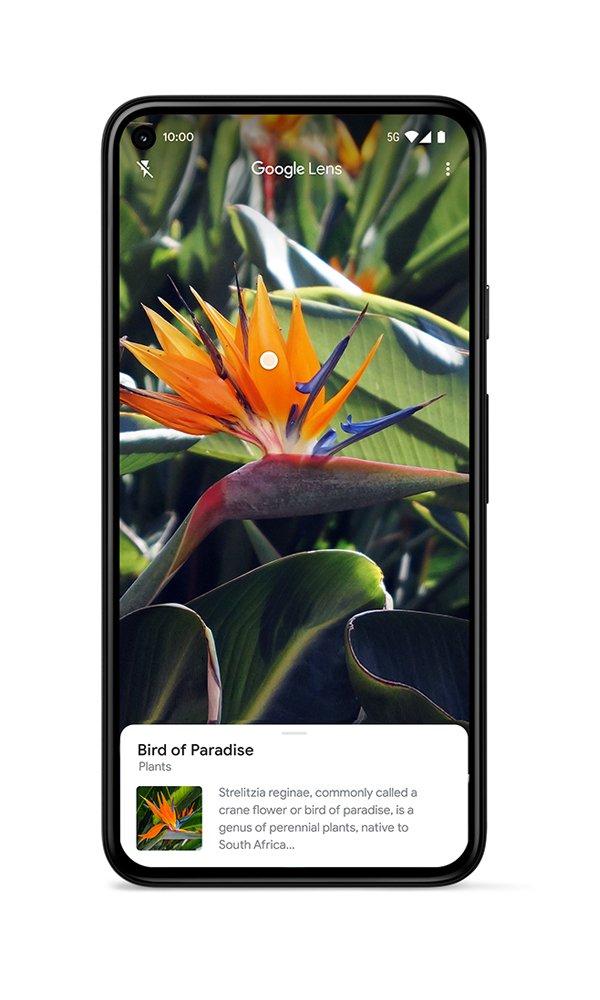
Rediscover your city through a new Lens this summer
With warmer weather upon us and many places reopening in the U.K., it’s the perfect time to go out and reconnect with your surroundings. Whether it’s soaking up that panoramic view of a city skyline that you’ve really missed, or wondering what that interesting tree species was that you pass every day on your park walk, many of us feel ready to reconnect with our cities in new ways.
British cities are especially ripe for rediscovery. As the country emerges from a long lockdown and people start to reintegrate with their cities this summer, we’re launching a campaign called Behind the Lens with Google Pixel, which aims to help people rediscover their cities using Google Lens on Pixel. We’ll do that through a series of events over the coming weeks, alongside some very special guests in London, Bristol and Liverpool.

Facebook lancia la sfida ad Apple e Google sui contributor

A change of pace: Get more from your walks with Google Fit
Everyone wants to be healthy and stay fit, but some days, it can be incredibly difficult to get a workout in. But there is something many of us do everyday that has huge health benefits: walk.
For years, walking has been measured by the number of steps we take. While seeing this count can be motivating, not all steps are equal. Think about it this way: There’s a difference between wandering through the garden and dashing to catch the bus. That difference is intensity, and scientists have found increased health benefits associated with walkingfaster. Everyone has a preferred walking speed — a pace that feels natural — and picking up that pace has health benefits similar to riding a bicycle. Plus, if you start walking faster, your natural pace will get faster over time.
I learned a lot about this from Rob Harle, a research scientist for Google Fit. In fact, we worked together and used this research to introduce a new Google Fit feature called Paced Walking, which is already available for most Android phones now. “The idea is simple: Pop in some headphones during a Paced Walking session and we’ll play an audio beat — a gentle background tick — for you to fall in step with,” Rob explains. “You can use the app to change the beat speed and vary the intensity of your walks. The beat plays on top of other audio, so you can still play music or podcasts while you walk.
Another motivation for launching Paced Walking was to meet people where they are. “Studies show there is a lot of disparity when it comes to fitness; many people don’t have access to gyms or workout studios, or can’t afford equipment or online classes,” Rob says. “Walking is something almost everyone has access to, and picking up the pace can increase the health benefits.”
Once you start picking up the pace using Paced Walking, you’ll earn more Heart Points in Google Fit — for every minute that you walk at a pace of over 100 steps per minute, you’ll earn one Heart Point. This will help you get the American Heart Association® and the World Health Organization recommendations of at least 150 minutes of moderate physical activity per week, all while you are doing something that you routinely do — walking. And a bonus to using Paced Walking? You’ll arrive at your destination a little sooner!
5 Examples of B2B Brands Rocking With Influence in 2021
How does influence help B2B brands achieve success?
Influence may be multifaceted almost to a fault, however a key essence is its role in providing smart answers to the questions your audiences have.
Reaching target audiences through digital channels was recently found to be a top-three critical challenge for B2B marketers.
A new LinkedIn* report of the most in-demand marketing skills has shown that digital marketing represented the biggest mismatch of skills in supply and demand. Influence is a vital element of successful digital marketing, and presents B2B marketers with a powerful tool to overcome this challenge, and the five brands we’ll examine here have each used influence in a variety of ways to achieve digital marketing success.
These five brands are rocking with the power of influence, engaging audiences and telling captivating brand stories.
Let’s jump right in and take a look at their success.
1 — Dotgo
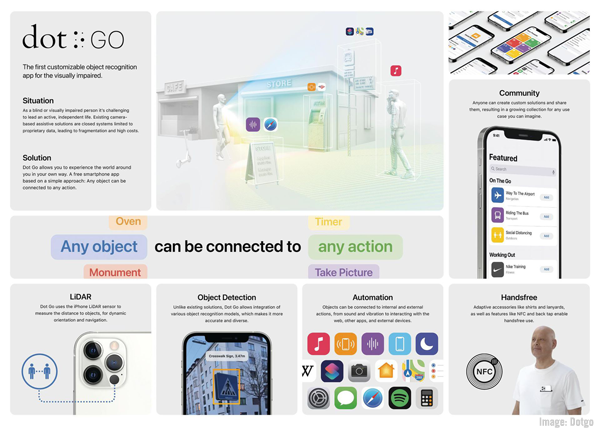
For Dotgo, a provider of rich communication services (RCS) and other business messaging solutions, enlisting subject matter experts from firms including Orange, Vodafone, Synchronoss, and IMI Mobile was an important part of explaining its mission.
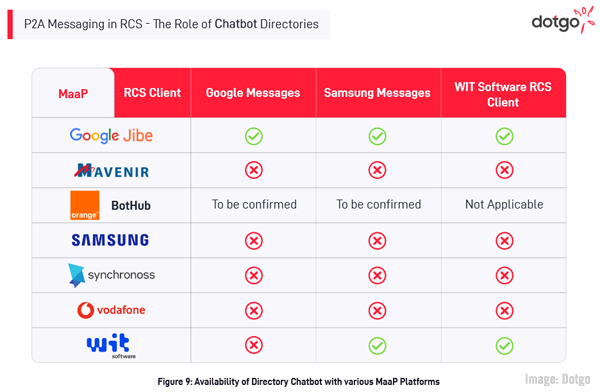
Providing whitepaper content to influence potential industry customers involved a close look at the power today’s latest chatbot technology offers, including person-to-application (P2A) messaging, the benefit of chatbot directories for enterprise businesses, and the first customizable object recognition application for the visually impaired.
Another forum for utilizing influence is through industry award events, a route Dotgo has pursued with recognition from the Cannes Lions Awards, being shortlisted for innovation in early state technology. Find @DOTGO on Twitter.
2 — True Name by Mastercard
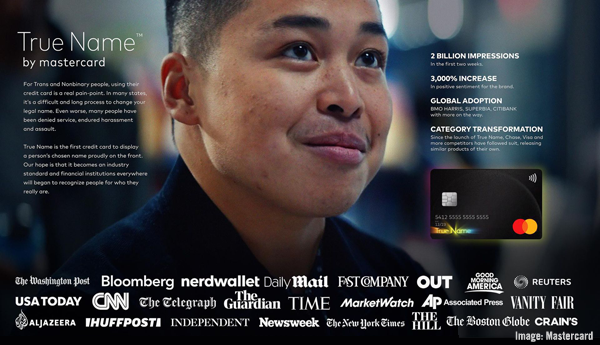
With its True Name initiative, Mastercard achieved global adoption and more than two billion impressions by tapping into the power of influence to promote its program that lets those in the transgender and non-binary communities display their chosen name on certain credit cards.
The campaign brought success in the form of positive brand sentiment, with a 3,000 percent increase, and achieved additional exposure through winning multiple industry awards, including the Black Pencil award at the 2021 D&AD Awards and shortlisting at Cannes.
Using videos that shared the powerful individual stories of people in the LGBTQIA+ community, Mastercard’s True Name campaign expanded to global availability, and used another form of influence in partnering with organizations including GLAAD and others.
Mastercard CMO Raja Rajamannar recently expanded on the firm’s embrace of radical changes in marketing and advertising, sharing how the human elements that incorporate influence provide the differentiation that is needed more than ever.
“Since digital marketing began, the dependency on technology and data has become so intense that people started regarding anything creative as unnecessary or fluffy,” Rajamannar shared in a recent interview with The Association of National Advertisers (ANA).
“But the reality is that technology and data will level the playing field, so a company can no longer compete on just its product features or benefits or pricing or distribution network. You are going to have to differentiate yourself through creativity that is relevant to human beings,” Rajamannar explained.
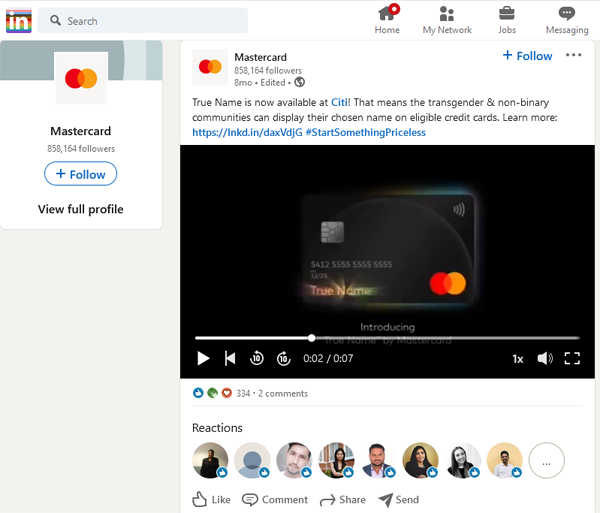
Mastercard also utilized its LinkedIn and other social media platform accounts to promote the True Name initiative, including a variety of video and static image content. Find @MastercardNews on Twitter.
3 — Google Search Black-Owned
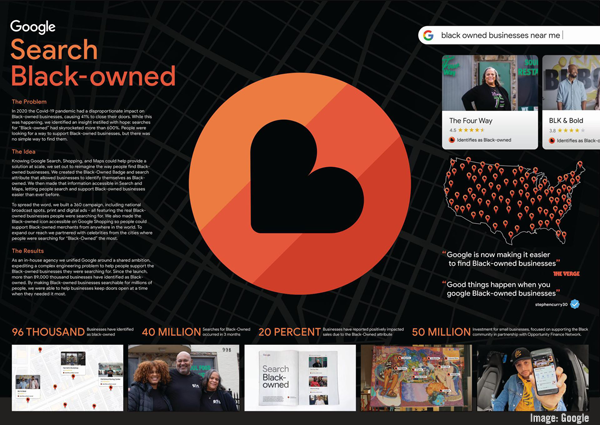
Google embraced Black History Month for the launch of its Black-owned business discovery features, and enlisted Black voices of influence to inform the public about the program.
Offering easy ways to help businesses get support or to give support to Black-owned businesses, Google featured an array of people from small business owners to National Basketball Association superstar Stephen Curry.
“Good things happen when you search Black-owned businesses on Google — take it from Stephen Curry,” the campaign urged.
Google implemented a visual black heart over a three-striped orange background in its badge to denote Black-owned businesses, and worked in conjunction with the #BlackOwnedFriday initiative and the U.S. Black Chambers, Inc. to provide business support resources.
Influence also played a role in Google’s Digital Coaches, dedicated to helping business owners thrive online, and Google made it easy for people to write and share reviews of the program — another area where influence thrives.
The Association of National Advertisers (ANA) most recently report on diversity in advertising revealed that black-owned suppliers were the minority, with a 10 percent figure that came in slightly less than the 11 percent Hispanic-owned figure, while 62 percent were women-owned, according to the association’s ad budget survey data. Find @GoogleSmallBiz on Twitter.
4 — Oracle People Over Profits
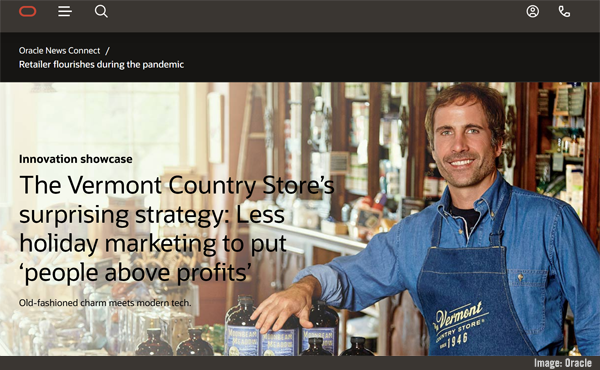
With its innovation showcase highlighting success stories during the pandemic, Oracle* has featured strategy from clients including The Vermont Country Store and its “People over profits” focus, highlighting how the power of influence can run the gamut from small to B2B enterprise firms.
Oracle has successfully shared customer stories in its innovation showcase, putting a human touch on what can often be cold software offerings, such as its Oracle Commerce e-commerce product — and going beyond the realm of traditional B2B product data sheets and often dry whitepapers.
Kelvin Gee, senior director of modern marketing business transformation at Oracle, sees the importance of a more customer-centric approach in personalizing content.
“Companies do need to be more customer-centric, deliver a better customer experience, personalize the content, align with sales, and measure themselves differently,” Gee told our own Joshua Nite in “Break Free B2B Marketing: Oracle’s Kelvin Gee on Winning with Enterprise ABM,” which offers not only a fascinating look at enterprise account based marketing (ABM), but also an exploration of the power of empathy in marketing.
[bctt tweet=”“Companies do need to be more customer-centric, deliver a better customer experience, personalize the content, align with sales, and measure themselves differently.” — Kelvin Gee of @Oracle” username=”toprank”]Find @Oracle on Twitter.
5 — Northwestern Mutual Celebrating American Resilience
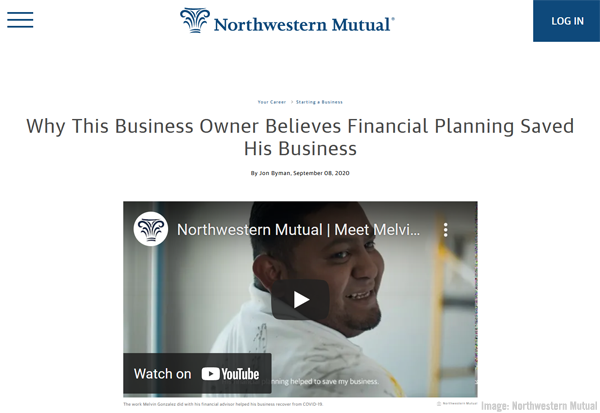
Northwestern Mutual creatively uses influence in the form of storytelling, and even pushes it into a new form of what CMO Lee Hurley calls “storydoing.”
Telling the stories of business owners hurt by the economic impact of the coronavirus, and how they overcame numerous obstacles, Northwestern Mutual’s American Resilience campaign utilized digital, social media, and traditional advertising.
“Influencers will help break down barriers surrounding financial planning by sharing authentic stories about how, with the help of a Northwestern Mutual advisor, they are financially and emotionally navigating important life stages in a COVID-19 world,” the campaign explained.
A video featuring business owner Melvin Gonzalez told a story of both individual business dreams and overcoming fear and pandemic difficulties utilizing financial advisor services, expanded on in additional campaign content.
CMO Lee Hurley sat down with LinkedIn News’ Callie Schweitzer during an episode of Marketer Must Read, and explored the campaign and the power of influencers, family, and friends when it comes to brands vying for attention.
“You’re not just competing with brands; you’re competing with everyone who is creating and sharing content — friends, family, influencers, media companies, and so on,” Hurley noted.
“People want to align with brands who stand for the causes they care about, who are making an impact, who are standing up,” Hurley added.
[bctt tweet=”“You’re not just competing with brands; you’re competing with everyone who is creating and sharing content — friends, family, influencers, media companies, and so on.” — Lee Hurley of @NM_Financial” username=”toprank”]Find @NM_Financial on Twitter.
Influence is the Art of Providing Smart & Colorful Answers
Influence may be multifaceted almost to a fault, however a key essence is its role in providing smart answers to the questions your audiences have.
We hope the examples of influence at work we’ve shared here from Dotgo, Mastercard, Google, Oracle, and Northwestern Mutual will help as you drive your brand initiatives ahead into post-pandemic marketing efforts.
Creating award-winning B2B marketing with an artful mixture of influence takes considerable time and effort, which is why many firms choose to work with a top digital marketing agency such as TopRank Marketing. Contact us today and let us know how we can help, as we’ve done for businesses ranging from LinkedIn, Dell and 3M to Adobe, Oracle, monday.com and others.
* LinkedIn and Oracle are TopRank Marketing clients.
The post 5 Examples of B2B Brands Rocking With Influence in 2021 appeared first on B2B Marketing Blog – TopRank®.
WooCommerce merchants can now list their products across Google
Last week we announced that all of WooCommerce’s 4.4 million merchants would soon have the ability to easily integrate their product inventory across Google in just a few clicks, and for free. Today, the product is live and ready for WooCommerce merchants to use globally.
Making it easier for retailers who work with partners like WooCommerce to integrate with Google shopping features across Search, Shopping, Image Search and YouTube means that retailers of all sizes will have even more ways to get discovered. And shoppers will have even more choice as they make their shopping decisions.
WooCommerce merchants can upload their products to Google, create free listings and ad campaigns, and review performance metrics — all without leaving their WooCommerce dashboard.
With over 1 billion shopping sessions happening per day across Google, this integration will help merchants make more connections with shoppers who are eager to discover new brands.

New tools to support vaccine access and distribution
While over half of U.S. adults are fully vaccinated, vaccine uptake is slowing across the country. Research shows a variety of factors are preventing people from getting vaccinated — from physical access issues, like transportation challenges and not being able to take time off work, to concerns about safety and side effects.
To help public health officials and researchers in the U.S. reach people facing these challenges, we’re introducing new tools to better understand the vaccination needs of a community. This builds on our work of providing data, insights and tools to public health, epidemiologists, researchers and policymakers since the early days of the pandemic.
Equitable access to vaccinations
For some people getting vaccinated is as simple as walking a few blocks to their local pharmacy. For others, it may be much more difficult and involve a long drive or navigating public transit. If public health officials, researchers and healthcare providers can identify areas where vaccination sites are inaccessible or hard to reach, they may be able to implement measures like pop-up vaccine sites or transportation support like ride vouchers.
Our COVID-19 Vaccination Access Dataset, which is available to the public today, calculates travel time to vaccination sites to identify areas where it may be difficult to reach a site whether someone is walking, driving or taking public transportation. We prepared this dataset using Google Maps Platform Directions API, the same API that powers navigation in Google Maps. This dataset does not contain any user data.
This dataset will help power a new Vaccine Equity Plannerdashboard from Ariadne Labs, a joint center for health systems innovation at Brigham & Women’s Hospital and the Harvard T.H. Chan School of Public Health, and Boston Children’s Hospital, the primary pediatric teaching affiliate of Harvard Medical School. . This dashboard integrates our dataset with data from other organizations, such as the CDC’s social vulnerability index, to identify “vaccine deserts,” or areas where people have little or no convenient access to a vaccine site, to inform interventions such as pop-up clinics or new sites.