A new tool to find stories from underrepresented voices
Editor’s note: Rachel Hislop is the Editor in Chief of Okayplayer, which represents the innovative, artistic and progressive voice of black culture through the amplification of music, art, film and politics.
In December of 2019, I was onstage at a Google News conference in Chicago giving a short presentation about creating stories for diverse audiences. I wanted to introduce Okayplayer’s approach towards telling stories about marginalized communities to the room of small to midsize publishers. My thesis was straightforward: If you want to change the story, you have to change the storyteller. The following months would prove me right: There’s a very real need to find new storytellers.
Nearly 200 counties in the United States do not have a local news publication — this means nearly 3 million people nationwide are very likely to be unaware of what’s happening in their communities. Publications, journalists, and credible news accessibility are all destabilized when access to local stories is limited.
It was clear that there needed to be some innovation around how newsrooms get stories out the door, and how new bylines — of those most qualified to tell the stories of their communities — got on our pages.
With bootstrapped budgets and disappearing resources due to archaic advertising models, getting new voices on the page is a difficult task for newsrooms. The pandemic and resulting lockdown also limited mobility and made people more reliant on community news. The social justice protests last summer are a perfect example: We saw cities like Minneapolis and Louisville, Ky. become hubs for stories with global impact while publications scrambled to get more diverse voices on their pages.
One of the main complaints about representation in media is finding journalists from diverse backgrounds with differing world views. This is the problem Okayplayer focused on as a recipient of the Google News Initiative Innovation Challenge — we used the support to address the decline of on-the-ground reporting opportunities for local journalists. In addition to targeting the issues affecting our newsroom, we wanted to focus on the industry-wide need for revenue model innovation that amplifies new voices and local stories. From that, The Byline Project was born.
The Byline Project is a completely free digital tool that empowers small and mid-size publishers and local storytellers to help bring local reporting back to their communities while connecting the work of storytellers to financial support from a broader digital audience.
The Byline Project is open-source software that publishers can install into their WordPress platform. It will streamline the reporting process, starting with receiving pitches from writers, photographers and creators, and take editors all the way through to the moment a story goes live. It will also integrate with industry-standard collaboration Google products — like Google Docs. And once stories are published, the online community can financially support content creators directly by tipping writers.
For writers and storytellers,The Byline Project provides direct access to editors who are accepting pitches. It also provides a centralized hub where they can collaborate on projects as well as the previously mentioned capability to directly earn money for their work from readers.
We hope The Byline Project can support a community-driven local reporting landscape on Okayplayer’s pages, while giving small and mid-size publishers like ourselves the tools to do the same.
Journalists can begin submitting pitches to Okayplayer via thebylineproject.com. Local news publishers can learn more about installing The Byline Project software for their news platforms by visiting TheBylineProject.com.

Changes to the Android Choice Screen in Europe
Android provides people with more choice than any other mobile platform. People can freely choose which apps they use, download and set as default — and research shows that Europeans understand how to easily switch search engines should they wish. Android also enables thousands of developers and manufacturers to build successful businesses.
We have been in constructive discussions with the European Commission for many years about how to promote even more choice on Android devices, while ensuring that we can continue to invest in, and provide, the Android platform for free for the long term.
We complied with a 2018 ruling that required us to distribute Search separately from Google Play. In consultation with the Commission, we then went even further by introducing a promotional opportunity for search apps and browsers and, subsequently, a choice screen requiring Android users to choose a default search provider. In both instances, we balanced introducing additional choice for device manufacturers and users with changes to our commercial terms.
Following further feedback from the Commission, we are now making some final changes to the Choice Screen including making participation free for eligible search providers. We will also be increasing the number of search providers shown on the screen. These changes will come into effect from September this year on Android devices.
We have always believed in offering people and businesses choice and competing on the merits of our services. And we know that people choose Google because it’s helpful; not because there are no alternatives. That’s why we will continue to invest in Google Search and Android to make them the most helpful products available, and we appreciate the open dialogue with the European Commission on these areas.
For further details, visit https://www.android.com/choicescreen/.

Fastly, glitch nella CDN: cos’è successo

Come estendere la rete Wi-Fi di casa con meno di 40 euro

Down i siti di Cnn, Governo UK, PayPal e molti altri: “Ma non è un cyberattacco”
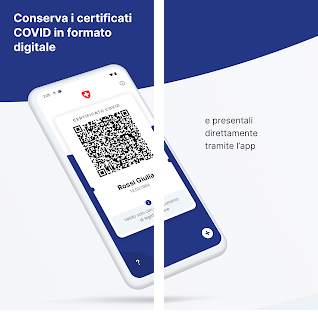
Le app per il certificato COVID svizzero: ecco dove scaricarle, diffidate delle imitazioni

Sono disponibili per lo scaricamento le app per la gestione del certificato COVID.
L’app per gli utenti, quella che custodisce il certificato e si usa per esibirlo, si chiama Covid Certificate ed è qui per iOS (installabile anche su iPad) e qui per dispositivi Android.
L’app per verificare i certificati, usabile da chiunque per scansionare e verificare la validità dei certificati esibiti e chiamata Covid Certificate Check, è qui per Android e qui per iOS.
Al momento non sono ancora stati rilasciati i certificati medici con codice QR da usare con queste app; arriveranno entro fine mese.
Nel frattempo, diffidate delle imitazioni e delle app quasi omonime presenti negli Store e installate soltanto le versioni originali.
Per tutti i dettagli sul funzionamento dei certificati COVID potete leggere questo mio articolo.
Questo articolo vi arriva gratuitamente e senza pubblicità grazie alle donazioni dei lettori. Se vi è piaciuto, potete incoraggiarmi a scrivere ancora facendo una donazione anche voi, tramite Paypal (paypal.me/disinformatico) o altri metodi.
FaceTime in arrivo su PC e Android tramite link condivisibili

Amazon, 3.000 nuovi posti di lavoro in Italia nel 2021

Stadia presto su Android TV e Chromecast con Google TV
A marine biologist uses Maps to explore under the sea
Just under the water lies one of the biggest mysteries of the Great Barrier Reef: blue holes. These underwater sinkholes give researchers a rare look at ocean life and how we can protect it. Until a few years ago, only two blue holes were documented in the entirety of the Great Barrier Reef — they are hard to find and even harder to get to.
With the help of Google Maps, marine biologist Johnny Gaskell and a team of researchers are finding previously unknown blue holes. In 2017, after witnessing Cyclone Debbie destroy many of the reefs in its path, he set out to find more blue holes. Home to hundreds of species of coral and serving as a protective waters for larger marine life, these formations give scientists a view of history buried in undisturbed sediment layers and clues about how to better protect coral reefs.
Using Google Maps’ satellite view, Johnny followed the cyclone’s path to pinpoint areas along the reef that might have been spared from damage. That’s when he spotted perfect circles along the reef, indicating a potential blue hole. The formation he identified was south of the Whitsundays in the Hard Line Reefs, a difficult-to-reach area of the Great Barrier Reef that’s dangerous to navigate. Despite this, Johnny and a team of divers headed out into the unknown, unsure of what — if anything — awaited them.
There’s still so many spots out in the Great Barrier Reef that are unexplored.
With the satellite view of Google Maps on their phones, they navigated their boats through narrow channels in unsurveyed waters until the blue dot on their map was directly over the blue hole. Johnny dove in and found healthy coral formations that have sat undisturbed, possibly for centuries. Along the edges were delicate birdsnest corals, vibrant giant clams and huge branching staghorn corals. In the stillness of the blue hole’s center, there were green sea turtles, giant trevally and sharks that all called the dark, cool water home.
With the help of Google Maps, a discovery that would have taken years of underwater exploration on the seafloor is now allowing researchers to expand our understanding of the world’s largest ecosystem. Today, Johnny is still working to build a snapshot of coral reef conditions. Working with Citizens of the Great Barrier Reef and the Great Reef Census project, they are using geotagged images to give everyone — from scientists to students — a better idea of what’s going in depths of the water whether they dive in or not.
In 2021 the Great Reef Census is expanding to reach more reefs, collect more data, and broaden its research goals. To join the efforts, sign up as a Citizen or contribute directly via the project’s fundraising page.

Beyond the Compliance, I rischi reali della GDPR
MEDIATECH (GRUPPO RELATECH) – CICLO DI SEMINARI FORMATIVI WEBINAR – MERCOLEDI’ 9 GIUGNO 2021 – ORE 12 Parte il 9 giugno alle ore 12.00 il primo dei 3 incontri formativi in…
L’articolo Beyond the Compliance, I rischi reali della GDPR scritto da Paolo Brambilla proviene da Assodigitale.

Optimize for B2B Customers with Digital First Content Marketing
The evolution of B2B marketing has required companies to extend the transformations and pivots made during the pandemic to more permanent changes in marketing driven by evolving consumer preferences for information discovery, consumption and interaction. B2B marketing is evolved as a digital first practice and there’s no going back.
While most marketers understand it is simply not enough to rely on push marketing tactics and advertising, they still rely on these familiar and comfortable tactics.
Today’s business customers have more content choices in text, images, audio, video and interactive formats on more devices than ever. They expect more than just useful information from the brands they buy from.
In reaction to many of these changes in technology and an increased demand for information, many businesses have resolved to creating more content; more information to feed the insatiable appetite of the search and social web.
B2B marketers are responding to this need. Yearly research from Content Marketing Institute and MarketingProfs on Content Marketing consistently shows marketers are dedicated to using content in their marketing.
Unfortunately, simply creating more digital first content isn’t the answer. Competition is fierce for customer time and attention, raising the bar on content from simply providing information to delivering meaningful experiences. To stand out, engage and inspire action, todays businesses must engage in smarter, customer focused content marketing.
The shift from traditional digital marketing to a focus on integrated content experiences is requiring companies to rethink their approach. Making that transition requires an understanding some essential shifts:
Information Overload
According to a study from IBM, we’re creating 2.5 quintillion bytes daily— so much that 90% of the data in the world today has been created in the last two years alone.
Competition for attention has increased exponentially as brands evolve their publishing efforts and consumers are increasingly empowered to publish themselves. Blogs, social media sharing sites and networks are powered by brand and user generated content, all competing for time and attention.
Since most consumers are confronted by thousands of marketing messages every day, it’s essential that companies understand their customers and those who influence them. Using the right tools for everything from influencer discovery to topic optimization, brands can embark on a continuous effort to improve the performance of their content investment.
Data analysis and optimization tools will surface knowledge of specific customer segments and their pain points, goals and those who influence them. Armed with such insight, marketers will be better prepared to craft meaningful content marketing experiences to exceed customer expectations and pass the competition. Businesses must think beyond the mechanical and transition to a more meaningful approach to PR, search, social media and content marketing.
Disruption or Evolution?
Traditional publishing models have been significantly affected by these changes in technology and consumer information preferences. Print based publications are on the decline, newsroom resources and staff are shrinking and the roles of brand publishers and traditional media publishers are exchanging.
Driven by the Customer Journey
The diversity of information options and access through myriad devices empowers consumers with more decision making power before they ever act on an intent to purchase. The customer journey from awareness to consideration to purchase weaves it’s way through channels like search, news and social media in a dynamic path that is rarely linear and increasingly numb to push messaging.
Those companies that can attract and engage consumers earlier in the journey can establish a stronger brand connection and influence sales, despite a greater diversity of content and rising competition.
Architecting a content marketing plan across the customer buying cycle will enable marketers to plan content topics meaningful to each stage: awareness, interest, consideration, purchase, retention and advocacy. Content discovery, consumption and action at each stage can then be planned to optimize the customer experience.
Great content isn’t great until it’s discovered, consumed and acted on.
Re-thinking a content marketing strategy and it’s integration with search, social media and PR requires a solid definition of content marketing:
Content marketing is the planned creation, promotion and optimization of brand stories designed to create useful and meaningful experiences that attract, engage and inspire a target group of customers from awareness to purchase to advocacy.
With that definition, marketers can build a content marketing strategy that draws from both consumer insights and brand goals to create great content that is optimized for discovery, engagement and conversion towards business goals
Next steps and key questions:
- What business goals could be solved by more useful and meaningful content?
- Who are the target audiences your business needs to connect with? What do they care about? What are their goals?
- Develop an editorial calendar that takes into account how each target customer segment discovers, consumes and acts on information needed during their buying cycle
- Build search, social media and media optimization best practices into your content planning and promotion efforts.
- Continuously analyze key performance indicators and business outcomes to optimize the performance of your content marketing investment
The post Optimize for B2B Customers with Digital First Content Marketing appeared first on B2B Marketing Blog – TopRank®.

Anime su Netflix: 5 film che andrebbero visti

New for Pixel: Starry night clips, Pride wallpapers and more
Our latest Feature Drop is making your Pixel smarter and more fun, while also helping you feel safer, too. From Locked Folders to expanding some features to more countries to short videos in astrophotography, there’s a lot to unpack.
Summertime fun for Pixel
Pixel owners love using astrophotography in Night Sight to take incredible photos of the night sky, and now it’s getting even better. You can now create videos of the stars moving across the sky all during the same exposure. Once you take a photo in Night Sight, both the photo and video will be saved in your camera roll. Try waiting longer to capture even more of the stars in your video. This feature is available on Pixel 4 and newer phones and you can learn more at g.co/pixel/astrophotography.
Pride events across many parts of the world kick-off in June, and Pixel has new wallpapers and ringtones to celebrate. Three bold, joyful wallpaper designs were created exclusively for Pixel by Ashton Attzs. Check out new Pride-themed ringtones and notifications created by other LGBTQ+ artists and YouTube Creators.
More privacy, more safety
Last month at Google I/O we previewed Locked Folder in Google Photos, which is now rolling out to Pixel users. For photos and videos that need a little extra privacy — like pictures of an upcoming gift for a loved one, or screenshots of your recent receipts — you can save them to the new Locked Folder. To make it even easier to add photos and videos to Locked Folder on Pixel, you can choose to save them there straight from the camera. They’re saved on your device and won’t show up in shared albums, Memories or any other apps on your device, and can only be accessed using your device passcode or fingerprint.