
No, gli utenti Tesla non sono rimasti chiusi fuori dalle proprie auto per via di un crash dei server dell’azienda
Molti giornali e siti hanno pubblicato la notizia di un guasto informatico che avrebbe appiedato gli utenti di auto elettriche Tesla, chiudendoli fuori dalle proprie automobili. No.
Semplicemente, ha smesso di funzionare per alcune ore il controllo remoto tramite app. Chi aveva con sé la chiave (telecomando come quello nella foto oppure tessera) ha potuto continuare a usare la propria Tesla. Lo so perché durante il guasto dei server di Tesla, avvenuto intorno alle 21:40 GMT, ero in giro con la mia e non mi sono nemmeno accorto del guasto. L’ho chiusa, aperta e avviata tranquillamente usando il telecomando apposito.
Ma l’idea degli utenti appiedati a causa delle loro auto troppo tecnologiche era giornalisticamente troppo ghiotta. Per esempio, BleepingComputer ha titolato “Tesla owners unable to unlock cars due to server errors” (poi ha corretto premettendo “Some”). Poi l’articolo stesso spiegava come stavano realmente le cose: “However, users can still unlock their cars using their phones over Bluetooth, via key card, or via key fobs.”
Anche la BBC ha titolato in modo ingannevole “Tesla drivers left unable to start their cars after outage”. Una volta tanto, Repubblica ha invece tweetato correttamente: “Tesla, interruzione sul server: molte auto del marchio non si avviano con la app in diversi paesi del mondo. Musk: “Ora ok, faremo controlli””.
In sostanza, le auto di Tesla non hanno una chiave propriamente detta: non hanno un oggetto metallico sagomato da infilare in una serratura. Come molte altre marche, hanno una chiusura elettronica che può essere comandata in molti modi.
Per esempio, può essere azionata usando un telecomando (keyfob) oppure una tessera (keycard), che funziona comunicando direttamente con l’auto via radio se si è vicini al veicolo. Se il dispositivo è dentro l’auto, consente di guidarla (non c’è una chiave di avviamento da inserire in un blocco a serratura). Il teleomando e la tessera funzionano anche senza Internet e senza copertura cellulare.
Un altro modo per aprire, chiudere e avviare una Tesla è l’app, da installare su uno smartphone. Se si è vicini all’auto, l’app comunica direttamente con essa via Bluetooth, senza aver bisogno di Internet.
L’unico caso in cui un guasto ai server di Tesla impedisce l’uso dell’auto è se l’utente ha con sé soltanto il telefonino e vuole comandare l’auto da remoto (per esempio aprirla o accendere il riscaldamento o l’aria condizionata). Andare in giro in auto contando su un’app e lasciando a casa il telecomando o la tessera è una totale sconsideratezza. Con qualunque marca di auto.
Fonte aggiuntiva: Electrek.
Questo articolo vi arriva gratuitamente e senza pubblicità grazie alle donazioni dei lettori. Se vi è piaciuto, potete incoraggiarmi a scrivere ancora facendo una donazione anche voi, tramite Paypal (paypal.me/disinformatico) o altri metodi.

Valvole e termostati tado° in sconto per il Black Friday

Antibufala: Tutti i green pass italiani sono su eMule! Spoiler: no
Vedo che si parla molto della scoperta di numerosi green pass italiani su eMule; è partita un’indagine d’urgenza del Garante Privacy italiano.
Matteo Flora e Bufale.net hanno già fatto egregiamente il punto della situazione, per cui non mi dilungo, ma in estrema sintesi: lo scenario più plausibile, al momento attuale, è che molto banalmente molti utenti di eMule hanno scaricato il proprio certificato Covid e lo hanno lasciato nella cartella Downloads… che è quella che hanno messo in condivisione col mondo in eMule.
Per cui qualcuno ha semplicemente cercato il nome standard dei file dei certificati Covid e ne ha fatto incetta.
Amici nostalgici del Mulo, a meno che non vogliate fornire un illecito servizio, spostate dalla cartella Downloads di #eMule il #GreenPass vostro e dei familiari. Archivi .zip/.rar e file .pdf online del #DGC a valanghe. pic.twitter.com/lWntDw7nkt
— N_{Dario Fadda} (@nuke86) November 7, 2021
Non c’è nulla, al momento, che faccia pensare a una violazione dei sistemi informatici che generano i “green pass”.
Certo che bisogna essere dei Veri Geni per
a) usare ancora eMule
b) settarlo per accedere alla cartella Downloads generica
c) salvare il proprio certificato Covid nella cartella Downloads…
… e poi indignarsi perché su eMule si trovano certificati Covid.
Prima che salti fuori il Solito Polemista che dice che lui usa eMule da anni e non gli è mai successo niente, vorrei ricordare che esiste Shareaza LE, una versione di Shareaza usata per il monitoraggio dei circuiti peer-to-peer, dove LE sta per Law Enforcement. Se usate eMule e simili, siete sorvegliati. Se scaricate o condividete (anche per errore) qualunque cosa il cui checksum sia nelle liste di contenuti proibiti gestite dalle agenzie governative di lotta al crimine, verrete identificati in men che non si dica.
Lo so perché ho avuto modo, pochi mesi fa, di vedere concretamente come funziona Shareaza LE e tutto il sistema internazionale di segnalazione per lavoro. Posso solo dire che è stato molto interessante. Linko un paio di esempi statunitensi (uno; due), ma i princìpi tecnici valgono anche in Europa.
Poi non dite che non vi ho avvisato.
Questo articolo vi arriva gratuitamente e senza pubblicità grazie alle donazioni dei lettori. Se vi è piaciuto, potete incoraggiarmi a scrivere ancora facendo una donazione anche voi, tramite Paypal (paypal.me/disinformatico) o altri metodi.

PAC-MAN, annunciata la raccolta definitiva PAC-MAN MUSEUM+

AIPB. Forum del Private Banking il 24 novembre online
Il Rinascimento dell’economia italiana Dopo una riunione riservata ai soli soci di AIPB, il forum digitale aperto al pubblico da remoto si pone l’obiettivo di tracciare gli elementi in comune tra…
L’articolo AIPB. Forum del Private Banking il 24 novembre online scritto da Paolo Brambilla proviene da Assodigitale.

Black Friday: Koch Media sconta molti dei “suoi” blockbuster

Systemd su Windows e WSL2 grazie a Ubuntu
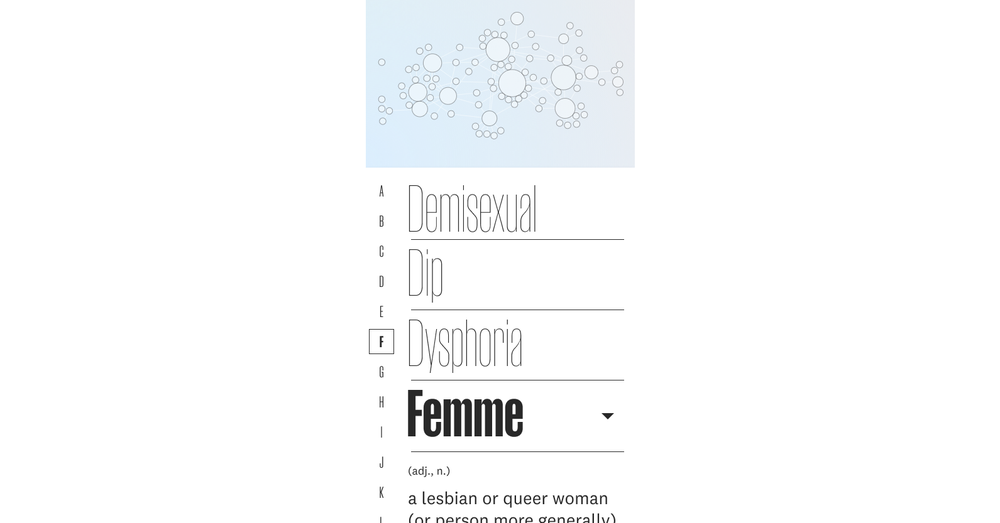
A new literacy tool promoting inclusive LGBTQ+ language
Imagine living your truth, but not being able to tell anyone. That was my experience as a young queer person in small-town Alabama. Twenty years ago, nobody, including LGBTQ+ people, had the language we have today to talk about queerness or gender outside the binary. Coded language made it even more difficult to learn about the LGBTQ+ community, much less learn about myself. Even when I felt safe (mostly in anonymous chat rooms), I found it nearly impossible to talk about what I was going through.
It wasn’t until my college professor, Cliff Simon, shared his story that I first heard someone use terms like “gay” and “lesbian” without shame or judgement. Cliff’s story proved to me that I could be happy, and it’s the reason I came out — and ultimately, my inspiration to start VideoOut, an LGBTQ+ education and advocacy nonprofit.
As the population of openly LGBTQ+ people increases around the world, VideoOut aims to shepherd people from a place of limited exposure to a place of expanded understanding.
LGBTQ inclusive language glossary and definitions
I’m queer trans nonbinary. Not long ago, queer was a derogatory word — it’s what the bullies used when they weaponized their language against me. As attitudes and society evolved, so did our language and our understanding of the power words have to uplift or disparage people.
This year, VideoOut launched The LGBTQ+ Learning Project. It includes multiple phases, including a comprehensive educational resource and live community events that ladder up to our long term goal of building a museum on the National Mall. The Google News Initiative has supported us every step of the way during the first phase – the LGBTQ+ Language and Media Literacy Program.
Partnering with the GNI gave VideoOut the opportunity to work with a team of PhD linguists from the LGBTQ+ community to research the origin, evolution and current usage of 100 words and phrases that range from clinical terminology, like HRT and dysphoria, to slang terms used in niche communities like drag and ballroom. We will continue to expand the data visualization, designed by Polygraph, and employGoogle Trends technology to show the popularity of search terms over time.
This tool guides journalists through the complex world of LGBTQ+ vernacular. It shows who should be credited when using words that belong to marginalized communities. Most importantly, it arms reporters with knowledge, helping them to use LGBTQ+ terminology respectfully and accurately.
The program aims to inform people who are less familiar with the LGBTQ+ community, with the hopes of warming attitudes and fostering allyship. To that end, we’ve partnered with Men’s Health magazine to help contextualize the research and data in the program. We hope to reach a new audience and model how sharing information makes the most impact when it’s done across lines of difference.
The tool will be accessible through the Men’s Health website.
Queer and trans people are not new, but increasingly people are beginning to feel safe about living authentically. According to a recent Gallup poll, “One in six [U.S.] adults in Generation Z identifies as LGBT.” At the same time, a GLAAD report found 45% of non-LGBTQ+ people in the U.S. say they’re confused by the different number of terms to describe individuals who comprise the LGBTQ+ community.
Thanks to the efforts of queer and trans people on the forefront of the liberation movement, things are better now than they have ever been — but they are still fragile. The news media can help. Journalists can reference this tool to ensure they are using language appropriately. They can also interact with members of the community in their process. For example, if there is a story written about trans rights, VideoOut believes the writer should interview trans people, particularly ones who are active in the movement for trans rights.
The LGBTQ+ Language and Media Literacy Program is more than a glossary, though at its simplest, it can function that way. It’s a way to understand the LGBTQ+ community, and hopefully, it will transform the way journalists — and all of us — write and talk about LGBTQ+ people.
A Matter of Impact: November updates from Google.org
COP26 wrapped up last week, and world leaders and industry experts headed home with commitments made to work together to further reduce emissions. You can learn more about Google’s commitments in this blog post.
Even for climate negotiators, transparent and trustworthy data around emissions can be hard to come by. Historically, there has been a limited push to build the kind of data sets and models needed to create a shared fact base for everyone. So we asked ourselves: How can we help advocates, citizens, governments and businesses take action on climate, faster?
We believe philanthropic dollars can play a critical role in creating important public goods, like transparent data sets and accessible digital tools, that might not otherwise exist. The world urgently needs a solid foundation of data and tools to monitor and verify our progress to make better decisions. That’s why much of our sustainability-related philanthropy is now focused on funding the creation and organization of data and the tools to make this data easily usable.
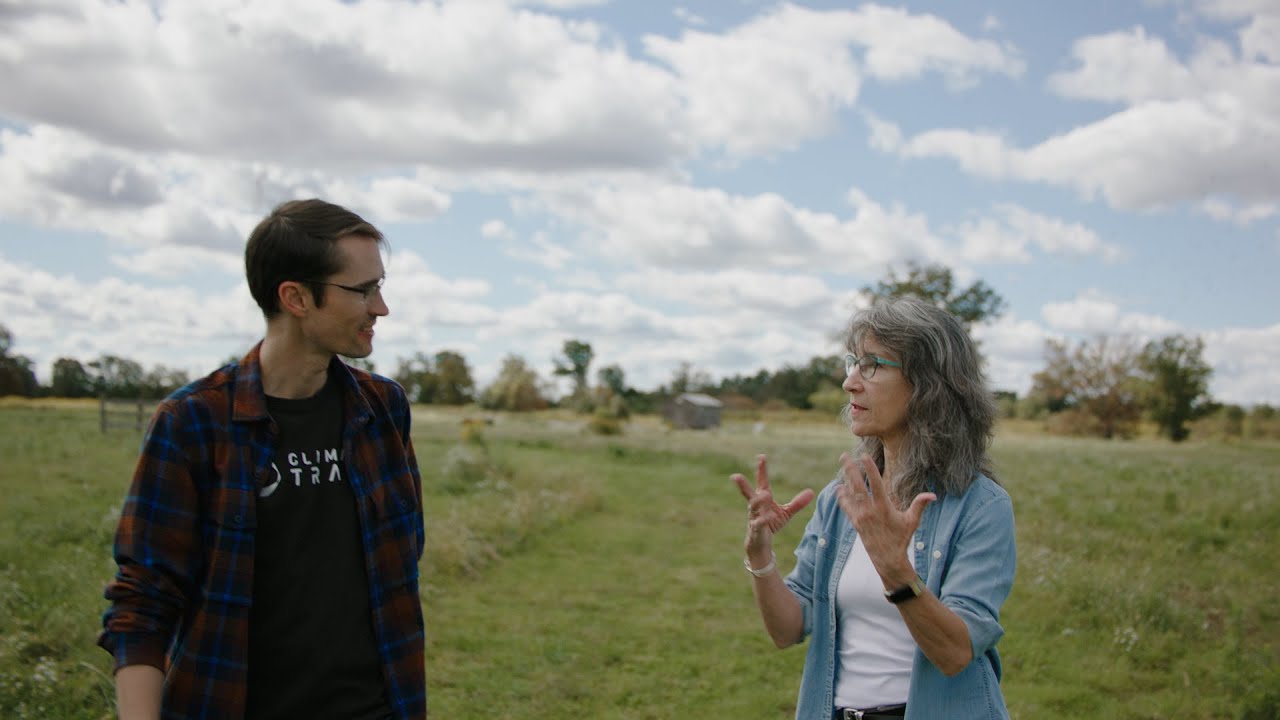
Three of our grantees launched tools around COP26 that are examples of this in action. Climate TRACE, the world’s first independent, comprehensive, near-real time greenhouse gas (GHG) monitoring platform uses large-scale data and AI models to provide neutral, accurate data for everyone. On the small business side, the work of Normative is hugely promising. They’re building out emissions estimates for SMBs and helping companies automatically compile detailed carbon reports so that they have actionable data to make better decisions around reducing their footprint. And for consumers, there’s Open Food Facts, an open-access food products database where users can see the eco-score of food products with a simple scan of the barcode from a mobile device.
We’re proud to support these organizations and look forward to more opportunities to combine philanthropic funding with technology to help everyone take action on climate change.
In case you missed it
Here’s recent progress our grantees have made to close these data gaps.
- BlueConduit is mapping out lead pipes across the U.S, for remediation.
- Open Food Facts expanded to 50 countries — you’ll hear more on that from their co-founder Pierre Slamich below.
- Normative debuted their Industry CO2 Insights carbon emissions accounting engine for small businesses at COP26.
- Restor launched an open data platform built on Google Earth Engine that allows anyone to select an area around the world and analyze its restoration potential.
- Dark Matter Labs launched their first version of TreesAI (Trees As Infrastructure), an open source platform to make it easy to map, monitor and forecast ecosystem services. The tool helps local authorities attract funds to develop and maintain urban nature-focused tools to fight climate change.
- Climate TRACE, supported by $8 million in funding from Google.org and a team of Google.org Fellows, talked about their emissions tracking project in this video.
Hear from one of our grantees: Open Food Facts
Pierre Slamich is the co-founder of Open Food Facts, a collaborative effort to create a worldwide database of food products, thanks to mobile apps that also empower citizens to make more informed food choices. Last spring, Open Food Facts received a $1.3 million Google.org grant and support from a team of 11 Google.org Fellows.
A few words with a Google.org Fellow: Astrid Weber
Astrid Weber is a UX Manager on the Google Assistant team and currently working with Normative for a six month Fellowship.
How this Googler celebrates Native American Heritage Month all year
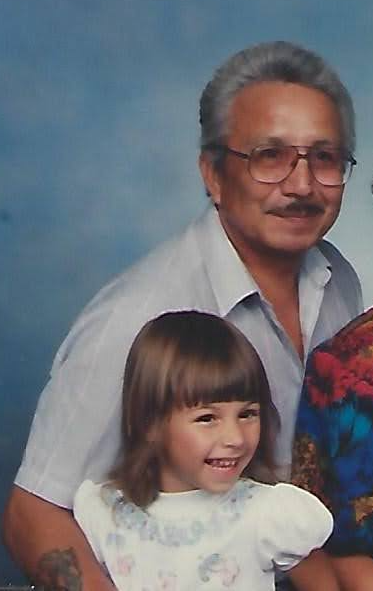
When I was growing up, my Misho (my grandfather) was the chief of our tribe (Prairie Band Potawatomi) and would often tell my brother and me stories and tales sacred to our Indigenous history. When I was in second grade, I asked my Misho to come into my class to tell his stories for show and tell. I was immensely proud of him, and grateful for the opportunity to share my culture with my classmates. But after he left, my classmates started calling me names like “Pocahontas,” and war-whooping at me on the playground. After that, I didn’t mention my tribe or Native affiliation to classmates or colleagues again until I was in my 20s.
Cheryl and her Misho
When I got pregnant, I realized I wanted to reconnect with my culture. I wanted my son to know about the powerful, strong history of the Prairie Band Potawatomi, and about his family and my Misho. I threw myself into trying to learn the language, the history and our stories again. I bought my son children’s books written by Indigenous authors, and watched every film and movie I could about Indigenous culture — even if it wasn’t about the Potawatomi.
As part of reconnecting with my heritage, I also joined Google’s Aboriginal and Indigenous Network (GAIN) to stay up to date on any native-focused events at work. I’d been a member of other employee resource groups at Google before, like Women@ and Pride@, but I wanted to find a group of other Native and Indigenous people. I was thrilled to discover GAIN and see that there were not only other Indigenous Googlers like me, but that there were enough of them to organize their own group.
During this time reconnecting to my heritage, I watched a film about the Murdered and Missing Indigenous Women (MMIW) movement. According to the United States Department of Justice’s Missing and Murdered Indigenous Persons (MMIP) Initiative, “American Indian and Alaska Native people suffer from unacceptable and disproportionately high levels of violence, which can have lasting impacts on families and communities.” In Australia and Canada, Aboriginal and First National Australian women are six times more likely to be victims of homicide than non-Native women. In the U.S., a Task Force was recently created with the purpose of working with tribal governments and developing protocols for the cases of missing and murdered Indigenous peoples, among other things. I remember feeling completely gutted after listening to the stories of Indigenous women disappearing from their Indian reservation, never to be seen again. This is particularly traumatic for many Indigenous tribes as funeral drum and burial ceremonies are critical for the spirit to move on to the afterlife, and for those of us behind to mourn.
After seeing that film, I reached out to GAIN leadership and asked what we could do to raise awareness for MMIW. The next thing I knew, we had a working group of more than a dozen people raising awareness and resources for MMIW organizations. We’ve even held 10 events with Googlers, including panels with Black and Indigenous women to discuss the intersectionality of murdered and missing women of color, began a podcast listening group, held a 5K run and hosted other fundraising and awareness events. This experience has made me feel more connected to my tribe and my culture. It’s empowered me to share more of my whole self at work — I’ve introduced colleagues to my language, for instance, and I’ve felt like I have a space to identify as Native American. I’m proud to be a member of GAIN, and appreciate how much they help to raise awareness not only about Indigenous culture but also MMIW.
There is a saying in the Indigenous community about MMIW: “When an Indigenous woman goes missing, she goes missing twice — first her body vanishes and then her story.” With help from Googlers and GAIN, and through the work of MMIW organizations and their volunteers, I hope these Indigenous women, girls and two-spirit peoples do not go missing forever. You don’t have to be a Googler to take part: You can educate yourself about MMIW, look into policies meant to address this issue, or find ways to support organizations that advocate for MMIW. These missing people are not just faces on missing posters. They’re family — and we are all connected.

Women of color creators share their journeys to success
Women of color are doing incredible things online. They are creating educational and inspiring content, and making their marks as influencers in fashion and beauty, health and wellness, business, and more. They’re making a living building their brands and presenting their authentic selves . And they’re creating strong communities around their shared experiences.
Today, on Women’s Entrepreneurship Day, we’re launching The Conversation — a new YouTube series to share and celebrate the experiences of women of color creators. Each interview will feature a new woman of color creator talking about her background and journey, including her struggles and successes. Guests will share how they’ve built brands that resonate with others, and how they’ve turned their passions into full-time careers. They’ll also discuss how gender, race and culture have influenced their paths, the ups and downs of getting to where they are today, and what they hope to share with the world. No topic is off the table, including how to handle haters and overcome creator burnout.
Our first episode features creator Tyla-Lauren Gilmore. In 2015, after many years of straightening her hair, Tyla-Lauren decided to embrace her natural curls. She began documenting her personal transformation on Instagram and YouTube, and almost immediately, other women took notice. Today, more than 150,000 subscribers follow her beauty and lifestyle posts across her social media channels. Tyla-Lauren continues to share her personal stories in the hopes of inspiring other women to embrace their natural beauty and feel comfortable in their own skin.
Tyla-Lauren Gilmore is the first creator featured in The Conversation.
Next month, we’ll hear from beauty and style influencer, fashion model and creative director Hannah Mussette. Hannah started creating content at the age of 12. Now, at 21, she’s a popular social media personality sharing modeling, fashion, makeup and hair care tips on YouTube and Instagram, and inviting candid discussions on topics such as self-care and social justice. She also co-founded a line of hair care products for natural Black hair called JuMu. The youngest creator interviewed in our series, Hannah shares what it’s been like to grow up online in front of an audience that supports and occasionally scrutinizes her content, which has evolved over the nine years she’s been posting.

Hannah Musette is a fashion model and influencer who started creating YouTube videos in high school
The goal of The Conversation is to pull back the curtain on creators like Tyla-Lauren and Hannah so you can get to know the women behind the brands. Visit the Google for Creators YouTube channel to watch the first episode of The Conversation, and share what you thought in the comments.
B2B Marketing News: Global Social Trends Study, What B2B Marketers Are Investing In, LinkedIn Product Pages, & New Google Search CTR Study
Here’s What B2B Content Marketers Will be Investing in Next Year
69 percent of B2B content marketers have said that videos will be their top area of content marketing investment in 2022, with 61 percent saying that events will lead their investment areas next year, while 57 said that owned-media assets will top their content marketing spending in 2022 — two of several statistics of interest to digital marketing contained in recently-released survey data. MarketingCharts
New LinkedIn data shows how gen Z is recalibrating the norms of work
Gen Z comprises the fastest growing audience demographic on the LinkedIn (client) platform, with 63 percent visiting the Microsoft-owner professional network at least once a week, and 74 percent saying they use LinkedIn to learn new skills, according to newly-released report data. . The Drum
YouTube gives dislikes the thumbs-down, hides public counts
Google’s YouTube video platform has done away with the default display of thumbs-down count data, moving instead to make that information available only as private feedback to video content publishers, in an effort to foster more respectful interactions between creators and video viewers, YouTube recently announced. The Verge
B2B Buyers Say They’re Engaging Salespeople Late in the Process, But Are Open to Doing So Earlier
The solution identification stage is the most frequent point of first engagement B2B buyers use with sellers, followed by the identification and clarification stage, with the evaluation of solutions phase rounding out the top three first engagement points, according to newly-released survey data of interest to online marketers. MarketingCharts
Making the Business Case for Your Marketing Budget
Building a collaborative relationship with corporate suite peers is a leading way to make the case for marketing budgets, and the Harvard Business Review looks at how CMOs can show the effectiveness of marketing in driving business, using data, trust, and more. Harvard Business Review
Massive CTR Study Reveals Actionable Insights
Differences in Google search desktop and mobile click-through-rate (CTR) insights garnered from 750 billion impressions are featured in newly-released third-party study data, which reveal that in the business and industrial sectors more searches for business-related content are conducted on mobile devices than on traditional desktops. Search Engine Journal
LinkedIn Quietly Experiments With Product Pages To Boost Conversations
Microsoft-owned LinkedIn has undergone testing of specialized business product pages on the platform, as part of ongoing efforts to increase engagement between members, brands, and brand product development teams, the social network recently announced. MediaPost
25% of marketers cite sustainability as ‘general goal’ rather than employ specific metrics
Gauging the success of sustainability efforts is a top challenge among marketers, with some 42 percent having said that they need to make new technology investments in the area, according to recently-released survey data of interest to digital marketers. The Drum
ON24 teams up with HubSpot in app marketplace
B2B users will be able to better integrate the features of the HubSpot platform and cloud-based hybrid engagement service ON24, with new event data-sharing options available in a forthcoming upgrade to the platforms, ON24 recently announced. MarTech
Budgets Show Spending Across All Social Networks: Trends For 2022
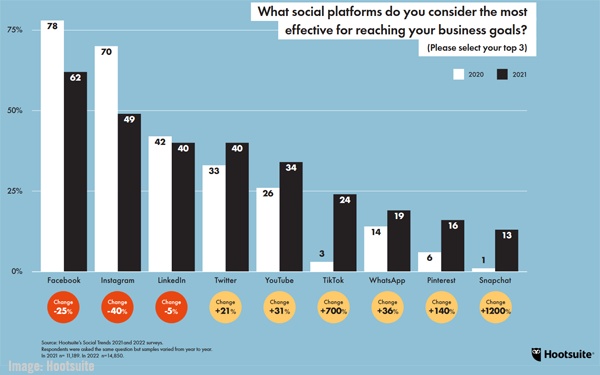
Facebook, Instagram, and LinkedIn are the three top social media platforms when it comes to effectively reaching business goals, according to Hootsuite’s newly-released annual social trends report, which has also shown that younger people are increasingly using social networks to research brands instead of traditional search engines. MediaPost
ON THE LIGHTER SIDE:
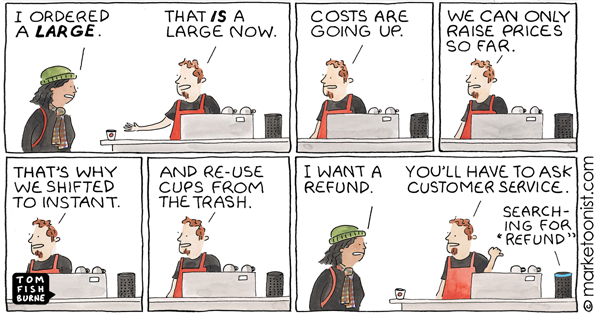
A lighthearted look at the “inflation, shrinkflation, and skimpflation” by Marketoonist Tom Fishburne — Marketoonist
Instagram is Paying Up to $35,000 to Lure Creators Away From TikTok — PetaPixel
Atari Unveils New Logo, Games, And More For 50th Anniversary — Forbes
TOPRANK MARKETING & CLIENTS IN THE NEWS:
- Lee Odden — 5 Questions 4 With Lee Odden — Demandbase
- Lane R. Ellis — What’s Trending: Embrace Your Inner Tinker — LinkedIn
- Lee Odden — Membership Update Fall 2021 [Digital Marketing Institute] — Digital Marketing Institute
Have you found your own top B2B marketing news from the past week? Please drop us a line in the comments below.
Thanks for taking the time to join us for the week’s TopRank Marketing B2B marketing news, and we hope you’ll return next Friday for more of the week’s most relevant B2B and digital marketing industry news. In the meantime, you can follow us on our LinkedIn page, or at @toprank on Twitter for even more timely daily news.
The post B2B Marketing News: Global Social Trends Study, What B2B Marketers Are Investing In, LinkedIn Product Pages, & New Google Search CTR Study appeared first on B2B Marketing Blog – TopRank®.

Le migliori Smart TV in offerta per il Black Friday di Amazon

Le migliori offerte Anker su Amazon: audio video e molto altro
Crime reporting gets a boost in readers: A GNI Journey
Editor’s Note from Ludovic Blecher, Head of Google News Initiative Innovation: The GNI Innovation Challengeprogram is designed to stimulate forward-thinking ideas for the news industry. The story below by Amos Gelb, publisher of D.C. Witness and Baltimore Witness, is part of an innovator seriessharing inspiring stories and learnings from funded projects.
Violent crime is surging across America while cities scramble to reform their criminal justice systems. This is especially difficult because there is no single American criminal justice system. Every jurisdiction has its own practices, methods and even laws. What they all have in common, however, is a lack of reliable, up-to-date information that could drive local change by providing transparency and accountability.
Starting in 2015, D.C. Witness developed a new approach to criminal justice journalism to try to address this issue. Traditional crime reporting can give an incomplete and warped view of what’s really going on, often based on only the most salacious cases. Instead, D.C. Witness reports on every step of every homicide from act to judicial resolution. This offers a distinct perspective across the entire criminal justice landscape.
Since launch, the D.C. Witness team reported on more than 1,300 homicide cases in Washington, D.C., wrote stories and gathered data. The journalism was strong, but the website was clunky and the data a mess. The result: D.C. Witness was having little impact.
The team realized they needed a better way to manage and present the data. But this would require resources beyond the existing budget. So D.C. Witness applied for support from the Google News Initiative Innovation Challenge. D.C. Witness was selected by the GNI with the goal of reengineering their systems. The result was nothing short of a reincarnation.
The GNI process, which requires drawing up detailed project milestones, forced D.C. Witness to tear everything down, reviewing how each process worked, how and why. The team realized they were getting in their own way. They’d committed the cardinal journalist sin of falling in love with their own work, losing sight of its potential value and the audience it served.
Further proof came almost immediately after the database and website were relaunched. As court activity has picked up after the peak of the pandemic, D.C. Witness’s audience has been using new functions developed to provide readers with better, customized case information.
Data and reporting work on violence reduction programs called “violence interrupters” was also effective. D.C. politicians were promoting the programs, boosting funding by $10 million, but there had been neither evaluation nor oversight. The GNI-remade platform enabled D.C. Witness to provide the first public data showing the programs were not working as claimed, dispersing rather than reducing homicides. The resulting public outrage brought critical scrutiny.
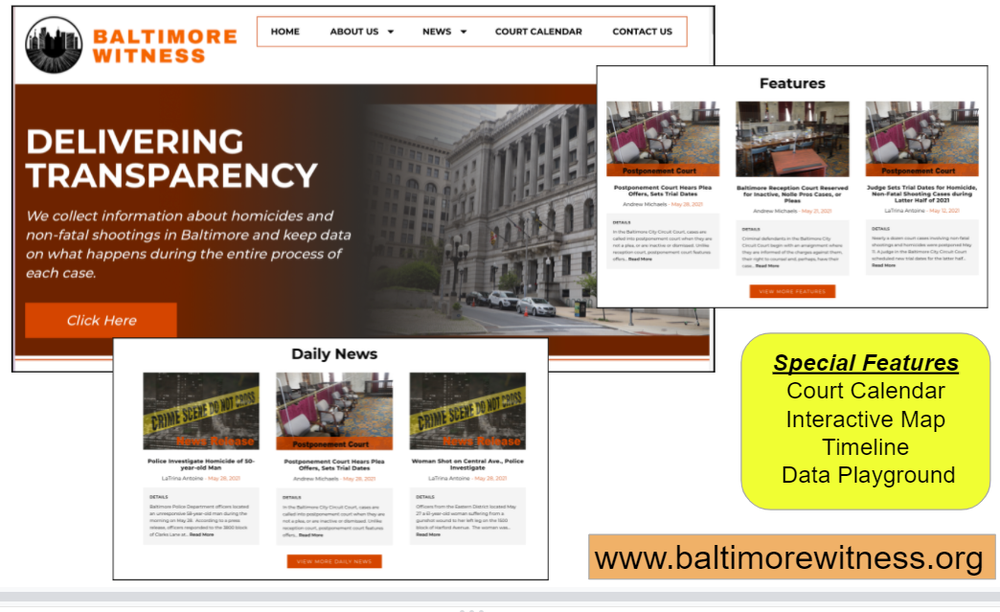
The Baltimore Witness’s website
Having realized the impact that making the data visible was having, the team launched a second website out of Baltimore, MD. There, the court that dealt with violent felonies routinely held back crucial public case information. In response to Baltimore Witness reporting, the court changed its procedures making more information accessible to the public.
The new website has also brought success in viewership with its audience growing 50% month-over-month since its launch.
While GNI helped D.C. (and now Baltimore) Witness better understand how they can reach people and serve their communities, this is just the beginning for the reporting teams. Now, D.C. Witness and Baltimore Witness can focus on maximizing their impact for everyone’s benefit.