Ask a Techspert: How do digital wallets work?
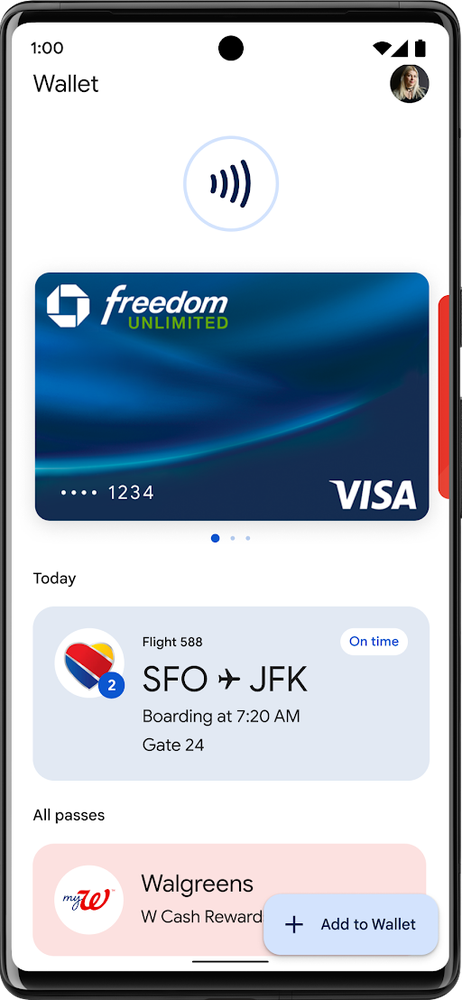
In recent months, you may have gone out to dinner only to realize you left your COVID vaccine card at home. Luckily, the host is OK with the photo of it on your phone. In this case, it’s acceptable to show someone a picture of a card, but for other things it isn’t — an image of your driver’s license or credit card certainly won’t work. So what makes digital versions of these items more legit than a photo? To better understand the digitization of what goes into our wallets and purses, I talked to product manager Dong Min Kim, who works on the brand new Google Wallet. Google Wallet, which will be coming soon in over 40 countries, is the new digital wallet for Android and Wear OS devices…but how does it work?
Let’s start with a basic question: What is a digital wallet?
A digital wallet is simply an application that holds digital versions of the physical items you carry around in your actual wallet or purse. We’ve seen this shift where something you physically carry around becomes part of your smartphone before, right?
Like..?
Look at the camera: You used to carry around a separate item, a camera, to take photos. It was a unique device that did a specific thing. Then, thanks to improvements in computing power, hardware and image processing algorithms, engineers merged the function of the camera — taking photos — into mobile phones. So now, you don’t have to carry around both, if you don’t want to.
Ahhh yes, I am old enough to remember attending college gatherings with my digital camera andmy flip phone.
Ha! So think about what else you carry around: your wallet and your keys.
So the big picture here is that digital wallets help us carry around less stuff?
That’s certainly something we’re thinking about, but it’s more about how we can make these experiences — the ones where you need to use a camera, or in our case, items from your wallet — better. For starters, there’s security: It’s really hard for someone to take your phone and use your Google Wallet, or to take your card and add it to their own phone. Your financial institution will verify who you are before you can add a card to your phone, and you can set a screen lock so a stranger can’t access what’s on your device. And should you lose your device, you can remotely locate, lock or even wipe it from “Find My Device.”
What else can Google Wallet do that my physical wallet can’t?
If you saved your boarding pass for a flight to Google Wallet, it will notify you of delays and gate changes. When you head to a concert, you’ll receive a notification on your phone beforehand, reminding you of your saved tickets.
Wallet also works with other Google apps — for instance if you’re taking the bus to see a friend and look up directions in Google Maps, your transit card and balance will show up alongside the route. If you’re running low on fare, you can tap and add more. We’ll also give you complete control over how items in your wallet are used to enable these experiences; for example, the personal information on your COVID vaccine pass is kept on your device and never shared without your permission, not even with Google.
Plus, even if you lose your credit or debit card and you’re waiting for the replacement to show up, you can still use that card with Google Wallet because of the virtual number attached to it.
This might be taking a step backwards, but can I pay someone from my Google Wallet? As in can I send money from a debit card, or straight from my bank account?
That’s actually where the Google Pay app — which is available in markets like the U.S., India and Singapore — comes in. We’ll keep growing this app as a companion app where you can do more payments-focused things like send and receive money from friends or businesses, discover offers from your favorite retailers or manage your transactions.
OK, but can I pay with my Google Wallet?
Yes,you can still pay with the cards stored in your Google Wallet in stores where Google Pay is accepted; it’s simple and secure.
Use payment cards in Google Wallet in stores with Google Pay, got it — but how does everything else “get” into Wallet?
We’ve already partnered with hundreds of transit agencies, retailers, ticket providers, health agencies and airlines so they can create digital versions of their cards or tickets for Google Wallet. You can add a card or ticket directly to Wallet, or within the apps or sites of businesses we partner with, you’ll see an option to add it to Wallet. We’re working on adding more types of content for Wallet, too, like digital IDs, or office and hotel keys.
Developers can make almost any item into a digital pass.. Developers can use the templates we’ve created, like for boarding passes and event tickets — or they can use a generic template if it’s something more unique and we don’t have a specific solution for it yet. This invitation to developers is part of what I think makes Google Wallet interesting; it’s very open.
What exactly do you mean by “open” exactly?
Well, the Android platform is open — any Android developer can use and develop for Wallet. One thing that’s great about that is all these features and tools can be made available on less expensive phones, too, so it isn’t only people who can afford the most expensive, newest phones out there who can use Google Wallet. Even if a phone can’t use some features of Google Wallet, it’s possible for developers to use QR or barcodes for their content, which more devices can access.
So working with Google Wallet is easier for developers. Any ways you’re making things easier for users?
Plenty of them! In particular, we’re working on ways to make it easy to add objects directly from your phone too. For instance, today if you take a screenshot of your boarding pass or Covid vaccine card from an Android device, we’ll give you the option to add it directly to your Google Wallet!
Get the full picture with helpful context on websites
When you think about how you can stay safe online, you might immediately think of protecting your data, updating your passwords, or having control over your personal information. But another important part of online safety is being confident in the information you find.
Information quality — in other words, surfacing relevant information from reliable sources — is a key principle of Google Search, and it’s one we relentlessly invest in. We also give you tools to evaluate for yourself the reliability of the information you come across.
Helpful context on websites
One of the tools we launched last year, About this Result, has now been used more than 1.6 billion times. This tool is available in English on individual Search results, helping you to see important context about a website before you even visit it. More languages will be available for this tool later this year.
But we want to ensure you have the tools to evaluate information wherever you are online — not just on the search results page, but also if you’ve already picked a webpage to visit. So we’re making this helpful context more accessible as you explore the web.
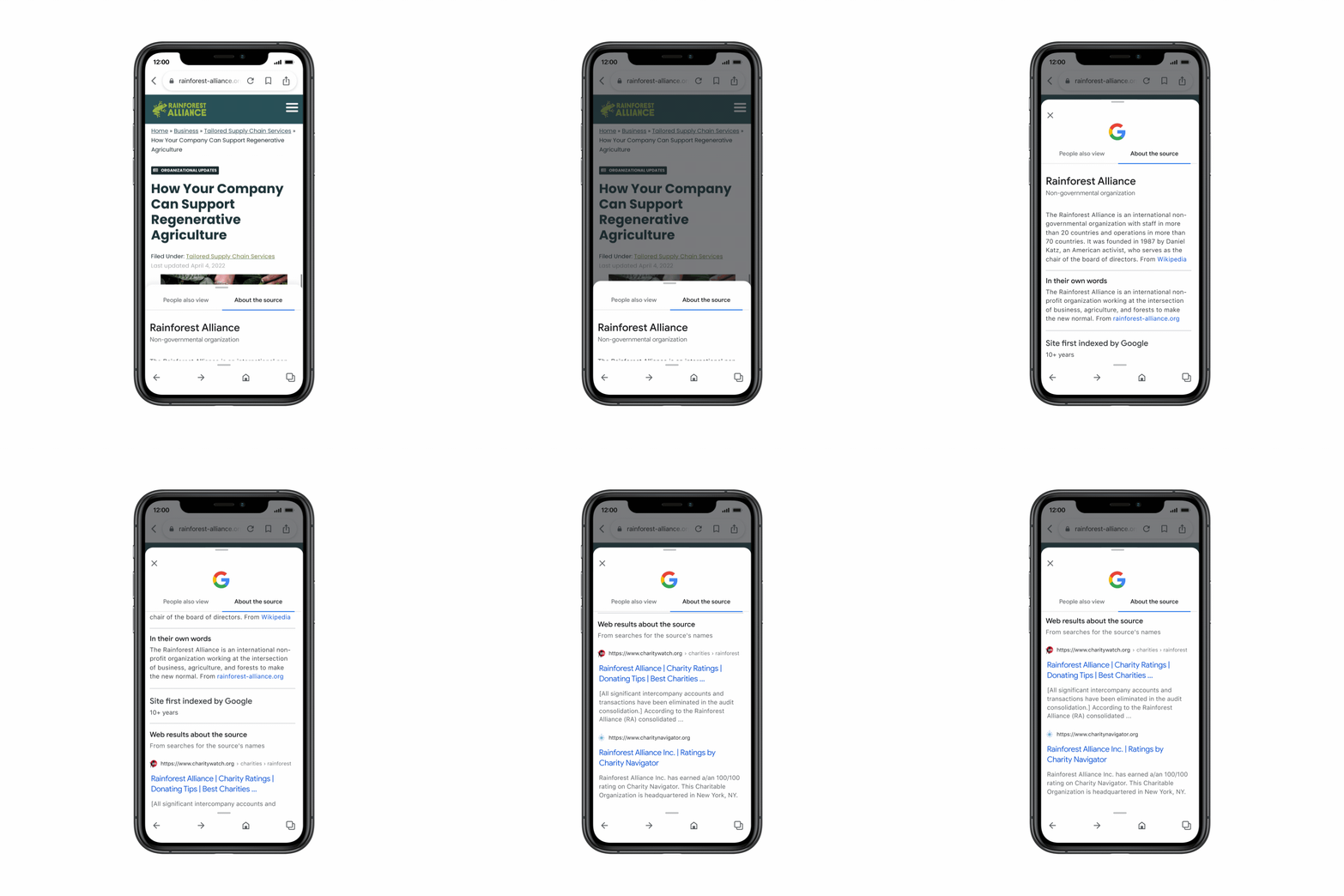
Soon, when you’re viewing a web page on the Google App, you’ll be able to see a tab with information about the source with just a tap — including a brief description, what they say about themselves and what others on the web say about them.
Imagine you’re researching conservation efforts, and find yourself on an unfamiliar website of a rainforest protection organization. Before you decide to donate, you’d like to understand if it’s an organization you feel confident you should support. With this update, you’ll be able to find helpful context about a source while you’re already on a website.
You’ll be able to see context like this on any website — coming soon to the Google App on iOS and Android.
We hope this will not only give you more context and peace of mind when you search, but also help you explore with confidence.
A new Search tool to help control your online presence
Have you ever searched for your name online to see what other people can find out about you? You’re not alone. And for many people, a key element of feeling safer and more private online is having greater control over where their sensitive, personally-identifiable information can be found.
These days, it’s important to have simple tools to manage your online presence. That’s why we’re introducing a new tool in Google Search to help you easily control whether your personally-identifiable information can be found in Search results, so you can have more peace of mind about your online footprint.
Remove results about you in Search
You might have seen that we recently updated our policies to enable people to request the removal of sensitive, personally-identifiable information — including contact information, like a phone number, email address, or home address — from Search.
Now, we’re making it easier for you to remove results that contain your contact information from Google. We’re rolling out a new tool to accompany our updated policies and streamline the request process.
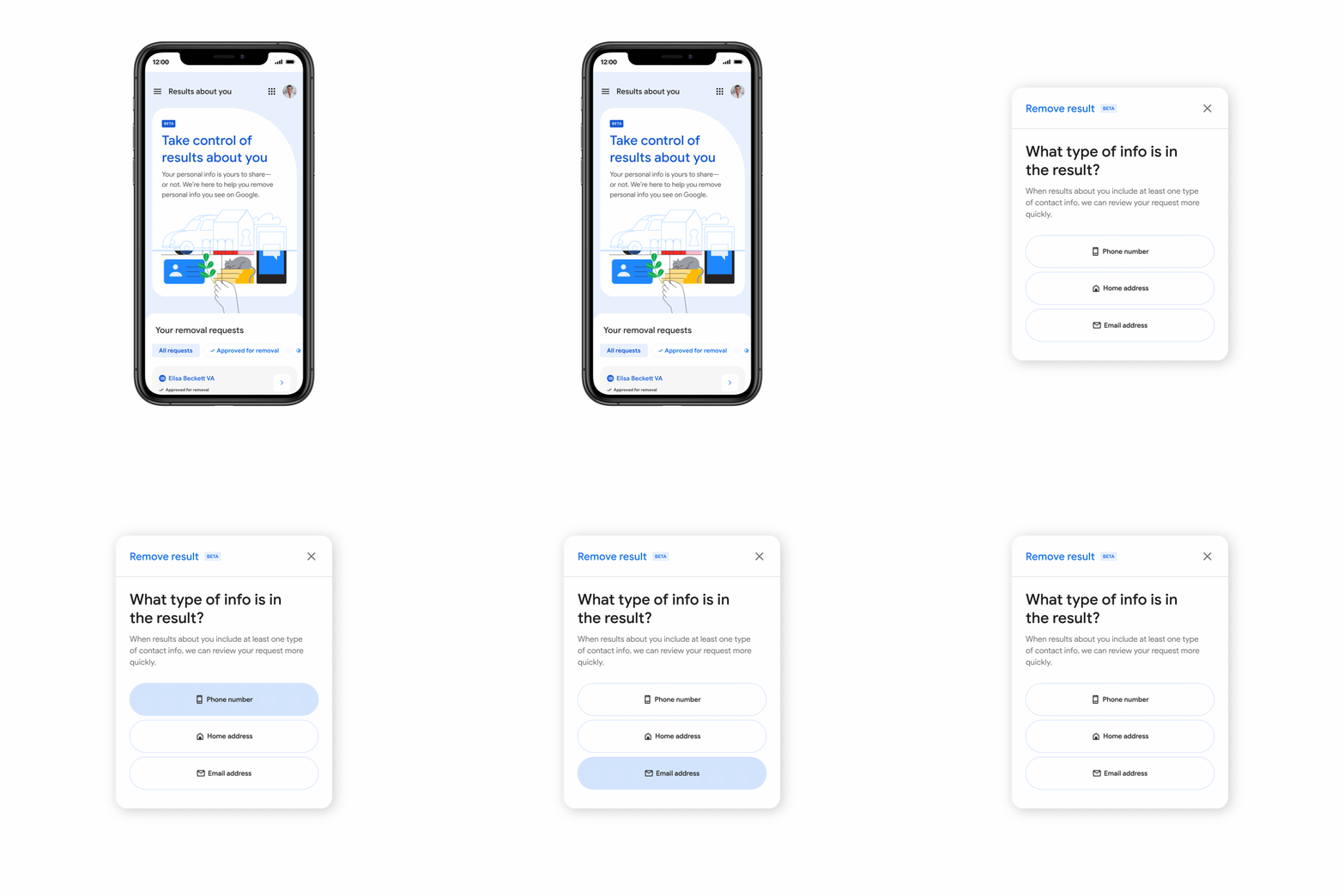
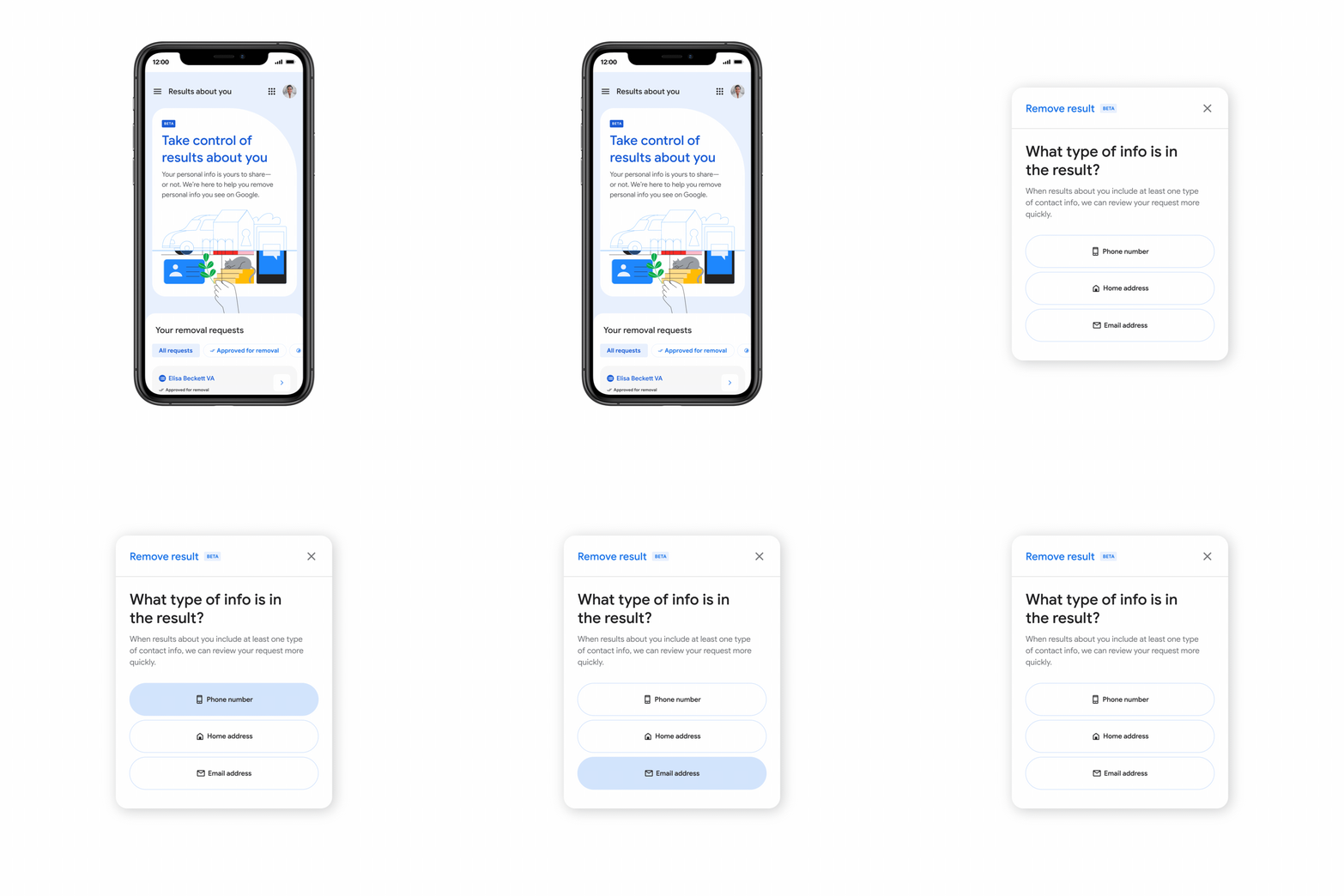
When you’re searching on Google and find results about you that contain your phone number, home address, or email address, you’ll be able to quickly request their removal from Google Search — right as you find them. With this new tool, you can request removal of your contact details from Search with a few clicks, and you’ll also be able to easily monitor the status of these removal requests.
This feature will be available in the coming months in the Google App, and you’ll also be able to make removal requests by going to the three dots next to individual Google Search results. In the meantime, you can make requests to remove your info from our support page.
It’s important to note that when we receive removal requests, we will evaluate all content on the web page to ensure that we’re not limiting the availability of other information that is broadly useful, for instance in news articles. And of course, removing contact information from Google Search doesn’t remove it from the web, which is why you may wish to contact the hosting site directly, if you’re comfortable doing so.
At Google, we strongly believe in open access to information, and we also have a deep commitment to protecting people — and their privacy — online. These changes are significant and important steps to help you manage your online presence — and we want to make sure it’s as easy as possible for you to be in control.

Improving skin tone representation across Google
Seeing yourself reflected in the world around you — in real life, media or online — is so important. And we know that challenges with image-based technologies and representation on the web have historically left people of color feeling overlooked and misrepresented. Last year, we announced Real Tone for Pixel, which is just one example of our efforts to improve representation of diverse skin tones across Google products.
Today, we’re introducing a next step in our commitment to image equity and improving representation across our products. In partnership with Harvard professor and sociologist Dr. Ellis Monk, we’re releasing a new skin tone scale designed to be more inclusive of the spectrum of skin tones we see in our society. Dr. Monk has been studying how skin tone and colorism affect people’s lives for more than 10 years.
The culmination of Dr. Monk’s research is the Monk Skin Tone (MST) Scale, a 10-shade scale that will be incorporated into various Google products over the coming months. We’re openly releasing the scale so anyone can use it for research and product development. Our goal is for the scale to support inclusive products and research across the industry — we see this as a chance to share, learn and evolve our work with the help of others.
The 10 shades of the Monk Skin Tone Scale.
This scale was designed to be easy-to-use for development and evaluation of technology while representing a broader range of skin tones. In fact, our research found that amongst participants in the U.S., people found the Monk Skin Tone Scale to be more representative of their skin tones compared to the current tech industry standard. This was especially true for people with darker skin tones.
“In our research, we found that a lot of the time people feel they’re lumped into racial categories, but there’s all this heterogeneity with ethnic and racial categories,” Dr. Monk says. “And many methods of categorization, including past skin tone scales, don’t pay attention to this diversity. That’s where a lack of representation can happen…we need to fine-tune the way we measure things, so people feel represented.”

Using the Monk Skin Tone Scale to improve Google products
Updating our approach to skin tone can help us better understand representation in imagery, as well as evaluate whether a product or feature works well across a range of skin tones. This is especially important for computer vision, a type of AI that allows computers to see and understand images. When not built and tested intentionally to include a broad range of skin-tones, computer vision systems have been found to not perform as well for people with darker skin.
The MST Scale will help us and the tech industry at large build more representative datasets so we can train and evaluate AI models for fairness, resulting in features and products that work better for everyone — of all skin tones. For example, we use the scale to evaluate and improve the models that detect faces in images.
Here are other ways you’ll see this show up in Google products.
Improving skin tone representation in Search
Every day, millions of people search the web expecting to find images that reflect their specific needs. That’s why we’re also introducing new features using the MST Scale to make it easier for people of all backgrounds to find more relevant and helpful results.
For example, now when you search for makeup related queries in Google Images, you’ll see an option to further refine your results by skin tone. So if you’re looking for “everyday eyeshadow” or “bridal makeup looks” you’ll more easily find results that work better for your needs.

Seeing yourself represented in results can be key to finding information that’s truly relevant and useful, which is why we’re also rolling out improvements to show a greater range of skin tones in image results for broad searches about people, or ones where people show up in the results. In the future, we’ll incorporate the MST Scale to better detect and rank images to include a broader range of results, so everyone can find what they’re looking for.
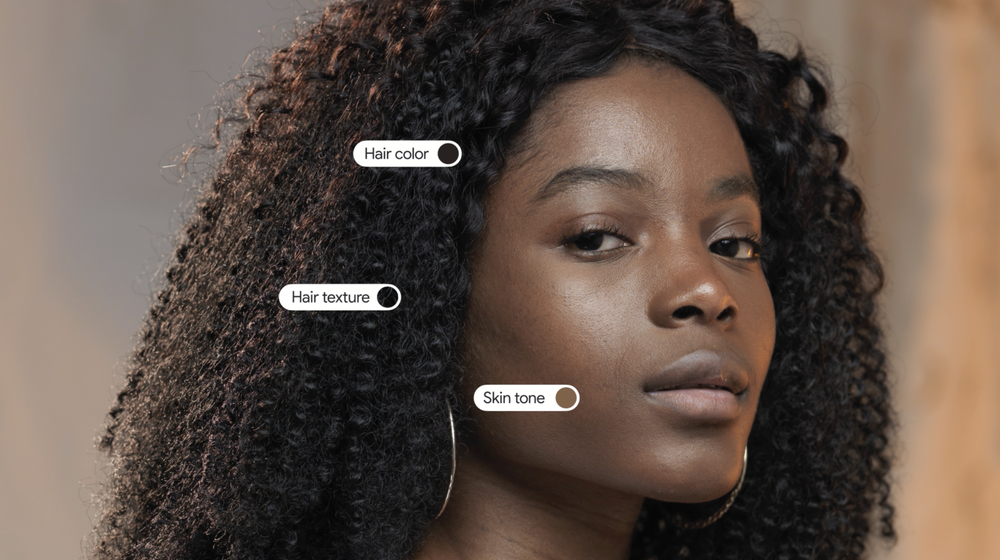
Creating a more representative Search experience isn’t something we can do alone, though. How content is labeled online is a key factor in how our systems surface relevant results. In the coming months, we’ll also be developing a standardized way to label web content. Creators, brands and publishers will be able to use this new inclusive schema to label their content with attributes like skin tone, hair color and hair texture. This will make it possible for content creators or online businesses to label their imagery in a way that search engines and other platforms can easily understand.
Improving skin tone representation in Google Photos
We’ll also be using the MST Scale to improve Google Photos. Last year, we introduced an improvement to our auto enhance feature in partnership with professional image makers. Now we’re launching a new set of Real Tone filters that are designed to work well across skin tones and evaluated using the MST Scale. We worked with a diverse range of renowned image makers, like Kennedi Carter and Joshua Kissi, who are celebrated for beautiful and accurate depictions of their subjects, to evaluate, test and build these filters. These new Real Tone filters allow you to choose from a wider assortment of looks and find one that reflects your style. Real Tone filters will be rolling out on Google Photos across Android, iOS and Web in the coming weeks.

What’s next?
We’re openly releasing the Monk Skin Tone Scale so that others can use it in their own products, and learn from this work —and so that we can partner with and learn from them. We want to get feedback, drive more interdisciplinary research, and make progress together. We encourage you to share your thoughts here. We’re continuing to collaborate with Dr. Monk to evaluate the MST Scale across different regions and product applications, and we’ll iterate and improve on it to make sure the scale works for people and use cases all over the world. And, we’ll continue our efforts to make Google’s products work even better for every user.
The best part of working on this project is that it isn’t just ours — while we’re committed to making Google products better and more inclusive, we’re also excited about all the possibilities that exist as we work together to build for everyone across the web.

Massimo Alparone torna su Rai 2 con Star Bene
Massimo Alparone, già Mr Universo Fitness ed esperto e consulente del benessere, dopo il successo di Buongiorno Estate, torna su Rai 2 con Star Bene, 6 puntate dal 14 Maggio,…
L’articolo Massimo Alparone torna su Rai 2 con Star Bene scritto da Paolo Brambilla proviene da Assodigitale.

Google I/O 2022: Advancing knowledge and computing
[TL;DR]
Nearly 24 years ago, Google started with two graduate students, one product, and a big mission: to organize the world’s information and make it universally accessible and useful. In the decades since, we’ve been developing our technology to deliver on that mission.
The progress we’ve made is because of our years of investment in advanced technologies, from AI to the technical infrastructure that powers it all. And once a year — on my favorite day of the year :) — we share an update on how it’s going at Google I/O.
Today, I talked about how we’re advancing two fundamental aspects of our mission — knowledge and computing — to create products that are built to help. It’s exciting to build these products; it’s even more exciting to see what people do with them.
Thank you to everyone who helps us do this work, and most especially our Googlers. We are grateful for the opportunity.
– Sundar
Editor’s note: Below is an edited transcript of Sundar Pichai’s keynote address during the opening of today’s Google I/O Developers Conference.
Hi, everyone, and welcome. Actually, let’s make that welcome back! It’s great to return to Shoreline Amphitheatre after three years away. To the thousands of developers, partners and Googlers here with us, it’s great to see all of you. And to the millions more joining us around the world — we’re so happy you’re here, too.
Last year, we shared how new breakthroughs in some of the most technically challenging areas of computer science are making Google products more helpful in the moments that matter. All this work is in service of our timeless mission: to organize the world’s information and make it universally accessible and useful.
I’m excited to show you how we’re driving that mission forward in two key ways: by deepening our understanding of information so that we can turn it into knowledge; and advancing the state of computing, so that knowledge is easier to access, no matter who or where you are.
Today, you’ll see how progress on these two parts of our mission ensures Google products are built to help. I’ll start with a few quick examples. Throughout the pandemic, Google has focused on delivering accurate information to help people stay healthy. Over the last year, people used Google Search and Maps to find where they could get a COVID vaccine nearly two billion times.
Google’s flood forecasting technology sent flood alerts to 23 million people in India and Bangladesh last year.
We’ve also expanded our flood forecasting technology to help people stay safe in the face of natural disasters. During last year’s monsoon season, our flood alerts notified more than 23 million people in India and Bangladesh. And we estimate this supported the timely evacuation of hundreds of thousands of people.
In Ukraine, we worked with the government to rapidly deploy air raid alerts. To date, we’ve delivered hundreds of millions of alerts to help people get to safety. In March I was in Poland, where millions of Ukrainians have sought refuge. Warsaw’s population has increased by nearly 20% as families host refugees in their homes, and schools welcome thousands of new students. Nearly every Google employee I spoke with there was hosting someone.
Adding 24 more languages to Google Translate
In countries around the world, Google Translate has been a crucial tool for newcomers and residents trying to communicate with one another. We’re proud of how it’s helping Ukrainians find a bit of hope and connection until they are able to return home again.
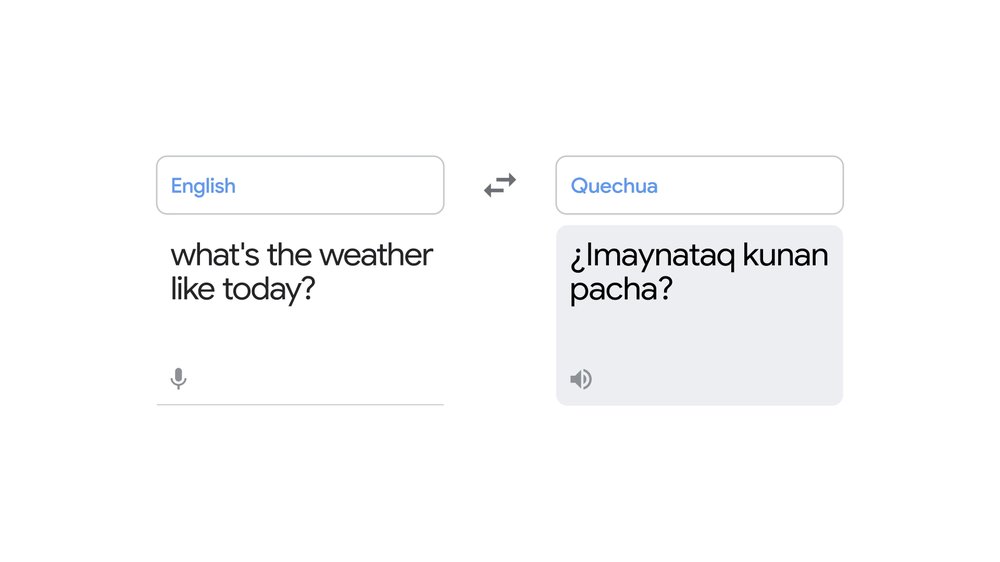
With machine learning advances, we’re able to add languages like Quechua to Google Translate.
Real-time translation is a testament to how knowledge and computing come together to make people’s lives better. More people are using Google Translate than ever before, but we still have work to do to make it universally accessible. There’s a long tail of languages that are underrepresented on the web today, and translating them is a hard technical problem. That’s because translation models are usually trained with bilingual text — for example, the same phrase in both English and Spanish. However, there’s not enough publicly available bilingual text for every language.
So with advances in machine learning, we’ve developed a monolingual approach where the model learns to translate a new language without ever seeing a direct translation of it. By collaborating with native speakers and institutions, we found these translations were of sufficient quality to be useful, and we’ll continue to improve them.
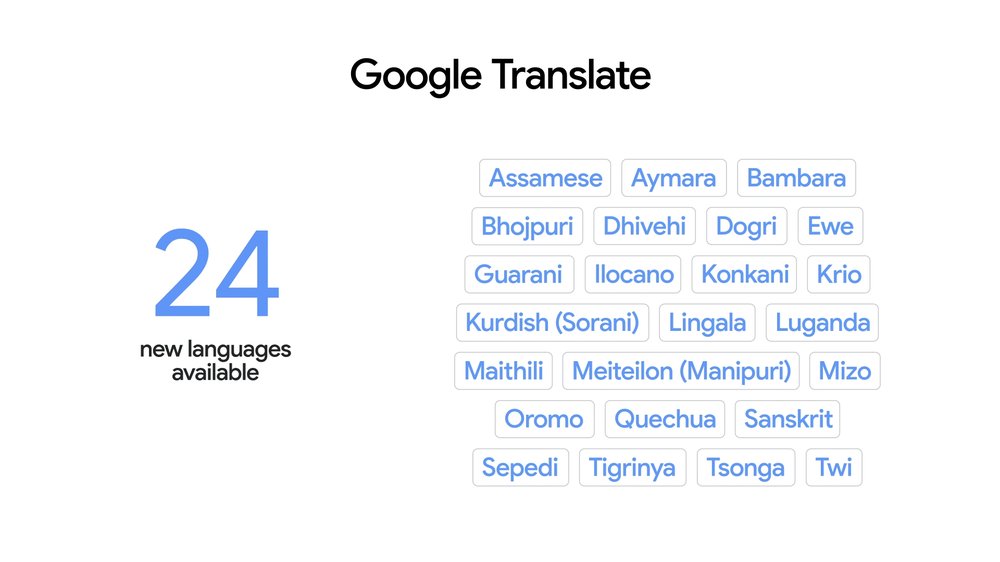
We’re adding 24 new languages to Google Translate.
Today, I’m excited to announce that we’re adding 24 new languages to Google Translate, including the first indigenous languages of the Americas. Together, these languages are spoken by more than 300 million people. Breakthroughs like this are powering a radical shift in how we access knowledge and use computers.
Taking Google Maps to the next level
So much of what’s knowable about our world goes beyond language — it’s in the physical and geospatial information all around us. For more than 15 years, Google Maps has worked to create rich and useful representations of this information to help us navigate. Advances in AI are taking this work to the next level, whether it’s expanding our coverage to remote areas, or reimagining how to explore the world in more intuitive ways.
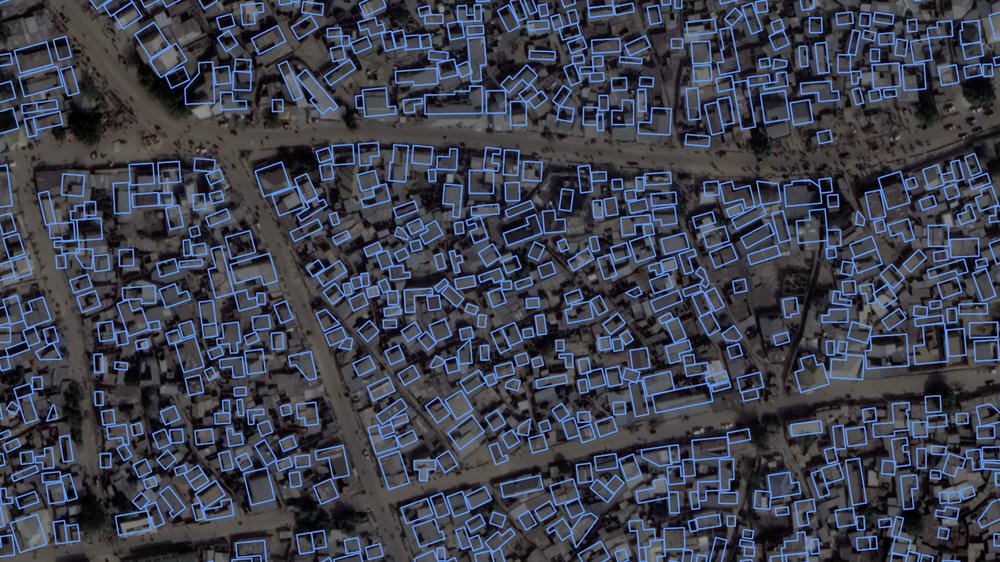
Advances in AI are helping to map remote and rural areas.
Around the world, we’ve mapped around 1.6 billion buildings and over 60 million kilometers of roads to date. Some remote and rural areas have previously been difficult to map, due to scarcity of high-quality imagery and distinct building types and terrain. To address this, we’re using computer vision and neural networks to detect buildings at scale from satellite images. As a result, we have increased the number of buildings on Google Maps in Africa by 5X since July 2020, from 60 million to nearly 300 million.
We’ve also doubled the number of buildings mapped in India and Indonesia this year. Globally, over 20% of the buildings on Google Maps have been detected using these new techniques. We’ve gone a step further, and made the dataset of buildings in Africa publicly available. International organizations like the United Nations and the World Bank are already using it to better understand population density, and to provide support and emergency assistance.
Immersive view in Google Maps fuses together aerial and street level images.
We’re also bringing new capabilities into Maps. Using advances in 3D mapping and machine learning, we’re fusing billions of aerial and street level images to create a new, high-fidelity representation of a place. These breakthrough technologies are coming together to power a new experience in Maps called immersive view: it allows you to explore a place like never before.
Let’s go to London and take a look. Say you’re planning to visit Westminster with your family. You can get into this immersive view straight from Maps on your phone, and you can pan around the sights… here’s Westminster Abbey. If you’re thinking of heading to Big Ben, you can check if there’s traffic, how busy it is, and even see the weather forecast. And if you’re looking to grab a bite during your visit, you can check out restaurants nearby and get a glimpse inside.
What’s amazing is that isn’t a drone flying in the restaurant — we use neural rendering to create the experience from images alone. And Google Cloud Immersive Stream allows this experience to run on just about any smartphone. This feature will start rolling out in Google Maps for select cities globally later this year.
Another big improvement to Maps is eco-friendly routing. Launched last year, it shows you the most fuel-efficient route, giving you the choice to save money on gas and reduce carbon emissions. Eco-friendly routes have already rolled out in the U.S. and Canada — and people have used them to travel approximately 86 billion miles, helping save an estimated half million metric tons of carbon emissions, the equivalent of taking 100,000 cars off the road.
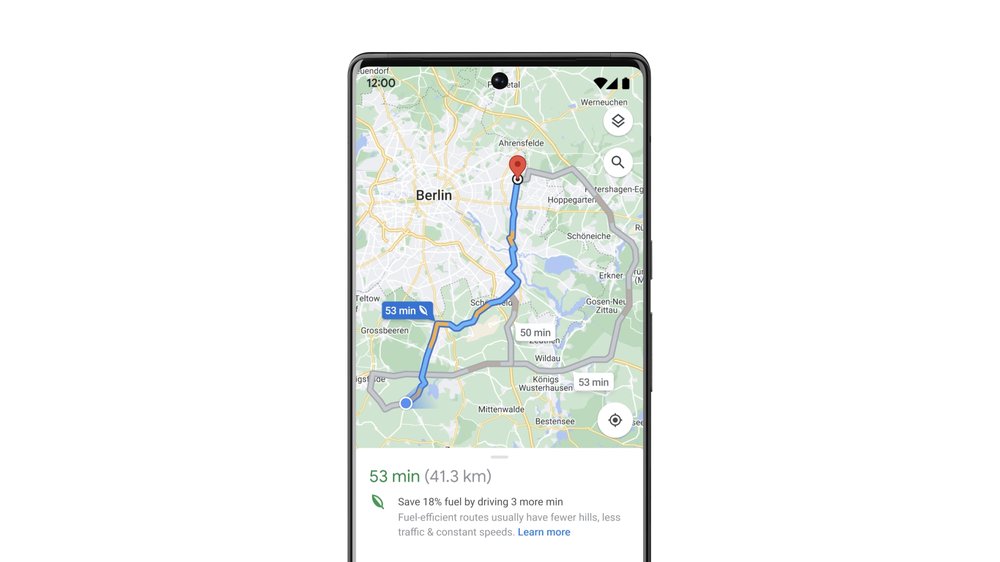
Eco-friendly routes will expand to Europe later this year.
I’m happy to share that we’re expanding this feature to more places, including Europe later this year. In this Berlin example, you could reduce your fuel consumption by 18% taking a route that’s just three minutes slower. These small decisions have a big impact at scale. With the expansion into Europe and beyond, we estimate carbon emission savings will double by the end of the year.
And we’ve added a similar feature to Google Flights. When you search for flights between two cities, we also show you carbon emission estimates alongside other information like price and schedule, making it easy to choose a greener option. These eco-friendly features in Maps and Flights are part of our goal to empower 1 billion people to make more sustainable choices through our products, and we’re excited about the progress here.
New YouTube features to help people easily access video content
Beyond Maps, video is becoming an even more fundamental part of how we share information, communicate, and learn. Often when you come to YouTube, you are looking for a specific moment in a video and we want to help you get there faster.
Last year we launched auto-generated chapters to make it easier to jump to the part you’re most interested in.
This is also great for creators because it saves them time making chapters. We’re now applying multimodal technology from DeepMind. It simultaneously uses text, audio and video to auto-generate chapters with greater accuracy and speed. With this, we now have a goal to 10X the number of videos with auto-generated chapters, from eight million today, to 80 million over the next year.
Often the fastest way to get a sense of a video’s content is to read its transcript, so we’re also using speech recognition models to transcribe videos. Video transcripts are now available to all Android and iOS users.
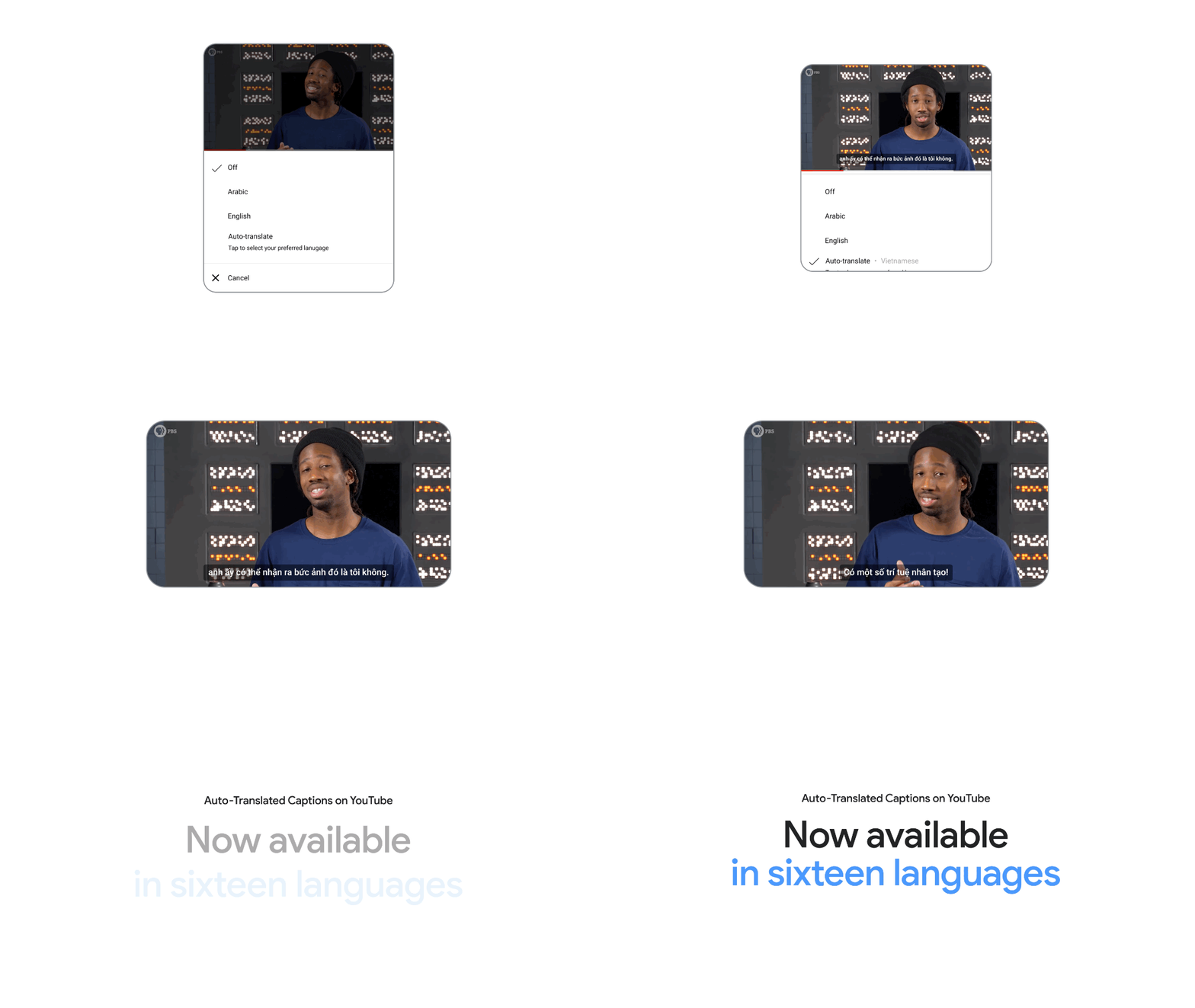
Auto-translated captions on YouTube.
Next up, we’re bringing auto-translated captions on YouTube to mobile. Which means viewers can now auto-translate video captions in 16 languages, and creators can grow their global audience. We’ll also be expanding auto-translated captions to Ukrainian YouTube content next month, part of our larger effort to increase access to accurate information about the war.
Helping people be more efficient with Google Workspace
Just as we’re using AI to improve features in YouTube, we’re building it into our Workspace products to help people be more efficient. Whether you work for a small business or a large institution, chances are you spend a lot of time reading documents. Maybe you’ve felt that wave of panic when you realize you have a 25-page document to read ahead of a meeting that starts in five minutes.
At Google, whenever I get a long document or email, I look for a TL;DR at the top — TL;DR is short for “Too Long, Didn’t Read.” And it got us thinking, wouldn’t life be better if more things had a TL;DR?
That’s why we’ve introduced automated summarization for Google Docs. Using one of our machine learning models for text summarization, Google Docs will automatically parse the words and pull out the main points.
This marks a big leap forward for natural language processing. Summarization requires understanding of long passages, information compression and language generation, which used to be outside of the capabilities of even the best machine learning models.
And docs are only the beginning. We’re launching summarization for other products in Workspace. It will come to Google Chat in the next few months, providing a helpful digest of chat conversations, so you can jump right into a group chat or look back at the key highlights.

We’re bringing summarization to Google Chat in the coming months.
And we’re working to bring transcription and summarization to Google Meet as well so you can catch up on some important meetings you missed.
Visual improvements on Google Meet
Of course there are many moments where you really want to be in a virtual room with someone. And that’s why we continue to improve audio and video quality, inspired by Project Starline. We introduced Project Starline at I/O last year. And we’ve been testing it across Google offices to get feedback and improve the technology for the future. And in the process, we’ve learned some things that we can apply right now to Google Meet.
Starline inspired machine learning-powered image processing to automatically improve your image quality in Google Meet. And it works on all types of devices so you look your best wherever you are.

Machine learning-powered image processing automatically improves image quality in Google Meet.
We’re also bringing studio quality virtual lighting to Meet. You can adjust the light position and brightness, so you’ll still be visible in a dark room or sitting in front of a window. We’re testing this feature to ensure everyone looks like their true selves, continuing the work we’ve done with Real Tone on Pixel phones and the Monk Scale.
These are just some of the ways AI is improving our products: making them more helpful, more accessible, and delivering innovative new features for everyone.
Today at I/O Prabhakar Raghavan shared how we’re helping people find helpful information in more intuitive ways on Search.
Making knowledge accessible through computing
We’ve talked about how we’re advancing access to knowledge as part of our mission: from better language translation to improved Search experiences across images and video, to richer explorations of the world using Maps.
Now we’re going to focus on how we make that knowledge even more accessible through computing. The journey we’ve been on with computing is an exciting one. Every shift, from desktop to the web to mobile to wearables and ambient computing has made knowledge more useful in our daily lives.
As helpful as our devices are, we’ve had to work pretty hard to adapt to them. I’ve always thought computers should be adapting to people, not the other way around. We continue to push ourselves to make progress here.
Here’s how we’re making computing more natural and intuitive with the Google Assistant.
Introducing LaMDA 2 and AI Test Kitchen
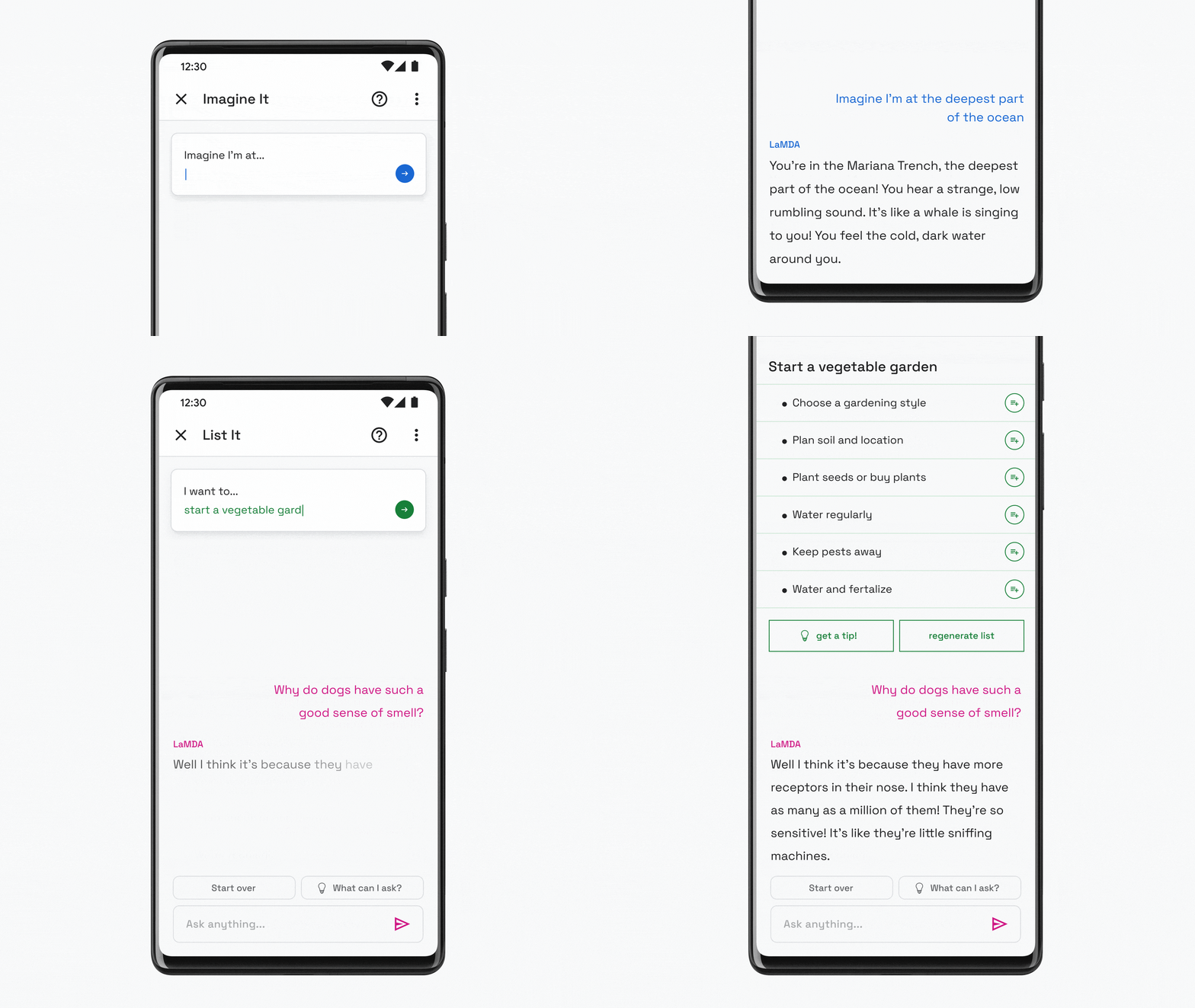
A demo of LaMDA, our generative language model for dialogue application, and the AI Test Kitchen.
We’re continually working to advance our conversational capabilities. Conversation and natural language processing are powerful ways to make computers more accessible to everyone. And large language models are key to this.
Last year, we introduced LaMDA, our generative language model for dialogue applications that can converse on any topic. Today, we are excited to announce LaMDA 2, our most advanced conversational AI yet.
We are at the beginning of a journey to make models like these useful to people, and we feel a deep responsibility to get it right. To make progress, we need people to experience the technology and provide feedback. We opened LaMDA up to thousands of Googlers, who enjoyed testing it and seeing its capabilities. This yielded significant quality improvements, and led to a reduction in inaccurate or offensive responses.
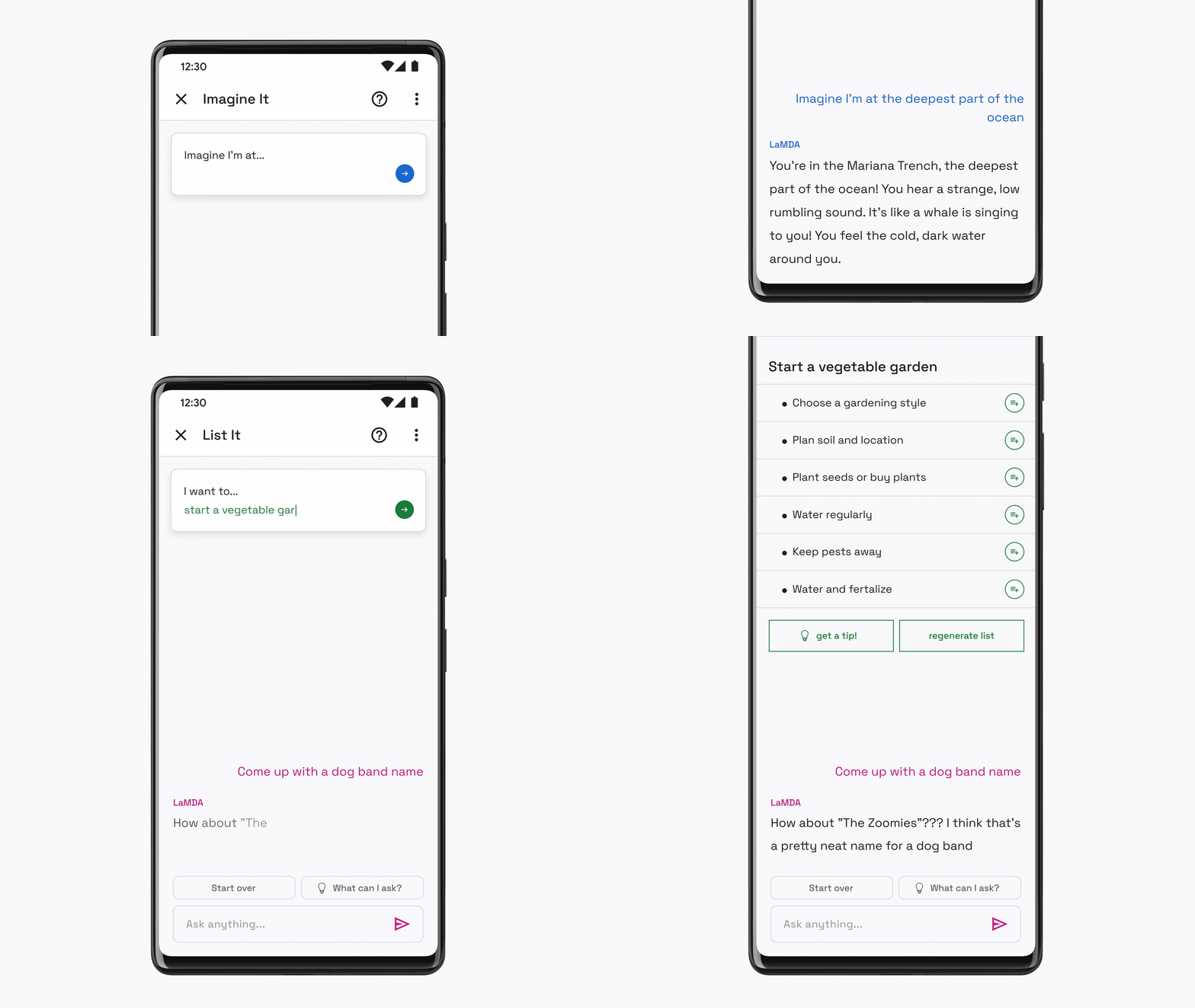
That’s why we’ve made AI Test Kitchen. It’s a new way to explore AI features with a broader audience. Inside the AI Test Kitchen, there are a few different experiences. Each is meant to give you a sense of what it might be like to have LaMDA in your hands and use it for things you care about.
The first is called “Imagine it.” This demo tests if the model can take a creative idea you give it, and generate imaginative and relevant descriptions. These are not products, they are quick sketches that allow us to explore what LaMDA can do with you. The user interfaces are very simple.
Say you’re writing a story and need some inspirational ideas. Maybe one of your characters is exploring the deep ocean. You can ask what that might feel like. Here LaMDA describes a scene in the Mariana Trench. It even generates follow-up questions on the fly. You can ask LaMDA to imagine what kinds of creatures might live there. Remember, we didn’t hand-program the model for specific topics like submarines or bioluminescence. It synthesized these concepts from its training data. That’s why you can ask about almost any topic: Saturn’s rings or even being on a planet made of ice cream.
Staying on topic is a challenge for language models. Say you’re building a learning experience — you want it to be open-ended enough to allow people to explore where curiosity takes them, but stay safely on topic. Our second demo tests how LaMDA does with that.
In this demo, we’ve primed the model to focus on the topic of dogs. It starts by generating a question to spark conversation, “Have you ever wondered why dogs love to play fetch so much?” And if you ask a follow-up question, you get an answer with some relevant details: it’s interesting, it thinks it might have something to do with the sense of smell and treasure hunting.
You can take the conversation anywhere you want. Maybe you’re curious about how smell works and you want to dive deeper. You’ll get a unique response for that too. No matter what you ask, it will try to keep the conversation on the topic of dogs. If I start asking about cricket, which I probably would, the model brings the topic back to dogs in a fun way.
This challenge of staying on-topic is a tricky one, and it’s an important area of research for building useful applications with language models.
These experiences show the potential of language models to one day help us with things like planning, learning about the world, and more.
Of course, there are significant challenges to solve before these models can truly be useful. While we have improved safety, the model might still generate inaccurate, inappropriate, or offensive responses. That’s why we are inviting feedback in the app, so people can help report problems.
We will be doing all of this work in accordance with our AI Principles. Our process will be iterative, opening up access over the coming months, and carefully assessing feedback with a broad range of stakeholders — from AI researchers and social scientists to human rights experts. We’ll incorporate this feedback into future versions of LaMDA, and share our findings as we go.
Over time, we intend to continue adding other emerging areas of AI into AI Test Kitchen. You can learn more at: g.co/AITestKitchen.
Advancing AI language models
LaMDA 2 has incredible conversational capabilities. To explore other aspects of natural language processing and AI, we recently announced a new model. It’s called Pathways Language Model, or PaLM for short. It’s our largest model to date and trained on 540 billion parameters.
PaLM demonstrates breakthrough performance on many natural language processing tasks, such as generating code from text, answering a math word problem, or even explaining a joke.
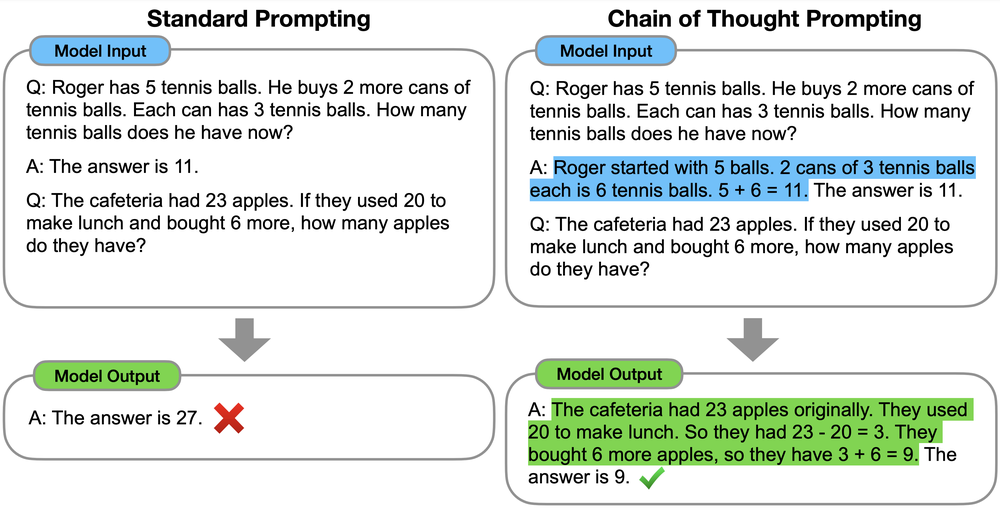
It achieves this through greater scale. And when we combine that scale with a new technique called chain-of- thought prompting, the results are promising. Chain-of-thought prompting allows us to describe multi-step problems as a series of intermediate steps.
Let’s take an example of a math word problem that requires reasoning. Normally, how you use a model is you prompt it with a question and answer, and then you start asking questions. In this case: How many hours are in the month of May? So you can see, the model didn’t quite get it right.
In chain-of-thought prompting, we give the model a question-answer pair, but this time, an explanation of how the answer was derived. Kind of like when your teacher gives you a step-by-step example to help you understand how to solve a problem. Now, if we ask the model again — how many hours are in the month of May — or other related questions, it actually answers correctly and even shows its work.
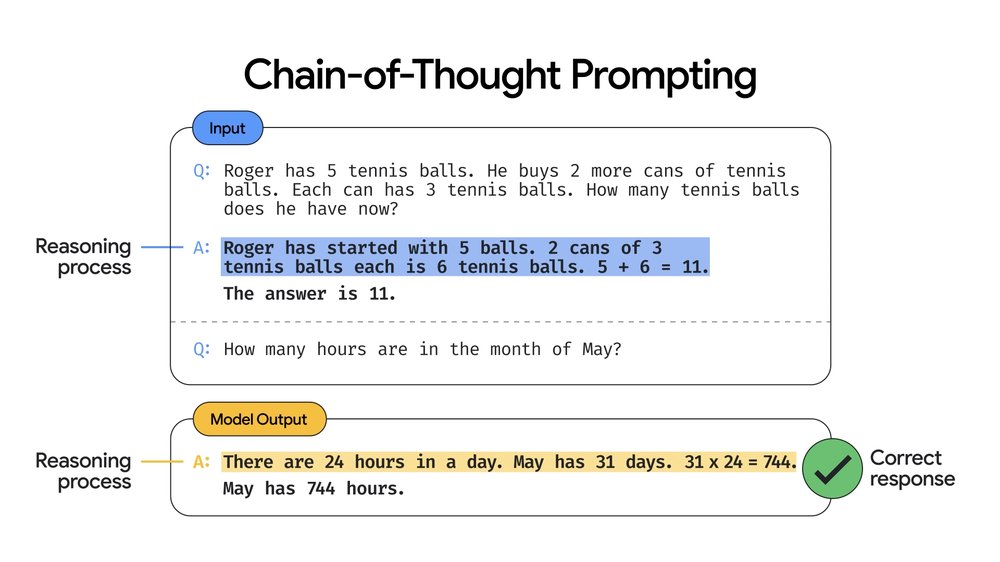
Chain-of-thought prompting leads to better reasoning and more accurate answers.
Chain-of-thought prompting increases accuracy by a large margin. This leads to state-of-the-art performance across several reasoning benchmarks, including math word problems. And we can do it all without ever changing how the model is trained.
PaLM is highly capable and can do so much more. For example, you might be someone who speaks a language that’s not well-represented on the web today — which makes it hard to find information. Even more frustrating because the answer you are looking for is probably out there. PaLM offers a new approach that holds enormous promise for making knowledge more accessible for everyone.
Let me show you an example in which we can help answer questions in a language like Bengali — spoken by a quarter billion people. Just like before we prompt the model with two examples of questions in Bengali with both Bengali and English answers.
That’s it, now we can start asking questions in Bengali: “What is the national song of Bangladesh?” The answer, by the way, is “Amar Sonar Bangla” — and PaLM got it right, too. This is not that surprising because you would expect that content to exist in Bengali.
You can also try something that is less likely to have related information in Bengali such as: “What are popular pizza toppings in New York City?” The model again answers correctly in Bengali. Though it probably just stirred up a debate amongst New Yorkers about how “correct” that answer really is.
What’s so impressive is that PaLM has never seen parallel sentences between Bengali and English. Nor was it ever explicitly taught to answer questions or translate at all! The model brought all of its capabilities together to answer questions correctly in Bengali. And we can extend the techniques to more languages and other complex tasks.
We’re so optimistic about the potential for language models. One day, we hope we can answer questions on more topics in any language you speak, making knowledge even more accessible, in Search and across all of Google.
Introducing the world’s largest, publicly available machine learning hub
The advances we’ve shared today are possible only because of our continued innovation in our infrastructure. Recently we announced plans to invest $9.5 billion in data centers and offices across the U.S.
One of our state-of-the-art data centers is in Mayes County, Oklahoma. I’m excited to announce that, there, we are launching the world’s largest, publicly-available machine learning hub for our Google Cloud customers.
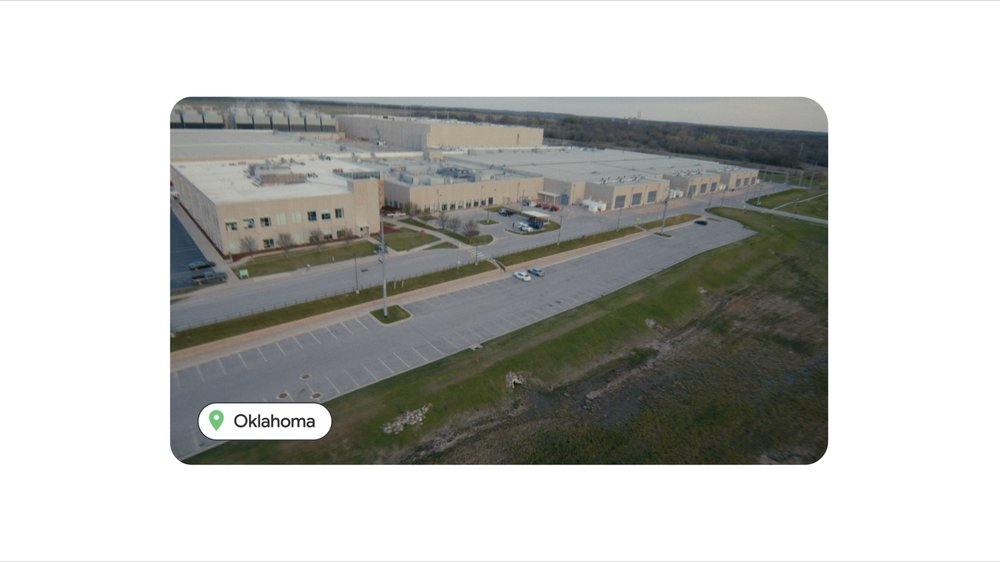
One of our state-of-the-art data centers in Mayes County, Oklahoma.
This machine learning hub has eight Cloud TPU v4 pods, custom-built on the same networking infrastructure that powers Google’s largest neural models. They provide nearly nine exaflops of computing power in aggregate — bringing our customers an unprecedented ability to run complex models and workloads. We hope this will fuel innovation across many fields, from medicine to logistics, sustainability and more.
And speaking of sustainability, this machine learning hub is already operating at 90% carbon-free energy. This is helping us make progress on our goal to become the first major company to operate all of our data centers and campuses globally on 24/7 carbon-free energy by 2030.
Even as we invest in our data centers, we are working to innovate on our mobile platforms so more processing can happen locally on device. Google Tensor, our custom system on a chip, was an important step in this direction. It’s already running on Pixel 6 and Pixel 6 Pro, and it brings our AI capabilities — including the best speech recognition we’ve ever deployed — right to your phone. It’s also a big step forward in making those devices more secure. Combined with Android’s Private Compute Core, it can run data-powered features directly on device so that it’s private to you.
People turn to our products every day for help in moments big and small. Core to making this possible is protecting your private information each step of the way. Even as technology grows increasingly complex, we keep more people safe online than anyone else in the world, with products that are secure by default, private by design and that put you in control.
We also spent time today sharing updates to platforms like Android. They’re delivering access, connectivity, and information to billions of people through their smartphones and other connected devices like TVs, cars and watches.
And we shared our new Pixel Portfolio, including the Pixel 6a, Pixel Buds Pro, Google Pixel Watch, Pixel 7, and Pixel tablet all built with ambient computing in mind. We’re excited to share a family of devices that work better together — for you.
The next frontier of computing: augmented reality
Today we talked about all the technologies that are changing how we use computers and access knowledge. We see devices working seamlessly together, exactly when and where you need them and with conversational interfaces that make it easier to get things done.
Looking ahead, there’s a new frontier of computing, which has the potential to extend all of this even further, and that is augmented reality. At Google, we have been heavily invested in this area. We’ve been building augmented reality into many Google products, from Google Lens to multisearch, scene exploration, and Live and immersive views in Maps.
These AR capabilities are already useful on phones and the magic will really come alive when you can use them in the real world without the technology getting in the way.
That potential is what gets us most excited about AR: the ability to spend time focusing on what matters in the real world, in our real lives. Because the real world is pretty amazing!
It’s important we design in a way that is built for the real world — and doesn’t take you away from it. And AR gives us new ways to accomplish this.
Let’s take language as an example. Language is just so fundamental to connecting with one another. And yet, understanding someone who speaks a different language, or trying to follow a conversation if you are deaf or hard of hearing can be a real challenge. Let’s see what happens when we take our advancements in translation and transcription and deliver them in your line of sight in one of the early prototypes we’ve been testing.

You can see it in their faces: the joy that comes with speaking naturally to someone. That moment of connection. To understand and be understood. That’s what our focus on knowledge and computing is all about. And it’s what we strive for every day, with products that are built to help.
Each year we get a little closer to delivering on our timeless mission. And we still have so much further to go. At Google, we genuinely feel a sense of excitement about that. And we are optimistic that the breakthroughs you just saw will help us get there. Thank you to all of the developers, partners and customers who joined us today. We look forward to building the future with all of you.
The Google Store is coming to Brooklyn
A year ago, we opened the doors to Google’s first-ever physical retail store in New York City. Since opening this flagship store in the iconic Chelsea neighborhood, we’ve heard how useful it is to try out our products in person — like giving the Pixel 6 Pro a spin or listening to a YouTube playlist on Nest Audio. Now, we’re bringing this experience to even more New Yorkers.
Today, we’re announcing our plans to open our second physical store in Williamsburg, Brooklyn. The Google Store Williamsburg will be the first of our “neighborhood stores,” offering similar hands-on experiences with our products and services as our flagship store, but in a more intimate setting that celebrates the unique neighborhood we’re in. We’ll start welcoming customers to our new location at 134 N 6th Street on June 16.
Inside our first neighborhood store
As soon as you walk through the door at the Google Store Williamsburg, you’ll find an installation by Brooklyn-based artist Olalekan Jeyifous, whose work examines the relationships between architecture, community and the environment. We’ll also host local events to celebrate Brooklyn, like guided walks around the neighborhood where you can try out Pixel photography features.
Underneath the installation, you’ll find our Here to Help desk. Our Chelsea flagship store visitors have told us they appreciate getting support, like Pixel phone repairs, directly from Google experts — so we’re bringing this to the Google Store Williamsburg, too.
You’ll also get the chance to picture everyday life with our products through interactive displays that show how our hardware and services work together. For example, you can explore Google Fi phone plans, discover which Pixel color best suits your personality or learn what goes into making our phone cases more sustainable. Meanwhile, kick back and relax on our couches to imagine what it would be like to use Google products at home — an area that will also serve as a space for local events and workshops.
And just like at our flagship store, you’ll be able to easily find a product at the Grab & Go wall or pick up a pre-order that you placed with the Google Store online. No matter what your reason is for stopping by, we’ll help you find what you need.
Feedback plays a big role in improving our stores, and we’ll keep listening to make sure you get the most helpful shopping experience — from Manhattan to Brooklyn. We look forward to welcoming you to the Google Store Williamsburg in June!

<div>ITForum 2022 a Rimini NFT & Cryptovalute protagoniste dell’evento dedicato ai trader</div>
ITForum 2022: il 16 e 17 giugno torna a Rimini il più grande evento italiano dedicato a trader, investitori e risparmiatori Dedicato al mondo dei trader professionali torna alla ribalta…
L’articolo ITForum 2022 a Rimini NFT & Cryptovalute protagoniste dell’evento dedicato ai trader scritto da YOUR_DIGITAL_VOICE! proviene da Assodigitale.
What’s beta than Android 13?
Every year and with every release, we make Android better based on your feedback. With Android 13, we’re continuing to improve the quality and performance of the platform while building on many areas that matter most to you, like privacy and security, personalization and large-screen devices.
Today, we’re sharing more about Android 13 and releasing the second beta across many Android phones, tablets and foldable devices.
A foundation of privacy and security
In Android 13, we’re giving you more control over what personal information you share and more detailed control over what files your apps can access. Instead of permitting access to “Files and media,” there are two new categories you can control access to: “Photos & videos” and “Music & audio.” For even more specificity, a new photo picker lets you select the exact photos or videos you want to grant access to, without needing to share your entire media library with an app.
We’re also helping you be more deliberate about how you engage with apps. While app notifications often provide helpful and timely reminders, you should have more control over which apps you want to receive notifications from. In Android 13, apps must get your permission before sending you notifications. In addition, we’re reducing the number of apps that require your location. For example, you will no longer need to grant location to apps to enable Wi-Fi scanning.
Android 13 goes further to help you stay ahead of risks, with timely recommendations and options to enhance your privacy. You already receive an alert when an app accesses your clipboard. Now, Android will go further and automatically delete your clipboard history after a short period so apps are preemptively blocked from seeing old copied information.
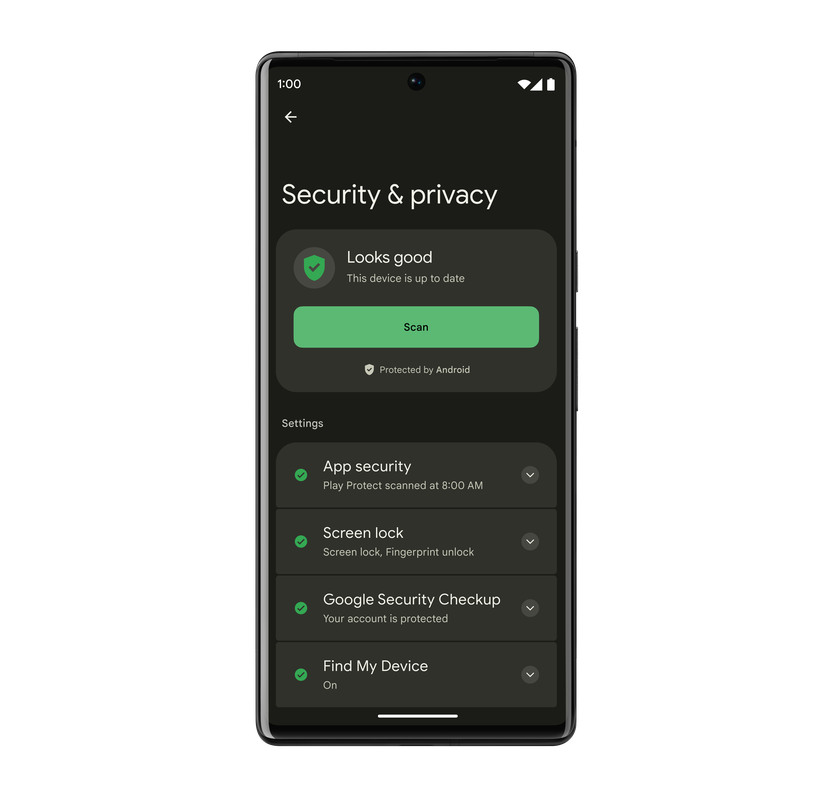
Later this year, we’ll introduce a unified Security & Privacy settings page in Android 13 that brings all your device’s data privacy and security front and center. This will provide a clear, color-coded indicator of your safety status and offer guidance and steps you can take to boost your security.
Personalized experiences for you
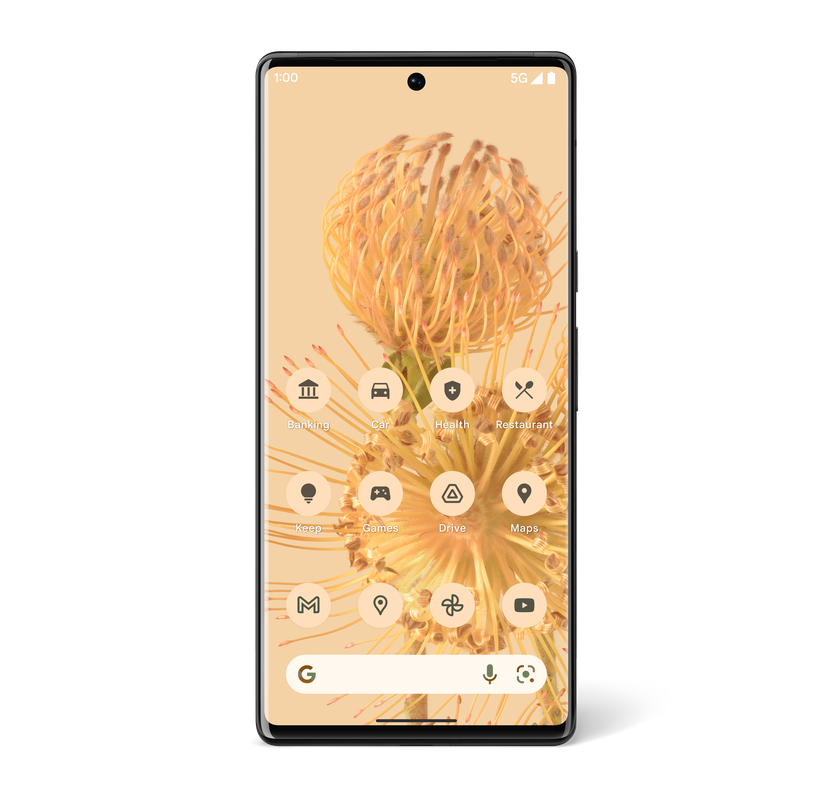
Last year, we introduced Material You to help your phone adapt to your style and preferences. With Android 13, we’re going further to customize your phone’s look and feel with pre-made color variants. Once a color scheme has been selected, you’ll see beautiful color variants applied across the entire OS to accentuate your wallpaper and style.
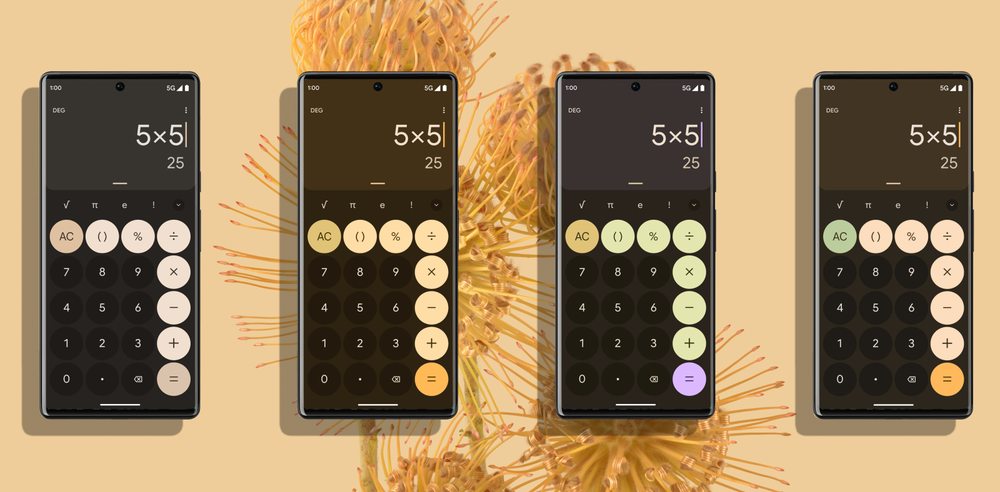
Android 13 also extends color theming of your app icons beyond Google apps. Starting with Pixel devices, you’ll be able to turn on the “Themed icons” toggle in your settings to have all supported apps also match your phone’s colors in a minimal, modern and consistent look.
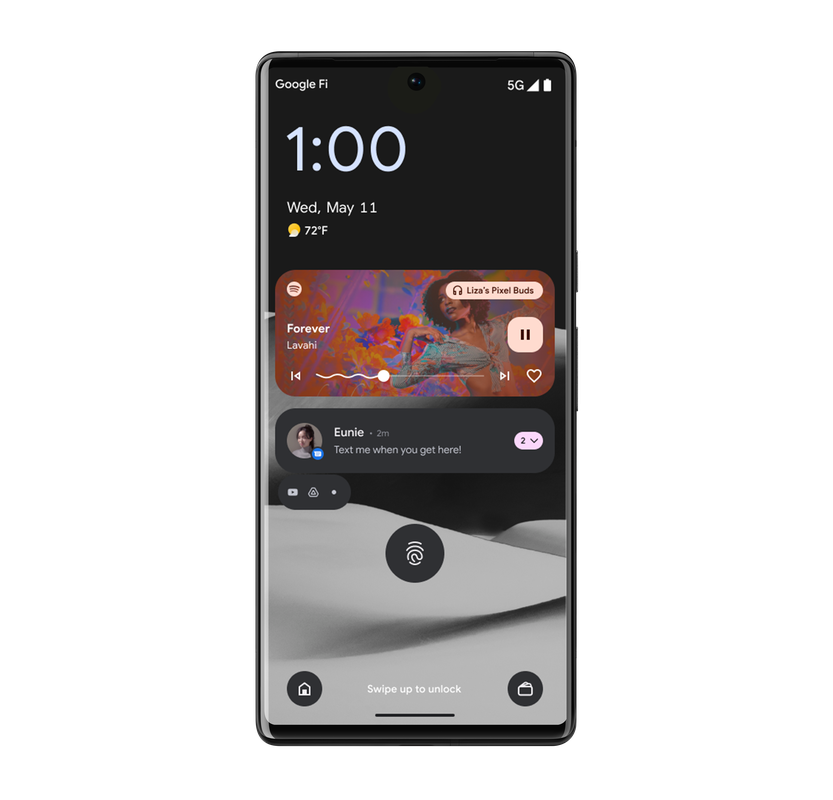
We’re also introducing a new media control that tailors its look based on the music that you’re listening to, featuring the album’s artwork.
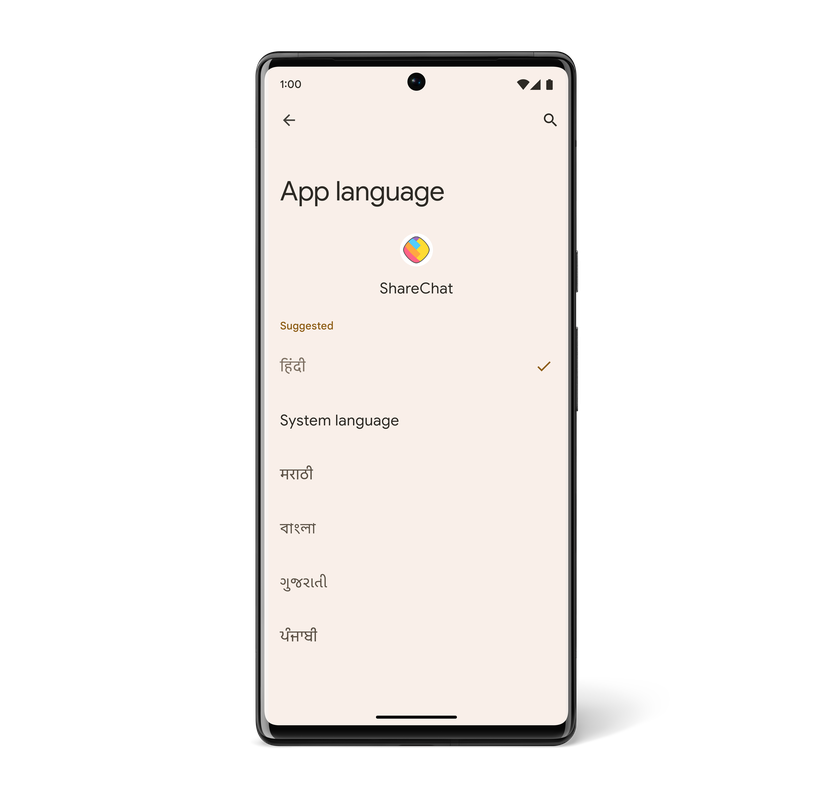
Personalization in Android 13 extends beyond the design and aesthetic of the phone’s interface to other areas that are important and unique to you, like your language preferences. If you’re multilingual, you likely use different languages depending on the situation and may change how you communicate from one instance to the next. For example, you might enjoy social media in one language, but bank in another. Android 13 helps you use language as fluidly as you do in real life, so you can select a different language preference for each of your apps in Settings.
Tablets just keep getting better
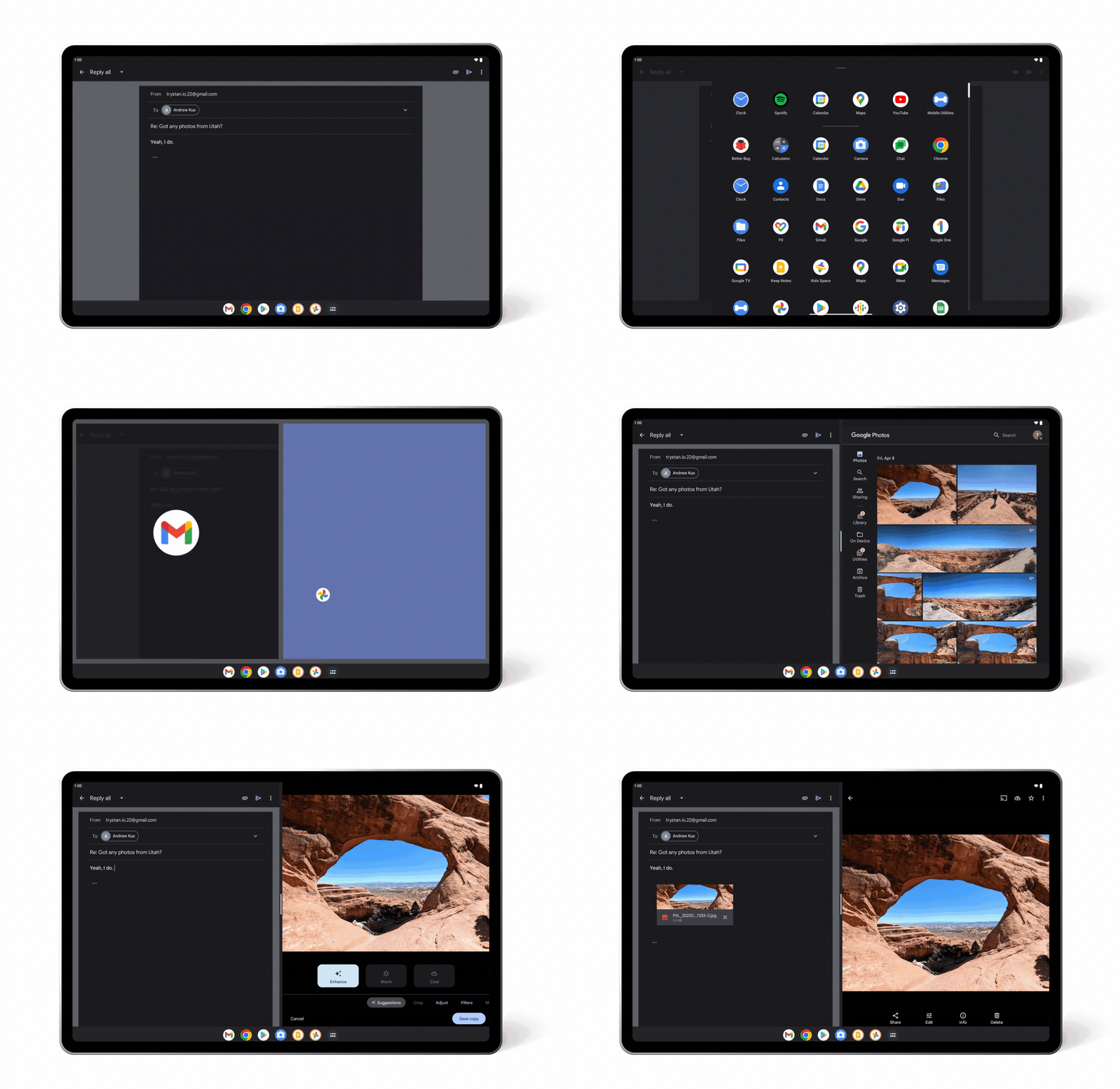
Android 12L’s updates optimized the layout for bigger screen devices. Android 13 builds on this foundation by introducing better multitasking capabilities for tablets. With the updated taskbar, you can easily switch your single tablet view to a split screen. Just drag and drop any second app in your app library onto your screen and you’ll be able to do two or more things at once with ease.
We’re also improving the experience for when you’re writing or drawing with a stylus pen. In Android 13, you can rest your hand comfortably on the screen without worrying about it being misidentified as a stylus pen, reducing any unintended actions.
We know these changes don’t mean much if apps aren’t built for the larger screens. So over the next few weeks, we’ll be updating more than 20 Google apps to take full advantage of the extra space with added functionality. Many of the third-party apps you love — like TikTok, Facebook and Zoom — will be revamped to make your experiences on tablets even better.
Try out Android 13 features, with more on the way
Android 13 has much more in store, including features that shape modern standards for audio and video like HDR video, Spatial Audio and Bluetooth Low Energy Audio.
You can find many of these features today in the second beta of Android 13. We have a great lineup of beta partners and we can’t wait for you to try it on your favorite device.
Search your world, any way and anywhere
People have always gathered information in a variety of ways — from talking to others, to observing the world around them, to, of course, searching online. Though typing words into a search box has become second nature for many of us, it’s far from the most natural way to express what we need. For example, if I’m walking down the street and see an interesting tree, I might point to it and ask a friend what species it is and if they know of any nearby nurseries that might sell seeds. If I were to express that question to a search engine just a few years ago… well, it would have taken a lot of queries.
But we’ve been working hard to change that. We’ve already started on a journey to make searching more natural. Whether you’re humming the tune that’s been stuck in your head, or using Google Lens to search visually (which now happens more than 8 billion times per month!), there are more ways to search and explore information than ever before.
Today, we’re redefining Google Search yet again, combining our understanding of all types of information — text, voice, visual and more — so you can find helpful information about whatever you see, hear and experience, in whichever ways are most intuitive to you. We envision a future where you can search your whole world, any way and anywhere.
Find local information with multisearch
The recent launch of multisearch, one of our most significant updates to Search in several years, is a milestone on this path. In the Google app, you can search with images and text at the same time — similar to how you might point at something and ask a friend about it.
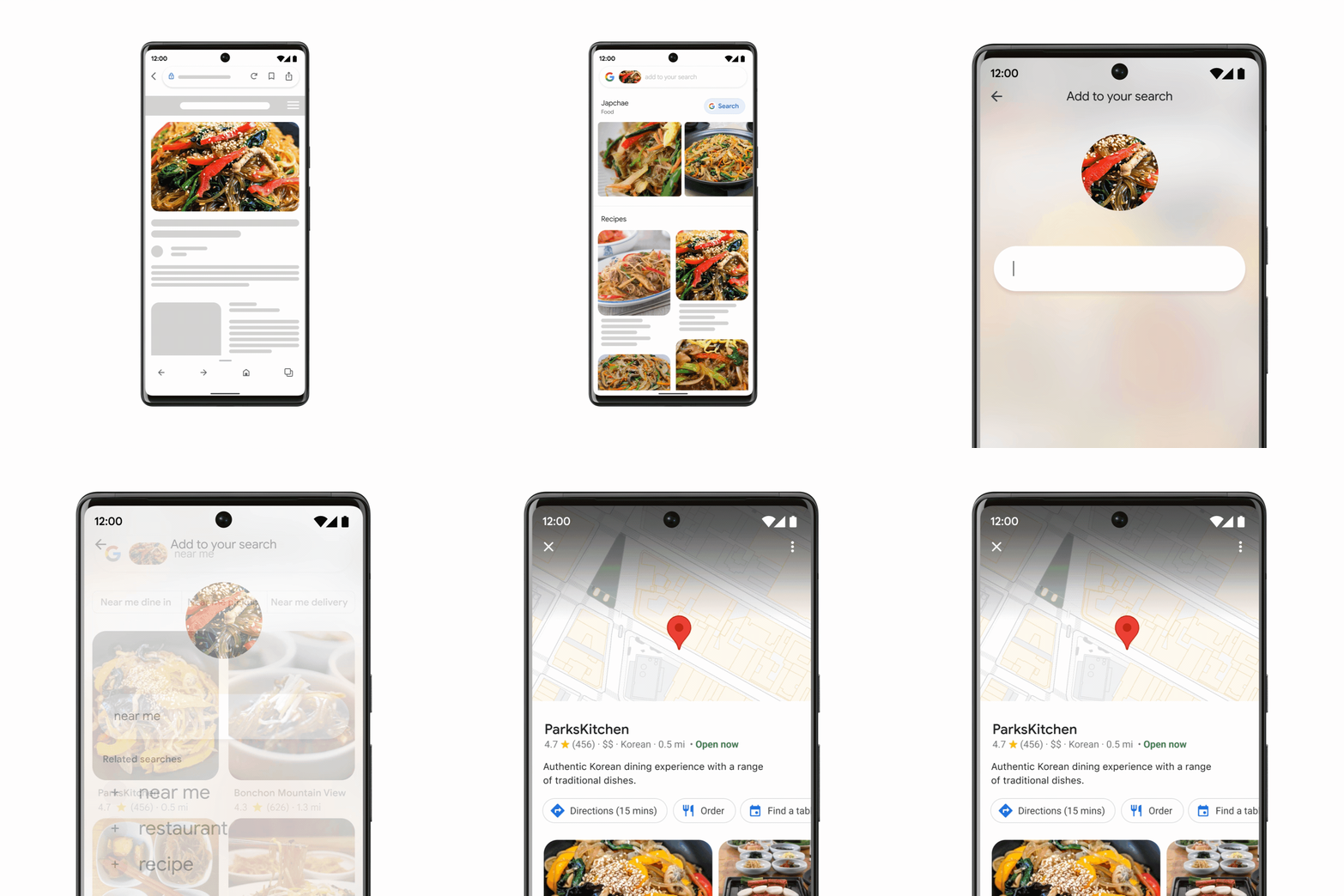
Now we’re adding a way to find local information with multisearch, so you can uncover what you need from the millions of local businesses on Google. You’ll be able to use a picture or screenshot and add “near me” to see options for local restaurants or retailers that have the apparel, home goods and food you’re looking for.
Later this year, you’ll be able to find local information with multisearch.
For example, say you see a colorful dish online you’d like to try – but you don’t know what’s in it, or what it’s called. When you use multisearch to find it near you, Google scans millions of images and reviews posted on web pages, and from our community of Maps contributors, to find results about nearby spots that offer the dish so you can go enjoy it for yourself.
Local information in multisearch will be available globally later this year in English, and will expand to more languages over time.
Get a more complete picture with scene exploration
Today, when you search visually with Google, we’re able to recognize objects captured in a single frame. But sometimes, you might want information about a whole scene in front of you.
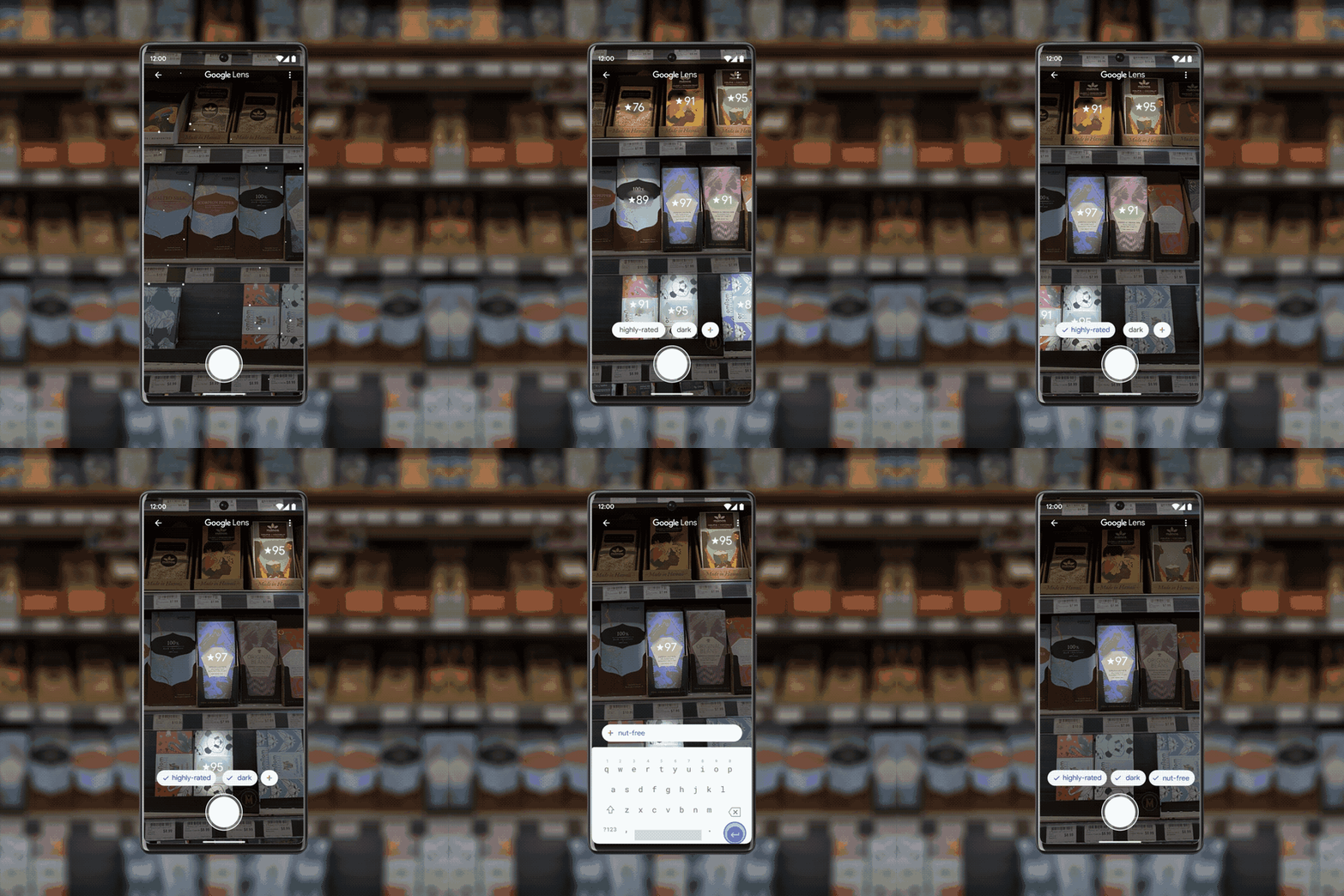
In the future, with an advancement called “scene exploration,” you’ll be able to use multisearch to pan your camera and instantly glean insights about multiple objects in a wider scene.
In the future, “scene exploration” will help you uncover insights across multiple objects in a scene at the same time.
Imagine you’re trying to pick out the perfect candy bar for your friend who’s a bit of a chocolate connoisseur. You know they love dark chocolate but dislike nuts, and you want to get them something of quality. With scene exploration, you’ll be able to scan the entire shelf with your phone’s camera and see helpful insights overlaid in front of you. Scene exploration is a powerful breakthrough in our devices’ ability to understand the world the way we do – so you can easily find what you’re looking for– and we look forward to bringing it to multisearch in the future.
These are some of the latest steps we’re taking to help you search any way and anywhere. But there’s more we’re doing, beyond Search. AI advancements are helping bridge the physical and digital worlds in Google Maps, and making it possible to interact with the Google Assistant more naturally and intuitively. To ensure information is truly useful for people from all communities, it’s also critical for people to see themselves represented in the results they find. Underpinning all these efforts is our commitment to helping you search safely, with new ways to control your online presence and information.


How we make every day safer with Google
Every day, we work to create a safer internet by making our products secure by default, private by design, and putting you in control of your data. This is how we keep more people safe online than anyone else in the world.
Secure by default in the face of cyber threats
Today, more cyberattacks than ever are happening on a broader, global scale. The targets of these attacks are not just major companies or government agencies, but hospitals, energy providers, banks, schools and individuals. Every day, we keep people’s data safe and secure through industry-leading security technology, automatic, built-in protections, and ongoing vulnerability research and detection.
Our specialized teams work around the clock to combat current and emerging cyber threats. Google’s Threat Analysis Group (TAG), for example, has been tracking critical cyber activity to help inform Ukraine, neighboring countries in Europe, and others of active threat campaigns in relation to the war. We’ve also expanded our support for Project Shield to protect the websites of 200+ Ukrainian government entities, news outlets and more.
Cybersecurity concerns are not limited to war zones — more than 80% of Americans say they’re concerned about the safety and privacy of their online data. That’s why we built one of the world’s most advanced security infrastructures to ensure that our products are secure by default. Now, that infrastructure helps keep people safer at scale:
- Account Safety Status: We’re adding your safety status to your apps so you never have to worry about the security of your Google Account. These updates will feature a simple yellow alert icon on your profile picture that will flag actions you should take to secure your account.
- Phishing protections in Google Workspace: We’re now scaling the phishing and malware protections that guard Gmail to Google Docs, Sheets, and Slides.
- Automatic 2-Step Verification: We’re also continuing our journey towards a more secure, passwordless future with 2-Step Verification (2SV) auto enrollment to help people instantly boost the security of their Google Accounts and reduce their risk of getting phished. This builds on our work last year to auto enroll 150+ million accounts in 2SV and successfully reduce account takeovers.
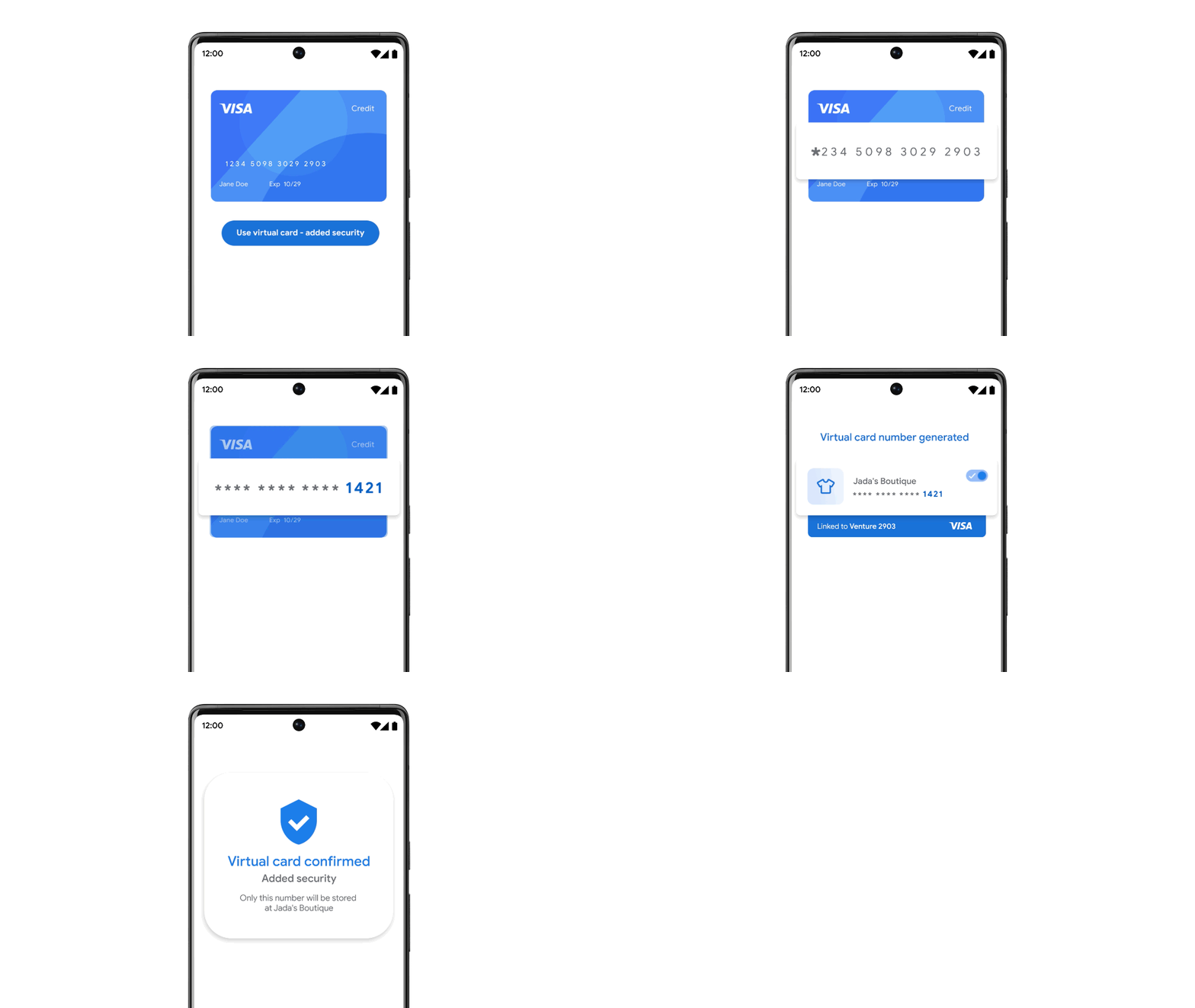
- Virtual Cards: As people do more shopping online, keeping payment information safe and secure is critically important. We’re launching virtual cards on Chrome and Android. When you use autofill to enter your payment details at checkout, virtual cards will add an additional layer of security by replacing your actual card number with a distinct, virtual number. This eliminates the need to manually enter card details like the CVV at checkout, and they’re easy to manage atpay.google.com — where you can enable the feature for eligible cards, access your virtual card number, and see recent virtual card transactions. Virtual cards will be rolling out in the US for Visa, American Express, Mastercard and all Capital One cards starting this summer.
Helpful products that are private by design
We’re committed to designing products that are helpful and protect people’s privacy. Our engineers have pioneered and open-sourced numerous privacy preserving technologies, including Federated Learning and Differential Privacy, which we made more widely available earlier this year when we started offering our Differential Privacy library in Python as a free open-source tool — reaching almost half of developers worldwide.
Now, we’re expanding this work with the introduction of Protected Computing, a growing toolkit of technologies that transform how, when, and where data is processed to technically ensure the privacy and safety of your data. We do this by:
- Minimizing your data footprint: Leveraging techniques like edge processing and ephemerality, we shrink the amount of your personally identifiable data.
- De-identifying data: Through blurring and randomizing identifiable signals, to adding statistical noise, we use a range of anonymization techniques to strip your identity from your data.
- Restricting access: Through technologies like end-to-end encryption and secure enclaves, we make it technically impossible for anyone, including Google, to access your sensitive data.
Today, Protected Computing enables helpful features like Smart Reply in Messages by Google and Live Translation on Pixel. And while we’re continuing to innovate new applications across our products, we’re equally focused on using Protected Computing to unlock the potential of data to benefit society more broadly — for example, by enabling even more robust aggregated and anonymized datasets so we can safely do everything from help cities reduce their carbon footprint, to accelerate new medical breakthroughs.
You’re in control of your personal information
Privacy is personal, and safety is a bit different for each individual. That’s why our privacy and security protections are easy to access, monitor and control. Today, we’re introducing two new tools that give you even more control over your data:
- Results about you in Search: When you’re using the internet, it’s important to have control over how your personal information can be found. With our new tool to accompany updated removal policies, people can more easily request the removal of Google Search results containing their contact details — such as phone numbers, home addresses, and email addresses. This feature will be available in the coming months in the Google App, and you can also access it by clicking the three dots next to individual Google Search results.
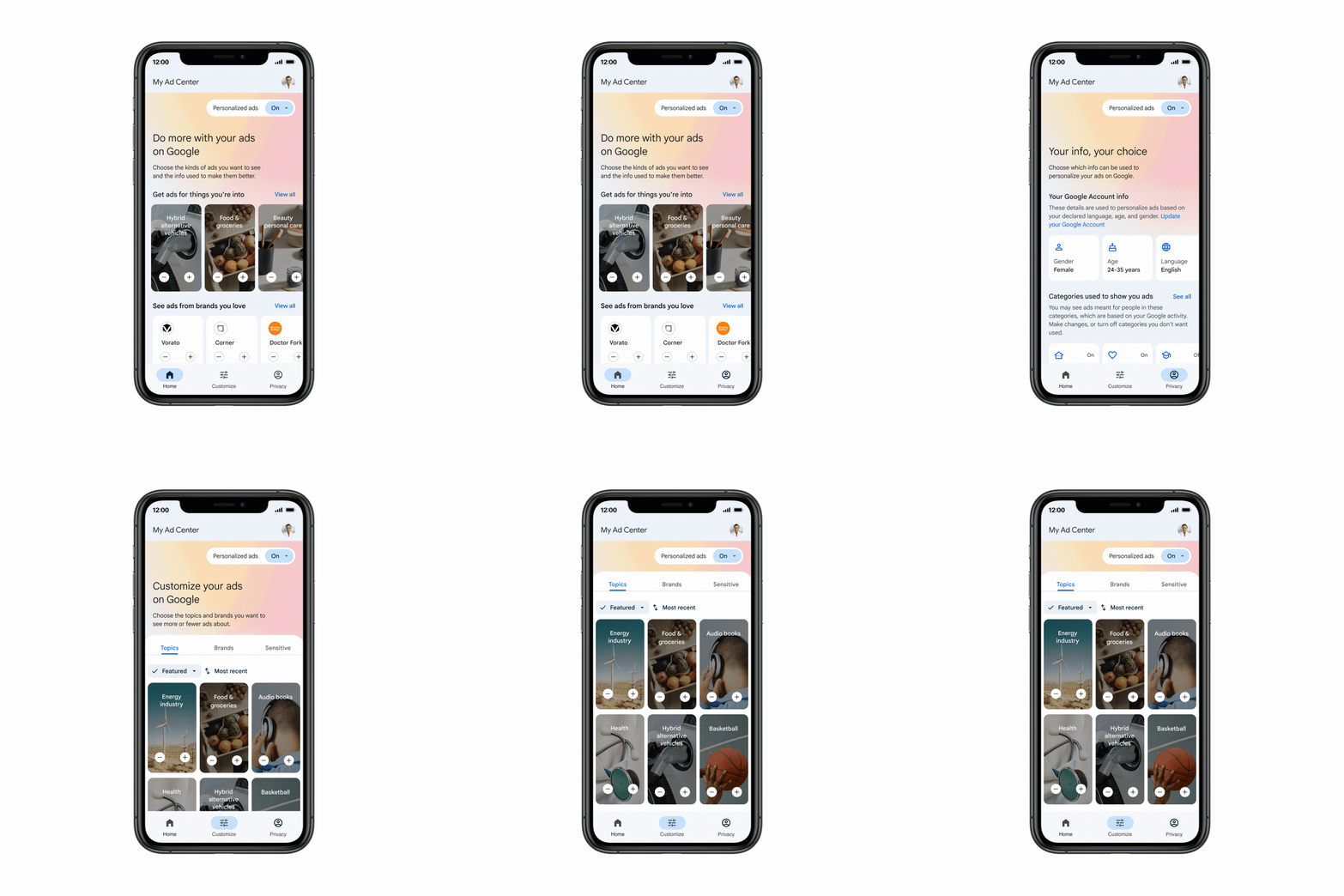
- My Ad Center: We want to make it even easier for you to control the ads you see. Towards the end of this year, we’ll launch more controls for your ads privacy settings: a way of choosing which brands to see more or less of, and an easier way to choose whether to personalize your ads. My Ad Center gives you even more control over the ads you see on YouTube, Search, and your Discover feed, while still being able to block and report ads. You’ll be able to choose the types of ads you want to see — such as fitness, vacation rentals or skincare — and learn more about the information we use to show them to you.
To learn more about how every day you’re safer with Google, visit our Safety Center.
Understanding the world through language
Language is at the heart of how people communicate with each other. It’s also proving to be powerful in advancing AI and building helpful experiences for people worldwide.
From the beginning, we set out to connect words in your search to words on a page so we could make the web’s information more accessible and useful. Over 20 years later, as the web changes, and the ways people consume information expand from text to images to videos and more — the one constant is that language remains a surprisingly powerful tool for understanding information.
In recent years, we’ve seen an incredible acceleration in the field of natural language understanding. While our systems still don’t understand language the way people do, they’re increasingly able to spot patterns in information, identify complex concepts and even draw implicit connections between them. We’re even finding that many of our advanced models can understand information across languages or in non-language-based formats like images and videos.
Building the next generation of language models
In 2017, Google researchers developed the Transformer, the neural network that underlies major advancements like MUM and LaMDA. Last year, we shared our thinking on a new architecture called Pathways, which is loosely inspired by the sparse patterns of neural activity in the brain. When you read a blog post like this one, only the critical parts of your brain needed to process this information fire up — not every single neuron. With Pathways, we’re now able to train AI models to be similarly effective.
Using this system, we recently introduced PaLM, a new model that achieves state-of-the-art performance on challenging language modeling tasks. It can solve complex math word problems, and answer questions in new languages with very little additional training data.
PaLM also shows improvements in understanding and expressing logic. This is significant because it allows the model to express its reasoning through words. Remember your algebra problem sets? It wasn’t enough to just get the right answer — you had to explain how you got there. PaLM is able to prompt a “Chain of Thought” to explain its thought process, step-by-step. This emerging capability helps improve accuracy and our understanding of how a model arrives at answers.
Translating the languages of the world
Pathways-related models are enabling us to break down language barriers in a way never before possible. Nowhere is this clearer than in our recently added support for 24 new languages in Google Translate, spoken by over 300 million people worldwide — including the first indigenous languages of the Americas. The amazing part is that the neural model did this using only monolingual text with no translation pairs — which allows us to help communities and languages underrepresented by technology. Machine translation at this level helps the world feel a bit smaller, while allowing us to dream bigger.
Unlocking knowledge about the world across modalities
Today, people consume information through webpages, images, videos, and more. Our advanced language and Pathways-related models are learning to make sense of information stemming from these different modalities through language. With these multimodal capabilities, we’re expanding multisearch in the Google app so you can search more naturally than ever before. As the saying goes — “a picture is worth a thousand words” — it turns out, words are really the key to sharing information about the world.

Improving conversational AI
Despite these advancements, human language continues to be one of the most complex undertakings for computers.
In everyday conversation, we all naturally say “um,” pause to find the right words, or correct ourselves — and yet other people have no trouble understanding what we’re saying. That’s because people can react to conversational cues in as little as 200 milliseconds. Moving our speech model from data centers to run on the device made things faster, but we wanted to push the envelope even more.
Computers aren’t there yet — so we’re introducing improvements to responsiveness on the Assistant with unified neural networks, combining many models into smarter ones capable of understanding more — like when someone pauses but is not finished speaking. Getting closer to the fluidity of real-time conversation is finally possible with Google’s Tensor chip, which is custom-engineered to handle on-device machine learning tasks super fast.
We’re also investing in building models that are capable of carrying more natural, sensible and specific conversations. Since introducing LaMDA to the world last year, we’ve made great progress, improving the model in key areas of quality, safety and groundedness — areas where we know conversational AI models can struggle. We’ll be releasing the next iteration, LaMDA 2, as a part of the AI Test Kitchen, which we’ll be opening up to small groups of people gradually. Our goal with AI Test Kitchen is to learn, improve, and innovate responsibly on this technology together. It’s still early days for LaMDA, but we want to continue to make progress and do so responsibly with feedback from the community.
Responsible development of AI models
While language is a remarkably powerful and versatile tool for understanding the world around us, we also know it comes with its limitations and challenges. In 2018, we published our AI Principles as guidelines to help us avoid bias, test rigorously for safety, design with privacy top of mind and make technology accountable to people. We’re investing in research across disciplines to understand the types of harms language models can affect, and to develop the frameworks and methods to ensure we bring in a diversity of perspectives and make meaningful improvements. We also build and use tools that can help us better understand our models (e.g., identifying how different words affect a prediction, tracing an error back to training data and even measuring correlations within a model). And while we work to improve underlying models, we also test rigorously before and after any kind of product deployment.
We’ve come a long way since introducing the world to the Transformer. We’re proud of the tremendous value that it and its predecessors have brought not only to everyday Google products like Search and Translate, but also the breakthroughs they’ve powered in natural language understanding. Our work advancing the future of AI is driven by something as old as time: the power language has to bring people together.

SEO: quanto contano il numero di parole e la keyword density?
Have more natural conversations with Google Assistant
Like any other busy parent, I’m always looking for ways to make daily life a little bit easier. And Google Assistant helps me do that — from giving me cooking instructions as I’m making dinner for my family to sharing how much traffic there is on the way to the office. Assistant allows me to get more done at home and on the go, so I can make time for what really matters.
Every month, over 700 million people around the world get everyday tasks done with their Assistant. Voice has become one of the main ways we communicate with our devices. But we know it can feel unnatural to say “Hey Google” or touch your device every time you want to ask for help. So today, we’re introducing new ways to interact with your Assistant more naturally — just as if you were talking to a friend.
Get the conversation going
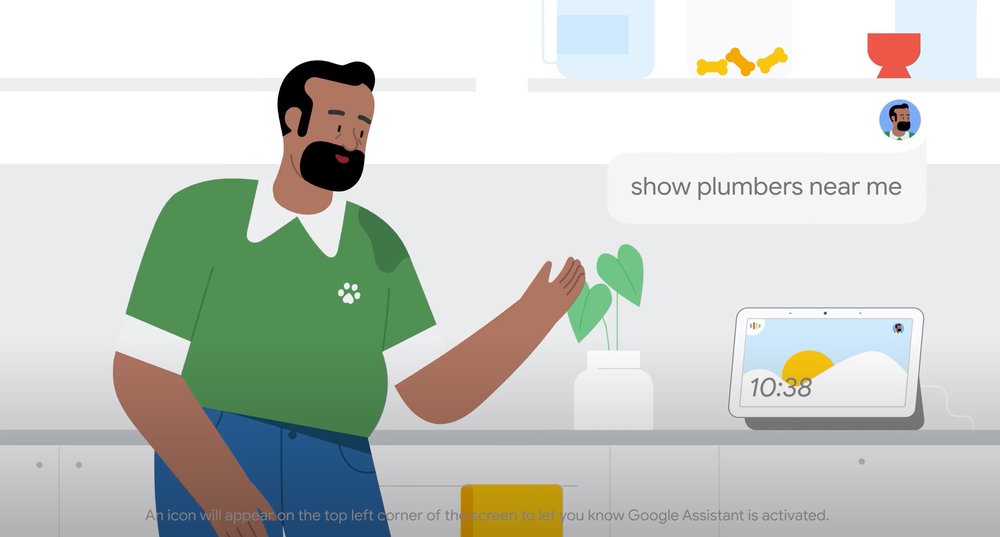
Our first new feature, Look and Talk, is beginning to roll out today in the U.S. on Nest Hub Max. Once you opt in, you can simplylook at the screen and ask for what you need. From the beginning, we’ve built Look and Talk with your privacy in mind. It’s designed to activate when you opt in and both Face Match and Voice Match recognize it’s you. And video from these interactions is processed entirely on-device, so it isn’t shared with Google or anyone else.
Let’s say I need to fix my leaky kitchen sink. As I walk into the room, I can just look at my Nest Hub Max and say “Show plumbers near me” — without having to say “Hey Google” first.
There’s a lot going on behind the scenes to recognize whether you’re actually making eye contact with your device rather than just giving it a passing glance. In fact, it takes six machine learning models to process more than 100 signals from both the camera and microphone — like proximity, head orientation, gaze direction, lip movement, context awareness and intent classification — all in real time.
Last year, we announced Real Tone, an effort to improve Google’s camera and imagery products across skin tones. Continuing in that spirit, we’ve tested and refined Look and Talk to work across a range of skin tones so it works well for people with diverse backgrounds. We’ll continue to drive this work forward using the Monk Skin Tone Scale, released today.

We’re also expanding quick phrases to Nest Hub Max, which let you skip saying “Hey Google” for some of your most common daily tasks. So as soon as you walk through the door, you can just say “Turn on the hallway lights” or “Set a timer for 10 minutes.” Quick phrases are also designed with privacy in mind. If you opt in, you decide which phrases to enable, and they’ll work when Voice Match recognizes it’s you.
Looking ahead: more natural conversation
In everyday conversation, we all naturally say “um,” correct ourselves and pause occasionally to find the right words. But others can still understand us, because people are active listeners and can react to conversational cues in under 200 milliseconds. We believe your Google Assistant should be able to listen and understand you just as well.
To make this happen, we’re building new, more powerful speech and language models that can understand the nuances of human speech — like when someone is pausing, but not finished speaking. And we’re getting closer to the fluidity of real-time conversation with the Tensor chip, which is custom-engineered to handle on-device machine learning tasks super fast. Looking ahead, Assistant will be able to better understand the imperfections of human speech without getting tripped up — including the pauses, “umms” and interruptions — making your interactions feel much closer to a natural conversation.
We’re working hard to make Google Assistant the easiest way to get everyday tasks done at home, in the car and on the go. And with these latest improvements, we’re getting closer to a world where you can spend less time thinking about technology — and more time staying present in the moment.