
Netflix si concentrerà inizialmente sul mobile gaming
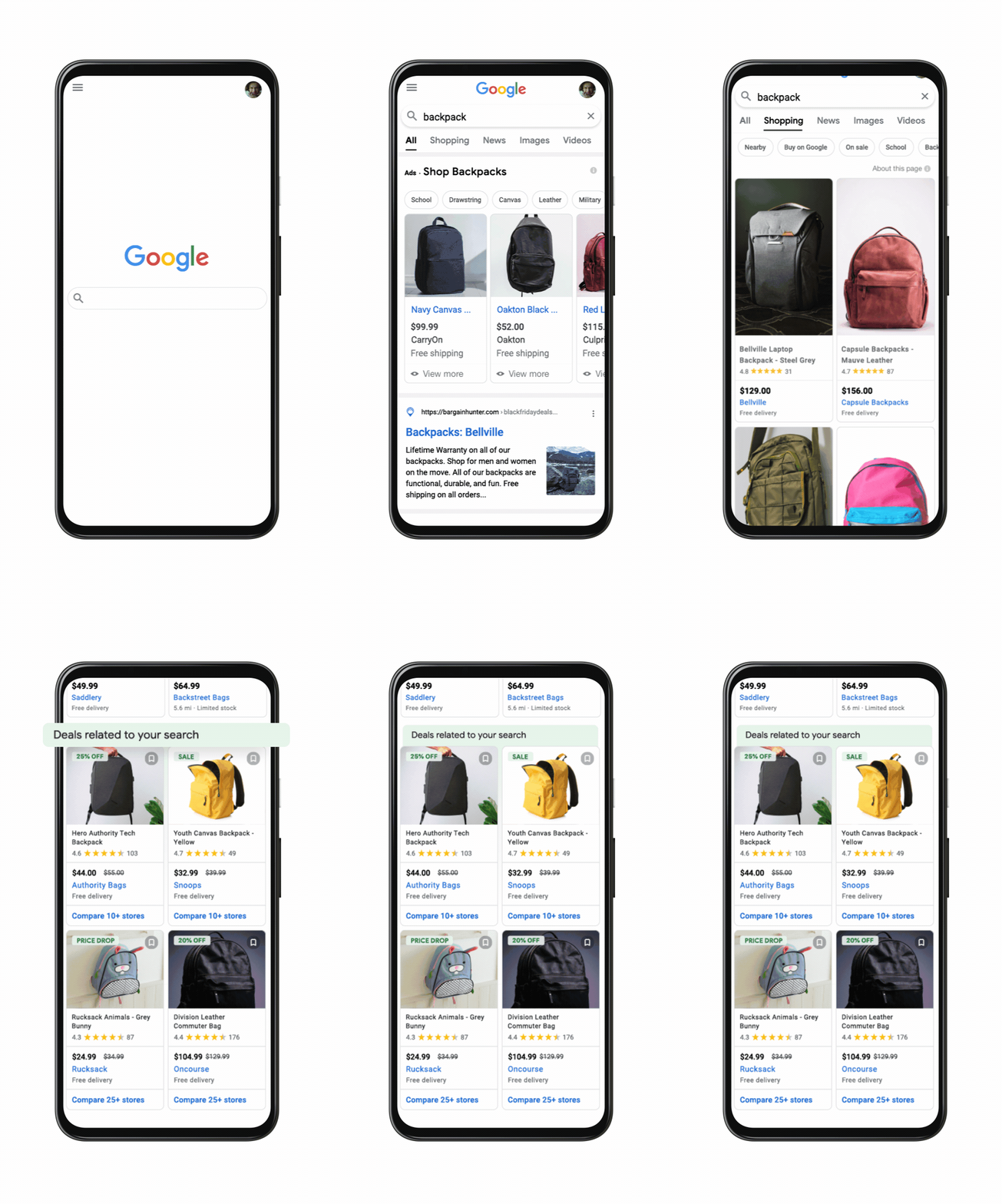
New ways to find deals and shop on Google
When it comes to shopping, people are increasingly looking for ways to save money. In fact, we’ve seen that searches for “discount code” have increased 50% since last year. With the back-to-school season upon us and the holiday season fast approaching, we know that consumers will be on the hunt for products that offer the best value, and businesses will be looking for ways to maximize exposure for their products with deals and promotions.
That’s why we’re rolling out new tools in the United States to bridge the connection between deal-seeking consumers and businesses looking to promote their products.
Making it easier for shoppers to find great deals
Starting today, we’re showcasing deals right on the Shopping tab found on Google. For instance, if you’re searching for “backpacks,” you may see a new section that will organize and show you backpacks that are competitively priced or discounted from retailers across the web, all in one place.

Echo Dot, 10 richieste inutili (e divertenti) da fare ad Alexa

Back 4 Blood, il nuovo trailer svela le funzionalità per PC
Jeff Bezos ce l’ha fatta: successo del suo viaggio nello spazio
Il nuovo Huawei P50 verrà presentato il 29 luglio

Scoperto un bug su Cassandra 4.0: rilascio annullato

Privacy and performance, working together in Chrome
For most people, internet browsers like Chrome act as a window to the web, where you can read the latest news, find the perfect gift or finally cross that task off your to-do list. And when you browse the web from A to Z, you definitely want an experience that offers peace of mind.
That’s why today, we’re making a number of privacy features more accessible, useful, and powerful in Chrome — helping you make informed decisions faster, and saving you some battery, too.
Per-site permissions, now just one tap away
Sometimes, when you visit a site, it might ask for access to your microphone, location and camera. With the updated site safety controls, we’ve made it easier to keep track of which site has permission to what information. Simply tap the lock icon on the left side of the Chrome address bar to open the updated panel, which shows what permissions you’ve granted for that particular site. From there, you’ll be able to more easily toggle between sharing and not sharing access to things like your location and your camera. And in an upcoming release, we’ll also add an option to delete the site from your browsing history in Chrome.
Cloud Covered: What was new in June on Google Cloud
June was full of news about new products, technologies and information from Google Cloud to help people connect, build and explore. Here’s a recap of June’s most popular posts on the Google Cloud blog.
New subsea cable will connect the US and South America
Last month we announced that Google is building a new, open subsea cable that will run from the East Coast of the United States to points in South America that include Argentina, Brazil and Uruguay. Named after Maria Firmina dos Reis, Brazil’s first novelist, the resilient Firmina cable will be the longest of its kind in the world that can run entirely from a single power source at one end of the cable if its other power source(s) become temporarily unavailable. As one of 16 subsea cables Google has invested in around the world, Firmina will improve access for South American users to Google products likeSearch, Gmail and YouTube, as well as Google Cloud services.
A powerful family of virtual machines say hello
In June we also announced a new virtual machine (VM) family type coming to Google Cloud, our Tau VMs. VMs are just like an actual computer, complete with an entire operating system, that is run in a separate window on a host computer or a remote server in a data center. They make it easier and faster for developers to build and run software in the cloud. Tau VMs will offer enterprises market-leading performance improvements and cost savings for their software applications. Learn more about Tau VMs’ performance versus competitors and read testimonials from companies like Snap and Twitter who’ve already benefited from this new offering.
A new dataset lets you do more with top Google Search terms
Trends in the top Google Search terms can tell people and businesses a lot about what’s on consumers’ minds. To expand access to this data and make it easier for enterprises to analyze these trends, we announced preview availability of a new public dataset for Google Trends. This will bring Google-owned Search data into Google Cloud Datasets for convenient analysis through favorite business tools like BigQuery, Google Cloud’s multicloud data warehouse. The dataset will allow you to gauge interest in specific topics or search terms across Google Search, from around the United States, down to the city level. This new public dataset is just the beginning of our process to make Google’s first-party data more accessible to businesses and enhance their data analysis projects.
Google gets one step closer to 24/7 carbon-free data centers
One of last month’s top announcements focused on Google data centers and sustainability. In 2020, we announced an ambitious sustainability goal to operate everywhere on 24/7 carbon-free energy by 2030. Last month, in the spirit of transparency, we released our updated carbon-free energy percentages (CFE%) for all Google data centers in 2020, as well as overall progress on our 2030 goal. The blog post details how we achieved 67% 24/7 carbon-free energy across all our data centers, up from 61% in 2019. This means that of all the energy used by Google data centers last year, two-thirds of it was matched with local, carbon-free sources on an hourly basis. You can check out an animation that explores events that helped us achieve these numbers. Decarbonizing the world’s power grids quickly will help prevent the worst impacts of climate change. Google is committed to clearing a path for others and encouraging collective action to achieve this goal. Let’s move, together, toward a carbon-free future.
Blue Origin porta brevemente nello spazio i primi passeggeri
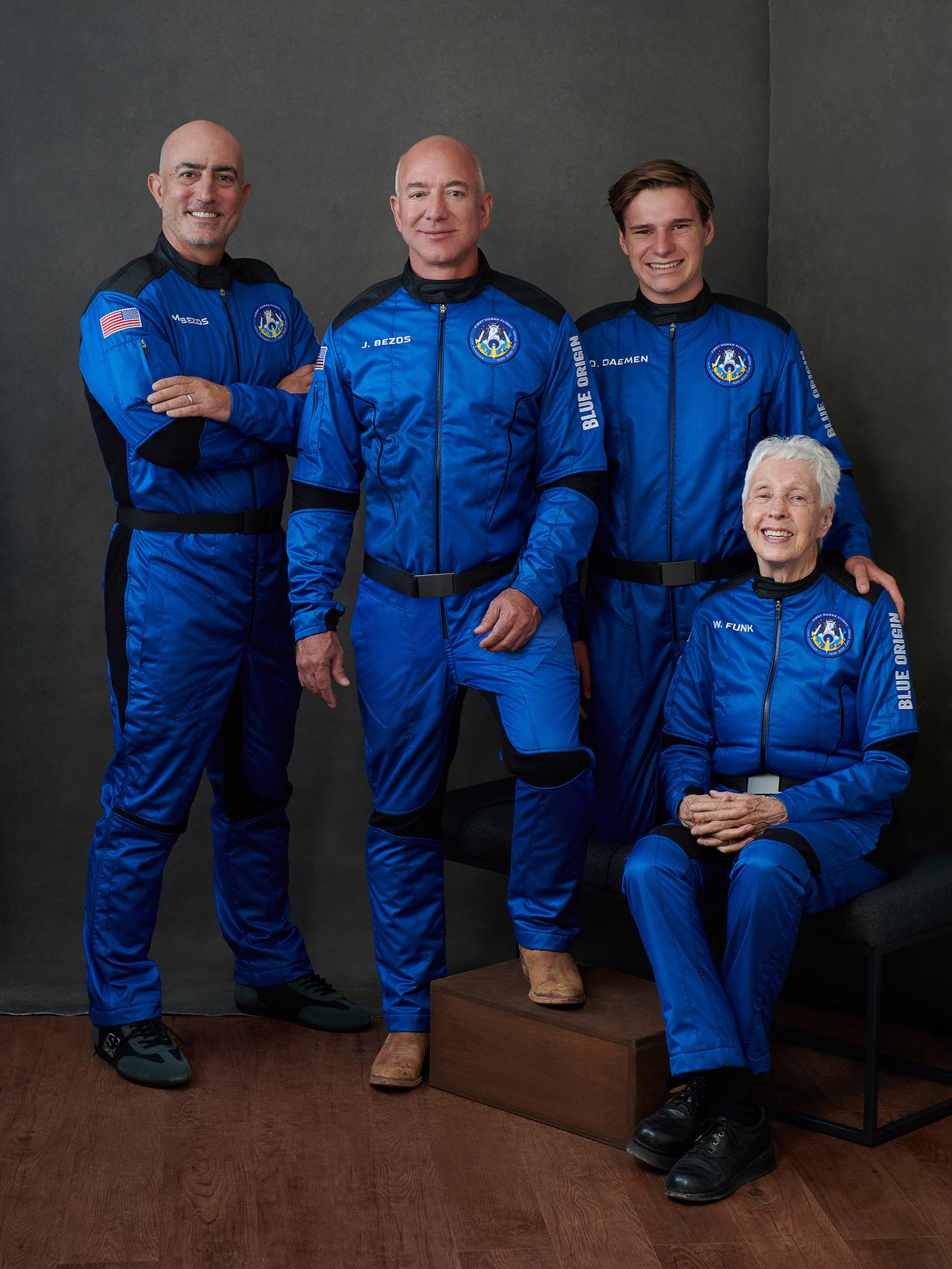
Poco fa il veicolo suborbitale New Shepard dell’azienda privata statunitense Blue Origin ha effettuato il suo primo volo spaziale con passeggeri. Il vettore riutilizzabile è partito da una base privata dell’azienda in Texas e ha trasportato alla quota di oltre 100 km, quindi a tutti gli effetti nello spazio, i suoi quattro passeggeri: Jeff Bezos (fondatore di Blue Origin e di Amazon e attualmente uomo più ricco del mondo), Mark Bezos (fratello di Jeff), Oliver Daemen (18 anni) e Wally Funk (82 anni).
Daemen è diventata la persona più giovane della storia ad andare nello spazio, grazie al biglietto pagato dalla famiglia: il record precedente spettava al russo Gherman Titov, che nel 1961 fece un volo spaziale (ma orbitale) all’età di 25 anni.
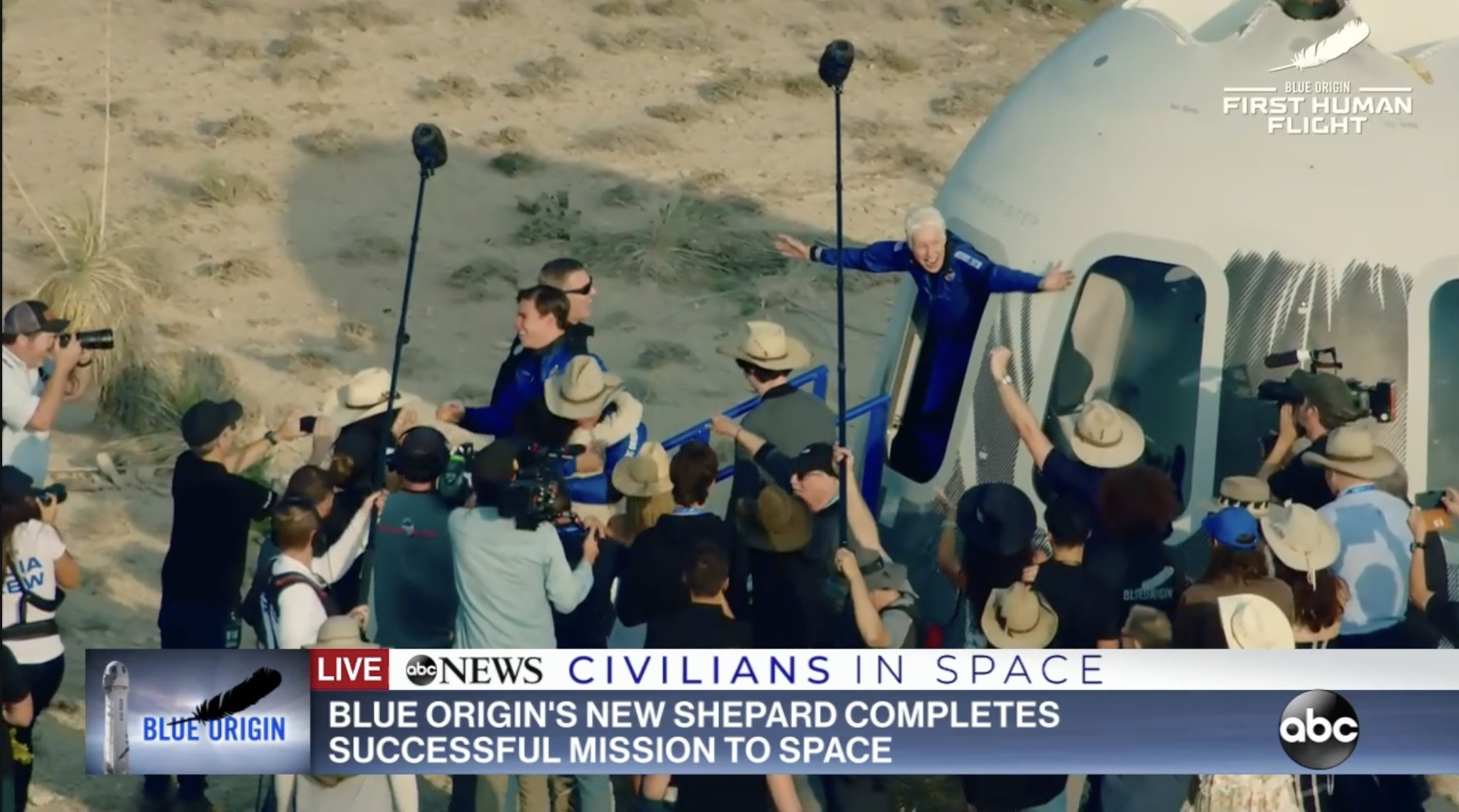
Wally Funk è diventata invece la persona più anziana a superare i 100 km di quota, battendo il primato detenuto da John Glenn, che nel 1998 fece un volo orbitale a bordo dello Shuttle all’età di 77 anni. Funk, pilota d’aereo professionista, è una delle Mercury Thirteen, le donne che negli anni Sessanta furono sottoposte, senza l’avallo ufficiale della NASA, agli stessi test fisici e attitudinali previsti per gli astronauti statunitensi e li superarono, dimostrandosi in alcuni casi candidate migliori degli uomini. Si offrirono come potenziali astronaute, ma la politica americana dell’epoca vietò loro di partecipare a missioni spaziali. I russi, invece, fecero volare nello spazio una donna, Valentina Tereshkova, già nel 1963.
Se volete saperne di più su Wally Funk, consiglio questo video:
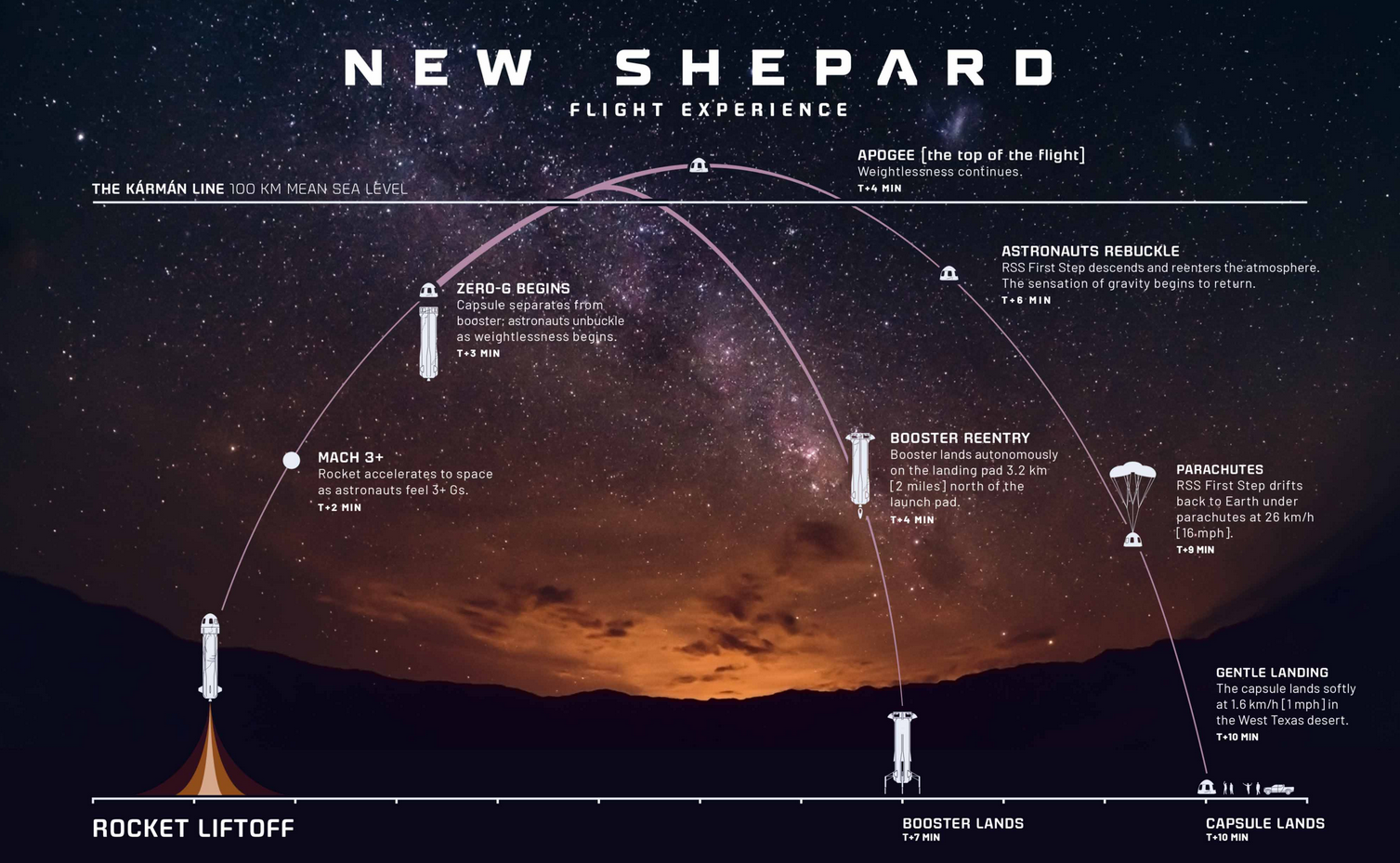
Va notato che questo volo commerciale è, appunto, suborbitale e quindi non ha raggiunto le altissime velocità necessarie per restare in orbita come nei voli spaziali normali (per esempio quelli degli astronauti professionisti che raggiungono la Stazione Spaziale Internazionale), ed è durato poco più di dieci minuti, di cui circa quattro trascorsi in assenza di peso. Ê arrivato a poco più di 100 km di quota e 3500 km/h, mentre la Stazione Spaziale Internazionale sta a 400 km e vola a 28.000 km/h. Inoltre gli occupanti della capsula (battezzata RSS First Step, dove RSS sta per Reusable Space Ship) sono stati puri passeggeri, privi di qualunque possibilità di pilotaggio, e tutto questo ha ridotto enormemente i requisiti fisici e di addestramento.
Non si tratta insomma di un volo particolarmente innovativo in termini tecnologici, dato che ricalca in piccolo i voli suborbitali già fatti negli anni Sessanta (per esempio da Alan Shepard), ma è una tappa significativa nella commercializzazione del volo spaziale.
I parametri ufficiali del volo sono i seguenti: la capsula con i passeggeri ha raggiunto la quota massima di 107 km sul livello medio del mare; il vettore è arrivato a 106 km; il volo è durato in tutto 10 minuti e 10 secondi; la velocità massima di salita è stata di 3.595 km/h.




Questo volo è il primo ad avere quattro persone a bordo che vanno nello spazio per la prima volta.
Questo articolo vi arriva gratuitamente e senza pubblicità grazie alle donazioni dei lettori. Se vi è piaciuto, potete incoraggiarmi a scrivere ancora facendo una donazione anche voi, tramite Paypal (paypal.me/disinformatico) o altri metodi.

Write from the Heart for More Memorable B2B Content Marketing
B2B marketers have been pushing for personalized content for a good long while. Now we’re also trying to humanize content — to make the case that B2B buyers are human beings who want to connect with other humans on an emotional level.
Isn’t it remarkable that we still have to make that argument?
But I’m not here to write another 1000 words about humanizing content. I want us to take it a step further, beyond personalization, humanization, personality and empathy.
B2B content marketing needs to come from the heart.
True, genuine heart is the last frontier in content. Every brand has an Instagram with behind-the-scenes content to boost authenticity. Every brand is striving to give at least the appearance of sincerity, personality and transparency.
A lot of it is about as deep as the checkout clerk telling you to “have a nice day.” To stand out now, B2B content needs to hit on a more fundamental level.
Why Write from the Heart?
Even as we talk about “human to human” or “B2Me” marketing, we still tend to think that B2B content needs to be head-driven, mostly logic and reasoning, with a thin gloss of personality and emotion on top to “humanize.”
The truth is, of course, that humans are inherently emotional creatures who seek connection with each other. We most often decide with our hearts first, then apply logic in retrospect.
B2B content with heart seeks to make a connection first, then supply value, then finally ask for a next step. It has to be in that order.
So, what does it mean to write from the heart?
1. Upgrade Personality to Passion
I am not passionate about, say, a software-as-a-service platform that collects customer data for marketers. And I’m not sure I want to meet the person who is.
But I am passionate about less intrusive marketing, about people getting connected with solutions that meet their needs, and about a future where marketing is helpful and productive, not annoying. So I can lead with the passion, the why that drove us to create this solution, and then I can talk about the product’s capabilities.
2. Upgrade Empathy to Compassion
Let’s face it: The marketing term ‘empathy’ sometimes has little to do with what the word actually means. While we may strive for truly feeling someone else’s hopes and fears, it tends to be in the service of persuasion, rather than connection.
Compassion is more than just walking a mile in someone’s shoes. It’s sincerely desiring to help them — to ease suffering, bring joy, and help them be successful. Do you care if the people you’re marketing to get promoted, get to spend more time with their kids, can finally afford to buy a starter home, and so on?
If you can show that you have true compassion for your audience, beyond the solution you’re offering, you’re far more likely to make a connection.
3. Upgrade Authenticity to Vulnerability
Here’s a hard one. Very few brands want to seem vulnerable or fallible. Even with behind-the-scenes content, they tend to present a highly sanitized version of the business. If you admit a fault, or share an obstacle you had to struggle to overcome, will you lose people’s trust and confidence in your brand?
Absolutely not. You’re writing to people who experience hardships and make mistakes. You’ll make a better connection if you show that your brand is made up of fallible human beings, too.
There’s nothing more authentic and transparent than a warts-and-all look at the problems your company faces and the ways in which you try, fail and ultimately succeed.
4. Upgrade Thought Leadership to Humility
What’s the fastest way to make a connection with a stranger? Ask them to do you a favor. Ask for help. Most salespeople are familiar with this phenomenon, sometimes called the “Ben Franklin Effect.” The idea is that if someone does you a favor, they’re demonstrably more likely to do a second one, and to regard you more kindly than if you had done a favor for them.
I think the same is true with content marketing. Thought leadership content tends to lack the notion of humility — it usually focuses on establishing knowledge and authority, of the author as an inerrant source of truth.
The problem is, no one really likes a know-it-all. A hefty dose of humility can make thought leadership content much more engaging, and much more likely to start a conversation.
Imagine a blog post that goes, “I’ve seen success in my business with x, y, and z. But I’m still not sure how to best go about a, b, and c. What are your experiences? What do you do in this situation?”
The thought leader in this case is adding value by sharing their own experience and success, but also allowing others to share their expertise as well. The result can be a conversation that benefits everyone involved – author, audience, and brand.
Your Heart Will Go On
As Maya Angelou famously said, people may forget what you say, but they will never forget the way you made them feel. And the best way to engage someone’s emotions is to share your own. We can’t settle for the shallow marketing equivalents of passion, compassion, vulnerability, and humility.
We need to embrace the difficult but rewarding task of bringing our whole hearts to what we’re creating.
How do you create content with heart? Let me know in the comments.
And take our B2B Influencer Marketing Survey to share your opinions.
The post Write from the Heart for More Memorable B2B Content Marketing appeared first on B2B Marketing Blog – TopRank®.

Jeff Bezos oggi nello spazio. Come seguire il lancio in diretta

Ubisoft annuncia Tom Clancy’s XDefiant con un trailer
WhatsApp consente di partecipare alle chiamate di gruppo in corso