Sviluppatori: le piattaforme e i linguaggi più utilizzati
TikTok, nuove funzionalità per creatori e spettatori
Expanding our cloud infrastructure to support Australia’s digital future
Even pre-pandemic, the adoption of cloud services was on the rise as organisations looked to drive digital transformation for business resilience and innovation. The impact of COVID-19 has only served to accelerate this momentum. As we continue to support the digital future of businesses, we are launching our second Australian Cloud region in Melbourne, Victoria.
In 2017 we launched our first Cloud region in Sydney and, since then, we have continued to invest and expand across Australia in an effort to support the digital future of businesses. According to AlphaBeta, Google Cloud delivers almost AU$3.2 billion in annual gross benefits to business and consumers in Australia, including AU$686 million to our customers and AU$698 million to our partners.
The Melbourne Cloud region represents one part of our continued expansion in cloud infrastructure to support Australia’s digital future, and is a strong reflection of our commitment to enabling our Cloud customers and partners to continue growing, innovating, and driving digital transformation forward in the region.
Of the launch, Victorian Minister for Government Services Danny Pearson said, “We welcome Google’s investment in local cloud infrastructure that will support the growing cloud requirements of Victorian businesses.”
Our investment in local cloud infrastructure
Melbourne joins the existing 26 Google Cloud regions connected via our high-performance global network, helping customers benefit from low latency and high performance of their cloud-based workloads and leverage the cleanest cloud in the industry. Through our second Cloud region in Australia, customers will benefit from improved business continuity planning with distributed, secure infrastructure needed to meet IT and business requirements for disaster recovery, all while maintaining data sovereignty in-country.
Designed for high availability, the region opens with three availability zones to protect against service disruptions; we’re the first hyperscaler to provide this capability in Melbourne today. It offers a portfolio of key products, including Compute Engine, Google Kubernetes Engine, Cloud Bigtable, Cloud Spanner and BigQuery.
We also continue to invest in expanding connectivity across the Australia and New Zealand region by working with partners to establish subsea cables, including INDIGO and JGA South, and points of presence in major cities including Sydney, Melbourne, Perth, Canberra, Brisbane, and Auckland. We also work with interconnect partners to extend the reach of our secure network.
Helping customers in the era of the transformation cloud
Navigating the past year has been challenging for Australian organisations as they grapple with changing customer demands and greater economic uncertainty. Technology has played a critical role in managing these changes, and we’ve been fortunate to partner with and serve people, companies and government institutions to help them adapt, including Australia Post, Bendigo and Adelaide Bank, and Optus. Hear more about what they have to say here.
A shared responsibility for quality journalism
Today we are publishing a paper that draws from our decades-long experience working with news publishers and journalists. It offers some ideas for constructive paths forward to foster the sustainability of the quality journalism that informs and strengthens communities, and elevates the essential stories in our lives. This paper includes possible areas for public policy support, such as incentive structures, innovation programs and projects to share best practices. While this is by no means an exhaustive list of ideas, we are publishing it to contribute to the wider discussion.
Supporting journalism has always been important to Google. As a company whose mission focuses on access to information, and whose success depends in large part on having a diverse open ecosystem of quality information, we are committed to helping find a path to a sustainable future for journalism. It’s why 20 years ago, we built Google News to help connect people to stories that impact their daily lives. We launched the Google News Initiative to support news publishers in their transition to a digital world; we do this through tools, technology and significant financial support for both existing newsrooms and new, diverse online news outlets and projects. More recently, we launched Google News Showcase, through which we pay publishers to create and curate quality content for a new online news experience.
Quality journalism enables communities to learn and share essential information, establish shared, accurate understandings of key public developments, and hold elected officials and institutions to account. And in this information age it has never been more essential for democratic discourse and social well-being. But digitization has challenged the underlying commercial model. That said, ensuring a sustainable, vibrant future for quality journalism needs to be done thoughtfully, and as a collective endeavor.
Sensible public policy can be a key component to addressing these challenges; such policy will work best if it is informed by a robust dialogue among a diverse range of stakeholders including publishers, journalists, policymakers, civil society and the private sector. We must identify the underlying challenges and consider novel solutions.
In the paper we are publishing today, we discuss three foundational proposals that we believe could help inform public policy approaches to supporting the future of quality journalism:
- Convening cross-sector experts to identify focus areas and collaborate on shared solutions;
- Investing in newsroom innovation and experimentation to identify and support sustainable business models; and
- Providing support for legacy institutions as they go through the digital transformation.
There are no easy solutions to the complex set of challenges facing the news industry today, which is why we have been working for years to support legacy newsrooms and new entrants focused on providing local news and quality journalism. The challenge is urgent – and across society we must work together to create sustainable solutions to these issues.
The experiences and lessons we describe in this paper would not have been possible without the valuable input we’ve received from the news partners we have worked with and learned from over the years. While there may be no simple solution, we are eager to listen, learn more and help drive innovation to support a successful public policy approach that results in a vibrant journalism ecosystem.

Laser TV Hisense 120L5F-A12: 120 pollici posson bastare?

Ebury mantiene visione positiva su Yuan Cinese
Il 2020 ha visto un forte apprezzamento dello yuan, che ha guadagnato più del 6% contro il dollaro statunitense. Alla fine di maggio di quest’anno USD/CNY è sceso sotto 6.40,…
L’articolo Ebury mantiene visione positiva su Yuan Cinese scritto da Paolo Brambilla proviene da Assodigitale.
Vaccines and our return-to-office plans
Sundar sent the following email to Google employees earlier this morning. The email has been edited to remove internal links.
Hi everyone,
I hope you are all taking good care. Since the beginning of the pandemic, we’ve put the wellbeing of our Google community front and center. We’ve done this while also taking care of our customers and partners, launching over 200 new products and features to help people and businesses navigate this difficult time.
In March of 2020, we made the early decision to send employees home to slow down the spread of COVID. Since then, we’ve extended our Carer’s Leave coverage to help employees care for loved ones. We’ve continued to cover the full wages of on campus workers who couldn’t perform their jobs because of office closures. And, we’ve made sure that Googlers and our extended workforce have access to vaccines as soon as they are available locally. Additionally, thanks to the generosity of Googlers and support from Google.org, we’ve helped Gavi to fully vaccinate over 1 million people in low-and middle-income countries globally.
Even as the virus continues to surge in many parts of the world, it’s encouraging to see very high vaccination rates for our Google community in areas where vaccines are widely available. This is a big reason why we felt comfortable opening some of our offices to employees who wanted to return early. And I have to say it’s been great to see Googlers brainstorming around whiteboards and enjoying meals in cafes again in the many offices that have already re-opened globally.
Getting vaccinated is one of the most important ways to keep ourselves and our communities healthy in the months ahead. As we look toward a global return to our offices, I wanted to share two key updates:
-
First, anyone coming to work on our campuses will need to be vaccinated. We’re rolling this policy out in the U.S. in the coming weeks and will expand to other regions in the coming months. The implementation will vary according to local conditions and regulations, and will not apply until vaccines are widely available in your area. You’ll get guidance from your local leads about how this will affect you, and we’ll also share more details on an exceptions process for those who cannot be vaccinated for medical or other protected reasons.
-
Second, we are extending our global voluntary work-from-home policy through October 18.We are excited that we’ve started to re-open our campuses and encourage Googlers who feel safe coming to sites that have already opened to continue doing so. At the same time, we recognize that many Googlers are seeing spikes in their communities caused by the Delta variant and are concerned about returning to the office. This extension will allow us time to ramp back into work while providing flexibility for those who need it. We’ll continue watching the data carefully and let you know at least 30 days in advance before transitioning into our full return to office plans. For those of you with special circumstances, we will soon be sharing expanded temporary work options that will allow you to apply to work from home through the end of 2021. We’re also extending Expanded Carer’s Leave through the end of the year for parents and caregivers.
I know that many of you continue to deal with very challenging circumstances related to the pandemic. While there is much that remains outside of our control, I’m proud of the way we continue to take care of each other while helping people, businesses and communities through these difficult times.
I hope these steps will give everyone greater peace of mind as offices reopen. Seeing Googlers together in the offices these past few weeks filled me with optimism, and I’m looking forward to brighter days ahead.
-Sundar
Using AI to map Africa’s buildings
Between 2020 and 2050, Africa’s population is expected to double, adding 950 million more people to its urban areas alone. However, according to 2018 figures, a scarcity of affordable housing in many African cities has forced over half of the city dwellers in Sub-Saharan Africa to live in informal settlements. And in rural areas, many also occupy makeshift structures due to widespread poverty.
These shelters have remained largely undetectable using traditional monitoring tools. Machine learning, computer vision and remote sensing have come some way in recognizing buildings and roads, but when it comes to denser neighborhoods, it becomes much harder to distinguish small and makeshift buildings.
Why is this an issue? Because when preparing a humanitarian response, forecasting transportation needs, or planning basic services, being able to accurately map the built environment – which allows us to ascertain population density – is absolutely key.
Enter Google’s Open Buildings
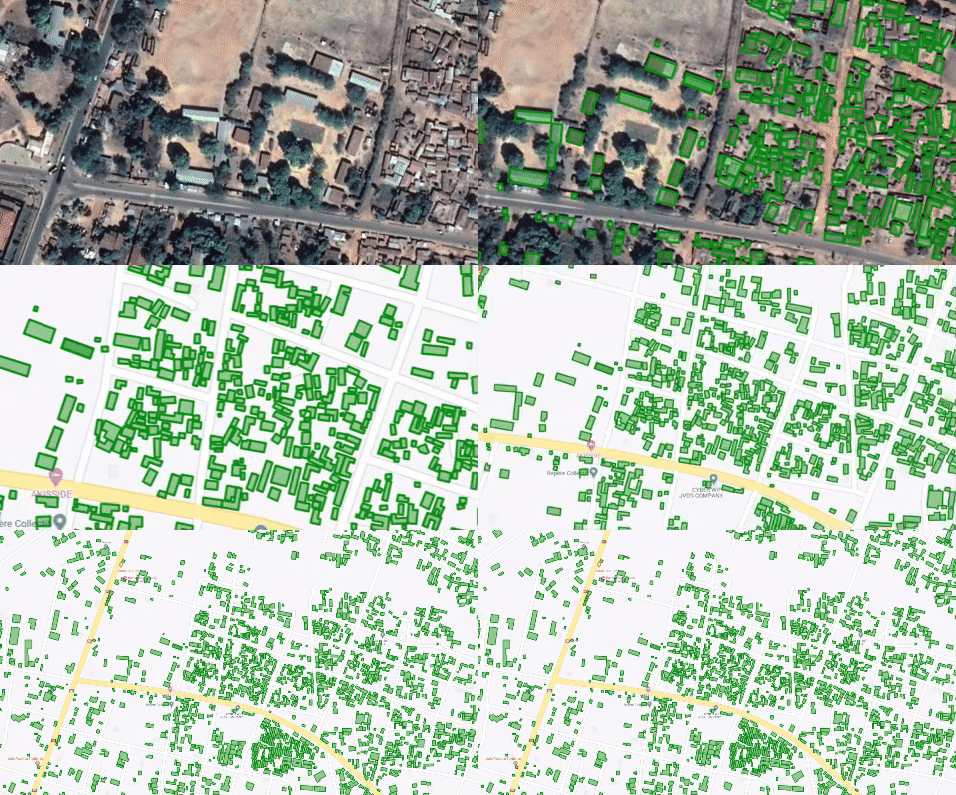
Google’s Open Buildings is a new open access dataset containing the locations and geometry of buildings across most of Africa. From Lagos’ Makoko settlement to Dodoma’s refugee camps, millions of previously invisible buildings have popped up in our dataset. This improved building data helps refine the understanding of where people and communities live, providing actionable information for state and non-state actors looking to provide services from sanitation to education and vaccination.
Open Buildings uses AI to provide a digital footprint of buildings. This includes producing polygons with the outlines of at least 500 million buildings across the African continent, the majority of which are less than 20 square meters. The full dataset encompasses 50 countries.
The data provides the exact location and polygon outline of each building, its size, a confidence score for it being detected as a valid building and a Plus Code. There is, however, no information about the type of building, its street address, or any identifying data. We have also excluded sensitive areas such as conflict zones to protect vulnerable populations.
Satellite mapping using AI
The Open Buildings dataset was generated by using a model trained to detect buildings using satellite imagery from the African continent. The information for the buildings detected is then saved in CSV files which are available to download. The technical details of the Open Buildings dataset, including usage and tutorials, are available on the dataset website and the Google AI blog.
How will this improve planning?
There are many important ways in which this data can be used, including — but not limited to — the following:
Population mapping: Building footprints are a key ingredient for estimating population density. This information is vital to planning for services for communities.
Humanitarian response: To plan the response to a flood, drought, or other natural disaster.
Environmental science: Knowledge of settlement density is useful for understanding the human impact on the natural environment.
Addressing systems: In many areas, buildings do not have formal addresses. This can make it difficult for people to access social benefits and economic opportunities. Building footprint data can help with the rollout of digital addressing systems such asPlus Codes.
Vaccination planning: Knowing the density of population and settlements helps to anticipate demand for vaccines and the best locations for facilities. This data is also useful for precision epidemiology, as well as prevention efforts such as mosquito net distribution.
Statistical indicators: Buildings data can be used to help calculate statistical indicators for national planning, such as the numbers of houses in the catchment areas of schools and health centers, mean travel distances to the nearest hospital or demand forecast for transportation systems.
Google’s AI Center in Accra
This project was led by our team at the AI Research Center in Accra, Ghana. The center was launched in 2019 to bring together top machine learning researchers and engineers dedicated to AI research and its applications. The research team has already been improving Google Maps with AI, adding 120 million buildings and 228,000 km of roads across Africa to Maps in the last year. This work is part of our broader AI for Social Good efforts.
5 Ways the Pandemic Has Forever Changed the Voices & Visions of B2B Marketing
How has B2B marketing changed forever during the pandemic?
The voices and visions of B2B marketing have been forced to shift over the past few years, as have many of the goals and methods we strive for and use to connect with our current and potential customers.
Some of these changes are subtle while others are decidedly not, yet each brings with it both new opportunities for embracing the future of B2B marketing along with risks for those who don’t heed the call when the winds of digital change shift.
Let’s take a look at five of the most substantial changes in B2B marketing that the pandemic has driven, and explore new insights that can inform and inspire your efforts in the push towards 2022 and beyond.
1 — Remote Yet Closer B2B Relationships
The remote Zoom, Slack, phone and email communication we’ve all had to embrace over the course of the pandemic have surprisingly brought closer B2B relationships in many cases.
How being physically distanced from each other has actually brought us together in new and fascinating ways is a phenomenon that will likely be studied for years to come, yet successful B2B marketers have already embraced this shift and are doing everything they can to nurture our new world of remote business relationships in creative digital fashion.
The heart of online communication are the people at either end of the conversation. The particular tools they use come and go like the shifting seasons, and in my 37 years of online digital communication this fact has become more pronounced.
The way our communication tools today are generally able to work together seamlessly is a far cry from the days when I operated a 300-baud computer bulletin board system and each person had to take turns phoning in with their modem. Two formats carried over, however — email and chat — and both are still successfully used today by countless B2B marketers.
Relationships between brands and influential subject matter experts have also taken on new qualities since the pandemic began.
For Ann Handley, chief content officer at MarketingProfs, a new variety of these opportunities has been arising.
“I think in B2B what we’re seeing, and this has been fueled by the pandemic, is that we are seeing those relationships start to happen between brands and influencers like me where they’re reaching out to me proactively and saying, ‘Hey, we don’t have a thing right now, but we want to work with you. Can we sort of get to know each other?’” Ann recently told our chief executive and co-founder Lee Odden in “Inside B2B Influence 14: Ann Handley of MarketingProfs on Content Marketing and Influence.”
[bctt tweet=”“Integrating influencer content is a direct line to building trust and customer confidence.” — Ann Handley @annhandley” username=”toprank”]2 — A Digital Communications Deluge
Advertisers, consumers, brands and pretty much everyone in between have all had to vastly increase their use of digital communication during these challenging recent years, which has led to more competition than ever to be heard.
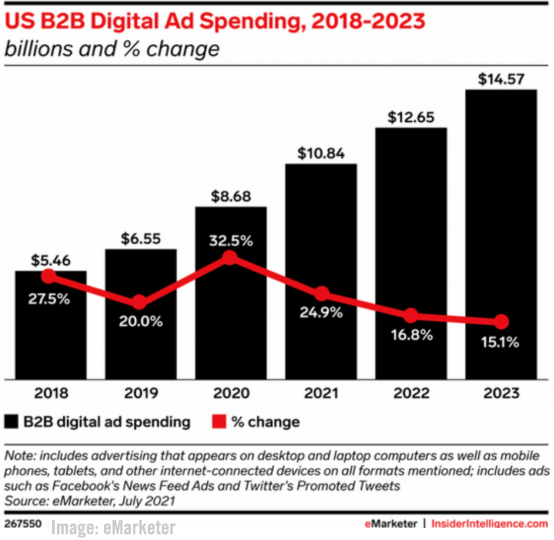
For advertisers, the pandemic propelled digital advertising past the 50 percent mark, and the margin between digital and all other formats is now only increasing.
Even among B2B marketers, in the U.S. advertising spending is expected to top $30 billion by 2023, with almost half of that going to digital advertising (eMarketer.)
Just because we have great tools for communicating, however, doesn’t mean we’re using them to full effect in our marketing efforts.
The combined art and science of effective B2B marketing communication is a subject we’ve explored in the following articles:
- 10 Marketing and Communications Leaders to Inspire You in 2021
- Remote Communication Opportunities For B2B Marketers
- The Universal Translator: How Marketers Can Improve Communication with Internal Stakeholders
3 — Heightened Customer Journey Expectations
The touch-points that B2B customers now look for along their purchasing journey in the coronavirus era run from well before the starting line to long past the finish line of sales.
Before the pandemic, B2B buyers had long-standing way-points for predictable interactions with brands.
Now, businesses that rely only on those traditional touch-points for customer interaction risk not being there for their potential customers in the new places buyers expect to find brands — whether it’s a new batch of social media platforms such at Clubhouse, human or chatbot live chat, or text messaging.
The more we can learn about our customers and the digital journeys they set out on today, the better we can get front and center at those key points where we want to provide the best-answer solutions our audience is searching for.
It’s rarely possible to truly be there at every possible spot in today’s vast and circuitous digital routes, even with substantial resources, so it’s important to pick the right locations for meeting your customer on their journey, and to make each one count.
One approach to tackling this complex issue is through the use of account based marketing (ABM), or better yet, account based experiences (ABX), as Lee recently explored in “Is ABX the Next Evolution of B2B Marketing?”
[bctt tweet=”“In many ways, Account Based Experience (ABX) is the next generation of Account Based Marketing. ABX is a fundamental customer centric rethinking of an account based go-to-market.” — Jon Miller @JonMiller” username=”toprank”]4 — The Natural Shift to Influence
One big winner the pandemic has surfaced for brands, marketers, and customers alike is the enduring power of influence.
It’s no wonder that U.S. influencer spending is set to surpass $3 billion in 2021, an increase of over 33 percent (eMarketer), and that paid branded content and influencer marketing have accounted for 20 percent of 2021 digital advertising budgets, while influence marketing has been seen as the second most important digital ad option for 2021, according to recently-released Advertiser Perceptions survey data.
These past two years are likely to go down as the turning point when influencer marketing truly showed its potential in the world of B2B industries.
We’ve examined this important shift to B2B influencer marketing recently in the following articles:
- Top 5 Benefits of Influencer Marketing for B2B Brands
- Mindful Marketing: 5 Uncommon Ways To Work With B2B Influencers
- 5 Examples of B2B Brands Rocking With Influence in 2021
- 9 Questions to Ask When Hiring a B2B Influencer Marketing Agency
5 — Hybrid Work Hotbeds Go Mainstream
I’ve worked remotely for the past 5,241 days — since March 23, 2007 — and one genie-from-the-bottle change the past two pandemic years has brought is the immense increase in the number of people working remotely around the world.
B2B brands that facilitate remote communication have undoubtedly thrived the past two years, with Zoom and clients such as Slack and monday.com upping their game to make hybrid and remote work a much more friction-free and less frustrating experience.
Digital video too has exploded since the pandemic began, a trend that newly-released forecast data clearly shows, with online video and eCommerce advertising expected to add $40 billion — some 11.2 percent — to advertising spending worldwide, an increase of more than six percent from its peak before the global health crisis.
Professional talent in all areas surrounding the great circle of B2B activity is now more global than ever, and successful firms are strengthening their teams by adding great and diverse voices from the four corners of the digital world.
[bctt tweet=”“The more diverse your workforce is, the better your ideas, innovation, and problem solving are, because you don’t have a bunch of heads that look like one another nodding in agreement, which doesn’t get us anywhere.” — @TamaraMcCleary” username=”toprank”]Crank Up & Amplify Your B2B Marketing Voice & Vision
Being mindful of these changes can help make the journey to 2022 and beyond a more successful one, as we move forward towards a future shaped not only by the pandemic but also by the many powerful changes and improvements B2B marketers have crafted.
By cranking up and embracing new closer B2B relationships and the digital realm where they largely reside, savvy marketers will meet those heightened customer journey expectations.
Utilizing the multifaceted power of influence will propel tomorrow’s most successful marketers and B2B brands, all in a new work landscape that will henceforth be far more hybrid and remote.
Crafting award-winning digital experiences and storytelling featuring each of these elements takes significant time, resources, and effort, which is why many of the world’s top B2B brands choose to partner with a leading B2B marketing agency. Contact us today and learn why for more than 20 years brands from LinkedIn and 3M to Dell and Adobe have chosen to work with TopRank Marketing.
The post 5 Ways the Pandemic Has Forever Changed the Voices & Visions of B2B Marketing appeared first on B2B Marketing Blog – TopRank®.

Italy’s capital of culture: Parma
The cultural scope of the beautiful Italian Peninsula never ceases to amaze people all over the world. But the possibility of getting to know the traditions and peculiarities of many Italian gems has been drastically reduced since the pandemic hit. Among such treasures is Parma, a delicate city set in the very heart of Italy. Beyond being the capital of iconic food such as Parmigiano and Prosciutto, Parma is a city of incredible cultural heritage that gained the prestigious title of “Italian Capital of Culture for the year 2020” but had to put a year-long calendar of events on hold due to the pandemic.
Eighteen months later, the city is ready to celebrate its cultural heritage with the world on Google Arts & Culture. The collaboration between the Municipality of Parma and Google brought online the work of 33 institutional partners in the Parma area, including over 17,000 images from the archives of the municipal museums, 30 places digitized with Street View and much more. It’s a project of true cultural valorization that highlights the magic behind this city.
Travel to Italy from home and check out some of Parma’s wonders. Explore the masterpieces, enjoy the sound of music and get a taste of that Italian cuisine:
-
Deep into a towering dome: Step inside and see the details of a 27-meters-high dome like you’ve never seen before and learn about the artist Correggio’s devotion to the Benedectine congregation.
-
Get your artists in place: Thanks to the Google Art Camera, the online experience faithfully reproduces over 200 masterpieces by international artists such as Picasso, Francis Bacon, Goya, Monet and Tiziano Vecellio but also by Italian artists including Ligabue, De Chirico, Boccioni, Filippo Lippi and Parmigianino.
-
300,000 bamboo plants: Did you know Parma holds the largest existing labyrinth in the world? Labirinto della Masone was created by the visionary mind of Franco Maria Ricci. It is composed of 300,000 bamboo plants and is considered a magical place, all waiting to be discovered!
-
Music to your ears: The land of renowned musicians Verdi and Toscanini, Parma is a favorite destination for opera lovers, who can now immerse themselves in a collection of 10,000 stage photographs, sketches and posters from the newly digitized Casa della Musica(literally “House of Music) archives. Several museums are now online, with the goal of bringing the history of sound reproduction to all ears.
-
No stereotypes when it comes to food: Known worldwide for Parmigiano Reggiano, the digital hub also features the Parmigiano Reggiano Museum to discover all about the history of one of the world’s most loved cheeses.
-
Did you say Pasta?: “Pasta” is synonymous with Italy so of course the online hub also includes the famous Pasta Museum to virtually transport you from the wheat fields to the traditional Italian household to make pasta. Check it out to truly understand the role that this type of food has played and continues to play in gastronomy, art, culture and in the lives of people around the world.
The journey into the beauty of Parma doesn’t end here. Continue to discover the wonders of the Capital of Culture 2020 and 2021and let yourself be amazed by the art, music and culture of the city.
Want to continue traveling to Italy from home? Look behind the curtain of one of the world’s greatest and oldest theaters, La Scala Theater in Milan or take a virtual tour of some of Italy’s most iconic sites through the “Wonders of Italy” experience.
This and so much more, on Google Arts & Culture and on the Google Arts & Culture app foriOS and Android

LA CRYPTO ARTE SUPPORTA LA SARDEGNA
Per la prima raccolta fondi in NFT prestigiosi artisti contemporanei italiani e internazionali hanno donato una propria opera per mostrare vicinanza all’isola colpita dai roghi. GLI NFT saranno venduti sulla…
L’articolo LA CRYPTO ARTE SUPPORTA LA SARDEGNA scritto da Michele Ficara Manganelli ✿ proviene da Assodigitale.

Anche Instagram si adegua e allunga la durata dei Reels
Samsung presenta Odyssey Neo G9, nuovo monitor curvo

Parma Capitale italiana della Cultura: un viaggio tra le eccellenze del patrimonio su Google Arts & Culture

Parma è stata nominata Capitale italiana della Cultura per il 2020 e 2021 ma con l’arrivo della pandemia, la città ha dovuto mettere in pausa un calendario di eventi lungo un anno. Diciotto mesi dopo, Parma è pronta ad aprire le sue porte al mondo grazie al digitale, con cui supera i confini geografici per celebrare il proprio patrimonio. È per questo che il Comune di Parma ha collaborato con Google Arts & Culture. Insieme, è stato portato online il lavoro di 33 partner istituzionali del territorio di Parma e Provincia comprendendo oltre 17.000 immagini provenienti dalle collezioni dei musei e dagli archivi comunali del territorio, 30 luoghi digitalizzati con Street View e molto altro ancora. Un progetto di vera valorizzazione culturale che mette in luce la magia di questa città portandola nelle case di tutti.
L’arte nascosta nelle vie di Parma

Grazie allo strumento Art Camera, l’esperienza di Google Arts & Culture riporta fedelmente oltre 200 opere di artisti internazionali come Picasso, Francis Bacon, Goya, Monet e Tiziano Vecellio ma anche di artisti italiani tra cui Ligabue, De Chirico, Boccioni, Filippo Lippi e Parmigianino.
Tra la selezione di progetti artistici, è presente anche il curioso Labirinto della Masone, il più grande labirinto esistente al mondo e creato dal sogno della mente visionaria di Franco Maria Ricci. Il Labirinto Masone è composto da 300.000 bamboo e viene ritenuto un luogo magico, tutto da scoprire!

La meta per gli amanti della musica
Le meraviglie enogastronomiche
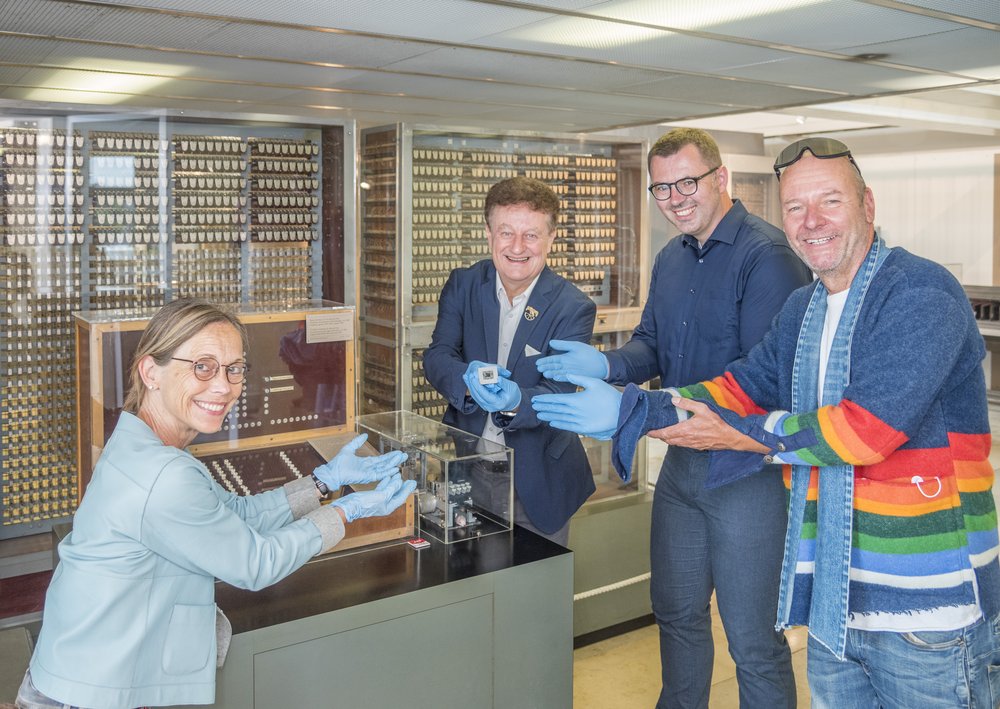
Our quantum processor at the Deutsches Museum
In 2019, our Quantum AI team achieved a beyond-classical computation by outperforming the world’s fastest classical computer. Today, a quantum processor from the Sycamore generation that accomplished this important computing milestone will be donated to the Deutsches Museum of Masterpieces of Science and Technology in Munich, Germany.
The Deutsches Museum has one of the largest collections of science and technology artifacts in the world. This means that the Sycamore will share the same exhibition space as some of the world’s most important technological achievements: like the roundest object in the world – a silicon sphere that gives the kilogram a new definition; the Z3, one of the earliest computers; the Wright Flyer, considered the first serial motor plane; and automotive history from the first diesel engine to the Waymo Firefly. The museum has a long history of preserving artifacts that mark the start of new eras in science and technology, which is why we’re honored to have the Sycamore processor among these exhibits. The beyond-classical experiment ushered in a new era for exploring near-term quantum algorithms that could have tangible benefits to society, for example—design more efficient batteries, create fertilizer using less energy, and figure out what molecules might make effective medicines.
Handover of the Sycamore processor in front of Zuse‘s Z3 computer. Luise Allendorf-Hoefer, Curator electronics, Deutsches Museum, Wolfgang M. Heckl, Director General, Deutsches Museum, Markus Hoffmann, Google Quantum AI Partnerships and Hartmut Neven, Director, Google Quantum AI.
This also marks an important milestone in the collaboration between Google Research and Germany’s burgeoning quantum community. Since Google has a research presence in Munich and Berlin, it has given us the opportunity to partner with several German organisations to explore the future of quantum computing. For example, the Sycamore processor has already been used by some of our industrial research partners, like Volkswagen and Mercedes-Benz, and will be the foundation for experiments designed with Boehringer Ingelheim, Covestro and BASF.
If you can’t travel to Munich to visit the Deutsches Museum in person, don’t forget that you can take a virtual trip through Google Arts & Culture.