
Black Friday Cyber Monday: Aspettative Disattese O Superate?

Kali Linux 2021.4 con supporto ai chipset Apple M1

Matrimoni nel Metaverso? Per Facebook si fanno senza niente dalla vita in giù
La
Invece Horizon Worlds offre avatar letteralmente troncati: le gambe e il bacino semplicemente non esistono, forse per evitare che gli utenti abusino della possibilità di scegliere la propria anatomia e il proprio vestiario. E la grafica, per quanto migliore di quella del matrimonio virtuale dei Gagnon, non è certo quella fluida e pulita della pubblicità.
Questo è come viene presentato Horizon Worlds nei video promozionali di Meta, che precisano che si tratta di “immagini simulate che non sono rappresentative del prodotto attuale”:
Da pochi giorni Horizon Worlds è disponibile al pubblico, dopo oltre due anni di sperimentazione limitata agli addetti, e quindi possiamo finalmente vedere com’è fatto realmente quello che ha in mente Mark Zuckerberg per il futuro di Internet.
Per entrare in Horizon Worlds i requisiti hardware sono abbastanza modesti: basta avere un visore per realtà virtuale Oculus Quest 2 e un account Facebook. L’accesso è gratuito.
Il problema sta nei requisiti personali: bisogna essere maggiorenni e soprattutto vivere negli Stati Uniti o in Canada (o convincere Facebook di essere residenti di questi paesi). Chi soddisfa queste condizioni ha cominciato a pubblicare i primi video delle proprie esperienze, e il confronto con i video promozionali è piuttosto impietoso: gli avatar e gli ambienti sono molto schematici e ben lontani dalle ombreggiature e dalle curve morbide mostrate negli spot.
Una volta entrati, si hanno a disposizione degli strumenti piuttosto sofisticati per creare strutture e oggetti interattivi nell’ambiente: chiunque abbia mai giocato a Fortnite, Roblox o Minecraft si troverà a proprio agio. Si possono anche aggiungere suoni personalizzati, tratti da un repertorio incluso in Horizon Worlds, e i primi partecipanti hanno già iniziato a costruire un gran numero di ambienti pubblicamente accessibili e molto dettagliati.
La cosa probabilmente più interessante per i tipi creativi è la disponibilità di un linguaggio di programmazione (Meta parla di script blocks) che consente di assegnare agli oggetti delle funzioni, creando quindi dei meccanismi e addirittura dei veri e propri giochi interattivi.
Per quanto riguarda il proprio aspetto in questa bozza del Metaverso, a parte l’assenza di metà corpo, è tutto personalizzabile con notevole dettaglio, e l’interazione con gli altri partecipanti è molto fluida e abbastanza naturale: ogni avatar si muove seguendo i movimenti delle mani e della testa del suo utente, che vengono rilevati dal visore e dai controller. Se due o più utenti tengono unite le mani virtuali per qualche secondo, diventano un gruppo che si sposta insieme.
Ci sono aree dove si partecipa a gare sparatutto, altre nelle quali si può fare musica usando strumenti virtuali, e altre ancora nelle quali si possono lanciare aeroplanini di carta o tirare con arco e frecce. Per ora è tutto gratis e non si parla di soldi per skin o indumenti personalizzati. Quasi tutto quello che si vede è creato dagli utenti stessi.
È insomma un luogo piuttosto interessante e divertente, ma come in qualunque ambiente nel quale ci sono altre persone, sia pure virtuali, ci sono anche delle esigenze di protezione. Per impostazione predefinita, tutto quello che si dice ad alta voce viene captato dal microfono del visore e diffuso dentro la propria area di Horizon Worlds. Questo rende facile attaccare bottone con gli altri utenti. Magari anche troppo facile: in ogni caso, chi vuole stare in pace ha una modalità protetta facilmente accessibile, nella quale diventa invisibile agli altri, che non possono sentirlo, ed è possibile bloccare gli utenti con i quali non si vuole interagire.
Ma se invece si vuole interagire con gli altri, bisogna sopportarne le voci in sottofondo, e siccome siamo in realtà virtuale immersiva e tridimensionale si amplifica il disagio di vedere qualcuno che si avvicina, allunga le mani e dice cose indesiderate. Ci sono già stati casi di molestie, come racconta The Verge. Ogni sessione di Horizon Worlds è dotata di una sorta di bodycam, che registra localmente quello che viene detto e fatto e lo tiene a disposizione in caso di comportamenti inadatti, per cui c’è un discreto deterrente. Però questa soluzione tecnologica non risolve il problema dei bambini rumorosi e iperattivi, che sono presenti anche qui e strillano parecchio perché non si rendono conto che gli altri li sentono. Forse è il caso di cercarsi una delle zone di meditazione.

Aggiornamenti Apple per tutti i dispositivi: non solo funzioni nuove, ma anche molti rattoppi. Anche per Android
Apple ha rilasciato una raffica di aggiornamenti per molti suoi dispositivi, dai computer ai tablet agli smartphone agli orologi, e li ha annunciati puntando sulle nuove funzioni, ma in realtà includono anche molte correzioni di sicurezza e quindi vanno installati appena possibile.
Per esempio, MacOS 12.21 aggiunge SharePlay, per condividere musica o video oppure il contenuto di un’app durante le videochiamate, ma con alcune limitazioni. Sono migliorati anche i controlli parentali, che permettono di attivare avvisi se i figli minori ricevono o inviano foto intime. Le correzioni di sicurezza sono elencate qui.
iOS e iPadOS 15.2 contengono una nuova impostazione che permette di vedere meglio quali app hanno avuto accesso alle informazioni personali, ma sono aggiornamenti importanti soprattutto per le correzioni di sicurezza, che sono davvero tante. Alcune delle falle corrette da questi aggiornamenti consentivano di prendere il controllo del dispositivo usando semplicemente un’immagine o un file audio appositamente alterato.
Anche gli Apple Watch e le Apple Tv hanno i loro bravi aggiornamenti, rispettivamente alle versioni 8.3 e 15.2, ma non sono particolarmente significativi, a parte la correzione di una falla che permetteva di prendere il controllo degli Apple Watch tramite un’immagine appositamente confezionata.
C’è invece una novità interessante che riguarda Android: la cosa può sembrare strana, visto che Apple normalmente non produce software per Android, ma stavolta è così. L’azienda ha infatti rilasciato una nuova app Android, chiamata Tracker Detect, che permette anche agli smartphone di questo tipo, oltre che agli iPhone, di rilevare i dispositivi di tracciamento e localizzazione AirTag di Apple.
Questi dispositivi, grandi come una moneta, sono pensati per rintracciare oggetti smarriti o rubati, come chiavi o valigie, ma sono utilizzabili anche in modo illecito per pedinare le persone a distanza e quindi è importante che anche gli utenti Android possano usare il proprio smartphone come rilevatore di eventuali AirTag nascosti da qualcuno nelle loro cose.

Panico da Log4Shell: cosa c’è da sapere e da fare
Da alcuni giorni, precisamente dal 9 dicembre scorso, c’è un panico informatico diffuso a proposito di Log4Shell, che secondo molti esperti è una delle falle di sicurezza più gravi di sempre e la
—-
Se vi state chiedendo come sia possibile un disastro del genere, per cui basta scrivere qualcosa in una casella di chat per attaccare un sito, la spiegazione è che Log4J è una libreria software, ossia una serie di istruzioni di programmazione, che viene usata da moltissime applicazioni, soprattutto nei computer collegati in rete. Serve a fare il cosiddetto logging, ossia a registrare tutto quello che avviene sui quei computer: per esempio quale utente ha fatto una certa cosa, quando l’ha fatta, da che dispositivo l’ha fatta, eccetera.
È una libreria libera e gratuita, per cui la possono usare tutti liberamente, e infatti la usano moltissime aziende.
Questa libreria ha un difetto: non controlla bene il contenuto dei dati che registra. Se un utente ostile fa in modo che nel log ci sia quella sequenza di caratteri che ho citato prima (per esempio la usa come nome del proprio telefonino oppure come User agent del proprio browser), Log4J riceve la sequenza e la interpreta come istruzioni da eseguire. Un errore classico e clamoroso, spiegato in dettaglio qui da Sophos.
Se volete saperne di più: LunaSec (anche qui), Minecraft.net (anche qui), Howtogeek, Ars Technica (anche qui e qui), Graham Cluley, Gizmodo, Sophos.

Se vi serve una notifica per salvarvi da una conversazione: Busy Simulator
Vi capita mai di essere in una conversazione nella quale state silenziosamente pregando che arrivi uno squillo di telefono o una notifica per darvi una scusa per sganciarvi? Avete mai bisogno di sembrare indaffarati quando non lo siete affatto?
C’è una soluzione semplice per queste esigenze: Busysimulator.com. Un sito che genera i suoni di notifica delle app pìù popolari, da Google Calendar a Slack a Skype passando Discord, Apple Mail e Outlook. C’è anche il suono della vibrazione di un telefonino. Per attivarli basta cliccare sull’icona corrispondente.
Se cliccate su uno dei pulsanti il suono di notifica corrispondente non viene emesso una sola volta, ma viene ripetuto a intervalli più o meno casuali. Il pallino sotto ogni icona è un cursore che regola la cadenza di ripetizione.
Se volete disattivare tutto, basta un clic sul pulsante rosso etichettato Stop All.
L’idea è di Brian Moore, un “direttore creativo/tecnologo” che sta a Los Angeles, in California, e funziona particolarmente bene nelle videoriunioni interminabili. Buon divertimento.
Adesso scusatemi ma devo assolutamente andare, mi sta arrivando una raffica di notifiche, dev‘essere qualcosa di importante.
Fonte: BoingBoing.
A creator who started posting at 12 now has over 700,000 fans
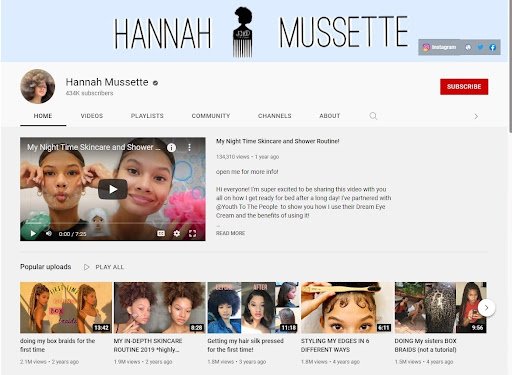
Google for Creators recently launched The Conversation, a new YouTube series spotlighting the experiences of women of color creators. This month, we’re featuring 21-year-old creative director, model and social media influencer Hannah Mussette, who began creating and posting content at age 12. Learn more about Hannah below and check out the full interview.
Social media influencer Hannah Mussette grew up on the internet, creating and posting content starting at age 12. Now, at 21, Hannah has a successful brand and over half a million followers. But the road to get there wasn’t easy. Like many others, she found that middle school wasn’t always a welcoming, inclusive environment. “I had very bad social anxiety,” Hannah recalls. “I was getting made fun of in school. I didn’t have any friends. My only outlet was to turn to the internet.”
Hannah began creating and sharing videos as a way to express her bubbly personality — showing what she had in her backpack or just goofing around with her sister. “I felt the internet wouldn’t judge me,” she shares. “I felt more comfortable being myself online, which I couldn’t do in [my] environment.”
Hannah began posting makeup tutorials in high school, taking note of what other women of color were doing online. At 16, she decided to go public with a deeply personal issue — her hair. “I used a relaxer, which is the devil,” she says. “My father said, ‘Do something with your hair. It looks fried.’ I said, ‘OK, I got you.’” Hannah took matters, and scissors, into her own hands. 30 minutes later, she emerged from the bathroom with her hair cut short. She documented the process in a YouTube video calledMy BIG Chop!, which quickly went viral. “I was watching the views go up,” Hannah says. “It was 20,000. Then, it was 50,000. Then, it was a million before I knew it. I was like, ‘Wow!’ And I knew that was my niche.”
Hannah shares haircare, skincare and modeling tips, as well as her thoughts on sexuality and self-care, in her YouTube videos.
Since it was first posted in 2016, Hannah’s haircut video has attracted more than 1.5 million views. HerYouTube channel now has 433,000 subscribers, who watch Hannah’s take on natural haircare and skincare, beauty, style, relationships and more. And herInstagram profile has 240,000 followers.
Today, Hannah is a professional model, content creator and social media influencer, with sponsorship and affiliate deals from multiple beauty brands. She is also co-founder and creative director ofJumu, a company that sells natural hair products.
Hannah shares some of what she’s learned from growing up in the social media spotlight.

Creating and sharing content helped Hannah overcome anxiety and find herself. It also jump-started her career in modeling and business.
Evolving with her content
Hannah’s content evolved as she grew into a young woman. “My content has changed dramatically,” she says. “Between the [ages] of 14 to 17, it was usually hair videos or school vlogs. I would take my camera to school and film with my friends.” Today, Hannah still shares beauty and styling tips, but she also vlogs on self-care and sexuality. She even opened up about her adoption story. “Now we’re talking about grown-up stuff,” she says. “We’re having girl talks.”
Taking on social issues
Hannah also promotes Black-owned businesses and posts about women’s rights and social justice issues. She doesn’t intend to stir up controversy, but she doesn’t shy away from it either. “I’m trying to educate,” she says. “People will either agree with me or they won’t. That’s the joy of social media. For every negative comment, there are 30 more from people wanting to know more, and thanking me for posting and speaking up.” Still, living in the social media spotlight can be challenging. “Social media can be a little bit scary,” Hannah admits. “I’m showing my personality, but some people will throw that back in your face. I try not to listen to [the negative] comments.”
Being a role model
Hannah wishes she could tell her 12-year-old self that everything would turn out OK. Now, she wants to inspire other girls and women of color to feel good about themselves. “My biggest inspiration is little girls, Black girls,” Hannah says. “Because when I first started [posting] the hair videos, the initial comments were, ‘Oh, I’m 10, or I’m 12, and my mom won’t let me cut my hair, but I want to. I want to be like you one day.’ I want to be that person for little girls… that person that they can look up to.”

Hannah looks ahead to a bright future, which includes inspiring other girls and women of color.
Want to hear more? Check out the full video interview with Hannah on The Conversation.

Spotify rivela artisti e playlist più ascoltate dai gamer in Italia

Wiko Let’s XMas Up: il Bleen è sempre più Green

L’intrattenimento di RaiPlay sbarca su Google TV
Alexa parla con la voce di Babbo Natale: ecco come attivarla

Gli speaker Echo in offerta fino al 60% per il Natale di Amazon
Watch With Me on Google TV: Taraji P. Henson’s watchlist
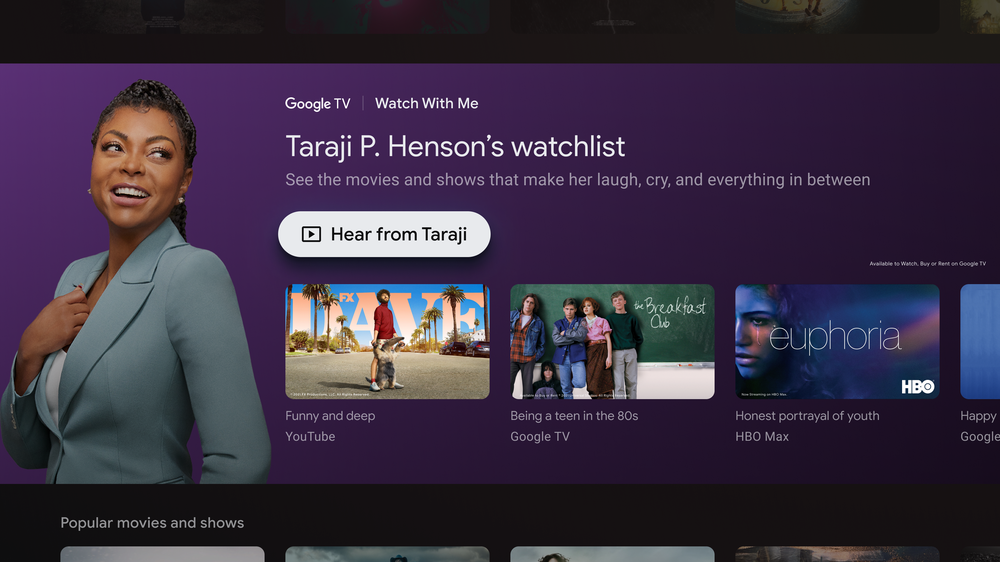
Movies and TV can make us laugh, cry and even shape who we are. Our watchlists can be surprisingly revealing. We’re teaming up with entertainers, artists and cultural icons on a newWatch With Meseries on Google TV to share their top picks and give you a behind-the-scenes look at the TV and movies that inspired them.
You may know Taraji P. Henson from her iconic roles in “Baby Boy,” “Empire,” “Hustle & Flow,” “Hidden Figures” and “The Curious Case of Benjamin Button.” While she dominates the big screen, she’s been using her platform to promote representation. “I didn’t get into acting for fame. I do it for the lives that I can touch because representation is very important and helps build empathy for others.”
Taraji is also passionate about eradicating stigmas around mental health and believes entertainment can help bring awareness to the pain that people may be facing silently. “When I found myself doing work in the mental health field, I realized how much movies and TV help depict the struggles that others go through for us to relate to and how we should all be a little more empathetic when we’re dealing with others.”
We sat down with Taraji to learn more about her work and what she watches.
What does your watchlist say about you?
Taraji P. Henson: My watchlist says that I’m someone who loves to laugh and I’m always rooting for the underdog. My picks should hopefully give you insight into people’s lives and how we should open up our hearts and minds.
What’s your favorite holiday ritual?
Taraji P. Henson:My holiday ritual is watching “The Christmas Story” on repeat.
What’s your top choice genre?
Taraji P. Henson:Comedy is my top choice. I always want to laugh! And I think the best way to teach is through Comedy because you get to laugh, but you also don’t feel like you’re being preached to.
Do you have a favorite guilty pleasure?
Taraji P. Henson:I love watching reality TV, especially any of the Real Housewives franchises!
What’s one rule you have for watching TV or movies with a group?
Taraji P. Henson:Shut up and be quiet! I don’t want to hear you next to me talking or crunching on your popcorn.
Who’s your favorite person to nerd out about shows and movies with?
Taraji P. Henson:My best friend since the seventh grade. She was also an art student with me, and we grew up watching the movies on my watchlist together like “Sixteen Candles” and “Beaches.”
What’s the best way to watch your watchlist?
Taraji P. Henson:Wear some comfy sweats or PJs on the sofa with the lights off. Be sure to turn the sound on loud!
So get comfy and settle into Taraji’s watchlist on Google TV, rolling out over the next few days. Be sure to share with us your favorites using #WatchWithMe!

L’Evangeliario, un gioiello bizantino in digitale
Un touchscreen per consultare il prezioso manoscritto digitalizzato in alta definizione Una digitalizzazione completa La Biblioteca comunale degli Intronati e il Santa Maria della Scala di Siena hanno dato vita…
L’articolo L’Evangeliario, un gioiello bizantino in digitale scritto da Paolo Brambilla proviene da Assodigitale.
Creating new digital businesses with Qaya
When Google moved to “work from home” due to COVID-19 in 2020, I was a Founder-in-Residence in Area 120, Google’s incubator for experimental products. I had spent the prior two years in Area 120 developing Kormo, a jobs marketplace for the “next billion users” in India, Indonesia, and Bangladesh. With time at home to revisit my passion for music and writing, I had a chance to reflect on my belief in creator entrepreneurship, and how to make it part of what I built next.
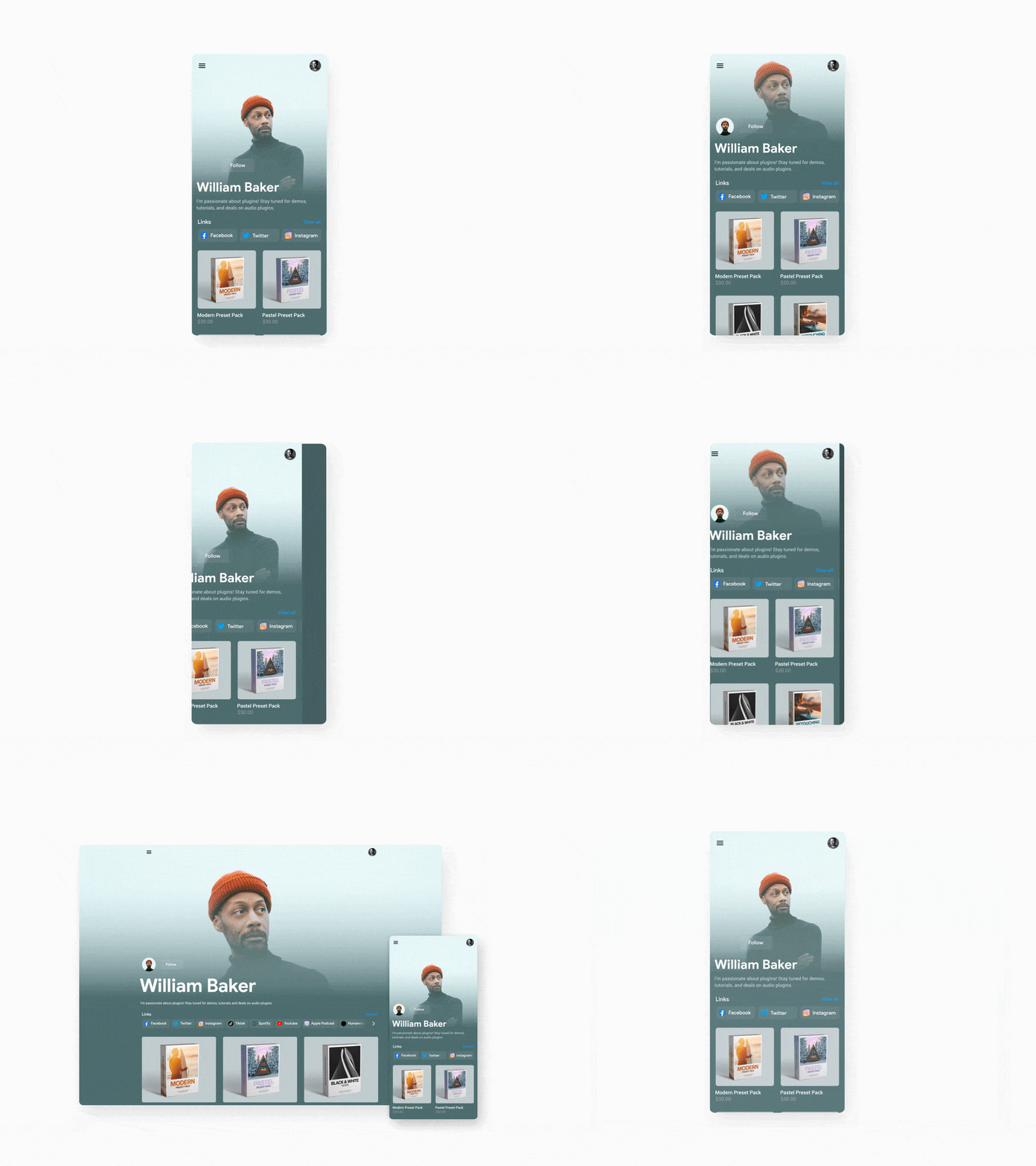
After spending time with dozens of creators, we consistently heard that building a digital creator business is time-consuming and difficult. This sparked a new project idea: Qaya, a product that provides web storefronts for creators who want to sell products and services directly to their audiences. Today, as part of Area 120, we are announcing Qaya’s U.S. beta launch.
Qaya is a small and agile team dedicated to helping creators build businesses on the web. Our project began with a simple idea: creators are the next generation of entrepreneurs. As the CEOs of their own businesses, they need the same commercial tools as any successful founder. Since we began live testing in early 2021, we’ve learned a lot from creators on Qaya, their fans and other creator economy projects.
Creators on Qaya sell everything from trapeze workout guides to wellness training videos, photo filters, beat packs, ASMR read-alouds, productivity templates, knitting patterns and much more. We support pay-gated and free products, with tipping, subscription and other monetization types coming soon.
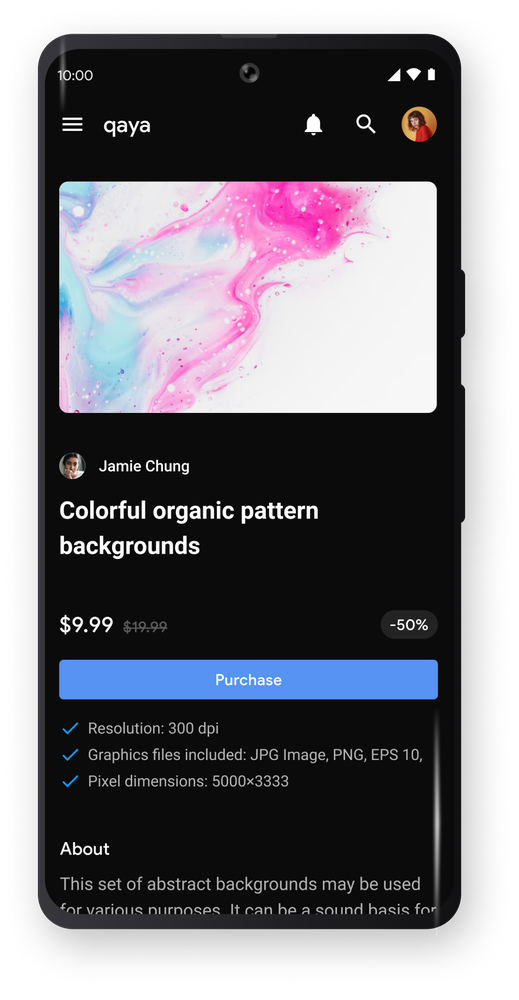
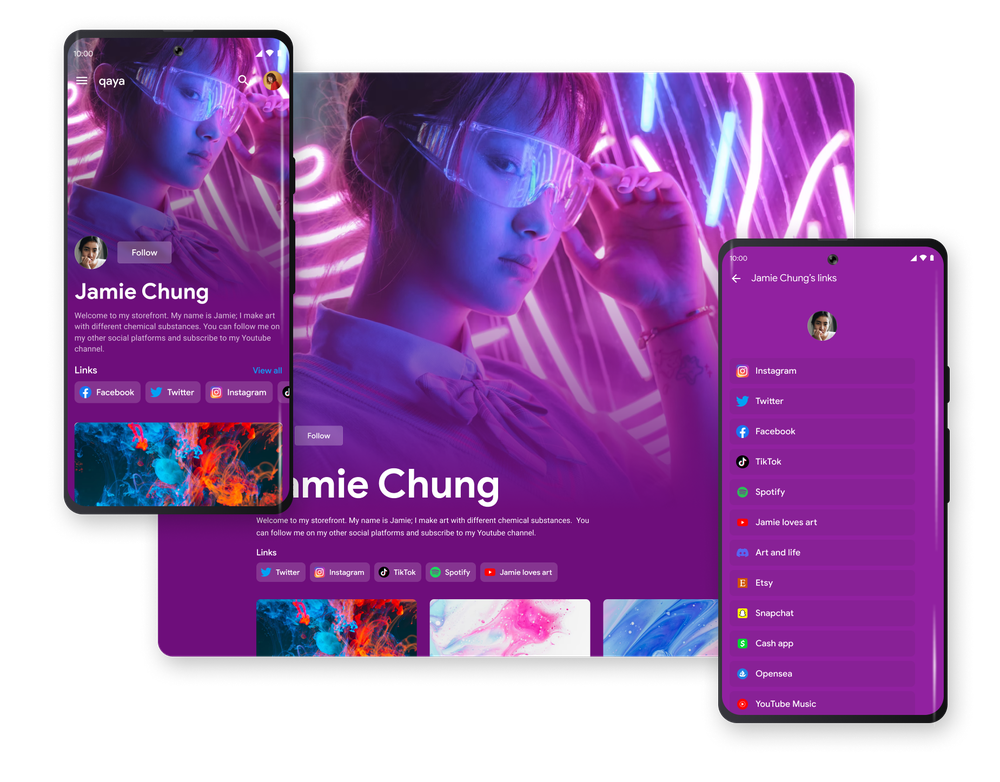
Creators use Qaya as the hub for their business activity across the web. Many link to their Qaya storefronts from their social media bios, and showcase digital products they upload or products and services hosted on other sites. We provide custom yourname.channel or qaya.store/your-name URLs, with payment functionality built in.
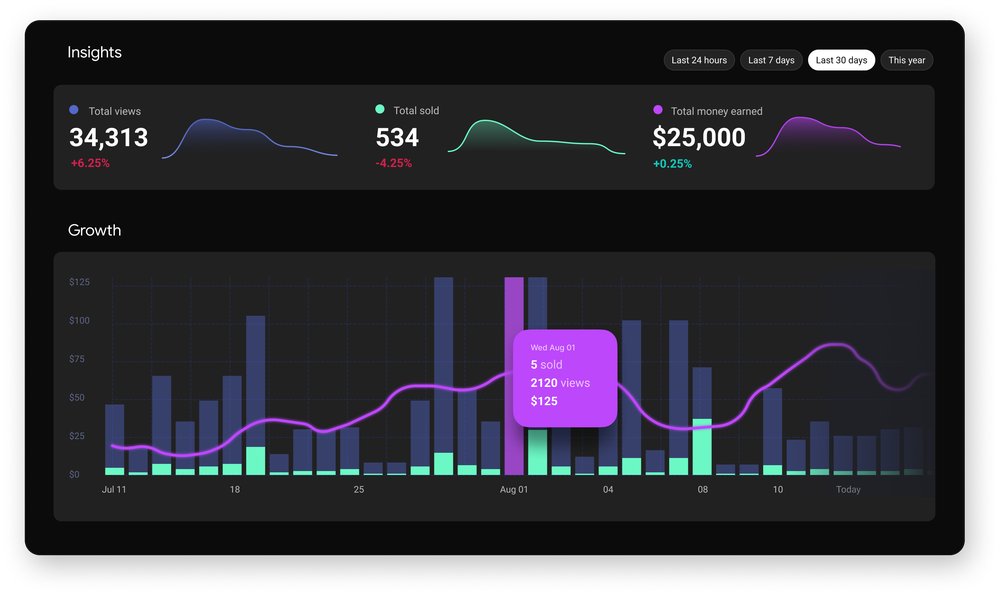
We also developed customer management and analytics tools that creators use to connect with their fans and understand sales and content performance.
Lastly, we know it’s important for creators to grow their audiences. So we’ve started to integrate with other Google products, including YouTube’s Merch Shelf. If you’re an eligible YouTube creator, you can now promote products from Qaya directly below videos on your YouTube channel.

We’re focused on the U.S. today, but hope to bring Qaya to more countries soon. And, we’re exploring ways to support creators as they experiment with other types of digital goods.
Google has always invested in creators, from publishers on the early internet to YouTubers today. Our goal with Qaya is to explore new ways to continue this work: giving creators tools to build successful, owner-operated businesses on the web.
If you’re a creator and you’d like to work together, you can request an invitation from Qaya’s site.