Telegram: chat vocali illimitate nei canali
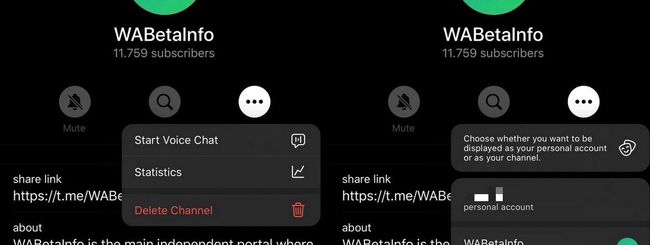
L’effetto Clubhouse si sta abbattendo come un ciclone su app di messaggistica e social network: non è immune nemmeno Telegram, che introduce una novità importante. Dopo aver introdotto le chat vocali nelle chat di gruppo verso la fine del 2020, il blog ufficiale dell’applicazione annuncia l’espansione dello stesso strumento anche nei canali. WABetainfo, a tal proposito, aveva già pubblicato uno screenshot della nuova funzionalità, che non è l’unica innovazione che la società ha predisposto per i suoi utenti.

Today, we #ShareTheMicInCyber
We know diverse security teams are more innovative, produce better products and enhance an organization’s ability to defend against cyber threats.
This is part of why Googler Camille Stewart cofounded #ShareTheMicInCyber, an initiative that pairs Black security practitioners with prominent allies who lend their social media platforms to the practitioners for a day. The goal is to break down barriers, engage the security community and promote sustained action to eradicate systemic racism.
Today, cybersecurity and privacy practitioners across Google and industry are elevating the voices and expertise of Black women who specialize in cybersecurity and privacy as part of #ShareTheMicInCyber’s Women’s History Month campaign.
I’m honored to #ShareTheMicinCyber with a few of the Black women security and privacy practitioners I work alongside everyday at Google.
La macchina di Anticitera: è come trovare un jet sepolto in una piramide

A quando risale il primo computer? Se includiamo quelli analogici, forse dovremmo rispondere che risale a circa duemila anni fa.
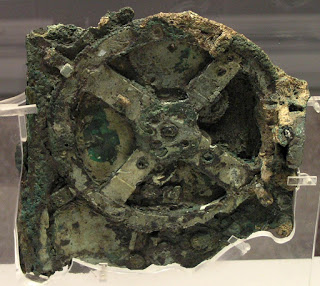
C’è infatti un reperto archeologico di provenienza indiscussa che è a tutti gli effetti un calcolatore astronomico portatile risalente a due millenni fa. È noto come la macchina di Anticitera, dal nome dell’isola greca presso la quale fu trovata nel 1900 fra i resti sommersi di un relitto.
L’archeologo che lo esamina, Valerios Stais, si accorge che si tratta di un meccanismo complesso fortemente incrostato, incompleto, corroso e danneggiato, ma chiaramente composto da una serie di ruote dentate ricoperte di iscrizioni. Già questo è notevole: immaginare gli antichi greci che fabbricano ingranaggi sovverte moltissimi luoghi comuni sulla competenza tecnologica nell’antichità.
L’oggetto rimane trascurato in un museo per cinquant’anni, fino a che il professor Derek de Solla Price lo studia e, nel corso di vent’anni di ricerca, riesce a decifrarne il funzionamento: è un calcolatore meccanico per il calendario solare e lunare, capace di prevedere le eclissi e le fasi lunari.
Per chi sospetta che si tratti di un artefatto alieno o di un meccanismo proveniente da un’epoca successiva: no. La macchina di Anticitera descrive soltanto i cinque pianeti visibili a occhio nudo e conosciuti all’epoca, è fatta di un metallo assolutamente normale e facilmente lavorabile (bronzo), e la letteratura dell’epoca descrive questi meccanismi (ne parla anche Cicerone), per cui si integra nelle conoscenze storiche assodate. Ma lo shock di vedere che gli antichi greci avevano dei calcolatori astronomici portatili resta notevole.
Questo capolavoro di meccanica di precisione è stato esaminato ulteriormente e pochi giorni fa è stato pubblicato un nuovo lavoro scientifico dell‘University College di Londra (UCL) che tenta di ricostruirne la parte frontale, rimasta irrisolta dagli studi precedenti che avevano decifrato il funzionamento della parte posteriore.
Queste due illustrazioni, tratte dal lavoro dell’UCL, mostrano parte del meccanismo interno ricostruito e il frontale (stavo per scrivere display) e sono un assaggio dell’affascinante complessità di quest’oggetto che ha due millenni sulle spalle.


B2B Marketing News: Livestreaming Use By Influencers Climbs, New Omnichannel B2B Report, LinkedIn’s New Campaign Worksheets, & Clubhouse’s Accelerator Program
Longer Articles Associated with More Traffic, Shares
Longer articles tend to get greater numbers of views and shares, with 7,000-plus word articles the most likely to be shared and garner the most page-views, according to recently-released SEMrush data examining some 1.2 million blog articles. MarketingCharts
Gartner: 75% of VCs will use AI to make investment decisions by 2025
Study data looks at how shifting from gut-feel decisions to artificial intelligence-based investment has begun to affect venture capital, while moving from a pilot program to production is a top data science and machine learning challenge, newly-released report data shows. VentureBeat
Livestreaming finds a home among influencers
Live-stream content usage by influencers has remained steady during the pandemic, with some 37 percent of U.K. and U.S. social media users who follow influencers noting that they actively watched the live-stream influencer content, in surveys conducted both in May and September 2020, according to recently-released report data. eMarketer
Hootsuite’s Social Media Image Size Guide for 2021 [Infographic]
Hootsuite has rolled out its latest annual information sheet featuring the latest recommended image size specifications for top social media platforms, the company recently announced. Social Media Today
Almost Half of Adults Have A Negative View of Big Tech
Between 2019 and 2021, the number of US adults who held a very negative view of technology companies more than doubled, from 10 percent to 22 percent, while those who took either a somewhat or very positive view of tech firms fell from 46 percent to 34 percent, according to recently-released Gallup data of interest to digital marketers. MarketingCharts
LinkedIn Provides New Worksheets to Help Map Out Your On-Platform Ad Campaigns
Microsoft-owned professional social media platform LinkedIn (client) has released a new selection of worksheets and guides offering digital marketers helpful information on currently available advertising campaign options for the platform, the firm recently announced. Social Media Today
Hispanics Feel Brands Don’t Understand Their Culture: Study
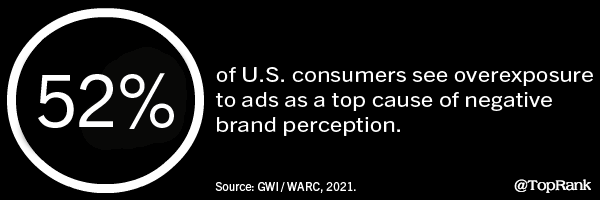
70 percent of U.S. Hispanics say that brands don’t understand the Hispanic culture, a figure that represents an increase from 59 percent in 2020, according to newly-released survey data. MediaPost
Clubhouse Launches Creator Accelerator Program to Help Support Broadcasters in the App
Rising audio-call-based communication iOS app Clubhouse has rolled out a new program aimed at helping selected broadcasters using the invitation-only platform by providing several resources, including financial support and sponsorship matching assistance, the company recently announced. Social Media Today
Marketers Lack Skills Needed for Success, Scoring 36% on Digital IQ Test [Report]
58 percent of marketers failed to correctly answer social media marketing questions relating to LinkedIn, while some 33 percent incorrectly answered the questions regarding Instagram — two of several statistics of interest to digital marketers in newly-released survey data. Boot Camp Digital
Omnichannel in B2B sales: The new normal in a year that has been anything but
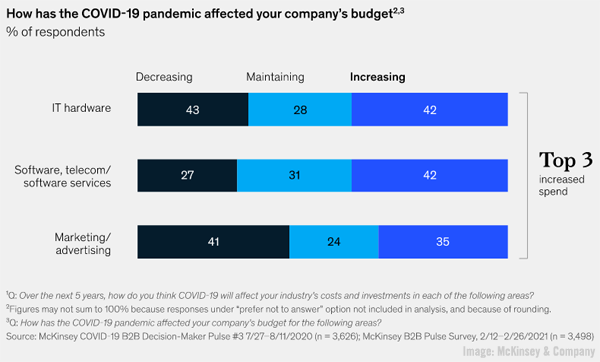
B2B buyers increasingly say that they want to communicate using a combination of in-person, remote, and eCommerce channels rather that a single communication channel, according to recently-released report data examining the role of omni-channel sales during the pandemic. McKinsey
ON THE LIGHTER SIDE:
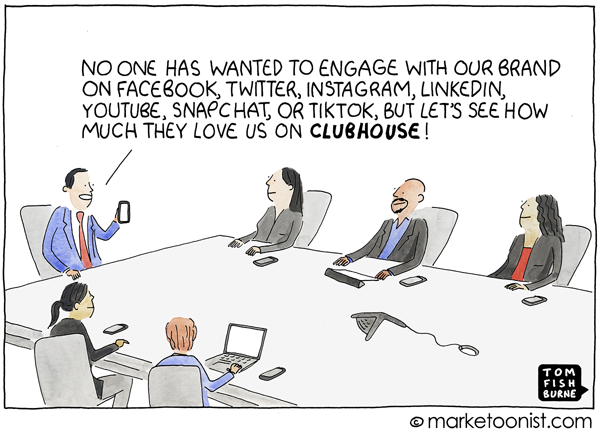
A lighthearted look at “brands on social media” by Marketoonist Tom Fishburne — Marketoonist
The Buzzy, Chatty, Out-of-Control Rise of Clubhouse — Wired
TOPRANK MARKETING & CLIENTS IN THE NEWS:
- Lee Odden — B2B vs. B2C Influencer Marketing: The Single Biggest Difference — Webbiquity
Have you found your own key B2B marketing story from the past week of industry news? Please let us know in the comments below.
Thank you for joining us for the TopRank Marketing B2B marketing news, and we hope you’ll will return next Friday for more of the week’s most relevant B2B and digital marketing industry news. In the meantime, you can follow us at @toprank on Twitter for even more timely daily news.
The post B2B Marketing News: Livestreaming Use By Influencers Climbs, New Omnichannel B2B Report, LinkedIn’s New Campaign Worksheets, & Clubhouse’s Accelerator Program appeared first on B2B Marketing Blog – TopRank®.
Le parole di Internet: Non-Fungible Token (NFT)

Se vi siete persi nei meandri delle complessità delle criptovalute, preparatevi a un altro mal di testa: sono arrivati i non-fungible token, e c’è gente che sborsa milioni per acquistarli.
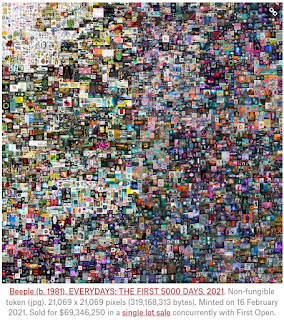
Un’opera d’arte puramente digitale è stata infatti venduta all’asta da Christie’s per ben 69 milioni di dollari. Chi ha sborsato questa cifra non riceverà una stampa o altra versione concreta dell’opera, ma solo una sorta di gettone digitale che attesta che lui o lei è il proprietario dell’originale dell’opera, che resta perfettamente copiabile senza alcuna perdita di qualità, come qualunque altra creazione digitale. Questo gettone si chiama non-fungible token o NFT.
Il nome non aiuta certo a capire di cosa si tratti e come funzioni. In economia, un bene fungibile è qualcosa composto da unità facilmente intercambiabili. I soldi, per esempio, sono una risorsa fungibile: una banconota da 100 euro vale esattamente quanto tutte le altre banconote dello stesso tipo. È scambiabile per esempio con due banconote da 50 euro senza alcuna perdita di valore. Lo stesso vale per i bitcoin, per esempio.
Una risorsa non fungibile è l’esatto contrario: una risorsa che ha proprietà uniche che non consentono di intercambiarla con qualcos’altro. Un quadro come la Gioconda è una risorsa non fungibile: se ne possono fare riproduzioni, foto o stampe, ma l’originale resta uno e uno solo. Un gettone non fungibile è una sorta di certificato di proprietà che riguarda una risorsa materiale o immateriale: un file digitale o una scultura. Nel caso degli NFT, il certificato è garantito da una blockchain, ossia un registro pubblico digitale e distribuito, esattamente come avviene per le criptovalute.
Ma che senso ha pagare milioni di dollari per un file che tutti possono copiare perfettamente? La differenza fra un quadro e una fotografia di un quadro è evidente: la copia perde delle caratteristiche essenziali. Nel caso delle opere NFT, invece, le copie sono perfettamente identiche all’originale. Quindi dove sta il valore?
Per qualcuno il valore c’è: l’artista Grimes, per esempio, ha venduto opere per alcuni milioni di dollari. Gli NFT sono diventati un modo per sostenere economicamente gli artisti. Il fatto che il registro delle proprietà di questi NFT è pubblico consente agli artisti di tracciare gli scambi e di incassare una commissione su ogni compravendita delle proprie opere, mentre con i sistemi tradizionali capita spesso che l’artista non veda un soldo dopo la vendita iniziale e gli speculatori facciano invece fortuna.
Ma anche negli NFT c’è l’ondata speculativa: c’è chi trasforma in NFT qualunque cosa (gli sticker di Telegram e persino i tweet) sperando di monetizzarli. Se trova qualcuno che è disposto a comprare, nasce l’affare. Il compratore, a sua volta, è convinto di poter rivendere quell’NFT in futuro a un valore maggiore e quindi avere un guadagno.
Però rispetto alla proprietà tradizionale resta ben vistosa una differenza fondamentale: se sei proprietario di un quadro o di una scultura, la detieni e decidi tu a chi mostrarla e cosa farne. Se sei proprietario di un NFT, hai solo il diritto di vantarti di essere proprietario di un’opera (e in alcuni casi hai il diritto di copia), ma materialmente non hai in mano niente. Questo non ha impedito al mondo dei videogiochi, per esempio, di vendere risorse di gioco sotto forma di NFT: come Fortnite ha ben dimostrato, c’è tanta gente disposta a pagare pur di avere una skin.
Dureranno gli NFT? O sono soltanto l’ennesimo caso di speculazione a breve termine? Non c’è modo di saperlo. Di certo c’è gente che ci sta guadagnando somme enormi e altra gente che le sta spendendo, e come al solito sono pochi quelli che guadagnano e tanti quelli che ci perdono. Il gioco continuerà finché ci sarà gente che ci crederà.
Fonti: Christies, The Verge, Gizmodo, BBC.
Instagram per gli under 13? Facebook ci sta lavorando
Perché vietare i social network ai minori di 13 quando è possibile catturarli e tenerli incollati allo schermo di uno smartphone? Se lo sono chiesti in casa Facebook, evidentemente, nell’incontro in cui si è deciso che, complice anche la pandemia in corso e il maggior tempo trascorso in casa, di mettere in cantiere una versione di Instagram pensata proprio ai più piccoli, una sorta di YouTube Kids o Messenger for Kids, per restare in casa Facebook.

Samsung, la gamma Neo QLED 2021 certificati Gaming TV Performance
La Verband Deutscher Elektrotechniker (VDE), autorevole ente certificatore tedesco nel settore dell’ingegneria elettrica, ha conferito il “bollino” di “Gaming TV Performance” a quattro modelli della gamma di TV Neo QLED 2021 di Samsung per le loro prestazioni ritenute “rivoluzionarie”, in particolare a livelllo di input lag, inferiore a 10ms, e di HDR, con luminosità superiore a 1000 Nit.

Hackeressa a 8 anni per evitare le lezioni noiose
 |
| Esempio di hackeressa. |
BoingBoing segnala un thread su Twitter che descrive la tecnica astuta usata da una bambina di otto anni a Austin, in Texas per avere una giustificazione tecnica plausibile per non frequentare le lezioni online che non le piacevano.
Tutto inizia con un problema apparentemente normale: la bambina non riesce a collegarsi con Zoom per la lezione. La madre tenta di ricollegarla per oltre un’ora ma fallisce. Presume che si tratti di un malfunzionamento di Zoom.
Il giorno successivo avviene la stessa cosa: la bimba non riesce a ricollegarsi. La madre avvisa il docente.
Il terzo giorno il problema si ripresenta, con l’avviso di Zoom che la password è sbagliata. Madre e docente ci provano per un’ora, ma niente da fare.
Siamo al quarto giorno: madre e figlia vanno a casa di un’amica per provare la sua connessione a Internet. Tutto funziona, ma a un certo punto il collegamento a Zoom smette di funzionare ed è impossibile ricollegarsi. Si sospetta che l’account della bambina sia stato messo in lista nera.
Quinto giorno: vengono coinvolti i tecnici di Zoom, ma non riescono a risolvere il problema.
Sesto giorno: il docente ricrea tutta l’aula virtuale da zero. Tutti e trenta gli studenti devono aggiornare, ricollegarsi. Niente da fare.
Siamo a una settimana: il docente d’informatica viene a casa della bambina per provare a risolvere il malfunzionamento. Inutile.
A questo punto la madre abbandona i tentativi e inizia a fare lezione al posto degli insegnanti. La bambina non si lamenta.
Passano due settimane e la bimba va in visita a un’amica della madre. Da lì riesce a collegarsi e ricomincia a frequentare le lezioni per qualche tempo. L’amica nota che la bimba si scollega da Zoom e le chiede come mai l’ha fatto. La bimba, innocentemente, risponde che la connessione non stava funzionando bene e quindi stava uscendo per ricollegarsi, come si fa spesso.
L’amica, però, si insospettisce e tiene d’occhio la bambina di otto anni. Dopo un’ora di lezione, la bambina non ce la fa più e si scollega per ricollegarsi. Ed è qui che scatta la sua astuzia. Quando si ricollega, sbaglia intenzionalmente la propria password per una ventina di volte.
Infatti la bimba ha capito che se un utente tenta di collegarsi con la password sbagliata un numero sufficiente di volte, Zoom blocca ulteriori tentativi per un certo periodo di tempo. Più si tenta, più aumenta la durata di questo periodo.
Ma il messaggio d’errore che viene mostrato sullo schermo è “password sbagliata”, non un più esplicativo “Il tuo account è stato bloccato per troppi tentativi sbagliati di immettere la password”.
Mai sottovalutare l’ingegno di un utente sufficientemente motivato.

Why I’m speaking out against anti-Asian hate
Editor’s note: This week, we were deeply saddened by the shootings in Atlanta that left eight people dead, including six women of Asian descent. Google is a proud supporter of the Asian American and Pacific Islander community, and we stand with them in the fight against hatred. In this post, Eva Tsai, Director, Marketing Analytics and Operations, shares her personal experiences and reflections on racism and discrimination as an Asian American.
When a stranger asks you where you’re from, the question is often not as simple as it seems. As an Asian American, when someone asks me that question, I run through a quick mental calculation to figure out what they really mean.
Some people just use it as an innocuous way to start a conversation. Others, however, have an underlying assumption: To them, someone like me can never truly be an American. They’re really asking, “Which foreign country are you really from?”
Years ago, in the Houston airport, a white man in a suit decided to single me out. I was the only Asian person in sight. “Where are you from?” he shouted across the packed airport train car. I had just finished a grueling week of business travel and meetings, and I just wanted to be left alone. Despite my silence, the man continued asking the question, with increasing exasperation. Soon, he started to cycle through different Asian languages, intertwined with increasingly loud and slow English, assuming I was a foreigner. “Are you Chinese, Korean, Japanese, Vietnamese … what are you?” he asked.
The tension in the air was palpable, until someone else spoke up. “How about American?” a white woman with purple hair yelled. “She is American, period!” Her answer stunned the man into silence. A stranger’s curiosity to know the origin of my Asianness does not trump my privacy. And everyone should be able to feel like they belong, instead of feeling “othered” by questions like that.
Outrunning and dismissing injustice is no longer an option.
Microaggressions like this contradict the long-held idea of the American dream: If you work hard enough, you will overcome any obstacles. For a while, I tried to outrun those microaggressions. (I once laughed off the “where are you from?” question by joking I was from Bulgaria, even though I don’t speak a word of Bulgarian.) I focused on achieving my version of the American dream and buried those incidents deep, wishfully thinking they would eventually fade away without a trace.
But they didn’t.
Two years ago, in an attempt to push myself outside of my comfort zone, I attended a meditation retreat, alone among hundreds of strangers. During group discussions, the topic of racial justice came up — and I was unsure how to respond. What am I as an Asian American? In the reductive narrative of the haves and the have nots, Asian Americans are not the oppressors. But are we the oppressed? Talking about the microaggressions I have experienced seemed self-indulgent; they don’t compare to the blatant injustices Black people have endured.
I continued to harbor my conflicted feelings until later that year, at a Google Asian Women Leadership Summit, when another attendee articulated the struggles I had been going through. “A cut is a cut. Each trauma is unique,” she said. “For Asian Americans, it’s death by a thousand cuts.” That explanation confirmed the baggage I have carried, despite my attempts to minimize it. Surrounded by people with similar lived experiences and mental baggage, I felt liberated.
Unfortunately, for Asian Americans, “death by a thousand cuts” has recently escalated to “death by assaults,” with the sudden spike in racist and xenophobic violence across the United States. The injustice has always been there, but increasingly, it is shifting from covert actions like “where are you really from?” to overt violence. As I see the rise in horrific attacks, I realize it’s time I confront the feelings I’ve repressed.
I never thanked the woman who called out the aggressor who questioned my right of belonging in the Houston airport. Her act of kindness, however, has inspired me to pay it forward. Outrunning and dismissing injustice is no longer an option.
Photo: Getty Images

Java 16 rilasciato: tutte le novità
Chrome can now caption audio and video
Captions make online content more accessible. If you’re in a noisy environment, trying to keep the volume down, or are part of the 466 million people in the world who are deaf or hard of hearing, having captions lets you follow along to whatever content you are watching — whether it’s viral feta pasta videos, breaking news or a scientist discussing their latest research.
Unfortunately, captions aren’t always available for every piece of content. Now with Live Caption on Chrome, you can automatically generate real-time captions for media with audio on your browser. It works across social and video sites, podcasts and radio content, personal video libraries (such as Google Photos), embedded video players, and most web-based video or audio chat services.
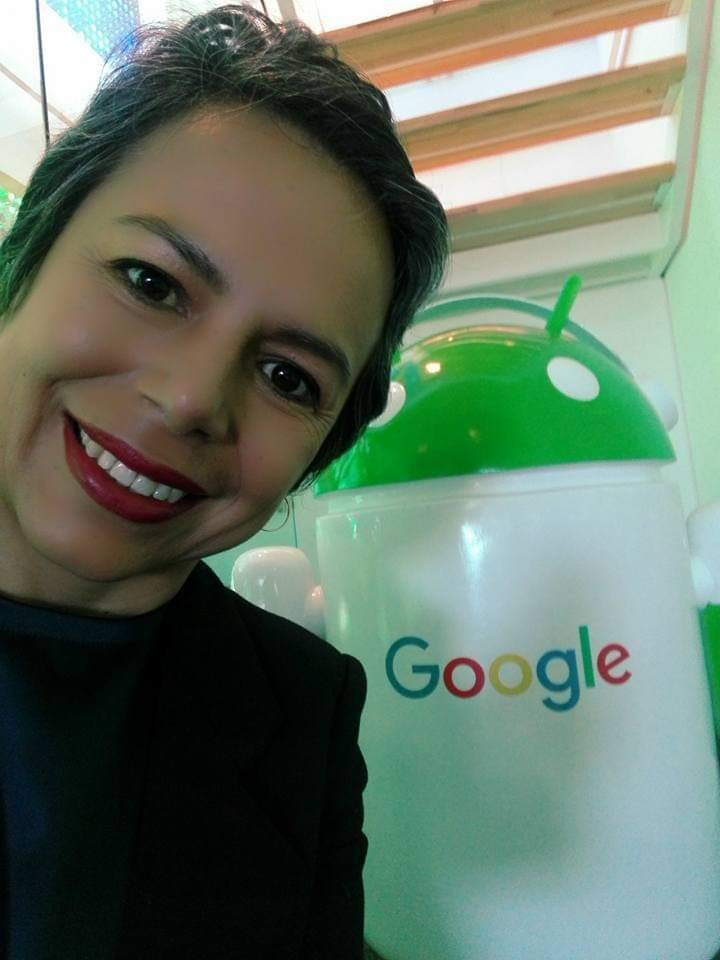
Why Monica Gómez left her role as a CEO to work at Google
Welcome to the latest edition of “My Path to Google,” where we talk to Googlers, interns and alumni about how they got to Google, what their roles are like and even some tips on how to prepare for interviews.
Today’s post is all about Monica Gómez, who left a very comfortable job as CEO of one of the world’s leading media agencies to take a risk and pursue a dream of working at Google in a role that directly impacts the development of Colombia and the Central America Region.
How would you describe your role at Google?
As a Head of Agencies, I work with outside partners and ad agencies in the region to develop business models based on the newest data and technology. I am also an activist in the search for female inclusion and empowerment in the digital industry.
Can you tell us a bit about your early studies and career?
I grew up in a small city in Colombia, in a huge family. (I have 20 uncles!) In our country, education is a privilege, it is not a right, and that made my parents work hard to give me the opportunity to go to a university. I actually started my studies in optometry, but in the second semester I got pregnant and had to leave the university to take charge of a new life with my daughter. This both rescued me and gave me a new purpose.
I worked during the day, and at night I began my studies in marketing and advertising. My professional career started at the bottom, making phone calls, filling in database fields and doing basically what no one else wanted to do. My passion and determination were the keys to quickly scale up and become CEO of one of the world’s leading media agencies.
In parallel, my daughter and I decided to start a new family — so today, my husband, my two daughters and I are indestructible.
What made you decide to apply to Google?
I attended a wedding and there, after dancing all night, a good friend who worked at Google told me about an opportunity that would open up soon at the company that she thought would be perfect for me.
My first reaction was an immediate, “No thanks. This position is not for me, it is for someone younger.” It’s amazing how your biases from the past come to your mind and sabotage you to the point of taking away great opportunities. At the time, in my 40s and in a comfortable place as an agency CEO, I was scared. I was happy at my job and competing with new talent in the industry to show that I was the best candidate terrified me.
After three weeks of introspection I realized I wanted to participate in the process, and that I was ready to face my insecurities and go full energy for my dream: work at Google.
How would you describe your path to your current role at Google?
My experience in the advertising ecosystem in Colombia was vital for my participation in the selection process. Knowing the advertising ecosystem and having worked in different roles in agencies and as a client made the difference.
What inspires you to come in (or log on) every day?
I never thought that I would experience a disruption as big as COVID-19. Overnight the consumption habits of people around the world changed, and the reacting capacities of all of us in the industry were put to the test. The pandemic dramatically challenged our agility, commitment, consistency and leadership to make decisions in a context where there are no instruction manuals.
For that reason, it motivates me to encourage my partners to build strategies that accelerate the business of the brands they represent and contribute to the development of our country.
I also find happiness in helping my team achieve personal fulfillment. I’m a facilitator for I am Remarkable, where I help other women recognize and celebrate their accomplishments. It is a way to return what I have received from Google
What’s one thing you wish you could go back and tell yourself before applying?
You don’t have to worry about explaining the reasons why you want to change jobs, or justifying your work decisions in the past.
“No salgas antes de entrar,” Do not leave before entering — great words from Adri Noreña.

Oggi partono i Surface Days: tanti sconti sul Microsoft Store
Il Microsoft Store annuncia anche quest’anno il consueto appuntamento con i Surface Days, due settimane di sconti e offerte imperdibili che, da oggi fino al 31 marzo, offriranno agli amanti dei dispositivi Surface la possibilità di acquistare una selezione dei prodotti della gamma a prezzi vantaggiosi con sconti fino al 29%. Protagonisti della promozione di primavera lanciata dal Microsoft Store, i 2 in 1 Surface Go 2 e Surface Pro 7 e i laptop Surface Laptop Go e Surface Laptop 3.

Sony svela i nuovi controller del PSVR per PS5
La promessa è stata mantenuta. Sappiamo ormai da settimane che Sony sta lavorando ad un nuovo visore per la realtà virtuale PSVR per la nuova PlayStation 5, ma sappiamo anche che il nuovo dispositivo non arriverà prima del 2022.
How we built a new tool without ever meeting in person
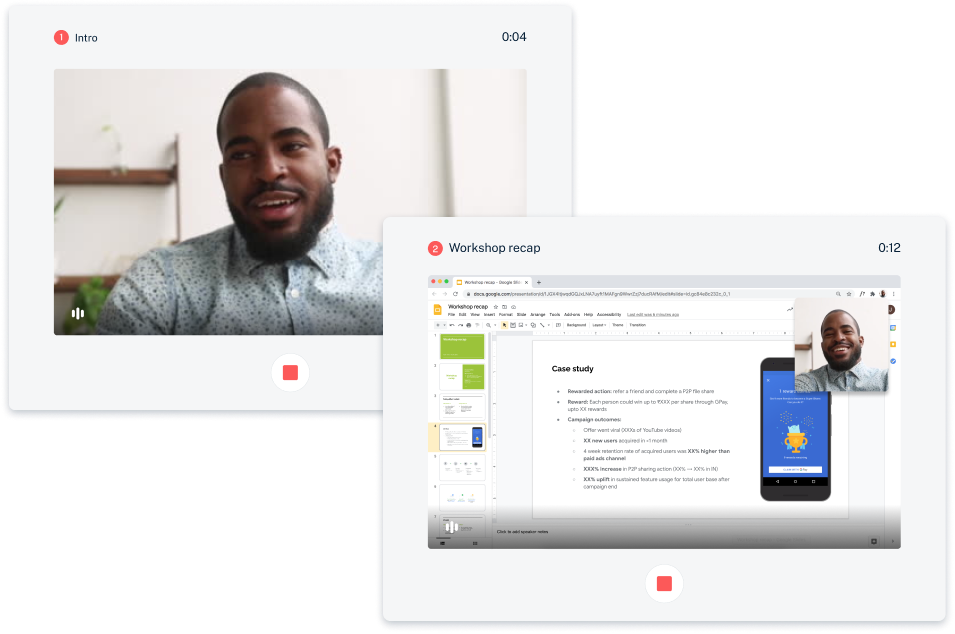
A little over a year ago, a group of us within Area 120, Google’s internal incubator, wanted to explore whether recorded video could help remote teams work better. Little did we know at the time that COVID-19 would soon send us all home, and we’d actually have to build the product remotely as well. That project became Threadit, short video recordings to share your work and connect with your team.
Once we had a working prototype, we started using Threadit to take back control of our working hours. Threadit, available from your browser or as a Chrome extension, helps you say and show more with a video message than with an email or chat. We use Threadit to show each other our progress, ask questions or request feedback without needing to coordinate schedules. This helps us reduce unnecessary meetings while still becoming a tighter-knit team. We have more time to think and do focused work, and the meetings we keep are more effective and easier to schedule for everyone.
Today, Threadit is available to anyone who wants to try it.