Helping newsrooms experiment together with AI
In our JournalismAI report, journalists around the world told researchers they are eager to collaborate and explore the benefits of AI, especially as it applies to newsgathering, production and distribution.
To facilitate their collaboration, the Google News Initiative and Polis – the journalism think tank at the London School of Economics and Political Science – are launching the JournalismAI Collab Challenges, an opportunity for three groups of five newsrooms from the Americas, Europe, the Middle East and Africa, and Asia Pacific to experiment together.
Each cohort – selected by Polis – will have six months to either cover global news stories using AI-powered storytelling techniques or to develop prototypes of new AI-based products and processes.
Participants will receive support from the JournalismAI team and partner institutions in each region: in the Americas, the challenge will be co-hosted with the Knight Lab at Northwestern University; in Europe, the Middle East and Africa, the challenge will be co-hosted with BBC News Labs and Clwstwr. JournalismAI’s partner in Asia Pacific will be announced later this year.
The Collab Challenges build on a successful pilot run by JournalismAI last year. More than 20 global newsrooms joined forces to solve four common problems using AI, from creating automated news summaries to mitigating newsroom biases, and from powering archives to increasing audience loyalty. JournalismAI online trainings are available on the Google News Initiative Training Center, where they have already been seen by more than 110,000 participants.
Newsrooms interested in participating in this free, year-long program must have made AI a strategic priority, must guarantee the participation of two staff members – one from editorial and one from the technical department – who can participate two to four hours a week, and must embrace collaboration with other publishers.
The outcome of their work – whose ownership will be shared among participants – will be presented at the second edition of the JournalismAI Festival in November.
Applications for the Americas challenge and the Europe, the Middle East and Africa Challenge open today and close at 11:59 PM GMT on April 5. The Challenge will open later this year in Asia Pacific.
To learn more about the process, please visit Polis blog and sign up for the JournalismAI newsletter.
Resident Evil Re:Verse, beta test aperta a tutti. Date e orari
Capcom ha annunciato una “open beta test” di Resident Evil Re:Verse su PlayStation 4, Xbox One o Steam, che si svolgerà dal 7 Aprile alle 08:00 fino all’11 Aprile alle 07:59. I videogiocatori che hanno partecipato alla precedente closed beta e hanno ancora il gioco installato sul proprio hardware possono giocare tramite un aggiornamento del gioco una volta che la open beta sarà disponibile. I nuovi utenti, invece, potranno pre-caricare il contenuto a partire dal 5 aprile. In tutti i casi, comunque, i partecipanti della open beta avranno bisogno di un Capcom ID per giocare.
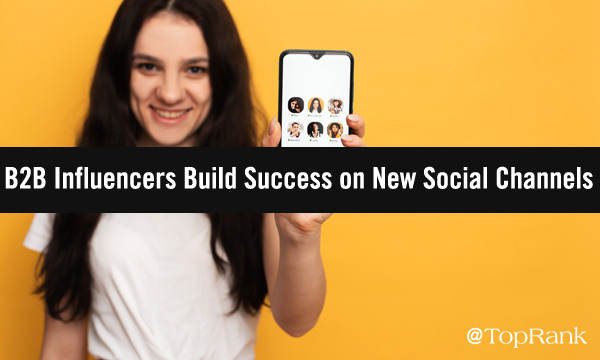
How B2B Marketing Influencers Are Finding Success On New Social Channels
In the world of social media, the only constant is change. Each platform continues to update and add new features, and new channels appear on a regular basis. With this change comes opportunities for B2B marketing influencers to share their thought leadership in new ways and have their voices heard.
I tapped top B2B influencers and thought leaders to see where they are finding successes on some of the newer social channels. Come along and let’s explore the social media maze with them.
Finding Business in the Clubhouse
If you are jumping on trends, don’t miss getting an invite to the audio-only Clubhouse app. TopRank Marketing CEO Lee Odden noted “audio and voice will continue to be a trend for information discovery, consumption and engagement in 2021.”
One of the key reasons to be on Clubhouse is to gain followers, and not just in that app, but also on other channels. Industry veteran Dennis Yu documented his first day on the app with key insights into how he gained 650 followers in one day.

Stephanie Thum, founding principal at Practical CX has also successfully built connections through Clubhouse. “Participating on the Clubhouse app immediately increased my social and professional networks. Clubhouse is amazing for the give-and-take communication and information exchange,” Stephanie said.

Mark Schaefer, chief operating officer at BSquared Media agrees. “I am seeing a ton of B2B marketers on this platform simply to connect, exchange ideas, and network. I’ve made many new connections through conversations on Clubhouse that lead to new LinkedIn relationships.”

The invite-only nature of Clubhouse can make it feel limiting, however. Ivana Taylor, marketing strategist at DIY Marketing commented, “I’m looking forward to when more of my friends join so we can all be together.”

Success can be measured in many ways, but adding to the bottom line is at the top of the list. Brian Fanzo, digital futurist and professional speaker at iSocialFanz, says he’s gotten business from Clubhouse. “A brand heard me, and now I am doing a speaking gig for them.”
Clubhouse is also time consuming. In order to dedicate the time he needed to develop his presence on Clubhouse, Brian learned to lean more on his team and delegate more responsibilities.
“Clubhouse is an interesting place for connection and inspiration, but in the short-term pretty limited in terms of customer communications and content creation for the B2B professional,” Mark added, “But it is evolving rapidly, and it’s definitely worth exploration.”
Twitter Spaces Taking on the Challenge
Twitter rolled-out it’s new audio-only tool, too — Twitter Spaces. If you don’t have it yet, you are not alone, as it is only for iOS, but rolling out to Android soon. Android users can join and participate in Spaces on the Twitter app, they just can’t start one.
When describing the difference between Spaces and Clubhouse, Brian says, “Clubhouse is like a conference. Spaces is like a dinner party.” One big difference is in the reactions to your speech or discussion, as Twitter let’s you react either to everyone in the space personally, or to the whole group. Moderators can also tweet additional information via direct tweets to the space, to allow the group to gain additional context.
“These apps are a gateway drug to social storytelling,” Brain noted when hosting a Spaces room to discuss both apps.

If you follow the #TwitterSmarter weekly Twitter chat, you may have checked out the after party on Spaces with host and social media speaker and consultant Madalyn Skar. On her blog, Madalyn shared a Beta tester’s success story of how she increased her following by 769%, and how as a plus, they were all authentic followers. Twitter Spaces also offers another key advantage to the B2B marketer – branding. Spaces is a great place for you to establish your brand to a larger audience or in a one-to-one setting.
Boosting with Fleets on Twitter
The popularity of the story format has now come to both Twitter and LinkedIn. Twitter’s version of stories can help to boost the presence of any thought leader. This newish tool is only visible on mobile, just like Spaces.
Recently, I noticed a tweet Stephanie posted for our client Mitel significantly outperformed many of her other posts. She commented, “Right?! That one Tweet went wild! I have a totally unsubstantiated theory that all of the posts got more impressions this time because of Twitter Fleets and Clubhouse.” She accomplished that by reposting the tweet in a Fleet.
Exploring Other Channels
A few months ago, I noticed that MeWe was making a resurgence. In musing about it, a B2B influencer asked me for more information, so I sent her an invite to go exploring with me. It is not currently a big B2B platform, but one to be aware of, along with Ello.

“In terms of new platforms, there’s no shortage of them; I’m even seeing some older platforms show up in my stream (such as Ello),” says Shonoli Burke, president and CEO of Shonali Burke Consulting.
She continues, “For me, that points to two elements marketers really need to be thinking about: first, if you’re going to blast the same content out via different platforms via cross-publishing, you run the risk of generalizing your content to the point where it loses impact. How much attention are you actually paying to the specific audience for that platform? Aren’t you actually contributing to the noise, and actually reducing the potential to reach what *should* be a specific audience?”
“And the second follows from the first: *why* are you on that platform anyway? Are you on TikTok because it’s the shiny new toy du jour, or because you’re trying to reach Gen Z for very specific reasons? And does it make sense for *your* specific type of organization? What’s the strategy here?” she added.
Finding Success on Social Channels
B2B influencers are finding success on many of these new platforms, but the key is time and finding the right audience. As these channels grow and change, we as marketers should challenge ourselves to join influencers in the exploration of these new spaces.
What is your favorite new social channel and why? We would like to hear about your experience.
The post How B2B Marketing Influencers Are Finding Success On New Social Channels appeared first on B2B Marketing Blog – TopRank®.

Allarme sicurezza: il 75% dei dipendenti usa WhatsApp per condividere dati sensibili
La sicurezza online di aziende e enti pubblici è sempre più spesso messa a dura prova dall’attacco costante di hacker e cyber-criminali di ogni forgia. Solo negli ultimi mesi, per esempio, abbiamo visto come i sistemi di posta elettronica di diverse agenzie federali statunitensi siano state prese di mira e violate da un gruppo di hacker, così come quelle di milioni di cittadini o di centinaia di aziende in tutto il mondo per una falla nei sistemi Microsoft.

CutiePi: un tablet con Raspberry Pi 4

TIM, blocco automatico dei servizi VAS per tutti i suoi clienti
TIM ha annunciato il blocco automatico dei servizi VAS per tutti i suoi clienti. La decisione dell’azienda fa seguito all’approvazione da parte dell’AGCOM delle nuove regole per il blocco e l’attivazione dei servizi a sovrapprezzo per la telefonia mobile in Italia, forniti sia tramite SMS ed MMS, che tramite connessione dati.

Unsplash helps 200,000 photographers tell their stories
Mikeal Cho, co-founder and CEO of Unsplash, believes that there’s an image at the heart of every story. Since 2013, Unsplash has allowed more than 200,000 photographers to share their work and build relationships with other creators and organizations.
Cho refers to Unsplash “an accidental company.” When looking for images online, he found that “great images were often locked up with confusing licenses,” meaning people couldn’t easily use them. So he uploaded 10 photos left over from a photoshoot to Tumblr and allowed anybody to use them for personal or commercial purposes, without attribution or licensing fees. Now, far from simply being a source of free stock photos, the platform has become the foundation for new careers, relationships and stories.

What drives Nithya Sambasivan’s fight for fairness
When Nithya Sambasivan was finishing her undergraduate degree in engineering, she felt slightly unsatisfied. “I wanted to know, ‘how will the technology I build impact people?’” she says. Luckily, she would soon discover the field of Human Computer Interaction (HCI) and pursue her graduate degrees.
She completed her master’s and PhD in HCI focusing on technology design for low-income communities in India. “I worked with sex workers, slum communities, microentrepreneurs, fruit and vegetables sellers on the streetside…” she says. “I wanted to understand what their values, aspirations and struggles are, and how we can build with them in mind.”
Today, Nithya is the founder of the HCI group at the Google Research India lab and an HCI researcher at PAIR, a multidisciplinary team at Google that explores the human side of AI by doing fundamental research, building tools, creating design frameworks, and working with diverse communities. She recently sat down to answer some of our questions about her journey to researching responsible AI, fairness and championing historically underrepresented technology users.
How would you explain your job to someone who isn’t in tech?
I’m a human-computer interaction (HCI) researcher, which means I study people to better understand how to build technology that works for them. There’s been a lot of focus in the research community on building AI systems and the possibility of positively impacting the lives of billions of people. I focus on human-centered, responsible AI; specifically looking for ways it can empower communities in the Global South, where over 80% of the world’s population lives. Today, my research outlines a road map for fairness research in India, calling for re-contextualizing datasets and models while empowering communities and enabling an entire fairness ecosystem.
What originally inspired your interest in technology?
I grew up in a middle class family, the younger of two daughters from the South of India. My parents have very progressive views about gender roles and independence, especially in a conservative society — this definitely influenced what and how I research; things like gender, caste and poverty. In school, I started off studying engineering, which is a conventional path in India. Then, I went on to focus on HCI and designing with my own and other under-represented communities around the world.

Trump lancia un social network contro Facebook e Twitter?
Se i social network censurano Trump, Trump si fa il suo social network. Uno dei collaboratori dell’ex presidente degli Stati Uniti d’America, Jason Miller, ha anticipato a Fox News che entro 2-3 mesi anche il tycoon avrà la sua piattaforma social che mira addirittura a “rivoluzionerà il settore”. Pur non offrendo molti dettagli sul progetto, Miller annuncia che il nuovo strumento online che Trump metterà a disposizione degli utenti attirerà “decine di milioni di utenti”.

Cloud Transformation: SECURITY FIRST. Sintesi del webinar
— – di Federica Di Bari – Trendiest News – – Nei giorni scorsi si è svolto l’evento online a cura del Gruppo Relatech, in collaborazione con il partner Nutanix. Notevole l’interesse suscitato dagli argomenti trattati per la chiarezza con la quale i relatori hanno affrontato gli aspetti salienti della sicurezza nel processo di innovazione digitale. Riportiamo una sintesi delle principali tematiche affrontate durante il webinar Marco Zanotti Co-Founder e CTO Mediatech srl, società che è entrata a far parte…
L’articolo Cloud Transformation: SECURITY FIRST. Sintesi del webinar scritto da REDAZIONE TRENDIEST proviene da Assodigitale.

Gli smartwatch di Huawei in offerta su Amazon
Le promozioni su Amazon proseguono senza sosta ormai da mesi e tra i prodotti che in queste ore possiamo trovare in offerta ci sono anche gli eleganti, versatili e duraturi smartwatch targati Huawei, a cominciare da quelli della serie HUAWEI Watch GT 2 che scendono del 48% e vengono proposti a partire da 119,99 euro invece di 229 euro.
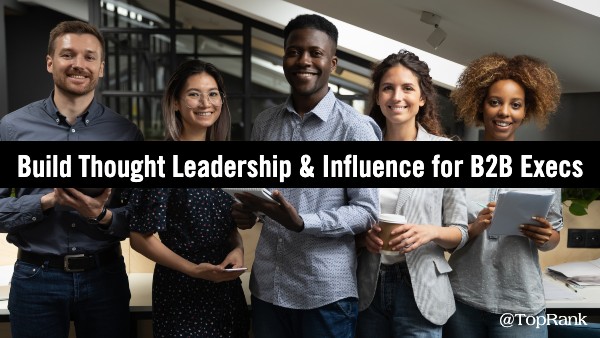
20 Ways to Build B2B Executive Credibility and Thought Leadership
The pandemic driven digital transformation of B2B marketing to digital first has created all new levels of competition for time, attention and trust. In this environment, the importance of building credibility and trust is essential in order to deliver stand out customer experiences. But how?
B2B brand Thought Leadership certainly plays a role and as the trends in trust focus more on individuals over companies, the opportunity to optimize content experiences through executive thought leadership and influence are growing. The more influence B2B brand executives have, the more credibility the brand has.
But how? How can B2B marketers build awareness, credibility and influence of their key executives with content? Here are a few tried and true tactics that continue to work in today’s digital B2B environment:
- Client Testimonials – The customer success story is often one of the first things that catches the eye when looking at potential vendors. Common mistakes include testimonials that are too enthusiastic or those that are benign but packed as if they’re something special. Testimonials should reflect issues of interest to the target audience and also include supporting quotes from key B2B brand executives.
- Case Studies – For deeper consideration, B2B brands want to drill down into the specifics of how a company does what it does and the results achieved. Case studies present a picture of a company’s breadth and depth of ability to solve a variety of issues and insights about the story from key B2B executives adds credibility to the study and to the brand.
- Industry Awards – Getting recognized by a respected third party can mean a quick trip to the credibility club. However, such awards are only as meaningful as the credibility of the entities giving them out. Whether a B2B brand is receiving or giving out the awards, key executive should be involved and cited.
- Being Quoted by the Press, Blogs – Being cited as an authority on a particular topic in a high profile publication can be instrumental for building a key executives reputation and credibility and by proxy, the trust and influence of the brand. Relevant media pickups should be curated on the brand’s newsroom or on brand social which is another opportunity to highlight relevant brand executives.
- Influencing the Influencers – It has become a universal truth that buyers trust people more than brands. As a result, there is a significant growth in influencers within various B2B industries. B2B brands can tap into influence by collaborating with individuals that have the trust and attention of customers as well as by building the influence of existing employees. Influencer status could be a consideration when making certain new hire decisions as well.
- Speaking at Industry Events – While most events in the B2B world are now virtual, there are more of them, which presents a great opportunity for key B2B executives to showcase their individual expertise as well as the thought leadership of the brand. Not everyone gets to start out giving keynotes, so be prepared to do some breakouts and work up the ladder of speaker status.
- Representation on the Brand Web Site– A web site still says a lot about a company and the leadership. Social proof of thought leadership for key executives gives a strong signal of credibility for their expertise and participation in the industry.
- Editorial Contributions to Industry Publications – Contributing articles to prominent online or print publications gives companies an opportunity to show their unique problem solving abilities and expertise. By association with the publication, the B2B brand also gets a boost in the credibility department.
- Advertising and Sponsored Content – One way of “buying your reputation” is to advertise in all the places your target audience looks for credible information. This takes a crack creative team and a healthy budget. Featuring key executives in sponsored content can send very strong signals of industry credibility.
- Employee Advocacy – How employees talk on social networks and wherever they connect about relevant industry topics can have a significant impact on the perceived authority and credibility of brand executives. Fueling employee advocacy with brand information that may be useful to their own social engagement can create value for everyone involved.
- Search Engine Visibility – When people search on topics relevant to your industry, your brand website and social channels should show up. But so should the content authored by the thought leaders at your brand. Formats can vary from text to video to audio. In many cases social conversations create interest, but findability in search creates trust.
- Brand – Message – There’s a lot that goes into creating a personal brand. Each interaction between a prospective company and something that communicates information about the B2B brand is an opportunity to make a brand promise. Repeat interactions provide the opportunity to keep that promise. Thoughtful messaging and image also convey important messages that evoke feelings which can either build or detract from credibility for both the executive and the B2B brand.
- Press Releases – Sending out press releases to wire services and directly to cultivated lists of relevant industry publications sends signals of your credibility. And with clever pitching, they might even get you some press coverage.
- Social Media Footprint – Forums, Social Networks, Images, Videos, Podcasts – The boon in social networks usage by those in the B2B world gives abundant opportunity to see another side of a B2B brand. Forums can be very useful to connect helpful and knowledgeable executives with prospective customers and even the media looking for insights. Promoting unique knowledge through social media formats and networks can give important indications of a B2B executives expertise in formats that can match the information consumption preferences of a variety of potential clients.
- Research Published – In the same way that faculty at Universities gain prominence and reputation by publishing research in professional journals, B2B brands that have the insight and resources to conduct real research and publish their findings create very strong signals of credibility. It is not only the execution of such research that makes it an effective “signal” though. The intelligent promotion by key executives of these learnings is as much or more important.
- Industry Association Involvement – Investing in the future of the overall industry through association involvement by key executives and thought leaders can give the impression that a B2B brand has a higher level commitment than those that are not involved. Being involved with setting industry standards, guidelines and even training programs can set a B2B brand apart and give an indication of their expertise.
- CEO, Executive and/or Company Blog – Blogs can still be effective at imparting a company’s philosophy and corporate personality. Company web sites tend to be dry and careful or conversely, full of hype. A well written and promoted blog can do amazing things for a B2B executive and brand’s reputation in an industry.
- Podcast and Social Audio – Audio content is decidedly on the rise in B2B through an increase in the popularity of podcasts. Social audio through new platforms like Clubhouse and features of existing social platforms like Twitter Spaces creates an opportunity for B2B brand executives to showcase their expertise, network and engage a community.
- Word on the Street, Buzz, Word of Mouth – First and foremost, doing good work is the cornerstone of building positive word of mouth. At the same time, successfully engaging the tactics on this list will build positive buzz, but the longevity of that buzz is only sustainable if the B2B executives involved deliver results. There is such a thing as over-marketing and people are smart enough to realize that one person can’t do everything. Making it easy for clients to pass on the good news or making sure testimonials are properly promoted can extend a B2b executive’s reach with nominal marketing investment.
- Being Included on Industry “Lists” – No matter how you slice and dice it, getting included on a list sends a signal. Lists are inherently controversial because getting included means others are excluded. If you know how to create and promote the right signals, like doing great work for clients and letting the world know about it, getting on the kinds of lists that build credibility is pretty straightforward. Alternatively, a B2B brand can make its own list and use a key executive to communicate the criteria. If you can’t be king, be a kingmaker.
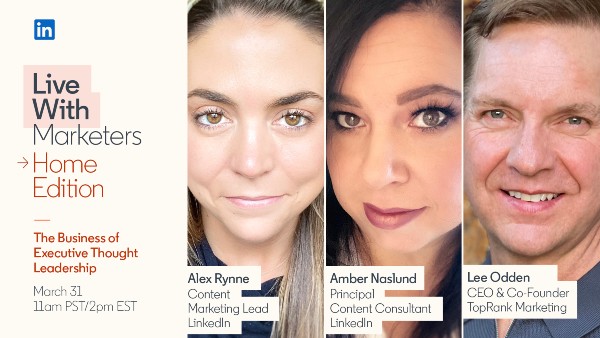
If you’d like to learn more about building B2B thought leadership with brand executives, be sure to tune in to the March 31st Edition of LinkedIn’s Live with Marketers: The Business of Executive Thought Leadership featuring Alex Rynne and Amber Naslund from LinkedIn and myself as we cover:
- What a compelling executive presence can do for your business
- Examples of effective thought leadership on LinkedIn
- How to measure your thought leadership efforts
- How to create a compelling and engaging profile
- How to integrate brand, executives and corporate communication
And more. Sign up here.
The post 20 Ways to Build B2B Executive Credibility and Thought Leadership appeared first on B2B Marketing Blog – TopRank®.
How my startup uses AI to reimagine water utilities
History repeats itself, but it doesn’t have to. I was inspired to launch my startup, Varuna, when Austin Water released its first-ever boil water warning in 2018 — a moment eerily similar to the massive winter storm in Texas just a few weeks ago. Because the water utility companies didn’t have enough real-time data to measure water quality in individual neighborhoods, they took the blanket approach of asking all of the city’s 950,000 residents to boil any water ingested through drinking or cooking. After several days of substantially reducing water usage — and seeing more than 625,000 plastic bottles of water handed out across the city — I set out to find a solution.
A systems engineer by trade and a problem-solver by nature, I repurposed our dishwasher’s sensor to create my first water-quality measurement device. Excited, I called up my Chicago-based friend and former employee Jamail Carter to talk about my idea. We agreed that water quality issues like the crisis in Flint are symptoms of a bigger problem: operational inefficiencies within water utilities.
When technicians don’t have real-time visibility into what’s going on across the water distribution system, utilities companies either splurge on a single sensor bound to one location or rely on manual measurement, which can be costly and time-consuming. By simply getting access to the right information, each community water system in the U.S. could save thousands of dollars — and lives — annually for every sample collection point they have on-site.
After months of prototyping and research, Jamail and I launched Varuna, named for the Vedic deity associated with water, truth and enlightenment. The platform provides cities and towns with Google AI-powered alerts, recommendations and predictions to reduce inefficiencies and violations in their water management operations. With a series of connected sensors in the distribution systems, Varuna reduces the number of times technicians need to collect water samples to lab test for quality issues. Google Maps Platform provides the “where” to the what and the why of water quality contamination issues, while Google Cloud gives users a way to access this information whenever they need it—all essential for adopting a proactive, preventive approach to water treatment.
Varuna is founded on the belief that when people know better, they do better. Research shows that water systems in communities of color have a disproportionate amount of EPA violations. By taking away excuses and providing key information, we can positively impact underserved communities. That’s why we first piloted programs in historically diverse locations across Louisiana, Texas, New Jersey and Alabama — and are tackling Chicago and New York City next.
As a Black immigrant founder building a startup in Texas, I understand firsthand the frustration of being denied access to needed resources. Despite the inherent humanity of Varuna’s mission and our proven entrepreneurial track record, Jamail and I faced systemic obstacles as we attempted to raise capital and network in a predominately white industry. Less than 3% of U.S. venture capital funding went to Black-led companies in 2020, despite the fact that 10% of American companies are Black-owned, according to U.S. Census data.
Thankfully, doors are getting opened — forced open in some cases — that have been previously closed to teams like ours. Receiving a $100,000 cash award from theGoogle for Startups Black Founders Fund last October wasn’t just a financial investment; it was a vote of confidence. Only three months after being selected for the Black Founders Fund, we’ve raised an additional $1.6 million, added two team members and a design agency partner, all while redesigning and halving the cost of our hardware. When you fund Black founders, you not only create equal access to economic opportunity, but also empower us to create real change with our tech, one glass of clean water at a time.

Celebra el Día Mundial del Agua con este emprendimiento
La historia se repite, pero no tiene por qué hacerlo. Fui inspirado a fundar mi emprendimiento, Varuna, cuando Austin Water lanzó su primera advertencia de contaminación del agua en 2018; algo extrañamente similar sucedió semanas antes cuando se desató una masiva tormenta invernal en Texas. Debido a que las empresas de servicios hídricos no tenían suficientes datos en tiempo real para medir la calidad del agua en los vecindarios individuales, optaron por el enfoque general de solicitar a los 950 000 residentes de la ciudad que hirvieran el agua para ingerir o cocinar. Después de seis días de reducir sustancialmente el consumo de agua y entregar más de 625 000 botellas plásticas de agua, me propuse encontrar una solución.
Ingeniero en sistemas de oficio y solucionador de problemas por naturaleza, miré alrededor en busca de objetos domésticos y recordé que los lavavajillas cambian de modo cuando el agua que contienen está lo suficientemente limpia como para que pase la luz. Readapté el sensor del lavavajillas para crear mi primer dispositivo de medición de la calidad del agua. Emocionado, llamé a mi amigo y antiguo compañero de trabajo en Chicago, Jamail Carter, para contarle mi idea. Coincidimos en que los problemas de calidad del agua, como la crisis en Flint, son síntomas de un problema mayor: las deficiencias operativas dentro de los servicios hídricos. Cuando los técnicos no tienen visibilidad en tiempo real de lo que sucede en los sistemas de distribución de agua, las empresas de servicios derrochan en un único sensor vinculado a una ubicación o dependen de costosas mediciones manuales que consumen mucho tiempo. Si tan solo tuvieran conocimiento y acceso a la información correcta, cada sistema hídrico de cada comunidad en los Estados Unidos podría ahorrar miles de dólares
—y vidas— anualmente por cada punto de recolección de muestras in situ.
Tras meses de realizar prototipos e investigaciones, Jamail y yo lanzamos Varuna. La plataforma brinda a los pueblos y las ciudades predicciones, recomendaciones y alertas basadas en la IA de Google para minimizar las deficiencias en las operaciones de gestión hídrica. Mediante una serie de sensores conectados, Varuna reduce la cantidad de veces que los técnicos necesitan recolectar muestras de agua para realizar pruebas de laboratorio para determinar problemas de calidad. La Google Maps Platform proporciona el “dónde” para el qué y el por qué de los problemas de contaminación de la calidad del agua, mientras que Google Cloud permite que los usuarios accedan a esta información cuando la necesitan.
La investigación muestra que los sistemas hídricos en las comunidades de color cuentan con una cantidad desproporcionada de infracciones de la EPA. Al eliminar las excusas y permitir el acceso, podemos tener un impacto positivo en las comunidades marginadas. Por eso primero experimentamos con programas en ubicaciones históricamente diversas, como Luisiana, Texas
y Alabama, y abordaremos Chicago, Nueva Jersey y la Ciudad de Nueva York a continuación.
Como inmigrante de color y fundador que desarrolló un emprendimiento en Texas, comprendo de primera mano la frustración de que se nos niegue el acceso a los recursos necesarios. Más allá de la humanidad inherente de la misión de Varuna y de nuestra trayectoria empresarial comprobada, Jamail y yo enfrentamos obstáculos sistemáticos cuando intentamos reunir el capital y relacionarnos en una industria predominantemente caucásica. Afortunadamente, se nos están abriendo puertas, de manera forzada en algunos casos, que antes no se abrían para equipos como el nuestro. La recepción de USD 100,000 por parte de Google for Startups Black Founders Fund el pasado octubre no fue solo una inversión financiera, sino un voto de confianza. Tan solo tres meses después de haber sido seleccionados para Black Founders Fund, recaudamos USD 1,6 millones adicionales, añadimos dos miembros y una agencia asociada de diseño al equipo, mientras rediseñamos y redujimos los costos de nuestro hardware a la mitad. Cuando se financia a los fundadores de color, no solo se estimula la generación de riqueza y se crea acceso igualitario a oportunidades económicas, sino que también se ayuda a devolver el favor dando cabida a otras comunidades poco representadas con nuestra tecnología; un vaso de agua no contaminada a la vez.
Varuna se basa en la creencia de que cuanto más se sabe, más se puede hacer. El primer paso para la creación de un cambio real es prestar atención a la gravedad del problema, ya sea mejorar la calidad del agua o crear condiciones de competencia equitativas para las empresas entre la población de color, porque solo así abordaremos colectivamente el problema. El acceso al agua potable es una necesidad humana fundamental y universalmente reconocida; algo que todos los seres vivientes compartimos. Con el respaldo de las personas y los productos de Google, en este Día Mundial del Agua pretendemos convertir ese derecho
en realidad y dar impulso a los futuros fundadores de color a lo largo del camino.

OnePlus passa a ColorOS di OPPO per la Cina
OnePlus è pronta ad annunciare al Mondo la nuova serie di smartphone top di gamma, la linea OnePlus 9, e col debutto dei nuovi dispositivi si appresta a dire addio, al momento soltanto per il mercato cinese, alla sua variante di Android, OxygenOS, una versione più minimale che arriverà sui nuovi OnePlus 9 nel resto del Mondo.