Amazon, 3.000 nuovi posti di lavoro in Italia nel 2021

Stadia presto su Android TV e Chromecast con Google TV
A marine biologist uses Maps to explore under the sea
Just under the water lies one of the biggest mysteries of the Great Barrier Reef: blue holes. These underwater sinkholes give researchers a rare look at ocean life and how we can protect it. Until a few years ago, only two blue holes were documented in the entirety of the Great Barrier Reef — they are hard to find and even harder to get to.
With the help of Google Maps, marine biologist Johnny Gaskell and a team of researchers are finding previously unknown blue holes. In 2017, after witnessing Cyclone Debbie destroy many of the reefs in its path, he set out to find more blue holes. Home to hundreds of species of coral and serving as a protective waters for larger marine life, these formations give scientists a view of history buried in undisturbed sediment layers and clues about how to better protect coral reefs.
Using Google Maps’ satellite view, Johnny followed the cyclone’s path to pinpoint areas along the reef that might have been spared from damage. That’s when he spotted perfect circles along the reef, indicating a potential blue hole. The formation he identified was south of the Whitsundays in the Hard Line Reefs, a difficult-to-reach area of the Great Barrier Reef that’s dangerous to navigate. Despite this, Johnny and a team of divers headed out into the unknown, unsure of what — if anything — awaited them.
There’s still so many spots out in the Great Barrier Reef that are unexplored.
With the satellite view of Google Maps on their phones, they navigated their boats through narrow channels in unsurveyed waters until the blue dot on their map was directly over the blue hole. Johnny dove in and found healthy coral formations that have sat undisturbed, possibly for centuries. Along the edges were delicate birdsnest corals, vibrant giant clams and huge branching staghorn corals. In the stillness of the blue hole’s center, there were green sea turtles, giant trevally and sharks that all called the dark, cool water home.
With the help of Google Maps, a discovery that would have taken years of underwater exploration on the seafloor is now allowing researchers to expand our understanding of the world’s largest ecosystem. Today, Johnny is still working to build a snapshot of coral reef conditions. Working with Citizens of the Great Barrier Reef and the Great Reef Census project, they are using geotagged images to give everyone — from scientists to students — a better idea of what’s going in depths of the water whether they dive in or not.
In 2021 the Great Reef Census is expanding to reach more reefs, collect more data, and broaden its research goals. To join the efforts, sign up as a Citizen or contribute directly via the project’s fundraising page.

Beyond the Compliance, I rischi reali della GDPR
MEDIATECH (GRUPPO RELATECH) – CICLO DI SEMINARI FORMATIVI WEBINAR – MERCOLEDI’ 9 GIUGNO 2021 – ORE 12 Parte il 9 giugno alle ore 12.00 il primo dei 3 incontri formativi in…
L’articolo Beyond the Compliance, I rischi reali della GDPR scritto da Paolo Brambilla proviene da Assodigitale.

Optimize for B2B Customers with Digital First Content Marketing
The evolution of B2B marketing has required companies to extend the transformations and pivots made during the pandemic to more permanent changes in marketing driven by evolving consumer preferences for information discovery, consumption and interaction. B2B marketing is evolved as a digital first practice and there’s no going back.
While most marketers understand it is simply not enough to rely on push marketing tactics and advertising, they still rely on these familiar and comfortable tactics.
Today’s business customers have more content choices in text, images, audio, video and interactive formats on more devices than ever. They expect more than just useful information from the brands they buy from.
In reaction to many of these changes in technology and an increased demand for information, many businesses have resolved to creating more content; more information to feed the insatiable appetite of the search and social web.
B2B marketers are responding to this need. Yearly research from Content Marketing Institute and MarketingProfs on Content Marketing consistently shows marketers are dedicated to using content in their marketing.
Unfortunately, simply creating more digital first content isn’t the answer. Competition is fierce for customer time and attention, raising the bar on content from simply providing information to delivering meaningful experiences. To stand out, engage and inspire action, todays businesses must engage in smarter, customer focused content marketing.
The shift from traditional digital marketing to a focus on integrated content experiences is requiring companies to rethink their approach. Making that transition requires an understanding some essential shifts:
Information Overload
According to a study from IBM, we’re creating 2.5 quintillion bytes daily— so much that 90% of the data in the world today has been created in the last two years alone.
Competition for attention has increased exponentially as brands evolve their publishing efforts and consumers are increasingly empowered to publish themselves. Blogs, social media sharing sites and networks are powered by brand and user generated content, all competing for time and attention.
Since most consumers are confronted by thousands of marketing messages every day, it’s essential that companies understand their customers and those who influence them. Using the right tools for everything from influencer discovery to topic optimization, brands can embark on a continuous effort to improve the performance of their content investment.
Data analysis and optimization tools will surface knowledge of specific customer segments and their pain points, goals and those who influence them. Armed with such insight, marketers will be better prepared to craft meaningful content marketing experiences to exceed customer expectations and pass the competition. Businesses must think beyond the mechanical and transition to a more meaningful approach to PR, search, social media and content marketing.
Disruption or Evolution?
Traditional publishing models have been significantly affected by these changes in technology and consumer information preferences. Print based publications are on the decline, newsroom resources and staff are shrinking and the roles of brand publishers and traditional media publishers are exchanging.
Driven by the Customer Journey
The diversity of information options and access through myriad devices empowers consumers with more decision making power before they ever act on an intent to purchase. The customer journey from awareness to consideration to purchase weaves it’s way through channels like search, news and social media in a dynamic path that is rarely linear and increasingly numb to push messaging.
Those companies that can attract and engage consumers earlier in the journey can establish a stronger brand connection and influence sales, despite a greater diversity of content and rising competition.
Architecting a content marketing plan across the customer buying cycle will enable marketers to plan content topics meaningful to each stage: awareness, interest, consideration, purchase, retention and advocacy. Content discovery, consumption and action at each stage can then be planned to optimize the customer experience.
Great content isn’t great until it’s discovered, consumed and acted on.
Re-thinking a content marketing strategy and it’s integration with search, social media and PR requires a solid definition of content marketing:
Content marketing is the planned creation, promotion and optimization of brand stories designed to create useful and meaningful experiences that attract, engage and inspire a target group of customers from awareness to purchase to advocacy.
With that definition, marketers can build a content marketing strategy that draws from both consumer insights and brand goals to create great content that is optimized for discovery, engagement and conversion towards business goals
Next steps and key questions:
- What business goals could be solved by more useful and meaningful content?
- Who are the target audiences your business needs to connect with? What do they care about? What are their goals?
- Develop an editorial calendar that takes into account how each target customer segment discovers, consumes and acts on information needed during their buying cycle
- Build search, social media and media optimization best practices into your content planning and promotion efforts.
- Continuously analyze key performance indicators and business outcomes to optimize the performance of your content marketing investment
The post Optimize for B2B Customers with Digital First Content Marketing appeared first on B2B Marketing Blog – TopRank®.

Anime su Netflix: 5 film che andrebbero visti

New for Pixel: Starry night clips, Pride wallpapers and more
Our latest Feature Drop is making your Pixel smarter and more fun, while also helping you feel safer, too. From Locked Folders to expanding some features to more countries to short videos in astrophotography, there’s a lot to unpack.
Summertime fun for Pixel
Pixel owners love using astrophotography in Night Sight to take incredible photos of the night sky, and now it’s getting even better. You can now create videos of the stars moving across the sky all during the same exposure. Once you take a photo in Night Sight, both the photo and video will be saved in your camera roll. Try waiting longer to capture even more of the stars in your video. This feature is available on Pixel 4 and newer phones and you can learn more at g.co/pixel/astrophotography.
Pride events across many parts of the world kick-off in June, and Pixel has new wallpapers and ringtones to celebrate. Three bold, joyful wallpaper designs were created exclusively for Pixel by Ashton Attzs. Check out new Pride-themed ringtones and notifications created by other LGBTQ+ artists and YouTube Creators.
More privacy, more safety
Last month at Google I/O we previewed Locked Folder in Google Photos, which is now rolling out to Pixel users. For photos and videos that need a little extra privacy — like pictures of an upcoming gift for a loved one, or screenshots of your recent receipts — you can save them to the new Locked Folder. To make it even easier to add photos and videos to Locked Folder on Pixel, you can choose to save them there straight from the camera. They’re saved on your device and won’t show up in shared albums, Memories or any other apps on your device, and can only be accessed using your device passcode or fingerprint.

Un nuovo modello di IA trasforma i Droni in registi “sensibili”

Uranium Backup: una soluzione economica e facile da usare per la sicurezza dei dati

Facebook ha deciso: Donald Trump sospeso per due anni
Some changes to our ad technology
The tools used by digital publishers and advertisers — often called ad tech — help websites and apps make money and fund high-quality content. Ad tech also helps our advertising partners big and small reach customers and grow their businesses. Our ad tech tools are built to work with our partners and competitors alike — it’s why we share access to advertising data to support publisher monetization and why we provide access to more than 700 rival advertiser platforms and 80 publisher platforms across our products.
Over the past two years, we have been working with the French Competition Authority (FCA) to answer their questions about our advertising technology, and more specifically about Google Ad Manager, our publisher platform.
While we believe we offer valuable services and compete on the merits, we are committed to working proactively with regulators everywhere to make improvements to our products. That’s why, as part of an overall resolution of the FCA’s investigation, we have agreed on a set of commitments to make it easier for publishers to make use of data and use our tools with other ad technologies. We will be testing and developing these changes over the coming months before rolling them out more broadly, including some globally.
Increased access to data
Today, when buyers use Google Ad Manager to participate in Google’s ad exchange, they receive equal access to data from our auctions to help them efficiently buy ad space from publishers.
As there are a lot of ad exchanges to choose from, publishers sometimes also use a technology called Header Bidding to run an auction among multiple ad exchanges. Because these Header Bidding auctions take place outside of our platform, it is usually not technically possible for Google to identify the participants, and therefore we cannot share data with those buyers.
With these commitments, we will work to create a solution that ensures that all buyers that a publisher works with, including those who participate in Header Bidding, can receive equal access to data related to outcomes from the Ad Manager auction. In particular, we will be providing information around the “minimum bid to win” from previous auctions.
Increased flexibility
Publishers using Ad Manager have always had the ability to sell ads via many different advertising platforms and the ability to negotiate terms with other publisher platforms to implement business strategies targeted to specific buyers. This flexibility allows publishers and advertisers to mix and match technology partners to meet their different needs.
We will further increase the flexibility of Google Ad Manager to meet the evolving needs of our partners, including allowing them to set custom pricing rules for ads that are in sensitive categories and implementing product changes that improve interoperability between Ad Manager and third-party ad servers. Also, we are reaffirming that we will not limit Ad Manager publishers from negotiating specific terms or pricing directly with other sell-side platforms (SSPs). And we will continue to provide Ad Manager publishers with controls to include or exclude certain buyers at their discretion.
Affirming our commitment to transparency
We have worked for years to bring increased transparency to programmatic advertising, including taking steps to simplify our platforms. This includes combining our publisher ad server and ad exchange to become Google Ad Manager and shifting to a unified first price auction in Ad Manager to help reduce complexity and create a fair and transparent market for everyone.
As part of these commitments, we are reaffirming our promise not to use data from other SSPs to optimize bids in our exchange in a way that other SSPs can’t reproduce. We are also reaffirming our promise not to share any bid from any Ad Manager auction participants with any other auction participant prior to completion of the auction. Additionally, we’ll give publishers at least three months’ notice for major changes requiring significant implementation effort that publishers must adopt, unless those are related to security or privacy protections, or are required by law.
We are always working on improving our ad tech products to help publishers fund their content and businesses and help advertisers efficiently reach customers. We recognise the role that ad tech plays in supporting access to content and information and we’re committed to working collaboratively with regulators and investing in new products and technologies that give publishers more choice and better results when using our platforms.

Conviene davvero abbonarsi ad Amazon Prime?

Il Garante per la Privacy blocca l’app Mitiga Italia
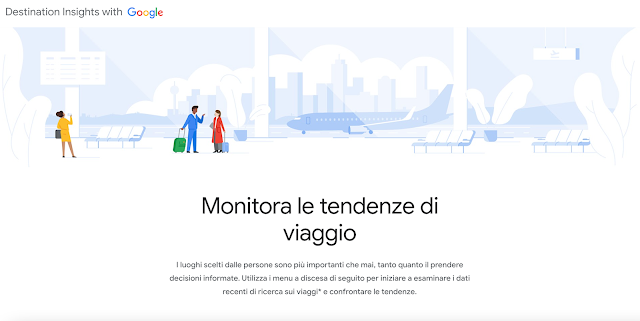
Google per il Turismo: arriva in Italia Destination Insights
Con l’avvicinarsi della stagione estiva il settore del turismo, composto da milioni di piccole e medie imprese a livello globale, sarà impegnato ad affrontare nuove sfide; nell’ultimo anno abbiamo trascorso più che mai del tempo online e il settore dei viaggi, come molti altri, avrà bisogno di farsi trovare online per mettersi in contatto con i futuri clienti, gestire le prenotazioni, le recensioni. Per questo Google ha collaborato con aziende, istituzioni ed esperti di tutto il mondo per costruire le competenze digitali necessarie per un settore dei viaggi sempre più digitale, e intende continuare a farlo.
Strumenti senza costi per cogliere le opportunità del digitale
Per andare incontro alle esigenze degli operatori del settore turistico oggi Google lancia in Italia Destination Insights, un nuovo strumento che permette di ottenere informazioni utili per esplorare come cambia la domanda turistica nel tempo e monitorare le tendenze di viaggio. Così, attraverso Destination Insights, gli imprenditori, le agenzie di viaggio e le istituzioni potranno osservare l’andamento della domanda, per poter prendere decisioni di business e di marketing sulla base di informazioni e insight consultabili in tempo reale.

Destination Insights entra a far parte del nuovo Travel Insights with Google, da oggi disponibile anche in Italia, una guida che raccoglie informazioni e strumenti utili per raggiungere i viaggiatori, a disposizione di strutture ricettive, operatori del turismo e agenzie di viaggi. Fa parte di Travel Insights with Google anche Hotel Insights, la piattaforma lanciata in Italia a gennaio e presentata insieme a MiC, ENIT, UNWTO e a Confindustria Alberghi, Federalberghi e Federturismo Confindustria, che offre informazioni e risorse pensate per aiutare il settore alberghiero a intercettare la domanda turistica potenziale.
Gli strumenti senza costi che Google mette a disposizione degli operatori del turismo aiutano le aziende del settore a cogliere le opportunità del digitale per farsi conoscere, comunicare con i clienti potenziali e attuali e prendere decisione di business sulla base di dati aggiornati e sintetizzati in modo chiaro. Per esempio, l’Hotel Piazza Bellini di Napoli ha utilizzato diversi strumenti di Google, tra i quali anche Hotel Insights, per poter cogliere informazioni utili sulle preferenze dei turisti interessati alla loro zona, utilizzate poi per comunicare e promuovere la struttura in modo più preciso ed efficace. O ancora è il caso di Club del Sole, un’azienda attiva nell’industria dell’ospitalità con ventuno villaggi nelle principali località italiane, che ha accelerato il proprio percorso di trasformazione digitale e adeguato la propria offerta in base alle esigenze dei turisti, comunicandola online.

Hotel Piazza Bellini, Napoli
Le tendenze in Italia attraverso Destination Insights
Ma come utilizzare Destination Insights? Prendiamo per esempio l’Italia: la tendenza delle ricerche effettuate su Google da gennaio ad aprile 2021 registra un crescente interesse verso le mete turistiche nazionali, che passa da una quota del 55% nel 2019 a una del 79% del 2021.
Se si osserva inoltre l’interesse verso le destinazioni locali, da Google Trends si nota come le ricerche di luoghi da visitare “vicino a me” nel 2021 abbiano visto una crescita dell’8% a livello mondiale rispetto al 2019.
È possibile anche approfondire l’interesse proveniente dall’estero verso le destinazioni italiane, che negli ultimi trenta giorni è spinto dai Paesi Europei vicini, come Germania e Francia; tra i primi 10 paesi dai quali proviene l’interesse di ricerca ci sono anche gli Stati Uniti, mentre gli altri sono al momento europei.
L’impegno di Google per il turismo
Google è impegnata da tempo nel sostenere il turismo, mettendo a disposizione la tecnologia e gli strumenti che possono aiutare imprese, agenzie, operatori e istituzioni nel dare impulso a un settore così importante per l’Italia, che crea opportunità e dà lavoro a centinaia di migliaia di persone. A partire dall’anno scorso collaboriamo con imprenditori, istituzioni ed esperti di tutto il mondo per sviluppare le competenze digitali necessarie ad affrontare le sfide future, all’interno di un settore che vedrà crescere l’importanza dell’online.
A maggio abbiamo dato il via a una collaborazione con la Commissione Europea per il Turismo per sviluppare le competenze digitali degli operatori turistici europei e, più recentemente abbiamo annunciato una partnership globale con UNWTO, l’Organizzazione Mondiale del Turismo, per supportare la ripresa del settore. Sulla base dei risultati raggiunti dei nostri programmi di accelerazione delle competenze digitali in Africa Sub-Sahariana, in Medio-Oriente e nel Sud-Europa, i corsi organizzati da Google e dall’Organizzazione Mondiale del Turismo aiuteranno gli addetti al turismo e le agenzie turistiche a comprendere i trend di settore e ad adottare le decisioni strategiche necessarie per mettere in campo una migliore pianificazione del turismo.
Abbiamo avviato collaborazioni con le istituzioni culturali e governative per mettere in luce e stimolare i viaggi nei luoghi di interesse culturale. In Italia, abbiamo lanciato lo scorso anno Meraviglie d’Italia, il progetto di Google Arts&Culture per ispirare e favorire l’interesse nei confronti dell’Italia e del suo immenso patrimonio culturale. Mentre non era possibile varcare i confini o, addirittura, uscire dalla propria abitazione, le persone di tutto il mondo hanno potuto scoprire e visitare virtualmente un ampio numero di musei, luoghi d’interesse culturale e monumenti digitalizzati grazie alla tecnologia di Google Arts&Culture.

Mentre i confini riaprono, il turismo interno cresce e i viaggi internazionali ripartono, lavoriamo per rimanere vicini al settore. Non importa se la ripresa sarà graduale o più rapida, ci impegniamo a supportare il mondo dei viaggi e il turismo, con tutte le persone e aziende che lo compongono.
Scritto da: il Team Google Italia