
Podcast del Disinformatico RSI di oggi (2021/06/18) pronto da scaricare: furto di dati sanitari, certificati Covid, scrivere con il pensiero, restart spaziale

È disponibile il podcast di oggi de Il Disinformatico della Rete Tre della Radiotelevisione Svizzera, condotto da me insieme a Tiki. Questi sono gli argomenti trattati, con i link ai rispettivi articoli di approfondimento:
- Mi è arrivato il certificato Covid digitale, ossia il “green pass” svizzero: come funziona
- Sottratti e messi in vendita i dati di vaccinazione Covid di 7,4 milioni di italiani? Il punto della situazione
- Scrivere con il pensiero, letteralmente
- “Prova a spegnere e riaccendere” funziona anche nello spazio
Il podcast di oggi, insieme a quelli delle puntate precedenti, è a vostra disposizione presso www.rsi.ch/ildisinformatico (link diretto) ed è ascoltabile anche tramite feed RSS, iTunes, Google Podcasts e Spotify.
Buon ascolto!

Scrivere con il pensiero, letteralmente


Gli scarabocchi che vedete qui sopra sono lettere pensate: sono linee tracciate da un algoritmo che interpreta gli schemi dei segnali elettrici del cervello di una persona che immagina di scrivere delle lettere. Lo immagina soltanto, perché è paralizzata.
È il risultato notevole di un’interfaccia computer-cervello (brain-computer interface o BCI) presentata su Nature a metà maggio scorso, che è in grado di decodificare 90 caratteri al minuto con il 94% di accuratezza: molto più veloce di qualunque interfaccia precedente e paragonabile alla velocità di scrittura di un messaggio su smartphone (circa 115 caratteri al minuto).
L’interfaccia è il frutto del lavoro di un gruppo coordinato da Frank Willett del Neural Prosthetics Translational Laboratory (NPTL) presso la Stanford University, e l’articolo che la descrive è intitolato “High-performance brain-to-text communication via handwriting” (Nature, 593:249–54, 2021).
L’approccio di questi ricercatori è consistito nell’abbandonare il modello classico “punta e clicca” (usato da loro in passato, ottenendo circa 40 caratteri al minuto). In questo modello, una persona deve usare il pensiero per muovere un cursore su uno schermo fino a posizionarlo sulla lettera desiderata oppure deve pensare in un modo apposito quando il cursore perennemente in movimento passa sopra la lettera in questione, in modo da selezionarla. Stavolta, invece, i ricercatori hanno chiesto alle persone di pensare ai movimenti che avrebbero fatto se avessero potuto scrivere una data lettera dell’alfabeto.
L’interfaccia fa parte di un test clinico a lungo termine denominato BrainGate2, in cui vengono impiantati dei sensori nella corteccia motoria dei cervelli di persone paralizzate. Uno dei partecipanti, identificato solo come T5, ha una lesione spinale che gli rende impossibile usare le mani (ma è in grado di parlare): nel corso di numerose sessioni di sperimentazione gli è stato chiesto di immaginare di tenere in mano una biro e di scrivere alcune centinaia di frasi che gli venivano mostrate su uno schermo.
L’attività neuronale captata durante queste sessioni dal sensore impiantato in T5 è stata usata per addestrare una rete neurale a identificare le lettere scritte dalla persona e a generare testo in tempo reale partendo dagli impulsi cerebrali prodotti dall volontario quando immaginava di scrivere frasi nuove.
Il sensore impiantato ha ancora alcune limitazioni: è ingombrante e cablato, e ha problemi di instabilità posizionale che alterano i segnali che riceve. Ma i ricercatori stanno già valutando versioni compatte, stabili e wireless, e pensano già di captare i segnali neuronali del parlato e convertirli in testo e voce, ridando la facoltà di parlare a chi l’ha persa.
Questo è quello che i ricercatori sono riusciti a fare per T5. Speriamo che scelgano bene il software per il T1000.

Chi è Jen-Hsun ‘Jensen’ Huang, una vita a fare Nvidia

Spotify acquisisce Podz, per migliorare la ricerca di contenuti

“Prova a spegnere e riaccendere” funziona anche nello spazio
Quante volte vi è capitato di riavviare un computer senza pensarci su due volte, semplicemente perché era lento o faceva un po’ le bizze? Ci pensereste due volte se da quel riavvio dipendesse la vostra vita.
Ieri (17/6) due astronauti, lo statunitense Shane Kimbrough e l‘europeo Tomas Pesquet, stavano installando dei nuovi pannelli solari all’esterno della Stazione Spaziale Internazionale, durante un’attività extraveicolare o EVA, nella quale gli astronauti sono nel vuoto, protetti esclusivamente dalla propria tuta spaziale, che fornisce ossigeno, pressione e controllo della temperatura. Dopo circa tre ore di lavoro, Kimbrough ha dovuto interrompere la propria attività per fare un reboot della tuta. Mentre lui era dentro la tuta stessa.
La vicenda è stata segnalata dalla NASA in questo suo blog in termini come al solito molto tranquillizzanti: Kimbrough ha fermato il proprio lavoro, è tornato all‘airlock (la camera di equilibrio che consente di entrare e uscire dalla Stazione) denominato Quest, ha collegato la propria tuta a un connettore ausiliario e poi ha riavviato la tuta.
Il reset, dice la NASA, “ha corretto le irregolarità del display della sua tuta e del modulo di comando che gli fornisce informazioni sullo stato della sua tuta.” E già che c’era, Kimbrough ha anche spento e riacceso il sublimatore che raffredda la tuta, visto che era stato rilevato un picco di pressione.
Potete seguire lo svolgimento dei fatti nel video qui sotto, a circa tre ore dall’inizio.
Dopo il reboot, Shane Kimbrough è tornato a lavorare all’installazione dei nuovi pannelli fotovoltaici.
È facile dimenticarsi o non accorgersi di quanto è complicata e difficile una EVA: tecnici e astronauti sono addestrati a gestire tutte queste situazioni e le fanno sembrare normali, ma dietro le quinte c’è tantissimo lavoro abbinato a una preparazione straordinaria.
Questo lavoro, fra l’altro, deve far funzionare tute spaziali che risalgono all’era Shuttle: hanno circa 40 anni e sono state costruite per avere una vita operativa di circa 15 anni, ormai ampiamente superata grazie a ricambi e manutenzione. Ne sono rimaste soltanto quattro.

Cloud Covered: What was new in May on Google Cloud
May flowered with new products, technologies and learning resources from Google Cloud. Here’s a recap of May’s most popular posts on the Google Cloud blog.
A new platform makes machine learning easier
At Google I/O, our annual conference for developers, we announced the general availability of Vertex AI, Google’s unified machine learning platform that allows companies to speed up the building, deployment and management of their artificial intelligence (AI) models. Because it requires far less coding to build custom models, Vertex AI can be used by data analysts and data scientists with varying levels of expertise. For example, a division of L’Oreal uses Vertex AI to create tools that let people “try on” beauty products online.
New data products come in threes
At our Data Cloud Summit, we introduced a number of new solutions to help organizations gain value from their data in support of their data cloud strategies. These include Dataplex, which allows organizations to centrally manage, monitor and govern data across a variety of systems; Datastream, which allows companies to replicate data in real-time across heterogeneous databases, storage systems and applications reliably and with minimal latency; and Analytics Hub, which provides a way to access and share data and analytics models across organizational boundaries.
A first-of-its-kind technology powers carbon-free energy
We announced a new technology that will help us reach our goal of operating on 24/7 carbon-free energy by 2030. Fervo is a next-generation geothermal project that will soon add carbon-free energy to the electric grid that powers our data centers and infrastructure throughout Nevada. Using fiber-optic cables inside wells, Fervo will gather information on flow, temperature and performance of the geothermal resource. Fervo will bring our data centers in Nevada closer to round-the-clock clean energy, and demonstrate how clean energy sources such as next-generation geothermal could eventually help replace carbon-emitting power sources around the world.
A video series teaches Anthos basics
Anthos is a managed application platform that extends Google Cloud services and engineering practices to development environments so you can modernize apps faster and establish operational consistency across them. To help you get started, we introduced the Anthos 101 video learning series, a great starting point for understanding the basics of Anthos and how to use it. Even better, you can watch the whole series of 11 episodes in less than an hour.
FAQs that clear up the clouds
Speaking of 101s, we also created a popular one with frequently asked questions about cloud computing. Do you want to learn the basics of containers, virtual machines, Kubernetes, data warehouses and more? The blog gives a quick rundown of common cloud computing terms and products. It’s just one guide available in our learning resources to help you understand cloud computing and start working with cloud-based tools and products.
That’s a wrap for May. Stay tuned to the Google Cloud blog for all things cloud.

A wetsuit startup rode the wave of surfing’s popularity
For many people, the most difficult part about surfing is just standing up on the board. But for diehard surfers — the ones who get up at 5:00 a.m. to catch the best waves — the real challenge is to find a wetsuit that actually fits. And that’s something that Los Angeles City lifeguard Andrew Park and marketing manager Grace Hsiang knew firsthand.
Skintight garments sold off the rack couldn’t possibly fit every aspiring surfer, and Andrew and Grace saw a need for a premium, high-quality wetsuit designed to accommodate a wide range of body types. “When it comes to a technical garment like a wetsuit, fit is a necessity for performance,” Andrew says. “We wanted to help any individual find a fit that helps them perform at their very best rather than ask the individual to conform to our product.”
So in 2016 Grace and Andrew launched 7TILL8, a direct-to-consumer startup named for the “glass-off hour” when conditions are ideal for surfing and diving. Customers submit 16 measurements to 7TILL8 to produce a completely bespoke wetsuit, personalized down to their preferred style, color, and thickness. Crafted out of Yamamoto neoprene—affectionately known as “the cashmere of neoprene” as it is made from Japanese limestone rather than petroleum—7TILL8 wetsuits are top-of-the-line in performance, durability, and comfort. The company also provides free alterations and repairs throughout the life of the product, encouraging surfers to invest in a quality suit rather than cheaply-made alternatives.
Surfing is one of the fastest-growing sports in the world, with thousands of people taking it up during the pandemic. Surfing will make its Olympic debut at the 2020 Tokyo Games this summer, and early results from Navy research shows that “surf therapy” may even aid with PTSD and depression. Google Ads has been key to helping 7TILL8 ride this wave of popularity and connect with the customers that need their product. Search engine optimization (SEO) and search engine marketing (SEM) in the Ads platform helped Grace and Andrew see more than sixfold return on investment on keywords like “custom wetsuits.” Constantly updating and editing their keywords has been essential to driving traffic to their website and growing their custom base — and ultimately helped 7TILL8 double their revenue.
While thrilled that their business model saw immediate success, Andrew and Grace worried about scaling manufacturing to align with this rapid growth. Could they accommodate surging demand without sacrificing product integrity? Support came in the form of Strong Ventures, an early-stage investment firm that finances, supports and mentors Korean-Global entrepreneurs. The Strong Ventures team invited Andrew and Grace to Google for Startups Campus Seoul to pitch, and ultimately invested in their vision for a more inclusive surf community. “As a young company that wants to help challenge the way people look at surfing, we’ve found how important it is to find your tribe,” says Grace. “We have been incredibly fortunate to partner with organizations like Strong Ventures and Google for Startups, who align with us from a values perspective.”
Through thoughtful work and collaborations, Grace and Andrew established 7TILL8 as a brand known for quality, service and intention. While they’ve shipped their suits to more than 45 different countries, their team of five is still based in Southern California. Despite the company’s rapid growth, Andrew and Grace remain particular about partnerships and publicity. “Surfing is sometimes perceived as a silly, superficial activity, but being in the ocean is such a blissful, magnificent experience,” said Grace. “We wanted to create a brand that would exemplify that by bringing integrity, dignity and respect to our wetsuits.”
B2B Marketing News: B2B Content Consumption Data, Digital Ad Revenue Sizzles, In-Person Events & Advertisers, & YouTube’s New Time-Savers
Almost 90% of B2B Content Consumption Said to Take Place Outside the C-Suite
Nearly 90 percent of B2B content consumption involves those outside corporate executive-level management, with some 21 percent being consumer by individual contributors, according to recently-released B2B buyer breakdown by job titles survey data. MarketingCharts
Podcasts start coming to Facebook next week
Facebook will begin rolling out a new podcast feature on June 22, offering podcast creators a new distribution channel, with features such as one minute promotional clips — to appear in a forthcoming podcasts tab — the social media giant recently announced. The Verge
TikTok Owner ByteDance’s Annual Revenue Jumps to $34.3 Billion
TikTok parent ByteDance saw a 93 percent jump in gross profit during 2020, with revenue more than doubling to $30 billion, the popular short-form social video platform that has seen increasing business interest recently announced in annual employee financial performance data. Wall Street Journal
Google Launches Search Console Insights
Google has launched a new feature to its Search Console product that presents audience data from Google Analytics combined with Search Console insights, to offer an expanded look at customer audiences, the search giant recently announced. Search Engine Journal
YouTube Will Now Enable Creators To Add Midrolls, End Screens and Captions While Their Video Is Processing
Google-owned YouTube has released a new time-saving feature in its YouTube Studio that will smooth workflow for marketers by allowing users to perform more tasks while the initial video uploading process is underway, the firm recently reported. Social Media Today
More Advertisers Envision Return to In-Person Events
17 percent of advertisers plan to resume sponsoring in-person events in the final quarter of 2021, while 16 percent say they plan to do so in the first quarter of 2022, according to newly-released survey data. The survey also showed that some 10 percent of advertisers say that they have no plans to resume sponsoring in-person event. MarketingCharts
Augmented Reality Market to Hit $175B by 2026: ABI Research
The global augmented reality (AR) and mixed reality (MR) market will top $175 billion by 2026, with almost 28 million smart glasses expected to ship by then, according to recently-released forecast data of interest to digital marketers. AV Network
Spotify launches its live audio app and Clubhouse rival, Spotify Greenroom
Spotify has begun launching Greenhouse, its Clubhouse-life mobile app offering with features that can also turn live audio conversations into podcasts on the Spotify platform, the firm recently disclosed. Spotify also plans to eventually infuse targeting recommendations and additional Spotify-specific functionality into Greenhouse. TechCrunch
LinkedIn bets on remote events, investing in $5 billion-plus virtual platform company Hopin
Microsoft-owned LinkedIn (client) has invested in virtual conference technology firm Hopin, in a push to allow customers to extend the reach of their live events onto LinkedIn with new immersive experiences, Hopin recently announced. CNBC
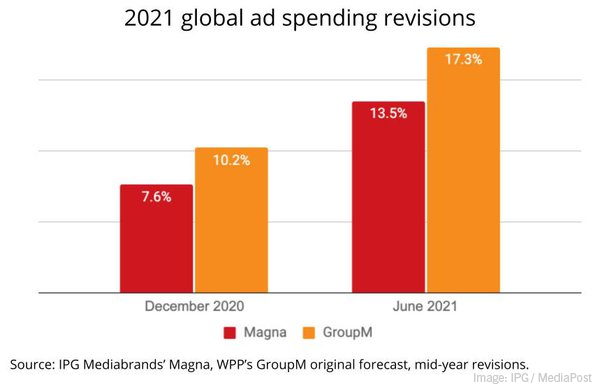
Global Ad Growth Consensus Lifted To 10.6% In 2021, 8.2% In 2022
Advertising spending worldwide in 2021 is expected to jump by 10.6 percent, with an 8.2 percent increase forecast for 2022, according to recently-released global ad spend forecast data of interest to online marketers. The figures represent a strong rebound from the 5.2 percent decrease seen in 2020. MediaPost
ON THE LIGHTER SIDE:
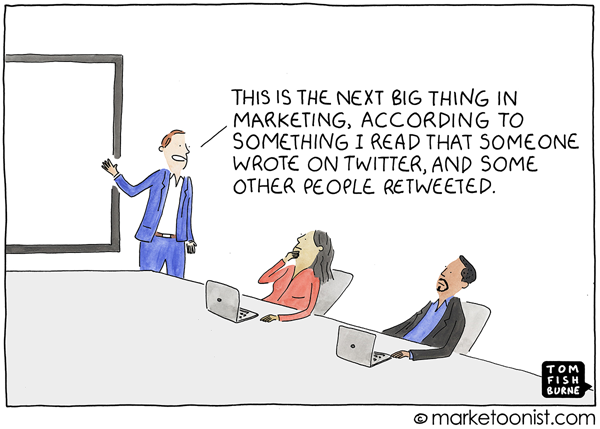
A lighthearted look at the “the next big thing in marketing” by Marketoonist Tom Fishburne — Marketoonist
Microsoft’s best Cannes Lions-winning ads and campaigns — AdAge
TOPRANK MARKETING & CLIENTS IN THE NEWS:
- Lee Odden — B2B Influencer Marketing with Lee Odden [Podcast] — Pam Didner
- Lee Odden — What’s Trending: Innovations in B2B Marketing — LinkedIn (client)
Have you found your own top B2B marketing article from the past week of industry news? Please drop us a line in the comments below.
Thanks for taking the time to join us for the TopRank Marketing B2B marketing news, and we hope that you’ll come back again next Friday for more of the week’s most relevant B2B and digital marketing industry news. In the meantime, you can follow us at @toprank on Twitter for even more timely daily news.
The post B2B Marketing News: B2B Content Consumption Data, Digital Ad Revenue Sizzles, In-Person Events & Advertisers, & YouTube’s New Time-Savers appeared first on B2B Marketing Blog – TopRank®.

Tamagotchi fa ritorno, stavolta come smartwatch

Huawei MateBook X Pro 2021 in sconto di 450 euro su Amazon!

Connettività domestica sempre più indispensabile per gli italiani

Green Pass, Draghi firma il decreto. Saranno validi in tutta l’UE

Il nuovo WWW: un supporto per accelerare la ripresa del retail
Durante il lockdown, il web si è rivelato un’ importante ancora di salvezza. Gli strumenti digitali ci hanno aiutato a rimanere in contatto: famiglie tra loro, insegnanti con studenti e aziende con clienti. La tecnologia si è rivelata utilissima per persone, comunità e paesi interi come mai prima d’ora.
Non sorprende che a seguito della pandemia il nostro uso della tecnologia abbia avuto una grande accelerazione, che si riflette anche sulle tendenze che stavamo già sperimentando in diversi settori, tra questi quello del retail.
Trend: il nuovo WWW
Anche nel momento in cui visitare fisicamente i negozi non è più stato possibile, le persone non hanno mai smesso di cercare l’ispirazione su cosa acquistare. Da fisiche, le vetrine da osservare per cercare ispirazione sono diventate virtuali. Le ricerche di “idee” sono aumentate sia su google.com, sia su Google Immagini, con gli acquirenti che cercavano ispirazione quando non avevano in mente un prodotto specifico da acquistare. In questo senso, per i rivenditori al dettaglio essere visibili online è fondamentale per intercettare potenziali clienti: oltre il 60% degli acquirenti che abbiamo intervistato ha affermato di aver ordinato da un brand dopo averlo visto su YouTube.
La crescente necessità di acquistare online ha portato allo stesso tempo una convergenza tra acquisti online e offline. Le persone cercano la stessa ispirazione e gli stessi consigli che potrebbero ricevere in negozio, con l’unica differenza che ora desiderano riceverli anche direttamente a casa. E i clienti chiedono di più quando fanno acquisti. Le ricerche di parole come “migliore” e “codice promozionale” continuano ad aumentare e le persone si aspettano un servizio di consegna a domicilio in un numero sempre maggiore di categorie. “WWW” non sta più solo per world wide web: ora è “What, When, Where”: quello che vogliamo, quando e dove lo vogliamo.
Infine, sappiamo che gli acquirenti di oggi desiderano che sia mantenuta la loro privacy. Vogliono avere il controllo dei propri dati e devono sapere come vengono utilizzati.
In Google, stiamo lavorando con i retailer per garantire che ogni interazione online diventi un’opportunità. Il rapporto online può essere prezioso quanto quello di persona per costruire relazioni dirette con i clienti, rafforzare la fiducia e costruire la fedeltà. I retailer devono solo utilizzare le giuste informazioni e gli strumenti corretti per raggiungerli.
L’importanza di strumenti e competenze digitali
Anche prima della pandemia, molti rivenditori, grandi e piccoli, avevano abbracciato il digitale per trovare nuove opportunità. Consideriamo per esempio le ricerche su Google: da marzo 2020, le ricerche legate allo shopping online e a come acquistare online sono raddoppiate in tutto il mondo, anche in Italia, dove l’interesse di ricerca relativo a “shopping online” è cresciuto del 50% (fonte: Google Trends). Allo stesso tempo, costruire la propria presenza online può aiutare le piccole e medie imprese anche a beneficio dell’esperienza offline. Secondo uno studio di Euromonitor, per il 2024 si prevede infatti che per la maggior parte degli acquisti, il 78%, continuerà ad avvenire offline; allo stesso tempo, prendendo in considerazione il settore del commercio al dettaglio nello specifico, si stima che il 54% delle entrate generate dal retail andrà a quegli esercizi che avranno integrato il digitale nei loro business model.
Per cogliere le opportunità del digitale, strumenti e competenze digitali sono fondamentali e il piano Italia in Digitale avviato da Google in Italia nel luglio 2020 va proprio in questa direzione: un progetto per accelerare la ripresa economica del Paese attraverso una serie di momenti di formazione, strumenti e partnership a supporto delle imprese e delle persone. Dall’avvio di Italia in Digitale sono oltre 300.000 le persone e le piccole e medie imprese che Google ha aiutato a digitalizzarsi.
Un esempio è quello della Libreria Verso di Milano, che a causa della pandemia si è trovata a riorganizzare la propria attività, ripensando al ruolo dell’online divenuto determinante, anche a supporto dell’offline: “Grazie al digitale e a Google My Business oggi abbiamo una nuova comunità di lettori provenienti da tutta Italia che ci segue e ci sostiene con grande affetto. Una risorsa inaspettata, che coltiveremo anche quando sarà possibile tornare a incontrarci di persona in libreria: sono due binari che possono convivere e alimentarsi a vicenda.” Antonio, Libraio e Specialista della Comunicazione, Libreria Verso

Nell’ottica di aiutare le persone a cogliere le opportunità del digitale per le proprie attività, tra le novità più recenti c’è anche La Mia Impresa Online, la nuova Action sull’Assistente Google pensata per portare online la propria attività in modo facile, immediato e senza costi. In questo modo, per valorizzare la propria attività online non sarà necessario possedere delle competenza digitali specifiche: per far trovare il proprio business sulla Ricerca Google e su Google Maps basterà soltanto utilizzare la propria voce.
Fare la nostra parte
Sappiamo che tenere il passo dell’accelerazione tecnologica a cui abbiamo assistito può essere sfidante e continueremo a lavorare duramente per aiutare e sostenere la ripresa del settore retail in Italia. Nessuno di noi sa esattamente cosa accadrà nei prossimi mesi, ma una cosa è certa: la determinazione e la creatività dimostrate delle piccole e medie imprese nell’ultimo anno meritano di essere celebrate.

Google Fuchsia usa un microkernel. Qual è la differenza e perché è rilevante

A conversation between two changemakers uplifting women
Editor’s note: This is the first in a three-part series of interviews between expert panelists for the Google.org Impact Challenge for Women and Girls.
As the President and CEO of Vital Voices Global Partnership, I lead an organization that invests in women leaders solving the world’s greatest challenges — from gender-based violence to the climate crisis to economic inequities.
Saskia Niño De Rivera is one of those leaders. She’s the co-founder of Reinserta, a nonprofit that supports mothers and their infants born in prison and helps adolescents who have committed crimes to reduce the cycle of crime and improve the prison system in Mexico.Saskia and her team at Reinserta work directly with those in the prison system to uncover underlying problems and advocate for the most effective solutions. Through doing so, they’ve impacted 2,600 people in prison.
Saskia and I are expert panelists for the Google.org Impact Challenge for Women and Girls, which will give a total of $25 million to organizations around the world that are working toward economic empowerment for women and girls. As expert panelists, we’ll help evaluate applications from the thousands of organizations that sent in ideas. Economic empowerment is crucial to achieving gender equity for women everywhere, but it’s a broad term that takes many shapes and touches different aspects of life across the world. To learn more about what economic empowerment means for women in Mexico, I spoke to Saskia about her path, her work with at-risk communities, and her advice for future changemakers.
How were you called to do this work?
When I was a teenager, my uncle was kidnapped which shaped how I see the world. It made me think: Why do these kidnappers exist? What have we done wrong as a society that people think it’s okay to take someone’s life into their hands and trade them for money? It was an “aha moment” that changed how I look at social justice.
Since then I’ve had the privilege — and it’s definitely a privilege — to have the time to find my passion. I work in what I love, which is a huge part of being good at what I do.
From there, you went to work for the police — first as a negotiator and then in the anti-kidnapping division. What did that teach you?
It taught me a lot of compassion. I visited 138 prisons and walked the halls myself. I learned that no one is born an aggressor or violent person. No one is born a criminal.
I would never justify a crime, but it’s interesting to learn about the background of the people in prison — the circumstances that led them to commit a crime. Justice has to do with a co-responsibility where no one is left behind, starting with victims and survivors and following with aggressors. We have to recognize people who commit crimes as a societal failure, and we are all a part of that failure.
I work in what I love, which is a huge part of being good at what I do.
Talk to us about the mission of Reinserta and how it has changed.
The main objective of Reinserta was to change the prison system to better the security of Mexico. But when you go into the system, there are problems everywhere — so many special interests, so much corruption. So my partner Mercedes and I asked ourselves, “Where can we make a difference? What is urgent?”
This year we adapted the mission to work with children and teenagers that are in contact with the criminal justice system, starting with children who are born in prison. Reinserta is constantly adapting because we’re inside the prisons, inside the justice system, creating models based on what really happens in the prisons.