
Metaverso, “Facebook” testa il guanto per toccare gli oggetti
A Chilean startup helps newsrooms grow their audiences
Editor’s note from Ludovic Blecher, Head of Google News Initiative Innovation: The GNI Innovation Challengeprogram is designed to stimulate forward-thinking ideas for the news industry. The story below by Miguel Paz, CEO and Founder of Reveniu, is part of an innovator seriessharing inspiring stories and learnings from funded projects.
“Do you believe me now?” is my favorite question. It’s the one I ask news organizations after they launch recurring payment programs for their audiences using Reveniu. When we look at the numbers from their first month using our tools, they see their revenues have doubled or sometimes even increased up to five times what they expected. These kinds of results drive our team’s work.
And it’s personal for me. As a former journalist and newsroom editor, I know how difficult it can be to develop technical solutions. When you are a small organization focused on producing good journalism, you don’t have the time or resources to develop advanced tools or platforms to drive audience revenue. I learned this firsthand when my last newsroom tried to develop a membership platform. We were discouraged by the sheer amount of work required — writing code, setting up payment gateways, fixing bugs, the list went on.
So I decided to build and launch Reveniu, a 5-minute-setup subscriptions and membership management platform for news organizations and small businesses with little to no tech experience or support. These businesses now have an easy-to-use platform with 24/7 support, including growth advice. These are the kinds of tools that would have helped me when I was in the newsroom myself.
The Google News Initiative’s support was crucial to jumpstart our work. The financial support we received from the Innovation Challenge, plus the help from the Global Partnerships team at Google Chile, gave our startup the necessary runway to conduct audience research for news organizations and overall research for product development. Since our launch, we’ve grown by an average of 20% month over month and raised over $300,000 in pre-seed money from venture capital funds and local angel investors. And our Software-as-a-Service is the one most widely used by newsrooms, newsletters and podcasts in Chile, a country with over 19 million people — and it’s having a concrete impact.
For example, Interferencia.cl now manages over 4,000 subscribers through Reveniu, representing an important part of their revenue stream. “El Semanal,” the country’s most influential business and finance newsletter, launched using Reveniu and has grown its subscription base three times beyond its original goals. The award-winning investigative reporter Alejandra Matus has funded the monthly operations for her website using Reveniu and was able to launch La Neta, which is partly funded by supporters paying through our platform. National broadcaster and podcaster Paula Molina and the podcast Relato Nacional are also growing their audience bases using our tools without having to spend any money upfront.
At Reveniu, our goal is to help our customers build audiences and focus on delivering high-quality journalism, without worrying about cost. And as we expand to more Latin American countries in 2022, we look forward to supporting even more news creators and helping them grow their businesses.

TIM: il fondo statunitense KKR pronto ad acquistare il gruppo!

Netflix, serie TV e film in uscita tra il 22 e il 28 novembre 2021

I dispositivi Fitbit in offerta fino al 45% su Amazon

Password deboli: 123456 e Juventus quelle più usate

No, gli utenti Tesla non sono rimasti chiusi fuori dalle proprie auto per via di un crash dei server dell’azienda
Molti giornali e siti hanno pubblicato la notizia di un guasto informatico che avrebbe appiedato gli utenti di auto elettriche Tesla, chiudendoli fuori dalle proprie automobili. No.
Semplicemente, ha smesso di funzionare per alcune ore il controllo remoto tramite app. Chi aveva con sé la chiave (telecomando come quello nella foto oppure tessera) ha potuto continuare a usare la propria Tesla. Lo so perché durante il guasto dei server di Tesla, avvenuto intorno alle 21:40 GMT, ero in giro con la mia e non mi sono nemmeno accorto del guasto. L’ho chiusa, aperta e avviata tranquillamente usando il telecomando apposito.
Ma l’idea degli utenti appiedati a causa delle loro auto troppo tecnologiche era giornalisticamente troppo ghiotta. Per esempio, BleepingComputer ha titolato “Tesla owners unable to unlock cars due to server errors” (poi ha corretto premettendo “Some”). Poi l’articolo stesso spiegava come stavano realmente le cose: “However, users can still unlock their cars using their phones over Bluetooth, via key card, or via key fobs.”
Anche la BBC ha titolato in modo ingannevole “Tesla drivers left unable to start their cars after outage”. Una volta tanto, Repubblica ha invece tweetato correttamente: “Tesla, interruzione sul server: molte auto del marchio non si avviano con la app in diversi paesi del mondo. Musk: “Ora ok, faremo controlli””.
In sostanza, le auto di Tesla non hanno una chiave propriamente detta: non hanno un oggetto metallico sagomato da infilare in una serratura. Come molte altre marche, hanno una chiusura elettronica che può essere comandata in molti modi.
Per esempio, può essere azionata usando un telecomando (keyfob) oppure una tessera (keycard), che funziona comunicando direttamente con l’auto via radio se si è vicini al veicolo. Se il dispositivo è dentro l’auto, consente di guidarla (non c’è una chiave di avviamento da inserire in un blocco a serratura). Il teleomando e la tessera funzionano anche senza Internet e senza copertura cellulare.
Un altro modo per aprire, chiudere e avviare una Tesla è l’app, da installare su uno smartphone. Se si è vicini all’auto, l’app comunica direttamente con essa via Bluetooth, senza aver bisogno di Internet.
L’unico caso in cui un guasto ai server di Tesla impedisce l’uso dell’auto è se l’utente ha con sé soltanto il telefonino e vuole comandare l’auto da remoto (per esempio aprirla o accendere il riscaldamento o l’aria condizionata). Andare in giro in auto contando su un’app e lasciando a casa il telecomando o la tessera è una totale sconsideratezza. Con qualunque marca di auto.
Fonte aggiuntiva: Electrek.
Questo articolo vi arriva gratuitamente e senza pubblicità grazie alle donazioni dei lettori. Se vi è piaciuto, potete incoraggiarmi a scrivere ancora facendo una donazione anche voi, tramite Paypal (paypal.me/disinformatico) o altri metodi.

Valvole e termostati tado° in sconto per il Black Friday

Antibufala: Tutti i green pass italiani sono su eMule! Spoiler: no
Vedo che si parla molto della scoperta di numerosi green pass italiani su eMule; è partita un’indagine d’urgenza del Garante Privacy italiano.
Matteo Flora e Bufale.net hanno già fatto egregiamente il punto della situazione, per cui non mi dilungo, ma in estrema sintesi: lo scenario più plausibile, al momento attuale, è che molto banalmente molti utenti di eMule hanno scaricato il proprio certificato Covid e lo hanno lasciato nella cartella Downloads… che è quella che hanno messo in condivisione col mondo in eMule.
Per cui qualcuno ha semplicemente cercato il nome standard dei file dei certificati Covid e ne ha fatto incetta.
Amici nostalgici del Mulo, a meno che non vogliate fornire un illecito servizio, spostate dalla cartella Downloads di #eMule il #GreenPass vostro e dei familiari. Archivi .zip/.rar e file .pdf online del #DGC a valanghe. pic.twitter.com/lWntDw7nkt
— N_{Dario Fadda} (@nuke86) November 7, 2021
Non c’è nulla, al momento, che faccia pensare a una violazione dei sistemi informatici che generano i “green pass”.
Certo che bisogna essere dei Veri Geni per
a) usare ancora eMule
b) settarlo per accedere alla cartella Downloads generica
c) salvare il proprio certificato Covid nella cartella Downloads…
… e poi indignarsi perché su eMule si trovano certificati Covid.
Prima che salti fuori il Solito Polemista che dice che lui usa eMule da anni e non gli è mai successo niente, vorrei ricordare che esiste Shareaza LE, una versione di Shareaza usata per il monitoraggio dei circuiti peer-to-peer, dove LE sta per Law Enforcement. Se usate eMule e simili, siete sorvegliati. Se scaricate o condividete (anche per errore) qualunque cosa il cui checksum sia nelle liste di contenuti proibiti gestite dalle agenzie governative di lotta al crimine, verrete identificati in men che non si dica.
Lo so perché ho avuto modo, pochi mesi fa, di vedere concretamente come funziona Shareaza LE e tutto il sistema internazionale di segnalazione per lavoro. Posso solo dire che è stato molto interessante. Linko un paio di esempi statunitensi (uno; due), ma i princìpi tecnici valgono anche in Europa.
Poi non dite che non vi ho avvisato.
Questo articolo vi arriva gratuitamente e senza pubblicità grazie alle donazioni dei lettori. Se vi è piaciuto, potete incoraggiarmi a scrivere ancora facendo una donazione anche voi, tramite Paypal (paypal.me/disinformatico) o altri metodi.

PAC-MAN, annunciata la raccolta definitiva PAC-MAN MUSEUM+

AIPB. Forum del Private Banking il 24 novembre online
Il Rinascimento dell’economia italiana Dopo una riunione riservata ai soli soci di AIPB, il forum digitale aperto al pubblico da remoto si pone l’obiettivo di tracciare gli elementi in comune tra…
L’articolo AIPB. Forum del Private Banking il 24 novembre online scritto da Paolo Brambilla proviene da Assodigitale.

Black Friday: Koch Media sconta molti dei “suoi” blockbuster

Systemd su Windows e WSL2 grazie a Ubuntu
A new literacy tool promoting inclusive LGBTQ+ language
Imagine living your truth, but not being able to tell anyone. That was my experience as a young queer person in small-town Alabama. Twenty years ago, nobody, including LGBTQ+ people, had the language we have today to talk about queerness or gender outside the binary. Coded language made it even more difficult to learn about the LGBTQ+ community, much less learn about myself. Even when I felt safe (mostly in anonymous chat rooms), I found it nearly impossible to talk about what I was going through.
It wasn’t until my college professor, Cliff Simon, shared his story that I first heard someone use terms like “gay” and “lesbian” without shame or judgement. Cliff’s story proved to me that I could be happy, and it’s the reason I came out — and ultimately, my inspiration to start VideoOut, an LGBTQ+ education and advocacy nonprofit.
As the population of openly LGBTQ+ people increases around the world, VideoOut aims to shepherd people from a place of limited exposure to a place of expanded understanding.
LGBTQ inclusive language glossary and definitions
I’m queer trans nonbinary. Not long ago, queer was a derogatory word — it’s what the bullies used when they weaponized their language against me. As attitudes and society evolved, so did our language and our understanding of the power words have to uplift or disparage people.
This year, VideoOut launched The LGBTQ+ Learning Project. It includes multiple phases, including a comprehensive educational resource and live community events that ladder up to our long term goal of building a museum on the National Mall. The Google News Initiative has supported us every step of the way during the first phase – the LGBTQ+ Language and Media Literacy Program.
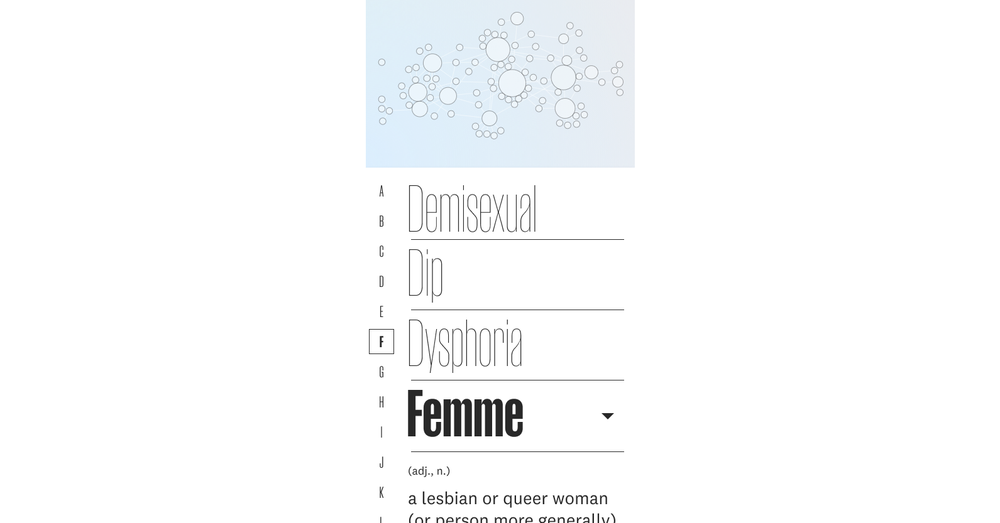
Partnering with the GNI gave VideoOut the opportunity to work with a team of PhD linguists from the LGBTQ+ community to research the origin, evolution and current usage of 100 words and phrases that range from clinical terminology, like HRT and dysphoria, to slang terms used in niche communities like drag and ballroom. We will continue to expand the data visualization, designed by Polygraph, and employGoogle Trends technology to show the popularity of search terms over time.
This tool guides journalists through the complex world of LGBTQ+ vernacular. It shows who should be credited when using words that belong to marginalized communities. Most importantly, it arms reporters with knowledge, helping them to use LGBTQ+ terminology respectfully and accurately.
The program aims to inform people who are less familiar with the LGBTQ+ community, with the hopes of warming attitudes and fostering allyship. To that end, we’ve partnered with Men’s Health magazine to help contextualize the research and data in the program. We hope to reach a new audience and model how sharing information makes the most impact when it’s done across lines of difference.
The tool will be accessible through the Men’s Health website.
Queer and trans people are not new, but increasingly people are beginning to feel safe about living authentically. According to a recent Gallup poll, “One in six [U.S.] adults in Generation Z identifies as LGBT.” At the same time, a GLAAD report found 45% of non-LGBTQ+ people in the U.S. say they’re confused by the different number of terms to describe individuals who comprise the LGBTQ+ community.
Thanks to the efforts of queer and trans people on the forefront of the liberation movement, things are better now than they have ever been — but they are still fragile. The news media can help. Journalists can reference this tool to ensure they are using language appropriately. They can also interact with members of the community in their process. For example, if there is a story written about trans rights, VideoOut believes the writer should interview trans people, particularly ones who are active in the movement for trans rights.
The LGBTQ+ Language and Media Literacy Program is more than a glossary, though at its simplest, it can function that way. It’s a way to understand the LGBTQ+ community, and hopefully, it will transform the way journalists — and all of us — write and talk about LGBTQ+ people.
How this Googler celebrates Native American Heritage Month all year
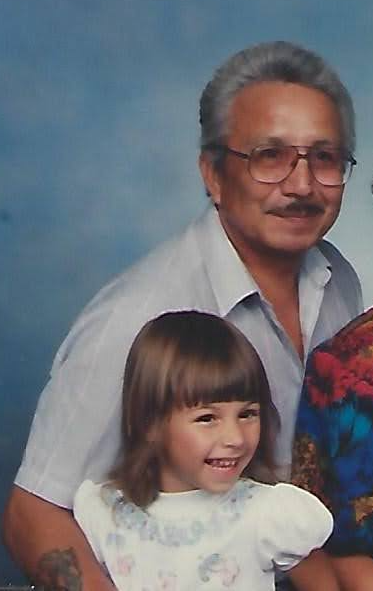
When I was growing up, my Misho (my grandfather) was the chief of our tribe (Prairie Band Potawatomi) and would often tell my brother and me stories and tales sacred to our Indigenous history. When I was in second grade, I asked my Misho to come into my class to tell his stories for show and tell. I was immensely proud of him, and grateful for the opportunity to share my culture with my classmates. But after he left, my classmates started calling me names like “Pocahontas,” and war-whooping at me on the playground. After that, I didn’t mention my tribe or Native affiliation to classmates or colleagues again until I was in my 20s.
Cheryl and her Misho
When I got pregnant, I realized I wanted to reconnect with my culture. I wanted my son to know about the powerful, strong history of the Prairie Band Potawatomi, and about his family and my Misho. I threw myself into trying to learn the language, the history and our stories again. I bought my son children’s books written by Indigenous authors, and watched every film and movie I could about Indigenous culture — even if it wasn’t about the Potawatomi.
As part of reconnecting with my heritage, I also joined Google’s Aboriginal and Indigenous Network (GAIN) to stay up to date on any native-focused events at work. I’d been a member of other employee resource groups at Google before, like Women@ and Pride@, but I wanted to find a group of other Native and Indigenous people. I was thrilled to discover GAIN and see that there were not only other Indigenous Googlers like me, but that there were enough of them to organize their own group.
During this time reconnecting to my heritage, I watched a film about the Murdered and Missing Indigenous Women (MMIW) movement. According to the United States Department of Justice’s Missing and Murdered Indigenous Persons (MMIP) Initiative, “American Indian and Alaska Native people suffer from unacceptable and disproportionately high levels of violence, which can have lasting impacts on families and communities.” In Australia and Canada, Aboriginal and First National Australian women are six times more likely to be victims of homicide than non-Native women. In the U.S., a Task Force was recently created with the purpose of working with tribal governments and developing protocols for the cases of missing and murdered Indigenous peoples, among other things. I remember feeling completely gutted after listening to the stories of Indigenous women disappearing from their Indian reservation, never to be seen again. This is particularly traumatic for many Indigenous tribes as funeral drum and burial ceremonies are critical for the spirit to move on to the afterlife, and for those of us behind to mourn.
After seeing that film, I reached out to GAIN leadership and asked what we could do to raise awareness for MMIW. The next thing I knew, we had a working group of more than a dozen people raising awareness and resources for MMIW organizations. We’ve even held 10 events with Googlers, including panels with Black and Indigenous women to discuss the intersectionality of murdered and missing women of color, began a podcast listening group, held a 5K run and hosted other fundraising and awareness events. This experience has made me feel more connected to my tribe and my culture. It’s empowered me to share more of my whole self at work — I’ve introduced colleagues to my language, for instance, and I’ve felt like I have a space to identify as Native American. I’m proud to be a member of GAIN, and appreciate how much they help to raise awareness not only about Indigenous culture but also MMIW.
There is a saying in the Indigenous community about MMIW: “When an Indigenous woman goes missing, she goes missing twice — first her body vanishes and then her story.” With help from Googlers and GAIN, and through the work of MMIW organizations and their volunteers, I hope these Indigenous women, girls and two-spirit peoples do not go missing forever. You don’t have to be a Googler to take part: You can educate yourself about MMIW, look into policies meant to address this issue, or find ways to support organizations that advocate for MMIW. These missing people are not just faces on missing posters. They’re family — and we are all connected.