Realme GT Master, lo STREPITOSO smartphone fortemente votato all’imaging tuo a prezzo FOLLE
La guida Google ai title tag è più chiara: ecco cosa cambia
L’aggiornamento della guida di Google ai tag title è più chiara e comprensibile. Leggi di più per sapere di cosa si tratta e quali sono le modifiche.
Leggi La guida Google ai title tag è più chiara: ecco cosa cambia
Realme GT Neo 2 (8+128 GB), prendilo OGGI su Amazon al MIGLIOR PREZZO web
Sensibo Air, il dispositivo di controllo remoto che rende smart il tuo condizionatore e taglia la bolletta
Google Pixel 6a+Pixel Buds A, offerta di lancio SHOCK su Amazon a soli 459€

Paghereste un canone di abbonamento per poter scaldare i sedili della vostra auto? Con BMW si può

Chi lavora con l’informatica è abituato da tempo all’idea di comperare un programma e poi pagare degli abbonamenti o dei supplementi per attivarne alcune funzioni extra. Ma da qualche tempo questo modello commerciale si è esteso anche alle automobili.
È di questi giorni la notizia che nel Regno Unito BMW ha iniziato a offrire il riscaldamento dei sedili e del volante in abbonamento. I componenti fisici del sistema di riscaldamento sono installati di serie, ma per attivarli è necessario pagare un canone mensile di 15 sterline (circa 18 euro o franchi svizzeri), più altre 10 sterline (circa 12 euro o franchi) per attivare anche il riscaldamento del volante. In alternativa si può pagare un supplemento di 200 sterline (circa 230 euro o franchi) al momento dell’acquisto. Anche il cruise control attivo, gli abbaglianti automatici e le sospensioni adattive sono installati ma attivati solo a pagamento.
Può sembrare assurdo che una casa automobilistica installi di serie dei componenti che il cliente non paga se non li attiva: in fin dei conti, questi componenti hanno un costo di fabbricazione e di installazione, per cui metterli su tutti i veicoli e poi sperare che il cliente paghi per attivarli parrebbe a prima vista un autogol commerciale. Ma nella produzione di massa capita spesso che installare i componenti su tutti gli esemplari costi meno che gestire due filiere di produzione separate, con tutti i relativi problemi di logistica, burocrazia e controllo qualità.
BMW non è l’unica marca a preinstallare hardware da sbloccare pagando un canone tramite un’app, in una sorta di App Store per automobili che chiama Connected Drive Store. Tesla, per esempio, offre da tempo vari servizi supplementari di aumento delle prestazioni che sono basati su un canone e propone anche un sistema di assistenza di guida i cui computer e sensori sono presenti in ogni esemplare venduto ma si attivano soltanto pagando un supplemento che parte da 3700 franchi e può superare i 7000; in passato ha offerto anche batterie la cui autonomia era limitata via software e poteva essere sbloccata pagando un supplemento circa 8000 dollari. E Stellantis ha annunciato a gennaio 2021 che si aspetta di ricavare circa 22 miliardi di dollari l’anno dalla vendita di software e abbonamenti sulle propri automobili entro il 2030. Anche Volkswagen, General Motors e Ford fanno previsioni analoghe. Già ora GM offre il proprio sistema di assistenza di guida su abbonamento: i primi tre anni sono gratuiti, poi si devono pagare 25 dollari al mese.
L’introduzione di questi servizi in abbonamento non è stata accolta dal pubblico con unanime entusiasmo, per dirla con garbo. L’annuncio dei sedili riscaldati a pagamento sulle BMW ha suscitato parecchie discussioni online da parte di utenti che ritengono che funzioni così basilari dovrebbero essere offerte di serie, e un sondaggio della società di marketing Cox Automotive indica che i tre quarti dei partecipanti dichiara di non essere disposta a pagare canoni mensili per le funzioni della propria auto. Kurt Opsahl, consulente legale della Electronic Frontier Foundation, ha tweetato che “Un riscaldatore di sedili bloccato tramite software è guasto, e il proprietario dell’auto dovrebbe avere il diritto di riparare i propri sedili”.
Le case automobilistiche ribattono facendo notare che questa formula consente al cliente di cambiare idea dopo l’acquisto, di provare funzioni delle quali è incerto, ed è utile per chi compra auto di seconda mano e può quindi attivare funzioni che il proprietario originale non aveva pagato.
With our ‘Functions on-demand’, customers can opt for additional functions after they purchased a car. Heated seats for example can be ordered with the car (without additional fees afterwards) or added later on depending on model and equipment through the online store.
— BMW (@BMW) July 19, 2022
Nel frattempo gli informatici non sono rimasti con le mani in mano ed è nata una fiorente comunità di hacking che sblocca le funzioni delle auto bloccate tramite software, esattamente come si fa con i programmi per computer limitati artificialmente. In alcuni casi questi sblocchi automobilistici alternativi sono a pagamento, ma la loro legalità è molto controversa: da un lato si invoca il diritto di riparare ciò che si possiede, ma dall’altro si fa notare che certe modifiche che toccano componenti essenziali del veicolo possono invalidarne l’omologazione o, peggio ancora, renderlo pericoloso per il conducente e per gli altri utenti della strada.
C’è anche un altro problema: i servizi di questo tipo, che dipendono da un server di gestione remota, sono revocabili o possono semplicemente smettere di funzionare dopo che sono stati pagati. Non è teoria: è quello che mi è capitato già nel 2020, quando stavo per acquistare un’auto elettrica della Opel ma ho scoperto che la sua app di gestione, OnStar, avrebbe smesso di funzionare a fine anno, disattivando permanentemente funzioni essenziali come il monitoraggio dello stato di avanzamento della ricarica e la chiamata automatica ai servizi di soccorso in caso di incidente.
In altre parole, le cose che compriamo, comprese le auto, non sono più realmente nostre. Ed è per questo che nascono organizzazioni e iniziative per la difesa di quei diritti digitali che sembrano così astratti e invece si rivelano profondamente concreti.
Fonti: BBC, Mashable, The Register.
Google Pixel Buds Pro, i flagship killer degli Apple AirPods Pro arrivano in Italia
Google Pixel 6a, il medio gamma SENZA COMPROMESSI arriva in Italia su Amazon
Mai più in panne con l’auto grazie all’avviatore con torcia e powerbank REGALATO da Amazon
No Privacy, No Party
Se tutta questa vicenda fosse un film probabilmente il titolo sarebbe questo… Purtroppo però non è un film né uno spot televisivo, nè tantomeno Pasquale Stanzione (presidente dell’Autorità garante per la protezione dei dati personali dal 2020) assomiglia al bel George Clooney del famosissimo slogan originale. Le vicende di cronaca sono note da diversi giorni. […]
The post No Privacy, No Party appeared first on Studio Cappello Blog.
Amazon, shopping a sorpresa: 5 prodotti di cui non potrai più fare a meno
Antenna TV da interni e il segnale del digitale terrestre torna a VOLARE
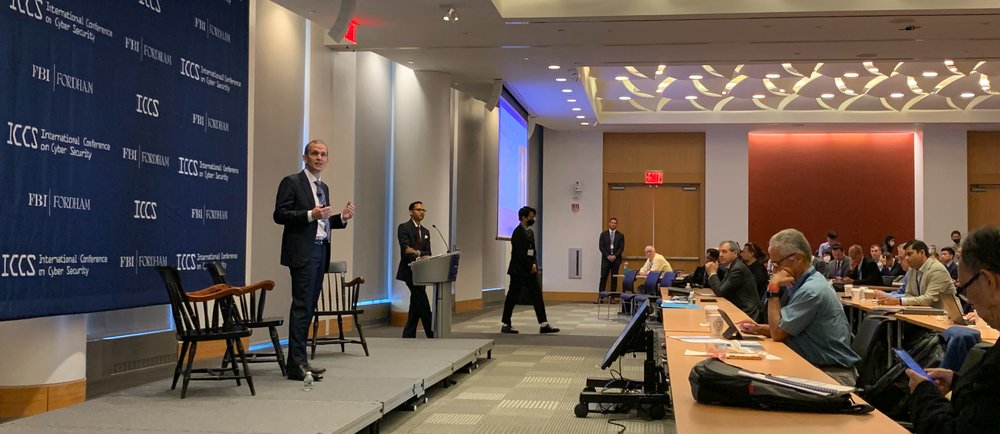
Transparency in the shadowy world of cyberattacks
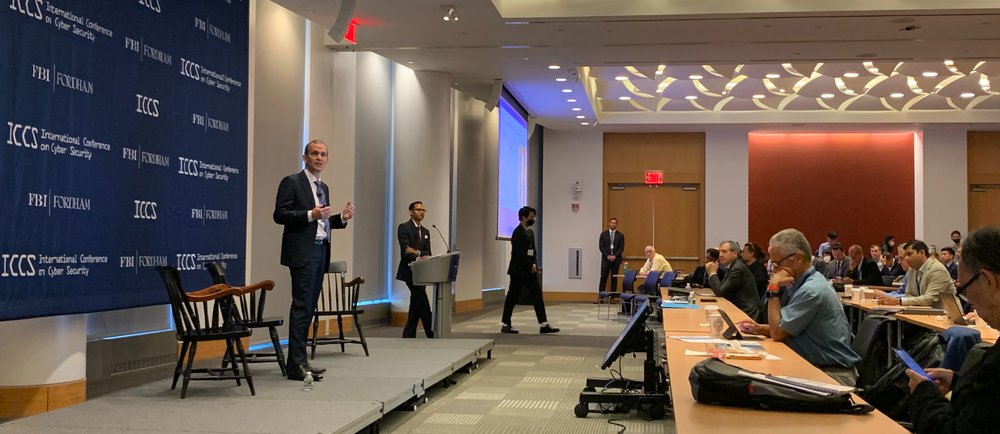
The following is adapted from remarks delivered by Kent Walker, President of Global Affairs, at the International Conference on Cyber Security 2022on July 19, 2022.
Thank you for the chance to be a part of this important conversation about cybersecurity.
At Google we’re proud to say that we keep more people safe online than anyone else in the world. But that wasn’t always the case.
So let me start by telling you a story about how we got it wrong, and two things we all can learn from that experience. My dad always told me that it was cheapest to learn from the other guy’s mistake. So let me tell you about one of ours.
As some of you may recall, in late 2009, Google was the victim of a major cybersecurity attack, code named Operation Aurora.
We’ve long had some of the most attacked websites in the world. But Aurora was something special.
Aurora was an attack attributed to the Chinese government, a significant security incident that resulted in the theft of intellectual property from Google.
But Aurora wasn’t just any security incident. And it wasn’t just against Google.
As part of our investigation we discovered that several other high-profile companies were similarly targeted. Other companies either hadn’t discovered the attacks, or hadn’t wanted to disclose them. When I was a federal prosecutor specializing in technology crimes, one of the biggest challenges we encountered was getting companies to go public or even come to the authorities.
So we felt it was important to talk about the attack–to tell the world about its impact, the methods of the hackers, and the sectors at risk.
We worked with the US Government to share threat vectors and vulnerabilities.
And we didn’t stop there: After Aurora, we launched an entire team called Project Zero to find and promptly disclose previously undiscovered, zero-day vulnerabilities in our own and other companies’ software, raising the security bar for everyone.
And today, Google’s Threat Analysis Group, or TAG, works to counter a range of persistent threats from government-backed attackers to commercial surveillance vendors to criminal operators. TAG does regular public disclosures of foreign state actor attacks, including doing the difficult work of attribution.
Without giving too much away, I can also tell you that, working with our team at VirusTotal (now called Chronicle), we have some projects in the works that will help us raise awareness of vulnerabilities from around the world. And we’re very excited about our upcoming partnership with Mandiant, one of the world’s premier security teams, to broaden and deepen this work.
So I’d say that the first lasting lesson from the Aurora attack is the need to weave openness and transparency into the fabric of a cybersecurity response. It’s not always comfortable work–we’ve had to have some tough conversations with partners and with our own teams along the way–but it’s necessary to move the industry forward and ensure bugs are getting fixed fast, before they can be exploited in the wild.
In the ensuing years, we’ve developed principles to ensure we can share learnings about vulnerabilities, cyber attacks (such as attacks on elections), and disinformation campaigns responsibly, transparently, and helpfully with the public, with our partners, and with law enforcement.
And the US government has in turn stood up its own process to facilitate more information sharing with industry partners in order to expedite patches that safeguard us all.
But the value of transparency isn’t the only reason I bring up the Aurora story.
Aurora not only taught us the need to embrace transparency, it also taught us a second, and even more important lesson: What works and what doesn’t when it comes to security architecture.
It’s possible to over-index on info sharing alone.
Focusing on the fundamentals of software security is in some ways more important to raise all of us above the level of insecurity we see today.
We curate and use threat intelligence to protect billions of users–and have been doing so for some time. But you need more than intelligence, and you need more than security products–you need secure products.
Security has to be built in, not just bolted on.
Aurora showed us that we (and many in the industry) were doing cybersecurity wrong.
Security back then was often “crunchy on the outside, chewy in the middle.” Great for candy bars, not so great for preventing attacks. We were building high walls to keep bad actors out, but if they got past those walls, they had wide internal access.
The attack helped us recognize that our approach needed to change–that we needed to double down on security by design.
We needed a future-oriented network, one that reflected the openness, flexibility, and interoperability of the internet, and the way people and organizations were already increasingly working.
In short, we knew that we had to redesign security for the Cloud.
So we launched an internal initiative called BeyondCorp, which pioneered the concept of zero trust and defense in depth and allowed every employee to work from untrusted networks without the use of a VPN. Today, organizations around the world are taking this same approach, shifting access controls from the network perimeter to the individual and the data.
If you fast forward to today’s hybrid-cloud environment, zero trust is a must.
At the core of zero trust is the idea that security doesn’t have a defined border. It travels with the user and the data. For example, as the Administration pushes for multi-factor authentication for government systems, we’re automatically enrolling users in two-step verification to confirm it’s really them with a tap on their phone when they sign into our products.
Practically, this means that employees can work from anywhere in the world, accessing the most sensitive internal services and data over the internet, without sacrificing security. It also means that if an attacker does happen to break through defenses, they don’t get carte-blanche to access internal data and services.
The most impactful thing a company, organization, or government can do to defend against cyber-attacks is to upgrade their legacy architecture.
Is it always easy? No, but when you consider that legacy architecture with its millions upon millions of lines of proprietary code, has thousands of bugs, each one a potential vulnerability, it’s worth it.
And beyond replacing existing plumbing, we need to be thinking about the next challenges, and deploying the latest tools.
In the same way the world is racing to upgrade encryption to deal with the threat of quantum decryption, we need to be investing in cutting-edge technologies that will help us keep ahead of increasingly sophisticated threats.
The good news is that cyber-security tools are evolving quickly, from artificial intelligence capabilities, to advanced cryptography, to quantum computing.
If today we talk about security by design, what comes next is security through innovation–security designed with AI and machine learning in mind–designed to counter bad actors using new tools to evade filters, break into encrypted communications, and generate customized phishing emails.
We’ve got some of the best AI work in the business, and we’re testing new approaches and using some of our leading-edge AI tools to detect malware and phishing at scale. AI allows us to see more threats faster, while reducing human error. AI, graph mining, and predictive analytics can dramatically improve our ability to identify and block phishing, malware, abusive apps, and code from malicious websites.
We look forward to sharing more of our findings so that organizations and governments can prepare. After all, this is no time for locking down learnings or successful techniques. Bad actors are not just on the lookout for ways to exploit your unknown vulnerabilities. As with Hafnium and SolarWinds, they are looking for the weak link in the security chain, letting them springboard from one attack to another. A vulnerability at one organization can do damage to entire industries and infrastructures.
Cybersecurity is a team sport, and we all need to get better together, building bridges not just within the security communities, but also between the national security community and academia and Silicon Valley.
Having started with one story, let me leave you with another—cybersecurity and Russia’s war in Ukraine.
A lot has changed in our approach since Aurora. And perhaps no example illustrates that shift more clearly than our response to the war in Ukraine.
Russia’s invasion sparked, not just a military and economic war, but also a cyber war and an information war. In recent months, we have witnessed a growing number of threat actors– state actors and criminal networks–using the war as a lure in phishing and malware campaigns, embarking on espionage, and attempting to sow disinformation.
But this time, we were ready with a modern infrastructure and a process for monitoring and responding to threats as they happened.
We’ve sent thousands of warnings to users targeted by foreign-state actors–a practice we pioneered after Aurora. And in the vast majority of cases, we’ve blocked the attacks.
We launched Project Shield, bringing not just journalists, but vulnerable websites in Ukraine under Google’s security umbrella against DDOS attacks. While you can DDOS small sites, it turns out that it’s pretty tough to DDOS Google. We disrupted phishing campaigns from Ghostwriter, an actor attributed to Belarus. And we helped the Ukrainian government modernize its cyber infrastructure, helping fortify it against attack.
We are proud that we were the first company to receive the Ukrainian government’s special peace prize in recognition of these efforts.
But the work is far from done.
Even now, we’re seeing reports that the Kremlin could be planning to ratchet up attacks and coordinated disinformation campaigns across Eastern Europe and beyond in an attempt to divide and destabilize Western support for Ukraine. In fact, just today, our TAG team published a new report on activity from a threat group linked to Russia’s Federal Security Service, the FSB, and threat actors using phishing emails to target government and defense officials, politicians, NGOs, think tanks, and journalists.
And, looking beyond Russia and Ukraine, we see rising threats from Iran, China, and North Korea.
Google is a proud American company, committed to the defense of democracy and the safety and security of people around the world.
And we believe cybersecurity is one of the most important issues we face.
It’s why we invested $10 billion over the next five years to strengthen cybersecurity, including expanding zero-trust programs, helping secure the software supply chain, and enhancing open-source security.
It’s why we’ve just created a new division–Google Public Sector–focused on supporting work with the US government. And it’s why we are always open to new partnerships and projects with the public sector.
In recent years, we’ve worked with the FBI’s Foreign Influence Taskforce to identify and counter align foreign influence operations targeting the U.S. We’ve worked with the NSA’s Cybersecurity Collaboration Center. And we’ve joined the Joint Cyber Defense Collaborative to help protect critical infrastructure and improve collective responses to incidents on a national scale.
Getting our whole digital economy on the front foot is essential. And there’s some encouraging progress. For example, we were glad to see last week’s Cyber Safety Review Board report deeply investigating the log4j vulnerability and making important recommendations about how to improve the ecosystem.
We need more of that.
Looking ahead, our collective ability to prevent cyber attacks will come, not only from transparency, but from a commitment to shoring up our defenses — moving away from legacy technology, modernizing infrastructure, and investing in cutting-edge tools to spot and stop tomorrow’s challenges.
We can’t beat tomorrow’s threats with yesterday’s tools. We need collective action to shore up our digital defenses. But by drawing on America’s collective abilities and advantages, we can achieve a higher level of collective security for all of us.
Thank you.