<div>B2B Marketing News: Rising B2B MarTech Spend, 10th Annual Data Never Sleeps Report, & LinkedIn Tops B2B Ad Spending</div>
US B2B MarTech Spend Set for ~15% Rise This Year
In 2022 marketing technology spending is set to top $20 billion for the first time, with the B2B-specific segment growing by some 14.6 percent — slightly higher than overall combined B2C and B2B spending, according to newly-released survey data of interest to B2B marketers. MarketingCharts
LinkedIn will capture nearly 25% of US B2B ad spending by 2024
By the end of 2022 B2B display advertising revenues on the LinkedIn professional social media platform are expected to account for 21 percent of U.S. B2B digital ad spend, a share that will rise to nearly 50 percent by 2024, according to recently-released U.S. B2B digital ad spending forecast data. Insider Intelligence
TikTok Increases Length Of Video Descriptions
Short-form video creation firm TikTok has rolled out a change that will see a jump from the previous maximum of 300 characters to describe content on the platform to 2,200, a move that has given marketers using the growing platform greatly-expanded room for search engine optimization (SEO) strategy. Search Engine Journal
Instagram Stories under 60 seconds are no longer broken up into clips
Meta-owned Instagram has begun to roll out a change that will no longer require Instagram Story content less than a minute in length to be broken into 15-second segments, instead allowing a single uninterrupted user experience — a change that will likely affect how B2B marketers use the feature for short-form content. TechCrunch
At Dreamforce, a new data platform and enhancements to Slack
Salesforce’ Dreamforce event saw the announcement of coming changes to its popular Slack video conferencing program, that will bring organized resource curation in a new Slack Canvas feature and multi-person screen sharing in Slack Huddles, along with a new real-time customer data platform, 360 Audiences. MarTech
Carbon Emerges As Key Ad Performance Indicator: Clients/Agencies Split On Cost
When it comes to carbon emissions generated by digital advertising campaigns, 87 percent of U.S. and U.K. advertiser and agency executives have said that the digital ad industry has a responsibility to lower carbon emissions, while a new carbon performance indicator (CPI) metric has begun to take shape, according to newly-released survey data of interest to digital marketers. MediaPost
Why is accessibility an afterthought for marketers?
With some 26 percent of the U.S. population living with a disability, a scant 36 percent of firms possess a top-down commitment to building accessible digital experiences, according to recently-published Forrester survey data, and Campaign US shows how Apple, Accenture, and IBM have worked to make inroads in digital accessibility. Campaign US
These Are the Areas Marketers Think Will Be Most Important Over the Next 2 Years
37 percent of marketers have said that a shift to decision making that is more data-driven will be their most important marketing area over the next two years, with 35 percent pointing to improved customer experiences and managing those journeys — two of several statistics of interest contained in newly-released survey data. MarketingCharts
How Patagonia’s shakeup challenges marketers to act on sustainability
With some 94 percent of consumers saying that they are seeking to lead more sustainable lifestyles, Patagonia’s recent move shifting 98 percent of its non-voting stock to environmental nonprofit Holdfast Collective, marketers are seeing new opportunities that cross the divide between B2C and B2B, and Marketing Dive takes a look. Marketing Dive
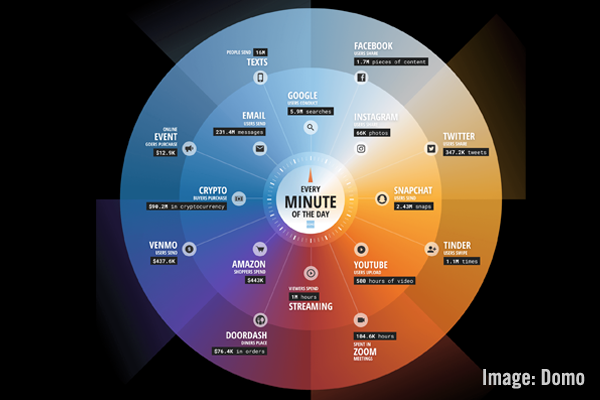
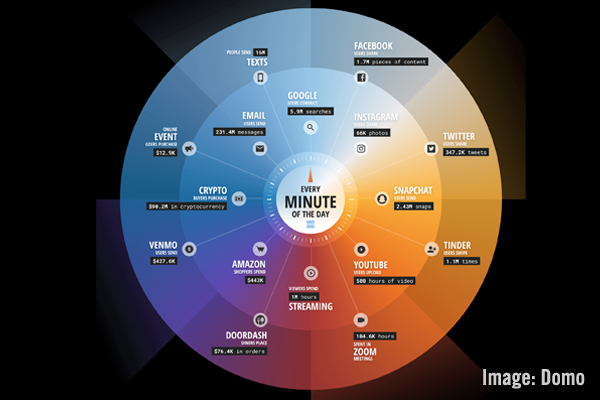
What Happens on the Internet Every Minute (2022 Version) [Infographic]
What happens during each digital minute online in 2022 is the focus of the tenth-annual “Data Never Sleeps” report in infographic form, showing Internet population and social platform use growth and other insights of interest to digital marketers, including some 97 zetabytes of data that is expected to be generated in 2022, Domo recently announced. Social Media Today
ON THE LIGHTER SIDE:
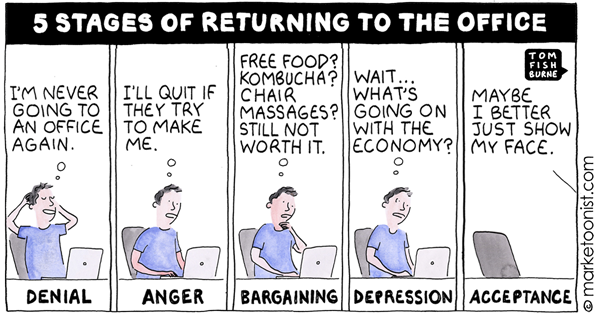
A lighthearted look at “Returning to the Office” by Marketoonist Tom Fishburne — Marketoonist
Vanessa Fox On The Early Days Of Google Search Console, Webmaster Tools & Sitemaps — Search Engine Roundtable
A history of ARM, part 1: Building the first chip — Ars Technica
TOPRANK MARKETING & CLIENTS IN THE NEWS:
- Joshua Nite — This Week in Marketing: Almost Famous — LinkedIn (client)
- Lee Odden / TopRank Marketing — Procurement and Partnership — Marketoonist
- TopRank Marketing — Who sees your B2B content? — TalkCMO
Have you found your own top B2B marketing news item this week that we haven’t yet mentioned? If so, please don’t hesitate to drop us a line in the comments below.
We thank you for joining us for this week’s TopRank Marketing B2B marketing news, and hope you will return again next Friday for another array of the most up-to-date and pertinent B2B and digital marketing industry news. In the meantime, you can follow us on our LinkedIn page, or at @toprank on Twitter for even more timely daily news.
The post B2B Marketing News: Rising B2B MarTech Spend, 10th Annual Data Never Sleeps Report, & LinkedIn Tops B2B Ad Spending appeared first on B2B Marketing Blog – TopRank®.
Windows 11: salvataggio automatico degli screenshot
Con la build 2511 di Windows 11 nel Dev Channel viene aggiunto il salvataggio automatico degli screenshot fatti con lo strumento di cattura.
Google Search On – tutte le novità
Con il nuovo aggiornamento della traduzione Lens, ora il testo tradotto viene sovrapposto in modo realistico alle immagini sottostanti.
Outlook: nuova versione in distribuzione per Windows 11
Microsoft ha avviato la distribuzione della nuova versione dell’ applicazione di Outlook per gli scritti al programma Office Insider.
Leggi Outlook: nuova versione in distribuzione per Windows 11
Android: scoperte 16 app che rubano dati bancari
Gli esperti di Trend Micro hanno trovato sul Play Store 16 app che possono prendere il controllo di Android e rubare dati bancari.
Siti Web: troppo codice di terze parti e basse performance
Quali sono le cattive pratiche che oggi rallentano maggiormente i siti Web? Le indicazioni del Web Almanac 2022 di HTTP Archive
Leggi Siti Web: troppo codice di terze parti e basse performance

Podcast RSI – WhatsApp da aggiornare; intelligenze artificiali scatenate, fra Star Wars, K-Pop e truffatori
È disponibile subito il podcast di oggi de Il Disinformatico della Radiotelevisione Svizzera, scritto, montato e condotto dal sottoscritto: lo trovate presso www.rsi.ch/ildisinformatico (link diretto) e qui sotto.
Le puntate del Disinformatico sono ascoltabili anche tramite feed RSS, iTunes, Google Podcasts e Spotify.
Buon ascolto, e se vi interessano i testi e i link alle fonti di questa puntata, sono qui sotto.
—
- Aggiornate subito WhatsApp per chiudere due falle critiche
- Intelligenza artificiale per il riconoscimento di voci in ambienti rumorosi: Whisper
- Darth Vader diventa immortale. O perlomeno lo diventa la sua voce
- Il truffator truffato: intelligenza artificiale contro stupidità naturale
- DALL-E diventa libero e gratuito: immagini sintetiche per tutti
<div>iPhone 14: migliora dove serviva. È l’iPhone per tutti? La recensione</div>
Proton Drive: implementata la piena end-to-end encryption
Il team di coder Proton ha lanciato il suo nuovo servizio di storage dei file sul cloud chiamato Proton Drive
Leggi Proton Drive: implementata la piena end-to-end encryption
Wolfi: la distro Linux per la Software Supply Chain Security
Wolfi: la distribuzione Linux container-focused dedicata alla Software Supply Chain Security
Leggi Wolfi: la distro Linux per la Software Supply Chain Security

Bite-size skills training for Brits short on time
Digital skills are a key part of many jobs and are crucial for helping small businesses grow. But with the hustle of daily life, many of us struggle to find the time to learn valuable new skills that could help with landing a new job, earning more money or growing a business.
That’s why we’ve asked for advice from four people who’ve done this before: presenter and former footballer Ian Wright, entrepreneur and Dragon’s Den investor Steven Bartlett, finance professional turned YouTuber Patricia Bright, and founder of notonthehighstreet.co.uk Holly Tucker. Based on their experiences with switching careers or starting a business by learning a new skill, they’ve helped us create Skills to Go, a free, bitesize digital skills training programme.

You can complete the short training sessions, which range from five to 20 minutes, as and when you have time — while commuting, over a coffee break or in between appointments. Our Skills to Go site suggests relevant topics — including CV writing, changing careers and growing a business online — based on how much time you have to spare.
We’ve built this programme in response to new data from YouGov that reveals that lack of time is the number one barrier stopping people from learning skills that could take their careers and businesses to the next level. And it’s a very real need: in the UK, more than 90% of people are online, yet fewer than half of businesses have a website. Businesses struggle to recruit people with digital skills; the digital skills gap accounts for 30% of unfilled vacancies, and costs the UK economy £63 billion per year.
Our new Skills to Go campaign is just one of the ways that we’re working to help address the nation’s skills shortage. Since launching our first digital skills training programme in Leeds in 2015, we’ve visited more than 500 locations up and down the country, and have provided digital skills training to more than 800,000 people in the UK. We offer individuals and business owners opportunities to, for example, take part in one-to-one mentoring sessions or learn about digital marketing to help them advance their careers or boost their businesses. This year, we’re visiting more than 30 locations, such as Newport and Cambridgeshire, to help people learn new skills and get Britain growing.
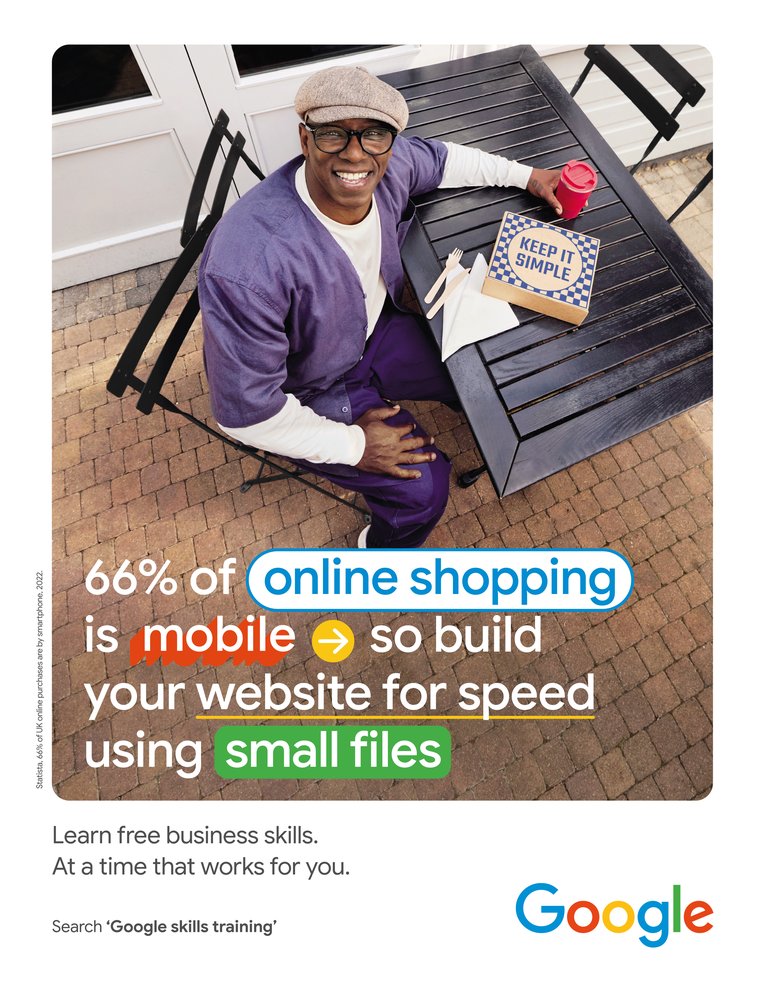
Of course, we can’t do this alone. Earlier this year, alongside a number of top UK employers including the BBC, BT Group, Deloitte, John Lewis Partnership and NatWest, we announced our Employer Consortium, which recognises Google Career Certificates when recruiting for much-needed tech roles, providing an accessible path for Brits into high-growth, well-paid tech jobs.
Everyone should have the opportunity to gain digital skills regardless of their location, race, age, gender or education level. That’s why we’re supporting Good Things Foundation’s work with 1,500 community organisations across the UK, which supports up to 25,000 people from underrepresented communities to get online and learn essential digital skills.
These are all part of our efforts to make it easier than ever for you to gain new skills, wherever you’re at in your career. So the next time you have a spare five minutes, search ‘Google Skills Training’ to learn from business experts like Stephen, Holly and Patricia and boost your business or career.

Intelligenza artificiale per il riconoscimento di voci in ambienti rumorosi: Whisper

Il riconoscimento vocale oggigiorno funziona piuttosto bene quando la voce è scandita chiaramente e non c’è rumore di sottofondo, ma fallisce miseramente se chi parla si mangia un po’ le parole, ha un accento molto marcato oppure si trova in un ambiente rumoroso. Se poi si tratta di una voce che canta, accompagnata e magari coperta da tanti strumenti, non c’è niente da fare.
Ma pochi giorni fa la società OpenAI, già nota per altri prodotti di intelligenza artificiale di cui ho parlato in questo blog, come DALL-E per la generazione di immagini, ha rilasciato Whisper, che è un software di intelligenza artificiale capace di superare queste limitazioni, diventando abile quanto una persona nel decifrare le parole di una conversazione anche in contesti rumorosi.
Per esempio, Whisper è in grado di riconoscere le parole pronunciate in varie lingue, dette a grandissima velocità e registrate con bassa qualità, cantate in una canzone K-Pop o dette con un forte accento, come negli esempi che trovate sul sito di Whisper.
L’azienda ha addestrato Whisper alimentandolo con 680.000 ore di audio abbinato alle trascrizioni corrispondenti in 98 lingue differenti. Oltre a riconoscere il parlato in condizioni difficili, è anche in grado di fornirne una traduzione in inglese abbastanza dignitosa.
Whisper è stato rilasciato come prodotto open source, libero e gratuito, per cui chiunque lo può scaricare e installare liberamente e lo può anche modificare. Richiede un computer piuttosto potente, e i suoi creatori avvisano che il modo in cui Whisper analizza il parlato può a volte fargli “riconoscere” parole che in realtà non ci sono, per cui è sempre necessaria una revisione attenta da parte di una persona. Ma lo sviluppo esplosivo di questi software di intelligenza artificiale dovrebbe far riflettere molto attentamente chiunque faccia trascrizioni per lavoro. Forse dovrà cominciare a pensare a come riorganizzare il proprio lavoro per diventare revisore esperto anziché dattilografo.
Ci sono anche implicazioni più profonde e rivoluzionarie, che è necessario considerare ogni volta che un procedimento che prima era oneroso diventa semplice e automatizzato: se diventa possibile trascrivere enormi quantità di parlato a costo praticamente nullo e il costo dei supporti di registrazione è altrettanto trascurabile, diventa possibile per esempio automatizzare la sorveglianza di massa.
Diventa possibile registrare l’audio di tutte le telefonate di un intero paese e trascriverle tutte integralmente, per poi cercare eventuali nomi o parole di interesse o per riconoscere le singole voci, anche a distanza di tempo. C’è chi sospetta che alcuni governi abbiano già questo tipo di capacità, ma con Whisper potrebbe averle anche uno staterello relativamente squattrinato.
Pensando ad applicazioni meno controverse, invece, un riconoscimento vocale automatizzato con le capacità di Whisper permetterebbe di trasformare in testo, a costi ben più abbordabili di quelli attuali, gli enormi archivi dei programmi radiofonici e televisivi storici e renderli accessibili anche a chi ha difficoltà di udito oltre che ai linguisti, agli storici o a chiunque abbia semplicemente il desiderio di ritrovare una battuta o una dichiarazione fatta da qualcuno magari qualche decennio fa.
E queste sono solo le possibilità che vengono in mente adesso; chissà quali verranno inventate quando questa tecnologia sarà diventata normale.
Fonti aggiuntive: Ars Technica, Slashdot.