Apple Watch Series 7: il must have del momento non ha rivali con lo sconto di 69€
HONOR Band 6: a questo prezzo incredibile sta ANDANDO A RUBA
OnePlus Nord 2 CE Lite ancora al MINIMO STORICO su Amazon (200€)
Con questo trasmettitore FM la tua vecchia auto diventa come Supercar
Chiamate vocali, musica in streaming e mille altre funzioni disponibili sulla tua vecchia utilitaria con questo incredibile trasmettitore.
Leggi Con questo trasmettitore FM la tua vecchia auto diventa come Supercar
Lenovo Tab P11: il tablet perfetto per lo studio e lo streaming prezzo OK su Amazon
Su Amazon trovi il Lenovo Tab P11, progettato per il lavoro, il gioco e lo studio nelle nuove modalità ibride, in super offerta.
Leggi Lenovo Tab P11: il tablet perfetto per lo studio e lo streaming prezzo OK su Amazon
Adobe annuncia: acquisirà Figma per 20 miliardi di dollari
Keliweb, nuove offerte web hosting per WordPress
La piattaforma di web hosting Keliweb ha annunciato tre nuove offerte a tempo limitato: c’è anche WordPress.
WordPress prepara il supporto a SQLite
WordPress potrebbe presto supportare il database SQLite come soluzione per i siti Web di piccole dimensioni
Adelante: Progress for Latino communities across the U.S.
Ver abajo versión en español
I grew up in Argentina and came to this country 20 years ago. Like many fellow Latinos, I was looking for better opportunities — in pursuit of my American dream — while holding on to and sharing my culture, language and identity. It’s the reason why my daughter’s first language was Spanish, and why I still drink mate and enjoy empanadas salteñas whenever I can. I think that’s what Hispanic Heritage Month is all about: honoring our culture, celebrating our contributions and thinking about our future.
This Hispanic Heritage Month, I am proud to share that Google has been hard at work for the past year to open new paths for future generations of Latinos. In 2021, we made a $15 million commitment to economic equity for Latinos. Today, we are providing an update on our work.
Earlier this summer, we announced the first 50 recipients of the Google for Startups Latino Founders Fund at the UNIDOSUS National Conference. Each of the recipients received $100,000 in non-dilutive funding and $100,000 in Google Cloud credits to help their startups grow. The founders are now working hand-in-hand with Googlers, getting deep mentorship from technical and business experts, and building community with fellow founders.
Over the last two years, through Google.org grantees like the Hispanic Federation and Grow with Google partners like the Hispanic Association of Colleges and Universities (HACU), we’ve provided digital skills to more than 35,000 Latinos across the U.S. and Puerto Rico for the growing number of jobs that require them. According to the Hispanic Federation, those that received digital skills training through their programs are seeing an average salary increase of $13,000 — that is real, meaningful change. As part of our commitment and ongoing partnership with the U.S. Hispanic Chamber of Commerce, we are hosting the Grow with Google Latino-Owned Business Summit live from their national conference in Phoenix, which will also be live streamed on YouTube.
We are proud of our progress and the impact of our commitments as we continue to execute against them. We are deeply committed to continue this work, engaging, investing and honoring the Latino community during this Hispanic Heritage Month and all year long. Stay tuned for more to come.
Adelante: Progreso para las comunidades Latinas en los Estados Unidos
Crecí en Argentina y vine a este país hace 20 años. Al igual que muchos otros Latinos, estaba buscando mejores oportunidades – en la búsqueda de mi sueño americano – mientras mantenía y compartía mi cultura, idioma e identidad. Es la razón por la cual el idioma materno de mi hija fue el español, y por eso todavía tomo mate y disfruto de las empanadas salteñas siempre que puedo. Creo que de eso se trata el Mes de la Herencia Hispana: rendirle homenaje a nuestra cultura, celebrar nuestras contribuciones y pensar en nuestro futuro.
Este Mes de la Herencia Hispana, me enorgullece compartir que Google ha trabajado arduamente durante el último año para abrirle nuevos caminos a las futuras generaciones de Latinos. En 2021, hicimos un compromiso de $15 millones para la equidad económica de los Latinos. Hoy, estamos proporcionando una actualización de nuestro trabajo.
A principios de este verano, anunciamos los primeros 50 beneficiarios del Fondo de Fundadores Latinos de Google para Startups en la Conferencia Nacional UNIDOSUS. Cada uno de los destinatarios recibió $100,000 en financiamiento no dilutivo y $100,000 en créditos de Google Cloud para apoyar el crecimiento de sus startups. Los fundadores ahora trabajan mano a mano con los Googlers, obteniendo una tutoría profunda de expertos técnicos y comerciales y desarrollo comunitario con otros fundadores.
En los últimos dos años, a través de los beneficiarios de Google.org como la organización Hispanic Federation y los socios de Grow with Google como la Asociación Hispana de Colegios y Universidades (HACU), hemos brindado habilidades digitales a más de 35,000 Latinos en los Estados Unidos y Puerto Rico para el creciente número de trabajos que las requieren.Según la organización Hispanic Federation, aquellos que recibieron capacitación digital por medio de sus programas están experimentando un aumento salarial de $13,000; ese es un cambio real y significativo. Como parte de nuestro compromiso y asociación continua con la Cámara de Comercio Hispana de Estados Unidos, estamos organizando la cumbre de empresas de propiedad Latina, Grow with Google Latino-Owned Business Summit, en vivo desde su conferencia nacional en Phoenix, que también se transmitirá en vivo en YouTube.
Estamos orgullosos de nuestro progreso y del impacto de nuestros compromisos a medida que continuamos ejecutandolos. Estamos profundamente comprometidos a continuar con este trabajo, motivando, invirtiendo y honrando a la comunidad Latina durante este Mes de la Herencia Hispana y durante todo el año. ¡Estén atentos qué hay más por venir.
Our commitment on using AI to accelerate progress on global development goals
I joined Google earlier this year to lead a new function: Technology & Society. Our aim is to help connect research, people and ideas across Google to shape the future of our technology innovations and their impact on society for the better. A key area of focus is AI, a field I have studied and immersed myself in over the years. I recently met with a team at the Google AI Center in Ghana that is using advanced technology to address an ancient problem: detecting locust outbreaks which threaten food security and livelihoods for millions of people. And in India and Bangladesh, our Crisis Response teams are using our machine-learning-based forecasting to provide over 360 million people with alerts about upcoming floods.
Efforts like these make me optimistic about how AI can contribute to solving societal problems. They also reinforce how high the stakes are for people everywhere, especially as global forces threaten the progress we’ve made on health, prosperity and environmental issues.
AI for the Global Goals
As the United Nations General Assembly begins, the world will come together to discuss issues of global importance, including assessing progress towards the Sustainable Development Goals (SDGs) which provide a roadmap on economic growth, social inclusion and environmental protection. While it’s clear the global community has made significant strides in meeting the 17 interlinked goals since their adoption by 193 countries, challenges persist in every country. Currently, no country is on track to meet all the goals by 2030.
From the launch of the SDGs in 2015, Google has believed in their importance and looked for ways to support progress. We know that advanced technology, such as AI, can be a powerful tool in advancing these goals. Research that I co-led before joining Google found AI could contribute to progress on all the SDGs — a finding confirmed by the UN. In 2018 Google launched AI for Social Good, focusing applied research and grantmaking efforts on some of the most intractable issues. But we know more needs to be done.
So today we’re expanding our efforts with AI for the Global Goals, which will bring together research, technology and funding to accelerate progress on the SDGs. This commitment will include $25 million to support NGOs and social enterprises working with AI to accelerate progress towards these goals. Based on what we’ve learned so far, we believe that with the AI capabilities and financial support we will provide, grantees can cut in half the time or cost to achieve their goals. In addition to funding, where appropriate, we’ll provide Google.org Fellowships, where teams of Google employees work alongside organizations for up to six months. Importantly, projects will be open-sourced so other organizations can build on the work. All of Google’s work and contributions will be guided by our Responsible AI Principles.
Since 2018, we’ve been focusing applied research and grantmaking efforts on some of the most intractable issues with over 50 organizations in countries ranging from Japan to Kenya to Brazil. We’ve supported organizations making progress on emissions monitoring, antimicrobial image analysis and mental health for LGBTQ+ youth. Working side-by-side with these organizations has shown us the creative ways a thriving ecosystem of companies, nonprofits and universities can use AI. We think we can use the same model to help countries make progress on the SDGs.
A critical time for global progress
COVID-19, global conflict, and climate change have set us back. Fewer people have the opportunity to move out of poverty, inequitable access to healthcare and education continues, gender inequality persists, and environmental threats pose immediate and long-term risks. We know that AI and other advanced technology can help tackle these setbacks. For example, in a significant development for biology and human health, DeepMind used AI to predict 200 million protein structures. They open-sourced the structures in partnership with EMBL-EBI, giving over 500,000 biologists tools to accelerate work on drug discovery, treatment and therapies — thereby making it possible to tackle many of the world’s neglected diseases.
As someone who has spent the last several decades working at the nexus of technology and societal good, it matters deeply that progress here will benefit communities everywhere. No single organization alone will develop and deploy all the solutions we’ll need; we all need to do our part. We’re looking forward to continuing to partner with experts around the world and learning what we can accomplish together.
Samsung, la smart TV dei tuoi sogni a prezzo PAZZO (-46% su Amazon)
Aspirabriciole portatile: in auto e in casa è il MASSIMO, senza fili
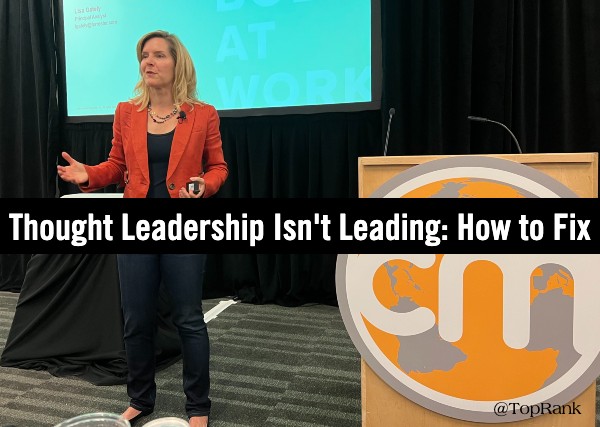
Forrester: Most Thought Leadership Isn’t Thoughtful or Leading: We Need to Fix That!
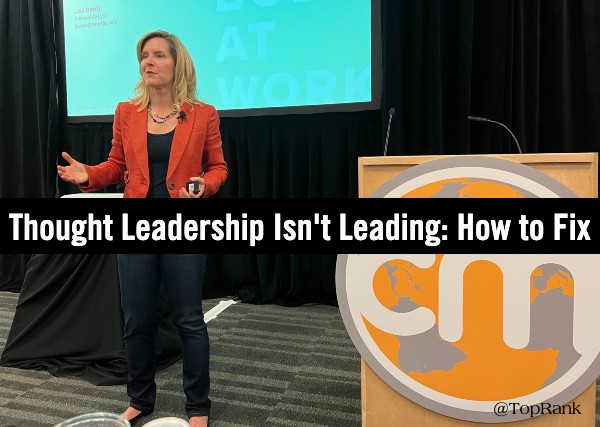
Thought Leadership is a bit part of many B2B brand strategies but Lisa Gately @LisaGately, Principle Analyst at Forrester says most thought leadership isn’t thoughtful or leading, so we need to fix that.
What is thought leadership personified? Many think of Dr Fauci. There are many examples of trusted experts we rely on for information, direction and inspiration.
Lisa says most B2B content isn’t serving buyers or business goals. Technology buyer research from Forrester shows buyers are oversaturated with content, yet they are seeking trusted subject matter expertise backed by data to help them make decisions
Here’s a thought leadership:definitionL Thought leadership is an intentional exercise of knowledge skills and expertise to increase awareness elevate perception and drive preference related to key issues that audiences care about.
Lisa says most thought leadership misses the mark. It requires investment and sustained efforts to stake out big idea conversations related to a brand value proposition, core competencies, and competitive differentiation.
So what are the issues with most thought leadership?
- Sameness – fails to establish a unique point of view and attract audiences
- No prioritization – Shows lack of disciplined process or resources, with unrealistic expectations
- Self serving – Delivers inwardly focused content with low value to audiences
4 Facets of thought leadership success and the path forward
Assessing thought leadership requires a deliberate, outside-in process that examines market and audience factors before looking inward at the organizations requirements.
1. Market Context – Understand current market requirements, dynamics and competitive activity, an outside-in approach. Conduct detailed market research to understand how themes are emerging and resonating with key non-buyer influencers, and assess themes for longevity and competitive ownership. How do you do that?
- Market interest – focused research, monitor social, PR and other channels
- Theme durability – Find external SMEs motivated to partner. Filed test themes with SMEs and influencers. Develop content plans with a 12+ month view
- Competitive presence – Assess competitors content. Monitor patent filings, R&D activity and research. Partner with the competitive intelligence team.
2. Audience Insights – Focus on buyer requirements, pain points and information gaps. Thought leadership requires organizations to step into the shoes of buyers and customers and understand their most pressing concerns and interests. Again, how?
- Theme relevance – Conduct primary research with buyers, field test with customer advisory boards and partner networks. Map themes to prioritized buyer personas
- Buying process and support – Map themes to brand attribute objectives and buyer’s journey phase. Test ideas with sales and partners.
- Customer evidence – Identify accounts for advocacy efforts and prioritize customer advocates on the theme.
3. Corporate Alignment – Look inward and align with business and market strategy. Is it believable that this is who you are as a business. Considerations:
- Theme expertise – identify experts who can ideate and innovate Consider co-opting external experts.
- Corporate alignment – Assess themes with leaders from marketing, sales, and product. Understand alignment to corporate goals and test themes with employees.
- Executive support – Identify an executive sponsor
4. Organizational Readiness – Candidly assess the organizations expectations capabilities and resources. Great thought leadership often fails because the organization is unprepared to execute, whether through budget, realistic expectations or resources and competencies. Considerations:
- Time to value – Set expectations on long term multiyear investment needed.
- Budget – Align expectations with resources. Use benchmark data to build a case for resources
- Team – Plan and identify the core and extended team.
What are the benefits of a properly implemented thought leadership program? Marketplace momentum and organization value. Thought Leadership allows for stronger competitive differentiation and access to audiences ready to engage because they’ve experienced value, leading to greater brand impact and improved results.
Lisa wrapped up her presentation with these action items:
- Define – Evaluate your organization’s current thought leadership efforts for credibility and raise awareness
- Apply – Form a cross-functional thought leadership team
- Accelerate – Engage with influencer community to co-opt thought leadership activities. Tightly integrate thought leadership programs with other programs.
The post Forrester: Most Thought Leadership Isn’t Thoughtful or Leading: We Need to Fix That! appeared first on B2B Marketing Blog – TopRank®.