LockBit: il ransomware si installa con un nuovo trucco
I ricercatori di NCC Group segnalano che il ransomware LockBit è attualmente in uso in una nuova ingegnosa campagna che sfrutta il phishing.
Leggi LockBit: il ransomware si installa con un nuovo trucco
Windows 10: Microsoft implementa Edge WebView2
Microsoft ha annunciato la disponibilità della tecnologia WebView2 Runtime per Windows 10, il download può avvenire dal sito ufficiale.
Leggi Windows 10: Microsoft implementa Edge WebView2
Honor 50 5G: bello, potente e votato all’imaging a prezzo IRRISORIO
Milano. Siam 1838. Nuovo corso GAME DEVELOPER – Unreal Engine
Dal 12 settembre 2022 – 140 ore di formazioneIl Game Developer è la figura in grado di gestire l’intero processodi sviluppo di un videogioco.L’obiettivo del percorso è quello di fornire…
L’articolo Milano. Siam 1838. Nuovo corso GAME DEVELOPER – Unreal Engine scritto da Paolo Brambilla proviene da Assodigitale.
Questo mini PC è così ESPLOSIVO che vi chiederete come fa tanta potenza a entrare in uno spazio così minuscolo
Caro bollette addio: da oggi l’energia elettrica la produci da te con questo kit fotovoltaico
MacBook Pro 14″ M1 Pro (16GB RAM, 512GB SSD) sconto 350€
Raid liquido elettrico, 3 Confezioni da 36ml (10€) e la zanzara fa kaputt
Router D-Link con 4 antenne e Wi-Fi 6 ad un prezzo BOMBA su Amazon
Router D-Link con 4 antenne direzionabili e supporto per assistente vocale ad un prezzo incredibile su Amazon
Leggi Router D-Link con 4 antenne e Wi-Fi 6 ad un prezzo BOMBA su Amazon
Masterizzatore DVD CD Esterno per PC e Mac: solo 19€
Multi-Cavo Di Ricarica Retrattile: idea GENIALE a soli 4€

One KUAM: Building bridges for live news in the Pacific
Editor’s note from Ludovic Blecher, Head of Google News Initiative Innovation: The GNI Innovation Challengeprogram is designed to stimulate forward-thinking ideas for the news industry. The story below by Marie Calvo Monge, CEO, KUAM/Pacific Telestations LLC, is part of an innovator seriessharing inspiring stories and lessons from funded projects.
With a population of 50,000 spread across an archipelago of tiny islands, the Commonwealth of the Northern Mariana Islands (CNMI) in the Pacific has often been too remote for other Guam based broadcast news crews to carry live coverage.
Previously, my organization’s coverage of significant events in the CNMI was handled in one of two ways: we could wait for a tape-delayed file from the island chain’s only local news operation, which was a lengthy process that taxed our workflow and internet bandwidth capabilities. Or we could send a two-person crew to gather the story, which they would edit and publish upon return to Guam, which was costly with airfare, transportation and lodging costing approximately $2,000 per trip.
But that has all changed thanks to the Google News Initiative Innovation Challenge funding the One KUAM project, which has enhanced and expanded the quality content our media group produces for and about our Pacific region.
Now, our regional correspondent operates efficiently as a “one-person band” and can send live HD quality video via their mobile device. We’re able to report live from multiple locations on broadcast and streaming, and we’ve even been able to feature live reports in HD from Tinian and Rota, the smaller islands of the archipelago, with a combined population of 5,000. We’re the first broadcast news station on Guam to do this.
These improvements have helped us achieve our goal of expanding our regional coverage and sharing the stories of Indigenous Pacific Islanders with more people. Our expanded coverage has brought more information to the homes of our viewers in the CNMI and also helped show how current issues – from climate change and COVID-19, to military training and cultural revitalization – impact the region as a whole.

The increase in news coverage from the CNMI has also opened up a new advertiser revenue stream, with local businesses and agencies in the region now advertising on our stations to appeal to our expanded audience. Prior to rolling out the One KUAM project, we had no advertisers from that market. Since March 2022, we’ve drawn in nearly $15,000 in advertising revenue from CNMI advertisers.
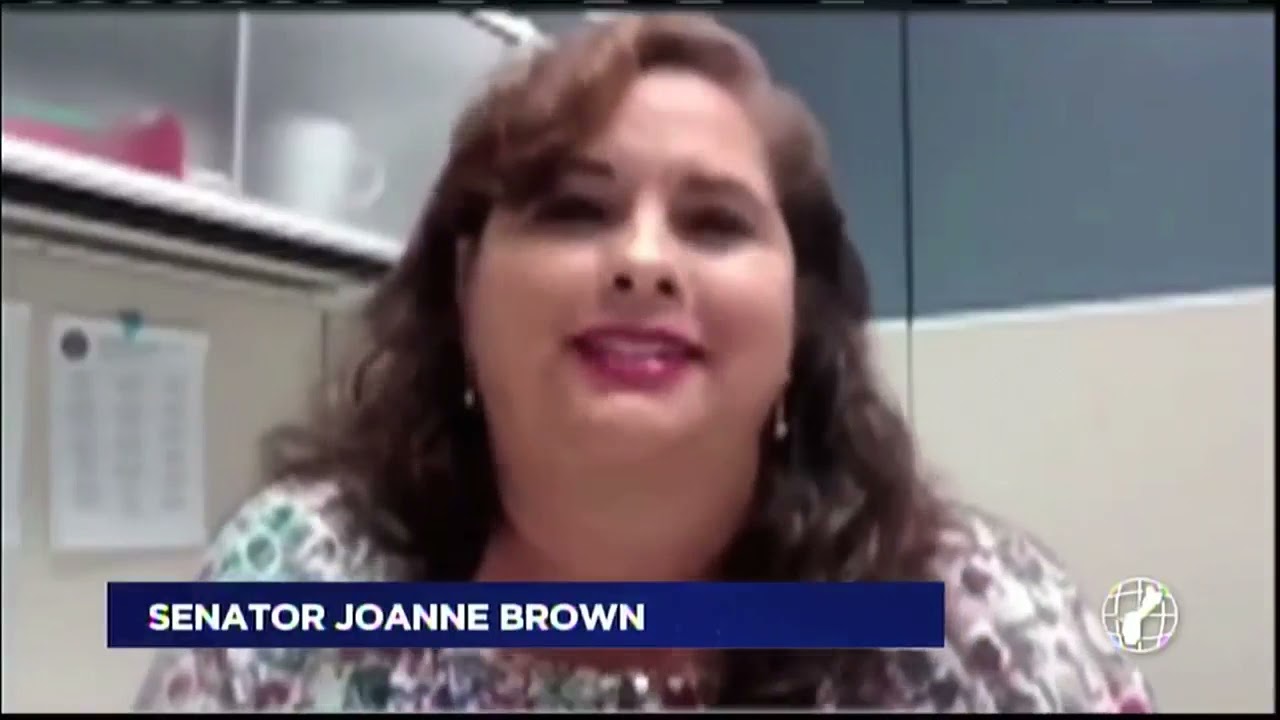
KUAM gained a noteworthy increase in viewers from our expansion to regional interactive coverage once we began reporting on events in the CNMI last fall. That market has been underserved in news coverage since the start of the pandemic, and our videos published to YouTube have generated an average of 10 times more views than usual from the CNMI. Our Facebook and Instagram posts have been viewed an average of seven times more than our normal traffic benchmarks, and videos on those platforms have been viewed and shared three times more than comparable coverage in our domestic market. Our overall growth of frequent users has increased 5.7%, with the overwhelming majority of those being from the CNMI.
We’ve made the leap from analog to fully digital operations and streamlined the workflow of our journalists. They now can gather and produce news with a more flexible multimedia skill set, integrating functions such as creating their own graphics, cross posting social and web content, and launching live reports for broadcast and live stream in HD directly from their mobile devices. Our new way of connecting to multiple internet connections has transformed the way we incorporate live reports into our productions while the teams can still use their existing cameras and mobile devices.
Our mission now not only includes hyperlocal journalism on Guam and national headlines from the mainland, but also regional stories from across the Western Pacific.
KUAM is Guam’s first commercial broadcast and news media group and has been broadcasting on television and radio for more than 65 years. We’ve also ushered in many innovations in our history. We were the first media group locally to garner national network affiliations (NBC and CBS) and the first to broadcast international sporting and news events locally via satellite. We were also the first to produce local broadcast news on Guam.
The GNI Innovation Challenge support we received has helped us continue that legacy of firsts. We’ve evolved our operation from local and broadcast-centric to the first and only one in the region that’s accessible to a global audience on multiple platforms and devices in a quality HD format.
Helping local journalism in the UK thrive online
Local news is at the heart of all communities – even in big cities. It’s often said London is a ‘city of villages’ and as someone who has grown up, studied and worked in different parts of the capital, I’ve always learnt a lot about my various neighbourhoods through the lens of the local newspaper. From the ‘Surrey Comet’ in Kingston, to the ‘Ham & High’ in Haringey, local journalism shines a light on issues as diverse as local government, culture and important new developments.
Today, thanks to the internet, readers can choose from an incredible array of news sources online. Anyone with a passion can set up a specialist blog and find a following. This is great news for creators and readers like me with a niche interest in anything from arts to architecture. But the online environment and changing audience habits have disrupted traditional business models. Today, local papers and news sites have to work harder than ever to capture – and monetise – audiences’ attention with news they’ll enjoy.
One way we support local publishers to meet this challenge is by driving online audiences to their journalism via Google News and Search. In 2021, we sent more than 2.4 billion organic clicks to local news publications in the UK from global users on Google Search and News. A 2019 study by Deloitte in Europe valued each visit between €0.04-0.06 —which equates to more than £84 million in value going to British local news publications from Google traffic alone.
We’ve been working to give local news greater prominence on Google Search and News in recent years, and our latest changes to Google News will help readers discover local content even more easily.
Local publishers often tell us they want to strengthen their digital skills and build on their expertise to further cut through to online audiences. That’s why with the Google News Initiative we are focused on helping local journalism to thrive. We partner with local publishers on new products like Google News Showcase, or the digital portal we developed with the NMA to protect revenue from public notices. On partnerships that support experimentation and innovation in new sustainable business models, and on training to upskill journalists with digital tools and techniques. Our training includes digital verification to tackle misinformation, data journalism and tools that strengthen investigative journalism.
Many local publishers across the UK are already innovating with new digital strategies to pull in new readers and revenues. Today we’re announcing three new programmes that build on this long standing work, and there is more to come.
Supporting local publishers with subscriptions
To be successful in the long term, publishers must have a sustainable digital revenue model. As part of our Digital Growth Programme, we partnered with the NMA and FT Strategies to help 12 local publishers develop the expertise they need to build a blueprint for the future. Local partners like Barnsley Chronicle, Rotherham Advertiser, and Iliffe Media took part, and it’s been great to hear the response:
Jeremy Spooner at the Maidenhead Advertiser said: “The extremely high level of expertise delivered by the FT Strategies team, coupled with their access to insights on how to grow digital subscription revenue would not have been accessible by Baylis Media Ltd, had it not been funded by Google News Initiative. The programme has given the team the confidence to accelerate its Digital Subscription Strategy with a clear methodology now in place and a challenge goal set. Without doubt the programme has provided a significant boost to the Digital Revenue Strategy.”
Today, we’re announcing that we’re expanding the programme for another 12 months in response to feedback from the publishers involved.
A new nationwide training partnership with the National Union of Journalists
As a former journalist, I can begin to understand the pressure to stay across a range of new tools. The team I lead has trained 16,500 UK journalists and journalism students since 2015, with a focus on providing workshops outside of London.
Our new partnership with the National Union of Journalists will build on these efforts, and focus on helping local journalists across the UK and Ireland develop both their journalism and leadership capabilities. They’ll deliver 13 in-person workshops nationwide, and 30 virtual digital skills workshops to ensure the training is fully accessible to all.
Michelle Stanistreet, NUJ general secretary said: “This partnership is an opportunity to improve the digital skills of our members, in particular by using technology to verify the authenticity and accuracy of images, videos and reports on social media and elsewhere online – an essential skill for a modern and ethical journalist. The training will also help mid-career members to progress towards leadership roles, with a particular emphasis on groups under-represented within the industry’s management – women, black and minority ethic, disabled and working class journalists.”
Partnering with PA Media on digital skills
Ensuring training programmes reach groups that are underrepresented in journalism is important if UK newsrooms are to better reflect the communities they serve. That’s why we’re proud to sponsor the NCTJ’s Journalism Diversity Fund and to have helped support 200 aspiring journalists from diverse backgrounds through their training and into local newsrooms such as WalesOnline, Barnsley Chronicle and Newcastle World.
Today we’re launching a new partnership with PA Media to offer more targeted support for underrepresented groups across two key areas: digital skills and misinformation. First, we’re sponsoring 25 places on PA Media’s four-week summer school for students from underrepresented backgrounds, with a particular focus on reaching students in Westminster and Camden – as well as a series of training festivals for 500 journalists. Secondly, we’re supporting PA Media to develop a new training curriculum to help journalists tackle misinformation as part of their daily news gathering processes.
Alongside these partnerships, we provide direct funding to support innovation in local news via the GNI innovation Challenge for Europe, our YouTube Creator Programme for Independent Journalists and our newly announced Global News Equity Fund.
We’re excited to see the impact these news projects have and to keep working with our local partners to help ensure a vibrant future for local British journalism.