
Lenovo ThinkVision M15, MAI a un PREZZO così BASSO (-22%)

Ti bastano 16€ per una tastiera wireless come questa di TRUST: affarone

Mouse wireless HP ricaricabile SUPER SCONTATO del 55% su Amazon

Telecamera esterno senza fili, la più economica ma qualità ASSICURATA

Debian 12.0 “Bookworm” potrebbe arrivare a metà del 2023

La smartband più richiesta è Huawei: non te la perdere in GRAN SCONTO

Xiaomi 12 Series è qui ed è pronta a conquistare il panorama Android
Extending Care Studio with a new healthcare partnership
Today at the HIMSS Conference in Orlando, Florida, we’re introducing a collaboration between Google Health and MEDITECH to jointly work on an integrated clinical solution. This partnership aims to combine our data harmonization, search and summarization capabilities from Google Health’s Care Studio product suite and integrate them into their electronic health record (EHR), MEDITECH Expanse.
Health information is complex — it’s often siloed or stored across different information systems and in different formats. As a result, it can be challenging for clinicians to find the information they need all in one place and quickly make sense of it to care for their patients.
Google Health’s Care Studio technology is designed to make it easier for clinicians to find critical patient information when they need it most. Built to adhere to strict privacy controls, Care Studio works alongside electronic health records (EHRs) to enhance existing workflows. Since we launched Care Studio, we’ve continued to hone our search capabilities for medical data, notes and scanned documents, and are using AI to help make sense of clinical information. We recently introduced our Conditions feature which summarizes a patient’s conditions and uses natural language processing to link to related information — like medications or lab results — so clinicians have the context they need to understand and assess a condition.
We’re proud of what we built with Care Studio thus far, and we know that partnering is fundamental to improving health outcomes at scale — no one product or company can overcome these obstacles alone.
Collaboration with the healthcare industry
MEDITECH has made significant commitments to advancing interoperability — a commitment we share. To best support clinicians, we need to fit into the way they work now. Collaborations with EHRs, like MEDITECH, will help us seamlessly integrate Google Health tools into existing clinical workflows, so we can help remove friction for clinicians.
With MEDITECH, we’re working on a deeply integrated solution to bring some of our data harmonization, search and summarization capabilities to their web-based EHR, MEDITECH Expanse. Using Google Health’s tools, MEDITECH will form a longitudinal health data layer, bringing together data from different sources into a standard format and offering clinicians a full view of patient records. And with Google Health’s search functionality embedded into their EHR, clinicians can find salient information faster for a more frictionless experience, and the intelligent summarization can highlight critical information directly in the Expanse workflow. This will help advance healthcare data interoperability, building on MEDITECH’s vision for a more connected ecosystem. Our collaboration expands on the partnership between MEDITECH and Google Cloud and will utilize Google Cloud’s infrastructure.
The healthcare industry is at an inflection point when it comes to interoperability. As COVID accelerated the need for interoperable systems, more organizations were eager to embrace Fast Healthcare Interoperability Resources (FHIR) as the standard format for healthcare data. We’re using FHIR to support our data harmonization, yet there is more to be done before FHIR is widely adopted and systems can effectively exchange information. We’re hopeful that collaborative approaches, much like what we’re working on with MEDITECH, will help create more interoperable solutions and facilitate an open ecosystem of data interoperability that benefits everyone.
Upholding our privacy commitments
As we deepen our partnerships across the healthcare industry, privacy and security remain our top priorities. As with all our Google Health Care Studio partners, Google does not own or ever sell patient data, and patient data cannot be used for advertising. Our tools are designed to adhere to industry best practices and regulations, including HIPAA. Patient data is encrypted and isolated in a controlled access environment, separate from other Google customer data and consumer data.
Industry collaboration is a critical path to overcoming pervasive data fragmentation challenges. While we’re in the early stages with MEDITECH, this new collaboration marks an exciting step forward in creating a more open healthcare ecosystem and improving health outcomes.
Join us at HIMSS at 3:00 p.m. EST today, in room WF3 to learn more.

Mai più senza il tuo mini HUB USB, subito ad 8€ su Amazon

Assemblare un PC: gli errori da evitare


MSI Optix MPG321QRF-QD: un monitor per giocatori

Criptovalute: la legge dell’UE al voto
The journey to build a news product is far from linear
Editor’s note from Ludovic Blecher, Head of Google News Initiative Innovation: The GNI Innovation Challengeprogram, is designed to stimulate forward-thinking ideas for the news industry. The story below by Dina Aboughazala, founder of the journalism marketplace Egab, is part of an innovator seriessharing inspiring stories and lessons from funded projects. The third Middle East, Turkey and Africa Innovation Challengeis now open for applications.
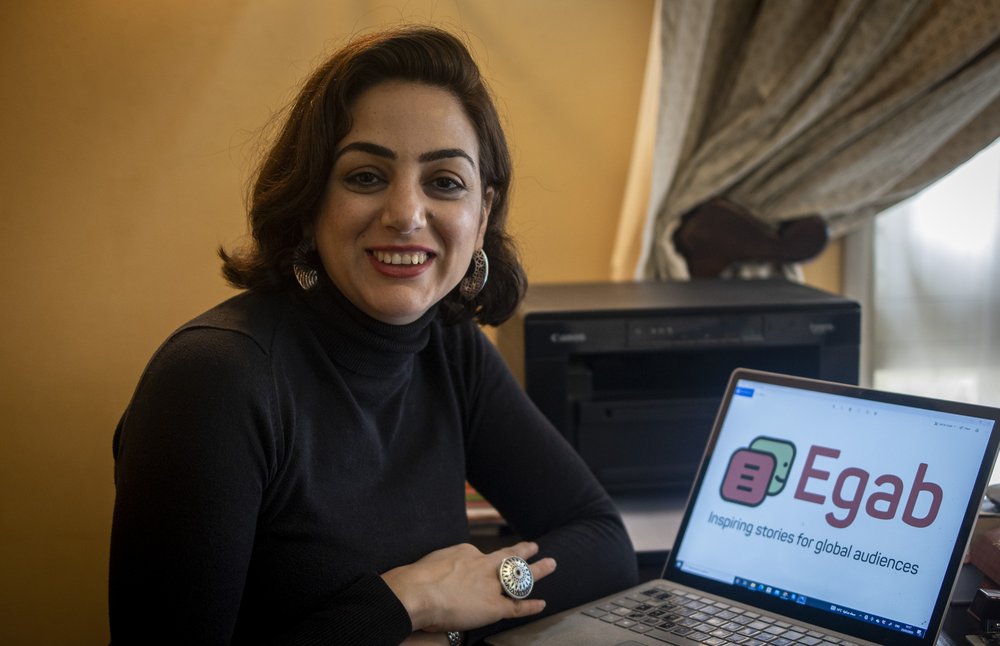
When I spoke to people in my home country of Egypt, they were actively avoiding the news. Many young people in their 20s and 30s wanted to leave because it was full of problems. As someone with an editorial, journalistic background, I was annoyed and felt moved to act. I wanted to show people that there were solutions, we just don’t hear about them.
I joined a startup accelerator to learn about business and tech for news, and explained my idea. One of the mentors stopped me and said, “So you are fixing a problem for yourself?”
At this point I realized I was basing my idea on what I wanted rather than what the users or the audience needed, a common mistake that many journalists who want to start their own media ventures fall into.
It was then that I remembered the dozens of messages I received on Twitter and LinkedIn from young aspiring journalists about how to join the BBC – my former employer – or how to get published there.
I finally understood that, instead of launching yet another media outlet, Egab could be a platform to support young and budding journalists to pitch solutions journalism stories and get published in international media. At the same time, the platform would act as a marketplace for international media editors to be able to select from the pitches, giving them access to unique content.
But one main question remained: Would people pay to have this need fulfilled? I was able to find out the answer and more, thanks to support from the Google News Initiative, as a recipient of the second Middle East, Turkey and Africa Innovation Challenge.
From the start, I envisioned Egab to be a for-profit business. I’ve read about several promising media initiatives that ceased to exist because of the lack of funding. I didn’t want that to happen to Egab if I were to solely rely on grants, which are neither sustainable nor guaranteed.
So, I went on to answer two more questions: Are my targeted users already paying money or exerting a lot of effort to fulfill this need? And what’s the difference between what’s available now and my offering?
At this point I wasn’t ready to build Egab’s platform. The last thing I needed was to put a lot of money into building something that may not be used. So we started with a Minimum Viable Product (MVP) to test the concept in the simplest form.

We started with a landing page and a Google Workspace account. This is how Egab has been operating for a year and a half. We receive journalists’ pitches via email; we organize Egab’s team’s work processes using Google Drive. We review pitches and prepare feedback, and when a pitch is ready, we circulate it to editors via email.
Through this very simple process, we were able to gather a lot of useful information. We were able to track our processes against our sales and adjust to become more efficient. We were able to understand our users better – both journalists and media outlets – and understand their needs, as well as the challenges to our model.
The process has not been a straight line. I’ve learned building a product is all about experimenting; testing, gathering data, adjusting and repeating. We now have close to 120 journalists from across 24 countries in the Middle East and Africa using our platform and 13 media outlets using our service. The number of media outlets grows by one new media outlet every month but it’s not all about the numbers.
The quality of the stories we facilitate is very important to us, and we are glad that many of our stories are being well received. As an example, one of our stories from Libya published on The National News was the first story to be added from the country to the Solution Journalism Network’s story tracker.The story was also featured in SJN’s best stories of 2021.
A year and a half into this experience, we are still testing and experimenting like day one, and I don’t think we will ever stop.
An anthology of insights, for a more inclusive internet
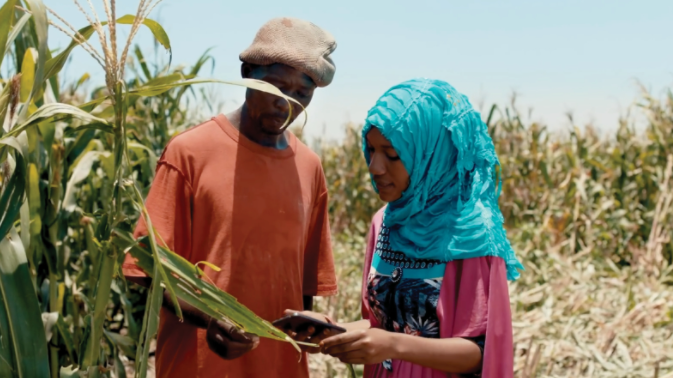
Between 2015 and 2022, nearly 3 billion people worldwide got online for the first time — and changed the internet in the process. These novice internet users experience the web differently from those who came online before. Almost all of them connect on their phones, they speak over 7,000 languages, and they often prefer to interact with the internet using video or their voice. For Google, understanding their needs has helped us build better products — for novice users, and for everyone else.
In 2015, we launched our Next Billion Users (NBU) initiative, with a focus on making technology helpful, relevant and inclusive for people new to the internet. Since then, our NBU teams have used deep research and product development to improve our existing products (creating offline versions of Maps, for example) and create new ones, like Files (a storage cleaning and offline file sharing app). With Android (Go edition), we’ve adapted our mobile operating system for entry-level devices, and we built Google Pay to advance financial inclusion in India.
Today, building a better internet is more important than ever. We’re committed to playing our part in nurturing a more inclusive global digital economy. But we also want to share the lessons we’ve learned over the past seven years to support the wider industry— which is why we’re releasing an anthology of our key NBU insights to date.
This compilation reflects one of the core principles of our NBU work: when we build with the next billion users, we make progress towards an internet that works better for everyone. In the anthology, our insights are listed across 26 topics from A to Z in the Roman alphabet (A for access, F for financial inclusion and Y for youth, and so on).
We’re launching our anthology this month to celebrate the invention of the World Wide Web, one of the most significant technologies in modern history. To mark the occasion, we want to highlight three topics in particular — Women, Ecosystem and Building Inclusive Products — or WEB.
Women
Women make up the majority of the next billion users, and it will take a sustained, coordinated effort from the technology industry, governments and nonprofit organizations to make the internet more gender-equitable. Our research has found that women often face higher barriers to internet access than men, as well as threats to their safety and privacy online. Yet a rising female population could have a profoundly positive impact on the internet economy — as studies in Africa have shown. Together with our partners, we run global programs like Women Techmakers, which provide visibility, community, and resources for women in technology.
Ecosystem
No one organization can build a more inclusive internet alone. In all our NBU efforts, we’ve prioritized sharing our research openly and forming partnerships with others who are working towards the same goals. One example is our work with India’s Jio to create the JioPhone Next, an affordable, made-for-India smartphone that’s enabling millions of people across the country to experience the internet. We also welcome and support the growing role that governments are playing in developing nationwide and regional strategies to increase digital inclusion. That includes Google’s own partnerships with governments to advance Africa’s digital transformation.
Building inclusive products
We’ve learned that to build better products, we have to challenge our own intuition and assumptions as technology-makers. That starts with deep, immersive research — spending time in communities to understand the environment, concerns and aspirations of the people we’re building for. We see the impact we want when we build with new users, not just for them, as with the brainstorming and design process for Motorcycle Mode in Maps. And we’ve learned that there’s no such thing as a typical user. For example, many families in NBU countries share their mobile devices with one another — yet device privacy and account settings are still mostly built on the principle of “one person, one account”.

Our work with novice internet users goes to the heart of Google’s founding mission — to make the world’s information universally accessible — and together we will shape a more equitable, inclusive internet. We designed this anthology of NBU insights to inspire others to join us in building for everyone, everywhere.