
Podcast RSI – Deepfake di guerra, truffe a tema Ucraina, nuove tecniche rubapassword e pronuncia di GIF
È disponibile subito il podcast di oggi de Il Disinformatico della Radiotelevisione Svizzera, scritto, montato e condotto dal sottoscritto: lo trovate presso www.rsi.ch/ildisinformatico (link diretto) e qui sotto.
I podcast del Disinformatico sono ascoltabili anche tramite feed RSS, iTunes, Google Podcasts e Spotify.
Buon ascolto, e se vi interessano i testi e i link alle fonti di questa puntata, sono qui sotto.
- La guerra dei deepfake
- Attenzione alle false proposte di aiutare l’Ucraina. Anche a quelle sexy
- Insolita tecnica rubapassword: il BITB o “Browser in the Browser”
- Addio a Stephen Wilhite, papà dei GIF
Come iniziare a lavorare nel ramo del web marketing?
Il “web marketing”, inteso come grande mondo dalle ricche opportunità, è cambiato e non è come agli esordi. Oggi è una sorta di mondo parallelo a quello reale dove esistono…
L’articolo Come iniziare a lavorare nel ramo del web marketing? scritto da YOUR_DIGITAL_VOICE! proviene da Assodigitale.

Caricabatterie rapido 20W a 5 euro!

Digitale Terrestre DVB-T2 a meno di 20 euro!

Miglior decoder DVB-T2 con risoluzione FULL HD in offerta su Amazon

Mouse wireless ricaricabile e SILENZIOSO: 12€ e diventa tuo

Lampadine intelligenti MULTICOLOR: 2 al prezzo di 1 con coupon

PRENDI TEMPO PER PENSARE
di Cristina Melchiorri Hai mai sentito qualcuno dire “Vorrei fare quello che chiedi, ma non ho tempo”? In realtà sta dicendo: “Non mi interessa quello che proponi… Non mi so organizzare…”…
L’articolo PRENDI TEMPO PER PENSARE scritto da Paolo Brambilla proviene da Assodigitale.

Tablet senza limiti: Android e 5G a prezzo da STRAPAZZO

Lampada SMART da comodino: pazzesca e UNICA su Amazon
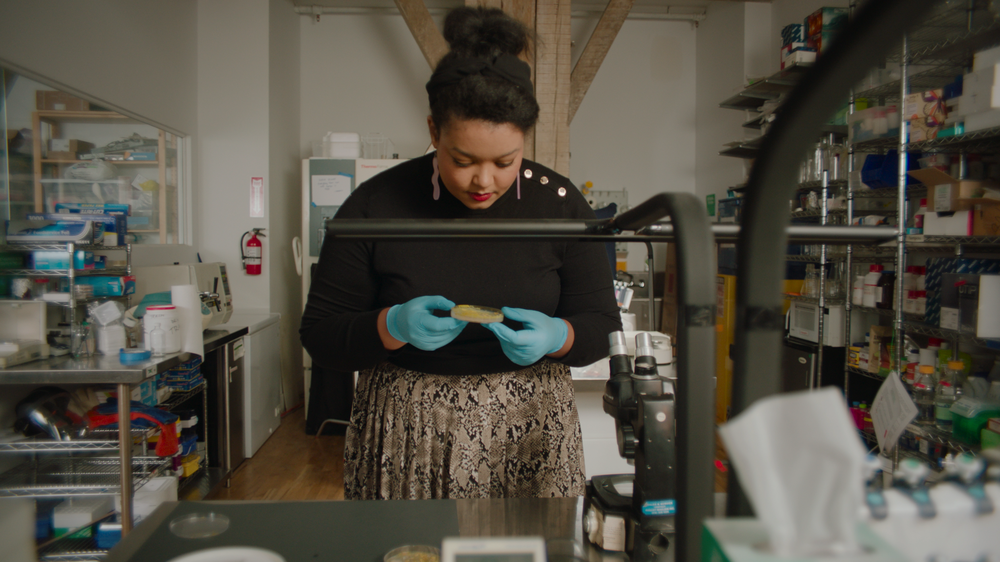
Meet 3 Black women pushing for inclusivity in tech
“When you think about the technologies we use all the time and how few of them are designed to consider an identity like mine — Black people or women — it makes us question how much technology is made for us, with our needs in mind, to protect us, to consider us,” says Ashley Jane Lewis.
Ashley is a creative technologist who focuses on finding ways that science and tech can better impact underrepresented communities. She’s featured in Women Techmakers Black Women in Tech initiative, which highlights Black women’s leadership in the technology industry.
We recently took time to talk to three of these leaders to learn more about them and their work: Meet Ashley Jane Lewis, Chanelle Hardy and A.M. Darke.
Ashley Jane Lewis, creative technologist
“Creative technologist” is perhaps a role you’ve never heard of, but an example of Ashley’s work may better explain what she does: Currently, Ashley is using slime mold to raise awareness of society’s structural inequities. That’s right, slime mold. “Slime mold has the capacity to be multicellular in its structure and distributes nourishment equitably,” Ashley explains. “It’s a natural example of how mutual aid positively impacts communities.”
Through her project, called Slime Tech Lab, Ashley brings actual terrariums of slime mold to schools and organizations that typically don’t have access to science and technology resources. Using a Raspberry Pi, Ashley measures and tracks the slime mold’s movement, and the result is part art piece, part science experiment, part social metaphor. How the slime mold acts can teach us about community cooperation, Ashley explains. “I’ve found that non-Black communities I bring this to have an increase in empathy, and I think it could lead to more thoughtful conversations around topics like immigration and borders.”
A huge part of Ashley’s workshop centers the goal of offering the Black community science and tech skills coupled with creative speculations on the future through storytelling. “If you live in an environment with no visibility of the way out of an oppressive structure, you have to use your imagination,” she says. “Imagination builds resilience and paints a future you can walk toward as a Black person.”
Chanelle Hardy, head of civil and human rights at Google
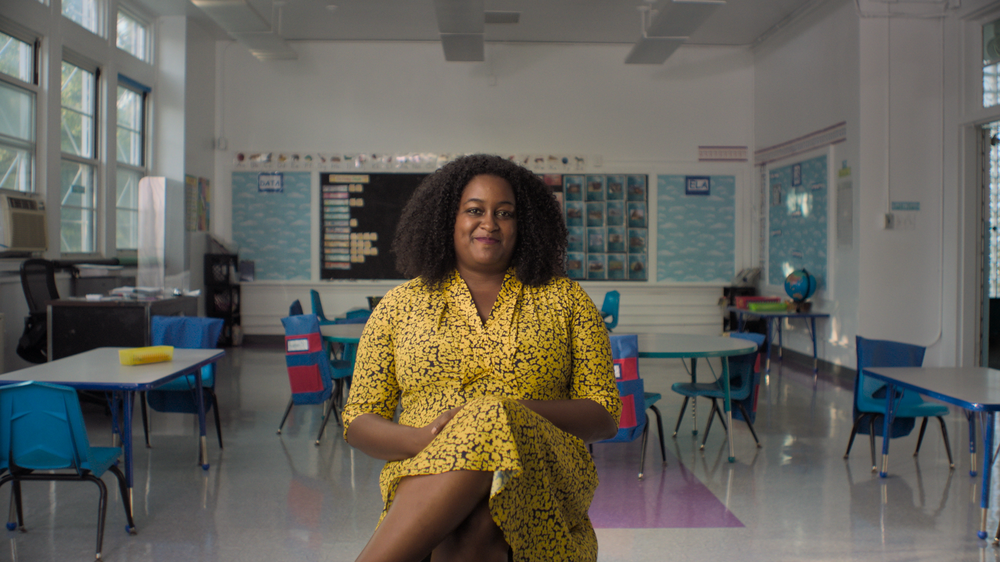
Chanelle Hardy, head of civil and human rights at Google, originally gravitated to public policy after two years of teaching fifth grade in Anacostia with Teach for America. “These incredibly brilliant and talented fifth grade students were inspiring because they embraced and got excited about everything they were exposed to,” she says. “I realized systems impacted the lives and opportunities of my students, and I wanted to understand how those systems worked and be part of designing, developing and improving systems.”
That interest eventually brought Chanelle to Google. “When I came to Google, it was a tremendous opportunity to be at the forefront of thinking about how tech and innovation could help to solve some of the challenges we face in society. After all, we were thinking about tools, who uses them and how.”
Chanelle founded the Google Next Gen Policy Leadership Program based on her certainty that there were emerging leaders who didn’t even know their expertise could be valuable in the context of tech policy and social justice. “I knew that just because the world of tech policy isn’t as diverse as it should be, there wasn’t a dearth of talent,” she says. “It was about making connections and bringing people together.”
A.M. Darke, artist, professor and game designer
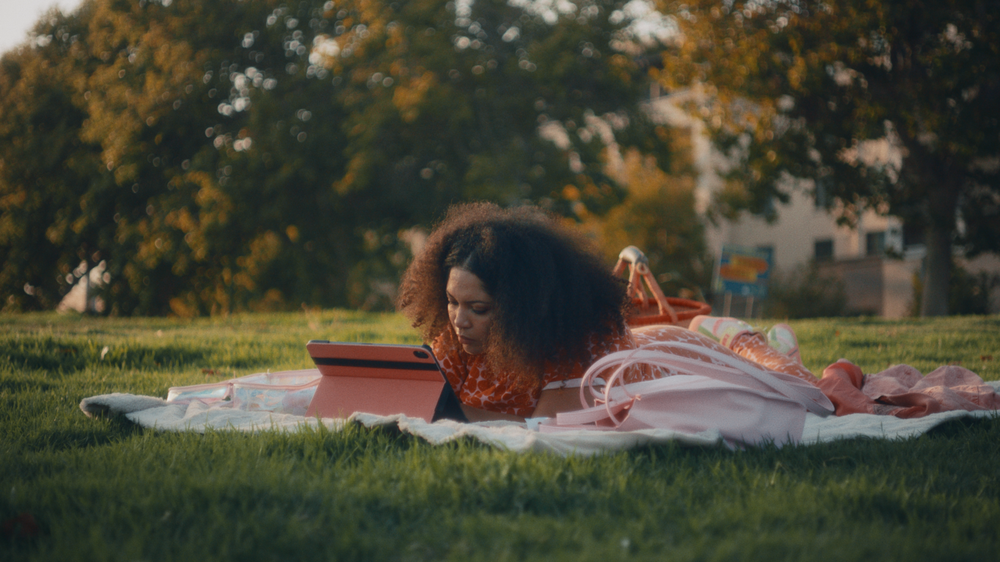
“What I actually care about is liberation,” says A.M. Darke, an artist and professor who designed ‘Ye or Nay?, a game that reimagines “Guess Who?” with all Black men, and half the characters are Kanye West. A.M. describes the game as “providing a critical analysis of popular Black men from a position of cultural subjectivity.” A.M. also produced the open source Afro Hair Library, a database with the purpose of creating a wider visual library for Black hair.
A.M. says she doesn’t take much time to savor accomplishments — she’s always already thinking about the next thing. But when young women and non-binary people share how she’s positively affected them, she feels genuinely moved, happy and grateful. “When what I’m saying and doing is affirming to others, that is something that I really connect with. I’m trying to build a world that didn’t exist for me,” she says.

OnePlus 10 Pro: svelata la data di lancio (UFFICIALE)
Come abbiamo mantenuto Google Maps attendibile nel 2021

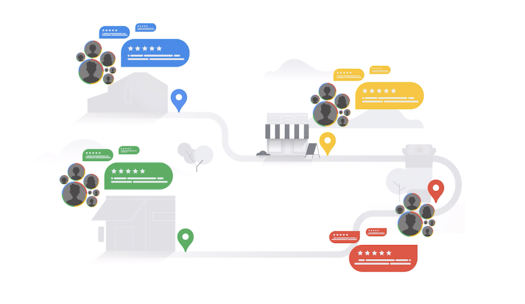
Ogni giorno riceviamo circa 20 milioni di contributi da chi usa Google Maps. Questi contributi includono varie cose tra cui gli orari aggiornati dei negozi, i numeri di telefono, foto o recensioni. Come per qualsiasi piattaforma che accetta contenuti degli utenti, dobbiamo rimanere vigili nel nostro impegno per combattere gli abusi e assicurarci che queste informazioni siano accurate. Grazie a una combinazione di apprendimento automatico e operatori umani, continuiamo a diminuire la quantità di contenuti fraudolenti o abusivi presenti sulle mappe: in effetti, si tratta di meno della metà di tutti i contenuti presenti sulla piattaforma. Oggi, stiamo condividendo di più su come abbiamo tenuto le informazioni irrilevanti e offensive fuori da Google Maps per tutto il 2021.
Mantenere affidabili le informazioni dei business
Il mondo è cambiato nel corso del 2021 con il lancio dei vaccini, gli aggiornamenti sull’utilizzo delle mascherine e le nuove varianti di COVID. Gli utenti di Maps hanno contribuito ad aggiornare Google Maps con nuove informazioni sulle loro comunità. Infatti, per tutto il 2021, i loro contributi ci hanno aiutato ad aggiungere informazioni aggiornate sulle imprese e le attività commerciali, come gli orari apertura di un luogo o i suoi protocolli di salute e sicurezza. I contributi degli utenti sono aumentati del 30% rispetto al 2020.
I contributi sono preziosi e ci impegniamo a mantenere Google Maps un luogo sicuro, dove trovare informazioni affidabili. Per questo lavoriamo quotidianamente per contrastare le attività di coloro che cercano di aggiornare le informazioni aziendali su Google Business Profiles con modifiche abusive. Nel 2021, abbiamo bloccato più di 100 milioni di queste modifiche, grazie ai nostri continui progressi nei modelli di apprendimento automatico che hanno migliorato la nostra capacità di catturare l’attività dei bot e scoprire modelli di attività sospette. Ecco uno sguardo più approfondito alle informazioni che abbiamo rimosso da Maps:
- Grazie ai progressi della nostra tecnologia, abbiamo identificato e rimosso più di 7 milioni di falsi profili aziendali – più di 630.000 dei quali ci sono stati segnalati direttamente.
- Abbiamo fermato più di 12 milioni di tentativi di creare falsi profili aziendali di Google e quasi 8 milioni di tentativi di rivendicare profili aziendali di Google non appartenenti a questi malintenzionati.
- Grazie ai continui miglioramenti nel nostro machine learning, le nostre tecnologie e i nostri team hanno disattivato più di 1 milione di account di utenti a causa di attività che violano le policy, come il vandalismo online o la frode.
Verifica di foto, video e recensioni sui profili delle attività
Con la riapertura del mondo nel corso del 2021, le persone si sono affidate alle recensioni di Google Maps per ottenere le informazioni di cui avevano bisogno sui luoghi prima di visitarli – come i protocolli di salute e sicurezza applicati o se c’erano ristoranti all’aperto e spazi aperti.
- Abbiamo bloccato o rimosso più di 95 milioni di recensioni che violano le policy, oltre 60.000 delle quali sono state eliminate a causa di casi legati a COVID.
- Abbiamo eliminato più di 1 milione di recensioni che ci sono state segnalate direttamente.
- Come risultato dei continui progressi dei nostri sistemi di rilevamento automatico, abbiamo bloccato o rimosso più di 190 milioni di foto e 5 milioni di video che erano sfocati, di bassa qualità o che violavano le nostre politiche sui contenuti.
La conoscenza locale che la nostra comunità globale contribuisce è una parte enorme di ciò che rende Google Maps più di uno strumento di navigazione. Continueremo a investire per mantenere queste informazioni aggiornate e affidabili in modo che gli utenti possano scoprire sempre di più sul mondo.
Scritto da: Pavithra Kanakarajan, Group Product Manager, User Generated Content
The Check Up: helping people live healthier lives
My years spent caring for patients at the bedside and in the clinic inspired me to find ways to improve health for them and their communities at scale. That passion eventually brought me to Google where I could help solve the world’s most significant health challenges.
I joined the company just weeks before the COVID-19 pandemic unfolded. At the time, most people hadn’t heard of “flattening the curve” or “mRNA vaccines.” But what they did know was that they could turn to Google with their questions. The COVID-19 pandemic strengthened our resolve that Google could and should help everyone, everywhere live a healthier life. It also accelerated our company-wide health efforts.
We embed health into our products to meet people where they are. Our teams apply their expertise and technological strengths and harness the power of partnerships to support our 3Cs – consumers, caregivers and communities around the world.
Today, we’re hosting our second annual Google Health event, The Check Up. Teams from across the company — including Search, YouTube, Fitbit, Care Studio, Health AI, Cloud and Advanced Technologies and Projects team — will share updates about their latest efforts.
Among the areas of progress, I’m delighted at the ways our teams are working to support consumers with helpful information and tools throughout their health journeys.
Making it easier to find and book local care providers in the U.S.
When people have questions about their health, they often start with the internet to find answers. No matter what people are searching for on Google Search, it’s our mission to give high-quality information, exactly when it’s needed.
The Search team recently released features to help people navigate the complex healthcare system and make more informed decisions, like finding healthcare providers who take their insurance.
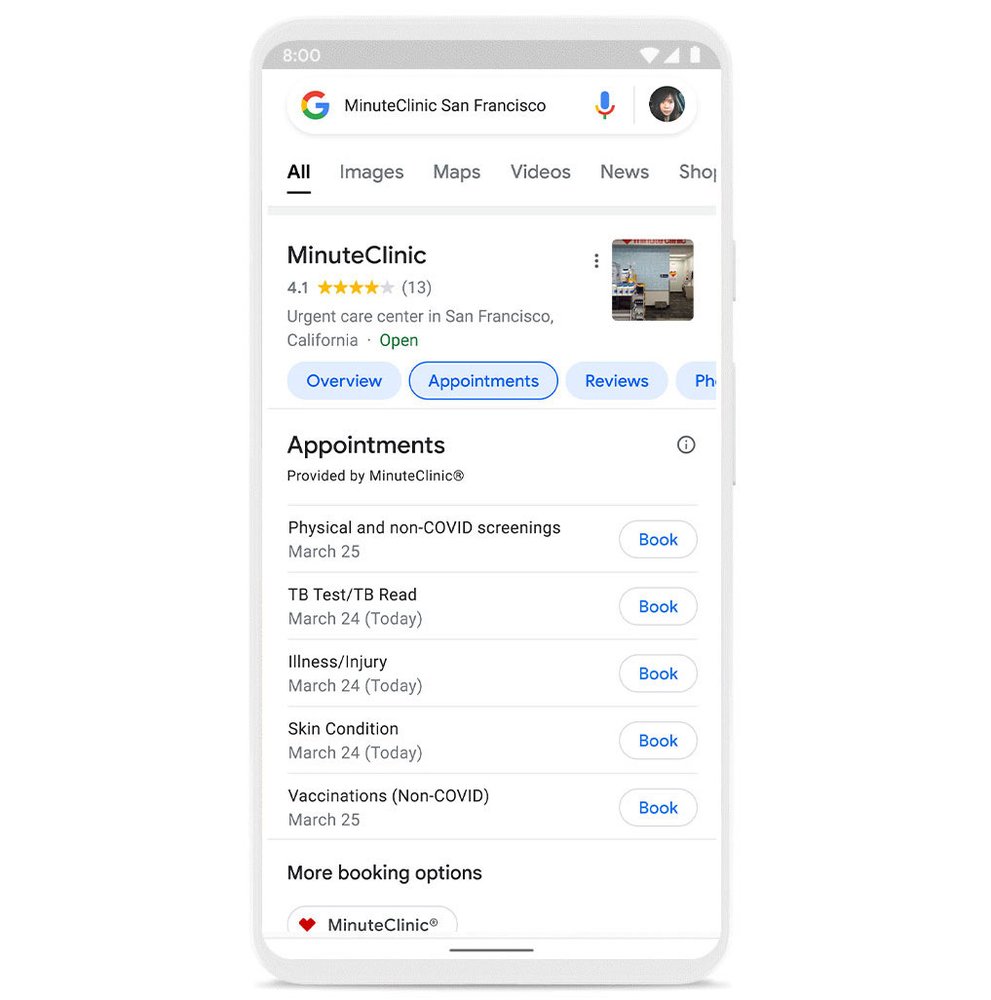
At today’s event, Hema Budaraju, who leads our Health and Social Impact work for Search, introduced a feature we’re rolling out that shows the appointment availability for healthcare providers so you can easily book an appointment. Whether you put off your annual check-up, recently moved and need a new doctor, or are looking for a same-day visit to a MinuteClinic at CVS, you might see available appointment dates and times for doctors in your area.
While we’re still in the early stages of rolling this feature out, we’re working with partners, including MinuteClinic at CVS and other scheduling solution providers. We hope to expand features, functionality and our network of partners so we can make it easier for people to get the care they need.
Helping people in Brazil, India and Japan discover local, authoritative health content on YouTube
Of all the information channels people turn to for health information, video can be a helpful and powerful way to help people make informed healthcare decisions. People can watch and listen to experts translate complex medical terms and information into simple language and concepts they easily understand, and they can connect with communities experiencing similar conditions and health challenges.
Dr. Garth Graham talked about YouTube Health’s mission of providing equitable access to authoritative health information that is evidence-based, culturally relevant and engaging. In the past year, YouTube has focused on building partnerships with leading health organizations and public health leaders to increase the volume and visibility of authoritative health content through new features.
Starting this week in Japan, Brazil and India, YouTube is adding health source information panels on videos to provide context that helps viewers identify videos from authoritative sources, and health content shelves that more effectively highlight videos from these sources when people search for specific health topics. These context cues help people easily navigate and evaluate credible health information.
Supporting heart health with Fitbit
In addition to information needs, people use our consumer technologies and tools to support their health and wellness. Fitbit makes it easy and motivating for people to manage their holistic health, from activity and nutrition to sleep and mindfulness. Fitbit co-founder James Park shared how Fitbit believes wearables can have an even greater impact on supporting people with chronic conditions, including heart conditions like atrial fibrillation (AFib).
In 2020, the team launched the Fitbit Heart Study, with nearly half a million people who use Fitbit. The goal was to test our PPG (Photoplethysmography) AFib algorithm, which passively looks at heart rate data, to alert people to signs of an irregular heart rhythm.
We presented the study results at the most recent American Heart Association meeting, showing that the algorithm accurately identified undiagnosed AFib 98% of the time. We’ve submitted our algorithm to the FDA for review. This is one of many ways we’re continuing to make health even more accessible.
Building the future for better health
These updates are only a slice of what we covered at the event. Check out our Health AI blog post and tune into our event to hear more about ways we are advancing better, more equitable health for everyone.
The Check Up: our latest health AI developments
Over the years, teams across Google have focused on how technology — specifically artificial intelligence and hardware innovations — can improve access to high-quality, equitable healthcare across the globe.
Accessing the right healthcare can be challenging depending on where people live and whether local caregivers have specialized equipment or training for tasks like disease screening. To help, Google Health has expanded its research and applications to focus on improving the care clinicians provide and allow care to happen outside hospitals and doctor’s offices.
Today, at our Google Health event The Check Up, we’re sharing new areas of AI-related research and development and how we’re providing clinicians with easy-to-use tools to help them better care for patients. Here’s a look at some of those updates.
Smartphone cameras’ potential to protect cardiovascular health and preserve eyesight
One of our earliest Health AI projects, ARDA, aims to help address screenings for diabetic retinopathy — a complication of diabetes that, if undiagnosed and untreated, can cause blindness.
Today, we screen 350 patients daily, resulting in close to 100,000 patients screened to date. We recently completed a prospective study with the Thailand national screening program that further shows ARDA is accurate and capable of being deployed safely across multiple regions to support more accessible eye screenings.
In addition to diabetic eye disease, we’ve previously also shown how photos of eyes’ interiors (or fundus) can reveal cardiovascular risk factors, such as high blood sugar and cholesterol levels, with assistance from deep learning. Our recent research tackles detecting diabetes-related diseases from photos of the exterior of the eye, using existing tabletop cameras in clinics. Given the early promising results, we’re looking forward to clinical research with partners, including EyePACS and Chang Gung Memorial Hospital (CGMH), to investigate if photos from smartphone cameras can help detect diabetes and non-diabetes diseases from external eye photos as well. While this is in the early stages of research and development, our engineers and scientists envision a future where people, with the help of their doctors, can better understand and make decisions about health conditions from their own homes.
Recording and translating heart sounds with smartphones
We’ve previously shared how mobile sensors combined with machine learning can democratize health metrics and give people insights into daily health and wellness. Our feature that allows you to measure your heart rate and respiratory rate with your phone’s camera is now available on over 100 models of Android devices, as well as iOS devices. Our manuscript describing the prospective validation study has been accepted for publication.
Today, we’re sharing a new area of research that explores how a smartphone’s built-in microphones could record heart sounds when placed over the chest. Listening to someone’s heart and lungs with a stethoscope, known as auscultation, is a critical part of a physical exam. It can help clinicians detect heart valve disorders, such as aortic stenosis which is important to detect early. Screening for aortic stenosis typically requires specialized equipment, like a stethoscope or an ultrasound, and an in-person assessment.
Our latest research investigates whether a smartphone can detect heartbeats and murmurs. We’re currently in the early stages of clinical study testing, but we hope that our work can empower people to use the smartphone as an additional tool for accessible health evaluation.
Partnering with Northwestern Medicine to apply AI to improve maternal health
Ultrasound is a noninvasive diagnostic imaging method that uses high-frequency sound waves to create real-time pictures or videos of internal organs or other tissues, such as blood vessels and fetuses.
Research shows that ultrasound is safe for use in prenatal care and effective in identifying issues early in pregnancy. However, more than half of all birthing parents in low-to-middle-income countries don’t receive ultrasounds, in part due to a shortage of expertise in reading ultrasounds. We believe that Google’s expertise in machine learning can help solve this and allow for healthier pregnancies and better outcomes for parents and babies.
We are working on foundational, open-access research studies that validate the use of AI to help providers conduct ultrasounds and perform assessments. We’re excited to partner with Northwestern Medicine to further develop and test these models to be more generalizable across different levels of experience and technologies. With more automated and accurate evaluations of maternal and fetal health risks, we hope to lower barriers and help people get timely care in the right settings.
To learn more about the health efforts we shared at The Check Up with Google Health, check out this blog post from our Chief Health Officer Dr. Karen DeSalvo. And stay tuned for more health-related research milestones from us.