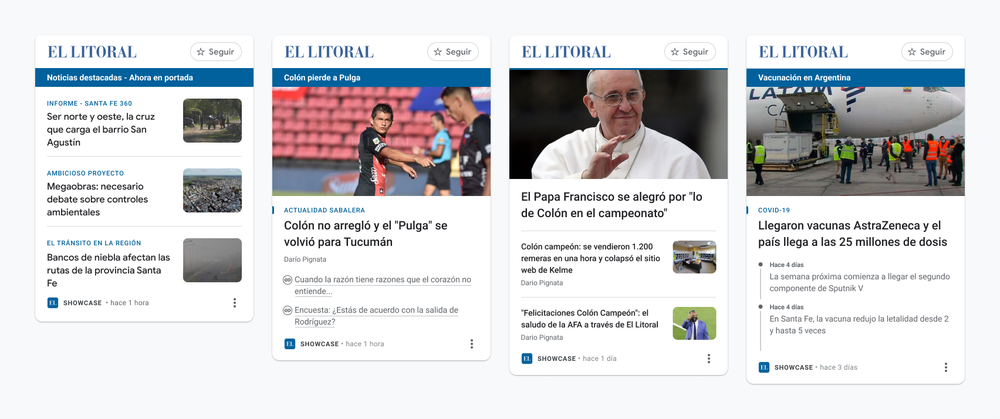
How local news in Argentina is using News Showcase
Editor’s note: This is the first in a series we’re doing featuring local publishers using Google News Showcase. Thanks to the three Argentinian publishers who shared their thoughts and insight on the impact that News Showcase is providing for their coverage. In the coming months we’ll have more from local News Showcase news partners around the globe.
ADIRA, The Asociación de Diarios del Interior de la República Argentina, is a regional press association that brings together newspaper publishers throughout Argentina. Many of our partner publications have worked with Google over the years, through Google News Initiative, trainings and now nearly 50 of them are a part of Google News Showcase. Google’s efforts have been important in helping our journalism reach and develop stronger relationships with readers and diversify our revenue.
The transition from print to digital for newspapers outside the metropolitan area of Buenos Aires is slow and difficult, where smaller papers can’t generally afford to hire the necessary tech professionals to make digital changes needed to reach readers. But it has been easy for smaller publications to use News Showcase, helping them reach new audiences.
News Showcase, alongside Google’s other product efforts and programming from the Google News Initiative, has great potential to grow and deepen reader relationships for newsrooms in Argentina through new ways to highlight stories, greater control over showcasing our brand and additional tools for paywalled content.
Here is how three local ADIRA publications — El Litoral, La Opinión de Rafaela and La Gaceta — are using News Showcase to expand their digital strategies and build relationships with readers.
El Litoral
Magalí Suarez, Content Coordinator at El Litoral, Santa Fe, Argentina
Founded in 1918, El Litoral is a regional newspaper in Santa Fe, Argentina, producing several supplements, specialized magazines, a second provincial newspaper, a TV channel and more.
News Showcase came at a critical time for all media, especially for those of us who are strongly betting on digital growth. Even in the middle of an unprecedented health and economic crisis, we’ve continued to produce quality content for our readers. News Showcase allows us to “package” our journalists’ content, provide context to the information and offer readers more tools so they can inform themselves around stories responsibly.
Overall News Showcase has allowed us to improve engagement by including related news, create panels that better position our stories/content for our target audience, highlight the journalism that distinguishes us from other news organizations and give our readers a way to get information and context in an easy, organized way.
We think News Showcase has helped us to solve complex challenges such as how to better engage with readers in a crowded news environment. This is a very good start in laying the foundations for sustainability in the future.
Mentorship inspires Deyrel Diaz and future researchers
During his undergrad, Deyrel Diaz attended a VR hackathon where he tried out an aircraft training demo. While Deyrel, a computer science (CS) student, had experience with 3D modeling and coding, seeing the results in action was all new. “This was the first time I’d seen the two mediums interact on such an immersive level,” he says. “Seeing how this simulation was used for real world training and research…I wanted to be a part of that.” Today, Deyrel is a PhD student studying Human-Centered Computing at Clemson University with a focus on mixed reality (AR/VR) research. He’s also a graduate of the most recent class of the CS Research Mentorship Program (CSRMP), one initiative by Google Research to support students from historically marginalized groups (HMGs) in computing research pathways.
Recognizing that the work CS Researchers are doing has broad implications for billions of people across the globe, CSRMP aims to ensure that the community of researchers represents the experiences, perspectives, concerns and creative enthusiasm of all the people of the world, by supporting the pursuit of computing research for undergraduate and graduate students from HMGs through mentorship, peer networking and career exploration.
In June, CSRMP graduated a class of 281 students from 110 universities across the United States and Canada. We spoke with Deyrel to learn more about his experience and plans for his journey in computing research. Here’s what he had to say:
What motivated you to participate in CSRMP?
Through programs and conferences, I learned just how important it is to have representation in the development and design of technology. When I read about CSRMP, I saw the opportunity to not only help expand that community by connecting with other professionals in the field, but to also learn alongside some of the best and brightest students from around the world.
How has CSRMP influenced your research journey?
The pod meetings influenced my journey the most. I was able to build relationships with other phenomenal student researchers and my CSRMP mentor. We discussed the challenges we face while conducting computing research, and we shared lots of helpful tools and resources. These meetings were also a place to find inspiration and motivation, and helped me learn about other career fields, which I might incorporate into my future research.
What are you proudest of?
I’m proudest of winning two national fellowships that will fully fund my PhD studies. The support system my mentors created for me really helped guide me in the right direction, so it’s thanks to this strong mentorship I was able to accomplish this. Plus, having these fellowships gave me the time to take part in programs where I can mentor other up-and-coming underrepresented students and expose them to not only computing research, but graduate school in general.
What advice do you have for students like you who are curious about starting their journeys as researchers in computing?
The field of computer science touches anything and everything, and if there’s something it hasn’t, you could be the person who makes it happen. That said, there’s no reason for you to pursue something you don’t love, so seek out professors, hack-a-thons, demos or certificate programs to learn more about different fields and how you can use them in personal projects. Don’t wait for someone to tell you what to do, just start tinkering and create something you’d have fun using.
Congratulations to all of the students who graduated from the CS Research Mentorship Program in the first half of 2021! We look forward to supporting future students who are taking computing research by storm like Deyrel Diaz. Applications are now open for the September 2021 mentorship cycle – apply by July 28, 2021.
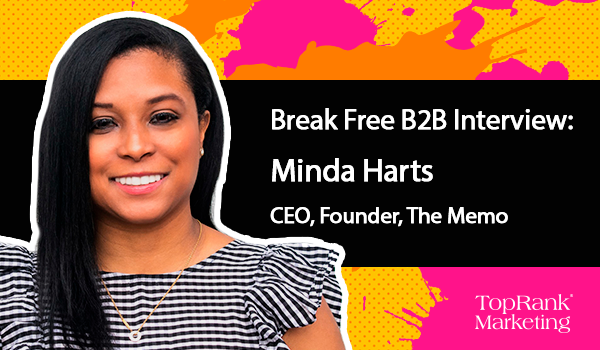
Break Free B2B Marketing: Minda Harts of The Memo on Having Courageous Conversations
When it comes to B2B influencer marketing, it’s only natural to wonder just what an industry influencer actually looks like?
For our third season of Break Free B2B Marketing video interviews, we’re featuring conversations with leading B2B influencers, and examining the issues that each subject matter expert is influential about in their specialized industry.
For over a decade our team at TopRank Marketing has nurtured a strong community of leading influencers, developing close relationships with SMEs in many industries, and we’re delighted to share our latest episode of Break Free B2B Marketing.
2020 put a lot of things into laser focus that weren’t getting the attention they historically deserved. One of those things has been the necessity of greater diversity in the modern workplace. There’s no denying the fact that approximately 68 percent of C-level executives are white men and only some four percent are women of color. That’s no longer acceptable, and many businesses are actively seeking the advice of experts who can help them break free from outdated norms so they can move into a brighter, more creative, more diverse future.
One of the leading experts on how that can be accomplished is Minda Harts. Minda is a sought after speaker and thought leader who focuses on the topic of advancing women of color in the workplace and building diverse teams. She founded The Memo LLC, a career development company for women of color, and has published a similarly named book that gives actionable advice on this same topic. The Memo: What Women of Color Need to Know to Secure a Seat at the Table can be found at your favorite bookseller or online right now.
Minda is the sort of voice to listen to for any B2B marketer who wants to learn how to better speak to the needs and wants of a diverse population. That’s why we asked her to join us for the latest episode of our Break Free B2B Marketing Interview series.
Break Free B2B Interview with Minda Harts
If you’re interested in checking out a particular portion of our discussion, you can find a quick general outline below, as well as a few excerpts that stood out to us.
- :21 – Introduction to Minda Harts
- 2:16 – Micro and macro aggressions in the modern workplace
- 3:18 – “Can you give us an example, maybe of a courageous conversation you’ve had or guided someone to have, and what happened?”
- 8:00 – Office politics and the benefits of building a squad
- 9:50 – What can business leaders be doing now to help build a more inclusive future?
- 12:53 – “What’s been surprising or interesting about working with and counseling companies on these initiatives?”
- 15:33 – Not silencing yourself
- 17:59 – “In terms of helping women of color secure their seat, what should be burned or eliminated?”
- 19:15 – Movement forward and areas of progress
- 21:55 – “What do you hope for in the next few years? What does the workforce look like? How is it different? Better?”
- 23:00 – Companies or leaders who are making positive steps toward equity
- 26:35 – “What does it take to be a thought leader, subject matter expert, or influencer?”
- 31:38 – How to find Minda Harts online
Sue: How do you counsel and guide women of color to deal with having courageous conversations and other issues?
Minda: Even in the moment when I’ve dealt with some of those micro or macro aggressions, depending on how you see it, I wasn’t sure how to respond to it, because it takes you off guard, right, you’re not prepared. And sometimes when it’s happening — your colleagues — especially if you’re the only woman, or the only black woman, might think that it’s a joke, or that so and so doesn’t mean any harm. But those things, again — intentional or unintentional — they still land on certain communities where it is harmful. And so what I would say is, one thing that I didn’t do, which is part of why I wrote the book, is to center yourself as a woman in the workplace. If something is harmful, have those courageous conversations to let people know that this is not okay. Right. And you can do that in a way that doesn’t have to be in front of everyone, but I wish that I would have been more courageous in bringing those kinds of tough conversations to the forefront.
[bctt tweet=”“If something is harmful, have those courageous conversations to let people know that this is not okay.” — Minda Harts @MindaHarts #BreakFreeB2B ” username=”toprank”]Minda: And that’s okay — I mean, we have to start somewhere. And that’s where I want leaders to realize this isn’t a problem that you’re going to solve in three Zoom meetings, right? This is going to take some time. But we have to start somewhere.
Sue: Right, exactly. Okay, so I love this. You say, don’t take shit from anyone. And as a woman, you know, typically working in tech companies and running my own agency, I know that being strong, and having opinions and a clear direction, and not settling, stating a vision with passion that can be perceived as maybe being kind of a bitch. And so this gets tough because sometimes I find myself feeling beat down and ashamed for being strong. And I can only imagine that this would even be harder for women of color. Can you talk about that a little bit?
Minda: They’re both true. And I think you made a really good point — that oftentimes, people will say, “Well, I’ve had it hard too,” right? And two things can be true at the same time, right? You could experience the same things, and then I can experience it, but it might be that your proximity to power is a little bit better than mine. Right? But we are experiencing these situations. And I think that the reason why I say don’t take anything from anybody else, is because for so long as women, we’ve had to silence ourselves, right? We’ve had to silence ourselves at the expense of our own well being. You’re even seeing it, regardless of what political party, in this idea of being too ambitious — what does that even mean? Because somebody wants more, or in their lives they want to do a good job — they’re trying to figure out what good looks like for them. I think because that has been a narrative that we didn’t create, that’s why it’s important that we have to dismantle these systems, because these systems would say that any woman that has a perspective or has ideas, that she needs to sit down and know her place.
Minda: But that is part of the system that never saw us at the table. Right? Those are those systems. So I think we have to call it out when we see it, and I think we have to unlearn that thinking too. Because being in these environments, we would then question ourselves, “Well, maybe I shouldn’t speak up,” or those sorts of things. I think with women of color in particular, it’s a fine line, right? Don’t be too aggressive. Don’t say too much. You know, don’t be angry — so it’s that office politics — trying to find that right angle. I think it goes back to having a squad, because if you have relationships inside the workplace, somebody can say, “You know what, that’s not the Susan I know, actually,” and I think that when we know each other better, we can stand up for each other in those moments and really dismantle a culture that would say that about women.
[bctt tweet=”“We have to dismantle these systems, because these systems would say that any woman that has a perspective has ideas, and that she needs to sit down and know her place.” — Minda Harts @MindaHarts #BreakFreeB2B ” username=”toprank”]Keep your eye on the TopRank Marketing Blog and subscribe to our YouTube channel for more Break Free B2B interviews. Also check out episodes from season 1 and season 2.
Take your B2B marketing to new heights by checking out out previous season 3 episodes of Break Free B2B Marketing:
- Episode 1: Kevin L. Jackson, GC GlobalNet — The Future of Cloud Computing
- Episode 2: Tim Crawford, AVOA — The New Normal
- Episode 3: Oliver Christie, PertexaHealthTech — The Future of Artificial Intelligence
- Episode 4: Liam McIvor Martin, Time Doctor — Trends in Remote Work
- Episode 5: Sarah Barnes-Humphrey, SHIPZ — The Future of Supply Chain
- Episode 6: Eric Vanberburg, TCDI — The Changing Cybersecurity Landscape
- Episode 7: Nicole Brady, SAHM Reviews — The Importance of Empathy
- Episode 8: Tamara McCleary, Thulium — Visions of the Future
- Episode 9: Dez Blanchfield, Sociaall Inc. — Joining the Conversation
- Episode 10: Keith Townsend, The CTO Advisor — Bringing Value Through Friction
The post Break Free B2B Marketing: Minda Harts of The Memo on Having Courageous Conversations appeared first on B2B Marketing Blog – TopRank®.
WhatsApp testa video e foto che scompaiono dopo la visualizzazione
Samsung lancia TV Plus e Samsung O su smartphone e tablet

Al via oggi il Green Pass digitale dell’UE
Vodafone lancia l’iniziativa Happy Cashback. Come funziona?
Instagram lavora alla sua versione dei Super Follows di Twitter
Immagini strepitose e audio impeccabile con le soluzioni di Logitech per il business
UE, no all’uso della biometria per la videosorveglianza
Samsung presenta One UI Watch, OS basato su Android Wear

Google: basta AMP, largo ai Core Web Vitals

ENDOMETRIOSI: Grazie a Kiko prosegue il progetto per conoscerla e prevenirla
KIKOnonosce l’Endometriosi: un progetto per conoscere e prevenire. Dal 15 giugno in tutti i negozi KIKO dell’area metropolitana di Milano è in corso di svolgimento un’importante campagna di sensibilizzazione verso…
L’articolo ENDOMETRIOSI: Grazie a Kiko prosegue il progetto per conoscerla e prevenirla scritto da Paolo Brambilla proviene da Assodigitale.
Qualcuno sta cancellando i dati dai dischi My Book Live di Western Digital connessi a Internet. Scollegateli

Da alcuni giorni, chiunque abbia un disco rigido esterno My Book Live o My Book Live Duo della Western Digital sta sudando freddo. Qualcuno, non si sa bene chi, sta prendendo il controllo via Internet di questi dischi e li sta azzerando (facendo un factory reset da remoto).
Visto che questi dischi rigidi vengono usati per conservare grandi quantità di dati, per molti utenti il risultato è catastrofico: perdita di tutti i documenti digitali, di tutte le foto e i video di famiglia, di tutta la musica e altro ancora.
Fra gli utenti che stanno sudando freddo ci sono stato anch’io, visto che ho ancora un paio di questi dischi e li uso come archivi temporanei (circa 9 terabyte in tutto, spesso piuttosto pienotti).
Il consiglio di Western Digital è stato molto drastico: scollegare questi dischi da Internet. Punto. Si tratta infatti di dischi rigidi dotati di porta Ethernet al posto delle consuete porte USB, che si collegano alla rete locale e fanno da archivio condiviso per tutti i dispositivi presenti sulla rete. Possono essere configurati in modo da affacciarsi a Internet e quindi essere consultabili o gestiti via Internet, a patto di conoscerne la password di amministrazione. Ma qualcuno ha trovato il modo di scavalcare questa protezione e devastarli. Brrr.
L’azienda precisa che il problema riguarda soltanto i suoi dischi della serie My Book Live e non i suoi prodotti successivi. Aggiunge inoltre che non fornirà aggiornamenti che correggano le due falle software (CVE-2018-18472 e CVE-2021-35941) che consentono queste cancellazioni di massa. Noterete che una di queste falle è nota dal 2018.
In alcuni casi, a chi ha perso dati offrirà servizi di recupero dati e degli sconti di permuta (trade-in) con altri dischi rigidi analoghi più recenti. Western Digital fa notare che i dischi vulnerabili sono stati messi sul mercato nel 2010 e hanno ricevuto il loro ultimo aggiornamento firmware nel 2015. In altre parole, sono obsoleti e non più supportati.
L’unico rimedio per chi, come me, ha ancora questi dischi è isolarli da Internet, impostandoli in modo che non siano accessibili da fuori della rete locale (niente port forwarding o simili). Questo non protegge da eventuali attacchi locali (o anche remoti, messi a segno attaccando prima qualche altro dispositivo che faccia da testa di ponte sulla rete locale), ma è meglio di niente.
La tecnica di attacco è stata scoperta: l’aggressore trova un disco rigido My Book Live accessibile via Internet (con un port scanning) e usa una delle due vulnerabilità per scavalcare la password e installare un trojan, mentre l’altra vulnerabilità viene usata successivamente per azzerare il disco.
Sappiamo anche che la falla che consente di eseguire l’azzeramento senza digitare password è colpa di Western Digital, un cui sviluppatore ha commentato via le righe di codice che proteggevano con la password il comando di reset. Un errore madornale e imperdonabile.

Quello che resta da capire è chi abbia scatenato questo attacco, e soprattutto perché: manca infatti un movente. Non viene chiesto un pagamento, non vengono sottratti dati. È pura e semplice distruzione, una cosa rara in questi tempi di attacchi informatici motivati sistematicamente dal denaro.
Una teoria è che le vittime di questi attacchi si siano trovate coinvolte in una lotta fra due gruppi di criminali informatici che si contendevano il controllo di questi dischi rigidi. Uno dei gruppi, secondo questa teoria, aveva preso il controllo di un grande numero di dispositivi My Book Live per trasformarli in una botnet (un esercito di dispositivi comandabili a distanza e usabili per altri attacchi). L’altro gruppo avrebbe cercato di rubare il controllo di questa botnet.
Ars Technica approfondisce gli aspetti tecnici di questa teoria, se volete saperne di più. Quello che conta è che quel disco rigido che molti di noi tengono sulla scrivania, silenzioso e apparentemente innocuo, è in realtà un probabile teatro di guerra fra bande informatiche rivali.
Perché non ci si può fidare delle testimonianze ufologiche? Un caso personale
Mi chiedono spesso perché sono così scettico sul fenomeno UFO e soprattutto sulle testimonianze di avvistamenti. Provo a spiegare perché: in una parola, esperienza. Chi non ha esperienza di avvistamenti e segnalazioni tende a credere che le persone siano testimoni affidabili e precisi; chi ce l’ha sa che le testimonianze sono spesso incredibilmente distorte, anche nei casi apparentemente più banali. Faccio un esempio.
Alcuni anni fa (nel 2015) mi scrisse una persona, dicendomi che un suo conoscente, quindi una persona di sua assoluta fiducia, aveva ripreso e fotografato direttamente un oggetto misterioso.
Il testimone stava tornando a casa dopo una serata passata in compagnia quando
“si è trovato di fronte a questo oggetto, che si “dondolava” ed emetteva una strana luce ed era collocato in un campo adiacente a casa sua. […] stando al racconto del mio amico, non c’era un filo di vento a casa sua questa sera. Dopo averlo filmato e fotografato dalla lontananza, ha provato ad avvicinarsi all’oggetto, ma questo schizzava verso l’alto per poi tornare a terra una volta che lui si allontanava, fino a quando, dopo l’ennesimo tentativo di avvicinarlo, è sparito nel cielo.”
Il caso sembra interessantissimo: un oggetto sconosciuto che si muove spontaneamente, addirittura decollando, in un campo a poca distanza dall’osservatore, ed emette una luce. Cosa potrà mai essere?
Provate a fare qualche ipotesi prima di continuare la lettura. Immaginatevi la scena sulla base delle parole della descrizione, che ho riportato testualmente, omettendo solo i riferimenti personali per tutelare l’identità delle persone coinvolte.
—
Avete fatto le vostre ipotesi? Avete fissato bene nella vostra mente cosa avete immaginato? Bene, allora siete pronti per il resto della vicenda.
Se ci fosse soltanto questa testimonianza dell’evento, l’episodio rimarrebbe inspiegabile, misterioso e affascinante. Ma c’è un dettaglio che cambia tutto: il testimone ha appunto “filmato e fotografato” questo oggetto, e mi ha mandato foto e video.
Nel video, la voce del testimone dice, mentre sta riprendendo l’oggetto che si dondola ed emette luce:
“Oh beh, ragazzi, guardate questo. Io non so cosa sia. Io non so che animale sia questo. È nel mio campo, e questo è un UFO. Non vi dico una balla, questo è un UFO, ragazzi. Non so se ci credete o no, ditemi voi che cos’è.”
Sia il testimone, sia la persona che mi ha mandato il video e le foto dell’avvistamento, sono convinte di aver visto qualcosa di straordinario che non riescono a spiegare.
Ma il video, che per ora non vi posso mostrare, riprende molto chiaramente un oggetto molto normale.
Un palloncino.
Un palloncino metallizzato semisgonfio, appoggiato sul campo e mosso dal minimo refolo di vento. È a pochi metri dalla persona che lo sta riprendendo. Emette una “strana luce” semplicemente perché è illuminato dai fari dell’auto del testimone. E non “schizza verso l’alto”: si limita a oscillare leggermente.
Tutto qui. È un palloncino, lo si vede chiaro come il sole.
Senza questo video e senza le foto, la narrazione sarebbe appunto perfettamente ufologica. Conosco ufologi e conduttori di programmi TV che ci ricamerebbero su a non finire. Ma il video ridimensiona completamente la vicenda.
I testimoni, insomma, sono incredibilmente inattendibili. Ma la cosa ancora più interessante è che quando spiego che si vede lontano un miglio che si tratta di un palloncino, la persona che mi ha contattato non accetta la spiegazione. Non vuole arrendersi all’evidenza. Fatica a pensare che la spiegazione possa essere così ovvia, e forse gli ho rovinato quella che per lui era un’esperienza straordinaria.
Io ricevo un gran numero di segnalazioni di avvistamenti di oggetti ritenuti misteriosi, e posso dire che queste reazioni emotive alle spiegazioni sono comunissime e umanissime. Questi sì che sono gli aspetti umani e psicologici che dovremmo considerare e investigare quando si parla di ufologia.
—
Ma c’è anche un altro fattore comunissimo, un errore di metodo che l’astrofisico e divulgatore scientifico Neil DeGrasse Tyson riassume egregiamente in questo video da 00:56 in avanti:
“Qualcuno vede delle luci lampeggianti in cielo. Non le ha mai viste prima. Non capisce cosa siano. Dice ‘Un UFO!’ La U sta per Unidentified [non identificato]. E così dice ‘Non so cosa sia. Devono essere alieni dallo spazio che ci visitano da un altro pianeta!’. Ma se non sai cosa sia, è a questo punto che la tua conversazione dovrebbe fermarsi!”