
6 Timeless SEO Tips Content Marketers Can Do Now
Content is the research search began in the first place.
Learning about how to get customers to visit newly created websites is where my search engine optimization education began. In that journey from before there was a Google to today, many things have changed. What has stayed the same is the opportunity to grow business by connecting customers to content by being the best answer and inspiring those customers to take action.
The best SEO practitioners stay on top of what’s current, always experimenting and evaluating what works for topics in a particular industry for the websites and content they’re in charge of attracting customers to. At the same time, the best SEO advice isn’t worth much if it doesn’t get implemented. That’s why many marketers with long term SEO experience emphasize the fundamentals.
If content can be found in search, it can be optimized for better performance.
With over 200 million search results for the phrase “search engine optimization” on Google, there is no shortage of advice for marketers, copywriters, designers, web developers, programmers and creatives. SEO is definitely a team sport. In the spirit of simplicity with the goal of easy implementation, here are 6 timeless tips for content marketers to improve their search visibility:
Avoid overuse of pronouns like “it”, “they” and “them” in favor of more descriptive keyword phrases where Google is looking for them: in page titles, file names, text links between pages, image alt text and in body copy.
Facts tell, stories sell: Figure out why customers buy and create keyword optimized content that tells stories about how and why your products solve customer problems. Problem solution formatted content naturally invites the kind of information structure that can satisfy customer intent when they are looking for solutions. Google is dedicated to creating a great search user experience so anything content marketers can do to deliver topically specific information that satisfies what people are looking for is likely to be rewarded with better placement in search results.
Links are like electricity: “Light up” your website content to be so useful and engaging that it is worth linking to by others who compile and share resources. To make it easier for others to know about your link worthy content, promote it by sharing with industry influencers (better yet, invite them to help you create it), on social networks, through blogging, byline articles in industry publications, through guest posts on industry and association websites and by being digitally active in the industry you are working in.
Be the best answer: Create and promote comprehensive and remarkable information resources on topics of interest to prospects and relevant to your business. Strive to “be the best answer” for what customers are looking for by creating content that is in-depth, engaging, and inspires deeper clickthroughs into your site. Develop content based on topic clusters and aim to answer any questions buyers might have about those topics, keeping in mind to use an index page and to cross link between pages.
Close the gap with an SEO audit: Have your website audited by a SEO professional (yes, we do audits) to ensure keyword targeting in content, technical friendliness of your website to being crawled, and the health of links between pages as well as inbound links from other topically relevant websites. The audit will uncover gaps and provide prioritized opportunities where you can focus your efforts to improve search visibility and the marketing performance of your content.
Always be optimizing: Optimization of content including text on web pages, videos, audio, images or a combination for better search visibility is a continuous process. Search Engine Optimization is not a project or a single event. SEO is an ongoing effort to create and promote keyword optimized content that can be the best answer for what customers are looking for. It is also the process of monitoring performance through analytics and making refinements at regular intervals.
There are numerous long lists of SEO best practices that you can and should follow. There are also some fundamentals that can be made part of the content marketing operation and process which are very doable for most organizations. Leaving search engine visibility to chance isn’t something most companies can afford to gamble with as competition for customers continues to increase in digital channels. Search Engines are a trusted resource for customers at all stages of the buying journey and represent an opportunity for brands to be useful at the very moment buyers need help the most.
The post 6 Timeless SEO Tips Content Marketers Can Do Now appeared first on B2B Marketing Blog – TopRank®.
Facebook Gaming arriva sui dispositivi Apple con una web app

TikTok, come mettere Non Mi Piace ai video

Green Pass falsi in vendita su Telegram

Essere chiari nel comunicare è essere politically correct?
Per Ilaria Betti, in un suo recente articolo, il “politically correct” non ha invaso soltanto film e serie tv, ma anche gli spot pubblicitari (quintessenza dell’arte di comunicare, aggiungiamo noi,…
L’articolo Essere chiari nel comunicare è essere politically correct? scritto da Paolo Brambilla proviene da Assodigitale.

Marvel’s Avengers gratis dal 29 luglio al 1° agosto

CLIP-Italian: estendere la classificazione delle immagini con il testo
SME Connect Italia è ora una realtà operativa
SME Connect Italia è collegata alla piattaforma europea Intervista a Mariapaola Negri, Responsabile Relazioni Esterne di SME Connect Italia A tutt’oggi, le piccole, medie e micro imprese, che costituiscono oltre il 90%…
L’articolo SME Connect Italia è ora una realtà operativa scritto da Paolo Brambilla proviene da Assodigitale.
Workflow Di Email Marketing Automation / Guida Completa

Anime su Prime Video: 5 film che andrebbero visti
How leading Google One is like solving a puzzle
When office life became video call life in 2020, people around the world experienced the drain of remote meetings. Larissa Fontaine might be the one exception. “Video calls can be hard because you’re just moving from one thing to the next…but I also get a lot of energy from them,” she says with a smile. “I realized I actually like jumping from topic to topic.” Holding up her notebook, she admits one caveat: “But I have to write things down! Otherwise I won’t retain it all.”
By “it all,” Larissa means the many product teams she meets with every day. Larissa is the vice president of Google One, a subscription service that includes cloud storage and extra benefits to give users peace of mind, such as automatic phone backup, enhanced security features, family sharing…the list goes on. This role requires her to act as something of a puzzle master, making sure everything works together just right, so that different departments, partners and ultimately — most importantly — customers get what they need. Luckily, she’s up to the task. “I enjoy problem-solving,” she says. “I find it really invigorating.”
How would you describe your job to someone who doesn’t work in tech?
I say I work on Google One, which is a subscription that gives you more storage and premium features across different Google products — basically, a membership to help you get more out of Google. I work with Googlers across different areas like engineering, marketing and design to figure out how to make Google One even more valuable for our members.
What are the most challenging and most rewarding parts of your job?
They’re the same thing: partnering with so many different teams and products across the entire company. It can be complicated trying to solve for the needs of that many product areas. At the same time, when teams come together and find a great solution, it’s exciting. I am always impressed with the creativity and collaboration required to make amazing experiences for users that also work really well for different products and our partners.
Did you always want to work in tech?
I took a mechanical engineering class in college, and it was sort of like “MacGyver,” where you have things like foam core and string and tape and you have to figure out how to precisely move an object across the room without picking it up. I loved figuring out ways to solve these crazy problems, I loved being part of a team, and I loved being super hands-on building things. I ended up majoring in mechanical engineering and then also getting my master’s degree in mechanical engineering.
I want to hear how you’re doing, what’s going on in the rest of your life — and then we can get into the potentially harder, thornier stuff we need to talk about.
How have you seen the subscription model take over tech?
The open, free internet is still incredibly important, and ad-supported models provide significant value to users. There are also cases where ad-supported solutions may not be the right fit. Subscriptions are growing across industries, not just tech. Car companies are building subscriptions, kids’ clothing companies — there are many examples. And it’s because people rightfully expect ongoing value for the things they buy. Buying something that’s one-and-done, that doesn’t consistently get better, isn’t as appealing. Tech lends itself particularly well to this idea, because we can provide more innovation and continuous improvements over time.
What’s a habit or routine that helps you in your job?
I have a habit of spending the first few minutes of every meeting just connecting with my coworkers, especially in video calls. Having an awareness of other people’s overall wellbeing is personally important to me, and I also think it helps us work better together. I want to hear how you’re doing, what’s going on in the rest of your life — and then we can get into the potentially harder, thornier stuff we need to talk about. It makes my work a lot more enjoyable and I think it makes the people I work with feel the same — at least I hope so!
We created these values for our team a couple of years ago, and one of them is “woohoo often.” It sounds silly, but we do a group “woohoo!” out loud when we have a win or hit a milestone, personal or work-related. We kept it going throughout working from home, and it felt a little strange at first to cheer “woohoo!” over a video call, but it’s actually been great.
What’s something about you that would surprise people?
I did gymnastics growing up and was on the national team for about nine years and I competed on two world championship teams. I have a move named after me, the Fontaine. It was considered difficult at the time, but you’ll see far more impressive skills from Simone Biles in Tokyo!
B2B Marketing News: Targeting B2B Buyers Takes Long-Term Lens, Where CMOs Are Spending, ABM Use Rises In B2B, US Influencer Spending To Top $3B, & Media Price Inflation Concerns
US influencer spending to surpass $3 billion in 2021
An increase of over 33 percent in influencer marketing spending is expected for 2021 — reaching $3.69 billion — recently-released forecast data shows, with a 12.2 percent rise predicted for 2022 and 11.5% in 2023, climbing to $4.62 billion, according to the forecast. eMarketer
Ehrenberg-Bass: 95% of B2B buyers are not in the market for your products
As many as 95 percent of businesses aren’t presently in the market for most services and goods, however not in all sectors, according to newly-released data from client LinkedIn and its LinkedIn B2B Institute. Marketing Week examines the data, and interviews Jann Martin Schwarz, global head of the LinkedIn B2B Institute, on targeting long-term B2B marketing goals and more. Marketing Week
B2B Marketers’ Biggest Lead Gen Challenges
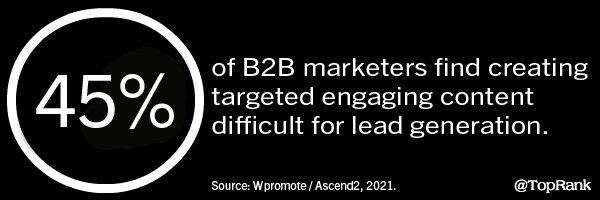
45 percent of B2B marketers find creating targeted and engaging content the most difficult challenge when it comes to lead generation, followed by difficulty gathering quality data at 43 percent, and managing and tracking leads at 38 percent, according to recently-released B2B marketing survey data of interest to digital marketers. MarketingProfs
Account-based marketing propelled forward by the pandemic
80 percent of B2B buyers plan to do more business online after the pandemic than they did during pre-covid times, while at the same time 77 percent say purchases have become more complex and challenging, with six to 10 people now comprising the median size of buying groups, newly-released survey data shows. MarTech
CMOs: Budgets, Resources Are Constrained, Digital Investments Most Popular
Digital commerce, marketing operations, brand strategy and marketing analytics are the top content marketing officer investments, according to Gartner’s latest CMO Spend Survey, which also showed that over 72 percent of total marketing budgets are now pure-play digital channels. MediaPost
Google Launches New Way to Optimize Videos For Search
Google has brought easier markup to video content hosted on brands’ own sites with the latest Google SeektoAction change, making non-YouTube video segmentation and chapters possible, the search giant recently announced, expanding the previous beta test of the feature to a wider audience. Search Engine Journal
Ad Market Grows 35.2% In June, Marks Fourth Consecutive Month Of Expansion
Strong year-over-year growth has continued for the U.S. advertising economy, with June’s 35.2 percent increase in ad spending representing the third month in a row of growth, according to newly-released advertising index data of interest to digital marketers. MediaPost
Instagram Stories Drafts are Now Available to All Users
Crafting more thoughtful and detailed content is likely to become easier with the return of Instagram’s option to save Instagram Story drafts — a feature that had previously been removed, the Facebook-owned platform recently announced. Social Media Today
YouTube Begins Adding Chapters to Videos Automatically
Optional artificial intelligence (AI) generated video chapter splitting has come to certain eligible videos on Google’s YouTube platform, with the option being turned on by default, in an effort to provide a more helpful user experience, YouTube recently announced. Search Engine Journal
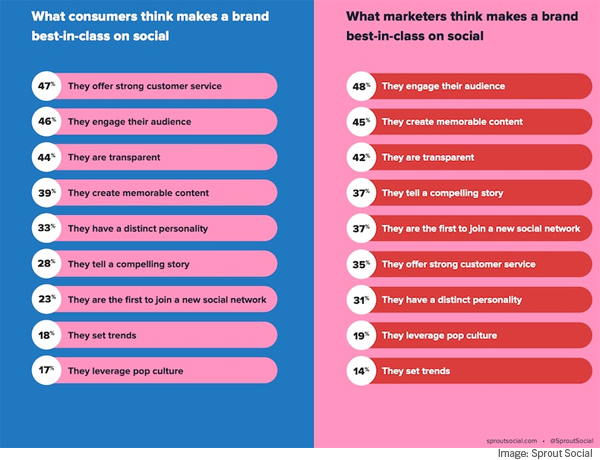
What Makes a Brand Best-in-Class on Social Media
Marketers and consumers hold differing viewpoints on the qualities that comprise best-in-class experiences on social media, with 48 percent of marketers noting that they saw audience engagement as the most important factor, while 47 percent of consumers said that they viewed strong customer service as the most important element, according to newly-released social media survey data. MarketingProfs
ON THE LIGHTER SIDE:
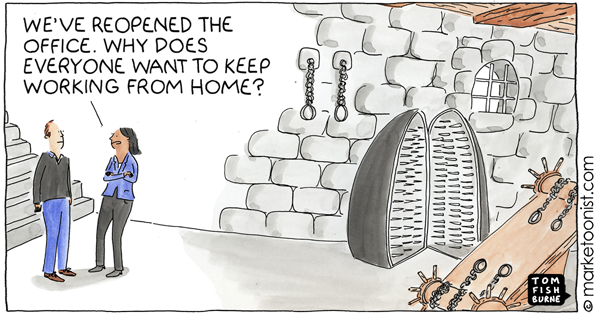
A lighthearted look at the “back to the office” by Marketoonist Tom Fishburne — Marketoonist
Italian Museums Are Using AI Cameras to Determine if People Like the Art — PetaPixel
TOPRANK MARKETING & CLIENTS IN THE NEWS:
- TopRank Marketing — Influencer Marketing In A B2B World – Don’t Miss Out! — Crowd Media
- TopRank Marketing — Why Website Accessibility Is Critical To The Digital Experience — Dan Gingiss
- Lee Odden — Top 45 Twitter Accounts on Marketing You Should Follow — Signum.ai
Have you located your own key B2B marketing news item from the past week of industry news? Please drop us a line in the comments below.
Thank you for taking the time to join us for this week’s TopRank Marketing B2B marketing news, and we hope that you’ll return again next Friday for more of the week’s most relevant B2B and digital marketing industry news. In the meantime, you can follow us at @toprank on Twitter for even more timely daily news.
The post B2B Marketing News: Targeting B2B Buyers Takes Long-Term Lens, Where CMOs Are Spending, ABM Use Rises In B2B, US Influencer Spending To Top $3B, & Media Price Inflation Concerns appeared first on B2B Marketing Blog – TopRank®.
Cultural Pit-Stops: making hours of boring travel time fly by
Ever noticed how summer holidays never seem to come quickly enough? We plan our journey ahead with chills of excitement, eagerly choosing which swimsuits will make it into our suitcase or dreaming of days blurring into long naps and lemonade-sipping, counting down the moments until we can finally hit the road. But then the long-awaited day arrives and time shifts as hours seem to stretch long while we wait to board a plane, travel hundreds of kilometers or miles by car (sometimes with kids or pets) or embark on multiple train rides. How can we make it go faster?
Google Arts & Culture and its partners have got you covered with Cultural Pit-Stops: a series of fun and educative activities you can do alone or with a group to help speed up time while you travel.
1. If you’re watching the clock tick before hopping on your next train/plane/bus…
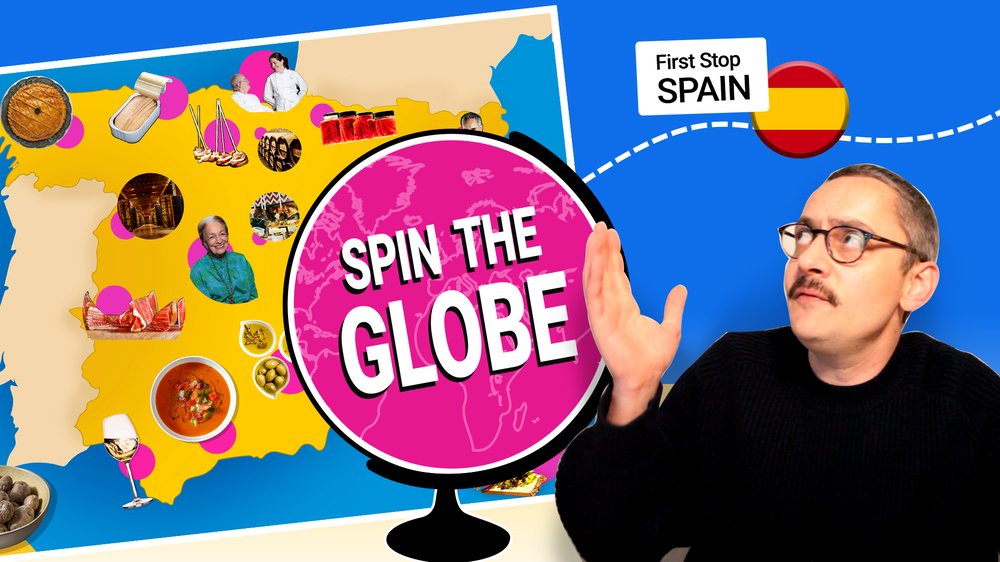
Enjoy a series of videos and experiences like Spin the Globe for your first stop, continue your journey across the world with celebrities, or just relax and stop frantically checking the departure board at the station or airport. And if you’re stuck in a car, we have something for you whether you are sitting in the driver’s orpassenger’sseat.

2. If your kids start to act up in the back of the car:
Traveling with children can literally be a headache but virtual baby-sitters like the Blobs or Hopper the Penguin may just save your journey by helping you keep your littles ones busy and focused as you create a song or explore a museum together.

3. If conversation is running dry with your fellow travel companions:
Why not test your knowledge of cinema pioneers or famous monuments? You may well become your group’s next culture champion and, if not, you can always put your headphones on and learn more about Frida’s Self Portrait or Gauguin’s Vahine. Tip: this also works for endless walks with your in-laws or that old uncle you haven’t seen in years.
If this intense cultural journey has left you exhausted, you can always squeeze in one last selfie — but make it artsy.
And just like that, you’ve arrived at your destination. Happy holidays.
Explore more by downloading the free Google Arts & Culture app, or visit the Google Arts & Culture website.
Gli Emirati Arabi Uniti useranno i droni per controllare il clima

Podcast del Disinformatico RSI 2021/07/23: Perché i computer spaziali durano decenni ma il mio PC si pianta sempre?

È appena terminato il montaggio del podcast di oggi de Il Disinformatico della Rete Tre della Radiotelevisione Svizzera, condotto dal sottoscritto, e la puntata è già online presso www.rsi.ch/ildisinformatico (link diretto). Questa è l’edizione estiva, dedicata a un singolo argomento.
I podcast del Disinformatico di Rete Tre sono ascoltabili anche tramite feed RSS, iTunes, Google Podcasts e Spotify.
Buon ascolto, e se vi interessano il testo e i link alle fonti della storia di oggi, sono qui sotto!
—-
L’uomo seduto davanti a me, in un ristorante di Zurigo in un caldissimo giorno di giugno, ha un problema. Deve riprogrammare un vecchio computer, cosa che sa fare benissimo, ma quel computer risponde molto, molto lentamente. Per mandargli un comando e ottenere la risposta servono quasi nove ore. Cosa più importante, se si blocca per un comando sbagliato è un po’ difficile andare a spegnerlo e riaccenderlo, perché quel computer sta a cinque miliardi di chilometri di distanza.
L’uomo, infatti, è Alan Stern, principale responsabile della sonda spaziale New Horizons, partita dalla Terra nel 2006; quella che ci ha regalato le prime, bellissime immagini di Plutone e che ora va riprogrammata per esplorare le zone più remote del Sistema Solare.
Questa è la storia di come uomini e donne di tutto il mondo riescono a creare macchine così incredibilmente affidabili da sopravvivere a decenni di funzionamento continuo nel gelo nello spazio, mentre noi conviviamo sulla Terra a fatica con computer, tablet e telefonini che vanno spenti e riaccesi perché si piantano continuamente. Perché loro ci riescono e noi no?
—-
Ho incontrato Alan Stern, il principal investigator della sonda spaziale New Horizons, a giugno del 2019, in occasione del festival di musica e scienza Starmus, tenutosi appunto a Zurigo. Stern era lì per presentare gli straordinari risultati della sua sonda.
[CLIP: AlanStern parla a Starmus]
I dati, appunto, arrivano lentamente perché la sonda sta a oltre cinque miliardi di chilometri e trasmette con una potenza di trenta watt: quella di una lampadina piuttosto fioca, per intenderci. E lui deve trovare il modo di riprogrammare il computer di quella sonda per cercare nuovi corpi celesti da esplorare negli anni che verranno.
Il lavoro di Alan Stern può sembrare lontanissimo, non solo in termini di distanza siderale, dalla nostra vita di tutti i giorni. Lui, come tutti i responsabili dei progetti spaziali, ha bisogno di sistemi informatici ad altissima affidabilità, mentre noi possiamo tranquillamente accettare che ogni tanto il nostro computer si pianti e vada riavviato pigiando un pulsante.
]CLIP: Suono di boot di Windows Vista]
Ma in realtà non è così: anche noi viviamo circondati da apparati informatici che devono assolutamente funzionare. Le nostre automobili contengono computer che ne gestiscono funzioni essenziali come la frenata; gli ascensori sono comandati da sistemi elettronici programmabili; gli aerei di linea volano grazie ai sistemi informatici di bordo. Sarebbe decisamente spiacevole se uno di questi sistemi decidesse che “Il computer ha riscontrato un problema e deve essere riavviato” proprio mentre stiamo effettuando un sorpasso o sorvolando le Alpi. La progettazione di sistemi a prova di crash informatico è insomma una cosa che ci tocca molto da vicino.
Ma non la possiamo avere nei nostri computer, perché troveremmo indigesto il prezzo di questa affidabilità totale. I progettisti di questi sistemi, infatti, devono ricorrere a rinunce drastiche e a rimedi costosi. I loro mantra non sono il numero di megapixel della fotocamera o la risoluzione ultra HD dello schermo o i gigahertz del processore, ma la resilienza e la ridondanza.
Resilienza significa che il software che controlla tutto, ossia il sistema operativo, deve essere in grado di assegnare le giuste priorità ai vari compiti che deve svolgere, e di decidere quali di questi compiti scartare senza pietà se la situazione gliene chiede troppi contemporaneamente. Se il vostro computer si ferma completamente per qualche secondo perché sta scaricando la mail, non muore nessuno; ma se il computer di una sonda spaziale che si sta avvicinando a Marte si blocca per una manciata di secondi nel momento sbagliato perché è occupato a copiare un file o a salvare una foto, rischia di schiantarsi sul pianeta o mancarlo completamente.
Non solo: il software deve essere anche capace di riavviarsi da solo e istantaneamente in caso di problemi, qualunque cosa accada, perché nello spazio non c’è nessuno che possa premere il pulsante di reset e non c’è tempo di aspettare il caricamento dei programmi. I progettisti includono quindi un cosiddetto safe mode: una modalità minima che permette al sistema di ripartire velocemente da capo, a mente fresca, per così dire, e dedicarsi alle attività essenziali ignorando tutto il resto.
Questa non è teoria o eccesso di prudenza: sono realmente accaduti vari episodi in cui questa progettazione astuta ha salvato le missioni spaziali e in alcuni casi anche le vite degli astronauti.
Un caso classico è quello del primo allunaggio, a luglio del 1969: due astronauti, Neil Armstrong e Buzz Aldrin, stanno scendendo verso la Luna quando il computer che mantiene stabile il loro veicolo va in sovraccarico a tre minuti dall’atterraggio. Sta ricevendo troppe informazioni contemporaneamente, e segnala questo problema ai due uomini con un laconico, semplice codice: 1202.
[CLIP: Armstrong e Aldrin segnalano il 1202]
Senza quel computer i due astronauti sono spacciati, ma i tecnici sulla Terra rispondono via radio di continuare tranquillamente la discesa, ignorando la crisi informatica. È la scelta giusta, perché il software del computer si riavvia istantaneamente, scarta i compiti non strettamente necessari e si concentra sull’unica cosa davvero importante: atterrare. E i due, appunto, atterranno con successo sulla Luna ed entrano nella Storia.
Se non abbiamo tanti pezzettini d’astronauta sparsi sulla Luna è grazie in parte a una donna, Margaret Hamilton. che era direttore e supervisore della programmazione del software della missione Apollo 11, a soli 33 anni. È stata lei a progettare il computer di allunaggio in modo così resiliente, ispirata in parte da un incidente avvenuto durante una simulazione: la sua piccola figlia Lauren, che aveva portato con sé in ufficio, era riuscita a mandare in tilt il computer di bordo semplicemente pigiando dei tasti a caso. Questo chiaramente non doveva essere possibile durante una missione.
Questa resilienza, però, si paga: niente grafica, niente finestre, ma solo lettere e numeri su uno schermo rigorosamente monocromatico. Accettereste un telefonino o un computer così semplificato? Senza Fortnite, senza suonerie personalizzate, senza video e foto per Instagram, senza schermo touch 4K, e con una manciata di bei tasti robusti? Probabilmente no. E quindi niente resilienza per il vostro smartphone.
Però il software del computerino che gestisce la frenata della vostra auto con l’ABS fa a meno di tutte questi abbellimenti e quindi riesce a fare una sola cosa e a farla bene: frenare senza bloccare le ruote. Quel computerino salvavita della vostra auto è resiliente come un veicolo spaziale.
Anche Alan Stern, l’uomo che cerca di vedere una lampadina da cinque miliardi di chilometri di distanza, sa bene quanto sia importante questa resilienza. La sua sonda New Horizons a un certo punto aveva perso il contatto radio con la Terra proprio pochi giorni prima di raggiungere la sua destinazione principale, Plutone, dopo anni di viaggio. Senza quel contatto radio i dati raccolti sarebbero andati persi per sempre. Ma la sonda, che era andata in sovraccarico di compiti da svolgere, si era resa conto della situazione e si era riavviata da sola, andando in safe mode e dando priorità assoluta alle trasmissioni, e così aveva ripreso il contatto con la Terra appena in tempo.
L’altro asso nella manica di questi computer ultra-affidabili è la ridondanza: tutti i componenti principali, dal processore alla memoria ai sensori, sono duplicati o triplicati. Se se ne guasta uno, subentra l’altro: se va in crisi anche quello, entra in azione il terzo, e così via. Ovviamente questo significa dover installare il doppio o il triplo dei componenti, occupando molto più spazio e quasi raddoppiando o triplicando i costi. Una scelta accettabile per un veicolo spaziale, che costa comunque milioni, ma non per un computer o uno smartphone che vogliamo che sia sempre più compatto e leggero e che costi sempre meno. Sarebbe come andare in giro sempre con quattro ruote di scorta: inutile quando c’è un gommista ogni pochi chilometri, ma molto opportuno se c’è da attraversare un deserto roccioso.
Anche questa ridondanza è un trucco che troviamo anche qui sulla Terra, ma solo nei sistemi informatici che proteggono cose essenziali: negli aerei di linea, appunto, per esempio, e nelle automobili dotate di sistemi avanzati di guida assistita. Questi sistemi devono avere tempi di analisi e reazione rapidissimi e devono funzionare sempre, e quindi le loro memorie e i loro processori sono ridondati, ossia duplicati; addirittura in molti casi l’intero computer è installato in due esemplari completi e ce n’è un terzo, differente, che decide cosa fare se gli altri due non concordano.
L’informatica spaziale, come quella terrestre, continua a evolversi, e la sua nuova frontiera è l’intelligenza artificiale: le sonde più recenti non chiedono più l’aiuto a casa, ma trovano da sole il punto giusto dove atterrare grazie a software di bordo che analizzano le immagini delle telecamere di navigazione e riconoscono crateri, massi e altri ostacoli da evitare. Anche questo software deve essere perfettamente affidabile e privo di esitazioni.
Zibi Turtle è un’altra di quelle persone che lo sa bene: è una collega di Alan Stern. Anche lei è coordinatrice di un progetto spaziale molto ambizioso: la prima sonda capace di atterrare e ripartire in volo per esplorare Titano, una delle lune di Saturno, alla ricerca di indizi chimici della vita. Lo farà nel 2036. La sonda, denominata Dragonfly, sarà così lontana, a un miliardo e quattrocento milioni di chilometri, che i suoi segnali ci metteranno ore, alla velocità della luce, ad arrivare al centro di controllo, per cui il suo software dovrà essere in grado di decidere da solo come volare e dove atterrare. Non potrà aspettare comandi dalla Terra.
Via Zoom, Zibi Turtle mi ha spiegato come Dragonfly, che è in sostanza un laboratorio volante simile a un grosso drone a otto eliche, dovrà cavarsela completamente da solo su Titano.
[CLIP: Zibi spiega]
Le sue decisioni saranno guidate dal software di bordo, che dovrà fare riconoscimento delle immagini in tempo reale. Se il software dovesse sbagliare, addio sonda, e quindi anche qui sarà necessario adottare resilienza e ridondanza.
Quello stesso riconoscimento delle immagini che permetterà a questo “ottocottero” di esplorare una luna lontanissima è quello che, in forma più semplice, riconosce i volti quando facciamo le foto con il telefonino, ed è quello che, in forma molto più sofisticata, agisce nelle automobili più moderne, che possono decidere di frenare autonomamente perché hanno riconosciuto la sagoma di un bambino che sta attraversando di corsa la strada senza guardare [CLIP] e hanno attivato il freno ben prima che il conducente avesse il tempo di rendersi conto del pericolo e reagire.
[CLIP: Allarme di collisione]
Alla fine, insomma, gli investimenti spaziali hanno ricadute molto concrete sulla Terra, grazie a persone come Alan Stern, Zibi Turtle, Margaret Hamilton e a tante altre come loro, sparse per il mondo.
Ed è così che le pigiate incoerenti di una bambina sulla tastiera di un computer spaziale mezzo secolo fa hanno creato un intero settore, l’ingegneria del software, che vale circa 400 miliardi di dollari, e ci hanno portato qui, sul nostro fragile pianeta, ad avere voli sempre più sicuri e automobili che frenano ed evitano incidenti, spesso meglio di quanto farebbero i loro conducenti umani. Ma al tempo stesso, la corsa al risparmio ci dà computer che invece s’impallano puntualmente, contando sul fatto che arriverà la nostra semplice, affidabile mano a spegnerli e farli ripartire.