Things to consider when developing job training programs
The way we work has changed. When millions of people around the world had to turn their homes into virtual offices due to the COVID-19 pandemic, technology became essential to stay connected with their day-to-day work. This uptake in technology use and the impact of the pandemic on the labor market have fundamentally transformed how we conduct business and the type of skills needed in the workforce.
As jobs with routine tasks like clerical work or bookkeeping become more automated, it’s important for governments to invest in their workforce so everyone can get the digital skills needed to succeed in today’s job market. That includes closing the digital skills gap for those who are at greatest risk of job displacement: women, those on lower incomes, young and disabled people, migrant populations and ethnic minorities who have borne the brunt of the economic fallout.
A full year after joining the European Commission Pact for Skills — an initiative to upskill and reskill the workforce — we are sharing the key characteristics that we feel should be considered when developing job training solutions. We draw on our experience implementing initiatives to help workers get the skills they need to get a job or grow their business. Since 2015, over 18 million people across Europe, the Middle East and Africa have participated in our Grow with Google training, resulting in more than 4 million people getting a new job, growing their career or growing their business.*
Provide in-demand training that’s
accessible to everyone
Earlier this year we announced Google Career Certificates. These affordable courses were designed for people with no prior experience to foster new skills in high-demand areas like IT support and data analytics. Hosted on the Coursera platform, they help people who want to learn online at their own pace, or who may want to change careers and don’t have the time or means to access traditional education. Moreover, they are designed to prepare learners for a new job within less than 6 months.
Invest in public-private sector partnerships
Addressing the challenges of the future of work requires collaboration between governments, companies and community organizations. Public organizations are often in the front line of addressing job displacement needs and play a crucial role in reaching those most in need of training. Google has partnered with organizations to helpreach trade unions and workers in the transport and logistics sector, developing programs to helpwomen build confidence in their leadership skills and funding nonprofits to provide critical services forunderserved small businesses.
We are providing 100,000 Google Career Certificates scholarships in Europe, the Middle East and Africa in collaboration with local organizations. Half of these scholarships go to learners from vulnerable populations through grant funding from Google.org to INCO for personalized coaching, mentorship, resume writing and other wraparound support. INCO has partnered with over 30 European non profits like Fundación Secretariado Gitano (FSG), an organization serving the Roma community in Spain.
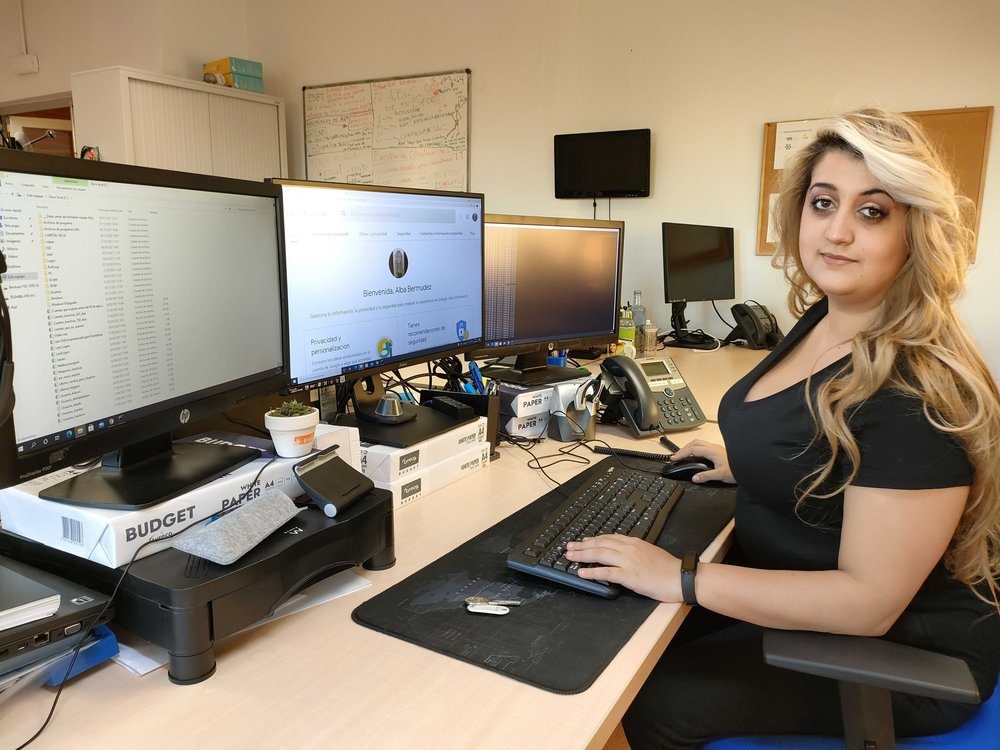
Alba Bermúdez in Madrid
Thanks to FSG, Alba Bermúdez in Madrid for instance was able to learn about the scholarships for the Career Certificates. Since the age of 16, Alba worked in craft fairs, as a clerk at a local flea market and most recently as a hairdresser assistant. After losing her job during the lockdown, she decided to use the scholarship from FSG for the IT Support course as she had always been curious about getting into the technology field. Shortly after finishing the course, she found a job in IT support.
In the UK, we’re providing scholarships for more than 10,000 people to be able to take these courses for free, including a partnership with the Department for Work and Pensions specifically aimed at jobseekers. We also worked with the Greek Ministry of Labor and the local manpower employer organization, OAED, to offer bespoke training programs in digital marketing, IT support and entrepreneurship to 10,000 unemployed young people in Greece. We have also partnered with Techfugees to provide digital skills training to unemployed refugees in Uganda, Kenya, Lebanon and Germany. These are just a few examples of partnerships with organizations in the region to provide financial assistance for digital skills trainings.
Work hand-in-hand with employers
While there are people that cannot find a job because they don’t have the right skills, 40% of employers in Europe also struggle to find qualified people. To ensure digital skills training directly translates into jobs, we are working with companies and organizations who recognize the Google Career Certificates and openly express their interest in receiving applications from graduates.
We know that no entity or industry can tackle these challenges alone. Instead, it’s a shared responsibility, one that will require public policy solutions as well as efforts on the part of businesses, communities, and civil society groups. At Google, we are committed to doing our part. We have a once in a generation opportunity to boost the prospects of an inclusive and sustainable digital future that works for everyone.
*Analysis by Google based on internal data and a survey by Ipsos from Sep 2016 to Sep 2021 amongst EMEA residents trained via Digital Workshop

Instagram, abbonamenti per supportare i creatori di contenuti?

Netflix, 5 film da non perdere a novembre 2021

#DeliveringSmiles, Amazon sostiene Sport Senza Frontiere
Honoring Veterans Day as a Googler and Reserve Officer
At Google, I’m on the Law Enforcement and Information Security (LEIS) team, where I work on a variety of legal issues, from physical security to cybersecurity. But every four months, I hand off projects to my teammates and fly across the country to my other office — the Washington Navy Yard in Washington, D.C. There, I’m the commanding officer of a unit in the United States Navy Reserve Judge Advocate General’s (JAG) Corps that represents sailors and marines appealing a conviction in the military court system.
Throughout my four years at Google, my team has been incredibly supportive of my Navy Reserve career. They cover for me while I’m away on assignments with no questions or fuss. Whenever I bring up an upcoming assignment, my director tells me to take as much time as I need. And when I got promoted to my current rank of Commander, the entire LEIS team attended the ceremony. I simply couldn’t continue my work in the Navy Reserve without their generous support and willingness to lend a hand.
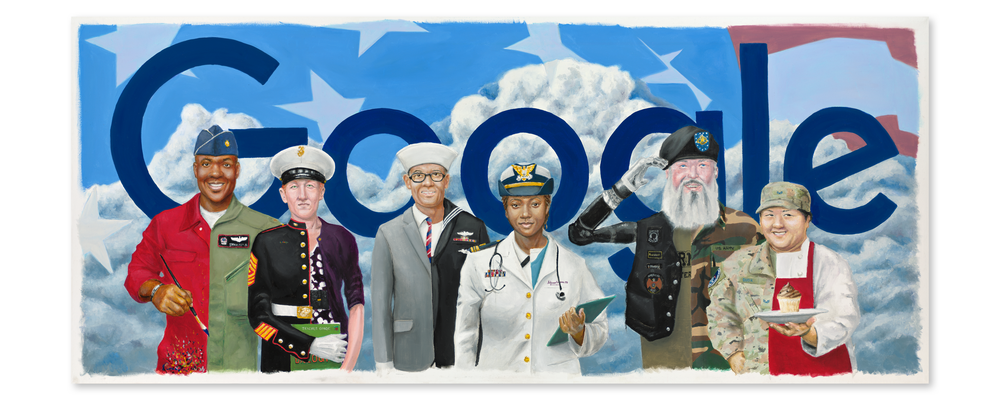
If you head over to the Google homepage today, you’ll see Google’s annual Veterans Day Doodle, illustrated by Army veteran and guest artist Steven Tette. And Google doesn’t honor veterans only on Veterans Day. We’re committed to this community year-round through support for veteran and National Guard or Reserve employees, and through programs and training for transitioning service members, veterans, and military spouses.
In fact, last week, we announced that Google.org is providing $20 million in grant funding and in-kind product donations to support economic empowerment for veterans and the military community. This includes a $10 million cash grant to Hiring Our Heroes to launch Career Forward — an initiative to train 8,000 transitioning service members, veterans, and military spouses for in-demand jobs through Google Career Certificates. These certificates are a great resource for the military community because they’re portable, industry-recognized credentials that prepare people for high-growth jobs across state and international boundaries — no degree or relevant experience required. The Career Forward program will also place certificate graduates in 12-week, on-the-job fellowships at one of over 400 employers in the Hiring Our Heroes network, and provide full-time job placement support.
Over the next year, our own Google Veterans Network — a community of veteran, military spouse, and civilian ally Googlers who support the career advancement and mental wellness of veterans — will volunteer with Hiring Our Heroes to host free career development, resume support, and job search workshops for thousands of service members. I’ll volunteer at one of the workshops myself, helping job applicants prepare for upcoming interviews.
Last week’s announcement builds on years of support for veterans and military families. Countless veterans have started and grown their own businesses with help from free Grow with Google resources. Last year, Google also became an official partner of the Department of Defense Military Spouse Employment Partnership and announced five days of paid leave for military spouses each time their service member receives orders. Google also works closely with the Cybercrime Support Network, an organization that helps consumers, including those in the military community, recognize and protect themselves against cybercrimes like employment scams.
Throughout my career, many people have helped me recognize the unique strengths I bring to a team because of my military service. Camaraderie and teamwork don’t end when we hang up our uniforms. And like many other current and former service members, I’m eager to pay it forward. Whether it’s by helping transitioning or retiring military members build a civilian career, providing resources for veteran business owners, or making it easier for military spouses to succeed in their careers despite countless moves, I’m proud to be a part of a company that puts its honor for the military community into action.
Honrar Dia de los Veteranos como Googler y Reservista
En Google soy miembro del equipo de Seguridad de la Información y Cumplimiento de la Ley (LEIS), donde trabajo con una variedad de asuntos jurídicos que van desde seguridad física hasta ciberseguridad. Pero, cada cuatro meses, delego mis proyectos a mis colegas y atravieso el país para ir a mi otra oficina: la Marina de los Estados Unidos en Washington, D.C. Allí soy comandante en jefe de una unidad del Cuerpo de Abogacía General (JAG) para la Reserva de la Marina de los Estados Unidos, que representa a marinos e infantes de marina que presentan recursos contra condenas en el sistema de tribunales militares.
Durante los cuatro años que llevo trabajando para Google, mi equipo ha sido un apoyo increíble para mi carrera en la Reserva de la Marina. Ellos me cubren, sin hacer preguntas y sin inconvenientes, cuando debo ausentarme para participar en alguna misión. Cuando hablo de mis próximas misiones, mi director me dice que me tome todo el tiempo que necesite, y cuando me ascendieron a mi rango actual de Comandante, todo el equipo de LEIS asistió a la ceremonia. Es tan sencillo como que no podría seguir trabajando en la Reserva de la Marina de no contar con su generoso apoyo y su voluntad de ayudar.
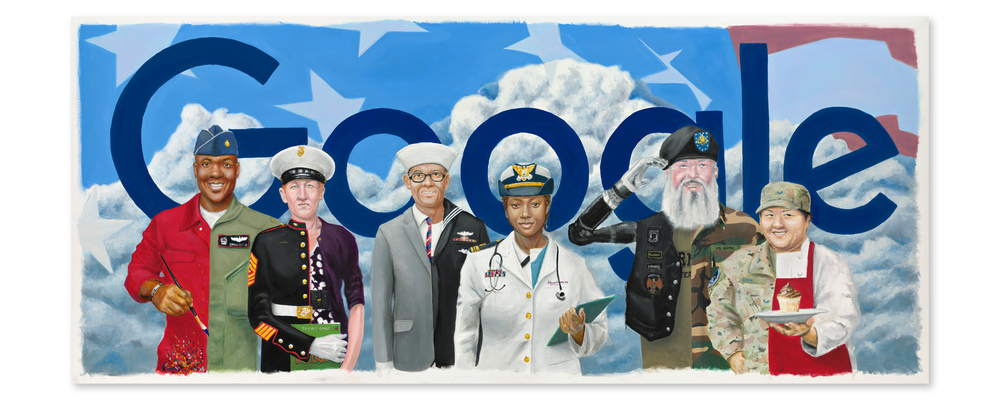
Si visitas la página de inicio de Google hoy, verás el doodle de Google en homenaje al Día de los Veteranos ilustrado por el artista invitado y veterano del ejército Steven Tette. Pero, Google no les rinde homenaje únicamente el Día de los Veterano; nuestro compromiso con esta comunidad se extiende durante todo el año mediante el apoyo a los veteranos y a los empleados de la Reserva Nacional o de la Guardia Nacional y a través de la organización de programas y formación para los miembros del servicio en transición, los veteranos y los cónyuges de militares.
De hecho, la semana pasada anunciamos que Google.org financiará USD 20 millones en subvenciones y donaciones de productos en especie para fomentar la autonomía económica de los veteranos y de la comunidad militar. Esto incluye una subvención de USD 10 millones en efectivo a Hiring Our Heroes para poner en marcha Career Forward, una iniciativa que formará a 8,000 miembros del servicio en transición, veteranos y cónyuges de militares en los trabajos de mayor demanda por medio de los Certificados profesionales de Google. Estos certificados son un recurso valioso para la comunidad militar ya que son credenciales reconocidas por la industria, que preparan a las personas en empleos con alto potencial de crecimiento más allá de las fronteras estatales e internacionales, y no requieren diplomas ni experiencia relevante previa. El programa Career Forward también dará a quienes reciban el certificado una beca de trabajo de 12 semanas en una de las más de 400 empresas que integran la red de Hiring Our Heroes y les proporcionará apoyo permanente para la integración laboral.
Durante el próximo año, nuestra propia Red de Veteranos de Google (una comunidad de veteranos, cónyuges de militares y Googlers civiles aliados que apoyan el desarrollo profesional y el bienestar mental de los veteranos) colaborará de manera voluntaria con Hiring Our Heroes para organizar sesiones gratuitas de desarrollo vocacional, apoyo para la redacción de currículos y talleres de búsqueda de empleo para miles de miembros del servicio militar. Yo mismo participaré como voluntario en uno de los talleres y ayudaré a los solicitantes de empleo a prepararse para sus entrevistas futuras.
El anuncio de la semana pasada es el resultado de años de apoyo a veteranos y familias de los militares. Muchos veteranos han creado y desarrollado su propio negocio con la ayuda de los recursos gratuitos de Crece con Google. El año pasado, Google también se convirtió en socio oficial de la Alianza de Empleos para los Cónyuges de los Militares (MSEP) del Departamento de Defensa y anunció que se concederían cinco días de licencia paga a cónyuges de militares cada vez que su miembro del servicio reciba órdenes. Google también trabaja estrechamente con Cybercrime Support Network, una organización que ayuda a los consumidores, incluidos los que forman parte de la comunidad militar, a reconocer y protegerse de delitos informáticos como las estafas de empleo.
Durante mi carrera, muchas personas me han ayudado a reconocer las ventajas únicas que aporto al equipo como miembro del servicio militar. La camaradería y el trabajo en equipo no terminan cuando nos quitamos el uniforme, y al igual que muchos miembros del servicio militar, actuales y antiguos, es un placer para mí devolver el favor. Ya sea ayudando a los miembros del servicio militar en transición o retirados a construir su carrera como civiles, aportando recursos a los veteranos dueños de empresas o ayudando a los cónyuges de militares a tener éxito en sus carreras a pesar de los numerosos traslados, estoy orgulloso de formar parte de una compañía que rinde homenaje de manera activa a la comunidad militar.

Un lanciatore spaziale… elettrico? Spinlaunch propone uno sparasatelliti centrifugo
Ultimo aggiornamento: 2021/11/10 23:10.
Spinlaunch è un sistema di lancio per satelliti che si basa sull’idea di accelerare un satellite usando la stessa tecnica di un lanciatore di dischi o di una frombola. Spinlaunch piazza il satellite in un contenitore aerodinamico, piazzato dentro una centrifuga nella quale è stato prodotto il vuoto, e lo accelera elettricamente tenendolo all’estremità di un braccio che ruota a velocità crescente, fino a raggiungere circa 8000 km/h.
A quel punto il braccio rilascia il contenitore-proiettile, che sbuca dalla centrifuga attraverso un tubo di lancio, trapassando la membrana che sigilla la centrifuga, e viene così scagliato fino a una quota di circa 60 chilometri senza usare nemmeno un goccio di propellente.
Raggiunta questa quota, si accende il motore a propellente chimico, che accelera il carico fino alla quota e velocità orbitale.
Spinlaunch ritiene di poter lanciare in questo modo satelliti fino a 200 chilogrammi a costi bassissimi e con grande frequenza, recuperando il contenitore per ulteriori voli. Ovviamente si tratta solo di voli cargo e non per il trasporto di equipaggi.
L’azienda ha già costruito una centrifuga di prova alta una novantina di metri in New Mexico e il 22 ottobre scorso ha effettuato il primo lancio di test, scagliando un proiettile lungo circa tre metri fino a una quota non precisata ma pari ad alcuni chilometri.
Dato che il decollo e l’attraversamento degli strati più densi dell’atmosfera sono le fasi che comportano il maggior dispendio di propellente e il maggior rischio, usare un sistema del genere risolverebbe parecchi problemi. Ovviamente ce ne sono altri: il proiettile, il motore al suo interno e il carico devono essere in grado di sopportare le enormi spinte centrifughe e l’attrito con l’atmosfera, e il sistema di lancio deve calcolare l’istante del rilascio in maniera assolutamente precisa, altrimenti il volo sarà molto breve.
Come consueto, Scott Manley ha un buon video esplicativo con un po’ di calcoli e ragionamenti critici che spiegano bene la complessità di un progetto come Spinlaunch.
Fonti: CNBC, Spinlaunch. Questo articolo vi arriva gratuitamente e senza pubblicità grazie alle donazioni dei lettori. Se vi è piaciuto, potete incoraggiarmi a scrivere ancora facendo una donazione anche voi, tramite Paypal (paypal.me/disinformatico) o altri metodi.
Stay productive with these Google features on iOS
If you use Google apps to get work done on your iPhone or iPad, we’re making some improvements to help you stay organized and productive.
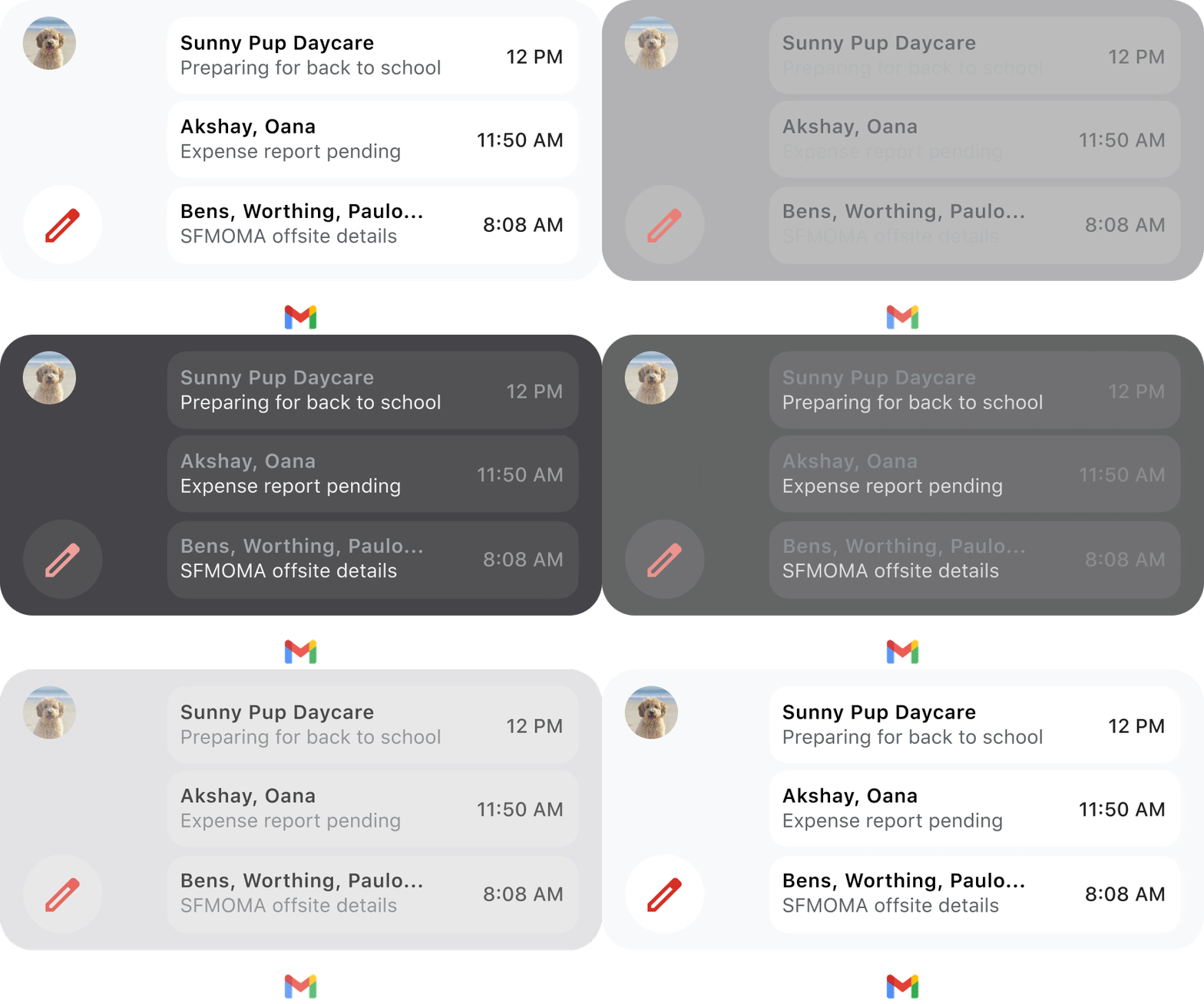
Keep on top of your inbox with the new Gmail widget
Thanks to your helpful feedback on our first Gmail widget, we’re adding a new one so you can better manage your inbox on iOS. With the new widget, you’ll see the senders and subjects of your most recent emails right on your Home Screen.
Building a more equitable workplace
When we established our racial equity commitments in June 2020, we started with a concerted focus on building equity with and for the Black community as part of our ongoing work to build a Google where everyone belongs. Over the past year, we’ve provided regular updates on our progress.
Through this work, we’ve found new ways to support all groups who have historically been underrepresented in the tech industry, and to improve our products so they work better for everyone. Here’s a look at our latest efforts.
Building a more representative workforce
We set out to improve leadership representation of Black+, Latinx+ and Native American+ Googlers in the U.S. by 30% by 2025. We’ve already reached our goal, and we’re on track to double the number of Black+ Googlers at all other levels in the U.S. by 2025.
Hiring alone isn’t enough. We’re continually investing in onboarding, progressing and retaining our underrepresented employees. This year, we ran an onboarding pilot to provide a sense of community, and targeted support and mentorship for Black new hires in the U.S., including providing an onboarding roadmap, resources and virtual seminars. New employees at the Director level were also paired with buddies in the Black Leadership Advisory Group (BLAG). We’ve seen positive feedback from this program — in fact, 80% of respondents to questions about their pilot experience said they would recommend it. We’ll take what we’ve learned and roll out a six-month onboarding program for Black new hires globally early next year.
We’re building a similar program for Latino Googlers, and many of our Employee Resource Groups have worked with us to establish a Noogler Buddy program. And in Europe, the Middle East and Africa, Black employees can opt in to receive one-on-one mentorship and external executive coaching during the second half of this year — regardless of tenure.
We continue to invest in fair and consistent performance reviews, promotion and pay outcomes. And we know leadership engagement is critical in this area, so all VPs are now evaluated on their leadership in support of diversity, equity and inclusion, which factors into their ratings and pay.
Ensuring our products work for everyone
We’re also continuing to build products that work for all users. Last month, we launched the Pixel 6 with an improved camera, plus face detection and editing products, which we call Real Tone — specifically to power images with more brightness, depth and detail across skin tones. And we’re continuing our work to take down videos with misinformation, removing roughly 10 million a quarter.
The call for product inclusion and equity ideas to support the Black community resulted in 80 new projects since 2020, including making a Black-owned business attribute available to merchants in the U.S. We also worked closely with the United States Hispanic Chamber of Commerce (USHCC) to unveil a new Latino-owned attribute in Google Business Profiles to help Latino-owned businesses get discovered in Google Search and Maps. We’re also creating Grow with Google digital resource centers with USHCC that will train an additional 10,000 Latino business owners on how to use digital tools to grow their business.
Creating pathways to tech
Back in June, we granted Historically Black Colleges and Universities (HBCUs) $50 million in unrestricted funding so these institutions could invest in their communities and the future workforce as they see fit. For example, North Carolina A&T State University is putting $150,000 towards curriculum development in pre-college programs for aspiring science, technology, engineering and mathematics (STEM) students. Morgan State University has dedicated $1 million to computer science operations, which includes new ideation lab spaces and equipment enhancements. Additionally, as part of our $15 million investment in the Latino community, we’re providing a $1 million grant to Hispanic Federation to help Latino-led and Latino-serving nonprofits train more than 6,000 individuals in career-aligned digital skills over the next year.
We’ve also partnered with the Thurgood Marshall College Fund, the Hispanic Association of Colleges and Universities and Partnership with Native Americans to bring digital skills and workforce training to HBCUs, Hispanic Serving Institutions (HSIs) and Native Serving Organizations (NSOs) through the Grow with Google Career Readiness program. In total, Google has committed to training more than 250,000 Black, Latino and Indigenous students by 2025. And through Grow with Google: Black Women Lead, we’re providing 100,000 Black women with career development and digital skills training by spring 2022.
We’re also expanding the paths to technology outside the U.S. For example, in Brazil, we launched the second class of Next Step, an internship program exclusively for Black students that removes the prerequisite for English.
Providing opportunities for economic advancement
Last year, we announced a goal to spend $100 million with Black-owned suppliers, as part of our broader supplier diversity commitment to spend more than $1 billion with diverse-owned suppliers in the U.S. every year. To date, we’ve paid out nearly $1.1 billion to diverse-owned suppliers, exceeding our $1 billion goal for 2021. We are also on track to meet our $100 million commitment toward Black-owned suppliers for 2021.
We continue to offer resources for Black-owned businesses through programs like the Google Storefront Kits program, which provides small businesses with free Google Nest and Pixel devices, alongside free installation and Grow with Google online training. In the first 60 days of the program, we donated 3,000 Nest and Pixel devices to more than 550 Black-owned businesses across the U.S. We’ve updated the kits based on business owners’ feedback and aim to reach an additional 1,200 Black-owned businesses across more cities in the U.S.
Google’s commitment of $185 million has enabled Opportunity Finance Network (OFN) to establish the Grow with Google Small Business Fund and OFN’s Grant Program, funded by Google.org to assist Community Development Financial Institutions (CDFIs) working with underserved small businesses. To date, over $149 million in loans and grants has been disbursed to OFN member CDFIs, including $50 million to support Black-owned businesses.
We’re focusing on communities outside the United States, too. For example, in addition to the $15 million we invested in Black and Latino founders in the U.S., we’ve invested in 50 Black-owned startups in Africa, 29 Black-owned startups in Brazil and 30 Black-owned startups in Europe.
We’re also partnering with financial institutions like BlackRock, Goldman Sachs and JP Morgan to launch money market funds that promote racial equity. We’ve invested more than $1 billion in products that generate revenue for diverse-led financial institutions, like Loop Capital, and support programs like the One Million Black Women Initiative and the Thurgood Marshall College Fund.
Our racial equity work is an important part of our company-wide commitment to diversity, equity and inclusion. It takes thoughtful engagement with our underrepresented employees, including the Asian and Pacific Islander, Black, Latino and Native American communities — as well as people with disabilities, those who identify as LGBTQ+ and those who come from different religious backgrounds. Through this work, we’ll build a Google where everyone belongs and more helpful products for our users and the world.
Traffic’s Black Hole: What B2B Marketers Need To Know About Dark Social
What do B2B marketers need to know about so-called dark social, and what are the best ways to manage and integrate unattributable site visitor traffic?
Is the old adage that any traffic is good traffic still true as we knock on 2022’s digital marketing door?
As we fall back for daylight saving time, let’s spring forward and take a look at these questions and more.
What Is Unattributable Traffic — a.k.a. Dark Social?
Historically, both dark social and the dark web have had somewhat muddled definitions, as each term has been used to mean both the unattributable segments of the online landscape and — quite differently — the unsavory portions of our Internet realm.
For our purposes, we’ll examine dark social as it relates to the difficulties most marketers face when it comes to trying to measure visitor traffic from largely unknown sources.
In our usage case, dark social simply refers to the way people share links to our content using private social channels, such as secure messaging apps — whether they originate from WhatsApp and its two billion global users, iMessage, Facebook Messenger, Signal, Slack, or the vast array of other alternatives.
Dark Social Isn’t New
First let’s take a look at how the popularity of the terms “dark social” and “dark web” have changed over time and in our digital lexicons.
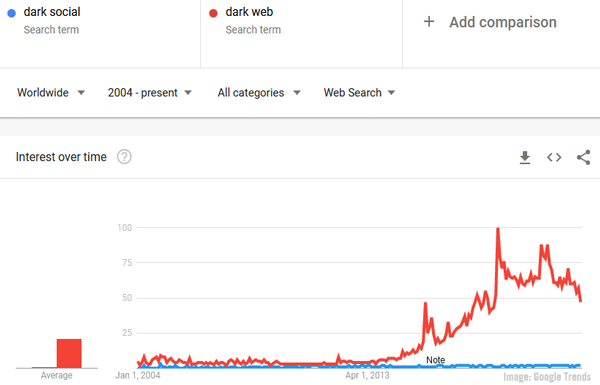
Clearly dark social hasn’t seen nearly the usage that the dark web has, yet dark social has endured as an ongoing puzzle for marketers and search engine optimization professionals alike.
The use of private messaging communication has increased worldwide, which means that more people are sharing links that don’t come from the traditionally measurable online public sources such as the major social media platforms, search engines, webmail, and easily-measured plain old web links.
While dark social isn’t new, the measurement challenges it presents may be growing in scope, however, as marketers are facing a new black hole where attribution data was once available, in the form of disappearing web browser cookie data and an increase in the number of folks using ad-blocking technology.
Disappearing Cookie Data & Increasing Ad-Blocking Form A New Measurement Black Hole
Between 1994 and 1996, as the web grew, so did the implementation of cookies — the bits of data used to keep track of who’s visited a particular website before — and as marketers we’ve seen their use explode over the intervening years, leading to the data privacy concerns and regulations that have grown over the past several years.
As the maker of the web’s most popular browser Chrome, Google’s decision this year to phase out its use of third-party cookies — those that go beyond simply tracking visitors on a single site — has undoubtedly caused substantial consternation among marketers.
While Google pushed back its timeline for implementing the third-party cookie cutoff until the later part of 2022, marketers are exceedingly likely to eventually face a new day when it will no longer be possible to track site-to-site browsing history — at least for users of Chrome — and focus will out of necessity need to shift to new ways of using first-party cookies, along with Google’s forthcoming Federated Learning of Cohorts (FLoC) alternative.
One marketing industry professional recently urged those looking to gauge the impact of what they’re doing with consumer data in cookies by taking the time to ask themselves, “Would I do this with my own mother’s data?” — always a good question to ask when it comes to how we treat others, including their browsing data.
Is Any Traffic Good Traffic?
With so much existing unattributable traffic and some cookie tracking options on the way out, just where should marketers focus their efforts when it comes to measurement?
As Sir Arthur Conan Doyle wrote for his famous sleuth Sherlock Holmes, “When you have eliminated the impossible, whatever remains, however improbable, must be the truth,” and for B2B marketers dealing with dark social and significantly diminishing cookie tracking options, taking a similar approach could very well be a wise choice.
In 2022 savvy marketers will meet these challenges head on and turn them into new opportunities by increasing their focus on the traffic sources that can be measured, and by paying greater attention to first-party cookie data.
Surprisingly, dark social and the loss of third-party cookie data may be blessings in disguise, as marketers will increasingly have to get more out of the information they do have at their control.
Then, as Sherlock suggested, the data black hole that remains — can also be more accurately measured against the known, making obscured traffic origins clearer by the brute force of eliminating the alternatives.
Although hidden dark social traffic may never be thoroughly unveiled, unless fundamental tracking changes are made to the underpinnings of deeply entrenched Internet protocols — marketers may face a future with less user data than ever, especially as concern for data privacy increases globally.
What’s Old Is New Again — Server Log Analysis & The Power Of Trust
As B2B marketing teams look to do more with the data they already have access to, the rather old-fashioned and unglamorous practice of server log-file analysis may see an uptick in 2022 and beyond.
A website’s server log files can contain a wealth of helpful information, potentially showing every search people conducted while on your site, along with tracking their navigation journey through a site. Getting access to this information depends on your organization and whether you host your own site.
It’s important to know as much as possible about where your traffic is coming from, however with the rise of dark social and the eventual loss of the majority of traditional third-party cookie tracking data, smart marketers don’t want to overlook any information sources when it comes to finding out more about their audience and what they want.
Dark social may hide the origin of your visitors, however the fact that you’ve got traffic arriving even in obscured form shouldn’t be overlooked, and may point to an especially powerful type of content sharing.
“Word-of-mouth remains one of the most effective and natural marketing drivers,” Sanjay Sarathy, vice president of marketing at SaaS technology firm Cloudinary, recently noted. “The person who shares a link to a loved one has already qualified that potential lead, and in doing so has become a champion of your brand. People trust people more than they trust brands,” Sarathy added.
This type of trust reinforces the power of influence, especially in the B2B marketing landscape, as our CEO Lee Odden has explored in, “Inside B2B Influence: Sarita Rao of AT&T on Growing B2B Executive Influence with Social Media,” and “Inside B2B Influence: Brian Solis of Salesforce on the Future of Influence in B2B Marketing.”
[bctt tweet=”“Word-of-mouth remains one of the most effective and natural marketing drivers. The person who shares a link to a loved one has already qualified that potential lead, and in doing so has become a champion of your brand.” — Sanjay Sarathy” username=”toprank”]Turn Your Marketing’s Dark Social Black Hole Into Northern Lights
By keeping the concerns we’ve examined in mind, we hope that you’ll be better equipped to face the traffic attribution and data analysis changes coming down the pike in 2022, and turn the dilemmas of dark social into something more like a digital version of the curious spectacle of northern lights.
Next year it will be even more important to stay on top of the latest news on dark social, data privacy, and other vital marketing topics. B2B marketing industry news sources, such as our long-running weekly TopRank Marketing digital marketing news each Friday, can help marketers stay abreast of key shifts and how they affect our industry.
No matter how well you’re able to track it, crafting award-winning B2B marketing takes considerable time and effort, which is why an increasing number of firms are choosing to work with a top digital marketing agency such as TopRank Marketing. Reach out to us today to learn how we can help, as we’ve done for over 20 years for businesses ranging from LinkedIn, Dell and 3M to Adobe, Oracle, monday.com and others.
The post Traffic’s Black Hole: What B2B Marketers Need To Know About Dark Social appeared first on B2B Marketing Blog – TopRank®.

Google presenta il sistema di previsione delle inondazioni

TCL C728 55″: qualità e completezza al giusto prezzo, e c’è anche Android TV

Asus VivoBook Pro 14X
This Googler is dedicated to making a difference
Welcome to the latest edition of “My Path to Google,” where we talk to Googlers, interns and alumni about how they got to Google, what their roles are like and even some tips on how to prepare for interviews.
Today’s story is all about Lerato Seopela from our Johannesburg office. Lerato shares her path from management consultancy to marketing at Google, plus her passion for sustainability and beekeeping at home.
What do you do at Google?
I’m an Associate Product Marketing Manager (APMM) for the Ads Marketing team in Sub-Saharan Africa. My work often comes to life through local tool launches and events that share insights and practical tips with clients to help them reach their business goals.
The Google APMM program is a unique career path on the Google Marketing team. As a cohort-based, two-and-a-half-year rotational development program, it provides an active community, leadership roles, and job rotations to help you discover different marketing teams across Google.
I’m also an inclusivity advocate. Since joining Google, I have helped create inclusive marketing campaigns, research, and business training specifically for the LGBTQ+ community in the region.
What have been the driving forces behind your career?
My family has had a huge impact on my career. My parents, aunts and uncles have all achieved success and happiness despite the adversities they faced during the Apartheid regime. The values they’ve instilled in me have influenced how I empower myself and others through education. I feel fulfilled in my career when I know that I’ve contributed to improving the lives of others, whether that’s through supporting people’s business needs or helping them develop new skills.
How would you describe your path to Google?
Before Google, I was a marketing consultant at Discovery Health, an insurance company that encourages people to live healthier. Towards the end of 2019, I decided to look for a new job that would give me the opportunity to build my problem-solving skills, develop strategies and work with different people around the world. At the beginning of 2020, I started a new job as a management consultant at a local management consulting firm. Just before I transitioned to this new role, a recruiter reached out to me on LinkedIn about an open Associate Product Marketing Manager role at Google. After a quick call with her, I immediately began the application and interview process, which all took place virtually. And I was lucky enough to get the role! I joined Google in April 2020, soon after the world was thrust into a global pandemic. Despite not seeing a Google office yet, it’s been an incredible experience working with so many talented people.
What surprised you about the interview process?
I was surprised by the rounds of interviews and the amount of communication from my recruiter throughout the whole process. It was reassuring to have someone to reach out to with questions, and who would proactively keep me updated. Everyone throughout the interview process was so lovely and made an effort to help me feel comfortable. It was a really human experience, and I could get a sense of the company culture from everyone I met.
What gets you most excited in your role?
What excites me most about my role is the breadth of work available, my amazing colleagues, and the tangible and positive impact we are making in the region. I’ve contributed to projects like the Economic Recovery campaign, which helps small businesses, jobseekers, educators and students find their feet and recover during the COVID-19 pandemic. These efforts gave me a sense of purpose during a challenging time, and showed me that I can make a difference in my job. It was inspiring to see how some of the small businesses we worked with not only recovered, but thrived under very difficult circumstances. And working alongside a team dedicated to helping as many people as possible has been one of the proudest moments of my career.
And what excites you outside of your role?
My guilty pleasure is reality TV! I love watching the Real Housewives franchise. I’m also a huge foodie, and I like finding new places to try new food and hang out. To keep level headed, I enjoy Pilates, yoga, and hiking, and recently discovered the benefits of meditation. I’m also an advocate for sustainability and environmental preservation. In fact, I’ve taken up beekeeping to support the declining population of bees around the world.
Any tips for anyone hoping to join Google in Africa?
Have confidence in your ability. Don’t doubt the amazing things that you can do, and the impact you can make across the continent.