
Restor rende chiunque partecipe del ripristino ecologico della Terra
Lavorare insieme per far crescere il movimento globale di recupero ambientale

Netflix, 5 nuove serie TV da vedere a Halloween 2021
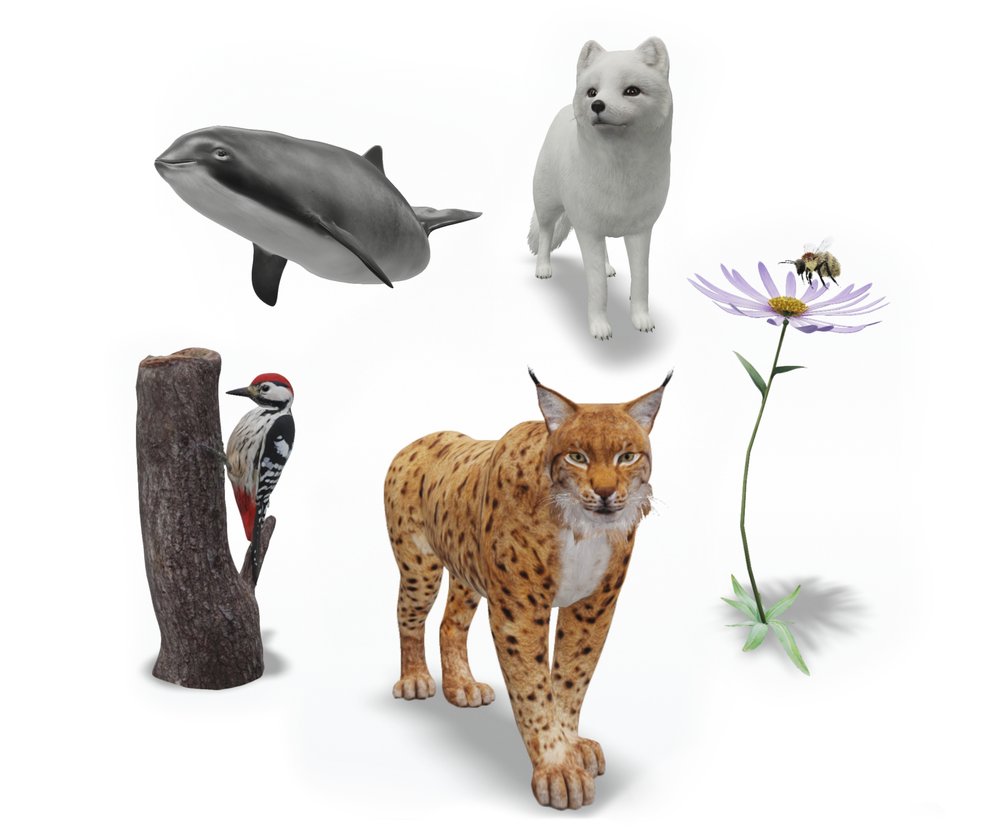
Bringing new life to Swedish endangered animals using AR
According to the UN, more plants and animals are threatened with extinction now than in any other period of human history — approximately 1 million species globally. The accelerating pace of extinction is an urgent matter, and at this week’s UN biodiversity conference representatives from countries all over the world are coming together virtually to set out a plan for how to combat the challenge of better protecting our endangered ecological ecosystem.
Sweden, which is home to much of the iconic wildlife in the northern hemisphere — from moose and bears to reindeer and wolverines— currently has 2,249 threatened species, according to the IUCN Red List. Each of these animals plays a vital role in the ecosystem we are all a part of, yet according to a recent study by Kantar Sifo, 30% of Swedes don’t believe or know if there are animals currently at risk of becoming extinct in Sweden.
Meet five endangered species in 3D
Today, in collaboration with the Swedish Society for Nature Conservation, and in an effort to raise awareness of endangered animals, we are bringing five new Swedish endangered species to Search in augmented reality. Now, by simply searching for the lynx, arctic fox, white-backed woodpecker, harbour porpoise or moss carder bee in the Google App and tapping “View in 3D”, people from all over the world will be able to meet the animals up close in a life-size scale with movement and sound.
Restor helps anyone be a part of ecological restoration
In the face of a rapidly warming planet, protecting and restoring the world’s ecosystems is critical for safeguarding the biodiversity we all depend on and for helping us adapt to a changing climate. In addition, restoring ecosystems around the world has the potential to draw down about 30% of accumulated global carbon emissions and is key to limiting the worst effects of climate change. But where do we start and how?
How Google technology helps unlock ecological insights
As part of their work to better understand the relationship between ecological systems and climate change, professor Thomas Crowther and scientists at ETH Zurich’s Crowther Lab analyzed 78,000 images of tree cover and applied machine learning (ML) models to predict where trees could naturally grow. The findings revealed a thrilling opportunity: outside of urban and agricultural areas, there are approximately 0.9 billion hectares of degraded lands worldwide that could potentially support an additional trillion trees. The discovery catapulted restoration into the headlines, and Crowther Lab saw a need to support new and existing restoration projects by bringing together practitioners and scientists to form a global network — and to make the movement accessible to the public.
The result is Restor, which launches this week. Founded by Crowther Lab and powered by Google Earth Engine and Google Cloud, Restor allows anyone to analyze the restoration potential of any place on Earth. When you outline a given area on the Restor map, it will show you data on local biodiversity, current and potential soil carbon, and other variables like land cover, soil PH and annual rainfall. With this information, anyone can better understand their local environment and become a restoration practitioner. The platform connects practitioners, facilitates the exchange of information, and makes projects visible to potential funders and the public.
Designers, animators and creative technologists from Google Creative Lab helped design and develop the platform. Additional support, in the form of a $1 million grant from Google.org, is helping the Restor team test new ways to monitor ecosystem restoration progress by collecting data on indicators such as tree size and density, soil moisture, and vegetation structure from various restoration projects currently underway. Insights from this data will help Restor’s machine learning models deliver more accurate ecological insights, monitor project development, enable early intervention in at-risk areas, and help restoration organizations learn from one another.
Working together to expand the global restoration movement
Restor is making essential scientific data and high-resolution satellite imagery openly accessible to anyone, anywhere in the world with an internet connection. As the effort to invest in and support ecosystem restoration grows, we want to make sure that everyone can effectively measure progress. To do that, there needs to be sector-wide standards for tracking restoration metrics, such as the quantity of vegetation and soil carbon, native species abundance and survival rate. To support standardization, Google.org is granting $500,000 to Climate Focus to support the Global Restoration Observatory, which will bring together leading data providers, think tanks and restoration experts to do just that.
To protect and reverse the degradation of billions of hectares of ecosystems, we all need to get involved. Through our support for organizations like Restor and Climate Focus, we hope to empower a global restoration movement and make it possible for groups and individuals everywhere to heal our planet.

Walk the Great Wall of China
As the largest man-made structure in the world, the Great Wall of China is one of the most iconic and popular heritage sites anywhere. Over 10 million people visit each year—but not everyone has the opportunity to see the Great Wall first-hand.
Today, in collaboration with renowned Great Wall expert Dong Yaohui and curators from Gubei Water Town, Google Arts & Culture presents a new theme page enabling people to visit the Great Wall virtually. “Walk the Great Wall of China” includes an exclusive 360-degree virtual tour of one of the best-preserved sections, 370 images of the Great Wall in total, and 35 stories that dive into fascinating architectural details. It’s a chance for people to experience parts of the Great Wall that might otherwise be hard to access, learn more about its rich history, and understand how it’s being preserved for future generations.

Farò un volo in mongolfiera: che esperimenti posso fare?
Come avrete intuito dal mio silenzio, il mio tentativo di aggiudicarmi un volo intorno alla Luna è terminato dopo aver passato la prima selezione (i selezionati, che io sappia, non sono ancora stati annunciati).
In compenso mi accingo a una forma di volo suborbitale che non ho mai avuto il piacere di assaporare: un’ascensione in mongolfiera, che dovrebbe svolgersi (meteo permettendo) il 13 novembre prossimo.
Il volo è un regalo della Dama del Maniero insieme ad amici, familiari e parenti, per il mio compleanno. Durerà un’ora e mezza, superando la frontiera fra l’Italia e la Svizzera, e avrò occasione di partecipare alle operazioni di gonfiaggio pre-volo e piegatura post-volo.
Ho intenzione di godermi appieno la vista e il silenzio di questo mezzo di trasporto così antico e magico, ma se vi viene in mente qualche esperimento semplice che posso fare durante l’escursione, segnalatemelo nei commenti! Per ora mi sono venuti in mente questi:
- Geolocalizzazione in tempo reale tramite Glympse o simili (a proposito, conoscete qualche app che salva le localizzazioni anche in altitudine, in 3D?)
- Lancio di aeroplanino di carta o coriandoli (se permesso)
- Foto del Maniero Digitale e di altri luoghi interessanti
- Qualcosa con segnali radio o cellulari?
- Qualche esperimento di fisiologia, visto il cambio di quota abbastanza repentino e significativo?
Tenete presente che sono esclusi droni e dispositivi pesanti, ingombranti o che richiedano gestione continua. Avrò con me una GoPro e forse un piccolo selfie-stick e posso coordinarmi con qualcuno a terra.

Il Capitano Kirk (William Shatner) va nello spazio. Stavolta per davvero
L’attore William Shatner, noto ai Trekker come il Capitano Kirk di Star Trek e a molti altri fan come TJ Hooker e come Danny Crane, dovrebbe effettuare un volo spaziale suborbitale a bordo di un razzo New Shepard di Blue Origin domani (13 ottobre) alle 15.30 ora italiana. Diventerà la persona più anziana ad andare nello spazio: ha novant’anni esatti, ma decisamente non li dimostra.
Per l’occasione Shatner ha registrato questo bel video:
“We are just at the beginning, but how miraculous the beginning is.” @WilliamShatner is ready to go to space. #NS18 pic.twitter.com/u3MnOAbWtW
— Blue Origin (@blueorigin) October 12, 2021
Sarà un volo piuttosto breve, una decina di minuti in tutto: il razzo salirà a circa 100 km di quota, raggiungendo quindi lo spazio perché supererà la linea di Karman che definisce arbitrariamente il confine fra atmosfera terrestre e spazio, ma ridiscenderà subito dopo perché non avrà la velocità orizzontale (28.000 km/h) necessaria per entrare in orbita. Questa traiettoria offrirà comunque qualche minuto di assenza di peso.
Chicca: formalmente Shatner non diventerà il primo attore di Star Trek ad andare nello spazio, perché altre persone che hanno recitato nella saga ci sono già andate. Mi vengono in mente almeno tre nomi: Mae Jemison, Terry Virts e Michael Fincke. Sono infatti astronauti che hanno fatto piccole parti da attore in varie puntate di Star Trek.
Fonti aggiuntive: Blue Origin, Blue Origin. Questo articolo vi arriva gratuitamente e senza pubblicità grazie alle donazioni dei lettori. Se vi è piaciuto, potete incoraggiarmi a scrivere ancora facendo una donazione anche voi, tramite Paypal (paypal.me/disinformatico) o altri metodi.
Happy 5th birthday, Google Assistant!
We launched Google Assistant five years ago — and back then, it sometimes felt a bit strange to ask our devices for help. Now, digital assistants are part of daily life for millions of people around the world. In fact, Google Assistant has helped answer billions of questions, send millions of messages, make millions of recipes, set billions of reminders and much more (hands-free!).
In its early days, Assistant offered just two voices, was available on Google Home speakers in the U.S. and supported English and German on Pixel phones. Now, Assistant is available in over 90 countries in nearly 30 languages, offers 10 voices to choose from and works with more than 100 million smart home devices, including lights, security systems and thermostats.
Try asking “Hey Google, Happy Birthday” or “Hey Google, how old are you?” for a timely surprise. To continue the celebration, members of the Google Assistant team share some of their favorite features and advancements from the past five years.
Supporting more complex, contextual and helpful conversations
Dave Orr, Group Product Manager, Natural Language Processing
Google Assistant brings together all the technology Google has been building for years, from the Knowledge Graph to Natural Language Processing. One of my proudest moments working on the team was when we applied BERT, the revolutionary neural transformer invented by Google in 2018, to Assistant conversations, helping Assistant understand context and longer dialogs, making conversations more natural.
Advancing and expanding AI capabilities
Lisa Huang, Group Product Manager, Duplex
A major milestone for me was when we introduced Duplex for Google Assistant three years ago — revolutionizing the ability for computers to understand and generate natural speech. It meant Assistant could make a phone call on your behalf for an appointment, find store hours or make online food orders easier. In fact, more than 600,000 reservations at restaurants and hair salons were made last month with this feature. Throughout the pandemic, Duplex made millions of calls to businesses for store hours and delivery availability, in Maps and Search.
Building a more inclusive Assistant
Beth Tsai, Director, Policy
One of the things I love most about Assistant is how intentional we’ve been about inclusivity. For example, we don’t think of Assistant as having any particular gender, which is reflected in its name. When you set up your Google Nest device, we randomly assign a voice, so you have a 50/50 chance of getting one of two voices — either the “red” voice or the “orange” voice. We don’t formally designate voices as being “male” or “female,” but you can think of the “red” voice as traditionally female sounding, and the “orange” voice as traditionally male sounding.
Bertrand Damiba — Group Product Manager, Language, Translation, Routines & Recommendations
I’m really proud of how our team mobilized to support and educate users around the Black Lives Matter movement through inclusive content. We also added the ability to say “Hey Google, what happened today in Black history?” and “Hey Google, what happened today in Latino history?”
Sheenam Maheshwari — Product Manager, Text-to-Speech
We’ve been working on adding Text-to-Speech voices for Google Assistant that can fluently speak and understand more than one language, even within one utterance (or code-switching) — they’ll launch in the coming days. Check out a preview of the new English-Spanish bilingual voice when you ask Assistant about Latino history. Names will even be pronounced in a more authentic Spanish accent. We’ll add support for English-Hindi and other common language pairs where code-switching often occurs later this year.
Designing a private Assistant from the ground up
Bryan Horling — Software Engineer, Privacy
A highlight from my time on the team was when we launched Guest Mode. Just say, “Hey Google, turn on Guest Mode,” and your Google Assistant interactions will not be saved to your account. Another way we’re helping users manage their data is with voice actions: You can say “Hey Google, delete my last conversation” or “Hey Google, delete everything I said to you this week” and Assistant will delete activity from your account.
Google Assistant is built to keep your information private, safe and secure. As always, users have control over how Google Assistant handles their data and the features they choose to use. You can do things like review, delete or turn off Web and App Activity, limit audio recordings or turn off ads personalization.
Creating more secure, optional personalized experiences
Nino Tasca — Group Product Manager, Speech
It was really exciting to be the first to introduce the technology that lets users teach a digital assistant to recognize their voice with Voice Match. You can choose to train Google Assistant to recognize your, your kids’ and whoever else’s voice you share a home with so everyone gets personalized responses. We built on this with Face Match, which means your device can recognize when you walk up to it and present a personalized display, or media — like your calendar or upcoming package deliveries.
Hands-free help while driving
Effie Goenawan — Product Manager, Auto
We just launched several new Google Assistant updates for cars, and I personally love that you can say “Hey Google, pay for gas” to complete your transaction from Android Auto or from your Android phone. And starting to roll out today, you can say “Hey Google, let’s drive” to access a new dashboard for Google Assistant driving mode on your phone or automatically launch it in your car via Bluetooth.
Helping families throughout their day
Brad Abrams — Group Product Manager, Family
At the onset of the pandemic, I quickly learned my family needed help keeping on track. One of my favorite productivity features is Family Bell. I use it on my smart speakers and smart displays to remind me it’s time to make dinner, or for my kids to take a break and stretch.
Building the smart home of the future
Michele Turner — Sr. Director, Product Management, Smart Home Ecosystem
One of the most exciting milestones for me was when Google and other leading tech companies came together to develop Matter, a protocol that simplifies smart homes by using one standard across the industry.
A redesigned Assistant for the phone
Luv Kothari — Senior Product Manager, Mobile
I personally enjoy calling features like Call Screen and Hold for Me where Assistant manages tasks over the phone. And our recent breakthroughs in on-device speech processing means that more requests can happen right on your Pixel, making Assistant faster and many device-level queries like “take a selfie,” “open Chrome,” “turn on flashlight” work even without an internet connection.
MSI GS66 Stealth: il notebook sottile con GeForce RTX 3080

WSL diventa un’app del Microsoft Store
How Google Workspace is helping the RSPCA
For nearly 200 years, the Royal Society for the Prevention of Cruelty to Animals has worked to ensure that animals of all kinds, from household pets to livestock and animals in sport, have a good life. It is an extraordinary mission that involves 1,400 people, including around 270 inspectors and 100 animal rescue officers across England and Wales. Together they rescue animals in distress, investigate suspected incidents of cruelty, place animals in new homes, train volunteers, and educate the public about suitable animal care.
Last year, the RSPCA’s dedicated frontline team handled over 1.2 million phone calls, investigated more than 140,000 suspected incidents of cruelty, found homes for over 29,000 animals and secured over 1,400 convictions for abuse. They also coordinated a network of 150 branches in England and Wales, along with 56 regional and branch animal centres, plus animal hospitals, clinics and wildlife centres. It’s a mammoth task.
We’re proud that for over nine years the RSPCA has relied on Google Workspace to help coordinate this work. Clear communication and collaboration, wherever it’s needed, takes many forms. Workspace helps with everything from email and video calls, to collaborative documents and spreadsheets, slides and other visual tools for education. This is available from wherever it’s needed, whether via desktop, laptop, or mobile device. The RSPCA has even trialled new digital rehoming initiatives, which use video conferencing via Google Meet to virtually visit the new homes of animals that have been rescued. It does what technology does at its best: focus on the human need, and the human connection.
During the COVID lockdown, Workspace became an even more critical tool for the RSPCA, enabling virtual experiences in place of face-to-face staff interactions, volunteer and staff onboarding and check-ins with people who were caring for rescued animals. That’s how tens of thousands of animals could be looked after despite the lockdowns, and how more than 500 RSPCA meetings could take place every day in 2020.
“Our strategic mantra is ‘Together for animal welfare’. Everyone in every department is all working towards that same goal,” says Alan Moynihan, Head of IT Customer Solutions at the RSPCA. Workspace, he says, is “a system that gives us effective collaboration and communication tools without geographical boundaries.”
Some of those tools, like Chromeboxes and Chromebooks, complement Workspace while reducing hardware costs, improving team coordination and enabling Alan Moynihan and his IT staff to better control software creation and management. Android and iOS mobile devices give field workers like inspectors and animal rescue officers instant access to files they need in the field.
We stand in admiration of the dedication of the thousands of people involved with the RSPCA and are proud that solutions like Google Workspace help them continue to do this critical work.
Helping companies tackle climate change with Earth Engine
Recent wildfires, floods and other natural disasters remind us that everyone has to take action to move the needle on climate change — from scientists and researchers to governments at all levels and businesses of all sizes.
Google Earth Engine combines satellite imagery and geospatial data with powerful computing to help people and organizations understand how the planet is changing, how human activity contributes to those changes and what actions they can take. Over the past decade, academics, scientists and NGOs have used Earth Engine and its earth observation data to make meaningful progress on climate research, natural resources protection, carbon emissions reduction and other sustainability goals. It has made it possible for organizations to monitor global forest loss in near real-time and has helped over 160 countries map and protect freshwater ecosystems.
Today, we’re expanding Earth Engine with a commercial offering for select customers in preview as a part of its integration with Google Cloud Platform. Organizations in the public sector and businesses can now use insights from Earth Engine to solve sustainability-related problems, such as building sustainable supply chains, committing to deforestation-free lending, preparing for recovery from weather-related events and reducing operational water use. To learn more about how Earth Engine can help your organization meet its sustainability goals,fill out this form.
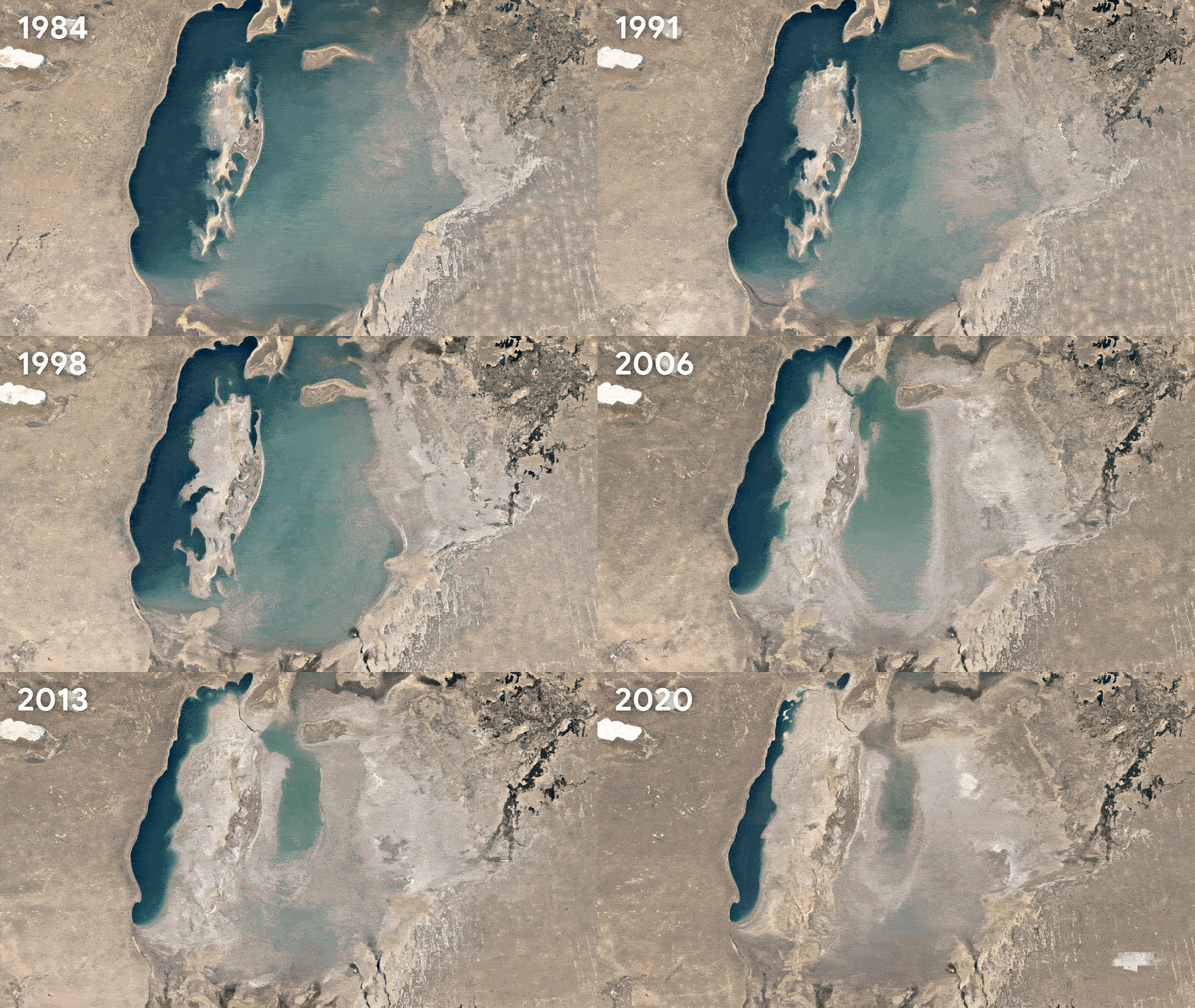
Surface water change visualization enabled by Earth Engine (shown here: Aral Sea from 1984-2020).
This new offering puts over 50 petabytes of geospatial open data into the hands of business and government leaders. Google Cloud customers and partners can bring together earth observation data with their own data as well as other useful datasets, train models to analyze at scale, and derive meaningful insights about real-world impact. By combining Earth Engine’s powerful platform with Google Cloud’s distinctive data analytics tools and AI technology, we’re bringing the best of Google together.
Already, businesses and organizations across the public sector, agriculture, financial services and consumer goods industries are using insights from this data to improve their operations, better manage and mitigate their risks while also preserving natural resources. For example, consumer goods company Unilever plans to achieve a deforestation-free supply chain for palm oil and other commodities by 2023. With insights from Google Earth Engine and its internal supply chain sourcing information, they can model the source of palm oil to their mills. The U.S. Department of Agriculture is also using Earth Engine to eliminate the overhead of managing vast amounts of geospatial data. This will enable their agency, the National Agricultural Statistics Service, to focus on the analyses of 315 million acres of croplands across the United States. We look forward to seeing more impactful use cases and quantifiable progress towards sustainability goals that Earth Engine will continue to power across organizations.
The time for businesses to act on climate is now, but the advanced analytics resources and sustainability knowledge needed to make change can be hard to access. To make sure businesses can make the most out of Google Earth Engine, we’re working with partners, like NGIS and Climate Engine, to help businesses identify and manage risks related to climate change.
It will take all of us working together to make a difference. Earth Engine will continue to be free for scientists, researchers and NGOs, just as it has always been. We hope that putting Google Earth Engine into the hands of more businesses, organizations and people will multiply the positive impact we can have together on our people and planet.

Samsung TV in offerta: 460 euro di sconto sul modello Q60A da 65″

Kaspersky: forte aumento di furti di password online in sei mesi