Twitter patteggia 809,5 milioni per porre fine a una class action
How Indonesia Helped Spice up the World
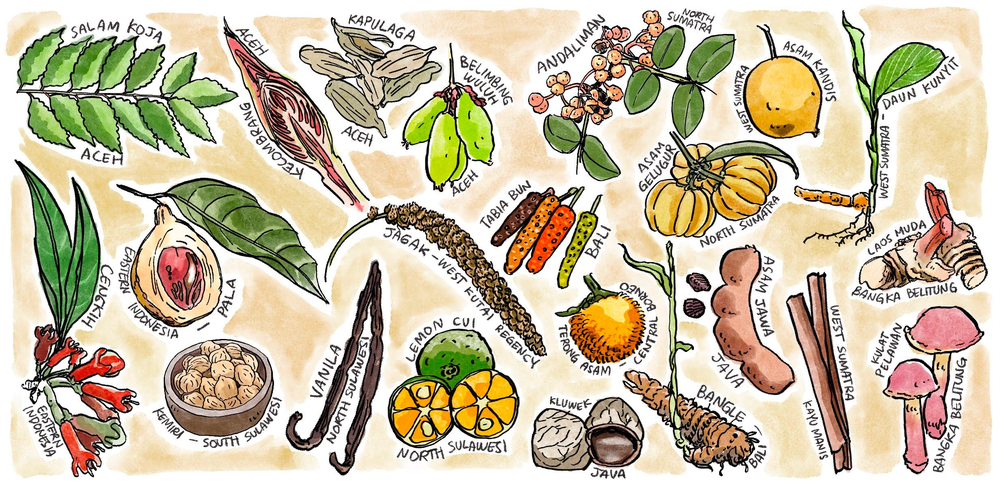
More than half of the world’s spices originated from Indonesia. These spices not only flavor one of the world’s most diverse cuisines — they also influenced the culinary world as we know it, changing tastes around the globe.
Spice Up The World, a new destination on Google Arts & Culture, is a collaboration with the Indonesian Ministry of Tourism & Creative Economy and Indonesia Gastronomy Network. It features 45 immersive digital stories that dive into Indonesia’s 1,000-year history of spices and give you a taste of the delicious dishes that make up Indonesian gastronomy.
Here’s a quick taste of 5 things you should know about Indonesian spices:
1. Half the world’s spices originated from Indonesia
Responsibly applying AI models to Search
For over two decades of Search, we’ve been at the forefront of innovation in language understanding to help deliver on our mission of making the world’s information more accessible and useful for everyone. We’ve seen how critical these advancements are to making information more helpful, and being able to better connect people to creators, publishers and businesses on the web. It’s this constant improvement in understanding human language that’s enabled us to send more traffic to the web every year since Google was created.
We’ve also seen how AI models have significantly improved language innovation. Each successive milestone, from neural nets, to BERT, to MUM, has blown us away with the step changes in information understanding they’ve offered. But with each step forward, we look closely at the limitations and risks new technologies can present.
Across Google, we have been examining the risks and challenges associated with more powerful language models, and we’re committed to responsibly applying AI in Search. Here are some of the ways we do that.
Training on high quality data
We pretrain our models on high-quality data to reduce their potential to perpetuate undesirable biases that may exist in web content. In the case of MUM, we ensured that training data from the web was designated as high-quality based on our search quality metrics, which are informed by our Search Quality Rater Guidelines and driven by our quality rating and evaluation system. This substantially reduces the risk of training on misinformation or explicit content, for example, and is key to our approach.
And as part of our efforts to build a Search experience that works for everyone, MUM was trained on over 75 languages from around the world.
Rigorous Evaluation
Every improvement to Google Search undergoes a rigorous evaluation process to ensure we’re providing more relevant, helpful results. Our Search Quality Rater Guidelines are our north star for how we evaluate great search results. Human raters follow these guidelines and help us understand if our improvements are better fulfilling people’s information needs.
This evaluation process is central to the responsible application of any improvement to Search, whether we’re introducing powerful new systems like BERT or MUM, or simply adding a new feature.
Some changes are bigger than others, so we have to adjust our process accordingly. At the time of its introduction to Search, BERT impacted 1 in 10 English-language queries, so we scaled our evaluation process to be even more rigorous than usual. We subjected our systems to an unprecedented amount of scrutiny, increasing both the scale and granularity of quality testing, to help ensure they weren’t introducing concerning patterns into our systems.
While our standard evaluation process helps us judge launches across a representative query stream, for some improvements, we also more closely examine whether changes provide quality gains or losses across specific slices of queries, or topic areas. This allows us to identify if concerning patterns exist and pursue mitigations before launching an improvement to Search.
Search is not perfect, and any application of AI will not be perfect — this is why any change to Search involves extensive and constant evaluation and testing.
Responsible application design
In addition to working with responsibly designed and trained models, the thoughtful design of products and applications is key to addressing some of the challenges of language models. In Search, many of these critical mitigations take place at the application level, where we can focus on the end-user experience and more effectively manage risk in smaller models designed for specific tasks.
When we adopt new AI technologies such as BERT or MUM, they’re able to help improve individual systems to perform tasks more efficiently and effectively. This approach allows us to focus the scope of our evaluation and understand if an application is introducing concerning patterns. In the event that we do find concerning behavior, we’re able to design much more targeted solutions.
Minding our footprint
Training and running advanced AI models can be energy consumptive. Another benefit of training smaller, application-specific models is that the energy costs of the larger base model, such as MUM, are amortized over the many different applications.
The Google Research team recently published research detailing the energy costs of training state-of-the art language models, and their findings show that combining efficient models, processors, and data centers with clean energy sources can reduce the carbon footprint of a model by as much as one thousand-fold — and we follow this approach to train our models in Search.
Language models in practice
New language models like MUM have enormous potential to transform our ability to understand language and information about the world. And while they may be powerful, they do not make our existing systems obsolete. Today, Google Search employs hundreds of algorithms and machine learning models, none of which are wholly reliant on any singular, large model.
Amongst these hundreds of applications are systems and protections designed specifically to ensure you have a safe, high quality experience. For example, we design our ranking systems to surface relevant and reliable information. Even if a model were to present issues around low quality content, our systems are built to counteract this.
As we’re able to introduce new technologies like MUM into Search, they’ll help us greatly improve our systems and introduce entirely new product experiences. And they can also help us tackle other challenges we face. Improved AI systems can help bolster our spam fighting capabilities and even help us combat known loss patterns. In fact, we recently introduced a BERT-based system to better identify queries seeking explicit content, so we can better avoid shocking or offending users not looking for that information, and ultimately make our Search experience safer for everyone.
We look forward to making Search a better, more helpful product with improved information understanding from these advanced language models, and bringing these new capabilities to Search in a responsible way.

Microsoft presenta il nuovo e potente Surface Laptop Studio
Magic in the making: The 4 pillars of great creative
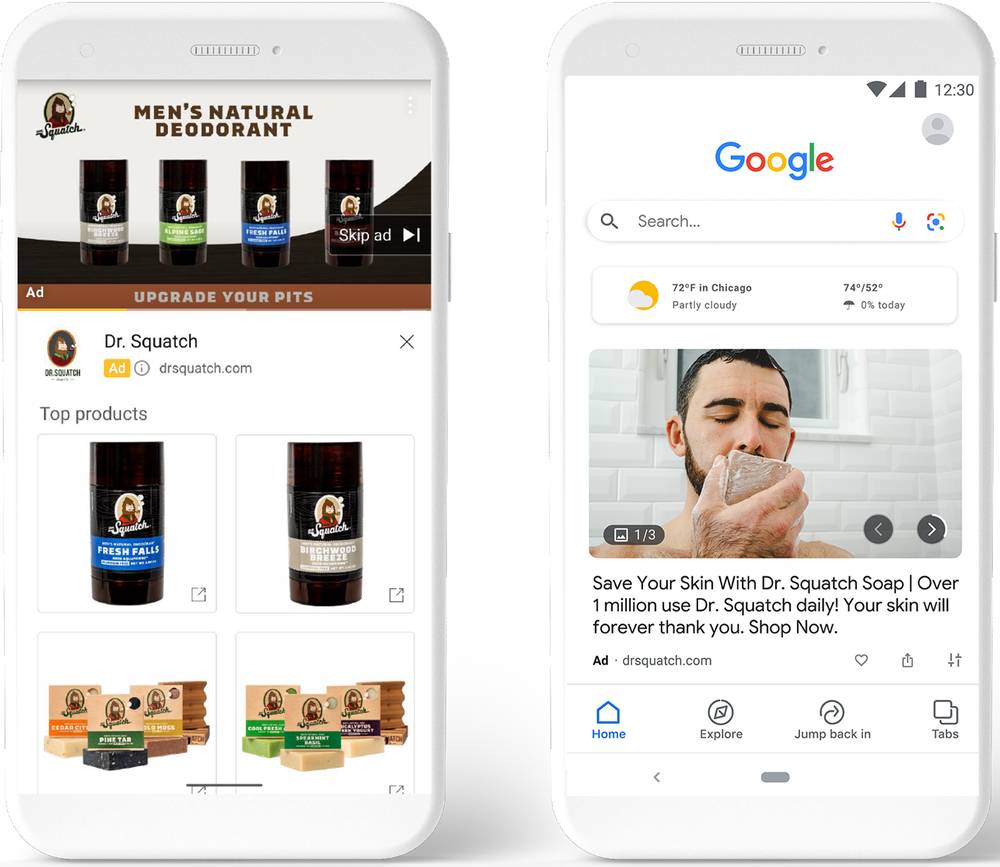
Consumers report that helpfulness is their top expectation of brands since the start of the COVID-19 pandemic, with 78% saying a brand’s advertising should show how they can be helpful in everyday life.1 This means businesses need to quickly engage audiences with meaningful messages, using immersive storytelling to bring their brand and products to life.
To help you build visually-rich ad experiences that easily drive consumers to action, we’ve brought together our top creative guidance across Google Ads solutions in a single guide. Learn to craft stronger calls-to-action, engaging ad copy and striking visual assets — plus, get the latest insights from our team of creative and data scientists at Creative Works. You can also explore tips by marketing objective in order to craft more impactful creative to meet your business goals.

Vaccino e terapie per il Covid-19
Terapie domiciliari Un’opinione diversa dal solito, quella di Piero Andreuccetti che riportiamo volentieri per affrontare un tema così delicato da tutte le angolazioni possibili Durante la I Guerra Mondiale sono…
L’articolo Vaccino e terapie per il Covid-19 scritto da Paolo Brambilla proviene da Assodigitale.
Giving users more transparency into their Google ad experience
Today, people engage with a wider variety of ad formats on more Google products than ever before — from Video ads on YouTube to Shopping ads across Search, Display and more. And they increasingly want to know more about the ads they see. That’s why we’ve been innovating on features like “About this ad” to help users understand why an ad was shown, and to mute ads or advertisers they aren’t interested in.
Last spring, we also introduced an advertiser identity verification program that requires Google advertisers to verify information about their businesses, where they operate from and what they’re selling or promoting. This transparency helps users learn more about the company behind a specific ad. It also helps differentiate credible advertisers in the ecosystem, while limiting the ability of bad actors to misrepresent themselves. Since launching the program last year, we have started verifying advertisers in more than 90 countries — and we’re not stopping there.
Introducing advertiser pages
To give users of our products even more transparency, we are enhancing ad disclosures with new advertiser pages. Users can access these disclosures in our new “About this ad” menu to see the ads a specific verified advertiser has run over the past 30 days. For example, imagine you’re seeing an ad for a coat you’re interested in, but you don’t recognize the brand. With advertiser pages, you can learn more about that advertiser before visiting their site or making a purchase.
Users can tap on an ad to learn more about the advertiser showing them the ad
In addition to learning about the ads and advertiser, users can more easily report an ad if they believe it violates one of our policies. When an ad is reported, a member of our team reviews it for compliance with our policies and will take it down if appropriate. Creating a safe experience is a top priority for us, and user feedback is an important part of how we do that.
Advertiser pages will launch in the coming months in the United States, and will roll out in phases to more countries in 2022. We will also continue to explore how to share additional data within advertiser pages over time.
Improving transparency for ads on Google
Enhanced ad disclosures build on our efforts to create a clear and intuitive experience for users who engage with ads on Google products. More than 30 million users interact with our ads transparency and control menus every day, and “About this ad” has received positive feedback on its streamlined experience. Users engage with our ads transparency and control tools on YouTube more than any other Google product. To help our users make informed decisions online — no matter where they engage — we will roll out the “About this ad” feature to YouTube and Search in the coming months.
We’re committed to creating a trustworthy Google ad experience, and enhanced ad disclosures represent the next step in that journey. We will continue to work towards helping our users have greater control and understanding over the ads they see.

5 Fresh Features: What LinkedIn’s New Learning Hub, Ratings & Reviews, Live Events & Page Article Updates Mean for B2B Marketers
What do B2B marketers need to know about LinkedIn’s* new full-length articles, profile ratings and reviews, Live Events, Learning Hub skill-building platform, and updated accessibility features?
The world’s largest professional social media platform — with more than 774 million users — has rolled out an impressive assortment of new features throughout 2021, including five recent additions that bring a goldmine of new opportunities for B2B marketers.
For the first time, Microsoft-owned LinkedIn saw annual revenue topping the $10 billion mark, Satya Nadella, chairman and chief executive officer of Microsoft announced in July, with quarterly revenue up 46 percent.
This growth has been accompanied by a number of powerful and fascinating new feature roll-outs that are poised to make a change in how B2B marketers utilize LinkedIn.
Let’s jump right in and look at five of the key new LinkedIn features and how they’ll affect B2B marketers.
1 — Publish Long-Form Content Using Page Articles
LinkedIn has launched a new feature that gives company pages the ability to share long-form content on the professional social platform.
Unlike personal LinkedIn accounts, until this addition business pages had faced a limit in the length of the material that could be organically posted.
In addition to allowing articles of virtually any length, LinkedIn’s new Articles For Pages feature offers a variety of analytics information about the people and businesses reading and interacting with that long-form content — helpful for businesses to learn more about their target audience.
LinkedIn has made the process of publishing detailed articles intuitive, with an interface that’s familiar to anyone who has posted a traditional update on its platform, conveniently available to page administrators as “Write article” as an always-visible option beneath the “Start a post” prompt, as shown in yellow below.
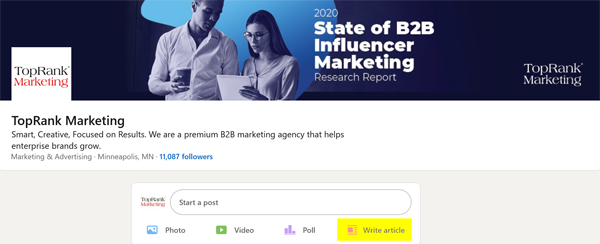
Editing options for articles include the ability to highlight quotes, incorporate links, and include calls-to-action such as linking to a company website, encouraging readers to become followers of the page, or even downloading a related digital asset.
Firms using the new feature will face the issue of determining just how much to publish on LinkedIn versus on their own websites. Through experimentation, company’s can look for a mixture that produces the best engagement and maximum impact for the unique needs of each business.
With more B2B brands making significant use of discussion in the form of comments on LinkedIn, the new long-form article feature provides fascinating options for firms to consider when it comes to where they want to engage clients and prospects.
Learn more about this new feature at Articles for Pages: Build Community with Long-Form Content.
2 — Share Customer Praise With Ratings & Reviews
LinkedIn also recently began offering review and rating features to user profiles, as part of a new more robust services profile element that can now include a range of past client reviews and ratings.
When LinkedIn initially rolled out the ability for individual users and small businesses to create a no-cost service page, the feature was primarily a static list of services — now however, the updated services page optionally allows reviews from past clients to add real-world feedback.
Creating a service page on LinkedIn helps users and small businesses make the services they provide more discoverable both on the platform and through third-party search engines, and allows all LinkedIn users to make contact inquiring about the services listed.
Learn more about how to create a LinkedIn Service Page, explore frequently asked questions, find out how to invite clients to review a service page, and check out our own “5 Stars: 20+ Tips to Invigorate Your B2B Marketing Using Testimonials & Reviews.”
3 — Enhanced LinkedIn Live Experience
Another area that has recently been enhanced by LinkedIn is an updated LinkedIn Live Events experience, allowing users to create more robust virtual events.
LinkedIn Live is the platform’s live video feature, and recent updates have combined many of its abilities with those of LinkedIn’s separate event experiences. The integrated offering now automatically creates a public event post for each scheduled live-streaming event, which then appears in the LinkedIn feed.
Users who have chosen to attend a LinkedIn Live event will also now receive helpful reminder messages, and LinkedIn will additionally notify certain followers of the company page hosting the event.
Another change has made it possible to have more lead time than the previous seven day limit when scheduling LinkedIn Live events.
Learn more about the updated integration between LivedIn Live and events, and check out our own “Livestream Marketing: 5 B2B Brands Rocking LinkedIn Live.”
4 — Utilize LinkedIn Learning Hub Skill-Building Platform
LinkedIn has just launched its LinkedIn Learning Hub, a robust skill-building platform looking to expand on what is available from traditional learning experience platforms (LXPs).
As Amy Borsetti, senior director at LinkedIn Talent Solutions announced yesterday in “With LinkedIn Learning Hub, a New Era of Skill Building Starts Today,” the new LinkedIn Learning Hub is part of a movement that’s fundamentally changing the way people learn.
Savvy B2B marketers know that the ever-changing industry requires ongoing education, and with its new LinkedIn Learning Hub, a wealth of learning and development (L&D) offerings are on tap for marketers seeking to make learning a lifelong pursuit.
5 — Lighten The Load On Your Eyes With Dark Mode
Increased accessibility, inclusivity, and reduced eye-strain-inducing blue light are among the aims for LinkedIn’s new dark mode option, being rolled out to the professional platform’s users.
LinkedIn has taken a measured approach to carefully implementing its dark mode, which is a part of its move to make the platform more inclusive and accessible through the use of upgrades making the visual elements of LinkedIn as clear and eye-strain-free as possible, including support for the free Be My Eyes app for blind and low-vision users.
Learn more about LinkedIn’s new dark mode and other accessibility updates.
B2B Brands Work Smarter With LinkedIn’s New Features
With its latest updates including full-length articles for pages, profile ratings and reviews, LinkedIn Live Events, a new LinkedIn Learning Hub skill-building platform, and new features for accessibility in the form of a dark mode, LinkedIn has made it easier than ever for B2B marketers to create meaningful engagement on the world’s biggest professional business network.
Crafting award-winning B2B marketing with a skillful mixture of influence takes considerable time and effort, which is why many firms choose to work with a top digital marketing agency such as TopRank Marketing. Talk with us about how we can help, as we’ve done for businesses ranging from LinkedIn, Dell and 3M to Adobe, Oracle, monday.com and others.
* LinkedIn is a TopRank Marketing client.
The post 5 Fresh Features: What LinkedIn’s New Learning Hub, Ratings & Reviews, Live Events & Page Article Updates Mean for B2B Marketers appeared first on B2B Marketing Blog – TopRank®.

Sony Xperia 1 III: display e fotocamera al top giustificano il prezzo? La recensione

Netflix, 5 film da vedere se ti è piaciuto Dune
Building a sustainable future for travel
There’s a lot to consider when it comes to booking travel: price, health and safety, environmental impact and more. Last year, we shared travel tools to help you find health and safety information. Now we want to make it easier for you to find sustainable options while traveling — no matter what you’re doing or where you’re going.
To make that happen, we’ve created a new team of engineers, designers and researchers focused solely on travel sustainability. Already, this team is working to highlight sustainable options within our travel tools that people use every day.
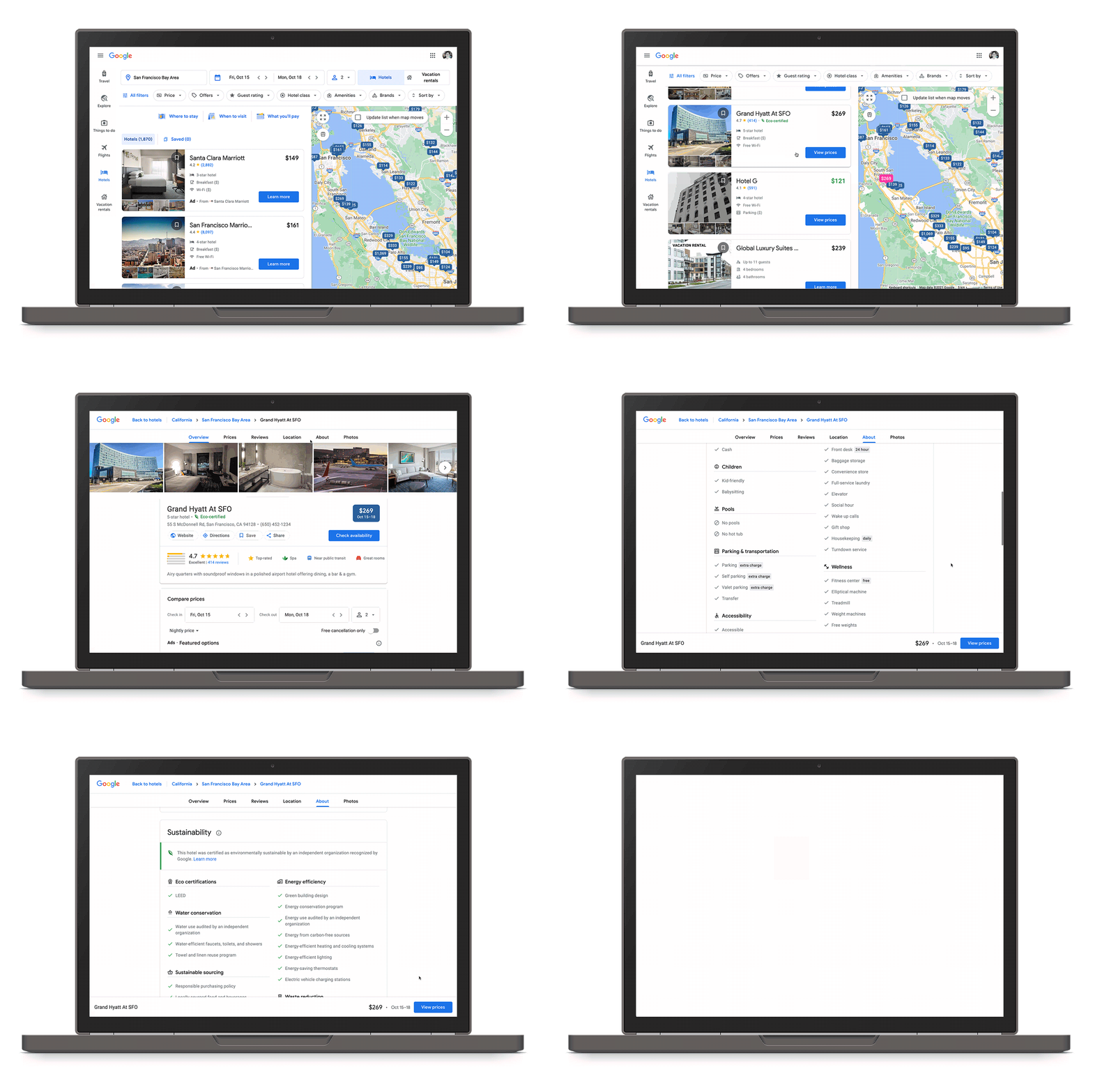
Beginning this week, when you search for hotels on Google, you’ll see information about their sustainability efforts. Hotels that are certified for meeting high standards of sustainability from certain independent organizations, like Green Key or EarthCheck, will have an eco-certified badge next to their name. Want to dive into a hotel’s specific sustainability practices? Click on the “About” tab to see a list of what they’re doing — from waste reduction efforts and sustainably sourced materials to energy efficiency and water conservation measures.

Helping travelers discover new things to do
While travel restrictions continue to vary across the globe, people are still dreaming of places to visit and things to do. Searches for “activities near me” have grown over the past 12 months, with specific queries like “ziplining” growing by 280% and “aquariums” by 115% globally. In response to this increasing interest, and to support the travel industry’s recovery, we’re introducing new ways to discover attractions, tours and activities on Search.
Now, when people search on Google for attractions like the Tokyo Tower or the Statue of Liberty, they’ll see not just general information about the point of interest, but also booking links for basic admission and other ticket options where available. In the months ahead, we’ll also begin showing information and booking links for experiences in a destination, like wine tasting in Paris or bike tours in California.

Samsung potrebbe produrre vaccini per conto di Pfizer

Google lavora a due telefoni pieghevoli con Android 12.1?