Attacchi informatici usando documenti Office, l’allerta di Microsoft

Il 7 settembre scorso Microsoft ha pubblicato un advisory che mette in guardia contro documenti Microsoft Office alterati per trasformarli in vettori di attacchi informatici. Questa tecnica di attacco viene già sfruttata attivamente dai criminali informatici per colpire gli utenti Windows.
La vulnerabilità in questione, la CVE-2021-40444, si basa su un difetto presente in MSHTML/Trident, il motore di rendering usato dall’obsoleto Internet Explorer e oggi utilizzato da Office per visualizzare i contenuti Web nei documenti Word, Excel e PowerPoint.
Se si apre con Microsoft Office su Windows un documento Office alterato in questo modo (includendovi un controllo ActiveX), l’aggressore che ha inviato il documento può prendere il controllo del computer della vittima, perché il motore di rendering esegue il codice ActiveX con gli stessi privilegi dell’utente. Il codice ActiveX usa questo potere per scaricare e installare un malware scelto dall’aggressore.
La vulnerabilità è insomma potenzialmente molto seria, ma va detto che se Microsoft Office viene usato con le sue impostazioni predefinite l’attacco non va a segno perché i documenti scaricati da Internet vengono aperti in Visualizzazione protetta o in Application Guard e quindi non possono accedere alle risorse trusted del computer attaccato. L’attacco non ha effetto su chi usa Microsoft Office su Mac ma riguarda tutte le versioni di Windows dalla 8.1 alla 10.
Defender, l’antivirus di Microsoft, già riconosce i documenti-trappola che sfruttano questa vulnerabilità, e lo stesso fanno i principali antivirus di altre marche, se li aggiornate.
Dovrebbe uscire a breve un aggiornamento di sicurezza che correggerà la falla, ma nel frattempo Microsoft consiglia a tutti non solo di aggiornare il proprio antivirus ma di disabilitare l’installazione di tutti i controlli ActiveX in Internet Explorer (nel modo spiegato nell’advisory) per contenere i danni di un eventuale attacco. Un altro consiglio è non usare un account Windows che abbia privilegi di amministratore, non disattivare la Visualizzazione protetta per nessun motivo e non aprire documenti Office inattesi, ricevuti via mail o scaricati da siti Internet non fidati.
Tutte cose ovvie, in linea di principio, ma purtroppo molti utenti non rispettano questi principi e poi finiscono per essere scottati.
Fonti aggiuntive: The Hacker News, Cybersecurity360.it, Sophos, Tripwire.

Amazon presenta la nuova Fire TV Stick 4K Max
OPPO svela la nuova OPPO Reno6 Series: tutti i dettagli
Microsoft Start è il nuovo aggregatore news di Microsoft

Rivelati gli artisti NFT che celebreranno la storia della famiglia Lamborghini
Una serie di opere d’arte su blockchain saranno messi in vendita dal prossimo 25 settembre su Elysium Bridge Emanuele Dascanio, Maciej Kuciara, Matteo Mauro e Giovanni Motta sono i nomi…
L’articolo Rivelati gli artisti NFT che celebreranno la storia della famiglia Lamborghini scritto da YOUR_DIGITAL_VOICE! proviene da Assodigitale.
Our commitment to water stewardship
I grew up in Muir Beach, California, and was fortunate to spend my childhood exploring its beautiful forests and streams. Today, these delicate ecosystems are threatened as the entire west coast of the U.S. is experiencing one of the worst droughts in recorded history. Unfortunately, this problem extends beyond the stretch of coastline I call home. Climate change is exacerbating water scarcity challenges around the world as places suffer from diminished rainfall — from Brazil’s semi-arid region to Sub-saharan Africa. At the same time, we’ve seen strong storms bring devastating floods to places like the eastern U.S., central China, and western Germany.
Last September, we announced our third and most ambitious decade of climate action and laid out our plan toward a carbon-free future. Building on this commitment, we are pledging to a water stewardship target to replenish more water than we consume by 2030 and support water security in communities where we operate. This means Google will replenish 120% of the water we consume, on average, across our offices and data centers. We’re focusing on three areas: enhancing our stewardship of water resources across Google office campuses and data centers, replenishing our water use and improving watershed health and ecosystems in water-stressed communities; sharing technology and tools that help everyone predict, prevent and recover from water stress.
Managing the water we use responsibly
We use water to cool the data centers that make products like Gmail, YouTube, Google Maps and Search possible. Over the years, we’ve taken steps to address and improve our operational water sustainability. For example, we deployed technology that uses reclaimed wastewater to cool our data center in Douglas County, Georgia. At our office campuses in the San Francisco Bay Area, we worked with ecologists and landscape architects to develop an ecological design strategy and habitat guidelines to improve the resiliency of landscapes and nearby watershed health. This included implementing drip irrigation, using watering systems that adjust to local weather conditions, and fostering diverse landscapes on our campuses that can withstand the stresses of climate change.
Our water stewardship journey will involve continuously enhancing our water use and consumption. At our data centers, we’ll identify opportunities to use freshwater alternatives where possible — whether that’s seawater or reclaimed wastewater. When it comes to our office campuses, we’re looking to use more on-site water sources — such as collected stormwater and treated wastewater — to meet our non-potable water needs like landscape irrigation, cooling and toilet flushing.
Investing in community water security and healthy ecosystems
Water security is an issue that goes beyond our operations, and it’s not something we can solve alone. In partnership with others, we’ll invest in community projects that replenish 120% of the water we consume, on average, across all Google offices and data centers, and that improve the health of the local watersheds where our office campuses and data centers are located.
Typically, the water we all use every day comes from local watersheds — areas of land where local precipitation collects and drains off into a common outlet, such as a river, bay or other receiving body of water. There are several ways to determine whether a watershed is sustainable including measuring water quality and availability and community access to the water.
We’ll focus on solutions that address local water and watershed challenges. For example, we’re working with the Colorado River Indian Tribes project to reduce the amount of water that is withdrawn from Lake Mead reservoir on the Colorado River in Nevada and Arizona. In Dublin, Ireland, we’re installing rainwater harvesting systems to reduce stormwater flows to improve water quality in the River Liffey and the Dublin Bay. And in Los Angeles, we’re investing in efforts to remove water-thirsty invasive species to help the nearby ecosystem in the San Gabriel mountains.
Using data tools to predict and prevent water stress
Communities, policymakers and planners all need tools to measure and predict water availability and water needs. We’re dedicated to working with partners to make those tools and technologies universally accessible. To that end, we’ve recently worked with others on these water management efforts:
-
Partnered with the United Nations Environment Programme and the European Commission’s Joint Research Centre (JRC) to create the Freshwater Ecosystems Explorer. This tool tracks surface water changes over time on a national and local scale.
-
Co-developed the web application OpenET with academic and government researchers to make satellite-based data that shows how and where water moves when it evaporates available to farmers, landowners and water managers.
-
Provided Google.org funding for Global Water Watch and Windward Fund’s BlueConduit. Global Water Watch provides real-time indicators for current and future water management needs, and was built in partnership with Google.org, WRI, WWF and Deltares. BlueConduit quantifies and maps hazardous lead service lines, making it easier to replace water infrastructure in vulnerable communities.
When it comes to protecting the future of our planet and the resources we rely on, there’s a lot to be done. We’ll keep looking for ways we can use our products and expertise to be good water stewards and partner with others to address these critical and shared water challenges.
Twitter testa Communities, nuova funzione stile Gruppi Facebook

A new training programme to help small businesses reduce their carbon emissions
The climate crisis is an urgent issue for everyone. The UK government has set an ambitious target to reach net zero by 2050 and all businesses of all sizes need to play a part if we’re to reach those goals.
This is not just about doing the right thing — today’s consumers expect action: according to research from Edelman, 80% of people want brands to solve society’s problems.
Small businesses make up 99% of the UK’s business community so they’ll play a crucial role in reaching net zero. Yet, understandably, small businesses don’t always have the time, resources or expertise to dedicate to this — especially as they focus on recovery from the pandemic. A study from the British Chambers of Commerce and O2 found that only one in 10 small businesses are measuring their carbon footprint, and a fifth of small businesses don’t fully understand the term “net zero”. Cost, and an ability to understand, measure and report emissions are cited as two of the main barriers to change.
Sustainability training for small businesses
To help small businesses overcome these obstacles, we’re announcing a new free, simple and actionable training programme to help SMEs reduce their emissions. We developed the training in partnership with leading sustainability and net zero certification group, Planet Mark, as part of the UK Government’s Together for our Planet Business Climate Leaders campaign, which encourages small businesses to commit to cutting their emissions in half by 2030 and to net zero by 2050.
Our training is designed for small businesses starting their journey towards sustainability, with an emphasis on how a sustainability strategy can help drive business performance. It sets out the business case and imperative for cutting emissions, and explains practical, digitally-focused ways to decarbonize — from using paperless billing and Cloud-enabled technology, to renewable energy sourcing and supply chains. Since we know how much consumers care about this, it also covers how small businesses can use their sustainability credentials to differentiate.
One business already doing this successfully is catering company, Fooditude. They made tangible changes to their business, like limiting their food waste, going paperless with admin systems and swapping to local suppliers, and reduced their emissions by over 30% per meal. Dean Kennett, Fooditude’s Managing Director, attributes £3 million in new revenue to their new sustainability credentials, as well as their ability to hire staff who share their values, and a shared purpose among employees.

3 mesi gratis di NOW Cinema o Entertainment? Ve li regala la NOW Smart Stick in offerta
OPPO Reno6 Pro 5G: elegante, leggero e pronto per i video-maker. La recensione
Su Twitter si potrà bloccare temporaneamente un utente
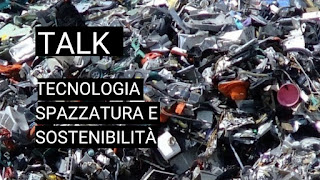
A Lugano parliamo di rifiuti, tecnologia e sostenibilità l’11 settembre alle 18

LuganoLivingLab, il laboratorio urbano della Città di Lugano, mi ha invitato a partecipare a un incontro pubblico su Tecnologia, spazzatura e sostenibilità, che si terrà al Boschetto del Parco Ciani a Lugano l’11 settembre alle 18.
Sul palco ci saranno Andrea Scarinci, Project Manager del Progetto eQuiD (Lugano Living Lab), Cristina Giotto, direttrice di ATED, e Silvia De Ascaniis, coordinatrice della Cattedra UNESCO in tecnologie digitali per un turismo sostenibile dell’Università della Svizzera italiana, e il sottoscritto. Saremo moderati da Giada Marsadri, musicologa e conduttrice.
Parleremo di strategie e astuzie che possiamo adottare concretamente per ridurre l’impatto dei nostri dispositivi e discuteremo con dati ed esempi concreti della questione del digital-divide e del progetto eQuiD sviluppato dalla città di Lugano.
L’evento fa parte del Festival ARS Electronica Lugano Garden, è aperto a tutti e gratuito, e sarà fruibile anche in streaming.
Visual Studio Code: editing su Web browser con Python
Discover Dubai’s Culture & Heritage with Google Arts & Culture
In Dubai, we believe our future is derived from our past. While my hometown has become renowned for its fast-paced development and soaring skyscrapers, many people still don’t know about the rich culture and heritage this city holds.
Today, I’m proud to unveil ‘Dubai’s Culture and Heritage’, launched in collaboration with Google Arts & Culture, which will help you discover my hometown’s story and its vibrant art scene through more than 80 expertly curated stories, 5 audio stories, 25 videos, and over 800 high-resolution images of arts, crafts, heritage sites and much more.
Did you know Dubai was a trading port?
Some people wonder what it was like to live in Dubai before the city became a bustling metropolis. What better way to learn than to hear firsthand from some of Dubai’s residents, from pearl merchants, boat builders and craftspersons to hearing about childhood memories of swimming in the Dubai Creek.
For many of us, the traditional Emirati Majlis, a cultural and social space where members of the community come together for discussions, was and remains a staple feature of our social lives.
To get a sense of traditional life in Dubai, take a virtual walk through alleyways and witness traditional architecture such as buildings with high air towers called Barajeel, in the Al-Fahidi district. You can also learn more about traditional embroidery, palm weaving and, for the coffee lovers, the history and culture of coffee in the UAE.
Modern Dubai, Zaha Hadid and the art scene
Fast-forward with the click of a button to see some of modern-day Dubai’s iconic architecturallandmarks, from towers with 90 degree rotation from top to bottom to torus-shaped structures with Arabic calligraphy and the first hotel to have its interiors and exteriors designed by renowned architect Zaha Hadid.
Dubai’s art scene has also evolved over the years, reflecting the diversity of its social fabric. Learn about one of the city’s first cinemas, learn more about the Sikka Arts Festivaland Art Dubai — two important artistic events held in the heart of the city — and hear from emerging artists from around the world who are using Dubai as a hub to share their work with the world.
Ready to take the tour?
We’re excited to be able to help people, wherever they may be, discover our culture and heritage through our work with Google Arts & Culture. To learn more, visit g.co/dubaiculture or download the Google Arts & Culture app for Android or iOS.
All the ways to print your memories with Google Photos
We use photos for so many things: to decorate our homes, reminisce with family and friends, and make personalized gifts. But today, most (if not all) of our photos — our memories — are digital. That’s why Google Photos has multiple ways to print your photos, so you can easily celebrate and save life’s meaningful moments.
Now we’re rolling out larger photo print sizes, a new option to get your prints delivered right to your door and new canvas print sizes, so there are even more ways to print your favorite pictures. And because Google Photos helps you keep your photos organized and searchable, it’s easy to find what you want to print even if you’re looking for a shot from years ago.
Turn your memories into photo prints
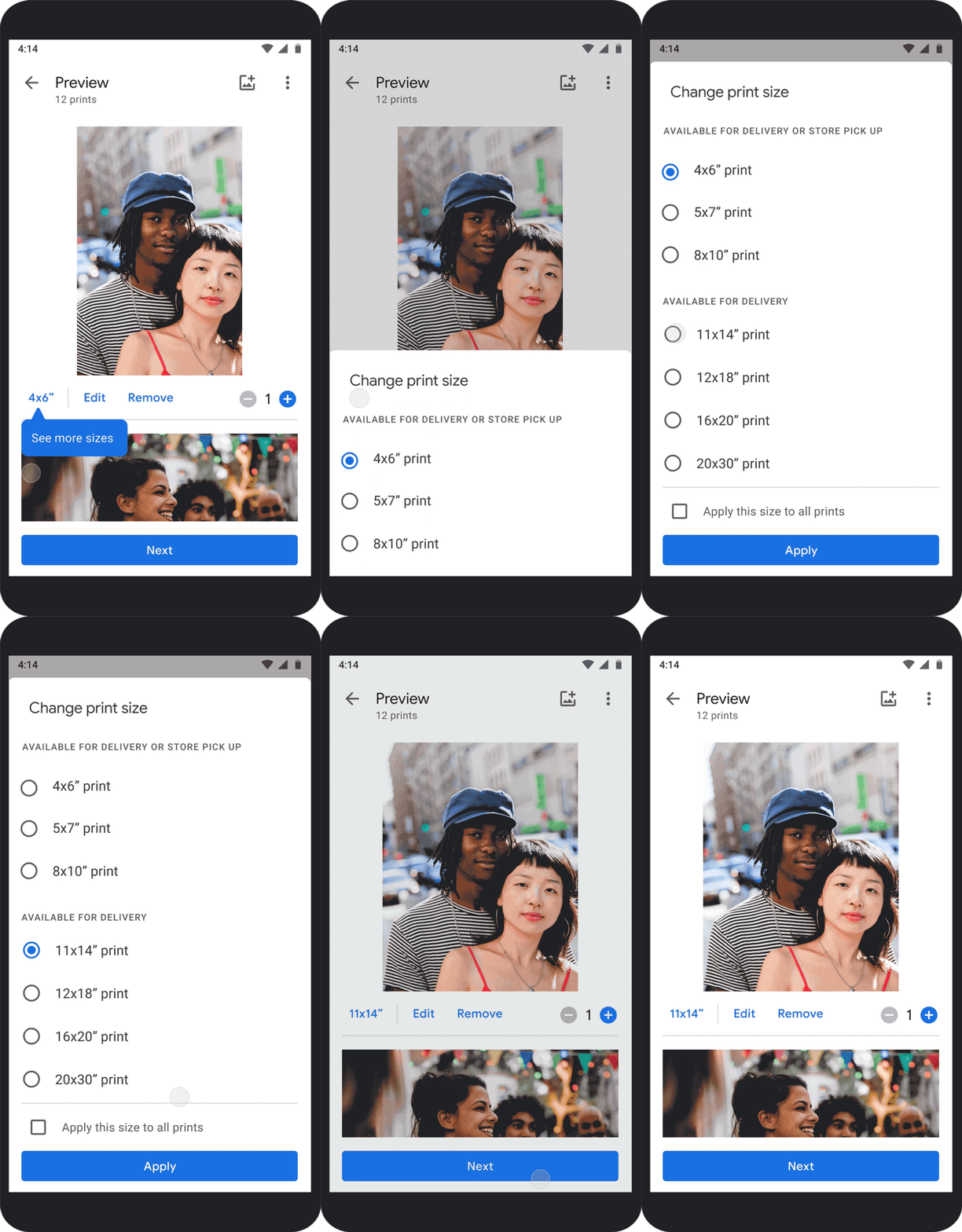
Google Photos makes it easy to turn your memories into photo prints right from the app. And today we’re starting to roll out the ability to have photo prints delivered right to you in the U.S. Starting at $0.18 per print (plus shipping), you can choose between our existing 4×6, 5×7 or 8×10 prints, or four additional sizes: 11×14, 12×18, 16×20 and 20×30 prints.