
Google Pixel Buds A: ora a 99€ sono un’ottima scelta! La recensione

Iliad rassicura: nessun rischio rimodulazione né cambi di programma
Grownnectia entra nel capitale della startup italiana WeShort
WeShort, la nuova startup italiana per i migliori cortometraggi nazionali e internazionali, rivoluzionerà il mondo del cinema breve. Grownnectia e WeShort Si chiama WeShort la startup che porta il grande cinema breve…
L’articolo Grownnectia entra nel capitale della startup italiana WeShort scritto da Paolo Brambilla proviene da Assodigitale.

Stadia Savepoint: May updates
It’s time for another update to our Stadia Savepoint series, recapping the new games, features and updates on Stadia.
In May, players summoned the courage to take on the terrors of Resident Evil Village and competed in freestyle events around the world in Street Power Football. It wasn’t all intense gameplay, though — Stadia players happily managed vineyards in Hundred Days – Winemaking Simulator.
In addition to these games available now on the Stadia store, subscribers to Stadia Pro played new titles like STAR WARS: Jedi Fallen Order, Trine 4 – The Nightmare Prince, Hotline Miami 2: Wrong Number and Floor Kids. Claiming these titles within the growing Pro library of 25+ games makes them easy to play instantly, as long as you’re a Pro subscriber!
We’re well on our way to adding more than 100 games to the Stadia store during 2021. In fact, during May we gave players a sneak peek at Super Animal Royale, Shantae and the Pirate’s Curse, Olympic Games Tokyo 2020 – The Official Video Game and Control Ultimate Edition. Plus, we’re looking forward to the launch of Ubisoft’s next entry in the Far Cry franchise with Far Cry 6 on Oct. 7, 2021!
Stadia Pro updates
- Four new games were added to Stadia Pro in May: STAR WARS: Jedi Fallen Order, Trine 4 – The Nightmare Prince, Hotline Miami 2: Wrong Number and Floor Kids.
- An entire library of games are currently available to play instantly with Stadia Pro, including PLAYERUNKNOWN’S BATTLEGROUNDS, SteamWorld Dig, Crayta, Orcs Must Die! 3, Gunsport, HITMAN, Human Fall Flat, République, Everspace, Submerged: Hidden Depths, Cthulhu Saves Christmas, Figment, Ary and the Secret of Seasons, Journey to the Savage Planet: Employee of the Month Edition, Little Nightmares II, PixelJunk Raiders, AVICII Invector, PAC-MAN Mega Tunnel Battle, Resident Evil 7 biohazard Gold Edition, SpongeBob SquarePants: Battle for Bikini Bottom Rehydrated, Ys VIII: Lacrimosa of DANA, PIKUNIKU, Trine 4 – The Nightmare Prince, Hotline Miami 2: Wrong Number, Floor Kids and STAR WARS: Jedi Fallen Order.
- There are ongoing discounts for Stadia Pro subscribers and special savings for all players —- check out the web or mobile Stadia store for the latest.
May content launches on Stadia:
New games coming to Stadia announced in May:
- Control Ultimate Edition
- Far Cry 6
- Olympic Games Tokyo 2020 – The Official Video Game
- Shantae and the Pirate’s Curse
- Super Animal Royale
That’s all for now — we’ll be back next month to share more updates. As always, stay tuned to the Stadia Community Blog, Facebook, YouTube and Twitter for the latest news.

Pixel Buds A-Series: suono ricco, design iconico, a soli 99 Euro
Un’esperienza sonora premium
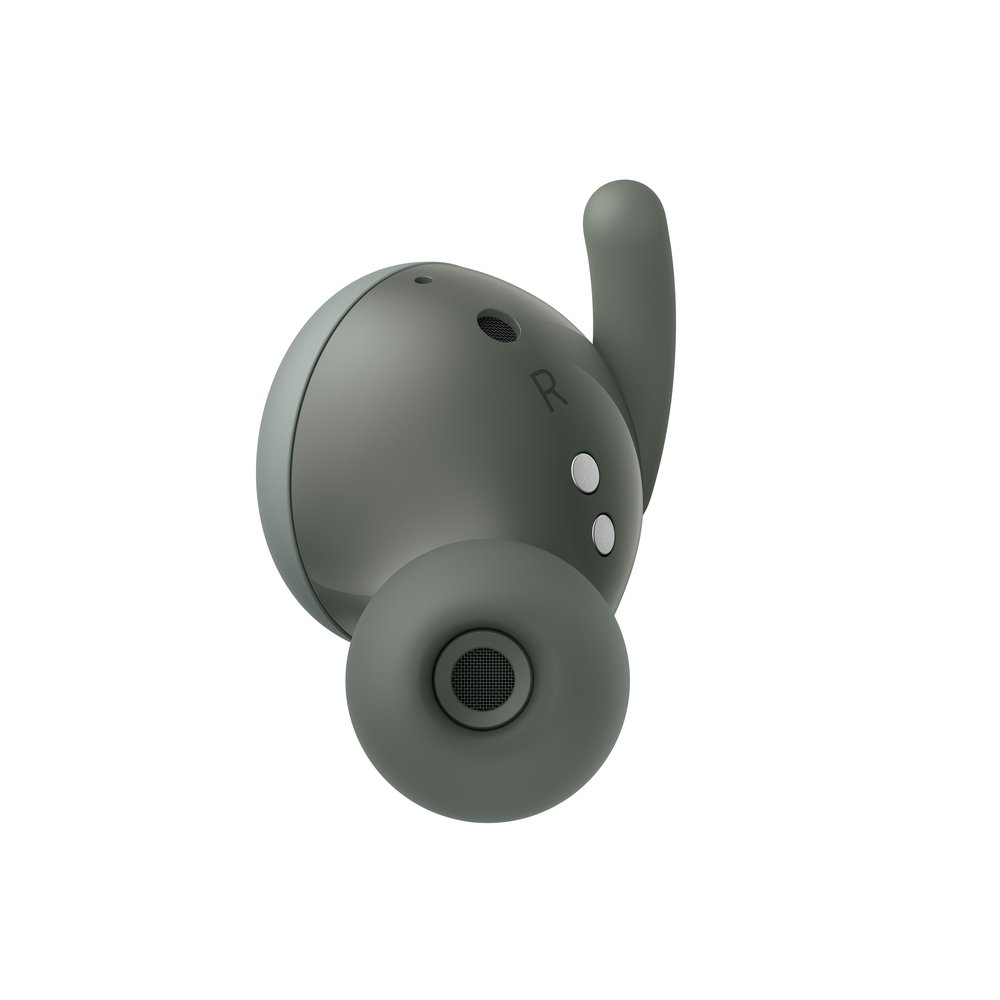
| L’arco stabilizzatore assicura un posizionamento delicato ma stabile, mentre il foro ambientale evita la sensazione di orecchio tappato |
Prestazioni eccellenti, con stile
Il meglio di Google, senza usare le mani
Pixel Buds A-Series: Rich sound, iconic design, just $99
When we first introduced our truly wireless Pixel Buds, we were most excited about how such a small product could pack so much functionality. Now, we’re making that same premium sound quality, along with hands-free help from Google Assistant and real-time translation, available at an affordable price.
Introducing Pixel Buds A-Series: rich sound, clear calls and Google helpfulness, all in a low-profile design – for just $99.
A premium audio experience
Our research shows that most people describe great sound as full, clear and natural. This is what guides our audio tuning process and shows up in other devices, like Nest Audio. And Pixel Buds A-Series are no exception. Custom-designed 12 mm dynamic speaker drivers deliver full, clear and natural sound, with the option for even more power in those low tones with Bass Boost.
To experience the full range of the speaker’s capabilities, especially in the low frequencies, a good seal is essential. We’ve scanned thousands of ears to make Pixel Buds A-Series fit securely with a gentle seal. In order to keep the fit comfortable over time, a spatial vent reduces in-ear pressure.
Each earbud also connects to the main device playing audio, and has strong individual transmission power, to keep your sound clear and uninterrupted.
The stabilizer arc ensures a gentle, but secure fit while spatial vents prevent that plugged ear feeling.
Sound quality can also be affected by your environment. The new Pixel Buds A-Series come with Adaptive Sound, which increases or decreases the volume based on your surroundings. This comes in handy when you’re moving from the quiet of your home to somewhere noisy like a city street, or while jogging past a loud construction site.
And your calls will have great sound, too. To make sure your calls are as clear as they can be, Pixel Buds A-Series use beamforming mics to focus on your voice and reduce outside noise, making your calls crystal clear (though of course, overall call quality depends on signal strength, environment, network, and other factors). Once your call is over, quickly get back to your music with a simple “Hey Google, Play my music.”

Stylish and hardworking
For Pixel Buds A-Series, we wanted to bring back the iconic Clearly White, but added a twist with new gray undertones. For a darker alternative, Pixel Buds A-Series are also available in Dark Olive. We use nature for inspiration in our colors all the time, and our design team was looking to create soothing tones that evoke a sense of comfort and relaxation.
Pixel Buds’ design is inspired by the idea that great things can come in small packages: Pixel Buds A-Series include up to five hours of listening time on a single charge or up to 24 hours using the charging case. And with the ability to get a quick charge — about 15 minutes in the case gives you up to three hours of listening time — you can keep listening anywhere.1
They’re comfortable enough for those long listening sessions, and don’t worry if some of that time is devoted to a sweaty workout or a run in the rain: The earbuds are also sweat and water-resistant.2
Hands-free access to the best of Google
Google Assistant is built right into the Pixel Buds A-Series. You can get quick hands-free help to check the weather, get an answer, change the volume, or have notifications read to you with a simple “Hey Google.”
You can do more than just ask questions, though — for example, you can get real-time translation in more than 40 languages right in your ear while using a Pixel or Android 6.0+ phone. Say “Hey Google, help me speak Japanese” to start a conversation. For more information, including available languages and minimum requirements, visit g.co/pixelbuds/help.
Pixel Buds A-Series are now available for pre-order in the U.S. and Canada, arriving to customers by June 17. For more country availability and waitlist options, visit g.co/pixelbudsaseries.
1 All listening times are approximate and were measured using music playback with pre-production hardware and software, with fully charged Pixel Buds A-Series and case, and other features disabled. Case is used to recharge Pixel Buds A-Series when their batteries are depleted. Charging times are approximate. Use of other features will decrease battery life. Battery life depends on device, features enabled, usage, environment and many other factors. Actual battery life may be lower.
2 Pixel Buds A-Series (earbuds only) have a water protection rating of IPx4 under IEC standard 60529. Water resistance is not a permanent condition and may be compromised by normal wear and tear, repair, disassembly, or damage.
Tips and tricks from Google’s resident iOS expert
Luke Wroblewski has been thinking about mobile design since…well, since mobile design was a thing. “I got my start in the mid-90s developing tools for scientists working with the first graphical web browser at the National Center for Supercomputing Applications,” he says. “Back then, people thought the internet was mostly just for scientists to share data.” But Luke was looking at what else could be done with the web, and like many other people, he realized very early on that the future was mobile.
“I remember back then, the mindset was, ‘People aren’t going to watch videos on their phones, and people aren’t going to buy anything on their phones,’” he says. “But it was clear this was going to grow and it was going to grow really fast.” Today, Luke doesn’t just work on one mobile app — he works on nearly 100 of them. As the lead of the iOS at Google team, he coordinates all of Google’s iOS apps.
Luke’s job is to make sure Google’s entire family of products work as well on iOS as they do on Android — and that Google apps make use of the latest iOS functionality to work better with people’s iPhones, iPads and more. “We really want people to see that having our products on their iPhone makes Google more helpful for them,” he says. “And every time Apple updates its operating system, it just gives us even more opportunities to make Google apps better by taking advantage of the new things these devices are capable of.”
Given his expertise, we asked Luke to run us through some of his favorite things you can do with Google apps on iOS. Here are his iOS Google app power user tips:
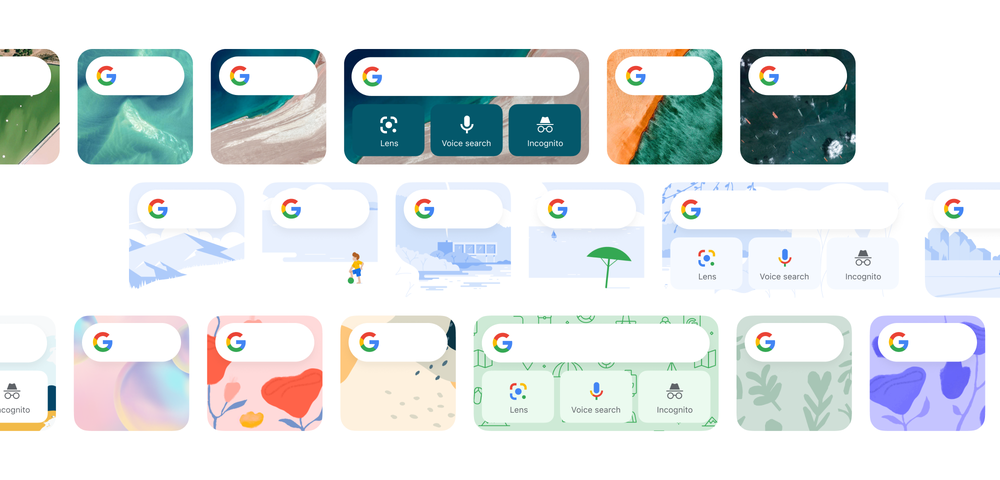
Widgets, your way: “Right now, everybody does this dance of open the phone, find the app, tap the app, open the app, go to the feature tap on the feature, and on and on… so we’ve been doing a bunch of things to try and bring the most useful stuff to you when you need it instead.” Like widgets, Luke says, which let you easily access key features of your Google apps from your homescreen. Luke’s favorite is the Google Photos widget, which shows Memories featuring his photos from years past, recent highlights, favorite activities and more without any action on his part.


Come configurare il sistema di luci Philips Hue

NFTs Expo su The Nemesis: pronti a partire!
Il mondo virtuale che ospiterà l’evento sta per aprire le sue porte. Su The Nemesis è tutto pronto per la NFTs Expo: il mondo virtuale che ospiterà l’evento sta per…
L’articolo NFTs Expo su The Nemesis: pronti a partire! scritto da YOUR_DIGITAL_VOICE! proviene da Assodigitale.

Facebook, tutti gli annunci di F8, l’evento dedicato agli sviluppatori

Funding Europe’s future with the Black Founders Fund
To cement our commitment to racial equity in Europe, last Octoberwe announced the Google for Startups Black Founders Fund, a $2 million initiative to provide cash awards up to $100,000 to Black-led startups in Europe. These are non-dilutive awards, meaning companies won’t have to exchange equity for the funding, and are paired with up to $120,000 in Ads grants and up to $100,000 in Cloud credits per startup. The founders will be introduced to each other and a wider community of experts for leadership, growth, technical support and access to Google for Startups’ body of knowledge, mentors and best practices.
We often hear that lack of diversity in tech is a pipeline problem. This program shows that isn’t the case. We received almost 800 applications for the fund from 18 countries in Europe and the quality we saw was truly exceptional — from tech prodigies, to former executives of the most successful companies in the world, to serial entrepreneurs.
Our team interviewed almost 100 founders for the fund to understand their businesses, their ambitions and their lived experience as leaders, whether they are serial or first time founders. Did they need to work three jobs at a time? How much perseverance did it take to get that degree? Did they have a friend or a cousin to call up to get easy funding? We looked at what opportunities each founder has been given (or not given) and what they did with them. The answers we heard made clear the caliber of these founders.
Today, we’re announcing the30 startups from the U.K., France, Belgium, Germany, Austria and the Netherlands who have been selected to receive awards from the Black Founders Fund. Their inspiring, fast-growing startups address global challenges like access to healthcare, financial inclusion, energy and education, in the most competitive industries, from hardware design and advertising to data and risk management. And it’s not only racial diversity that they represent: 40% of startups we selected are led by women.
Lasting change only happens when you engage everyone — the corporations, the VCs, the angel investors, the founders themselves — and invite them to support each other. With less than 0.5% of venture capital (VC) funding going to Black-led startups, and only 38 Black founders receiving venture capital funding in the last 10 years, the Black Founders Fund in Europe is a third region, after the U.S. and Brazil, where Google for Startups is helping to level the playing field by backing Black founders who are disproportionately locked out of access to capital.
We are so impressed by the founders’ experiences — the depth of their industry knowledge coupled with their valuable lived experiences of being Black leaders. This makes them uniquely positioned to build successful startups and create important solutions for our community. Backing Black founders not only means creating individual success stories, but also supporting job creation and wealth generation for decades to come.
Meet a few of the founders:
Research: What really happened to newspaper revenue
Having worked in news publishing for more than two decades, I’ve seen firsthand the impact the internet has had on the way we create and consume news. As people spend more time online, journalists and newspaper publishers are increasingly turning to technology to find new ways to reach readers. From subscriptions to data analytics to new formats, the news industry is transforming itself.
While digital reader revenues are growing at a promising rate, there is no doubt that the publishers’ business model has been challenged over the past several decades. Some critics have argued that if Google and Facebook didn’t exist, much of the revenue from print newspapers would have stayed with news publishers – that these tech platforms directly disrupted the newspaper business model.
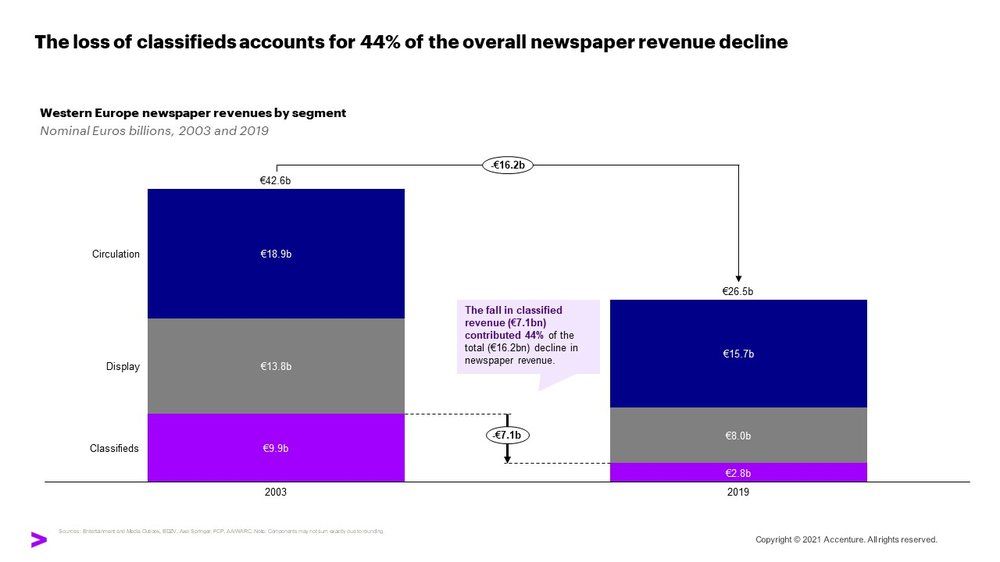
New research released today looks at the facts which disprove that theory. The analysis from economists at Accenture, commissioned by Google, looks at the revenues of newspapers in Western Europe over nearly two decades to reveal exactly what broke the old business model for newspapers. The data is clear: Almost half of the overall decline of newspaper revenue has come not from Search or social advertising, but from the loss of newspaper classifieds to specialist online players.
The countries included for analysis in this report are Austria, Belgium, Denmark, Finland, France, Germany, Greece, Ireland, Italy, Netherlands, Norway, Portugal, Spain, Sweden, Switzerland and the U.K., chosen based on the availability of robust data. Here’s what the report found:
Consumers are increasingly paying for digital news.
Four out of five of us now access news online. As a result, many publishers are using the latest technologies, including artificial intelligence, to reach readers and grow subscriptions. While many readers are not in the habit of paying for access to news, between 2013 and 2018, digital circulation volumes increased by 307% to reach 31.5 million paying subscribers in the Western Europe region, more than offsetting the decline in paid print subscriptions. Since 2018, the pace of publishers launching digital subscription models has accelerated further, which is a promising sign.
However, the growth in online revenue has not been enough to offset the loss from newspaper print advertising. As people move online, regular display advertising in newspapers became less popular, with revenue in this segment decreasing from €13.8 billion to €8 billion between 2003 and 2019.
What happened to newspaper revenues?
The majority of advertising in newspapers was made of classifieds like selling cars and homes, or listing jobs, and births and deaths notices. These advertisements, or “classifieds,” contributed €9.9 billion – almost a quarter – of newspaper revenues, and newspapers collected 93% of all classified advertising in 2003.
However, by 2019, only 32% of that revenue was going to newspapers, generating just €2.8 billion, with the drop accounting for 44% of newspapers’ total revenue decline over the period.
Huawei, HarmonyOS 2.0 rilasciato ufficialmente in Cina