Last year, I saw COVID-19 impact the lives of some of the strongest people I know because of their race, class and zip code — especially in my hard-hit hometown of Detroit. But I wasn’t the only one who witnessed this. We’ve all heard how the pandemic has affected vulnerable communities across the country due to structural and long-standing health inequities. Even so, there was no central resource to help consolidate, visualize and understand the data on a national scale.
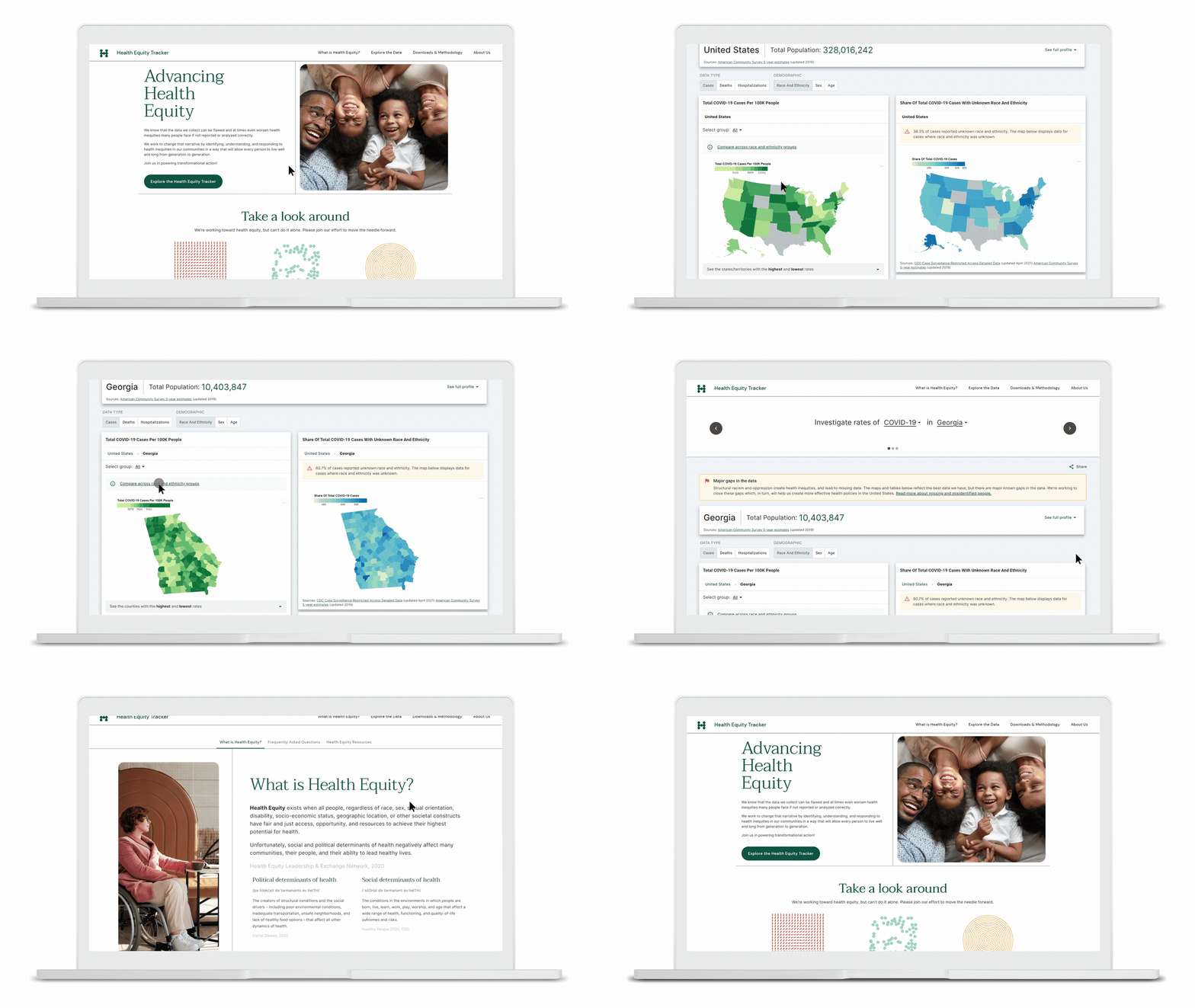
Over the past year a team of Google.org Fellows and I worked with the Satcher Health Leadership Institute at Morehouse School of Medicine and a multi-disciplinary Health Equity Taskforce to understand COVID-19 health inequities. Today, we released The Health Equity Tracker (HET), a publicly available data platform that visually displays and contextualizes the health disparities facing communities of color throughout the U.S.
With $1.5 million of Google.org grant funding and over 15,000 pro bono hours donated from 18 Google.org Fellows, the HET parses through a mountain of public health data to record COVID-19 cases, deaths and hospitalizations nationwide across race and ethnicity, sex and age, as well as state and county. The tracker also measures social and systemic factors — like poverty and lack of health insurance — that exacerbate these inequities and have resulted in higher COVID-19 death rates for people of color, especially Black and Latinx communities.