
SpaceX, oggi decolla la Crew-2 NASA con 4 astronauti a bordo
La NASA ha dato il via libera per il lancio della missione Crew-2 di oggi, dopo il rinvio di ieri dovuto alle previsioni meteo avverse che hanno quindi portato alla decisione di posticipare il tutto di circa 24 ore. Alle 11.49, ora italiana, dal Launch Complex 39A del Kennedy Space Center della NASA, in Florida, inizierà quindi il conto alla rovescia per l’operazione che porterà la capsula con a bordo quattro astronauti sulla Stazione Spaziale Internazionale, nell’ambito della missione operativa Crew-2 con SpaceX.

Perché i computer sono stupidi?

Si fa un gran parlare di intelligenza artificiale: computer che riconoscono la voce, come Siri o Alexa o OK Google, giocano a scacchi meglio degli esseri umani, identificano ed evitano ostacoli nella guida autonoma o assistita, con tempi di reazione fulminei e irraggiungibili per una persona. È facile pensare che siamo ormai vicini alla creazione di una vera intelligenza sintetica generalista, capace di competere con un essere umano.
Ma l’informatico statunitense Terry Winograd ha ideato un test che dimostra che non è affatto così. Il bello è che lo ha fatto nel 1972, e il suo test funziona ancora adesso. Non per nulla è diventato professore d’informatica alla Stanford University ed è considerato uno dei massimi esperti nel settore.
Il test di Winograd è beffardo, dal punto di vista degli informatici, per la sua semplicità. Una delle sue formulazioni tipiche è questa:
Il trofeo non ci stava nella valigia marrone perché era troppo grande.
Una frase banale, con una struttura grammaticale semplice e parole comunissime, perfettamente comprensibile. Talmente comprensibile e ovvia, per noi umani, che neanche ci accorgiamo che è ambigua. Quale dei due oggetti era troppo grande? Il trofeo o la valigia? Per noi la risposta è istantanea. Per un computer, invece, no.
Infatti una semplice analisi meccanica della frase (“questo è un sostantivo, questo è un verbo”, eccetera) non consente di risolvere l’ambiguità. Per farlo bisogna sapere che cos’è un trofeo, che cos’è una valigia, quali sono i normali rapporti di dimensione fra trofei e valigie, che le valigie sono fatte per contenere oggetti e i trofei no, e il fatto che se l’oggetto A deve stare dentro l’oggetto B, non è un problema se l’oggetto B è molto più grande dell’oggetto A: bisogna sapere che le cose piccole possono stare dentro le cose grandi ma non viceversa.
Non è neanche possibile usare uno dei trucchi preferiti dei sistemi di intelligenza artificiale, ossia sfruttare un enorme corpus di testo e un po’ di statistica per arrivare a una disambiguazione affidabile, o la tecnica tipica degli assistenti vocali, ossia estrarre le singole parole riconosciute e tirare a indovinare sul significato generale della frase. Serve esperienza del mondo.
Il test di Winograd ha varie versioni, chiamate schemi, composte da due frasi che sono differenti tra loro sono per una o due parole ma contengono un’ambiguità che si risolve in due modi opposti. Risolverla richiede conoscenza della realtà e ragionamento. Un computer che fosse capace di farlo sarebbe, all’atto pratico, intelligente.
Questo è un esempio di schema di Winograd:
I consiglieri comunali rifiutarono il permesso ai manifestanti perché temevano disordini
I consiglieri comunali rifiutarono il permesso ai manifestanti perché istigavano disordini
Le persone interpretano la prima frase nel senso che sono i consiglieri comunali a temere disordini; interpretano la seconda nel senso che gli istigatori sono i manifestanti. Lo fanno perché sanno cosa sono i consiglieri comunali e quali sono i loro compiti, e sanno che cosa sono le manifestazioni e le loro possibili conseguenze.
Beh, direte voi, ma frasi ambigue come queste sono rare. Invece no: un gruppo di ricercatori ne ha radunati 150 esempi, da usare come test d’intelligenza per computer. Frasi banalissime, come “ho messo un libro pesante sul tavolo e si è rotto”. Persino GPT-2, uno dei sistemi di intelligenza artificiale più moderni applicato al linguaggio, va in crisi di fronte agli schemi di Winograd, come spiega bene Tom Scott in questo video.
Potremmo risolvere il problema rivolgendoci ai computer in modo meno ambiguo? È improbabile. Il guaio è, infatti, che siamo talmente abituati a usare sottintesi basati sulla conoscenza del contesto che troveremmo estenuante parlare o scrivere in maniera perfettamente non ambigua.
Questa necessità di avere contesto per capire e risolvere le ambiguità non è solo una questione linguistica: è un ostacolo per un settore delicatissimo come la guida autonoma.
Un’automobile che usi un sistema di puro riconoscimento delle immagini, per esempio, verrà confusa dall’immagine della bambina in mezzo alla strada che vedete all’inizio di questo articolo e probabilmente frenerà di colpo per non colpirla. Al sistema mancano il contesto temporale e la conoscenza del comportamento dei bambini che consentono di capire che non ha senso che la bambina sia perfettamente immobile e che la forma della “bambina” cambia, man mano che ci si avvicina, in un modo che rivela senza dubbio che si tratta di un disegno applicato alla superficie stradale.
Senza dubbio, s’intende, se siete esseri umani.
In sintesi: l’intelligenza artificiale fallisce in modi profondamente “inumani”. Dà l’illusione della comprensione. Questo rende particolarmente difficile prevedere i suoi errori e correggerli. Specialmente quando si è al volante.

Le Poste Svizzere offrono fino a 10.000 franchi a chi scopre falle nei suoi sistemi

Un bug bounty è una ricompensa che viene offerta da un’azienda o da un ente a chi trova e segnala in modo responsabile una falla o un difetto informatico in un prodotto di quell’azienda o ente. Questi premi servono per incoraggiare gli informatici a cercare queste falle, con il risultato di migliorare la sicurezza del software per tutti gli utenti.
Ovviamente l’informatico che scopre una falla è tenuto a non rivelarla a nessuno a parte l’azienda o ente che offre il bug bounty, in modo che sia possibile turarla prima che diventi nota e venga sfruttata.
Le Poste Svizzere offrono da pochi giorni uno di questi bug bounty, con ricompense da 50 fino a 10.000 franchi. Non è la prima volta che lo fa, ma in questo caso l’iniziativa è aperta a tutti, mentre in passato era accessibile soltanto su invito. Cosa non trascurabile, le Poste Svizzere offrono un safe harbor, ossia un’immunità da conseguenze legali per chi effettua test e indagini sui sistemi informatici seguendo le regole di un bug bounty. Senza questa tutela giuridica, infatti, una violazione di un sistema informatico sarebbe considerata un reato.
Per maggiori informazioni si può consultare la pagina apposita del sito delle Poste Svizzere, che porta a yeswehack.com/programs/swiss-post, dove è riportato il regolamento del bug bounty e c’è anche una hall of fame.
Le Poste spiegano di aver già trovato 500 vulnerabilità e di aver pagato circa 250.000 franchi in ricompense da quando è stato lanciato il programma, che ha dimostrato di essere efficacissimo, come racconta in dettaglio Sandro Nafzger, responsabile del programma.
A chi non conosce il settore può sembrare strano, e persino immorale, che un’azienda paghi profumatamente degli hacker per penetrare nei suoi sistemi e mostrarne le falle. Ma i bug bounty costano molto, molto meno di un test tradizionale svolto da professionisti e funzionano. Come conseguenza non trascurabile, tengono i talenti informatici al riparo dalle tentazioni del crimine organizzato.
Secondo i dati pubblicati di recente dalla società di sicurezza Digital Shadows, infatti, le bande specializzate in reati informatici pagano cifre notevoli a chi vende loro accessi a sistemi aziendali. Un semplice initial access broker, ossia una persona che trova una falla in un sistema ma non la sfrutta e invece la rivende ad altri, diventando l’equivalente informatico di una persona che scassina una cassaforte e poi se ne va, lasciando ad altri il compito di vuotarla e riciclare il bottino, può guadagnare in media dai 7000 ai 9000 dollari. E questo genere di attacco è aumentato fortemente per via del lavoro da remoto di molte persone durante questa pandemia.

Raffica di tentativi di truffa: la finta assistenza Microsoft e il ricatto che arriva dal proprio indirizzo di mail
Il Canton Ticino sembra essere preso particolarmente di mira dai truffatori in questi giorni.
È tornata alla grande la classica truffa telefonica della finta assistenza Microsoft: la vittima riceve una telefonata da qualcuno che, in inglese, dice di far parte del servizio di assistenza Microsoft e ci avvisa che il suo computer è infetto. Non è vero, e non si tratta di un tecnico di Microsoft ma di un truffatore.
Se la vittima segue le sue istruzioni, il truffatore prenderà il controllo del suo computer, simulerà problemi inesistenti e solitamente chiederà soldi per risolverli.
Ne ho parlato tante volte, ma c’è sempre qualcuno che si affaccia all’informatica per la prima volta, non sa di questa truffa e quindi ci casca o perlomeno si spaventa, per cui vale la pena di ricordare che la cosa migliore da fare è chiudere la comunicazione senza seguire le istruzioni di uno sconosciuto al telefono.
Le chiamate, segnalatemi da numerosi lettori, sembravano provenire da numeri di telefono esteri: una di quelle che ho ricevuto io proveniva apparentemente dal numero austriaco 0043 675 000372; altre indicavano come origine un prefisso 0049 (Germania).
Non è l’unica truffa informatica che sta girando: in Canton Ticino molte persone segnalano ai giornali) di aver ricevuto una mail in tedesco che intima di pagare una cifra in bitcoin altrimenti il computer verrà infettato. La mail dice inoltre che chi l’ha scritta ha le prove che la vittima è entrata in siti pornografici.
Si tratta di un bluff, ma chi lo riceve rimane scosso dal fatto che la mail proviene dal suo stesso indirizzo di posta. In realtà falsificare il mittente è un vecchio trucco dei truffatori e non vuol dire affatto che i criminali sono entrati nella casella di mail della vittima. È sufficiente cancellare la mail senza rispondere e seguire le raccomandazioni della Polizia Cantonale pubblicate da varie testate.

Governance e meritocrazia. Tavola rotonda il 29 aprile
Tavola rotonda del 29 aprile segnalata da “Bussola Italia” Questa tavola rotonda mette al centro altissime competenze. L’evento è organizzato dal Forum della Meritocrazia che è tra i promotori di Bussola Italia. Le istruzioni per registrarsi e partecipare all’evento sono riportate qui sotto. Il progetto Meritocrazia e CdA, a cura di Silvia Stefini e Laura Zanfrini, sarà discusso durante l’evento Innovazione e Governance: “Che ruolo ha il consiglio di amministrazione nel disegno di un ecosistema…
L’articolo Governance e meritocrazia. Tavola rotonda il 29 aprile scritto da Paolo Brambilla proviene da Assodigitale.
Finding more accessible ways to connect
In 2020, global searches for “how to say i love you in sign language” reached an all-time high. While social distancing has been difficult for everyone, it’s disproportionately affected people who are deaf or hard of hearing. Wearing face masks and connecting over video calls has helped to keep us safe, but it’s made it harder to follow conversation through lipreading and more difficult to follow sign language that’s confined to a small screen.
So it makes sense that we’re searching for ways to communicate better. And I’m proud to work at a company that’s building technology to help people do just that. Products like Live Transcribe provide real-time transcriptions of what is being said so people can follow conversations even while wearing masks, and Live Caption automatically captions videos and spoken audio on your device and browser so no one has to miss out on their favorite content.
Behind all this technology are Googlers, like Tony Lee, who makes our films more accessible through captions and whose family uses captioning technology every day. The Googlers working on this technology are passionate about making the world more accessible for the deaf and hard of hearing communities — communities that some of them are also a part of. Here’s a glimpse at a few of the Googlers working on accessible features and the motivation behind their work.
Dimitri Kanevsky, Research Scientist for Live Transcribe, also on the Hearing Accessibility team
“I came to Google to work as a speech researcher to improve speech recognition algorithms. I completely lost hearing in early childhood and waited for so long to have this speech recognition application like Live Transcribe that I am using now everywhere every day. I was happy to be able to finally talk easily to my granddaughters.”
Live Transcribe is available for free on most Android devices in more than 80 languages. It transcribes conversations in real time, which can be helpful to people who are deaf or hard of hearing when speaking with a hearing person during face-to-face meetings. It can also be used to transcribe audio from videos and podcasts.
Ken Harrenstien, Software Engineer on YouTube captions
“For me and most of the Deaf/HoH in particular, captions are essential for accessible video content. I went to MIT. While there, I didn’t go to classes because I didn’t know ASL and couldn’t lipread the lectures or anything. Just books. After we launched captions on YouTube, MIT began uploading many class lectures to YouTube, and I was able to find these videos and finally see how all those professors had been trying to make their subjects interesting. I can enjoy classes, lectures, talks, how-tos on literally any topic, personal stories, ASL performances, live streaming events… It’s like having my own immense library of ‘just books,’ except with video. Without captions, we cannot achieve Google’s original mission of making the world’s information accessible and useful.”
In 2009, we launched YouTube Automatic Captions which use speech recognition to automatically add captions to videos. Since then, we’ve expanded to more than 10 commonly spoken languages and, to date, over 1 billion YouTube videos have been captioned.
Ricardo Garcia (Rago), Tech Lead on Sound Amplifier
“While most hearing assistive technologies focus on speech enhancement or intelligibility, we understood early on that the hearing experience goes beyond speech. Natural sounds — like birds chirping, a river stream or the buzz of a mosquito — and audible cues — like hi-hat cymbals or even the failing motor of a fridge — are well beyond the speech frequency range. I truly believe that by creating these audio algorithms, everybody benefits — not only the deaf and hard of hearing communities.”
Sound Amplifier is an Android application that when used with headphones allows you to filter, augment and amplify the sounds in your environment. It increases quiet sounds, while not over boosting loud sounds and gives the user control over noise reduction and sound enhancement settings.
Sean Kinzler, Software Engineer on Meet Captions
“I joined Google to work on features that are not only challenging, but also have a significant impact on people’s lives. Since the start of COVID-19, virtual meetings have become a critical part of maintaining communication lines in the workplace. Making it possible to caption these meetings helps the Deaf and Hard of Hearing community more freely join in and have an impact in virtual meetings.”
Google Meet uses speech-to-text technology to provide live captions in meetings, which helps participants who may be deaf or hard of hearing follow along and stay engaged. The feature is available in several languages, including French, German, Portuguese, Spanish and English.
I am hard of hearing myself, and throughout my life there have been many times I have felt left out of conversations, or wanted to engage in the media content I was watching, but couldn’t. I just wanted to be included and thought about. Working on accessible features has been my life’s work, and I am thankful that in my role at Google I’ve been able to help make sure all disabled people are included in the work we do, and the stories we tell. Across our products and stories, we aim to create a truly accessible world.

A CODA story: Why accessible technology matters
I’ve been a Googler for over four years, but many of my coworkers only recently learned that I’m a CODA or “child of a deaf adult.” And in my case, I’m the child of two because both of my parents were born deaf.
Growing up in the ‘90s, communicating with my parents was the one thing that made me realize my experiences were different from those of my friends. Long before texting (let alone video chatting) was a thing, my family had a TTY — a complex, and frankly cumbersome device that sent messages letter by letter. By today’s standards it would seem pretty archaic, but as a kid it was just an accepted part of my family’s everyday life.
While technology has come a long way since then, there are still moments that remind me how much harder it can be for people like my parents to stay in touch and connect with the outside world. This past year, when staying close has been more difficult, accessibility has become more important — especially for my family. With the birth of my son Owen, my parents became grandparents for the first time. Being apart has been extra hard since they don’t want to miss a single milestone (big or small).
But technologies like Live Caption and captioning in Google Meet have helped us stay close in spite of the distance. Live Caption automatically adds captions to any audio on the videos we send to my parents, so they can follow all the chatter in the background. And as all of our family time happened on Google Meet last year, captioning helped us communicate more easily — especially when our hands were occupied with Owen. Distance is never easy, but we made it work. And this week, after 14 long months of quarantined virtual bonding, my parents finally got to see Owen in person.
A whale of a tale about responsibility and AI
A couple of years ago, Google AI for Social Good’s Bioacoustics team created a ML model that helps the scientific community detect the presence of humpback whale sounds using acoustic recordings. This tool, developed in partnership with the National Oceanic and Atmospheric Association, helps biologists study whale behaviors, patterns, population and potential human interactions.
We realized other researchers could use this model for their work, too — it could help them better understand the oceans and protect key biodiversity areas. We wanted to freely share this model, but struggled with a big dilemma: On one hand, it could help ocean scientists. On the other, though, we worried about whale poachers or other bad actors. What if they used our shared knowledge in a way we didn’t intend?
We decided to consult with experts in the field in order to help us responsibly open source this machine learning model. We worked with Google’s Responsible Innovation team to use our AI Principles — aguide to responsibly developing technology — to make a decision.
The team gave us the guidance we needed to open source a machine learning model that could be socially beneficial and was built and tested for safety, while also upholding high standards of scientific excellence for the marine biologists and researchers worldwide.
On Earth Day — and every day — putting the AI Principles into practice is important to the communities we serve, on land and in the sea.
Curious about diving deeper? You can use AI to explore thousands of hours of humpback whale songs and make your own discoveries with our Pattern Radio and see our collaboration with the National Oceanic and Atmospheric Association of the United States as well as our work with Fisheries and Oceans Canada (DFO) to apply machine learning to protect killer whales in the Salish Sea.
3 ways to find and support eco-friendly places on Maps
In an effort to be more eco-friendly, we all know that it’s best to reduce, reuse and recycle — and to support businesses and places that do the same. But it’s not always easy to know which restaurants compost or where you can recycle items, like electronics or clothing. Thankfully, Google Maps and its community of contributors are making it easier for everyone to make choices that are better for the planet.
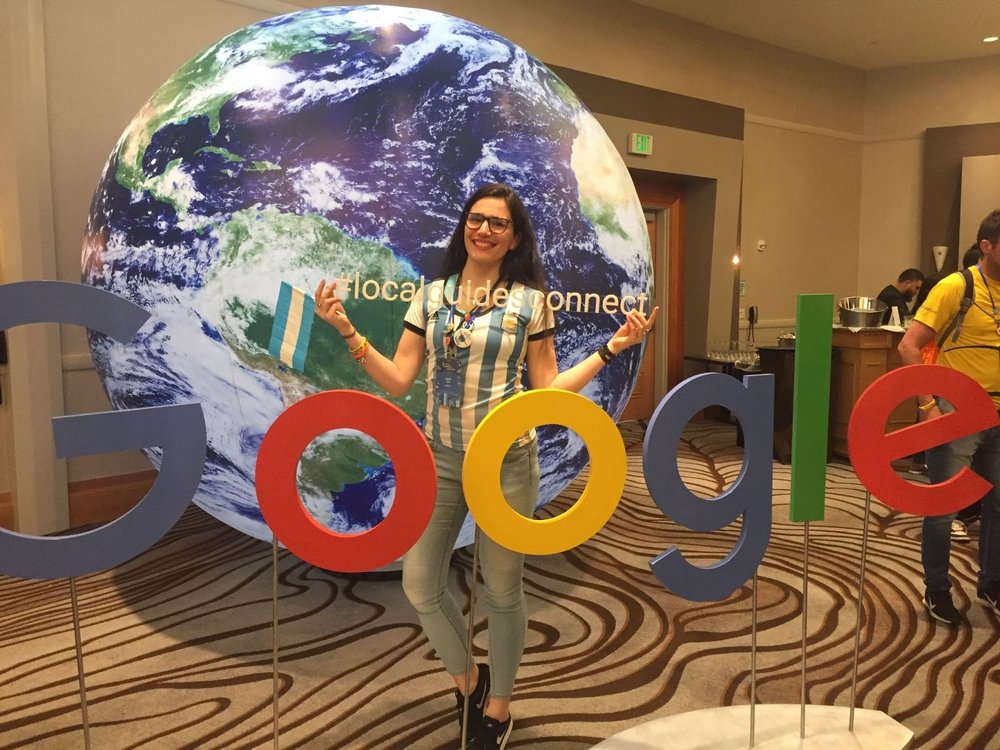
As an active member of the Local Guides program, a global community of people who share their local knowledge and recommendations on Google Maps, Karol helps people find environmentally-friendly spots in her hometown of Posadas, Argentina.
“Posadas is truly a blessed place surrounded by nature, but it breaks my heart that it’s just taking its first steps on the path to being environmentally-friendly,” says Karol, who used the list featureon Maps to curate and share hard-to-find recycling centers in her city. “Anything that can be done to promote sustainable consumption is priceless.”

Embedding Web Stories across your site
Web Stories are a great way for content creators to bring enhanced experiences to their users and thousands of creators and publishers are using them. Tools for creating stories are available to a global audience, and Google products such as Search and Discover are incorporating Web Stories as a first-class content format. And if you are using WordPress we have good news for you! With the release of v1.5 of the Stories Editor for WordPress, you can easily embed Web Stories into your existing site.
Embedding Web Stories in your site
The Web Stories Editor for WordPress makes it easy for you to create beautiful Web Stories, and the newly released version 1.5 provides capabilities that make it very easy to embed Web Stories into your site, including a versatile Web Stories block, integration of Web Stories into the theme customization process, and Integration with Classic Editor.
Integrating Web Stories into your content strategy allows you to:
-
Take advantage of both original and third-party story experiences to enhance the quality of your content strategy. You can embed your own Web Stories or Web Stories created by other publishers into your content.
-
Diversify your traffic sources by combining organic traffic from search results and Discover, with direct traffic from origin, and social sharing.
The Web Stories block
To embed stories on your WordPress-powered content site , you start by inserting a Web Stories block:
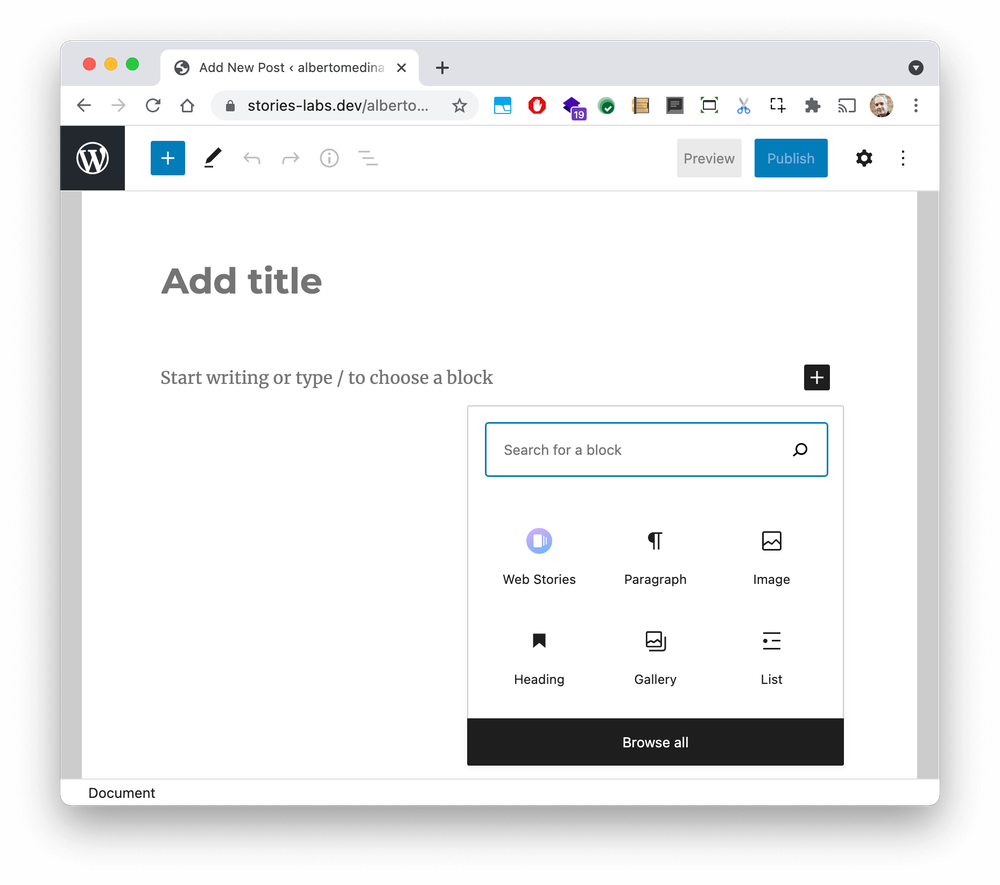
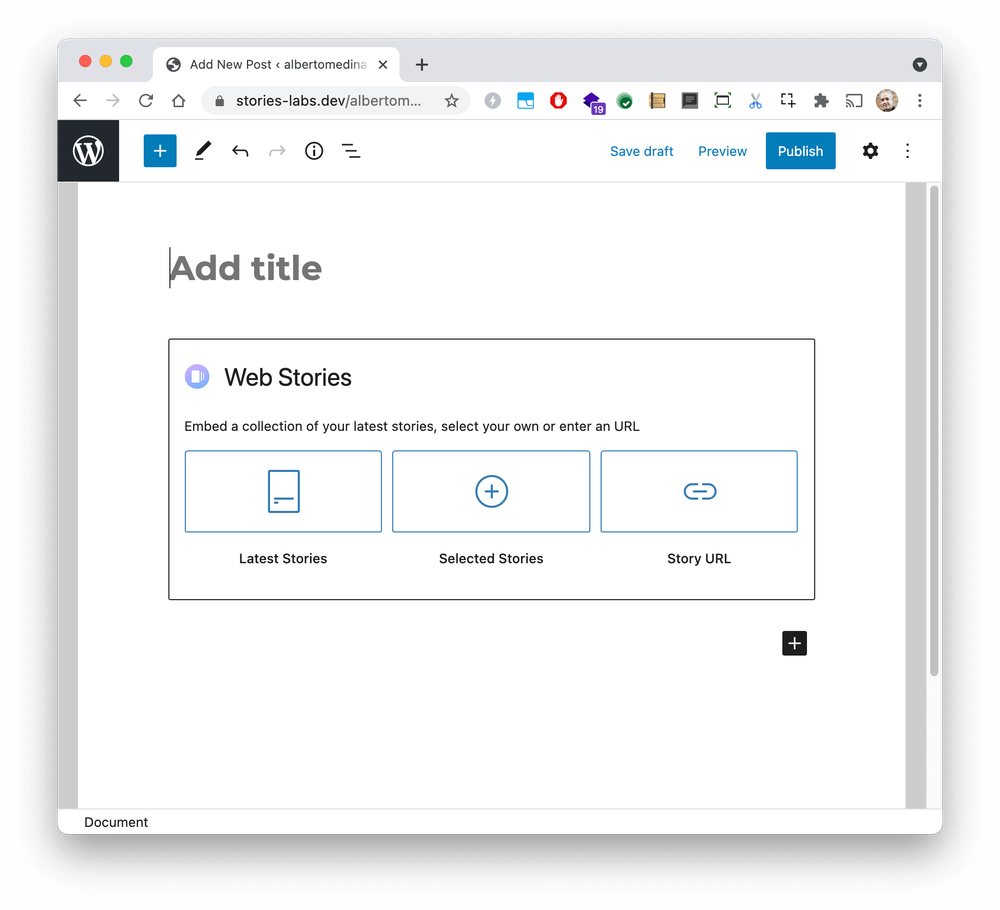
The Web Stories block provides three options for embedding stories into a post or page:
-
Latest Stories: Display your most recent stories, with filtering and sorting options. The list automatically updates as you publish new stories.
-
Selected Stories: Display a list of handpicked stories.
-
Single Story: Embed a single story given its URL. This is a simple option but combined with other blocks, stories can be embedded and displayed in many creative ways.
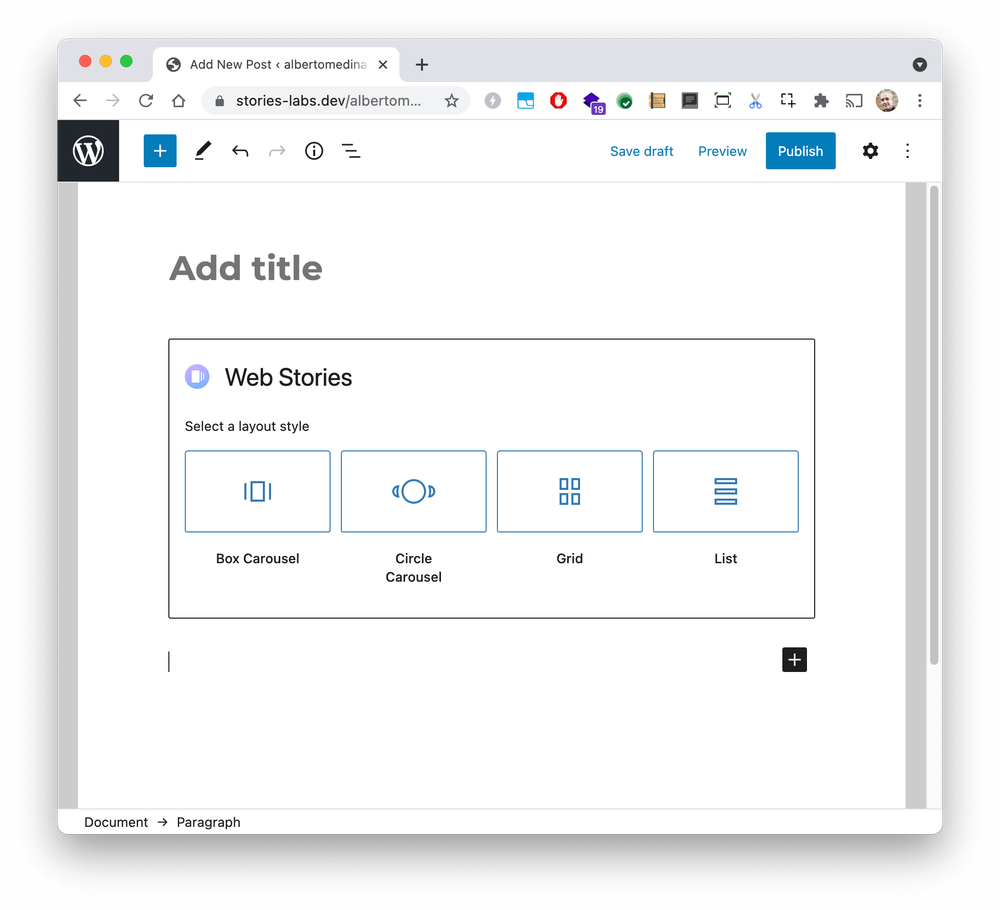
For the Latest Stories and Selected Stories embedding options, you can specify which Web Stories you want to show, as well as some layout options to control how they are displayed:
-
Carousel: Carousel of web stories as rectangular cards or circular items.
-
Grid: Grid view (up to four columns).
-
List: Stacked list of stories.
Each layout option provides additional settings to give you fine-grained control over how embedded stories appear.
With this new Web Stories block, stories can be displayed anywhere blocks can be used. This includes the upcoming full site editing feature in WordPress, which gives users the ability to edit all elements of a site using Gutenberg blocks. This is great news, as the ecosystem continues to evolve and moving steadily towards Gutenberg-based themes, more and more users will get direct access to the Stories format.
Availability
If you are using any of the following themes, you can start bringing the power of storytelling to your site today:
-
The makers of the popular Astra theme announced their integration of stories.
-
The Neve theme also provides integration of Web Stories into their theme.
-
The Newspack project provides native stories support to the Newspack theme and the new capabilities will be released soon.
-
The Web Stories WordPress plugin provides built-in integrations for all WordPress core default themes so that they have this opt-in functionality out-of-the-box.
Below you can take a look at some demo sites using these themes to get a glimpse of what is possible. Can’t wait to see what you would do on your site!
Astra
The Astra theme provides native integration with Web Stories. Check out the Astra theme demo site. In the screenshots below you can again see a selected stories embed using a circle carousel at the top of the theme, a selected stories embed using a box carousel displaying the members of the team, a selected stories embed using a box carousel displaying stories for the menu items, and a selected stories embed using a list layout.
Newspack
Newspack is an all-in-one publishing platform that incorporates industry best practices to help small and medium-sized news organizations produce great journalism. Integration of Web Stories into the Newspack flagship theme is available as of v1.33.0. Take a look at the Newspack theme demo site showcasing embedded stories in different ways.
What’s next
With the creation capabilities of the Web Stories editor for WordPress and the completely revamped and versatile Gutenberg block, you have everything you need to unleash your creativity and bring the power of the Stories format to your content strategy. And this is just the beginning. Stay tuned and share your stories with the world!
The most affordable Fi unlimited plan is here
Everyone needs something different from their phone plan. Some people love the freedom of a plan that works seamlessly at home and abroad. Others just need the essentials: unlimited data, talk and text on a fast network with great coverage. So today, as Google Fi celebrates its sixth birthday, we’re introducing a new phone plan: Simply Unlimited.
For the person who wants unlimited data with just the essentials
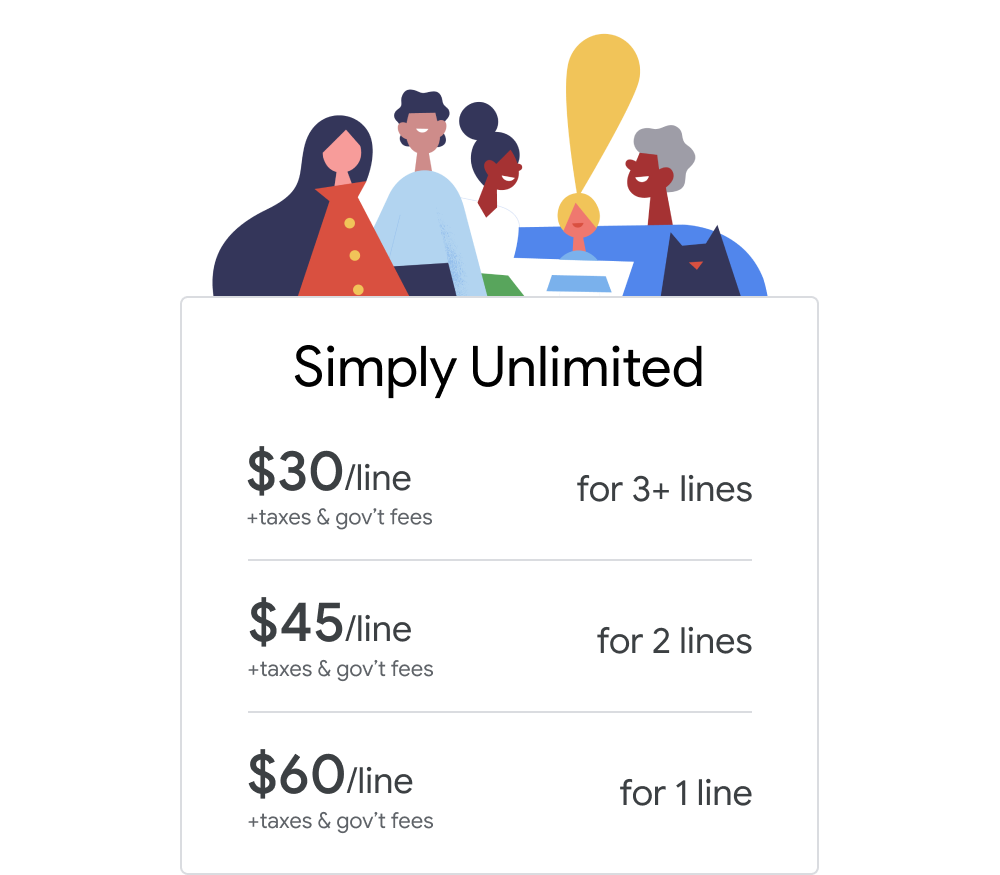
Simply Unlimited is our most affordable plan for unlimited data, calls and texts. You pay a consistent price each month, with rates starting at $30 per month per line for three or more lines. That price includes unlimited calls and texts in the U.S., plus unlimited data and texting in the U.S., Canada and Mexico. Simply Unlimited is also a great choice if you’re looking for a plan for a group or family — you can get three lines for the same total price as two. As with all our plans, you always get privacy and security features that help protect your personal information, and family features that help your family stay safer on their phones and build healthy digital habits.
Mountaineering to Maps: Rebecca Moore’s fight for the planet
Rebecca Moore lives in the Santa Cruz Mountains, a series of peaks in Northern California where the ocean and redwoods collide. Living there, amongst the trees, she turned to mapping as a way to protect the planet.
When a logging project was proposed in her community, she used Google Earth to show everyone how the plans would affect their daily lives and, more importantly, endanger the precious ecosystem surrounding them. The logging plan was denied and that redwood forest is now being considered for permanent protection as public open space.
“In a way, technology and digital mapping can give nature a voice — it puts it on the map and helps it defend itself,” Rebecca says. “Seeing facts on a map quickly squashes debate and dispels misconceptions.”
For the past 15 years, Rebecca has led the Google Earth, Earth Engine and Outreach team. Their goal is to create a digital replica of the planet and put it into hands everywhere. They’ve mapped everything from endangered animal populations and fisheries to CO2 emissions and wildfires. We talked with Rebecca about why she thinks maps are so powerful and how she finds it in herself to tackle hard problems, like climate change.
What does your team at Google do?
Our goal is to organize all of the planet’s information and make it accessible, understandable and actionable. For example, Google Earth Engine helps us take the flood of environmental information from things like satellite imagery and weather data, and turn it into something that anyone can understand and take action on. And our Google Earth Outreach program helps nonprofits, communities and indigenous peoples around the world use our mapping tools to solve whatever problems they’re tackling.
What makes maps so powerful when it comes to protecting the planet?
The world is changing, but it’s hard to visualize it. If we can create a dynamic, digital replica of the real world and extract meaningful insights from it, then we can put it into the hands of people who can help protect and conserve the planet for generations to come.
For example, we’ve seen how putting this information into the hands of indigenous communities can help protect land that’s under threat. We worked with the Suruí, a tribe in the Amazon, to use Google Earth‘s mapping tools to stop illegal logging in their region.
Now, with Timelapse in Google Earth, anybody can fly over any region in the world and see decades of planetary change. When you see these changes with your own eyes, there’s what I call the digital overview effect — you become more emotional and more engaged.
How do you identify areas where Google can have the biggest impact?
I look for the hard problems that Google can make a dent in. Climate change is at the top of that list. It’s an existential threat, and we’re all experiencing the effects of rising temperatures: from droughts to wildfires to islands disappearing. There’s a sense of urgency that we have to act now.
Then I look for patterns. I’ve read voraciously over the past few years to understand what the world’s best thinkers have identified as potential pathways to solving climate change. I look at how Google can uniquely contribute to those solutions.
When taking on big challenges, how do you stay motivated?
I was a rock climber and mountaineer for years — I even climbed in the Himalayas. When you climb a mountain, you don’t actually see the summit from where you start. But you know if you head in a positive direction, eventually you’ll see it, and get there. And along the way, the little breakthroughs will motivate you. Same goes for making meaningful change to protect the planet.
Sometimes the best thing is to make a choice, commit and go forward. Stay attentive and mindful to what’s happening along the way, and be prepared to make mid-course corrections. And stay patient, taking on big challenges — whether it’s climbing or climate change — is hard work and it takes time. Even when the summit (or your goal) feels far away, don’t forget to turn around and look back to appreciate how far you have come. That can be super-motivating, and applies to my work today.
You didn’t always work at the intersection of environment and technology. What put you on this path?
I studied computer science, and after school I just wanted a job that was intellectually challenging. It didn’t matter so much what it was for and what I worked on. That changed after my father, who was an attorney and argued a landmark civil rights case, and my brother, who was an artist and an activist, died within five months of each other. It hit me that we don’t live forever. It seems cliche, but I didn’t want to look back and think I frittered away with stuff that didn’t matter.
I needed that sense of urgency to stop what I was doing, leave my job and reinvent myself. I didn’t know what my next move was, and it took me three years to figure it out, but I was determined to find a way to bring my own talents to bear and work on things I cared about. I started small, helping protect the nature that surrounds my community in the Santa Cruz Mountains, and went from there.
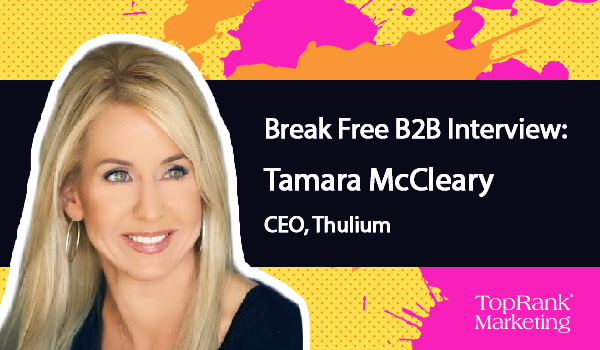
Break Free B2B Marketing: Tamara McCleary of Thulium on Visions of the Future and Doing No Harm
When it comes to B2B influencer marketing, it’s natural to wonder just what an industry influencer actually looks like?
Our third season of Break Free B2B Marketing video interviews feature conversations with top B2B influencers, looking closely at the issues that each expert is influential about in their industry.
For more than a decade our team at TopRank Marketing has fostered a strong community of leading influencers, developing close relationships with subject matter experts in many industries.
Sometimes you meet a person who ticks all the boxes: they’re smart, they’re funny, they’re connected, they’re brave, and they’re an expert — in not just one thing, but many. You can learn a lot from people like this: tips, tricks, advice, best practices, and more. The one thing they can teach you about more clearly than anyone else, however, is what’s going to happen next.
Tamara McCleary, CEO of Thulium, is just this sort of person. She’s been labeled a pioneer influencer of social media marketing for B2B, is the CEO of global digital social media marketing agency Thulium, and just recently enrolled to further her education at Harvard University. Tamara’s favorite thing to talk about is the future — the future of marketing, work, artificial reality, trust, life, and belief. These insights are valuable to any B2B marketer trying to figure out the next steps toward new successes, and they’re also the reason we asked her to speak with us for the latest episode of our Break Free B2B Marketing interview series.
Break Free B2B Interview with Tamara McCleary
If you’re interested in checking out a particular portion of the discussion, you can find a quick general outline below, as well as a few excerpts that stood out to us.
- 2:48 – Meet Tamara
- 4:05 – What does “do no harm” mean?
- 11:01 – Concerns about privacy in the modern world
- 12:33 – “Let’s talk 2030.”
- 17:04 – How do we approach the risks that come with adopting technology of the future?
- 22:15 – How do you think the global workforce will be operating in the next year and how has COVID influenced those changes?
- 29:11 – Tamara’s experience pursuing further education at Harvard
- 32:49 – How Tamara feels about the word influencer
- 36:50 – Why should B2B marketers be working with influencers or thought leaders?
- 44:54 – How do you figure out what’s important to your audiences?
- 48:46 – Have you seen any B2B tech campaigns you like or are involved in that are something special?
- 54:51 – How people can get ahold of Tamara
- 55:57 – In conclusion: how can B2B leaders break free?
Sue: Most of our clients are tech clients. And of course, we’re all trying to rise to the next technology that eases our worlds. AI is massive, and for most of our clients, there’s a vision of it. We have to be communicating what the benefits are as marketers. But at the same time, I think we all understand, though, there’s a little bit of risk here. So how do we approach this? How do we reconcile ourselves to these things that are happening? What’s our job in terms of protecting humanity as we bring these things forth?
Tamara: You need the protection of policy, because I think it’s really difficult to say that marketing is going to have to be the policing agent for organizations as to whether or not something that they’re putting out there as proper, that’s a lot of burden to put. Not only that, it’s a conflict of interest. Because if that’s your client, and you’re running a business, and they’re a business, now we’re asking you to police. And that’s not right. Instead, I say that you need to be protected by policies put in place that say that these things are okay and lawful to do. And these things are unlawful because in marketing, we saw this happen, even with technologies that came out for social listening and monitoring — there were things that you can do, there were back-doors. I remember even 10 years ago, backdoor ways where you could see who was sending that email, who was clicking on on that tweet, who’s opening that Facebook ad? But the thing is, ethically, it’s not right. As an organization, I think it’s where you take a stand and go, you know — we will treat all people respectfully and within the law. And what’s nice is when you do have the law behind you, and you say no to something, these organizations that you and I work with — their legal teams would never go for something that was unlawful, never. I really feel that the companies we work with are those A-plus companies that do care about being law abiding citizens, but there are those out there that don’t. And usually they don’t bother to hire agencies like ours. Because if you’re going to be underhanded, you’re not really going to pay for top level advice that’s going to tell you that you’re wrong.
[bctt tweet=”“The more diverse your workforce is, the better your ideas, innovation, and problem solving are, because you don’t have a bunch of heads that look like one another nodding in agreement, which doesn’t get us anywhere.” — @TamaraMcCleary” username=”toprank”]Tamara: From an HR perspective, what’s wonderful is the fact that we now are open to the ability to have much more diversity within the workforce, and what I mean by that is diversity of geographic location — diversity of education. Because I don’t think it’s about your education or your degree, as much as it’s about your willingness and your hunger to learn, earn and be agile, because everything’s changing, right? 85% of the jobs in 2030 haven’t been invented yet. I need agile diversity of people and ethnicities because we can go outside of our zone. I think that just having a remote workforce gives us the ability to have a better mix within an organization of diversity of thought, because the more diverse your workforce is, the better your ideas, the better your innovation, the better your problem solves are, because you don’t have a bunch of heads that look like one another nodding in agreement, which doesn’t get us anywhere.
So I love the fact that I think a year out from now we’re going to see that a remote workforce is a good workforce, and it allows us to include more people than maybe might have been included when they had to come into a physical office. And then on the other side and perspective, I think what we’re offering a year out from now is that people are going to be able to have a greater work experience, and the employee experience will be shifted, because you can get your work done and still do all the things in your life that you may need to do, whether that’s your 12 noon yoga class, or having lunch with your kids, or expanding your mind with painting or clay or taking a writing class. With the flexibility of a remote workforce, we have the ability now to express ourselves more, versus having these compartments that have never worked — a compartment that says “this is our personal life,” and the compartment that says “this is my work life.” Then I think we can finally stop talking about that really annoying work life balance that never worked.
Keep your eye on the TopRank Marketing Blog and subscribe to our YouTube channel for more Break Free B2B interviews. Also check out episodes from season 1 and season 2.
Take your B2B marketing to new heights by checking out out previous season 3 episodes of Break Free B2B Marketing:
- Episode 1: Kevin L. Jackson, GC GlobalNet — The Future of Cloud Computing
- Episode 2: Tim Crawford, AVOA — The New Normal
- Episode 3: Oliver Christie, PertexaHealthTech — The Future of Artificial Intelligence
- Episode 4: Liam McIvor Martin, Time Doctor — Trends in Remote Work
- Episode 5: Sarah Barnes-Humphrey, SHIPZ — The Future of Supply Chain
- Episode 6: Eric Vanberburg, TCDI — The Changing Cybersecurity Landscape
- Episode 7: Nicole Brady, SAHM Reviews — The Importance of Empathy
The post Break Free B2B Marketing: Tamara McCleary of Thulium on Visions of the Future and Doing No Harm appeared first on B2B Marketing Blog – TopRank®.
Bonita Stewart’s new research for the next era of leaders
“I took a zigzag approach to life and my career, climbing corporate ladders, swerving through the obstacle course of entrepreneurship and landing in Silicon Valley,” Bonita Stewart says of the path her work took her in. Along the way, she was often the only or the first woman or woman of color, or both.
Bonita was also the first Black woman to be a vice president at Google, where she’s VP of Global Partnerships. In 2018, she teamed up with another Black woman who experienced “being the first:” her fellow Harvard Business School alumna and former CBS news White House correspondent Jacqueline (Jackie) Adams, who was the first Black woman CBS assigned full-time to cover the White House. Together, they co-authored the book “A Blessing: Women of Color Teaming Up to Lead, Empower and Thrive.”
As part of their writing process, they surveyed 2,300 Black, Latinx, Asian and white women across generations. “Research on the impact of women of color in business remains limited, which is why Jackie and I wanted to expand on our first study and look into more topics,” Bonita says. The 2020 Women of Color in Business: Cross-Generational Survey© (launched in partnership with the Executive Leadership Council) surveyed participants during the ongoing health and economic pandemics and racial justice protests. And unlike the 2019 report, the 2020 Survey also sought answers from 150 white male managers.
To learn a little more about Bonita and her research, I took some time to ask about her career path and to dive a little deeper into the survey’s findings.
You focus on “generational diversity” in this year’s study. What does this mean and why is it important?
“Generational diversity” is a term that Jackie and I coined to highlight the nuances being overlooked in today’s Diversity, Equity and Inclusion conversations, specifically, representation across generations.
The most important investment a company makes are the people it employs. Right now we’re in what we describe as “a new era of leadership,” where younger generations are demanding more authentic, empathetic leadership.
Our survey found that Gen Z and Millennial workers, especially those who are Black and Latinx, are supremely confident they will control their careers. They’re mission-driven, wildly creative and tech-savvy. They expect their leaders to create a workplace of belonging for everyone. It’s equally important that leaders have a better appreciation for diverse — and very valuable — generational perspectives.
Don’t forget: The Census predicts these young people of color, currently between 18-29, will be the majority of Americans in the workforce by 2027.
To all women of color, I say while we need to ‘lean in,’ we will do best if we team up.
What findings surprised you?
One of the most eye-opening stats was around what we call “side-preneurship” or the “side hustle:” 29% of Black women have a business they run or are developing in their free time, compared to 15% of Latinx women, 11% of Asian women and 10% of white women. That means Black women are nearly three times as likely to have a side hustle.
And while it wasn’t exactly surprising, it was validating to see some findings regarding women managers. Specifically, of the women managers surveyed, only 44% of Black managers, 36% of Latinx managers, 37% of Asian women managers and 35% of white women managers received stretch assignments — an opportunity to develop skills outside of their day-to-day role — over the last 12 months versus 62% for white male managers. We also found honest feedback is helpful to thriving on the job. Only 51% of Latinx women managers, 48% Black women managers, 39% of white women managers and 37% of Asian women managers reported receiving helpful feedback — 75% of white male managers said they did, though.
There were also some surprising results when we asked about mentoring: Women were more willing to help anyone, regardless of race or gender, versus the men. We saw that anywhere from 56% to 65% of women reported this, compared to just 34% of men.
What can senior leadership and hiring managers learn from this report?
We believe great managers matter. If they want exceptional talent, leaders and managers must boost their capability, hire underrepresented minorities in multiples, provide honest feedback, offer stretch assignments and create an inclusive environment for all employees across all generations.
What advice do you have for women of color in business?
Specifically, I strongly encourage you to take on a stretch assignment as a way to grow your capabilities and progress in your career. It’s a great opportunity to differentiate yourself and achieve what others might think is impossible, unexpected or unlikely. Our data found that a large majority of women across all races said they hadn’t received a stretch assignment over the past year — though it was encouraging to see that 37% of Black and Latinx Millennials reported they had. Please take it upon yourself to pursue one!
And to all women of color, I say while we need to “lean in,” we will do best if we team up. Surround yourself with those who believe in the diversity of thought, race, gender and generations. There are so many new, disruptive technologies opening unexpected fields — challenge yourself to explore and find both your passion and your purpose.

PlayStation Plus potrebbe presto includere film
Presto i possessori di PlayStation potrebbero avere un motivo in più per effettuare la sottoscrizione al PlayStation Plus. Non solo per avere accesso al comparto multiplayer online e ai giochi gratuiti ogni mese, quindi: secondo quanto riportato da VGC, Sony avrebbe di recente pubblicato sul proprio sito web un logo e una descrizione per un “PlayStation Plus Video Pass”, ma solo per un breve lasso di tempo. La società ha in seguito rimosso quanto pubblicato, infatti, tuttavia pare che l’offerta includesse i film Sony (tra cui Bloodshot, Venom e Zombieland: Doppio Colpo) come parte di un “servizio di prova” che sarebbe durato almeno un anno.