B2B Marketing News: Emotional Connections Top Brand Loyalty Study, YouTube’s New Metrics, & Google My Business Adds Audience Discovery Data
How and Why B2B Marketers Are Using Intent Data [Report]
56 percent of B2B marketers use intent data to identify new target accounts, while 51 percent use this data to align sales and marketing, according to recently-released report data of interest to digital marketers. MarketingProfs
Post Engagement Rates Remain Far Higher on Instagram Than Facebook or Twitter
Across industries, Instagram saw an average engagement rate more than four times that of Facebook during 2020, according to a recently-released report that examined more than 22 million business page posts on Instagram, Facebook, and Twitter. MarketingCharts
Microsoft Bing updates search results interface to make it more visually immersive
Microsoft’s Bing has augmented its search result experience to include expanding image carousels and infographic-like knowledge panels, in addition to several other new additions, Bing announced recently. Search Engine Land
Google Gains Additional Data From Performance To Target Ads
Google’s popular My Business service has added a variety of new audience discovery features, along with updated reporting of performance data of interest to digital marketers, the search giant recently announced. MediaPost
YouTube Analytics adds ‘new’ and ‘returning viewer’ metrics
Google’s YouTube has brought digital marketers new information on unique and returning viewers, in analytics additions that are part of YouTube’s latest metrics update, the firm recently announced. 9to5Google
Data Shows How Emotional Connections Fuel Consumer Loyalty
80 percent of consumers say they want to build relationships with brands, and some 57 percent said that they didn’t change brands despite the global pandemic — two of several statistics of interest to online marketers in recently-released Merkle Loyalty Barometer report data. MediaPost
Despite Inbox Competition, Marketers Confident in Email’s Effectiveness
Some 39 percent of marketers said that their email marketing effectiveness held steady during 2020, while 30 percent said that they found email marketing to be slightly more effective than during the previous year, according to recently-released survey data. MarketingCharts
Twitter is Testing a New ‘Undo’ Option for Sent Tweets
Twitter has looked into implementing a brief five second window of time during which users could recall their tweets, a move that would primarily allow for the correction of grammar and spelling mistakes, Social Media Today reports. Social Media Today
Google Discovery Campaigns on the Rise
73 percent more advertisers were using Google Discovery campaigns during the fourth quarter of 2020 compared to the first quarter of the same year, up from 51 percent during Q3, according to recently-released Google Ads Benchmark report data. MarketingCharts
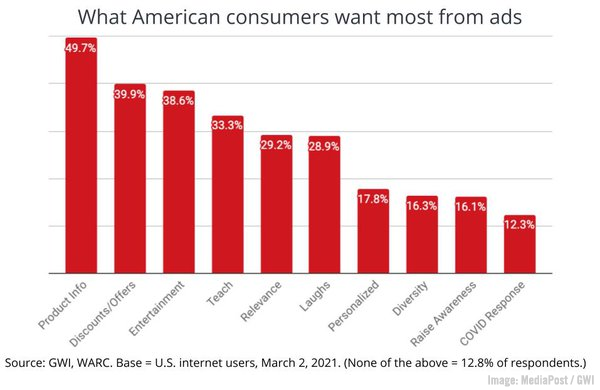
Info Is King: Study Finds Americans Simply Want Ads To Tell Them About Products
49.7 percent of U.S. consumers said that they most want production information from the advertising they receive, with 29.2 percent seeking ad relevance and 17.8 percent looking for personalized ads, according to newly-released research study data. MediaPost
ON THE LIGHTER SIDE:
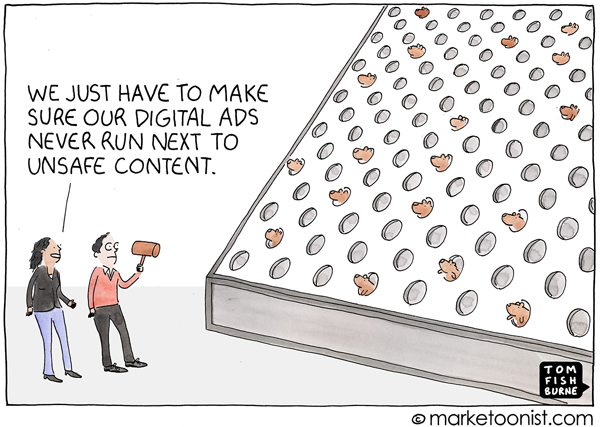
A lighthearted look at “brand safety whack-a-mole” by Marketoonist Tom Fishburne — Marketoonist
Pinterest hosts its first ad summit and opens new video ad space to brands — Ad Age
TOPRANK MARKETING & CLIENTS IN THE NEWS:
- Joshua Nite — What’s Trending: Fine-Tune Your Content Strategy — LinkedIn (client)
- TopRank Marketing — Marketers You Should Know: 16 Brilliant Thinkers to Follow on LinkedIn — LinkedIn (client)
- Lee Odden — B2B-Influencer-Marketing: Die Imagepfleger [In German] — ONEtoONE
- Lee Odden — Chris Boggs: A Drink With Brent – 03/05/2021 — Brent D. Payne
Have you found your own key B2B marketing story from the past week of industry news? Please let us know in the comments below.
Thanks for taking the time to join us for the TopRank Marketing B2B marketing news, and we hope that you will return once again next Friday for more of the week’s most relevant B2B and digital marketing industry news. In the meantime, you can follow us at @toprank on Twitter for even more timely daily news.
The post B2B Marketing News: Emotional Connections Top Brand Loyalty Study, YouTube’s New Metrics, & Google My Business Adds Audience Discovery Data appeared first on B2B Marketing Blog – TopRank®.
Our ongoing commitment to supporting journalism
Google has always been committed to providing high-quality and relevant information, and to supporting the news publishers who help create it. We are one of the world’s leading financial supporters of journalism. We’ve shared billions of dollars in revenue with news publishers via our ad network, helped news organizations develop new business models and revenue streams, and committed $1 billion over the next three years to license news content through Google News Showcase.
We welcome the discussion of ways to create a better economic future for quality journalism, especially as the news media business model has been facing increased challenges for many years. But proposals that would disrupt access to the open web (such as requiring payment for just showing links to websites) would hurt consumers, small businesses, and publishers. That’s why we’ve engaged constructively with publishers around the world on better solutions and will continue to do so.
We also believe that this important debate should be about the substance of the issue, and not derailed by naked corporate opportunism … which brings us to Microsoft’s sudden interest in this discussion. We respect Microsoft’s success and we compete hard with them in cloud computing, search, productivity apps, video conferencing, email and many other areas. Unfortunately, as competition in these areas intensifies, they are reverting to their familiar playbook of attacking rivals and lobbying for regulations that benefit their own interests. They are now making self-serving claims and are even willing to break the way the open web works in an effort to undercut a rival. And their claims about our business and how we work with news publishers are just plain wrong.
This latest attack marks a return to Microsoft’s longtime practices. And it’s no coincidence that Microsoft’s newfound interest in attacking us comes on the heels of the SolarWinds attack and at a moment when they’ve allowed tens of thousands of their customers — including government agencies in the U.S., NATO allies, banks, nonprofits, telecommunications providers, public utilities, police, fire and rescue units, hospitals and, presumably, news organizations — to be actively hacked via major Microsoft vulnerabilities. Microsoft was warned about the vulnerabilities in their system, knew they were being exploited, and are now doing damage control while their customers scramble to pick up the pieces from what has been dubbed the Great Email Robbery. So maybe it’s not surprising to see them dusting off the old diversionary Scroogled playbook.
Microsoft is the second-largest company in the U.S. by market capitalization and the owner of LinkedIn, MSN, Microsoft News and Bing, all of which are places where news is regularly consumed and shared. But their track record is spotty: They have paid out a much smaller amount to the news industry than we have. And given the chance to support or fund their own journalists, Microsoft replaced them with AI bots.
Microsoft’s attempts at distraction aside, we’ll continue to collaborate with news organizations and policymakers around the world to enable a strong future for journalism. We’re doing a lot to support journalism, and will do much more. We look forward to continuing to engage with regulators and news publishers to ensure a thriving and healthy publishing industry.

Puntata del Disinformatico RSI del 2021/03/12
È disponibile la puntata di stamattina del Disinformatico della Radiotelevisione Svizzera, condotta da me insieme a Nico.
Posso finalmente prendere fiato e aggiornarvi sulle novità che mi hanno impegnato in questi giorni e tenuto lontano dal blog: quella principale è che il Disinformatico diventerà podcast puro, senza essere un rimontaggio della diretta radiofonica (che non ci sarà più). Questo consentirà maggiore flessibilità di durata e permetterà di affrontare con più calma temi complessi e storie più articolate che difficilmente erano inseribili fra un disco e l’altro.
Questa novità dovrebbe partire il 26 marzo, poco dopo l’introduzione del nuovo palinsesto della Rete Tre della Radiotelevisione Svizzera: restate in ascolto per i dettagli. Ho in preparazione un po’ di chicche perfette per un podcast dedicato.
Argomenti trattati nella puntata di oggi:
- Le parole di Internet: link rot, ossia quando il Ministero della Cultura italiano linka(va) un sito porno
- Siamo nel 2021 e ANSA non ha ancora capito la differenza fra polizia cantonale e polizia cantonese. E tutti la copiano senza fiatare
- I bitcoin consumano tanta energia. Che proviene in gran parte da fonti inquinanti. Un dilemma etico
- Quando il cloud diventa una nuvola. Di fumo
Podcast solo audio: link diretto alla puntata; link alternativo.
App RSI (iOS/Android): qui.
Video (con musica): è qui sotto.
Podcast audio precedenti: archivio sul sito RSI, archivio su iTunes e archivio su TuneIn, archivio su Spotify.
Archivio dei video precedenti: La radio da guardare sul sito della RSI.
Buona visione e buon ascolto!

Webinar OpStart. Consulenza finanziaria sul web
— – di Federica Di Bari – Trendiest Media – – Un Webinar via Zoom e live su Facebook organizzato da OpStart, piattaforma di equity, lending e debt crowdfunding “LA CONSULENZA FINANZIARIA: IL PERCORSO IRREVERSIBILE DALL’AGENZIA AL WEB” La pandemia e l’ingresso nel mondo del lavoro dei Millennials, già abituati a gestire online la maggior parte degli aspetti della propria vita, hanno accelerato una tendenza che esisteva già a livello embrionale: il passaggio al web…
L’articolo Webinar OpStart. Consulenza finanziaria sul web scritto da REDAZIONE TRENDIEST proviene da Assodigitale.
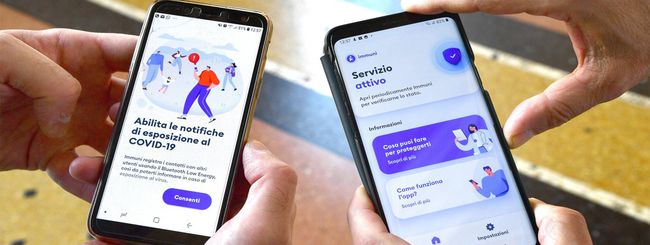
Immuni, il Garante della Privacy dice sì a nuove funzionalità
Novità importante nella lotta al contenimento della diffusione del coronavirus in Italia. Il Garante per la privacy, infatti, nell’esprimersi sugli aggiornamenti del Sistema di allerta Covid-19, ha autorizzato il Ministero della salute ad attivare una nuova funzionalità dell’app Immuni che consente a una persona risultata positiva di attivare in autonomia la procedura per allertare i suoi contatti stretti.

Il nostro supporto ai publisher per prosperare nello scenario di privacy attuale
Le persone non dovrebbero essere costrette ad accettare di essere tracciate mentre navigano online per poter ricevere pubblicità pertinenti. Come annunciato la scorsa settimana, non creeremo identificatori alternativi per monitorare le persone mentre navigano su Internet, né li useremo nei nostri prodotti una volta che i cookie di terze parti verranno eliminati. Questo è il motivo per cui riteniamo che Privacy Sandbox sia fondamentale per un futuro incentrato sulla privacy per la pubblicità digitale e per proteggere gli utenti, continuando a fornire risultati per publisher e inserzionisti.
Nell’ultimo anno, abbiamo collaborato con i partner dell’ecosistema per testare nuove soluzioni, comprese API che preservano la privacy delle persone rinunciando al tracciamento dei singoli individui online, mantenendo allo stesso tempo l’efficacia della pubblicità.
L’aspetto fondamentale è che non prevediamo che sia necessario un grande lavoro da parte dei publisher affinché possano trarre vantaggio dalle soluzioni di Privacy Sandbox una volta che saranno disponibili nel settore in generale. Google Ad Manager e AdSense, per esempio, utilizzeranno le API pubbliche per la tutela della privacy per creare supporto per queste soluzioni, così che non siano i publisher a doverlo fare.
Attivazione di relazioni dirette
Oltre a Privacy Sandbox, crediamo che i publisher che hanno costruito relazioni dirette con il proprio pubblico debbano essere in grado di fornire esperienze pubblicitarie personalizzate ai propri clienti. Questo è il motivo per cui stiamo investendo in strategie a supporto delle relazioni dirette, invitando i publisher ad adottarle.
Portare audience dirette alla pubblicità programmatica
Quando i publisher hanno rapporti diretti con il loro pubblico, le informazioni che derivano dall’interazione delle persone con i loro contenuti possono essere utili per proporre annunci rilevanti, che permettono allo stesso tempo di guadagnare di più.
Oggi molti grandi publisher che si basano su strategie di dati di prima parte utilizzano Publisher Provided Identifiers (PPIDs) su Ad Manager per produrre campagne pubblicitarie personalizzate, mantenendo massima attenzione alla privacy. Questa funzione consente ai publisher di creare segmenti di pubblico personalizzati, pubblicare campagne tramite prenotazioni tradizionali o offerte di pubblicità programmatica garantita e, allo stesso tempo, guadagnare di più.
Per aiutare i publisher ad aumentare ulteriormente il valore del loro inventario, stiamo lavorando per espandere l’uso dei PPIDs a più tipi di campagne di pubblicità programmatica, inclusa l’asta aperta. Abbiamo iniziato a testare questa funzionalità e non vediamo l’ora di vederne i progressi.
Abilitare gli indicatori diretti per publisher di tutte le dimensioni
Per aiutare i publisher di tutte le dimensioni a cogliere più facilmente i vantaggi che derivano dai dati proprietari, stiamo sperimentando una nuova funzione che abiliterà gli indicatori diretti in Ad Manager. Con il minimo sforzo tecnico, la soluzione consentirà ai publisher di attivare i dati relativi all’engagement dell’utente sui propri siti. Questa funzionalità aiuterà gli editori che scelgono di utilizzarla ad aumentare la domanda di pubblicità programmatica e il valore del loro pubblico. Condivideremo di più su questa sperimentazione entro la fine dell’anno.
Supportare le relazioni di fiducia dei publisher
Supportiamo da tempo relazioni dirette e affidabili tra publisher e buyer, e vogliamo garantire che i nostri prodotti pubblicitari continuino ad abilitare tali relazioni in modo sicuro. Inoltre, miriamo a fornire ai partner la flessibilità e la scelta necessarie per implementare strategie di monetizzazione che supportino al meglio gli obiettivi di business.
Ecco perché stiamo sperimentando funzionalità che permetteranno ai publisher di condividere segnali crittografati direttamente con gli Authorized Buyer o gli Open Bidder con i quali hanno già un rapporto diretto. I publisher avranno il pieno controllo sulle informazioni raccolte e su chi potrà ricevere i segnali. Google non sarà in grado di leggere o decrittografare i segnali. Ad Manager agirà solo come intermediario per conto dei publisher per trasmettere i segnali agli offerenti selezionati. Stiamo attualmente testando questa funzione e condivideremo in futuro maggiori dettagli.
Per mantenere un ecosistema di publisher dinamico e aperto che fornisca alle persone l’accesso ai diversi contenuti a cui tengono, continueremo a investire in tecnologie che aiutino i nostri partner ad avere successo proteggendo la privacy delle persone online. Nel corso dell’anno condivideremo i progressi relativi a Privacy Sandbox e a come potranno essere utili e rilevanti per i diversi business, insieme agli aggiornamenti relativi alle sperimentazioni in corso che abbiamo raccontato oggi.
Scritto da: Deepti Bhatnagar, Group Product Manager, Google Ad Manager

Mobile-Only Indexing. Cosa Fare Per Non Perdere O Migliorare Il Ranking Su Google

Quando il cloud diventa una nuvola. Di fumo

Questa foto (credit: @mothattacks) mostra il datacenter di Strasburgo della Ovh, colpito da un incendio il 10 marzo scorso. In questo datacenter venivano ospitati i dati di migliaia di clienti della società francese: era insomma la parte concreta di quello che in gergo viene definito cloud. Quel cloud è diventato letteralmente una disastrosa nuvola di fumo.
Trovate tutti i dettagli e i nomi di molti dei clienti colpiti in questo articolo di Wired.it, ma il dato più importante è che Ovh ha invitato gli utenti ad attivare i propri piani di disaster recovery. Questo di solito non è un buon segno, e significa che i dati custoditi presso il datacenter sono da considerare perduti.
Anche se la dinamica di questo incendio è ancora tutta da definire, il segnale di fumo è molto chiaro: depositare i propri dati nel cloud non implica automaticamente che il gestore del cloud ne abbia una copia di scorta per emergenze come queste (leggete attentamente il vostro contratto) ed è possibile che spetti al cliente fare questa copia di scorta altrove.
Per contro, implica che se i vostri processi di lavoro dipendono dalla disponibilità di quei dati depositati nel cloud, in caso di disastro che colpisce il cloud non potrete più lavorare. A meno che abbiate una copia di scorta locale o presso un cloud separato.
Casi come questo sono un’occasione importante per riflettere sulle proprie strategie di backup e sui propri piani di disaster recovery. Ne avete uno? Lo avete mai messo alla prova? Sareste in grado di lavorare senza accesso al cloud? È il momento giusto per farsi queste domande.

I bitcoin consumano tanta energia. Che proviene in gran parte da fonti inquinanti. Un dilemma etico

Tutti parlano di criptovalute e in particolare di bitcoin, grazie anche al fatto che il controvalore dei bitcoin è salito vertiginosamente. Chi ha comprato bitcoin un anno fa oggi ha ben 12 volte l’investimento iniziale.
Ma questa corsa all’oro digitale ha anche un risvolto ecologico che non va trascurato. Ogni creazione di bitcoin e ogni transazione richiede complicatissimi calcoli matematici, che richiedono enormi potenze di calcolo. A loro volta, queste potenze di calcolo richiedono computer altrettanto potenti, che consumano energia. Tanta energia. E molta di questa energia viene prodotta usando fonti altamente inquinanti.
Non solo: la matematica dei bitcoin è fatta in modo che man mano che aumenta la potenza di calcolo disponibile aumenta anche la difficoltà dei calcoli, per cui aumenta anche il consumo di energia.
Secondo una stima del Cambridge Centre for Alternative Finance, pubblicata presso Cbeci.org, nel 2019 la generazione di bitcoin consumava più energia dell’intera Svizzera: 77 terawattora ogni anno (la Svizzera ne ha consumati circa 57). Oggi, nel 2021, questo consumo stimato di energia è salito a 127,7 TWh/anno, ossia più di Norvegia o Argentina, mentre il consumo svizzero è lievemente diminuito (-0,8%).
Queste stime hanno ampi margini d’incertezza, ma la tendenza è chiara: i consumi derivanti dall’uso dei bitcoin stanno aumentando. Oggi rappresentano lo 0,6% dei consumi totali di elettricità del pianeta. A titolo di paragone, tutti i datacenter del mondo consumano 199 TWh/anno.
Se volete un altro paragone, e se non ho perso qualche zero per strada, 127,7 TWh sarebbero sufficienti a far fare oltre 100.000 km a tutte le auto della Svizzera (circa 6 milioni di veicoli) o 16.000 km a tutte le auto d’Italia (circa 39 milioni) se fossero tutte elettriche (stimando 0,2 kWh/km).
Il 65% dell’hashrate (la potenza di calcolo complessiva usata per generare bitcoin e gestirne le transazioni) si trova in Cina.
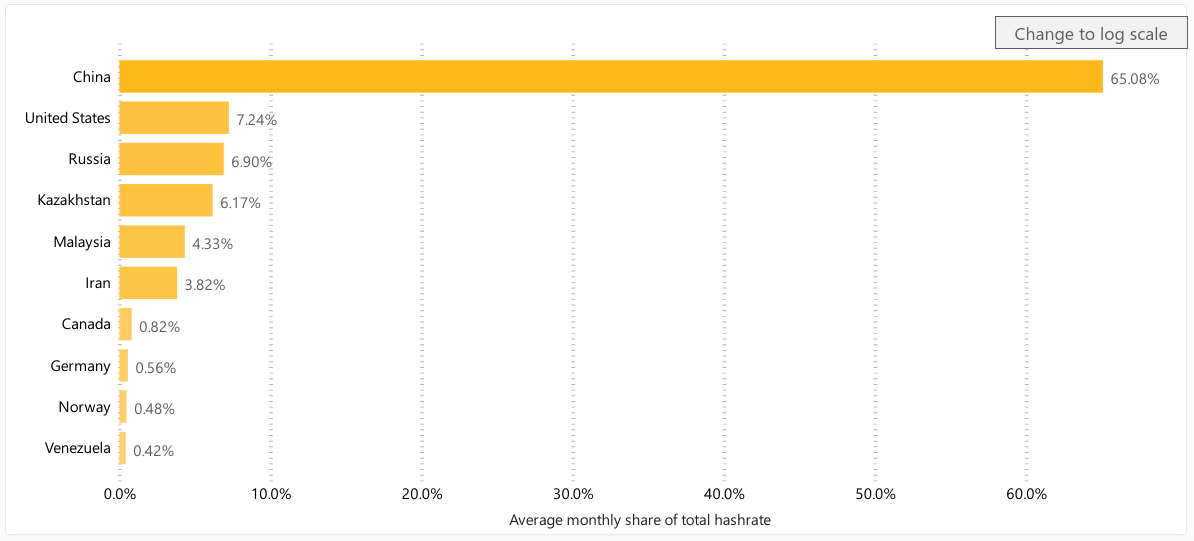
Inoltre circa i due terzi dell’energia consumata per gestire i bitcoin proviene da fonti fossili, e questo significa che i bitcoin hanno un impatto ambientale significativo. Investire in bitcoin e presentarsi come sostenitori dell’ecologia, come ha fatto per esempio Tesla a febbraio scorso, è un controsenso.
Ma probabilmente l’obiezione principale all’adozione su vasta scala dei bitcoin è il numero di transazioni gestibili: attualmente è meno di sette al secondo ed è tecnicamente difficilissimo aumentarlo. Non si può pensare di usare questa criptovaluta per gestire gli scambi dell’economia mondiale.

A titolo di confronto, la rete informatica di un singolo gestore di carta di credito, come Visa, ha una capacità teorica di 65.000 transazioni al secondo.
In altre parole: per come stanno le cose ora, i bitcoin non hanno alcuna possibilità di sostituire le monete convenzionali e producono molto inquinamento. Altre criptovalute possono far di meglio, ma resta il dilemma del grande consumo di energia, inevitabile per qualunque criptovaluta basata sul proof of work e in generale per qualunque tecnologia basata sulla blockchain.
Per cui mi sa che liquiderò i miei pochi bitcoin: mi arrendo al fatto che non sono eticamente sostenibili.

Reimagining 311 for the City of San José
Editor’s Note: Today marks the second annual National 311 Day. We talked with the City of San José’s CTO to learn about how they worked with Google.org Fellows to connect residents to the information they needed.
National 311 Day is a day to remind communities nationwide to use 311, a resource to connect with their city’s non-emergency services. It’s an important tool that cities use to unburden 911 call-takers of non-emergency calls, allowing them to quickly respond to residents’ most urgent needs. It’s also a time to honor the hardworking call-takers, especially after the past year as they’ve worked tirelessly to connect millions of local residents to critical services during the COVID-19 pandemic. We like to say that 911 is for the burning building, and 311 is for the burning questions, like the latest information about COVID-19, who provides garbage and recycling services or how to report a water leak.
At the beginning of 2019 San José identified a clear problem: it was taking too long for first responders to answer 911 calls. The State of California requires that 95% of 911 calls be answered within 15 seconds, and San José fell short of this goal in 2017 and 2018. That’s when we reached out to Google for help and were selected for a Google.org Fellowship. Together, we worked with a team of pro bono full-time Google.org Fellows to reduce 911 and 311 response times, improve the customer service experience, make 311 more accessible to residents, and address the growing load on call centers with solutions like a machine learning-based virtual agent.
First, the Google.org Fellows talked to residents and analyzed call volumes to understand what was contributing to the issues. They shadowed over 60 hours of calls to identify the most impactful ways to improve the response time, how to educate residents about 311 services, and ways to make it accessible to the residents of San José. San José is also one the most diverse U.S. cities, with residents speaking more than 100 languages. This demanded a new approach to automating the intake of requests from a majority population whose first language is not English, so equitable access was also top of mind for the Google.org Fellows.
Siamo nel 2021 e ANSA non ha ancora capito la differenza fra polizia cantonale e polizia cantonese. E tutti la copiano senza fiatare
Comunicazione di servizio per i colleghi giornalisti: la polizia svizzera è la cantonale. Non la cantonese. Se confondete le due cose, prendete una cantonata.
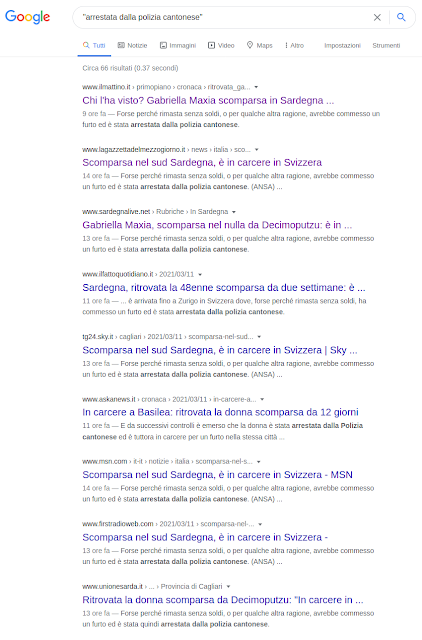
Per vedere quanto è diffuso questo errore grazie al copiaincolla senza rileggere è sufficiente cercare in Google “arrestata dalla polizia cantonese”. Ci sono cascati Il Mattino, La Gazzetta del Mezzogiorno, Il Fatto Quotidiano, Sky.it, L’Unione Sarda, La Gazzetta di Parma… perché tutti ripubblicano ciecamente senza rileggere e senza controllare.

La notizia, diffusa dall’ANSA, riguarda una donna che è “arrivata fino a Zurigo in Svizzera dove, forse perché rimasta senza soldi, ha commesso un furto ed è stata arrestata dalla polizia cantonese.”
Copia permanente: https://archive.is/icAQt. Screenshot: qui sotto.

Le parole di Internet: link rot, ossia quando il Ministero della Cultura italiano linka un sito porno
A volte capita che il proprietario di un nome di dominio smetta di pagare il canone annuo di mantenimento del nome, per varie ragioni, e quindi cessi di esserne il proprietario. A quel punto il nome di dominio torna sul mercato e può essere acquistato da qualcun altro, che ci mette i propri contenuti, magari di tipo completamente differente. Fa parte del normale corso delle cose su Internet.
Ma tutti i siti che hanno citato con un link quel nome di dominio non vengono avvisati del cambiamento, per cui finiscono per linkare qualcosa che non c’entra più con l’originale. Questo è il link rot: la “marcescenza dei link”.
Il link rot è un problema molto serio di tutta Internet, ma è particolarmente sentito in campo scientifico e amministrativo. Uno studio del 2013 dei link nella letteratura scientifica ha rivelato che la vita media di un link è circa 9 anni. Un altro studio sulla letteratura legale statunitense nel 2014 ha indicato che la metà dei link citati dalla Corte Suprema degli Stati Uniti non punta più all’informazione originale e quindi è inutile o fuorviante.
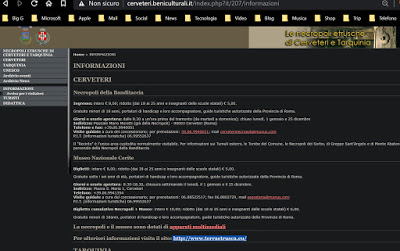
Un esempio particolarmente illuminante del fenomeno del link rot mi è capitato sotto gli occhi pochi giorni fa grazie a una segnalazione di un lettore: una pagina del sito del Ministero della Cultura italiano Beniculturali.it, dedicata alle necropoli etrusche di Cerveteri e Tarquinia, conteneva un link a www punto terraetrusca punto eu, che però nel frattempo aveva cambiato proprietario.

Il nuovo proprietario ci ha messo un redirect che porta a un sito pornografico, di cui posso mostrarvi solo una parte, perché questo è un blog per famiglie.
Grazie alla memoria storica di Internet, ossia Archive.org, possiamo vedere cosa c’era in origine, quando il ministero italiano scelse di linkarlo nel 2017:

Oggi invece il link porta a contenuti statuari, ma di altro genere:

Ovviamente ho segnalato la cosa ai responsabili del sito, ma la mia mail è stata respinta perché i responsabili accettano soltanto la PEC. Così è stato necessario segnalare pubblicamente la questione, anche questo avrebbe comportato regalare visibilità e quindi traffico al sito pornografico in questione.
Buongiorno @MiC_Italia , segnalo che la vostra pagina https://t.co/cTbavSHGrG contiene un link che porta a un sito pornografico.
Il link è quello che comincia con “terra”. pic.twitter.com/0olbjmy1WL
— Paolo Attivissimo (@disinformatico) March 10, 2021
La pagina è stata rapidamente corretta eliminando il link. Ma restano tutti gli altri siti che contengono ancora il link (per esempio Ancient-origins.net o TurismoItaliaNews.it o ExperienceEtruria.it, ed è impensabile avvisarli tutti uno per uno.
Se volete sapere come si fa a trovare i siti che ospitano un certo link, posso consigliarvi OpenLinkProfiler.org. Un tempo Google consentiva di fare ricerche usando l’operatore link, ma non funziona più dal 2017 circa. Si può però digitare il nome del sito in Google fra virgolette.
Helping publishers thrive in today’s privacy environment
Advertising plays an important role in helping publishers fund the content that people love to read, watch and play online. But it has become essential to evolve digital advertising practices to address people’s changing privacy expectations and keep online content accessible to everyone. We’re committed to helping publishers of all sizes navigate today’s privacy environment, and what lies ahead. With this in mind, today we’re sharing how we’re experimenting with new technologies to help our partners sustain advertising revenue as the web evolves.
People shouldn’t have to accept being tracked across the web in order to get the benefits of relevant advertising. That’s why, as we shared last week, we will not build alternate identifiers to track individuals as they browse across the web, nor will we use them in our products once third-party cookies are phased out. We believe the Privacy Sandbox is critical to a privacy-first future for digital advertising — one that protects users while still delivering results for publishers and advertisers.
Over the past year, we’ve been teaming up with ecosystem partners to test new solutions, including privacy-preserving APIs that move away from tracking individuals across the web while maintaining advertising effectiveness. The great news is we don’t anticipate publishers will need to put in significant work to benefit from the Privacy Sandbox when it’s rolled out to the industry at large. Google Ad Manager and AdSense, for example, will use the public privacy-preserving APIs to build support for these solutions, so publishers don’t have to.
Activating first-party relationships
In addition to the Privacy Sandbox, we believe that publishers who have built first-party relationships with their audiences should be able to provide personalized ad experiences to those customers. That’s why we’re investing in — and empowering publishers to adopt — strategies that support those direct relationships.
Bringing first-party audiences to programmatic
When publishers have direct relationships with their audiences, they can use insights from those users’ interactions with their content to responsibly deliver relevant and helpful ads and earn more revenue.
Today, many large publishers with existing first-party data strategies are using Publisher Provided Identifiers (PPIDs) in Ad Manager to deliver personalized ad campaigns in a privacy-first way. This feature allows publishers to build custom audience segments, deliver campaigns via traditional reservations or Programmatic Guaranteed deals, and in turn, make more money.
To enable publishers to further increase their inventory’s value, we’re working to help them expand the use of their PPIDs to more programmatic campaign types, including the Open Auction. We’ve begun testing this functionality and look forward to reporting progress.
Enabling first-party data for publishers of all sizes
We’re also experimenting with a new feature that will help publishers of all sizes more easily access the benefits of their first-party data in Ad Manager. With minimal technical effort, the solution will enable publishers to activate data from user engagement on their own sites. This capability will help publishers, who choose to use it, increase programmatic demand and the value of their audiences. We will share more on this experiment later this year.
Respecting publishers’ trusted connections
We’ve long supported trusted, direct relationships between publishers and buyers and want to ensure our ad products continue to enable those connections in a secure way. Additionally, we aim to provide partners with the flexibility and choice to implement the monetization strategies that best support their business goals.
That’s why we’re experimenting with functionality that will provide publishers with the option to share encrypted signals directly with Authorized Buyers or Open Bidders with whom they already have a direct relationship. Publishers will have full control over what data is collected, and who can receive the signals. Google will not be able to read or decrypt the signals. Ad Manager will only act as an intermediary on behalf of the publisher to pass the signals to the third-party bidders they choose. We are currently testing this feature and look forward to sharing more details.
To maintain a vibrant and open publisher ecosystem that provides people with access to the diverse content they care about, we will continue to invest in technology that helps our partners succeed while protecting people’s privacy online. As we move forward in 2021, you can expect to hear more about how progress in the Privacy Sandbox can be applied to your business, as well as updates on the experiments we’ve shared today.

Take a virtual tour with a professional pizza enthusiast
You might think you love pizza, but Miriam Weiskind truly loves pizza. She has given pizza tours of Manhattan and Brooklyn for Scott’s Pizza Tours for over eight years, runs a website and blog at the ‘Za Report, is active on Instagram at @thezareport and now makes her own pies for her local community — with a month-long waiting list. And while Miriam also runs a Brooklyn-based creative studio called mdoubleu Design, she is clearly a professional pizza enthusiast.
To help people around the world learn a bit about Miriam and her passion for pizza, the Google Web Creators team partnered with her on a Web Story showcasing a virtual pizza tour of Brooklyn.
The story’s title page draws you in with a mouth-watering video of a pizza being tossed and baked. The personal introduction makes you feel like you’re right there with her. She also appears throughout the Web Story, offering her opinions on what makes each pizza great.
Three new ways anyone can update Google Maps
With all the change our world saw over the past year, people are relying more than ever on high-quality, updated information about the places around them — like if a nearby restaurant is open or if a local grocery store has updated hours.
To make sure your map reflects the real world, we make it easy for anyone with a Google account to contribute their local knowledge about more than 200 million places in Google Maps. These community-led updates help people everywhere make better decisions about what to do and where to go. And at the heart of the fresh information you see on Google Maps are Local Guides. This community of contributors who help others by updating Google Maps has reached a new milestone: 150 million Local Guides around the world.
Today, we’re introducing three new Google Maps features that will help make sharing and finding local recommendations and information easier.
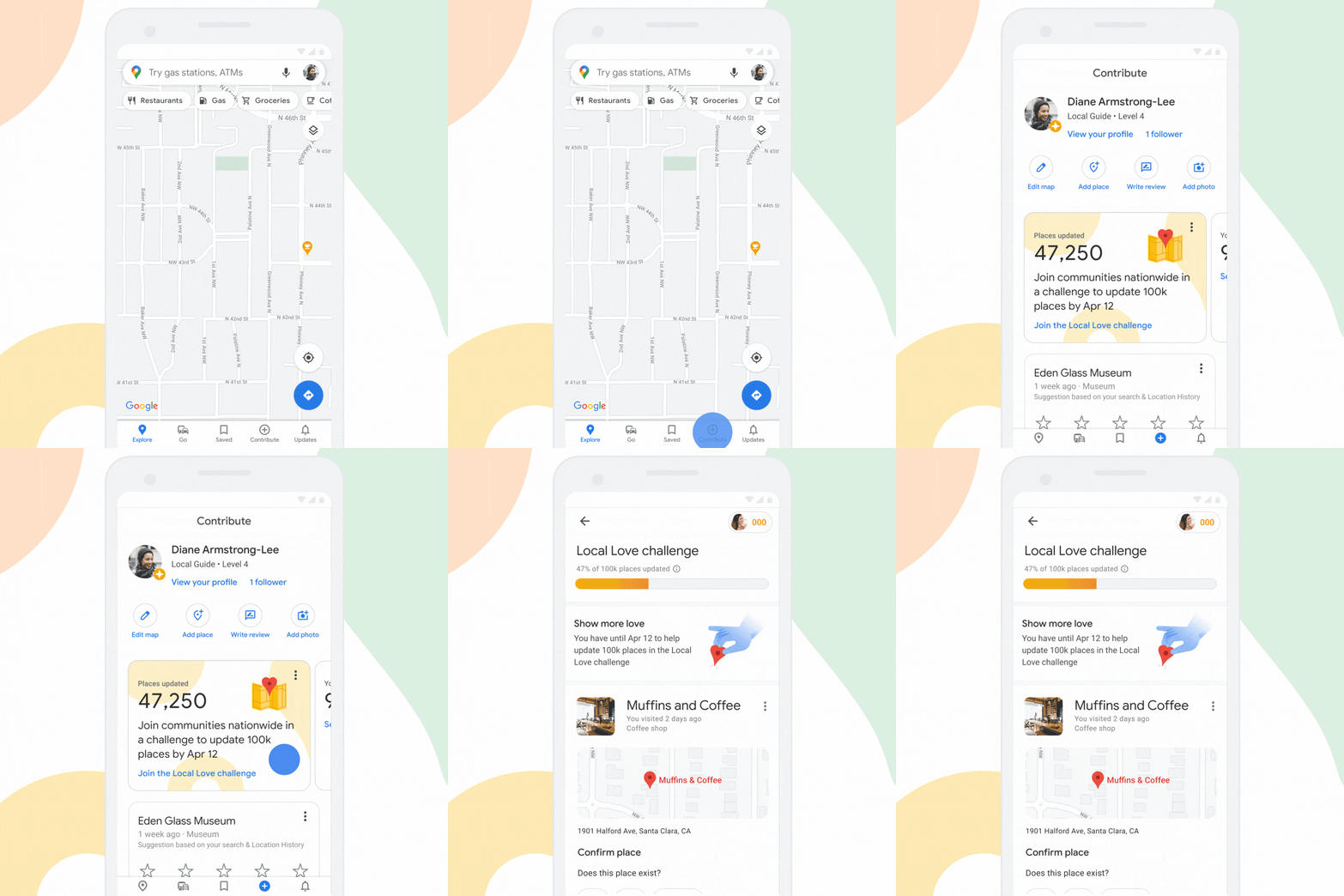
Leave reviews and updates as part of a community challenge
We see people showing love and support for local businesses in Google Search and Maps by leaving photos, writing reviews or updating factual information like a store’s new hours. We want to amplify that same local love with a feature we are now piloting.
For the next month, most people using Android in the U.S. can join our first nationwide challenge to rally helpful reviews, photos and updates from sea to shining sea. Simply jump into the Contribute tab in Google Maps to join the “Local Love challenge” and add ratings, reviews and confirm information to support local businesses you’ve visited, from your go-to bakery to the neighborhood hardware store. Each contribution will count toward a collective goal of updating 100,000 businesses. We’ll use feedback on the Local Love challenge to guide future campaigns in more countries.