
Anche Aruba ha la sua fibra: ecco costi e servizi
Aruba, la società italiana che offre servizi di data center, web hosting, e-mail e registrazione di nomi di dominio, entra nel mondo dell’Internet provider grazie a una partnership con Open Fiber, che continua a occuparsi della realizzazione dell’infrastruttura in fibra ottica in Italia. O meglio, “ritorna” a occupare un ruolo di fornitore di servizi Internet, come ha spiegato Stefano Cecconi, amministratore delegato di Aruba:

Google Elimina La Fee Ai Booking Link Per Gli Hotel

RIAVVIA MI, iniziativa sociale promossa da Lenovo
Comune di Milano. Con RIAVVIA MI una nuova vita per i device ricondizionati di Lenovo Saranno donati alle ragazze e ai ragazzi in difficoltà segnalati dal Comune Sostenere le ragazze e i ragazzi più in difficoltà e avviare un percorso virtuoso di economia circolare. È questo l’obiettivo di RIAVVIA MI, iniziativa sociale promossa da Lenovo in collaborazione con il Comune di Milano, la Città Metropolitana e l’Associazione Energie Sociali Jesurum per aiutare le famiglie bisognose…
L’articolo RIAVVIA MI, iniziativa sociale promossa da Lenovo scritto da REDAZIONE TRENDIEST proviene da Assodigitale.

Cagliari. Efficientamento Energetico 2021. T Hotel, venerdì 19 Marzo dalle ore 10
Crea Casa Luxury Living, importante general contractor del settore, in collaborazione con Igea Digital Bank S.p.A., chiarisce tutti i punti salienti del Decreto Rilancio – – di Greta V. Galimberti – Trendiest News – — Il Decreto Rilancio n. 34 del 19 maggio 2020, che presentava i grandi vantaggi costituiti dai “bonus” per i privati proprietari di casa e per i condomini, ha lasciato talvolta dei dubbi interpretativi e soprattutto ha creato delle difficoltà organizzative, che fortunatamente…
L’articolo Cagliari. Efficientamento Energetico 2021. T Hotel, venerdì 19 Marzo dalle ore 10 scritto da REDAZIONE TRENDIEST proviene da Assodigitale.

Security.txt: uno standard per le informazioni di sicurezza di un sito web

Core 11000: tutti i dettagli su Rocket Lake, la risposta di Intel ai Ryzen 5000

NOW TV cambia nome e sbarca sui dispositivi Fire TV di Amazon
NOW TV cambia nome. Sky ha svelato oggi la nuova brand identity del proprio servizio di streaming che diventa semplicemente NOW e porta con sé un nuovo luogo e un nuovo posizionamento. E, particolare non da meno, sbarca ufficialmente sui dispositivi Fire TV di Amazon in quello che è a tutti gli effetti una nuova partnership tra Sky e il colosso dell’e-commerce e dello streaming.

The 2012 FTC staff papers
A recent D.C. parlor game has been to second-guess the Federal Trade Commission’s 2012 decision to close its antitrust investigation into Google. (That investigation looked at search design, similar to the case filed last year by various state attorneys general.) In response to recent speculation in the press about the FTC’s decision, we wanted to set the record straight.
In a unanimous, bipartisan decision, all five FTC Commissioners concluded that the evolution of Google Search was designed to “improve the quality” of search results and “likely benefited consumers.”
Now, the staff papers and memos that helped inform this decision have been made public.
These documents show why, after a comprehensive review, the Federal Trade Commissioners all voted to close their investigation nearly a decade ago. The memos conclusively confirm that the decision to not bring an antitrust case against the design of Google’s search engine was supported by clear and unambiguous recommendations by all sections of the FTC who reviewed it, including the Bureau of Competition, the Bureau of Consumer Protection, the Bureau of Economics and the Office of the General Counsel.
It’s also clear from the papers how actively Microsoft and other rivals were encouraging these complaints. The FTC put consumers’ interests in higher-quality search results over the interests of a powerful commercial rival, which has since grown even further, to become the second-biggest company in the U.S. by market capitalization.
The memos also show that the FTC and its staff looked in detail at our Android and Apple distribution agreements (the subject of the Department of Justice’s current case) and, after uncovering evidence that people can readily choose alternatives but “overwhelmingly” prefer Google, declined to challenge them.
Some highlights:
People choose to use Google.
-
One click away:“The argument that competition is just ‘one click away’ is a compelling one.” (Bureau of Competition staff memo)
-
Users prefer Google: “Like the wireless carriers, Apple states [Google] is the overwhelming preference of its customers.” (Bureau of Competition staff memo)
-
Partners prefer Google:“The companies have made it apparent to Staff that they have no interest in being released from their current contracts, and little interest in pursuing negotiations with alternative search providers.” (Bureau of Competition staff memo)
Google Search benefits users.
-
Universal Search was indisputably a product improvement:“First, I endorse the staff’s recommendation not to bring a case on search preferencing. To bring such a case would intrude deeply into product design, an area into which courts have been extremely reluctant to go unless the design feature in question has no legitimate justification. … Universal Search was indisputably a product improvement…”(General Counsel memo)
-
Universal Search benefits users: “Google’s documents show that Universal Search was a procompetitive response to pressure from vertical sites and general search sites and an improvement for users.”(Bureau of Economics staff memo)
-
Substantial benefit for users:“Universal Search is a ‘product improvement’ that has resulted in substantial benefit to its users…Google’s organization and aggregation of content from other websites adds value to the product for consumers.”(Bureau of Competition staff memo)
-
Google’s search practices benefit users:“Google can legitimately claim that at least part of the conduct at issue improves its product and benefits users.”(Bureau of Competition staff memo)
Google’s distribution agreements
-
Our search distribution agreements with web browsers, like Apple’s Safari browser, aren’t exclusive: “[W]e find strong reasons for doubting that … default status on web browsers (both desktop and mobile) can be properly viewed as ‘exclusives’ in the sense that users are unable, with relatively low cost, to access rival search engines.” (Bureau of Economics staff memo)
-
Our Android agreements aren’t exclusive:“As an initial matter, recall that Google’s agreements with smartphone manufacturers do not actually require exclusivity. Rather, they are contracts that require Google search to be the initially installed default search engine. Consumers are free to switch to other search engines, or even to replace Google as their default search engine, should they wish to do so.”(Bureau of Economics staff memo)
Google faces competition from specialized search engines.
- Search and vertical search compete:“[S]ubstantial documentary evidence that Google competes against specialized search engines for certain types of queries. Google’s competition with specialized search engines is similar to a supermarket’s competition with a convenience store.” (Lead staff economists)
Google’s Apple agreement
Lead staff economists on the Google investigation:
-
Apple chooses Google because it’s the “best”:“Apple stated… ‘Apple’s focus is offering its customers the best products out of the box while allowing them to make choices after purchase. In many countries, Google offers the best product or service.’”
-
The agreement is not exclusive: “Additionally, similar to the desktop Safari agreement, both Microsoft and Yahoo are preloaded alternatives to Google in mobile Safari. According to Apple, to change the default, go to “Settings> Safari > Search Engine.”
-
Switching search engines is trivial:“[C]hanging the default search option on mobile browsers involves a few taps and downloading other search apps can be achieved in a few seconds. These are trivial switching costs.”
Overall conclusion
-
No antitrust violation:“[I]n my judgment at least, the weight of the available evidence…indicates that Google’s conduct has not risen to the level of an antitrust violation.” (Deputy Director in the Bureau of Economics)
-
Consensus:“I agree with both [Bureau of Competition] and [Bureau of Economics] staff recommendations that the Commission not issue a complaint or pursue remedies for discriminatory ‘search preferencing’ by Google.”(Head of the Bureau of Economics)
-
Staff raise doubts about the case: “We have identified throughout this memorandum the many substantial risks associated with bringing a case against Google. On a global level, the record will permit Google to show substantial innovation, intense competition from Microsoft and others, and speculative long-run harm.“ (Bureau of Competition staff memo)
Make tech work for the whole family
As the first generation of parents raising children surrounded by technology, you’ve told us that you need resources to help make it work — from setting up their first device, to learning about popular apps and services.
Our goal has always been to help families foster a healthy relationship with technology. We’ve given parents a way to help their kids have a safer online experience with Family Link’s parental controls. We’ve also made it easier to find quality content with teacher-approved apps in Google Play, a kids’ tablet experience with Google Kids Space and kids profiles on Google TV.
And today, we’re sharing more resources, tools and content. First, we’re introducing families.google, a website with resources for your family as your kids begin using technology. We’re also sharing a few Family Link updates and launching a content series with Headspace for practicing mindfulness together.
A resource for your family’s tech journey
Over the last year, we’ve listened to your feedback as well as key learnings from commissioned research and what’s trending in Google Search. With families.google, you’ll have a one-stop technology resource.
The website has detailed guides that spell out how to approach your kids’ technology use from organizations like Common Sense Media, ConnectSafely, Family Online Safety Institute, Headspace, PBS KIDS and Sesame Workshop. Alongside overviews of our kids and families products, you can also catch up on the latest apps and services and find helpful information on parental controls across the web. You’ll also see tips on how to manage online safety and digital wellbeing as well as fun online activities for families and tools for the classroom.
New to Family Link
Our parental controls have always helped you manage how your children spend time on their Android and Chromebook devices, with functions like screen time limits, the ability to hide apps and more. But parents are increasingly focused on how kids use devices and less on how much, so we’re adding some of your most requested features to Family Link.
You can now encourage your kids to spend more time with apps you approve of by designating them as “always allowed,” even when their screen time limit is up. For example, if your child needs certain apps for remote learning, they can be marked as “always allowed” so they won’t be counted toward their daily screen time limit.
Plus, you can now see added details to daily, weekly and monthly activity reports. This gives you an overview of how your child is spending their time in apps, how it changes over a week or month and what portion of time was spent in “always allowed” apps.
If you’re using the Family Link Android app, the teacher-recommended app card now has suggestions from a catalog of thousands of teacher-approved Google Play apps for kids under 13 in the U.S. You can select an app and download it directly to your child’s device. And to make sure their Android phone doesn’t run out of juice, the Family Link Android app helps you see their device’s battery life.
Finally, we’ve heard that sometimes it’s easier to manage parental controls directly on your child’s device rather than from your own. In the Android Settings for parental controls, you can now set screen time limits right from your child’s device.
Practicing mindfulness together
This last year, 3 in 5 parents allowed increased screen time for their kids, and we also saw Google searches like “fun at home activities for kids” and “mindfulness for kids” skyrocket. That’s why we’re working with Headspace to create content that helps families practice mindfulness and wellbeing. Over the next month, an episode from the new Headspace Breathers series will debut weekly on YouTube and YouTube Kids.
Parents tell us how they’re approaching family tech use
Last year, parents were forced to quickly adapt when schools, daycares and eventually summer camps closed. Almost immediately, many kids turned to online services for education and entertainment.
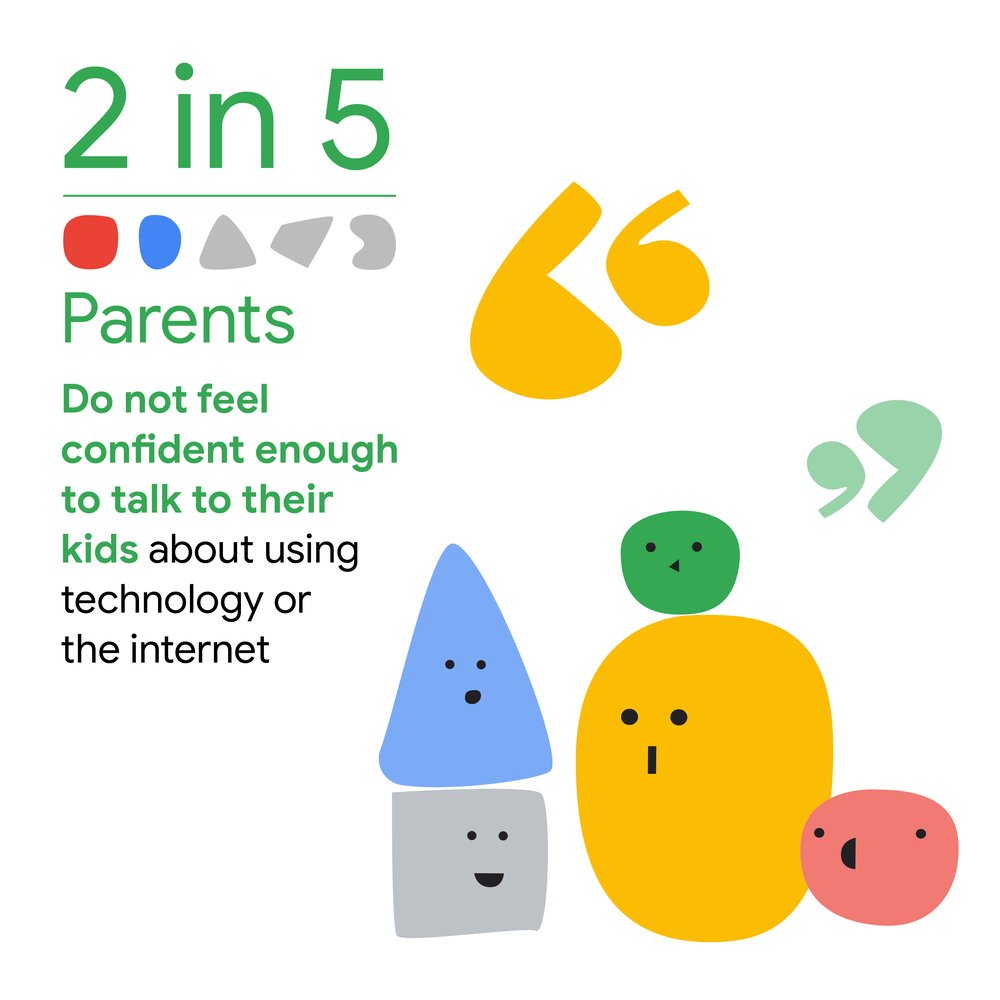
We want to provide a new website with helpful resources for families raising kids in a digital world during this challenging moment. So we decided to look at last year’s top Google Search trends related to digital parenting, and also surveyed more than 2,000 parents with kids under 13 in the U.S. Here’s what we found:

Ecco come tirarvi fuori da un incontro su Zoom
Siamo tornati in zona rossa. O meglio, 43 milioni di italiani sono di nuovo in zona rossa e tra lo smart working tornato con prepotenza e l’impossibilità di vedere amici e parenti, le videochiamate sono tornate a far parte della nostra quotidianità, che ci piaccia o meno. Spesso, soprattutto se per motivi di lavoro, non è facilissimo defilarsi da un incontro su Zoom e, con la scusa che siamo chiusi in casa, anche le scuse da inventare sono sempre meno. Oggi, però, vi vogliamo presentare uno strumento gratuito che vi permetterà di sabotare i vostri incontri su Zoom e tirarvene fuori senza dover inventare scuse.

Trendiest News 16-03-2021
ULTIM’ORA – Vaccini, accordo Ue-Pfizer per anticipo 10 milioni di dosi entro giugno. VACCINI 1 – AstraZeneca, prenotazioni bloccate. Quasi un milione di persone in attesa della seconda dose. In Italia sono state fatte circa 900mila dosi di vaccino AstraZeneca, meno della metà di quelle consegnate dall’azienda produttrice. Prima della seconda dose devono passare tre mesi e le prime persone hanno ricevuto il vaccino nella seconda settimana di febbraio. “Confidiamo che riceveranno il richiamo nei…
L’articolo Trendiest News 16-03-2021 scritto da REDAZIONE TRENDIEST proviene da Assodigitale.
Windows 10, risolto bug che bloccava i PC con la stampa
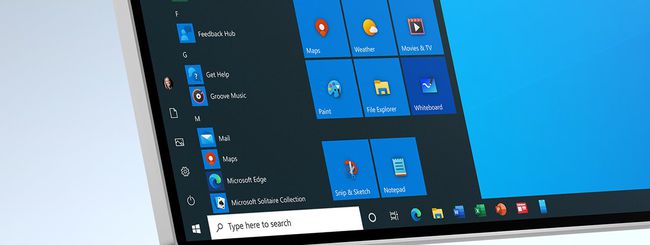
Microsoft sta risolvendo il grosso problema che mandava in tilt i computer con Windows 10, causando una blue screen, ogni qualvolta si tentasse di lanciare la stampa. Nel caso in cui foste incappati in questo grattacapo, l’aggiornamento di oggi dovrebbe consentirvi di riprendere a stampare senza alcun problema.

Need a better night’s sleep? Meet the new Nest Hub
A little over two years ago, I was part of the team that created Nest Hub, Google’s first smart display. Since then, we’ve been exploring ways to make these devices even more helpful. We know people already come to Google for information and tools to help them live healthier, happier lives, and we’ve specifically noticed more and more questions about sleep, exercise and health. So we decided to bring these kinds of solutions to our second-generation Nest Hub, while also improving what people already love about it.
The Nest Hub you love, but better
The new Nest Hub’s speaker is based on the same audio technology as Nest Audio and has 50 percent more bass than the original Hub. Fill any room with music, podcasts or audiobooks from services like YouTube Music, Spotify, Apple Music and Pandora — or enjoy your favorite TV shows and movies with a subscription from providers like Netflix, Disney+ and YouTube TV. With Quick Gestures, you can pause or play content at any time by tapping the air in front of your display.

A path forward for sustainable news startups
Camille Padilla Dalmau and Mackenzie Clark are doing similar work, 2,244 miles apart.
In San Juan, Puerto Rico, Camille creates stories for the 9 million Puerto Ricans who live around the world through 9 Millones. Mackenzie recently launched the Lawrence Times in Kansas, funded by an online campaign that brought in more than $8,000 over six days.
Camille and Mackenzie are part of a new wave of local news sites launching across the U.S. and Canada. Some 266 local news organizations have started over the last five years, at a rate of 50 per year. That’s explosive growth in the field and it’s happening with no coordinated support, even though — as we know — this is hard work.
Today LION Publishers and theGoogle News Initiative are announcing the findings of Project Oasis, first-of-its-kind research which provides information about the paths these entrepreneurs take — and points to the way forward to a sustainable future for local news. This project was undertaken in partnership with the UNC Hussman School of Journalism and Media, Douglas K Smith (architect of Table Stakes), and with support from Michelle McLellan (creator of Michelle’s List). The results are a database and research report that illustrate the state of the local news industry, as well as a step-by-step guide for aspiring news entrepreneurs on how to get started.
The Project News Oasis database features rich information on 711 publishers across the U.S. and Canada, including breakdowns of their distributional, editorial and financial operations. We’ll use it to help existing publishers, who can add or update their information at any time, as well as to inform the next generation of news entrepreneurs.
Next, the Project Oasis research report puts our research findings in context — it highlights the revenue streams publishers use to fund their newsgathering, the communities they aim to serve and the size of the teams they hire to do the work. It also provides benchmarks designed to help new startup publishers develop their own practical goals for what their operation can look like three years out.
So how might we encourage responsible growth in the local news industry? That brings us to the third resource we’re releasing today: The GNI Startups Playbook. The playbook will demystify the process of launching a digital news startup and, by tackling key activities such as building a product, growing an audience and developing a revenue stream, it will help news entrepreneurs build a business that’s financially viable and has a positive journalistic impact on local communities.
This comprehensive resource, which will soon be available in Spanish, Portuguese, Japanese, Korean and Indonesian, includes contributions from GNI, LION and a small army of experts. The playbook itself will provide the basis for much of GNI’s and LION’s joint programming moving forward, including the GNI Startups Lab and Boot Camp, as well as our collaboration with Tiny News Collective, a low-cost platform and set of shared services aimed at helping news entrepreneurs build a news organization from scratch.
The database, the research report and the playbook are intended to be living resources that will be updated regularly. We’re committed to working with the Google News Initiative to fully capture the experiments and learnings of this rapidly evolving field, and over the coming months we’ll collaborate once again to help the GNI conduct a global series of live workshops for aspiring entrepreneurs on the Digital Growth Program site. After you’ve looked at these resources, we’d love your input: What’s valuable? What would you like more information about? We’ll incorporate your feedback into the next editions.
Our goal is to ensure the next Camille and the next Mackenzie will have a smoother, better-lit road ahead of them. We’re confident that as this work continues, and the path is made clearer, we’ll build a sustainable future for local digital news by focusing on what founders and organizations need along the way.