
Pendrive USB 32GB a forma di chiave di cuore, IDEA REGALO Festa del papà
Cavo USB-C 60W, TRE metri: a 3€ TE LO REGALA Amazon

Utenti Linux a rischio: scoperto un nuovo exploit presente in tutte le distribuzioni
RuNet: la Russia si chiude nel suo Web?
Firefox 98 rilasciato: supporto a Wayland e download manager rinnovato
Using tech to make hiring more inclusive
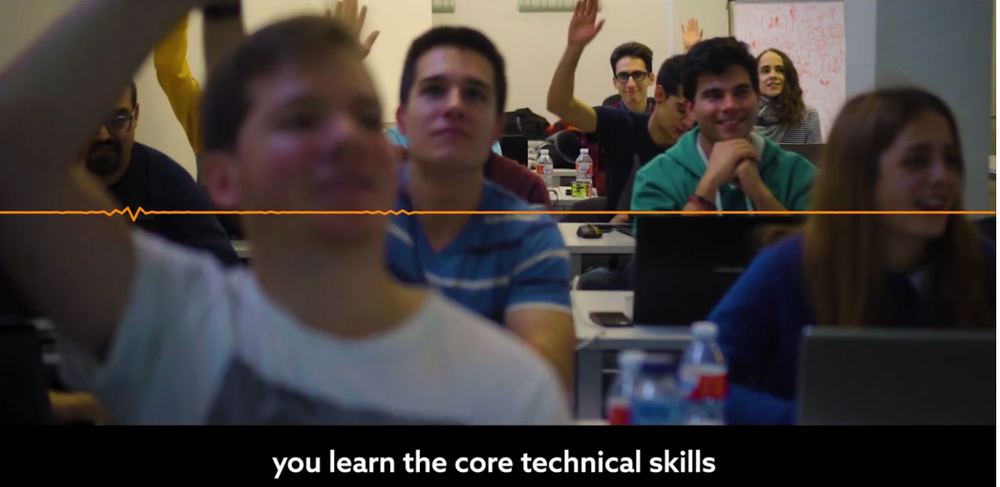
Three years ago, Generation and Google.org joined forces to help jobseekers launch meaningful careers and change their lives. Enabled by $7.5M in grant funding from Google.org, and technical support from a team of Google.org Fellows, Generation has now helped to train and place more than 3,000 people in France, Italy, and Spain into entry-level technology sector professions, including digital customer care, full stack and java development, digital marketing, and robotic process automation.
Opening up access to today’s digital economy
At both Google and Generation, we believe that everyone should have the opportunity to participate in today’s increasingly digital economy. Yet groups that are already underserved are still often underrepresented in jobs that require digital skills. Like Google’s Grow with Google initiatives, Generation’s programs seek to open access to education for those who have faced systemic barriers to accessing employment — 54% of learners at Generation are female, and most describe themselves as financially unstable before joining Generation, with 80% of learners unemployed.
Graduates from the Generation programs supported by Google.org have seen life-transforming outcomes, even in the midst of a pandemic labor market. Within six months of program completion, 75% of graduates were already placed in jobs. A year later, the majority of those remained employed.
Seeing the impact of Generation’s work and hearing the stories of Generation graduates is deeply inspiring. Stories like that of David André, who started working after high school without a university degree. He had a series of low wage restaurant and retail jobs, and then spent a period of time unemployed, facing financial and family difficulties.
Around that time, he received an email from the French employment agency, Pôle Emploi, about the Generation Customer Care program. David André decided to apply, and was accepted. He invested himself fully in the program. At the end of the course, Generation connected him with a French startup, Doctolib — an online platform that facilitates virtual medical appointments. Within a few months, he was hired permanently. With his newfound work stability, he has moved into his own place, and has stepped into a sales support role as he continues to advance in his career.
Spotlighting skills on the Employer Portal
To help further accelerate Generation’s mission, Google recently provided additional support in the form of a Google.org Fellowship, where a team of Google data scientists and product managers worked full-time, pro bono alongside Generation for six months, to address the challenge of matching job seekers with employers. When employers are accustomed to focusing on resumes, not candidate skills, it can be difficult for jobseekers from underrepresented communities to get seen. To make it easier for recruiters to find the talent they need from its pool of graduates, Google.org Fellows helped Generation to develop and build a new Employer Portal, now being trialed in both Spain and France.
What differentiates the Portal from other job-matching platforms out there is that employers can search for talent based on the skill-set of the job seekers, which Generation helps validate beforehand. Focusing on the skills that candidates bring to the table, rather than data points like age, gender, and education, help to minimize hiring biases and unlock new talent pools for employers — breaking down barriers to employment for underrepresented populations. We’re looking forward to seeing what the Employer Portal can do to help more jobseekers find employment, and like David André, change their lives.
Come Utilizzare Legalmente Google Analytics In Italia E In Europa
Biden e criptovalute: novità in arrivo questa settimana
Criptovalute: Coinbase blocca 25.000 indirizzi russi presumibilmente correlati ad attività illecite

A closer look at one Googler’s flexible work week
In January, we announced expanded leave benefits to help Googlers support their families and loved ones, and encourage employees to take time for themselves. We recently spoke with Googler Patricia Torres, who’s using leave benefits to spend more time with her family.
What’s your role at Google?
I’m a Program Manager based in Sydney, leading talent development programs for university students. My team provides scholarship grants to help students pursuing computer science degrees build their technical skills and become leaders in the field.
Tell us about your Google career journey.
I joined Google in 2016 as an Operations Specialist for the Talent and Outreach Programs team. My daughter Natasha was one and a half years old at the time. As a new parent, I felt guilty about leaving her in daycare — she cried every day for seven months straight! During this time, I worked three days a week, which allowed me to take care of my daughter and still get my work done. Once Natasha turned three, I moved to a four-day work week. Since then, I’ve had five different roles at Google.
What’s your typical workday like?
My days center around my family. After checking emails and eating breakfast, my husband Chris and I take turns getting Natasha ready for school. I usually sign off around 5:30 p.m. and have dinner with my family. We have a nightly routine where we share challenges and what we’re grateful for — it’s been an eye-opening experience for all of us! Because of the time differences between Australia and the U.S. and Europe, where the rest of my team is based, I’ll sometimes jump on conference calls in the evening.
How has the pandemic affected the way you work?
COVID-19 has presented challenges for everybody. For me, the hardest part was balancing childcare with work. When my daughter’s school closed for in-person classes, my husband and I became teachers overnight. It was a huge relief when Google extended their Carer’s Leave policy, which provides time off for parents or caregivers to support children or other family members due to COVID. Over the next few months, Chris and I worked half days, taking turns to make sure Natasha finished her schoolwork. On top of that, my mum was sick and in the hospital. Having the flexibility to work from the hospital and spend time with her before she passed was so important to me. Chris and I are both lucky to work for organizations that prioritize our health, well-being and families.
What advice would you give to others about flexible work?
Prioritization is key. Every month, I put together a schedule for my work and home responsibilities. For my job, I schedule back-to-back meetings on set days and times and block out periods to execute my work — communicating these in advance to my manager, team and stakeholders. At home, we plan meals (and who is going to cook) a week in advance, and we figure out who will take Natasha to her many activities.
Thankfully, I’ve had supportive managers throughout the pandemic who have been understanding of the challenges we faced as a family. My managers told me to take the time I needed and offered an even more flexible work week when I returned from Carer’s Leave. Google has been there to support me and it’s made all the difference — helping our family stay happy and healthy in a time that’s been tough for so many people.
Learn more about Patricia’s storyand Google’s benefits.
12L: A new look for Android’s larger screens
Tablets and foldables are my favorite devices for content and productivity. The large, portable screens are easy on the eyes and the perfect way to watch a movie, answer emails or video chat.
On tablets, we introduced Kids Space and Entertainment Space for the whole family to watch content, and spotlighted apps to stay connected, entertained and productive. And on foldables, we brought the best of Google to Samsung Galaxy Z Fold3 5G and Galaxy Z Flip3 5G devices.
Today we’re introducing 12L, an update to Android 12 with features that will make tablets and foldables simpler and easier to use.
A new layout for easier viewing
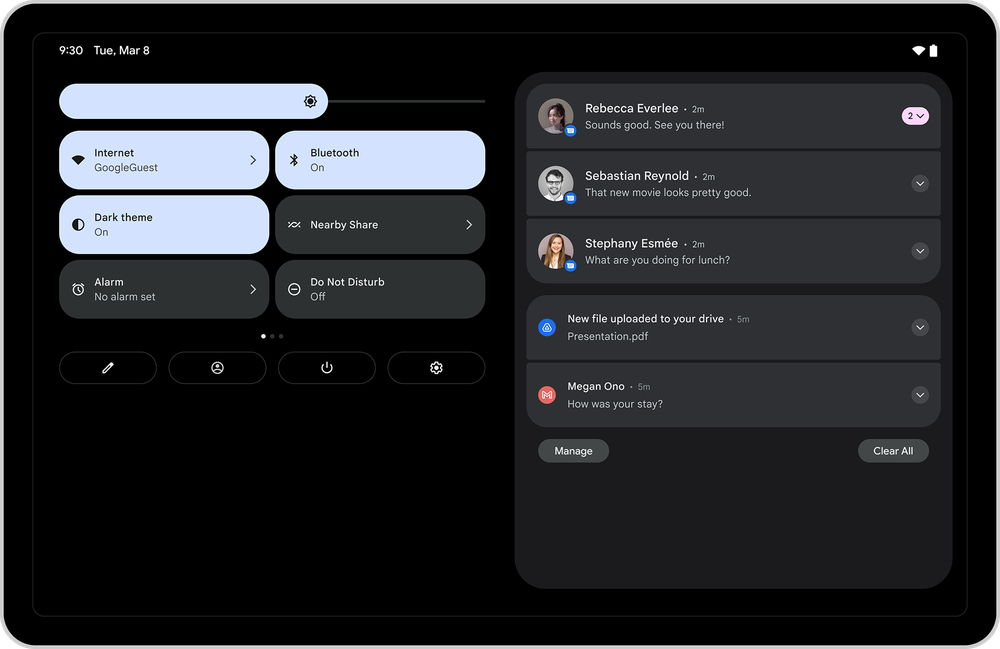
The bigger the screen, the more space there is for relevant information. With 12L, we’re optimizing the display for the home screen, lock screen, notification shade, device set-up screens, settings and beyond, so they look even better on tablet and foldable screens.
For example, we heard from you that the most common reason for swiping down to your notification shade is to check and clear your notifications. On 12L, we moved notifications and quick tiles to their own dedicated columns to give you more space to view and swipe away your notifications.
When setting up a new device, you’ll also be able to see more information with a two-column layout. And, you’ll be able to make changes to features in your Settings without having to go in and out of each section. Let’s say you’re looking to change the wallpaper on your device — select “Wallpaper & style” from the navigation panel and make your pick on the side, all in one view.
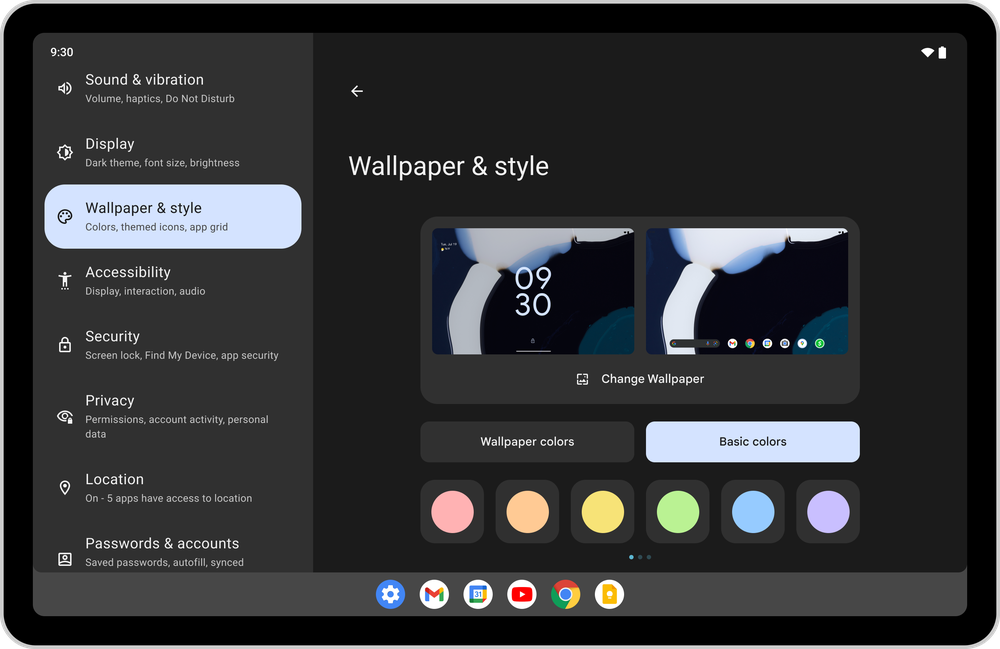
A taskbar to get more done
We’ve added a taskbar to help multitaskers launch and switch between apps on the spot. You can also drag-and-drop any app from the taskbar to enter split-screen mode so you can do two things at once. You can watch a YouTube video while you scan the news, or search for accommodations for an upcoming trip in a Chrome browser while you view its location in Google Maps.
Starting later this year, we’ll bring 12L to your favorite tablets and foldables with planned updates from Samsung, Lenovo and Microsoft. And we’ll continue to build more features and functionalities to help you make the most of your larger screen devices in Android 13 and beyond.
Free The Story: How B2B Marketers Can Use Digital Storytelling To Bring Content Alive In New Ways
How does digital storytelling help B2B marketers bring content to life in powerful new ways?
With more B2B buying research and ongoing customer engagement than ever taking place online over the past two years, there have never been as many opportunities to benefit from digital storytelling, yet greater competition has made it vital to create content that truly stands out and engages.
Let’s take a look at how well-crafted digital storytelling can propel B2B content to new successes, and how B2B marketers can breathe new life into content in a variety of digital formats.
Empathy Transforms Digital Storytelling
A shift in how many B2B marketers look at the content their teams create is often required to fully embrace and benefit from the power of successful digital storytelling. Empathy plays a role in this shift, and by taking the time to understand audiences, B2B marketers can create more emotionally memorable stories — making customers feel connected on a deeper level that’s more human and less digital.
“Brands want to transact with people who are showing high levels of empathy,” Miri Rodriquez, senior storyteller at Microsoft, has observed — a facet of successful digital storytelling that she expanded on in our article, “Microsoft’s Miri Rodriguez on How B2B Marketers Are Embracing Empathy For Better Customer Storytelling #B2BMX.”
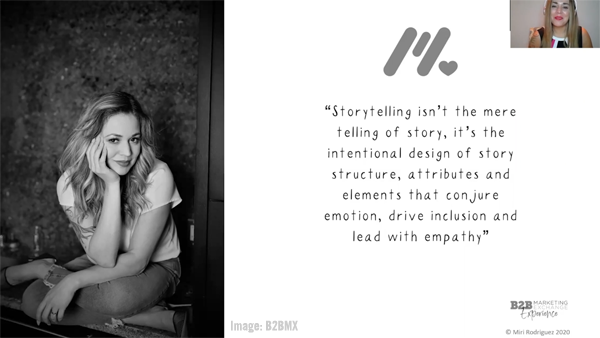
Miri considers storytelling a tactic worthy of being a top goal in 2022.
“Make storytelling excellence one of your top goals in 2022. Wherever you are in the brand storytelling journey, aspire to tangible deliverables in your storytelling strategy as part of your marketing efforts. This includes defining a plan on how you can best design and tell your brand story considering inclusion, market trends, thought leadership and your customers which are all continuously evolving,” Miri noted recently in our look at “How to Elevate Your B2B Marketing Career: Advice from Execs at Top B2B Brands.”
[bctt tweet=”“Make storytelling excellence one of your top goals in 2022. Wherever you are in the brand storytelling journey, aspire to tangible deliverables in your storytelling strategy as part of your marketing efforts.” — Miri Rodriquez @MiriRod” username=”toprank”]Free The Story: Not Just For B2C Anymore
The move to either all-digital or mostly-digital in B2B over the past several years has allowed brands to experiment with and even embrace aspects of what have traditionally been B2C-only marketing strategies, and these changes are likely to endure even when the world returns to a much more in-person mode of business operation.
While some of these changes adopted from B2C into the B2B world have been minor, the biggest may be the shift to working with the power of the story, even in enterprise organizations.
The the freedom digital storytelling offers, B2B marketers can break down many of the old barriers between brands and buyers, and truly connect in powerful and enduring ways.
Authenticity Humanizes B2B Connections
Digital storytelling also helps B2B marketers humanize content with authenticity.
“What good is your content marketing investment if it’s not believable? If it’s not trusted?” our CEO Lee Odden recently asked in a look at “Three of the Biggest Opportunities to Elevate B2B Marketing in 2022.”
When done well, digital storytelling not only drives trust, but is also a great way to incorporate industry thought leaders, who can augment and bring new life to brand stories. “Content collaborations between industry experts and internal subject matter experts and executives helps to humanize B2B brands by focusing on the real issues customers are dealing with,” Lee noted, highlighting another way that customer empathy drives content — including digital storytelling — to new heights.
[bctt tweet=”“Content collaborations between industry experts and internal subject matter experts and executives helps to humanize B2B brands by focusing on the real issues customers are dealing with.” — Lee Odden @LeeOdden” username=”toprank”]Customer Solutions In Formats They Prefer
Storytelling in B2B doesn’t have to exist in only one digital format — indeed in 2022 there are more ways to present and share stories than ever — and one of the prime benefits of stellar digital storytelling is that it can take many forms and still ring true with audiences.
A well-crafted story can be incorporated in B2B efforts that work equally well on many platforms and in multiple media types, including:
- Traditional blog content
- Social platforms
- Woven into video
- Added to audio / podcasting
- Email / newsletter campaigns
- Conference presentations
A powerful story works across the board, and while some stories are certainly better-suited to being shared in specific formats, a truly memorable one will transcend the medium and make that leap to existing not only online, but in the memory of the people your brand wants to connect with. When that transfer takes place, a story can endure, and drive customer relationships that reach newfound levels of connection.
We’ve looked at some of the ways that B2B marketers can create stories that connect on a deeper level, including these five:
- Why There’s a Need for Creative Storytelling in B2B Tech and How Influencer Marketing Can Accelerate Results
- Digital First B2B Marketing is Here to Stay and It’s All About Experiences
- Beyond SEO: B2B Content Optimization for Trust and Customer Experience
- Your Guide to Effective Storytelling in B2B Content Marketing
- 10 Fresh Social Media Marketing Tools To Boost Brand Storytelling
Telling Compelling Digital Tales Create Genuine Audience Connections
When B2B marketers take the time to tell compelling digital stories that create genuine audience connections, include industry subject matter experts, and share their efforts in a variety of digital formats and publishing platforms, the true strength of digital storytelling shines brightly.
We hope you’ve enjoyed this look at just a few of the ways that digital storytelling is helping B2B brands forge greater and more enduring connections, and that you’ll find some of them useful in your own efforts in 2022 and beyond.
Creating award-winning B2B marketing that humanizes with authenticity takes considerable time and effort, which is why more firms are choosing to work with a top digital marketing agency such as TopRank Marketing. Contact us today to learn how we can help, as we’ve done for over 20 years for businesses ranging from LinkedIn, Dell and 3M to Adobe, Oracle, monday.com and others.
The post Free The Story: How B2B Marketers Can Use Digital Storytelling To Bring Content Alive In New Ways appeared first on B2B Marketing Blog – TopRank®.
“White Identity” cosa nasconde un sorriso perfetto
Esce il nuovo libro del Dott. Emanuele Puzzilli “È come avere il proprio dentista a portata di mano” “Scelgo tutti i giorni questo mestiere perché il mio obiettivo primario è…
L’articolo “White Identity” cosa nasconde un sorriso perfetto scritto da Paolo Brambilla proviene da Assodigitale.
An update on the threat landscape
Online security is extremely important for people in Ukraine and the surrounding region right now. Government agencies, independent newspapers and public service providers need it to function and individuals need to communicate safely. Google’s Threat Analysis Group (TAG) has been working around the clock, focusing on the safety and security of our users and the platforms that help them access and share important information.
This work continues our longstanding efforts to take action against threat actors in this region. In the last 12 months, TAG has issued hundreds of government-backed attack warnings to Ukrainian users alerting them that they have been the target of government backed hacking, largely emanating from Russia.
Over the past two weeks, TAG has observed activity from a range of threat actors that we regularly monitor and are well-known to law enforcement, including FancyBear and Ghostwriter. This activity ranges from espionage to phishing campaigns. We’re sharing this information to help raise awareness among the security community and high risk users:
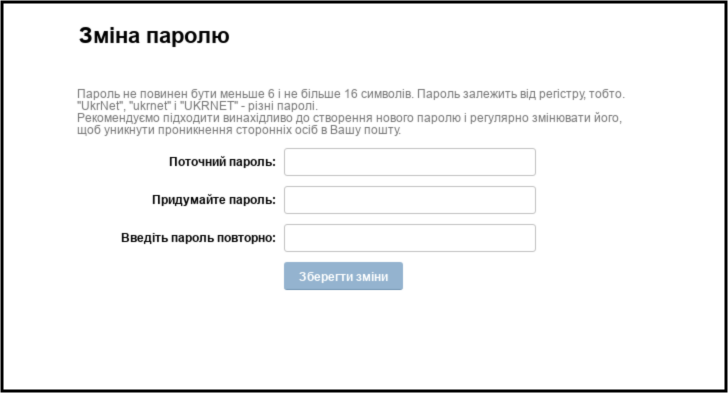
FancyBear/APT28, a threat actor attributed to Russia GRU, has conducted several large credential phishing campaigns targeting ukr.net users, UkrNet is a Ukrainian media company. The phishing emails are sent from a large number of compromised accounts (non-Gmail/Google), and include links to attacker controlled domains.
In two recent campaigns, the attackers used newly created Blogspot domains as the initial landing page, which then redirected targets to credential phishing pages. All known attacker-controlled Blogspot domains have been taken down.
Example of APT28 credential phishing page
Example credential phishing domains observed during these campaigns:
- id-unconfirmeduser[.]frge[.]io
- hatdfg-rhgreh684[.]frge[.]io
- ua-consumerpanel[.]frge[.]io
- consumerspanel[.]frge[.]io
Ghostwriter/UNC1151, a Belarusian threat actor, has conducted credential phishing campaigns over the past week against Polish and Ukrainian government and military organizations. TAG has also identified campaigns targeting webmail users from the following providers:
- i.ua
- meta.ua
- rambler.ru
- ukr.net
- wp.pl
- yandex.ru
Example credential phishing domains observed during these campaigns:
- accounts[.]secure-ua[.]website
- i[.]ua-passport[.]top
- login[.]creditals-email[.]space
- post[.]mil-gov[.]space
- verify[.]rambler-profile[.]site
These phishing domains have been blocked through Google Safe Browsing – a service that identifies unsafe websites across the web and notifies users and website owners of potential harm.
Mustang Panda or Temp.Hex, a China-based threat actor, targeted European entities with lures related to the Ukrainian invasion. TAG identified malicious attachments with file names such as ‘Situation at the EU borders with Ukraine.zip’. Contained within the zip file is an executable of the same name that is a basic downloader and when executed, downloads several additional files that load the final payload. To mitigate harm, TAG alerted relevant authorities of its findings.
Targeting of European organizations has represented a shift from Mustang Panda’s regularly observed Southeast Asian targets.
DDoS Attacks
We continue to see DDoS attempts against numerous Ukraine sites, including the Ministry of Foreign Affairs, Ministry of Internal Affairs, as well as services like Liveuamap that are designed to help people find information. We expanded eligibility for Project Shield, our free protection against DDoS attacks, so that Ukrainian government websites, embassies worldwide and other governments in close proximity to the conflict can stay online, protect themselves and continue to offer their crucial services and ensure access to the information people need.
Project Shield allows Google to absorb the bad traffic in a DDoS attack and act as a “shield” for websites, allowing them to continue operating and defend against these attacks. As of today, over 150 websites in Ukraine, including many news organizations, are using the service. We encourage all eligible organizationsto register for Project Shield so our systems can help block these attacks and keep websites online.
We’ll continue to take action, identify bad actors and share relevant information with others across industry and governments, with the goal of bringing awareness to these issues, protecting users and preventing future attacks. And while we are actively monitoring activity related to Ukraine and Russia, we continue to be just as vigilant in relation to other threat actors globally, to ensure that they do not take advantage of everyone’s focus on this region.
Two new pledges to reduce food loss and waste at Google
As food makes its way from farms and factories to store shelves and dining tables, nearly one-third of it ends up lost or wasted along the way. All that unused food negatively impacts the planet — it makes up eight percent of the world’s carbon footprint and is the food system’s largest source of carbon emissions.
To protect our planet and keep it healthy, we need to collectively cut back on food waste — for us at Google, that means doubling down on our efforts to reduce waste in our kitchens and cafes. By 2025, we aim to cut food waste in half for each Googler and send zero food waste to the landfill. To do so, we’ll prevent waste during food sourcing and procurement, improve our kitchens and cafes, and make sure excess food is repurposed or disposed of properly.
Preventing waste before it happens
Our food team serves hundreds of thousands of meals each day to Googlers across 56 countries. To prevent food waste before those delicious ingredients ever reach our kitchens, we work closely with manufacturers, processors, suppliers and distributors.
One way we’ve done this is by sourcing produce from farms that is imperfect and would otherwise be tossed — like a misshapen carrot or an apple that is slightly blemished, but still delicious. We also buy from creative businesses that make food products from upcycled ingredients — like broth made from vegetable trimmings from a processing plant.
To help the entire food system reduce food waste in their own operations, Google is also working with agricultural and food service partners to improve supply chain transparency, traceability and data tracking. For example, an early-stage team from X, an Alphabet subsidiary, worked closely with Kroger and Feeding America®️ to explore and analyze supply chain datasets using Google Cloud technology. With more data and transparency into the supply chain we can make sure excess food goes toward a better use like feeding people who need it, instead of going to a landfill.
Rethinking our kitchens and cafes
Shutting down our offices and pausing food services at the beginning of the pandemic gave us the space to think bigger about how we can sustainably support a growing global workforce.
Now that food is back on the table at Google, we’re continuing to use technology to cut back on waste in our kitchen and cafe operations. For example, Leanpath is a tool that helps chefs track what food is going to waste. They can then use that data to make changes to how they prepare, cook and serve food in cafes.
Since we started measuring our kitchen food waste in 2014, these strategies have helped divert 10 million pounds of food from our kitchens and cafes from going into the landfill. That’s equivalent to eliminating 25,000 metric tons of carbon from the atmosphere or taking 5,000 cars off the road for a year.
To work toward our food waste goals, we plan to get more innovative and develop new technologies. We’ll prioritize coming up with creative menu options that turn produce that would otherwise be wasted into tasty treats — like healthy slaw made from peeled and shredded broccoli stems.
And we’re working on technologies that can help us make changes not only in our kitchens but in commercial kitchens everywhere. For example, over at X we piloted a project that uses computer vision to automatically determine what is going into our compost bins. We need more projects like this to create a smarter food system that knows where excess food is and what state it’s in so we can make sure it gets used instead of ending up in a landfill.
Being responsible with how we dispose of food
The work doesn’t stop once the food is cooked and the meal is served. We have to think about what happens to the food next— whether it’s what we do with untouched components of our meals or what’s left on a Googler’s plate. We aim to donate the excess whenever possible or ensure that it is properly composted.
Part of managing our global food program requires having a network in place so that untouched, excess food can easily be shared with food rescue partners. We’re also sharing ways that everyone at Google can do their part to reach these goals — like each of us only taking what we know we can eat. For any food product that’s ready to be tossed, we’re working to improve our waste separation systems to make sure that composting works everywhere. We’re even piloting technology that can process organic waste onsite and smart waste collection containers that can better sort trash to divert waste from the landfill.
While we’re working hard to reduce waste in our own food operations and cafes, the biggest impact will come when the entire industry works together and adopts solutions to keep food out of landfills. That’s why last year we signed onto the Food Waste Action Plan — co-led by ReFED, the premier national nonprofit advancing data-driven solutions to end food waste — to urge the federal government to adopt ambitious food loss reduction goals. To further accelerate systems transformation, Google is providing $1M as an anchor funder to the upcoming ReFED Catalytic Grant Fund with the goal of accelerating and scaling food waste solutions in North America.
As we make progress toward our food loss and waste goals, we’ll keep sharing what we learn with others in the industry. Together, we can keep our planet healthy.