
Alexa fa anche il caffè con Lavazza A Modo Mio
Alexa, fammi un espresso!. Sì, avete capito bene, da oggi Alexa, l’assistente vocale di Amazon, ci fa anche il caffè. Il colosso dell’e-commerce e Lavazza hanno collaborato alla prima macchina da espresso che integra Alexa e che rende ancora più semplice un’azione che milioni di italiani compiono più volte al giorno a partire dal momento in cui aprono gli occhi.

Nuova TV per Europei e Switch-off? 4 proposte 2020 ancora molto valide

Lavorare in Canada: le opportunità per lavoratori qualificati e professionisti
La pandemia COVID-19 sta impattando sul mercato del lavoro canadese e sulla mobilità dei lavoratori stranieri. Tuttavia, anche nella prospettiva della ripresa, non dobbiamo dimenticare che l’Unione europea è il secondo partner commerciale ed economico del Canada. La forte crescita dell’economia canadese degli ultimi anni ha aumentato la domanda di lavoratori e professionisti stranieri con competenze specializzate. Nadia Deisori, giornalista e consulente Digital Human, analizza per il Centro Studi Italia-Canada cosa devono aspettarsi i lavoratori…
L’articolo Lavorare in Canada: le opportunità per lavoratori qualificati e professionisti scritto da MercurPress proviene da Assodigitale.

Ufficiale: i diritti TV della Serie A a DAZN fino al 2024
Alla fine l’ha spuntata DAZN. Con 16 voti a favore e 4 contrari (da Genoa, Crotone, Sampdoria e Sassuolo) nel corso dell’ultima assemblea di Lega, l’azienda si è infatti assicurata i diritti TV della Serie A fino al 2024, con grande soddisfazione anche di TIM. Quest’ultima, lo ricordiamo, ha un accordo come operatore di telefonia e pay tv di riferimento per l’offerta dei contenuti di DAZN, oltre che per la partnership tecnologica.

LockTheSystem, il nuovo ransomware che attacca l’Italia
Si chiama LockTheSystem ed è un nuovo virus informatico che una volta penetrato nel sistema, prende il controllo dei dispositivi, cripta i file e poi chiede un riscatto per restituirli. Il codice malevolo viene veicolato tramite delle finte mail che fanno riferimento alla mancata consegna di un pacco.

Debutta il podcast puro del Disinformatico

È pronta da scaricare la prima puntata in formato podcast puro del Disinformatico, condotta dal sottoscritto insieme a Tiki. In questa puntata parliamo di cose frivole da far dire agli assistenti vocali, interoperabilità (anche nelle app anti-Covid, archeoinformatica (la vendetta informatica contro i Beatles da parte del creatore dei suoni classici del Mac) e add-on per rivelare il tracciamento pubblicitario.
Il podcast di oggi, insieme a tutti quelli delle puntate precedenti, è a vostra disposizione presso www.rsi.ch/ildisinformatico (anche con feed RSS). È tutto nuovo anche per me, per cui segnalatemi eventuali problemi o disfunzioni. Buon ascolto!
B2B Marketing News: Long-Term Brand Relationship Study, Digital Ad Spending Climbs, Ad Overload Survey, & Google’s New Review Tools
Instagram Announces That Stories Drafts are Coming Soon
Facebook-owned Instagram will roll out a new scheduling option that will provide a helpful change for digital marketers who are using the native Instagram Stories interface, the firm recently announed. Social Media Today
B2B Highlights From “The CMO Survey”
51.3 percent of B2B marketers said they were more optimistic in January 2021 than during the fourth quarter of 2020, while 77 percent said it isn’t appropriate for their brand to take a stance on politically-charged issues — two of numerous findings of interest to digital marketers in new CMO survey data. B2B Marketing Directions
Study: Ad overload could pose steeper risk to brands than messages near inappropriate content
Some 52 percent of U.S. consumers say that they see overexposure to ads as the top cause of negative brand perceptions, especially those that were seen as distracting or otherwise intrusive, according to newly-released survey data. Marketing Dive
Google My Business releases tool to manage your reviews
Google has rolled out a new feature for its Google My Business service that allows marketers to conveniently monitor the status of multiple firm review take-down requests, the search giant recently announced. Search Engine Land
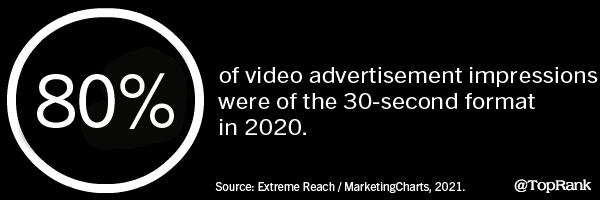
30-Second Video Ads Have Taken Over
Some 4 in 5 digital video ad impressions are comprised of the 30-second format, ousting the previous 15-second format as the most used video ad length, while the average time spent viewing videos ads has remained mostly stable, according to recently-released survey data. MarketingCharts
Zenith Forecasts Telecom Ad Spend Will Grow 4%-Plus Annually Through 2023
Nearly half of 2020’s $17.8 billion telecommunications industry advertising spending went to digital — the only channel with rising telecom ad spending — according to recently-released forecast data of interest to online marketers. MediaPost
4As Report: Agencies Stepped Up In Times Of Trouble
Client engagement levels at advertising agencies climbed some 90 percent over the past year as the pandemic spurred increased use of online collaboration tools — one of several findings of interest to digital marketers in newly-released American Association of Advertising Agencies study data. MediaPost
Digital’s Big 3 Are Now The Majority Of U.S. Ad Spending
For the first time, in 2020 Google, Facebook and Amazon combined to attract the majority of ad spending in the U.S., with ad revenue for the so-called triopoly reaching more than $115 billion, according to recently-released analysis data. MediaPost
Advertisers Are Podcast Listeners, And New Report Finds That’s Also Making Them Ad Buyers
56 percent of advertisers say the global health crisis has given increased importance to podcast advertising, with a third of advertisers saying that podcast ads drive better brand buying consideration scores — two of several statistics of interest to digital marketers contained in recently-released podcast advertising report data. Inside Radio
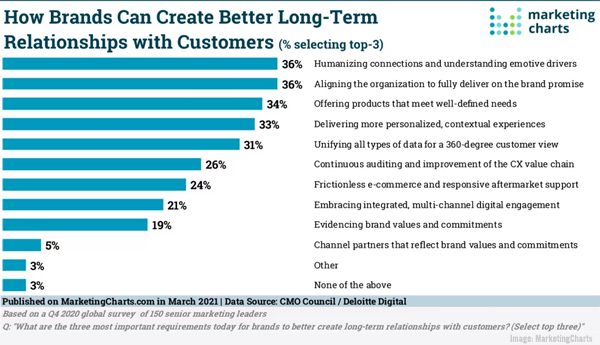
How Should Brands Create Better Long-Term Relationships with Customers?
Just 17 percent of senior marketers say their firms track customer lifetime value (LTV), while 62 percent hope to improve LTV through developing a unified customer view, according to recently-released report data from the CMO Council and Deloitte. Understanding emotive drivers and delivering on brand promises top the survey list. MarketingCharts
ON THE LIGHTER SIDE:
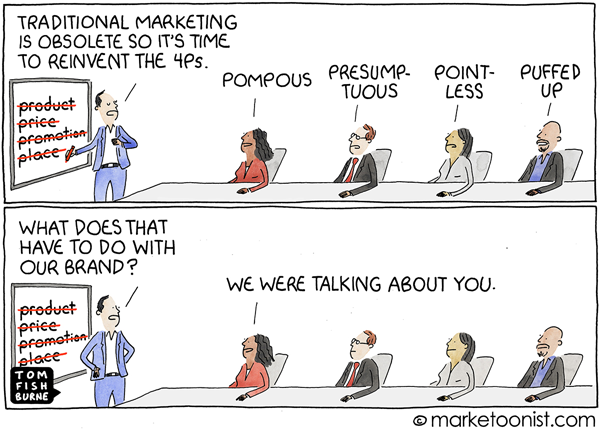
A lighthearted look at “reinventing the marketing 4Ps” by Marketoonist Tom Fishburne — Marketoonist
March Adness 2021: Vote for the Year’s Best Advertiser in Adweek’s Annual Bracket — Adweek
TOPRANK MARKETING & CLIENTS IN THE NEWS:
- Lee Odden — Why Content Is Important for SEO — Search Engine Journal
- Lane R. Ellis — 10 Ways to Monitor and Improve Your Small Business Online Reputation — Small Business Trends
- Lee Odden — Entrepreneurs on Fire: A Sneak Peek of Chapter 8 of The Common Path to Uncommon Success! — Entrepreneur on Fire
- Lee Odden — What Does it Mean to Market with Empathy in 2021? — Heinz Marketing
Have you found your own key B2B marketing story from the past week of industry news? Please let us know in the comments below.
Thanks for joining us for the TopRank Marketing B2B marketing news, and we hope that you’ll return again next Friday for more of the week’s most relevant B2B and digital marketing industry news. In the meantime, you can follow us at @toprank on Twitter for even more timely daily news.
The post B2B Marketing News: Long-Term Brand Relationship Study, Digital Ad Spending Climbs, Ad Overload Survey, & Google’s New Review Tools appeared first on B2B Marketing Blog – TopRank®.

Smart Home, in Italia è boom
Il mercato globale della Smart Home raggiungerà quota 110 miliardi di euro nel 2023, con un incremento medio annuo di circa il 17%. E’ quando emerso da un’indagine compiuta dal Centro Studi TIM. Secondo i risultati del rapporto, USA e Cina sono i principali mercati, e sono cresciuti rispettivamente del 20 e del 40% nel corso del 2019 (per il 2020 la crescita è prevista invariata).

Annunciato lo Snapdragon 780G, il nuovo gioiello di Qualcomm
Qualcomm Technologies ha annunciato lo Snapdragon 780G, il SoC (system on a chip) che porta anche su smartphone di fascia media la possibilità di integrare delle caratteristiche di rilievo, normalmente presenti su modelli top di gamma. Tra queste, il supporto al 5G e un sistema che migliora la cattura di foto e la ripresa di video. Snapdragon 780G vanta infatti una nuova architettura a bassa luminosità, che garantisce foto ad alta qualità in qualsiasi condizione di luce.

Le parole di Internet: interoperabilità

Interoperabilità è uno di quei paroloni con i quali spesso si riempiono i comunicati stampa autopromozionali degli uffici marketing, ma oggi questo termine informatico è importante anche per la salute.
Formalmente, interoperabilità in informatica significa la capacità di un sistema di cooperare con un altro e di scambiare informazioni senza problemi o errori. Internet stessa è un classico esempio di interoperabilità: è consultabile usando dispositivi di ogni genere e permette di scambiare dati fra questi dispositivi. Può sembrare strano, ma un tempo (negli anni Settanta) le varie marche di computer non si parlavano tra loro: ognuna aveva il suo standard interno. Internet nacque proprio per consentire a computer differenti di parlarsi e diventare appunto interoperabili. Questo è possibile grazie ai protocolli TCP/IP (Transmission Control Protocol/Internet Protocol), creati negli anni Settanta del secolo scorso e adottati come standard di comunicazione da ARPANET, il precursore di Internet, nel 1983.
Le prese elettriche dei vari paesi, invece, sono un esempio di mancata interoperabilità, pur usando quasi sempre lo stesso tipo di corrente elettrica.
Che c’entra la salute con l’interoperabilità? L’Ufficio federale della sanità pubblica svizzero ha annunciato che da ieri SwissCovid, l’app di tracciamento di prossimità installata e utilizzata da circa due milioni di persone per dare una mano a interrompere la catena dei contagi da coronavirus, è diventata interoperabile con l’analoga app tedesca Corona-Warn-App.
Questo significa che possono beneficiare del servizio in particolare i circa 60.000 frontalieri tedeschi che entrano ogni giorno in Svizzera, oltre che tutti coloro che dalla Svizzera si recano in Germania. Non è più necessario installare entrambe le applicazioni e commutare dall’una all’altra, perdendo dati: da ieri ne basta una sola. È una sorta di roaming per le app.
L’UFSP ha colto l’occasione per ricordare che SwissCovid da alcuni mesi è utilizzabile anche sugli iPhone meno recenti, dal 5s in poi, che usano iOS 12.5. In pratica SwissCovid funziona su tutti i telefonini Apple messi in vendita negli ultimi sette anni. Per Android la situazione è un po’ più complicata, ma in sostanza SwissCovid funziona con qualunque smartphone che usi Android 6.0 o successivo.

Donne Luce. La storia di donne coraggiose
— – Redazione Trendiest News – – DONNE LUCE: LA DOCUSERIE CHE CELEBRA IL RISVEGLIO DEL FEMMINILE Macrina Binotti, ideatrice e regista del progetto, e Mario Liguigli, co-produttore e DoP, ci raccontano come nasce Donne Luce e quali saranno le prossime tappe di questo viaggio dietro la cinepresa Qual’è la prima volta in cui hai sentito di dover scegliere tra il buio e la luce? Questo è il fil rouge di Donne Luce, una docuserie…
L’articolo Donne Luce. La storia di donne coraggiose scritto da REDAZIONE TRENDIEST proviene da Assodigitale.

Supporting a healthy digital ads ecosystem in Australia
Advertising plays a major role in sustaining the free and open web. It supports a universe of Australian creators and publishers — and underwrites the useful content and services that Australian internet users enjoy. Advertising technology creates opportunities for businesses, particularly small and medium businesses, to connect with customers. This helps facilitate competition, innovation and growth across the Australian economy. Research by AlphaBeta estimated that Google creates AU$32 billion in benefits annually for businesses and content creators in Australia through its advertising platforms.
Google succeeds when our partners do — so we have a strong incentive to ensure a healthy digital advertising ecosystem. We’ve made significant efforts and investments in this, and always aim to do so in a way that balances the interests of consumers, advertisers, and publishers. We recognise that advertising technology is a dynamic area and we welcome opportunities to share more on how advertising technology works.
Earlier this year the ACCC released its Interim Report on the digital advertising services industry. It recognises the considerable value of advertising technology in creating growth opportunities for businesses and publishers, while identifying areas for further improvement. We wanted to share some thoughts and suggestions we have in response to this. We expand on these in our submission to the ACCC here.
A regulatory approach that reflects the dynamics of digital advertising
We take seriously the ongoing need to maintain and improve trust in digital advertising and the ecosystem that supports it. We believe some key factors should be considered as the ACCC develops its final recommendations:
-
Balancing the interests of different stakeholders:Advertising technology involves balancing the interests of consumers, advertisers and publishers, which may sometimes be in conflict. This is not unique to Google — it applies to everyone participating in the advertising technology space. This means that any interventions must be carefully designed to take into account these inevitable trade-offs. Well-meaning but misjudged interventions can cause unintentional harm to consumers and businesses. For example, measures that increase transparency for one group may put consumer privacy at risk. We firmly believe that privacy needs to be a core principle underpinning the development of any proposals. Our users trust us with their data and we take that responsibility seriously.
-
Supporting supply chain transparency:We provide information about our advertising technology to our customers and partners but recognise more can be done in support of a transparent ecosystem. We are working to improve supply chain transparency, including supporting the Interactive Advertising Bureau (IAB) Transparency Standard, SupplyChain Object, that aims to improve ecosystem quality by enabling buyers and intermediaries to see all parties who are selling or reselling a given bid request. We will continue to work with industry and other stakeholders on constructive and collaborative solutions. When it comes to our advertising technology, we’ve recently shared how our display advertising business works when advertisers and publishers choose to use our products. Even when ads flow through both our buy-side and sell-side services, publishers receive the majority of the revenue. Publishers keep about 70 percent of the revenue when using our products, and for some types of advertising, publishers keep even more.
-
Protecting innovation and competition: The ACCC has identified some potential areas for intervention that risk undermining benefits for advertisers and publishers. In particular, vertical integration of services within the industry provides significant benefits by making products easier to use, and reducing the time and effort customers need to spend to achieve their desired outcomes. Customers and publishers including SBS, WPP and The Guardian have recognised this (p21). Regulatory interventions that could reduce those benefits should be evaluated carefully and only implemented if there is clear evidence of competitive harm. Otherwise, the ability and incentive for advertising technology providers to improve product quality will be affected without achieving tangible benefits, to the detriment of advertisers and publishers.
-
Recognising the highly dynamic and multifaceted nature of digital advertising: The ACCC’s Report focuses only on web-based open display advertising, an artificially narrow segment that does not fully reflect industry dynamics or the breadth of services. There are many companies, large and small, working together and in competition with each other to power digital advertising across different technologies — including the Web, mobile applications and Connected TV. This competition has spurred Google and other advertising technology providers to innovate further and compete across pricing, service and product. Advertising technology players need to constantly innovate to adapt to these trends.
-
Avoiding inconsistent and overlapping regulation:Any ACCC recommendations should also consider the interaction with other regulatory regimes and ensure that interventions do not create inconsistency or overlaps which may undermine legal certainty for all stakeholders. In particular, the existing competition law framework already applies to digital issues and deals with any concerns relating to anti-competitive self-preferencing. And the Privacy Act 1988 is currently being reviewed by the Australian Government. We believe it’s in the interests of all stakeholders to ensure that any recommendations that might impact consumer privacy (for example, common transaction IDs or data interoperability proposals) will be consistent with the outcomes of this review and will not harm consumers.
A collaborative approach to the future of digital ads
We support the ACCC’s suggestions for industry-led initiatives. Industry participants have deep knowledge of advertising technology, industry dynamics and potential consequences of different interventions for different stakeholders. Google has a track record of working with other industry players to improve the digital ad ecosystem. For example, we co-authored and led industry adoption of the IAB’s ads.txt and app-ads.txt specifications, and more recently participated in the development of Sellers.json. These were major steps forward in tackling ad fraud. We are also working with industry organisations such as the Australian IAB on further measures to support the long-term viability and integrity of an ad-supported digital advertising ecosystem.
We are confident that a collaborative approach will benefit consumers and businesses in Australia. You can read Google’s submission here. We look forward to continuing to participate constructively in the ACCC’s Ad Tech Inquiry process — working collaboratively to help avoid unnecessary inefficiencies and barriers in a competitive, growing and innovative sector.

Rivelare il tracciamento pubblicitario con Lightbeam
Sappiamo tutti molto bene che quando sfogliamo i siti Web veniamo tracciati a scopo pubblicitario. Quello che però molti non sanno è la scala di questo tracciamento. Dopo una lunga assenza è tornato uno strumento che consente di rivelare in tempo reale quanto sono pettegoli i siti che visitiamo e a quanti altri siti raccontano che li abbiamo visitati.
Lo strumento si chiama Lightbeam 3.0 ed è un add-on gratuito per Firefox. Lo potete vedere in azione in questo video: i triangolini sono i siti che non vengono visitati dall’utente ma che ricevono lo stesso informazioni da quelli effettivamente visitati.
In questo video, che dura un solo minuto, ho semplicemente visitato una decina di siti: un motore di ricerca (Google), due social network (Instagram e Facebook), due siti di viaggi (Tripadvisor e Booking), due giornali (Repubblica e il Corriere del Ticino), e due grandi negozi online, Amazon e Alibaba. Sfogliare questa decina di siti mi però ha fatto visitare, senza chiedermelo, ben 178 altri siti, presumibilmente a scopo di tracciamento pubblicitario.
I risultati, visti graficamente, sono eloquentissimi: non stupitevi se quando comperate qualcosa su Internet o cercate informazioni sui viaggi venite poi sommersi di pubblicità di quel prodotto o di viaggi in generale.
Se volete evitare questo tracciamento, vi conviene perlomeno installare un adblocker e attivare la protezione antitracciamento del vostro browser, se disponibile.

Truffa su Telegram: niente panico, non vi hanno “hackerato” tutto

Mi è arrivata una segnalazione di un tentativo di estorsione via Telegram piuttosto insolito. Circola su vari gruppi Telegram una minaccia: dei sedicenti “hacker” dicono alla persona presa di mira che deve fare a loro un pagamento via Internet (su PayPal o Streamlabs), altrimenti i dati della vittima e dei suoi familiari, compresi quelli delle carte di credito, verranno diffusi su Internet.
Chi fa la minaccia scrive in buon italiano, cosa abbastanza insolita per questo tipo di estorsione, e non porta alcuna prova di quello che dice. È comunque sufficiente a spaventare parecchie vittime, soprattutto fra gli utenti più giovani e meno esperti di Internet, che credono di essere stati “hackerati”.
Niente panico: è tutta una finta. I presunti hacker in realtà non hanno in mano nulla. Cosa più importante, secondo le informazioni raccolte fin qui non si tratta di criminali informatici professionisti in cerca di persone emotivamente vulnerabili, ma di un gruppo di ragazzini che diffonde queste minacce perché ritiene divertente spaventare la gente, senza rendersi conto dell’angoscia che causa.
Questi pseudohacker vengono regolarmente segnalati e bloccati nei vari gruppi, ma tendono a ricomparire con nuovi account. Il modo migliore per indurli a smettere è non cadere nella loro trappola. Non credete a tutto quello che vi dicono online. Vi dicono che hanno informazioni compromettenti su di voi e temete che dicano la verità? Chiedete di mostrarvele. Se non ne hanno, ridete loro in faccia e bloccateli.
A questi diversamente divertiti ricordo invece che quello che stanno facendo si chiama estorsione ed è reato anche se lo si fa per “divertirsi”. Ed è facile seguire le tracce per identificarvi. Crescete, gente.

Internet of Things e Industria 4.0
— – di Federica Di Bari – Trendiest News – – I passi avanti della tecnologia cui abbiamo assistito negli ultimi decenni hanno enormemente avvantaggiato le imprese, permettendo loro di implementare il processo produttivo con un prezioso alleato: l’infrastruttura di internet. È il caso dell’Internet of Things (o semplicemente IoT), che ha portato in dote a quelli che fino a qualche anno fa erano comuni oggetti, il dono dell’intelligenza. Molti di essi li adoperiamo già…
L’articolo Internet of Things e Industria 4.0 scritto da REDAZIONE TRENDIEST proviene da Assodigitale.