Una torcia da 3000 lumen PAZZESCA utile in tanti contesti: a 16€ è un vero AFFARE
SelfyConto: 2% annuo su somme vincolate a 6 mesi
Elegantemente nero: il prezzo del Samsung Galaxy A52s 5G precipita (-29%)
HONOR 70, lo smartphone DEFINITIVO per i Vlogger: offerta PAZZESCA
Smart TV Samsung UHD 4K da 50″, solo oggi a PREZZO REGALO (-53%)
Prime Video, film e serie TV in uscita tra il 17 e il 23 ottobre 2022
Teclast M40 Pro, tablet POTENTE e VALIDO a prezzo mini (160€)
Huawei Watch Fit, smartwatch al TOP a prezzo RIDICOLO (49€ su Amazon)
Mapping our emotions at the Guggenheim Museum Bilbao
Art can inspire a wide range of feelings. From the melancholy of a painting to the awe we feel standing before a sculpture, researchers have been fascinated by the relationship between art and human emotion for many years.
Guggenheim Museum Bilbao and Google Arts & Culture have partnered on the occasion of the museum’s 25th anniversary and are offering a unique and emotional experience that lets everyone explore their feelings and get closer to the contemporary museum’s collection.
Artetik: From the Art, a new installation in the Guggenheim Museum Bilbao, invites you to explore how artworks from the museum’s collection make you feel. By contributing to the experience, you will be guided to new artworks in the collection through an ever-changing visualization representing the shared emotions evoked in museum visitors.
The project is a collaboration between the Guggenheim Museum Bilbao and Google Arts & Culture, based on research about art and emotions by scientists at the University of California, Berkeley. This study explored the emotions evoked by works of art over time and across culture. 1,300 people described how a selection of around 1,500 artworks made them feel. The research revealed 25 different emotions relating to the pieces, including anger, boredom, nostalgia or love. The researchers used these feelings to create an interactive emotions atlas, grouping together artworks that evoked specific emotions. The installation developed by Google Arts & Culture and the Guggenheim Bilbao Museum gives this study life and – for the first time – applies the emotions atlas to a museum’s entire collection.
This unique initiative enables the Guggenheim Museum Bilbao to fulfill its commitment to education and innovation by making the collection more accessible as part of its goal to “inspire and open up new perspectives through art and the values it represents.” It is also a way of achieving one of the Museum’s strategic objectives on digital transformation and the implementation of innovative digital projects and experiences.
Located on the third floor of the Museum, Artetik: From the Art will allow visitors to choose artworks from the collection and to indicate the emotions that those works trigger in them. As participants link the different works of art with their own feelings, the experience will generate a collective graphic of emotions that will change over time. At the end of their experience, users will be able to learn more about the chosen artwork, locate it in the Museum in order to savor it in person, and share on social media the graphic of emotions that each work produces. In addition, the app will allow visitors to discover other works of art from the collection that connect with similar emotions, providing access to the Museum’s artworks in a truly unique way.
Furthermore, the virtual space that Google Arts & Culture has dedicated exclusively to exploring the Guggenheim Bilbao Museum since 2017 will update and include the museum’s entire collection, making it accessible to users and art fans around the world. Some of the materials available are:
- The entirety of the museum’s permanent collection in high resolution.
- New digital stories about masterpieces from the collection. Thanks to the storytelling tools developed by Google Arts & Culture, anyone will be able to dig deeper into the details behind these artworks (eg. Man from Naples, 24 heads).
- A cultural crossword that allows users to get to know the Guggenheim Bilbao Museum and their collection in a playful and educational way.
- The video Folding gravity at the Guggenheim Bilbao Museum, published previously, which follows Trashhand, an American urban explorer and photographer, and Johan Tonnoir, a global expert in free running — a discipline that combines acrobatics and athleticism — as they explore the museum in a unique way, reimagining the iconic building designed by Frank Ghery.
To explore this exhibit visit g.co/guggenheimbilbao or download the free Google Arts & Culture app for iOS or Android.
Honouring Andrew Watson’s footballing legacy
The year 2022 will be remembered as a historic one for English football. The beloved Lionesses won their first major tournament in a dramatic Euro Cup final against Germany at Wembley. After 56 years of hurt, Sunday, 31 July 2022, marked the day that football finally came home. As a lifelong Arsenal fan who grew up idolising Ian Wright, I remember feeling immense pride as I watched history being made.
The country came together to celebrate the beautiful game — but for me, as character designer and illustrator, I am fascinated by the stories behind the big moments. So for me, this was a chance to reflect on the sacrifices that players from minority groups have been forced to make in order to play the game that they love. For example, many female players have had to maintain full-time jobs whilst pursuing their football career, often a side effect of sometimes disproportionate funding for the women’s game. And it wasn’t that long ago that players from minority ethnic backgrounds were largely excluded from the sport.
Andrew Watson was a Scottish footballer widely believed to be the first black footballer to play in the Football League and the first player of colour to play in an English Cup match. Born in 1856 in what is now Guyana, Andrew was one of the most influential footballers of his time, captaining Scotland and leading his team to historic victories over England and Wales. Balancing his business entrepreneurship with his football career, he played for both Scotland and England, typically in the full-back position.
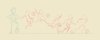
When I was asked to create a Doodle dedicated to Andrew’s achievements, it felt like a dream come true. After reading about his incredible life, I decided to not only illustrate his career, but also the trajectory of those who have followed in his path. Coming so soon after the euphoric celebrations of the Lionesses’ victory, it was important to me to capture that connection in the Doodle — to demonstrate that one person’s contribution can spark a positive and lasting chain reaction. This is why I settled on the idea of incorporating other generations into the Doodle, and hence the original sketches depict Andrew himself with a football, proudly watching on as other generations follow in his footsteps.
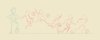
My initial idea was to depict this chain reaction in the artwork, with Andrew proudly watching on as new generations play the beautiful game.

The second sketch captures a greater level of detail and movement.

The final Doodle introduces character into the concept, and brings Andrew’s story to life.
With the finished product, I wanted to capture the beauty of football: the pace, the excitement, the vibrancy and, most importantly, the fun. Each character has their own experience with the ball, in the same way that each football player has their own unique style and strength.
I feel very proud and humbled to have been chosen to create this Doodle, and sincerely hope that people feel it captures not only Andrew’s legacy, but the legacy of all who follow in his footsteps.

YouTube creators are boosting the UK’s brands and economy
‘Creativity’, ‘diversity’ and ‘the economy’ are becoming increasingly associated with one another. The findings from two landmark studies, launching today at YouTube Festival, demonstrate that they are strongly symbiotic.
We have always known that creators are at the core of YouTube’s success and the latestYouTube Impact report by Oxford Economics on the state of the creator economy, highlights the wider, significant economic impact of YouTube’s creative ecosystem in the UK. A second piece of research, Mirrors and Windows, conducted with MTM, explores identity and media choice in the UK and the role and responsibility of brands in improving authentic representation.
This year I celebrated my 15th year at Google and there are some key themes that have progressed significantly during my time here. The main is the growth in sheer reach – new audiences continue to come to us with 96% of online adults in the UK visiting YouTube at least once a month. As a platform that attracts nearly the whole of the UK to our creative content, it should be no surprise that Oxford Economics found that YouTube’s creative ecosystem contributed over £1.4billion to the UK’s GDP, with 80% of creative entrepreneurs agreeing that YouTube provides an opportunity to create content and earn money that they wouldn’t get from traditional media.
I hear from creators every day about how our open platform has lowered the barrier to entry for creatives from every corner of the UK, and of every background and demographic. Munya Chawawa, who hosted YouTube Festival, is testament to how YouTube has the power to launch life-changing careers and ensure audiences can find content that reflects the diversity of the UK today. The research reinforced these anecdotes, with 79% of Mirrors & Windows respondents saying that they believe YouTube represents a wide range of voices, people and perspectives, a sentiment that was shared by those who identify as LGBTQ+ and those identifying as Asian, Black, Mixed or multiple, or other ethnic groups. Across the UK, from Scotland to Yorkshire to the South West, users also agree that YouTube has the content that people in the UK love.

Munya Chawawa at the MOBO Awards, 2021
While we’ve gained a better understanding of the tremendous benefits that YouTube’s creative ecosystem provides to our economy, society, brands and culture, the agencies and advertisers MTM spoke to indicated that they sometimes still have apprehensions about their ability to speak about the issue of diverse representation without misstepping and facing scrutiny. Saying that, as YouTube continues to introduce new ways to support diverse creatives, it is becoming a powerful vehicle for brands on the road to more inclusive campaigns.
When fashion and beauty destination ASOS, were planning to tell young people that their brand is for people of all sizes, races and celebrates self expression, YouTube was there to connect them with a unique opportunity to amplify this message. ASOS’ partnership with MOBO – a global brand dedicated to celebrating and championing Black culture and music – was a good example of how authentic and inclusive marketing equals reach and brand results, with ASOS’ pre-roll ads reaching almost three million people watching the Awards and associated music content on YouTube alone. The partnership, which also included ASOS sponsoring the Awards’ Best Newcomer category, not only demonstrated YouTube’s ability as a driver of cultural moments, but also its ability to bring brands closer to diverse audiences, deliver strong brand metrics, and support the creative development and distribution of representative content.
While we’ve known this for a while, the insights released today demonstrate that there’s an urgent need for cultural fluency – where brands show not just a familiarity with different cultures but an ability to communicate effectively in different contexts and be able to change and adapt as much as our platform and its audiences are.
I am so excited to continue to work with brands to help them thrive on this open and constantly evolving platform, where engaging with creative talent, ideas and audiences means direct investment in the UK economy, helping to maintain the UK’s position as a global leader in the creative industry.
The YouTube Effect: New ways to reach engaged audiences
People are gravitating toward content they relate to, whether they’re watching in their living rooms or scrolling short-form video on their phones. And they’re finding it all on YouTube, where creators are constantly pushing creative boundaries to stay relevant with today’s viewers, shaping and reflecting culture as it happens. We’re committed to helping them continue to do this. In fact, last month, we shared major updates in how we support creators — including that we’ve paid creators, artists and media companies over $50 billion over the past three years.
For advertisers, investing in YouTube means reaching people in the moments and places where they’ve sought out and really connect with what they’re watching. The unique dynamic between creators and viewers creates a halo effect, or what we call the YouTube Effect, for brands.
This week at Advertising Week New York, we’re announcing new ways you can tap into the YouTube Effect across streaming, shopping and audio.
New ways to drive awareness in key moments
Linear TV watching continues to decline. And now, even streaming platforms are struggling to hold onto loyal viewers. According to Nielsen, YouTube recently became the co-leader in streaming watchtime.
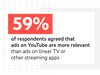
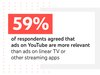
People have always connected in front of the TV screen, but YouTube gives them the unique chance to bond over shared passions — like watching live-streamed concerts, fitness classes or even religious ceremonies together. They feel a similar connection to the ads they get, too. In a new study with Latitude, 59% of respondents agreed that ads on YouTube are more relevant than ads on linear TV or other streaming apps.
To help you reach these engaged viewers, we’re launching a new offering called Moment Blast. Designed for brands looking to raise awareness during key moments — like major sporting events, movie releases or product launches — Moment Blast gives advertisers prime positioning on YouTube Select content on connected TVs (CTV) and other devices, plus a Branded Title Card and optional Masthead placement.
Help informed buyers shop what they love
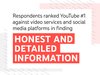
As e-commerce continues to rise, so has the informed buyer. New research from theSocial Commerce and Video Study in partnership with TalkShoppe shows that having trusted information and confidence in purchases is more important to shoppers than ever. Respondents ranked YouTube number one against other video services and social media platforms in finding honest and detailed information.
Today, we’re making it easier for people to shop what they love on YouTube. Advertisers can already use product feeds on YouTube, which turns ads into a virtual storefront. We’ve recently expanded product feeds to Shorts and found that, on average, Video action campaigns with product feeds saw an over 70% increase in conversions on Shorts over those without product feeds.
We’re now expanding product feeds to Discovery ads to help you scale your social media creative and reach even more engaged viewers. Soon, product feeds will also include local offers, allowing brands to show real-time availability for products in their Google Merchant Center so people can find the most convenient place to buy. Creators will also be able to transform their content into virtual storefronts; this quarter, more creators will have the ability to tag products in their videos and Shorts.
You’ll see these features, some of your favorite creators and more at the second annual YouTube Shopping holiday event, “From YouTube to You,” kicking off on November 10. This year’s event will include livestreams, videos and Shorts featuring brands and retailers like Ulta Beauty and TULA Skincare.
Reach music lovers and podcast listeners
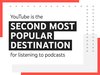
YouTube has long been a destination for music lovers to find official albums, music videos, live performances and more. And now, according to Edison, YouTube is the second most popular destination for listening to podcasts.
To help you reach these audiences, Audio ads are now globally available to buy in Google Ads and Display & Video 360. Audio ads are designed to reach people on audio surfaces and in listening-first states.
Podcast targeting is also now available globally. With Podcast targeting, brands and agencies can specifically reach podcast listeners.
From the big screen to the mobile screen, CTV to Shorts, immersive video to audio-first formats, YouTube is the only platform that can help advertisers reach viewers wherever they are.
BOMBA Amazon: il mega set per il fai da te Black+Decker (109 pezzi) a soli 20€
20 Terrifying Marketing Jokes to Celebrate Spooky Season
I’ll admit it: I’m one of those fall-loving, Halloween-obsessed people who just can’t wait to feel that crispness in the air and break out the spooky decorations. It’s the one time of year where everyone briefly shares my interest in horror movies and scary stories.
So when asked to write another in my series of marketing jokes posts, I had to seize the opportunity to make it scary. Granted, my jokes usually provoke more groans and moans than a cemetery full of ghouls, but at least these are painful on purpose.
Read on and laugh… if you dare!
20 Terrifying Marketing Jokes for Halloween
Jokes about sea monsters don’t have super high search volume, but they do have a long tail.
Our new viral ad campaign causes people to grow moles in the shape of our brand logo. We call it growth marketing.
You say, “Creepy psychic who locks everyone in the school gym and burns it down,” but I say “Thought leader who knows how to captivate an audience.”
I hear Sally Hogshead has ten buttons on her Halloween costume, but she can only fascinate.
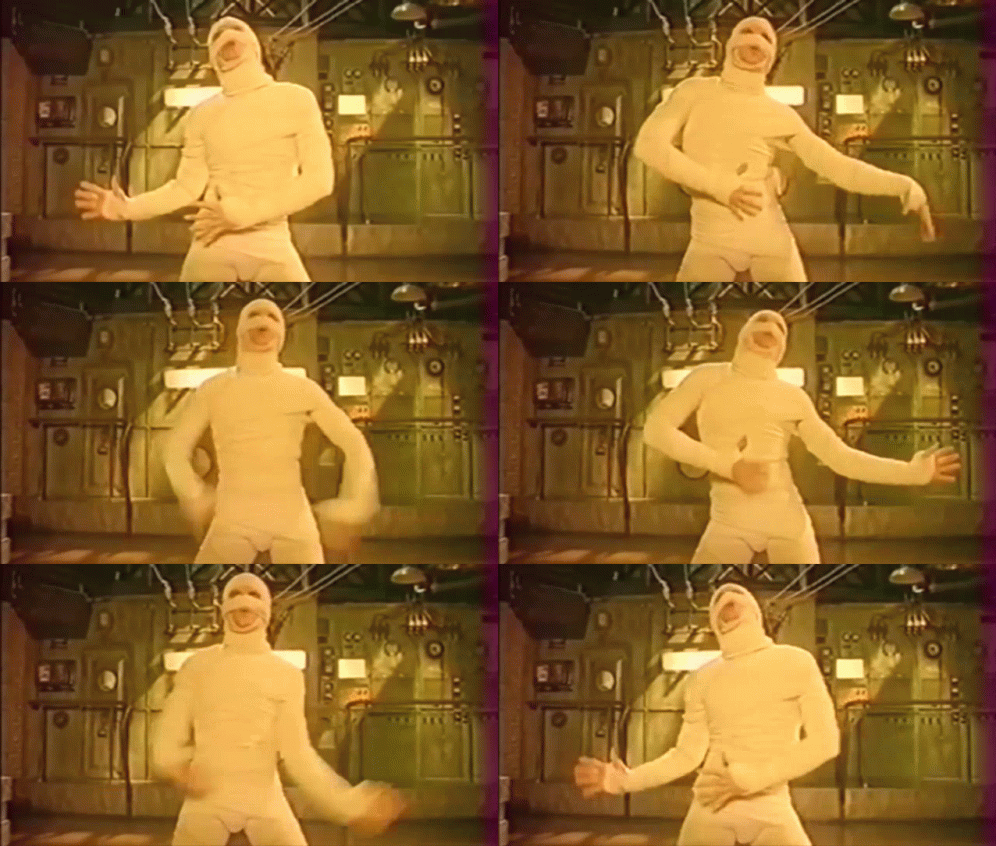
Q: Have you seen the mummy’s new ad campaign?
A: Of course not, it’s still under wraps.
Say what you will about Frankenstein’s skills as a marketer, but he really knew how to build an audience.
Before I hand out treats this Halloween, I’m going to pop out of the bushes and demand the kids confirm they will accept cookies.
I hired zombies to do my persona research. They really know how to get into other people’s heads.
I also hired the Invisible Man to help with our rebranding initiative. He’s really helping us nail authenticity and transparency.
Hey, social media marketers: The Necronomicon was the original Facebook.
I’m starting an ABM campaign targeted at The Hulk. They’re all Banner ads.
Q: Why is the abominable snowman so bad at sales?
A: He spends all his time making cold calls.
I’m writing a huge SEO piece about banshees. It’s a really high volume keyword.
Jason Voorhees may not be the most empathetic marketer, but he’s great with cutting edge technology.
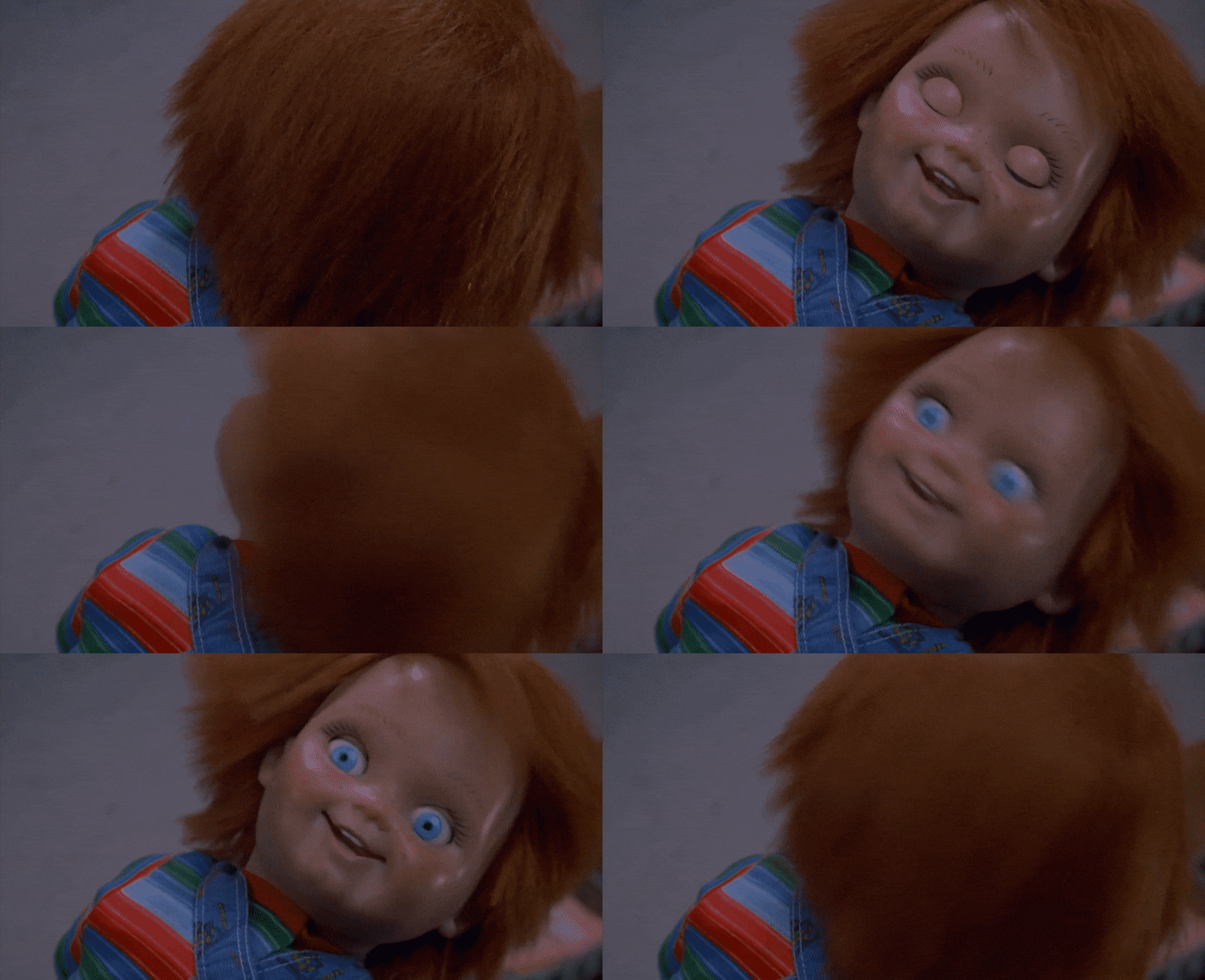
You say, “Creepy doll that can turn its head all the way around,” but I say, “Smart marketer with a 360-degree view of the customer journey.”
Q: Are poltergeists really that powerful as influencers?
A: Yeah, they’re real movers and shakers.
If your brand is targeting monster hunters, you should focus on Van Helsing: He’s the primary stakeholder.
Q: Why are alien body-snatchers such great LinkedIn marketers?
A: They know how to build lookalike audiences.
I rubbed a lamp the other day and a genie popped out! I wished for more qualified leads, but he said, “Sorry, I’m just a Demand Djinn.”
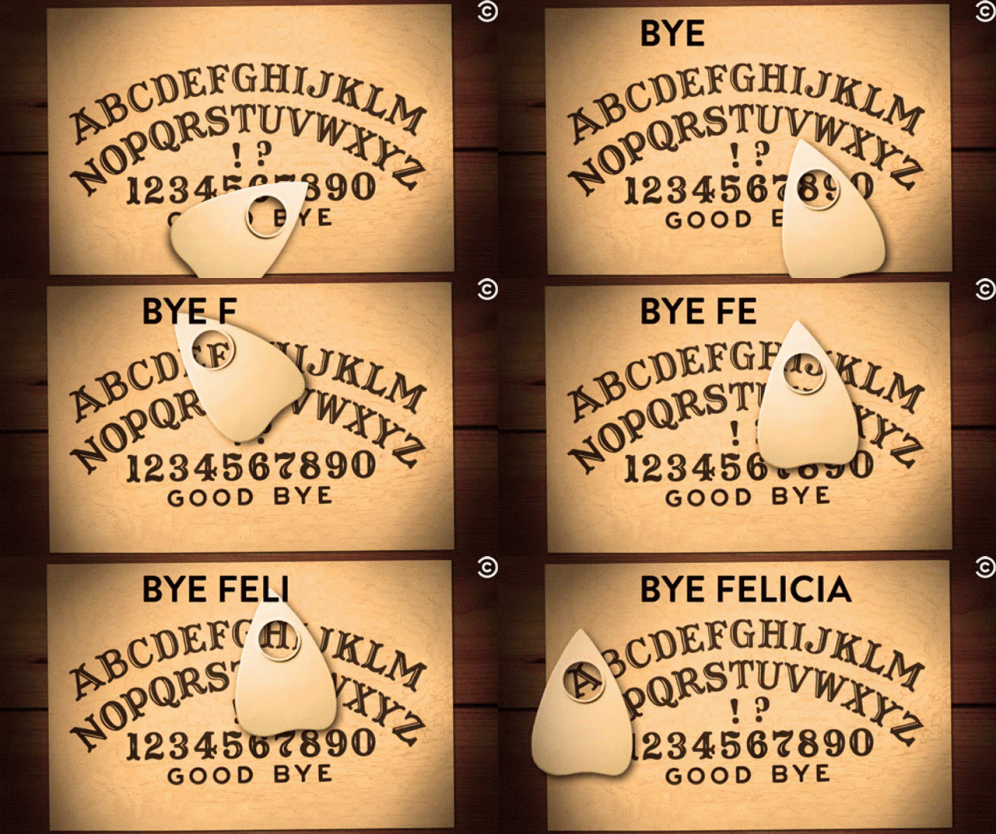
I added a Ouija board to my martech stack, but I’m not sure if it’s moving the needle.
B2B Doesn’t Have to Be Scary
It wouldn’t be hard to write a horror movie for modern B2B marketers. With the loss of third-party data, the decline of organic reach, and the move from open platforms to dark social, the potential for terror is high.
But any horror fan knows that you can survive and get to a happy ending if you don’t give up, make smart choices, and use every resource at your disposal. All jokes aside (finally!), we’re here to help. Start with some sage advice from Ann Handley in our first Elevate B2B podcast!
The post 20 Terrifying Marketing Jokes to Celebrate Spooky Season appeared first on B2B Marketing Blog – TopRank®.