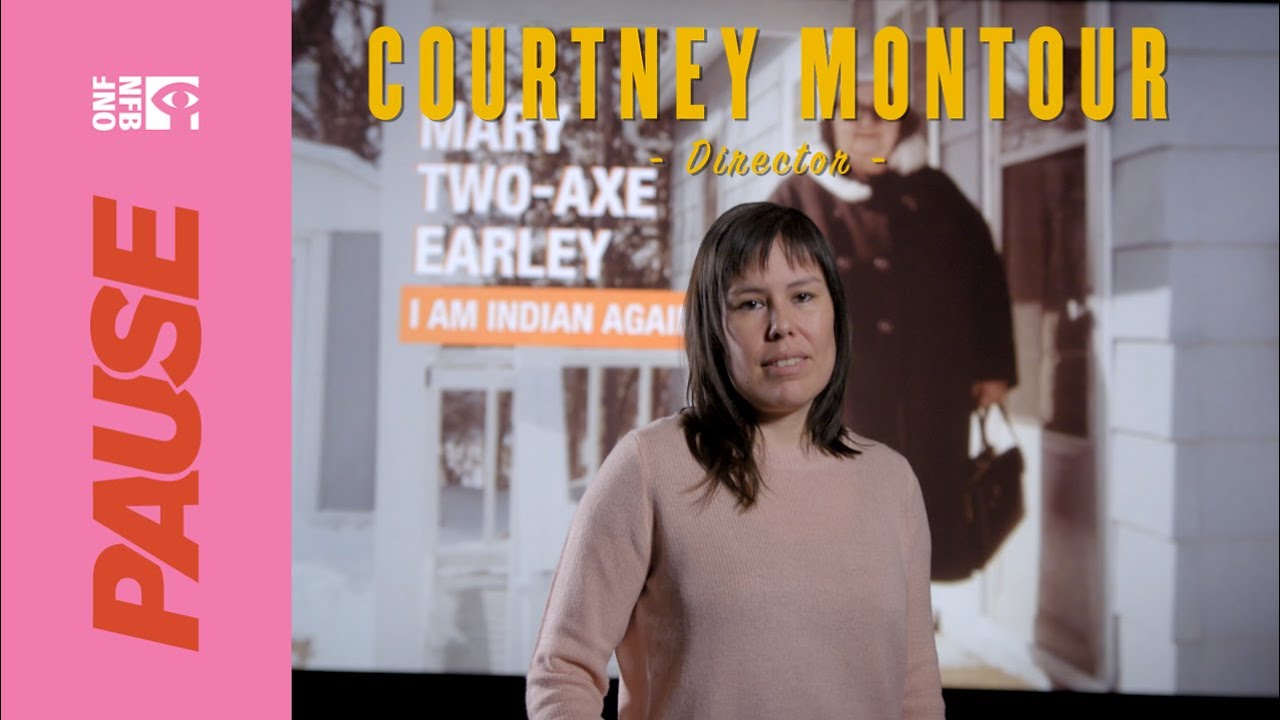
Editor’s note: This post is guest-written by Kanien’keháka (Mohawk) filmmaker Courtney Montour. She is the writer and director of “Mary Two-Axe Earley: I Am Indian Again.” Today, the Google Canada homepage Doodle honors Mary Two-Axe Earley, a Kanien’keháka (Mohawk) woman who fought for more than two decades to challenge sex discrimination against First Nations women embedded in Canada’s Indian Act. The Doodle was created by Kanien’keháka (Mohawk) guest artist Star Horn. This post has also been translated into Mohawk.
Mary Two-Axe Earley is a name I grew up always knowing. We are both Kanien’keháka (Mohawk) from Kahnà:wake, located across the river from Montreal, Quebec. I was a teenager when Mary passed away in 1996, too young to fully grasp the impact she had on people’s lives across Canada. I set out to make “Mary Two-Axe Earley: I Am Indian Again” to bring attention to a pivotal figure who is often overlooked in accounts of this country’s history.
Mary fought for more than two decades to challenge sex discrimination against First Nations women in Canada’s Indian Act and became a key figure in Canada’s women’s rights movement. The Indian Act of 1876 defines who is an “Indian” and who can belong to an “Indian band” (now referred to as First Nations). The federal government targeted First Nations women, stripping them of their Indian status (their recognition as an Indian) if they married a non-Indian man. These laws banned First Nations women and their children who lost their status from living in their communities, denying them access to critical social programs and voting rights in their community, and severing their ties to identity and culture. Thousands of First Nations women affected by this legislation are still waiting to be recognized by Canada.