Echo Buds (2ª gen.) con cavo USB-Ca: PREZZO SCONTATO del 48%, ACQUISTO obbligato
Termometro igrometro con Alexa: con 16€ hai il monitoraggio intelligente del clima domestico

RENTVOLUTION: la senatrice Elena Murelli e Silvia Spronelli discutono con gli stakeholder di normativa sugli affitti
 RENTVOLUTION: Al Senato la Senatrice Elena Murelli e Silvia Spronelli per discutere con gli stakeholder di normativa sugli affittiL’incontro nel cuore delle istituzioni per trovare risposte alla carenza di alloggi in…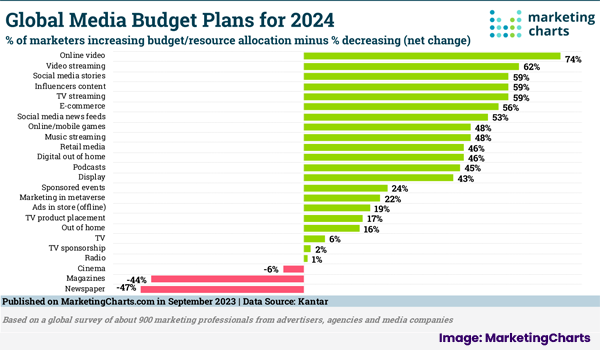
5 Winning Ways To Personalize Content With B2B Influencer Marketing
How can B2B brands bring greater personalization to content experiences, and why is personalized content more important than ever?
Personalization has increasingly become one of the most successful methods for creating content that B2B audiences want to engage with, and when context experiences are delivered by industry subject matter experts — or influencers and creators, if you prefer — personal connections occur and more often than not they help drive results.
59 percent of marketing professionals have said that they plan to increase their budget and resource allocation for influencer-created content in 2024, behind only online video and video streaming on the list of media channels expected to grow the most next year, while 59 percent expect greater spending for social media stories, according to newly-published Kantar report data, as we covered in a recent edition of our Elevate B2B Marketing Friday News.

An additional recent survey from Ogilvy paints an even brighter future for B2B influencer marketing, revealing that 75 percent of B2B marketers are investing in influencer marketing, with 93 percent planning to use B2B influencers even more in the coming year.
Influencer marketing spending is also expected to grow by 14 percent this year, while spending on influencer-sponsored social media content in the U.S. is expected to expand some 3.5 times faster than traditional social media advertising spending, according to recently-published forecast data.
Additionally, eight out of ten social media marketers recently indicated that they view influencer marketing as an essential strategy component, with 70 percent having received the most impact from macro-influencers who have between 100,000 and one million followers, while 52 percent of brands noted using a dedicated influencer marketing platform — three of numerous statistics of interest to B2B marketers contained in recently-published Sprout Social influencer marketing report findings.
Let’s take a look at the special power of B2B influencer marketing when it comes to building more personalized interactions both online and in person.
1 — Tap Industry Experts
A fundamental element of B2B influencer marketing is finding and working with the most relevant industry experts in a brand’s particular industry.
B2B brands have increasingly turned to influencer marketing, and a primary reason why has been the ability of expert industry influencers to help promote content that gives audiences the best answers to their most pressing challenges.
With influencer marketing, B2B brands can not only deliver relevant best-answer content, but do so through social media interactions that build trust and instill confidence.
As we explored recently in “B2B Content Revolution: Why Personalization Matters for Engaging Your Audience,” personalization is a great way to create marketing that resonates with your most valuable B2B buyers.
“The more you know about your audience, the more you can tailor content to them based on facts, not just speculation.” — Joshua Nite @NiteWrites
Click To Tweet
Finding the right B2B influencers is key, and brands that rely primarily or even exclusively on an influencer’s overall follower counts instead of their genuine topical industry relevance are likely to miss out on the hefty benefits of B2B influencer marketing.
Taking the time to find and vet influencers to find just the right ones pays off for B2B brands, and an ideal process often includes both the use of discovery tools and the right kind of human touch to develop a well-researched list of potential influencers.
Automated tools for finding potential influencers can only take you so far, and the real work begins by making the effort to go the extra mile with additional research.
By utilizing relevant industry experts, B2B brands are better equipped to deliver the type of personalized content experiences that B2B consumers desire.
During the second quarter of 2023, marketing research on content personalization increased by 522 percent, with research surrounding real-time personalization up 185 percent, according to newly-published study data.
2 — Harness Content Co-Creation
Brands that publish content without B2B influencers can find themselves at a significant disadvantage right from the start when competing with those that regularly co-create content using industry subject matter experts.
Co-created content melds brand initiatives with one or many B2B influencers, who help deliver it in relevant online communities both with their existing audiences and to the brand’s followers.
B2B consumer expectations have risen, especially when it comes to the desire to personalized content experiences. The fastest-growing expectation among B2B professionals for the next three years was for personalized experiences, according to recent research.

Content co-creation excels at delivering personalized content experiences, while also helping to build reach and boost engagement, as we explore in more detail in “How to Accelerate Reach and Engagement of B2B Content Through Co-Creation.”
“Co-created content drives greater reach and engagement without needing to rely on paid boosting.” — Nick Nelson @NickNelsonMN
Click To Tweet
3 — Get Personal With Events
Industry events are inherently one of the best channels for making and growing personal connections, and when it comes to B2B influencer marketing they are certainly a prime ingredient.
B2B brands can see industry influencers in-person or at hybrid events and learn firsthand how they deliver keynotes, sessions presentations, and how they interact with their audiences both in the session rooms and afterwards in conference hallways and during post-session gatherings.
B2B influencers can help take some of the magic that happens during in-person events and keep it alive and thriving throughout the rest of the year.
There are more events to choose and learn from, and we covered more than 50 of them in our look at “50+ Top 2023 B2B Marketing Events To Learn From.”
Marketing conferences truly offer a bounty of benefits to marketers looking for the latest learning, new networking opportunities, and recent industry research and insight to help increase brand awareness, and they should not be overlooked as a way to bring more personalization to your B2B marketing efforts.
4 — Use Social Personalization
B2B influencers are often finely tuned in to which social channels are best for specific types of content — and know how each channel works when it comes to personalizing brand messages or co-created content.
Social channels are not only good for publishing personalized content, but can serve as a powerful way to gain insight into the challenges audiences face. Social listening helps B2B influencers personalize content when they are able to take the time to step back and learn the particular pain points an audience has.
“Social listening helps B2B influencers personalize content when they are able to take the time to step back and learn the particular pain points an audience has.” — Lane R. Ellis @lanerellis
Click To Tweet
Knowing these pain points, B2B influencers can present brand content that directly helps solve an audience’s challenges — oftentimes delivered in a personalized way.
It’s often smaller specialist social communities that can deliver the biggest benefits to B2B brands, as micro-communities naturally form in the highly specialized areas where B2B influencer marketing is especially well-suited to thrive and grow. We took a closer look at utilizing these smaller online communities in “How Small Online Communities Are Delivering Big Brand Results With B2B Influencer Marketing.”
5 — Utilize AI & Other Relevant Tools
Generative AI tools have exploded in usage throughout nearly every industry from top to bottom, yet the jury is still out as to whether this revolution has helped provide content that is more personalized, or just more automated.
Indeed some have viewed AI as inherently impersonal, however when wielded carefully, the rapidly growing number of these tools can certainly have a place in crafting best-answer content.
Whether it’s finding potential B2B influencers, gathering and analyzing data on how their content performs, or ideation for unique storytelling experiences, when used wisely AI can help B2B marketers with efforts in numerous areas.
We recently took a look at “Infographic: 30+ Top Generative AI Tools For B2B Marketers,” and have also published a more comprehensive list of more than 100 AI tools in our “BIGLIST: 100+ Generative AI Tools For B2B Marketers.”
The risk with using AI is focusing too much on the artificial and not enough on the relevant intelligence needed to shape the technology with the human touch.
When the right balance is achieved, AI can be a welcome addition to personalized B2B content delivered through relevant influencers and creators.
Harmonize Personalization With B2B Influencer Marketing Partnerships
By tapping industry experts, harnessing content co-creation, getting personal with events and social, and by using generative AI and other relevant tools, B2B marketers can use personalization to elevate their content experiences to new levels.
We hope this brief look into the world of personalizing with B2B influencer marketing will be helpful with your own efforts as we make the push towards 2024 and beyond.
If you’re looking for help with your marketing, contact us and find out why major brands such as LinkedIn, Adobe, Dell, 3M, and others have for more than 22 years turned to TopRank Marketing.
The post 5 Winning Ways To Personalize Content With B2B Influencer Marketing appeared first on B2B Marketing Blog – TopRank®.
Kingston Canvas Select Plus da 128GB con adattatore: solo 10€ su Amazon
Sky rinnova l’offerta: puoi avere anche Netflix a 19€ al mese
Sky conferma l’offerta: puoi avere il pacchetto Intrattenimento Plus a 19 euro al mese e hai anche Netflix.
Leggi Sky rinnova l’offerta: puoi avere anche Netflix a 19€ al mese
OFFERTISSIMA! Presa di corrente multipla 6 in 1 a META’ PREZZO!
Presa filtrata multipla di Belkin 6 in 1: in offerta su Amazon da oggi a soli 15,99€, con sconto del 47% sul totale!
Leggi OFFERTISSIMA! Presa di corrente multipla 6 in 1 a META’ PREZZO!
StackOverflow licenzia 1/3 dei dipendenti. Colpa delle AI?
StackOverflow ha deciso di licenziare il 28% dei propri lavoratori. La piattaforma soffrirebbe della concorrenza delle AI
Leggi StackOverflow licenzia 1/3 dei dipendenti. Colpa delle AI?
1Password: il migliore password manager per la tua sicurezza
1Password permette di salvare tutte le tue chiavi di sicurezza, ma ti offre anche la possibilità di utilizzare le più sicure passkey.
Leggi 1Password: il migliore password manager per la tua sicurezza
Proteggi i tuoi file con pCloud e ottieni 10GB gratis
pCloud offre una moltitudine di soluzioni per soddisfare le tue esigenze, come il piano Premium Plus da 2 TB scontato e 10 GB in omaggio.
Chromebook HP 14a CROLLA di PREZZO a 219,99 euro su Amazon
Fino a ieri costava 349,99 euro: crollo di prezzo verticale per uno dei Chrombook dal miglior rapporto qualità-prezzo oggi disponibili.
Leggi Chromebook HP 14a CROLLA di PREZZO a 219,99 euro su Amazon
OFFERTISSIMA per la Stampante fotografica HP DeskJet 2710
stampante HP DeskJet 2710: da oggi in offerta su Amazon a soli 74,25€, con un DOPPIO SCONTO e risparmio totale di circa 45€!
Leggi OFFERTISSIMA per la Stampante fotografica HP DeskJet 2710
CyberGhost VPN offre piano di 2 anni a 2,11 euro e 3 mesi gratis
CyberGhost propone ai nuovi utenti sconto speciale dell’82% sul piano annuale e aggiunge altri tre mesi gratuiti.
Leggi CyberGhost VPN offre piano di 2 anni a 2,11 euro e 3 mesi gratis

Anteprima podcast RSI – Addio password, benvenuta passkey?
ALLERTA SPOILER: Questo è il testo di accompagnamento al podcast
Il Disinformatico della Radiotelevisione Svizzera che uscirà questo
venerdì presso
www.rsi.ch/ildisinformatico/.
—
[CLIP: rumore di tastiera vecchio stile con “beep” multiplo di errore di immissione]
Addio, rumorosa e frustrante digitazione di password complicate: Google,
Microsoft, Apple e molte altre aziende del settore informatico stanno
spingendo gli utenti ad abbandonare le password in favore delle
passkey, promettendo maggiore facilità d’uso e sicurezza. Questa
facilità e sicurezza, però, si conquistano solo dopo aver imparato cosa sono e
come funzionano queste passkey.
La transizione è inevitabile, per cui se volete conoscere questa novità,
capire perché è davvero necessaria e adottarla in maniera indolore, o almeno
in modo da ridurre il più possibile la scomodità, siete nel posto giusto;
state ascoltando la puntata del 20 ottobre 2023 del Disinformatico, il
podcast della Radiotelevisione Svizzera dedicato alle notizie e alle storie
strane dell’informatica, e dedicato in questo caso, appunto, alle passkey. Io
sono Paolo Attivissimo.
[SIGLA di apertura]
A partire dal 10 ottobre scorso, Google sta cominciando a
chiedere
agli utenti di passare dalle password alle passkey. Microsoft ha
incluso
il supporto alle passkey nell’aggiornamento di settembre di Windows 11, e
Apple lo
integra
già a partire da iOS 16 e macOS 13.
Nonostante l’assonanza, una passkey è molto differente da una password. La
password è una sequenza di caratteri che dobbiamo immettere per accedere
a un account o a un servizio. La passkey, invece, non si deve digitare: è un
codice custodito in parte sul nostro dispositivo e in parte sul server che
gestisce un servizio online. Le due parti sono protette dalla crittografia a
chiave pubblica, secondo uno standard aperto adottato da quasi tutte le
principali aziende informatiche.
Il vantaggio principale delle passkey è che per accedere a un’app o a un sito
non abbiamo più bisogno di digitare una password. Se accediamo usando uno
smartphone, è sufficiente sbloccarlo usando il nostro PIN o
l’impronta digitale o il riconoscimento facciale (o, per i più paranoici, un
cosiddetto token di sicurezza hardware). Se accediamo usando invece un
computer, è sufficiente avere il nostro smartphone nelle vicinanze del
computer: sul telefono comparirà una richiesta di sblocco, e se la accettiamo
il computer verrà autorizzato. Non ci servono più codici supplementari
ricevuti via SMS o generati da app separate per l’autenticazione a due
fattori.
L’altro vantaggio fondamentale è che le passkey resistono alle tecniche di
furto più diffuse, come il phishing o il keylogging. Nel phishing, la vittima
viene convinta con l’inganno a immettere la password in un sito che sembra
quello reale ma è in realtà una copia gestita dai truffatori; nel keylogging,
l’aggressore intercetta tutto quello che scriviamo con la tastiera e quindi
riceve anche la password. Ma se usiamo le passkey, non c’è più nulla di intercettabile.
Se un sito che usiamo viene attaccato, non è più possibile rubarne l’archivio
delle password, perché non c’è: al suo posto ci sono le passkey parziali, che
però sono inutilizzabili senza la parte di passkey che risiede sul nostro
dispositivo.
Le passkey eliminano anche uno dei pericoli più frequenti delle password:
dimenticarsela. Qui non c’è più nulla da dimenticare, perché è tutto
memorizzato nel nostro dispositivo. Di conseguenza, viene eliminato anche un
altro rischio ricorrente, ossia l’abitudine diffusissima di usare la stessa
password dappertutto, col risultato che se un aggressore scopre la password di
uno dei nostri account ha automaticamente le password di tutti gli altri. Con le
passkey, invece, ogni servizio ha automaticamente una credenziale differente.
Una volta tanto, insomma, siamo di fronte a un’innovazione tecnologica che ci
chiede di fare meno cose di prima in cambio di maggiore sicurezza. Ma
in pratica, come funziona?
Passkey in pratica: proteggere un account Google
Moltissimi utenti hanno un account Google, per
cui descrivere come si migra dalle password alle passkey per il proprio
account Google su un computer, tablet o smartphone è un buon esempio generale.
Per prima cosa entrate nel vostro account Google con un browser (per esempio
Chrome o Safari), dando la password come consueto. Nella sezione
Sicurezza troverete l’opzione Inizia a utilizzare le passkey.
Cliccando su Usa passkey verrà creata una passkey per il vostro account
Google. Tutto qui. Da quel momento in poi non avrete più bisogno di digitare la vostra
password di Google su quel dispositivo e sarà sufficiente usare il suo sistema
di sblocco, che può essere un PIN, un sensore di impronte digitali o una
telecamera con riconoscimento facciale.
Per chi ha uno smartphone Android, la passkey di Google normalmente è già
stata generata automaticamente e non occorre fare nulla.
Per gli iPhone, invece, è necessario prima attivare il Portachiavi di iCloud e
l’autenticazione a due fattori. Se non sono attivi, l’iPhone invita
automaticamente ad attivarli. Poi si va nell’account Google, sempre nella
sezione Sicurezza, e si clicca su Usa passkey.
La
procedura
per Windows 11 è
sostanzialmente la stessa, con la differenza che si può scegliere dove viene salvata la passkey: sul
computer stesso oppure su un altro dispositivo collegato. Se la si salva su un
altro dispositivo, per usare la passkey quel dispositivo dovrà essere fisicamente vicino
al computer. Se la si salva localmente, per usare la passkey bisognerà
digitare il PIN di accesso a Windows oppure usare il riconoscimento facciale o
l’impronta digitale.
Per chi usa Linux e ChromeOS, invece, il supporto alle passkey è normalmente
limitato
a quelle passkey salvate su un dispositivo esterno (per esempio un telefono o una chiave hardware).
Non vi preoccupate se vi perdete qualche passaggio di queste istruzioni effettivamente piuttosto complicate: le trovate descritte in dettaglio presso Disinformatico.info.
È importante ricordare che le passkey normalmente si affiancano alle
password e non le sostituiscono; diventano però il primo metodo di
autenticazione che viene proposto. Questo vuol dire che per ora è ancora
possibile accedere agli account protetti da passkey anche usando le password
di quegli account e di conseguenza, le password vanno ancora custodite con
attenzione e devono essere ancora robuste e differenti, ma non è più necessario
usarle.
L’altra questione importante da ricordare è che al momento molti siti non
supportano ancora le passkey. Fra quelli che le supportano ci sono per esempio
1Password,
Amazon,
Okta,
PayPal, Shopify, Kayak, iCloud,
eBay,
Uber, Adobe,
Nintendo,
TikTok
e
GitHub, ma a volte lo fanno solo in alcuni paesi [dopo la chiusura di questo podcast si è aggiunto anche WhatsApp su Android].
Non c’è comunque bisogno di rincorrere le notizie e gli aggiornamenti:
se un sito o un’app inizia a supportare le passkey, il vostro dispositivo ve lo segnalerà
automaticamente la prossima volta che vi accederete. In ogni caso, un elenco
aggiornato dei siti che adottano le passkey è disponibile presso
Passkeys.directory, mentre l’elenco
dei dispositivi e browser supportati è presso il sito
Passkeys.dev.
Le paure più frequenti
Le passkey sono un concetto nuovo, a differenza delle password, per cui è
comprensibile che ci sia una certa riluttanza mista a diffidenza e che
circolino molte preoccupazioni. Per esempio, si teme che se si perde il
dispositivo sul quale risiede una passkey di un account diventi impossibile
accedere a quell’account, ma in realtà si può continuare ad accedervi tramite
la tradizionale password, almeno per ora, e si possono sempre usare i codici
di recupero d’emergenza che ogni utente prudente dovrebbe aver salvato.
Un’altra ansia frequente è che se un aggressore si impossessa di uno
smartphone sul quale risiedono delle passkey e quello smartphone è stato
sbloccato dall’utente, l’aggressore avrà così accesso diretto agli account gestiti
dalle passkey. Ma non è così, perché se ci proverà gli verrà chiesto di nuovo
di far leggere l’impronta digitale o eseguire il riconoscimento facciale o
immettere il PIN.
Alcuni utenti giustamente sensibili alla privacy sono contrari alle passkey
perché richiedono di fornire un’impronta digitale o una scansione del proprio
volto al gestore del servizio di passkey. Ma in realtà questi dati biometrici
non lasciano mai il dispositivo dell’utente, e se si usa già il sensore
d’impronte o la telecamera per sbloccare il telefono tanto vale usarlo anche
per le passkey. In ogni caso, se non si vogliono fornire al dispositivo né
impronte né immagini del proprio volto, ci si può sempre autenticare usando la
password di sblocco del dispositivo, che vale anche per le passkey.
Altri utenti non si fidano di Apple, Microsoft o Google e quindi non vogliono
che la parte segreta della passkey, quella che risiede sul dispositivo
dell’utente, venga trasmessa a queste aziende quando si fa la sincronizzazione
dei dati o quando si copia una passkey da un dispositivo a un altro. Anche
questa preoccupazione, però, è infondata, perché in realtà la parte segreta
della passkey non viene mai trasmessa in forma utilizzabile da terzi, perché è
crittografata end-to-end, e anche se queste aziende o altre
organizzazioni fossero capaci di superare questa crittografia non potrebbero
usare le passkey senza essere fisicamente vicine al dispositivo dell’utente.
Insomma, le passkey sono una tecnologia nascente ma robusta e pensata bene per
le esigenze degli utenti comuni, che comprensibilmente vogliono un sistema di
autenticazione semplice da usare ma resistente agli attacchi. Ed è chiaro,
dalle storie quotidiane di password perse, dimenticate o rubate e di account
violati o irrecuperabili, che il sistema tradizionale scricchiola da tempo
sotto il peso della sua complessità eccessiva. Vale quindi la pena di provare ad
abituarsi adesso alla comodità di autenticarsi semplicemente appoggiando un
dito su un sensore. È sicuramente meglio che avere la stessa password
dappertutto e avere come password il nome seguito dall’anno di nascita.
Non lo fa più nessuno, vero? Vero?
Fonti aggiuntive:
TechCrunch, Google,
Ars Technica.