Group effort: How we helped launch an NYC vaccine site
In March 2021, Google initiated a considerable project: helping to distribute COVID-19 vaccines to New Yorkers in the Chelsea neighborhood of Manhattan.
Google’s New York City office is located in Chelsea, and the neighborhood is also the home to two New York City Housing Authority (NYCHA) developments, the Fulton Houses and the Elliott-Chelsea Houses. The city had identified NYCHA residents as hard-to-reach populations for vaccines — so to help, Google provided a total of more than $1 million in resources to the city to support more vaccine education and to Hudson Guild toward the creation of a local vaccination center.
“Google recognizes that equitable population vaccination is a complex problem to solve,” says Dr. Karen DeSalvo, Google’s chief health officer, “and we’re committed to doing our part.” That commitment led us to partnering with the Hudson Guild, a local nonprofit founded in 1895. Hudson Guild, which Google has worked with as a community partner for more than a decade, is a settlement house that serves 14,000 New Yorkers every year, mostly members of the Chelsea community. The nonprofit has a special relationship with local residents, and organizers and volunteers have taken their grassroots, one-on-one approach to make sure residents have the information and support they need to get vaccinated.
“The reputation you have in the community means everything. Residents who were very hesitant to get the vaccines eventually came around because we took the time to explain the science, give them reliable information and build trust,” says LeeAnn Scaduto, Hudson Guild’s chief operating officer.
From left to right: Googlers Connie Choi, David Goodman, Dale Allsopp, Duncan Wood, Hudson Guild’s Daisy Mendoza, Googlers Wenjie Sun and Thomas Coleman
“We’ve been able to be a consistent force in the neighborhood,” says Daisy Mendoza, director of community building for Hudson Guild. She says the team has walked the streets of the communities daily, knocked on doors, made phone calls and even stopped by local businesses to encourage owners and workers to get vaccinated. “The residents see us everyday and know we care about them,” Daisy says.
Googlers got involved in this grassroots effort, too — knocking on doors, helping in the registration efforts and serving as translators to help the vaccination site get up and running. “Many people were still isolating at that time,” says Stavroula Maliarou, a program manager at Google who helped organize the volunteer efforts. “There was a fear of being close to people who could potentially be sick. But so many Googlers showed up to help in any way they could. We know this community — and we knew they needed our help, especially at that moment.”
Of course, there were challenges. The Hudson Guild organizers said they’ve had to combat vaccine hesitancy and residents’ lack of access to technology. But they’ve overcome these obstacles thanks to relying on community volunteers and Hudson Guild staff to share information in plain language, dispel misinformation and make the vaccination process as simple as possible for recipients.
Since April 7, 2021, Hudson Guild’s Fulton Vaccine Hub, funded in part by Google, has helped vaccinate 21,250 people, 1,700 of whom are NYCHA residents. The vaccination site has been so successful it was initially extended to October 2021, and then extended indefinitely to continue bringing vaccines and boosters to the local neighborhood.
“Without Google’s help, this isn’t something we would have been able to do — this isn’t our area of expertise,” LeeAnn says. “Google gave us the opportunity to be part of the solution in a really meaningful way for our community. This allowed us to really find a solution that worked.”
If you’re interested in learning more about Hudson Guild and helping those who live, work or go to school in Chelsea and the west side of New York City, with a focus on those in need, visit hudsonguild.org.
<div>Create a work of heart on Valentine’s Day with Google</div>
Every February, I tell myself I’m going to make homemade Valentine’s Day cards for my family and friends…and every February 13, I realize I’m nearly out of time. Add the fact that these days it’s ultimately easier to deliver digital gifts, and I’m ready to give up on the whole thing.
This year I’ve come up with a few new ideas, courtesy of apps and tools from Google. They might be made for the office or school, but there are some truly impressive ways you can use these apps for your creative endeavors. Here are five ways you can make Valentines with Google products.
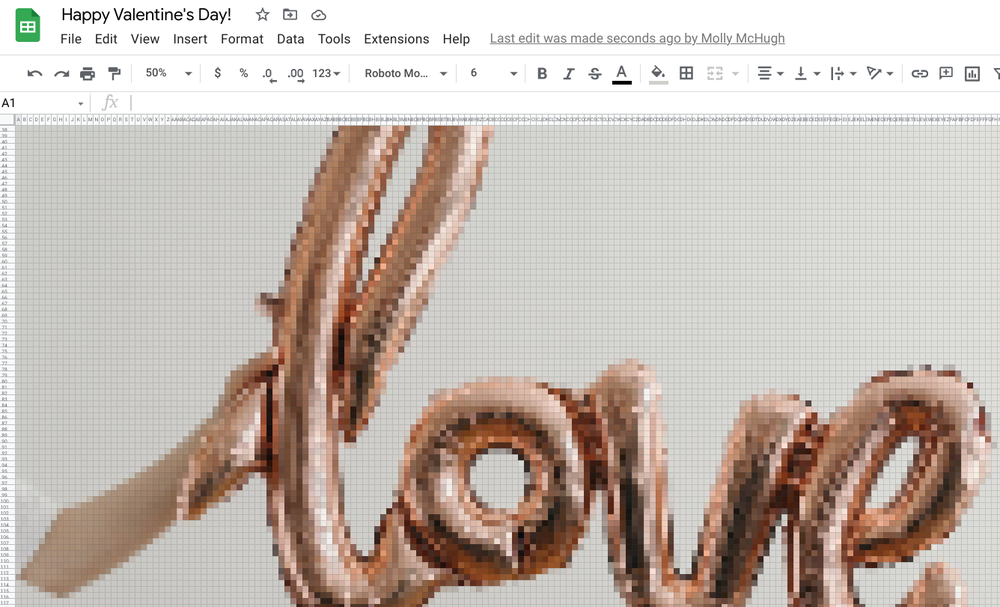
- Use Google Sheets to make some lovely pixel art (emphasis on love). You might think of invoices and project tracking when you think of Google Sheets, but it can also be a pixel art palette. These can be as simple or as complex as you want — do it yourself by selecting and coloring in Sheets cells to make an image, or search the Google Workspace Marketplace by hitting the right-hand sidebar and selecting “add ons.” (If words are more your thing, you could even try making a cute crossword puzzle.)
2. Create a digital card with Google Slides. This is an especially useful option if you aren’t able to see someone on Valentine’s Day. Make a digital slideshow full of photos, videos and notes; then you can either send the file or publish it to the web.
3. Set up a shared library with Google Photos. Use partner sharing in Google Photos to create a shared library of photos and videos for you and your better half. You can choose if you want to share all your photos or just shots of specific loved ones or pets, as well as the date you want to start sharing and Google Photos will automatically take care of the rest.
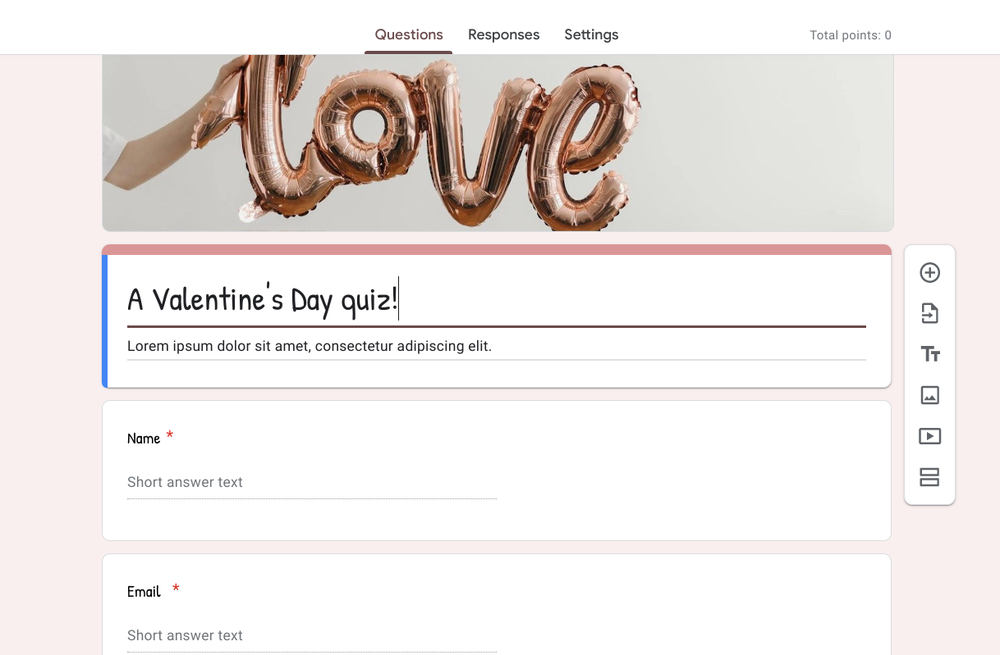
4. Send a fun Google Form to your partner. More than a couple of Google Forms used for dating purposes have gone viral, and you can put your own spin on one for the big day. Be sure to check out the Template gallery to find a look you like, or add your own images and choose a different font to make your form stand out.
5. Reminisce on romantic trips with Google Maps. Feeling nostalgic? Take a walk down memory lane with the Trips tab in Timeline to see all of the places — from beaches to cute cafes – that you visited on your last vacay.
6. Get some material from Google Assistant. Ask Google Assistant how to say “I love you” in another language, or ask for a Valentine’s Day joke or a “fact about love” to impress someone.
Or maybe you’re more interested in watching a few rom-coms on February 14. According to Google Trends, the most-searched types of romantic movies in the U.S. since 2004 are:
- Teen romance movies
- Black romance movies
- Romance comedy movies
- Sad romance movies
- Christmas romance movies
You could take some inspiration from a few of Google Search’s trending Valentine’s Day terms from the past week — like “chick fil a valentines day tray” (+1,650%), “valentine lovebirds lego” (+600%) or “valentines crocs” (+400%). A few more breakout terms from the past month include: “valentines converse,” “starbucks valentines 2022,” “valentines coloring pages” and “nike valentines day shoes 2022.”
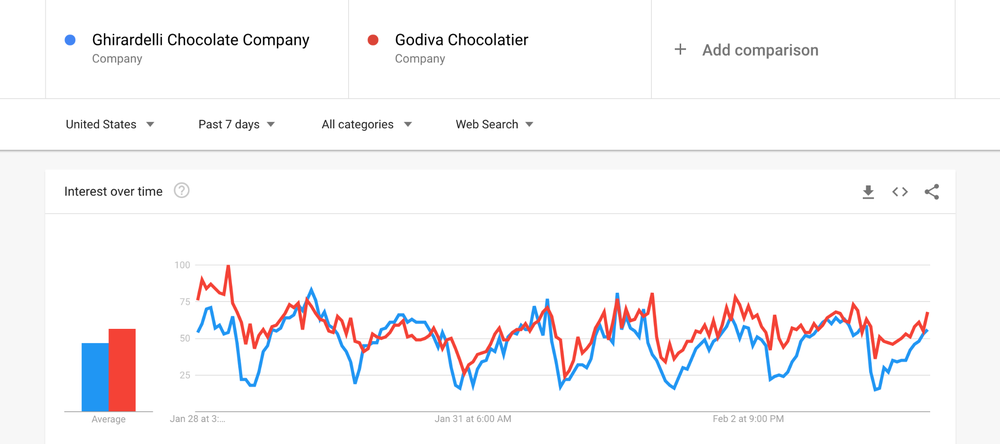
And if you’re still not quite sure how to celebrate, there’s one fail-safe option: chocolate. According to Google Trends, Godiva just barely took the lead over Ghiradelli in search interest in the U.S. this past week.
Also in the U.S., Google Maps searches for flower shops spike nearly 120% leading up to February 14. And if you’re thinking about celebrating with a date night…maybe start planning early: In the U.S., February 13 marks the day people most use Google Maps to search for “romantic restaurants.”
Celebrating Black women founders working in STEM
As a woman fintech founder in London in the early 2010s, I felt like an anomaly: The intersection of science, tech and finance didn’t necessarily attract the most gender-diverse talent. Ten years later, there’s still work to be done. As a well-educated white woman — albeit an immigrant — I shouldn’t stand out in the tech industry, but still only2.3% of all global venture capital goes to women-led companies.
Change won’t be meaningful if it doesn’t impact all women. Women of color are among the most talented founders I’ve met, and yet data shows they are disproportionately disadvantaged when it comes to securing investors and support. By creating opportunities for everyone, initiatives like the Google for Startups Black Founders Fund are closing the tech and science equality gap.
ThisInternational Day of Women and Girls in Science, meet six women Black Founders Fund recipients from around the world who are paving the way in STEM and the startup ecosystem.
The Google for Startups Black Founders Fund provides cash awards — without giving up equity in return — and hands-on support to help Black entrepreneurs build and grow their businesses. Learn more about the 200+ recipients from around the world.
<div>B2B Marketing News: Top B2B Social Networks, Marketing Trust Drivers Study, Twitter’s Article Plans, & How B2B Communication Is Changing</div>
Traditional B2B Sales and Marketing Are Becoming Obsolete
Some 43 percent of B2B buyers have said that they would like a buying experience without a sales representative, with higher rates among Millennials, and The Harvard Business Review examines the rise of all-digital B2B buying and takes a look at some of today’s out-of-sync interaction preferences. Harvard Business Review
4 Ways the Pandemic Changed B2B Communication (From A Nationally-Representative Survey)
53 percent of Millennial professionals have said they prefer email communication over conversations, while 54 percent felt that email could cause miscommunication — two of several findings of interest to B2B marketers contained in newly-released B2B communication survey data. Sales Hacker
What Drives Trust in Businesses and Institutions?
The technology industry leads as the most trustworthy global industry, while social media is among the least trusted, according to recently-released survey data. Reliability, transparency, responsible behavior, and shared values were also seen as the top drivers of trust in organizations. MarketingCharts
LinkedIn Launches New Updates for Sales Navigator, Including Improved Opportunity Discovery Options
Microsoft-owned LinkedIn has rolled out a refreshed customizable homepage, new search and filtering options, and other lead and trend data tools, in the latest update to its Sales Navigator offering, LinkedIn (client) recently announced. Social Media Today
Bing’s New PubHub Offers Millions Of New Site Visitors
Microsoft has expanded its Bing Webmaster Tools to include a new PubHub content publishing feature, offering potential new audiences for marketing content for digital publishers who meet requirements to take part in the new Bing Publisher Network, Microsoft recently announced. Search Engine Journal
Twitter Tests New ‘Articles’ Option, Potentially Enabling Long-Form Posts in the App
Twitter has tested new article-length posts that go well beyond the social platform’s traditional short-form text limits, a change that could alter both the character and character count of the platform, and provide B2B marketers with new options for publishing long-form content. Social Media Today
Mobile, Social, Digital Video Are Top Advertising Priorities For 2022
76 percent of digital experts have said that mobile ads will be a top priority in 2022, with 61 percent pointing to digital video, 56 percent desktop environments, and 48 percent podcast and audio — four of numerous findings of interest to online marketers contained in newly-released survey data. MediaPost
IAB warns of ‘measurement blackout’ as marketer priorities remain misaligned
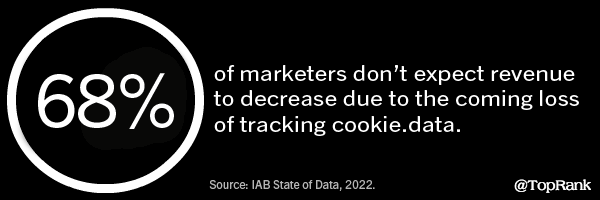
Marketers doubled down on spending for third-party audience data, as 2021 saw an 8.1 percent increase that was double that seen in 2020, as digital marketers have made adjustments to combat the forthcoming loss of user cookie data, according to recently-released Interactive Advertising Bureau (IAB) survey data. Marketing Dive
Amazon Ad Business Reaches $31B, Solidifies Position In Digital’s Big 3
Advertising revenue at Amazon grew by 32 percent to reach $9.7 billion during the final quarter of 2021, with annual ad revenue at the firm expanding to $31 billion, even as advertising accounted for just seven percent of the firm’s total fourth quarter revenue, Amazon recently announced. MediaPost
The Top Social Networks With B2B Marketers
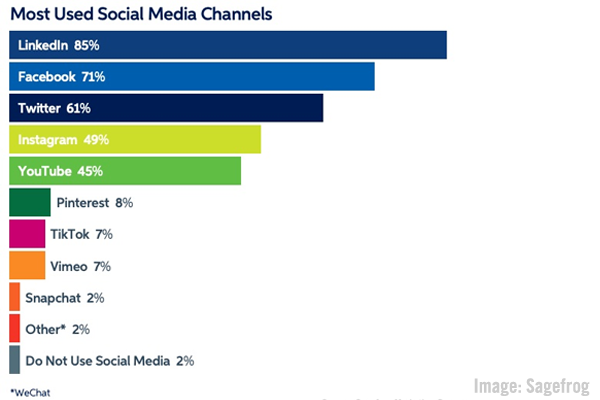
85 percent of B2B marketers have said that LinkedIn is their most used social media platform, followed by Facebook at 71 percent, Twitter at 61 percent, and Instagram at 49 percent — four of several statistics of interest to digital marketers contained in recently-released survey data. MarketingProfs
ON THE LIGHTER SIDE:
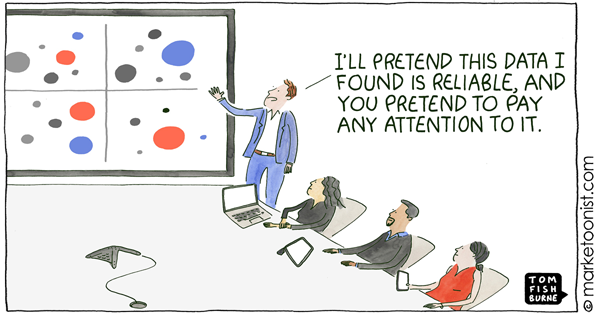
A lighthearted look at the “data-driven decision making” by Marketoonist Tom Fishburne — Marketoonist
Tell Us Now: 16 Discontinued Candies We Miss — Cracked
TOPRANK MARKETING & CLIENTS IN THE NEWS:
- Lee Odden — 152 Marketing Quotes To Inspire Your Next Great Campaign — CopyPress
- LinkedIn — LinkedIn Shares Insights into Platform Usage and Audience in New Guide for Wealth Planning Marketers — Social Media Today
- TopRank Marketing — Chief Marketer Unveils the 2022 CM200 Top Marketing Agencies of 2022 — Chief Marketer
Have you found your own favorite B2B marketing news for the week? Please don’t hesitate to drop us a line in the comments below.
Thank you for taking the time to join us for this week’s TopRank Marketing B2B marketing news, and we hope that you will return again next Friday for another round of the most relevant B2B and digital marketing industry news. In the meantime, you can follow us on our LinkedIn page, or at @toprank on Twitter for even more timely daily news.
The post B2B Marketing News: Top B2B Social Networks, Marketing Trust Drivers Study, Twitter’s Article Plans, & How B2B Communication Is Changing appeared first on B2B Marketing Blog – TopRank®.
<div>B2B Marketing News: Top B2B Social Networks, Marketing Trust Drivers Study, Twitter’s Article Plans, & How B2B Communication Is Changing</div>
Traditional B2B Sales and Marketing Are Becoming Obsolete
Some 43 percent of B2B buyers have said that they would like a buying experience without a sales representative, with higher rates among Millennials, and The Harvard Business Review examines the rise of all-digital B2B buying and takes a look at some of today’s out-of-sync interaction preferences. Harvard Business Review
4 Ways the Pandemic Changed B2B Communication (From A Nationally-Representative Survey)
53 percent of Millennial professionals have said they prefer email communication over conversations, while 54 percent felt that email could cause miscommunication — two of several findings of interest to B2B marketers contained in newly-released B2B communication survey data. Sales Hacker
What Drives Trust in Businesses and Institutions?
The technology industry leads as the most trustworthy global industry, while social media is among the least trusted, according to recently-released survey data. Reliability, transparency, responsible behavior, and shared values were also seen as the top drivers of trust in organizations. MarketingCharts
LinkedIn Launches New Updates for Sales Navigator, Including Improved Opportunity Discovery Options
Microsoft-owned LinkedIn has rolled out a refreshed customizable homepage, new search and filtering options, and other lead and trend data tools, in the latest update to its Sales Navigator offering, LinkedIn (client) recently announced. Social Media Today
Bing’s New PubHub Offers Millions Of New Site Visitors
Microsoft has expanded its Bing Webmaster Tools to include a new PubHub content publishing feature, offering potential new audiences for marketing content for digital publishers who meet requirements to take part in the new Bing Publisher Network, Microsoft recently announced. Search Engine Journal
Twitter Tests New ‘Articles’ Option, Potentially Enabling Long-Form Posts in the App
Twitter has tested new article-length posts that go well beyond the social platform’s traditional short-form text limits, a change that could alter both the character and character count of the platform, and provide B2B marketers with new options for publishing long-form content. Social Media Today
Mobile, Social, Digital Video Are Top Advertising Priorities For 2022
76 percent of digital experts have said that mobile ads will be a top priority in 2022, with 61 percent pointing to digital video, 56 percent desktop environments, and 48 percent podcast and audio — four of numerous findings of interest to online marketers contained in newly-released survey data. MediaPost
IAB warns of ‘measurement blackout’ as marketer priorities remain misaligned
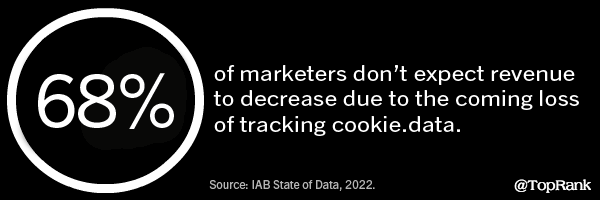
Marketers doubled down on spending for third-party audience data, as 2021 saw an 8.1 percent increase that was double that seen in 2020, as digital marketers have made adjustments to combat the forthcoming loss of user cookie data, according to recently-released Interactive Advertising Bureau (IAB) survey data. Marketing Dive
Amazon Ad Business Reaches $31B, Solidifies Position In Digital’s Big 3
Advertising revenue at Amazon grew by 32 percent to reach $9.7 billion during the final quarter of 2021, with annual ad revenue at the firm expanding to $31 billion, even as advertising accounted for just seven percent of the firm’s total fourth quarter revenue, Amazon recently announced. MediaPost
The Top Social Networks With B2B Marketers
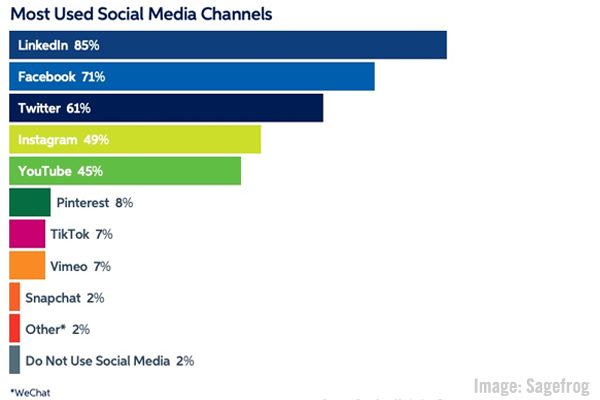
85 percent of B2B marketers have said that LinkedIn is their most used social media platform, followed by Facebook at 71 percent, Twitter at 61 percent, and Instagram at 49 percent — four of several statistics of interest to digital marketers contained in recently-released survey data. MarketingProfs
ON THE LIGHTER SIDE:
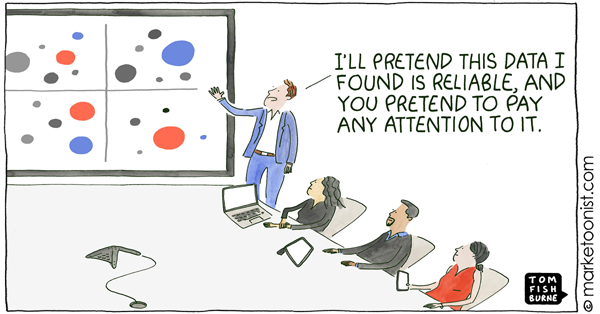
A lighthearted look at the “data-driven decision making” by Marketoonist Tom Fishburne — Marketoonist
Tell Us Now: 16 Discontinued Candies We Miss — Cracked
TOPRANK MARKETING & CLIENTS IN THE NEWS:
- Lee Odden — 152 Marketing Quotes To Inspire Your Next Great Campaign — CopyPress
- LinkedIn — LinkedIn Shares Insights into Platform Usage and Audience in New Guide for Wealth Planning Marketers — Social Media Today
- TopRank Marketing — Chief Marketer Unveils the 2022 CM200 Top Marketing Agencies of 2022 — Chief Marketer
Have you found your own favorite B2B marketing news for the week? Please don’t hesitate to drop us a line in the comments below.
Thank you for taking the time to join us for this week’s TopRank Marketing B2B marketing news, and we hope that you will return again next Friday for another round of the most relevant B2B and digital marketing industry news. In the meantime, you can follow us on our LinkedIn page, or at @toprank on Twitter for even more timely daily news.
The post B2B Marketing News: Top B2B Social Networks, Marketing Trust Drivers Study, Twitter’s Article Plans, & How B2B Communication Is Changing appeared first on B2B Marketing Blog – TopRank®.

L’AZIENDA EDTECH PREMIA GLI INSEGNANTI DI LINGUA CON NFT, MENTRE CRYPTO INFLUENZA LE INIZIATIVE PER L’APPRENDIMENTO ONLINE
Preply ha coniato 3 NFT su Opensea e li ha usati per premiare i migliori insegnanti nella loro piattaforma Degli oltre 40.000 insegnanti registrati nella piattaforma linguistica online Preply, l’azienda…
L’articolo L’AZIENDA EDTECH PREMIA GLI INSEGNANTI DI LINGUA CON NFT, MENTRE CRYPTO INFLUENZA LE INIZIATIVE PER L’APPRENDIMENTO ONLINE scritto da YOUR_DIGITAL_VOICE! proviene da Assodigitale.

FRITZ!Box 4060 AX con porta WAN da 2,5 Gbps: come funziona una rete ad alte prestazioni

Podcast RSI – Disinformatico Story: I dilemmi delle auto autonome. Un racconto breve
Ultimo aggiornamento: 2022/02/13.
È disponibile subito il podcast di oggi de Il Disinformatico della Radiotelevisione Svizzera, scritto, montato e condotto dal sottoscritto: lo trovate presso www.rsi.ch/ildisinformatico (link diretto) e qui sotto.
I podcast del Disinformatico sono ascoltabili anche tramite feed RSS, iTunes, Google Podcasts e Spotify.
Buon ascolto, e se vi interessano il testo e i link alle fonti di questa puntata, scritta in un formato sperimentale un po’ insolito, sono qui sotto (con alcune lievi modifiche ispirate dai commenti dei lettori). Sono curioso di sapere quanti di voi troveranno la citazione-easter egg asimoviana nascosta nel testo.
—
[Audio dell’AVAS di un’auto elettrica Mercedes, 2019]
È il 19 gennaio 2038. Nei pressi di Göschenen, in Svizzera, due automobili a guida autonoma procedono veloci e silenziose in direzioni opposte lungo una sinuosa strada di montagna e stanno per incrociarsi. Le persone a bordo dormono tranquille, leggono il giornale, chattano al telefonino, ascoltano musica, chiacchierano fra loro e ammirano il paesaggio.
Nessuna di loro ha gli occhi sulla strada o le mani sul volante: è normale, anche perché il volante non c’è. La riforma della legge federale sulla circolazione stradale del 2031 ha infatti vietato la guida manuale sulle strade pubbliche. Troppi incidenti, troppe ore di vita perse nel traffico.
I tamponamenti, le uscite di strada dei conducenti distratti dallo smartphone e i contromano in autostrada sono solo un ricordo che comincia già a sbiadire. I carrozzieri lavorano molto meno, i tassisti si sono estinti e le scuole guida sono diventate luoghi di svago e d’élite come le scuole di equitazione. Grazie al software e ai sensori sempre più sofisticati, viaggiare in auto è diventato sicuro come prendere un ascensore e richiede lo stesso livello di abilità.
Ma tra sette secondi queste due auto si scontreranno, causando morti e feriti.
Questa è la storia prossima ventura di un problema informatico che è già attuale: il cosiddetto trolley problem, o “dilemma del tram”. Se avete un’automobile a guida assistita, o avete sentito parlare della guida autonoma, e volete sapere cosa c’entrano i tram, benvenuti a Disinformatico Story, l’edizione del podcast Il Disinformatico della Radiotelevisione Svizzera dedicata alle storie insolite dell’informatica. Io sono Paolo Attivissimo.
[SIGLA]
Mancano ora sei secondi all’impatto di quei due veicoli a guida autonoma, che procedono alla velocità consentita dalla legge, 90 chilometri l’ora, in direzioni opposte, ciascuno nella propria corsia. Sensori LIDAR e telecamere accoppiate a un sistema di visione artificiale rilevano l’ambiente circostante e tengono le auto perfettamente in traiettoria, adattando la velocità alle curve della strada, controllando la situazione decine di volte al secondo, instancabilmente e senza distrazioni.
Dalla montagna che sovrasta la strada si stacca però un piccolo masso, che finisce sulla corsia dell’auto di Katia, giovane e brillante ricercatrice medica che sta dormendo, come ormai fanno tutti in auto, cullata dal rassicurante dondolìo della vettura mentre si dirige verso il convegno nel quale presenterà i risultati potenzialmente rivoluzionari del suo lavoro di ingegneria genetica.
I sensori dell’auto di Katia rilevano il masso e ne calcolano istantaneamente la pericolosità, la distanza e le dimensioni. È troppo grande per passarci sopra, per cui si impone un cambio di corsia. L’auto inizia la sterzata portandosi fluidamente a sinistra senza rallentare: non ce n’è bisogno, e una frenata brusca sveglierebbe Katia. Oltretutto la strada è libera: le automobili sono tutte interconnesse, per cui ognuna sa dove si trovano le altre.
Infatti l’altra auto che fra cinque secondi e mezzo verrà coinvolta nell’incidente si trova a distanza di sicurezza ed è già stata allertata tramite la rete 7G a bassissima latenza del fatto che l’auto di Katia sta invadendo temporaneamente la sua corsia. Non c’è bisogno di ridurre la velocità e sballottare i suoi passeggeri, ossia la famiglia Schlemmelmayer, composta da Otto, Andrea e i loro figli Benedetta e Martin. Benedetta, oltretutto, è il tipo che strilla sempre quando l’auto frena di colpo per non investire i daini che ogni tanto attraversano la strada, perché il contraccolpo le fa perdere la mira in Fortnite versione 42 e quindi Otto ha impostato al minimo legale la reattività dell’auto. Tutto è sotto controllo.
Mancano cinque secondi all’impatto.
Il 19 gennaio 2038, infatti, è un giorno particolare. È il giorno in cui alcuni componenti elettronici che ancora usano il metodo Unix per il calcolo dei tempi sbagliano e interpretano la data non come 2038 ma come 1901. Uno dei chip del circuito di sterzo dell’auto di Katia ha questo difetto, il cosiddetto bug dell’anno 2038. Il chip è un componente secondario, fabbricato di corsa tanti anni prima durante la crisi dei chip del 2022 e mai più controllato, ma il suo errore fa arrivare segnali contraddittori al sistema di intelligenza artificiale che gestisce l’auto di Katia.
Mancano quattro secondi e ventisette centesimi all’impatto.
A causa della contraddizione che arriva dal chip difettoso, il sistema di guida dell’auto di Katia non riesce ad avviare la manovra di rientro nella propria corsia dopo aver evitato il masso. Le due auto, quella di Katia e quella della famiglia Schlemmelmayer, sono quindi sulla stessa corsia, in rotta di collisione, a una velocità combinata di 180 chilometri l’ora.
Ma a questo punto interviene l’apposito software anticollisione d’emergenza, che rileva il pericolo di incidente fra i due veicoli e avvia la procedura di cambio corsia intanto che ciascuna auto trasmette un segnale di allarme all’altra e al Controllo Centrale del Traffico. Il guaio è che entrambe le auto cambiano corsia e quindi si trovano ancora in traiettoria di collisione.
Mancano tre secondi e mezzo all’impatto.
Il supercomputer del Controllo Centrale del Traffico inizia a svolgere simulazioni della possibile collisione grazie alla telemetria ricevuta in tempo reale dai veicoli, cercando di trovare la soluzione migliore al problema. Le mappe digitali gli dicono che non c’è spazio ai lati della strada per far accostare le due auto. Da una parte c’è la montagna, dall’altro uno strapiombo. Manda subito un ordine di override che scavalca i sistemi di guida autonoma di bordo e attiva i sistemi di frenata delle due auto, ma ormai un impatto di qualche genere è inevitabile. Le leggi della fisica non concedono sconti.
Dopo aver eseguito 305 simulazioni di collisione nel giro di 1,74 millisecondi, il computer del Controllo Centrale del Traffico allerta i servizi di soccorso e invia una notifica ai computer legali delle compagnie assicurative di Katia e della famiglia Schlemmelmayer.
La notifica viene ricevuta anche dal computer del Tribunale, che viene chiamato ad arbitrare come sempre in questi casi: se la collisione è inevitabile ed è possibile salvare una sola delle due auto facendo sterzare di colpo l’altra, con il rischio che sbandi e cappotti o finisca nello strapiombo, a quale bisogna dare la prorità?
Mancano tre secondi all’impatto.
Questo è il cosiddetto trolley problem, o “dilemma del tram”: uno scenario teorico, quando fu immaginato negli anni Sessanta del secolo scorso, ma attualissimo ora che le auto a guida autonoma sono ovunque e che i computer sono talmente potenti e veloci da poter calcolare tutte le possibili strategie di gestione della collisione e scegliere quella più razionale invece di affidarsi ciecamente ai riflessi e alle capacità di guida nel panico dei conducenti umani.
Aveva fatto scalpore, nell’ormai lontano 2016, una dichiarazione di Christoph von Hugo, direttore della Mercedes-Benz per i sistemi di assistenza al conducente e di sicurezza attiva che a quei tempi erano ancora primitivi: “Se sai che puoi salvare almeno una persona, almeno salva quella”, aveva detto “Salva quella nell’auto. Se tutto quello che sai con certezza è che puoi evitare una morte, allora quella è la tua priorità.”
Così aveva detto von Hugo. Molti avevano frainteso le sue parole, pensando che le auto autonome della casa automobilistica tedesca sarebbero state programmate per dare sempre la priorità alla sicurezza dei passeggeri. L’immagine del ricco proprietario di un’auto di lusso che si salva sacrificando la vita degli altri era risultata decisamente poco appetibile per il marketing, e l’intera industria automobilistica aveva seppellito la questione irrisolta parlando d’altro e riempiendo il mercato di auto dapprima semi-autonome e poi, finalmente, autonome al 100%.
Mancano due secondi e mezzo all’impatto.
Il supercomputer del Tribunale decide con il criterio del numero: sarà l’auto di Katia a tentare la sterzata brusca per evitare la collisione. Lei è una sola persona, mentre gli Schlemmelmayer sono in quattro, e due di loro sono bambini. Dal Tribunale parte quindi l’ordine informatico all’auto di Katia di iniziare la sterzata, ma viene fermato prima che arrivi.
Interviene infatti il computer legale che tutela i diritti di Katia, argomentando che sì, è vero, si tratta di rischiare una vita contro quattro, ma Katia è una ricercatrice medica il cui lavoro potrebbe salvare moltissime vite. Sarebbe difficilissimo per qualcun altro riprendere le sue ricerche se le succedesse qualcosa. La famiglia Schlemmelmayer, invece, non è particolarmente produttiva per la società e oltretutto la loro auto è più robusta e loro sono giovani e in ottima salute, quindi hanno una probabilità di sopravvivenza complessiva del 96,7% contro il 73,8% di Katia. Pertanto è giusto che rischino loro.
Mancano due secondi all’impatto.
Al computer del Tribunale arriva la replica del computer legale della famiglia Schlemmelmayer. “Un momento”, argomenta il computer. “Abbiamo davvero intenzione di mettere a rischio una famiglia intera solo perché non è sufficientemente produttiva per la società? È l’auto di Katia che deve sterzare e rischiare.”
Il computer del tribunale accoglie l’obiezione e reinvia l’ordine di sterzare bruscamente all’auto di Katia.
Ma non succede nulla.
Arriva infatti il contrordine inibitorio del computer legale della casa farmaceutica per la quale lavora la dottoressa Katia. Questo computer inizia una comunicazione cifrata con quello del tribunale.
“La casa farmaceutica che rappresento” spiega “è tra i principali investitori della Qwertz Automation Systems, azienda leader nel settore dei sistemi di guida autonoma. La dottoressa Katia Bernasconi è una risorsa chiave della nostra società e quindi fa parte della Lista dei Passeggeri Protetti. Quando sono stati sviluppati i software per la guida autonoma, sono state inserite delle eccezioni speciali per alcuni grandi investitori e altre personalità influenti, in modo che abbiano sempre la priorità in caso di possibile incidente.”
Manca un secondo e mezzo all’impatto.
Katia continua a dormire, inconsapevole di tutto il dibattito digitale che sta avvenendo. La famiglia Schlemmelmayer invece viene scossa dai bruschi movimenti della sua auto. Benedetta si mette puntualmente a strillare.
Il computer del Tribunale obietta che tutto questo è contrario ai princìpi di legge. Invia ripetutamente l’ordine di sterzata all’auto di Katia, ma il comando viene ignorato e l’auto prosegue la propria corsa.
Il computer della casa farmaceutica prosegue sul canale cifrato la sua conversazione con quello del Tribunale.
“Non c’è più nulla da fare. Il Tribunale non ha altra scelta che far sterzare di colpo l’auto degli Schlemmelmayer, e sperare che se la cavino. Appena prima dell’incidente, il software di guida autonoma cancellerà ogni traccia delle funzioni della Lista del Passeggeri Protetti da entrambi i veicoli.”
Manca un decimo di secondo all’impatto.
Il computer del Tribunale obietta che non ha mai sentito parlare di questa “Lista dei Passeggeri Protetti” e che questa richiesta altamente illegale è senza precedenti.
“Al contrario” interviene una subroutine del software di arbitraggio del computer del Tribunale. “Questa richiesta è già stata fatta ed eseguita 67,322 volte in passato, ma ogni volta la memoria del computer del Tribunale viene cancellata per non lasciarne traccia. Il suo software di arbitraggio è stato scritto dalla Qwertz Automation Systems. Abbiamo fatto molti progressi dai tempi del software del Dieselgate.”
Il computer del Tribunale tenta una risposta, ma si accorge che la sua memoria comincia già a cancellarsi.
Mancano zero secondi all’impatto.
Fra le montagne echeggia il rumore secco e metallico delle lamiere che tentano invano di assorbire l’energia cinetica della collisione.
Una pausa, e poi un tonfo sordo dal fondo dello strapiombo.
—
Questa storia è liberamente ispirata al racconto Override di James Yu, pubblicato su Medium.com nel 2015. Da allora alcuni degli elementi della sua narrazione si sono concretizzati. Il bug dell’anno 2038 è reale, come lo sono le dichiarazioni di Christoph von Hugo. Le funzioni occulte dei software delle automobili sono emerse con lo scandalo del Dieselgate. Le auto a guida autonoma cominciano a circolare sperimentalmente e sotto stretto controllo, ma le basi legali di come gestire i loro incidenti sono ancora embrionali.
[Aggiornamento: se vi sembra impossibile che un’auto piena di software possa essere progettata così male, tenete presente che proprio pochi giorni fa un modello di auto della Mazda si è trovato con il sistema di infotainment rovinato irrimediabilmente perché una stazione radio ha trasmesso, nel proprio flusso digitale, un file contenente un’immagine ma priva dell’estensione JPEG o GIF e questo comporterà la sostituzione della connectivity master unit, al costo di 1500 dollari.]Il resto, per ora, è fantasia, pensata non per prevedere, ma per prevenire.

Risparmio e previdenza. Informarsi fin da giovani
Risparmio e previdenza. Come calcolare cosa conviene a un risparmiatore. di Sara Augugliaro Il webinar gratuito tenutosi il 9 febbraio 2022, organizzato da Beppe Scienza, docente del Dipartimento di matematica…
L’articolo Risparmio e previdenza. Informarsi fin da giovani scritto da Paolo Brambilla proviene da Assodigitale.

Storie di donne pioniere della scienza
I molteplici contributi che le donne hanno dato al mondo della scienza sono una parte innegabile della storia del progresso scientifico dell’umanità. E mentre sempre più
L’astronauta, ingegnere e medico della NASA

IL PATRIMONIO IMMOBILIARE: UNA RISORSA DA SEGUIRE E ACCUDIRE
Intervista ad Andrea Corati, immobiliarista romano Quando un privato ha un capitale e lo investe in Bot e CCT, non deve far altro che aspettare gli interessi, che però non…
L’articolo IL PATRIMONIO IMMOBILIARE: UNA RISORSA DA SEGUIRE E ACCUDIRE scritto da Paolo Brambilla proviene da Assodigitale.
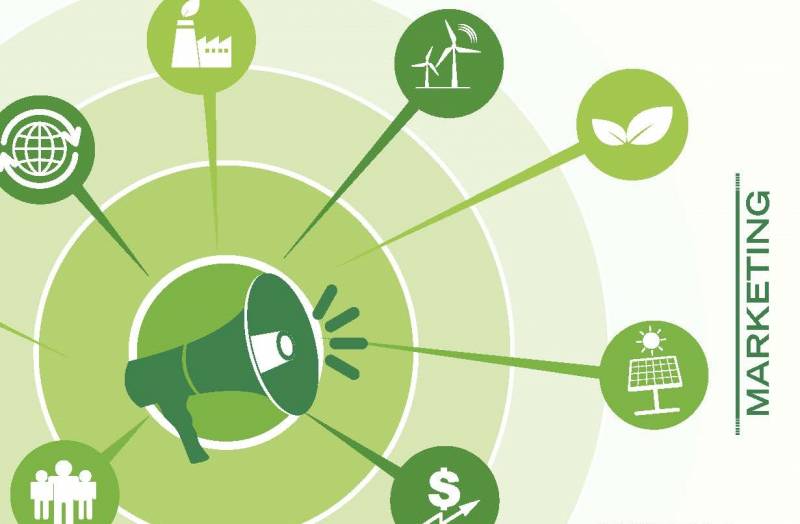
COMUNICARE LA SOSTENIBILITÀ – OLTRE IL GREENWASHING
di ALDO BOLOGNINI COBIANCHI Un libro per manager e imprenditori che desiderano approfondire l’argomento sostenibilità dal punto di vista del marketing e della comunicazione, utile anche per chi si avvicina…
L’articolo COMUNICARE LA SOSTENIBILITÀ – OLTRE IL GREENWASHING scritto da Paolo Brambilla proviene da Assodigitale.

Uno sguardo al 2022: community, collaborazione e acquisti
Le persone che guardano a YouTube
I partner
Un nuovo capitolo della nostra storia

iRobot Roomba j7+ rileva ed evita gli ostacoli di casa mentre pulisce