
Cuffioni JBL: senza fili e di PURA qualità (-42%)

Oppo Pad è sempre più vicino

Tastiera wireless Logitech K380: sconto SUPER CONVENIENTE (-36%)

Russia, cinque punti chiave della guerra informatica contro l’Ucraina

The future of learning is digital
With the rise of online learning and digital tools, education has dramatically changed over the years — requiring teachers and students alike to learn new digital skills. On February 22, thousands of educators around the world are celebrating the use of technology in the classroom by participating in Digital Learning Day. Whether in school or at home, we’ve seen technology can help provide access, increase engagement and help educators and students open up new possibilities for learning, especially over the last few years.
In honor of Digital Learning Day, Grow with Google’s Applied Digital Skills program has curated a collection of our most popular digital lessons, which includes everything from how to make art using spreadsheets to creating a presentation. Applied Digital Skills is Google’s free, online, video-based curriculum that teaches learners of all ages the practical technology skills needed to be successful in school, work and beyond. To date, this curriculum has helped more than three million students learn digital skills and has helped thousands of educators teach them in a fun and engaging way.
Matt Winters, a Senior Technical Trainer at the Utah Education Network and co-lead for Google Educator Group Utah, has incorporated Applied Digital Skills lessons in his community by training educators across the state of Utah to help them get more comfortable with technology. I met with him virtually to talk about his experience integrating technology and digital tools to create more personal learning experiences in the classroom.
What does digital learning mean to you?
In Utah, we are promoting several activities to get teachers and students involved in Digital Learning Day. And it isn’t about celebrating just one day or one week: This is a skillset that every teacher and student needs on a daily basis. Technology is a tool, and with any tool we need to know how to use it.
Technology is a tool, and with any tool we need to know how to use it.
In your opinion, how can Applied Digital Skills be used in the classroom to promote digital learning?
We as teachers are asked to do so much, especially since the pandemic. Whether it is planning curriculum, taking attendance or being experts in social-emotional learning, on top of all that we are asked to be technology experts. Teachers just don’t have time for all of it. Applied Digital Skills gives teachers the latitude to teach the technology skills that they want students to learn, without ever having to know the technology skills themselves. Although they can take the lessons too!
I also love the open-source nature of Applied Digital Skills. The lessons can easily be adapted to not just your content area, but also the digital tool you would like to use. One of my favorite lessons is Create a Comic Strip with Google Drawings. It’s a big hit with students and was a no-brainer given my personal love for graphic novels. The curriculum encourages teachers to hand off the lessons to the students to let them easily learn the technical skills needed. This allows the teacher to step out of the “sage on the stage” role and switch into coach mode. And they are able to be the content experts that they are and focus their attention on students who need additional support.
What advice would you give to teachers who are skeptical of bringing technology into the classroom?
My biggest suggestion to teachers is to simplify what you are doing with technology in the classroom. Less is more. Get comfortable with a few tech tools first. Start small. It doesn’t have to be a huge overhaul of your curriculum. If you are going from using very little or zero technology, start with very little increments to grow your confidence. That is a very easy win as you will continue to grow your skills over time.
We have to remind ourselves that some things that seem scary to us teachers aren’t actually that scary. For example, I was initially intimidated by some of the coding lessons but I realized how comfortable and easy it was to learn to code with Google Apps Script. By using lessons like Create a Guide to an Area, I was able to get comfortable with coding and show my students that this is much less daunting than it seems. No matter where you are at in your journey with digital skills, all you need to do is start today. Just remember to take it one step at a time.

Street Fighter 6: ecco il teaser

Truth, il social di Trump, è l’app più scaricata sullo Store Apple negli USA

Ufficiale: Red Magic 7 Global Edition in vendita dal 10 marzo


Decoder TV con WiFi: MEGA OFFERTA Amazon a 23€ (-40%)

Microsoft ha rilasciato la prima preview build di .NET 7

Chrome OS Dev Channel 100 si aggiorna con una nuova funzione salvaschermo

<div>Seeking news innovators in the Middle East, Turkey & Africa</div>
From Kenya to Lebanon, innovation lies at the heart of the many news organizations across the Middle East, Turkey and Africa where we are today inviting applications for the Innovation Challenges program.
As part of our ongoing commitment to support the news industry around the world, we are launching our third Google News Initiative Innovation Challenge in the region. Funding up to $150,000 is available via this open call for any digital innovative project and all news providers are eligible, regardless of size.
The program has been running in the region since 2019 and the first two rounds saw 43 projects selected from 18 countries. Those recipients answered a call for projects which would increase reader engagement and/or explore new business models. The ideas ranged from novel membership strategies to Arabic language search tools.

Successful past recipients include those featured in the videos on this blogpost as well as:
- Eco-Nai+ from Ripples in Nigeria is the first digital geojournalism platform for the country. Geojournalism is a form of data journalism which takes information from users, authoritative sources such as Google Earth, meteorological agencies and others, to cover issues tied to the question of climate change.
- Diaspora par TelQuel from TelQuel Digital in Morocco is a diaspora subscription platform for Morrocans of the world, publishing original content, practical guides, and history articles for audiences viewing abroad: mainly France (35%), Canada (9%) and Belgium (8%).
- My Town, My News from ynet in Israel is a newsroom tool which helps journalists create multiple hyperlocal stories individualized to specific locations across the country to provide statistical information such as COVID-19 rates or vaccination figures.
You can find out more about all the previous recipients on the website.
How to apply
Applications are open from now until Tuesday, April 5 2022. Established publishers, online-only players, news startups, publisher consortia, freelancers, press agencies, broadcasters and local industry associations are all eligible to apply.
Projects will be evaluated against five criteria: innovation, impact on news ecosystem, diversity, equity and inclusion; inspiration; and feasibility. The range of projects could be varied — we are intentionally not being prescriptive and instead welcome your boldest ideas. This could be anything from using Artificial Intelligence in the newsroom to diversifying your business model or figuring out ways to increase audience engagement or even reach new audiences. Whatever it is, we want to hear your sharpest solutions to the challenges faced on the ground.
The selected projects will be eligible to receive up to $150,000, not to exceed 70% of the total project cost. Please note that Google does not take any equity or intellectual property rights in any projects or submissions.
Applications must be made online via our website and are open until Tuesday, April 5 2022 at 23:59 GMT. As part of the application process, applicants are required to produce an explanatory slidedeck (please note the link opens a page to make your own copy to work in). We will also be holding an online town hall on Tuesday, March 8 at 10am GMT with a live presentation and the opportunity to ask questions.
We are looking forward to seeing fresh ideas come out of the Middle East, Turkey and Africa, a region rich with talent, potential and opportunity. For more information about the challenge, visit g.co/newsinnovation.
Asian startups are shaping global trends
There’s never been a more exciting time to be building a startup in Asia Pacific. Across the region, a diverse, talented and energetic group of founders is on the rise. And these entrepreneurs have an unprecedented opportunity to find the support they need to grow, with record venture funding flowing into the region.
For Google, supporting startups of all sizes is part of our commitment to help digital economies grow. Today, at a virtual Google for Startups event, we shared some of the key insights from our partnerships with founders throughout Asia Pacific: how they’re targeting global growth, moving technology forward, and seeking out support to help realize their potential.
Building for the world
In April 2021, there were almost 200 unicorns (startups valued at $1 billion or more) in Asia Pacific, second only to the United States (290) and ahead of Europe (69). Many of Asia’s leading startups are making a global impact, whether by influencing new business models — like Grab and other Southeast Asian ‘super apps’ — or by tackling universal challenges — like CogSmart in Japan, which is working to help prevent dementia at an early age.
At the same time, the impact of COVID-19 has created greater demand for new digital services that startups are ideally-placed to build. In Southeast Asia, for example, 60 million people have become ‘digital consumers’ — using at least one online service — since the pandemic began.
Exploring emerging technologies
To meet the changing needs of the region’s online population, Asian startups are exploring what’s possible with the next wave of advances in technology. Many want to help solve entrenched social, financial and environmental challenges. Often they’re focused on areas where technology hasn’t made the same progress it has in more established sectors of the digital economy.
- In artificial intelligence, the region’s founders are working on a wide range of powerful applications. Indonesia’s Kata.ai is a leader in conversational AI, helping businesses provide better experiences for their customers, while India’s BrainSightAI is building new tools to help researchers and clinicians better understand the human brain.
- Decentralized finance (DeFi) is another growth area. Southeast Asian DeFi startups raised $1 billion in equity funding in 2021, six times the amount in 2020. With an eye on the shift away from traditional finance and trading, entrepreneurs behind startups like Korea’sDA:Ground are making it easier for people in the region to invest and access other financial services.
- Financial technology (fintech) and e-commerce in Asia is booming. Many founders working in the fintech sector are driven by the goal of making finance more inclusive and e-commerce an even better experience. The Philippines’ Advance is making it easier for Filipino workers to access zero-interest credit through responsible partnerships with their employers. In Singapore, Shopinks helps retailers better engage their customers through chatbots and personalized emails.
- In the wake of the pandemic, there is great momentum behind health technology startups such as India’s Zyla, which provides 24/7, personalized care through a mobile app, and Caredoc, a Korean platform that shares information on elderly care facilities.
- Other founders are increasingly focused on sustainability, given Asia’s vulnerability to the climate crisis. Startups contributing to the response include Indonesia’s Duitin, which is managing 2,000 waste management sites across Indonesia, and Taiwan’s Lockists, a shared transportation platform that helps improve air quality by reducing car use.
Laying foundations for growth
While there’s ample funding available for Asian startups, we know that the region’s founders need a much wider range of support beyond investment. Common challenges faced by startups in the region include keeping up with regulations (which differ at country, state and provincial levels), getting access to infrastructure or technologies, and increasing the current low rate of women’s entrepreneurship.
Our aim is to work with everyone in the startup community — including founders, venture capital firms and governments — to help move the entire ecosystem forward. This year, we’re running Google for Startups Accelerator programs in India, Korea, Japan and Southeast Asia, providing support and mentorship for growth-stage startups. Our new Startup Academy program — launched in Indonesia — will coach early-stage startups. We’re working to help a more diverse range of startups through the Women Founders Academy. And we continue to build close links with private and public sector partners who share our commitment, with initiatives like Project Hatcher in Taiwan and our Startups & FinTechs Program with Cyberport in Hong Kong.
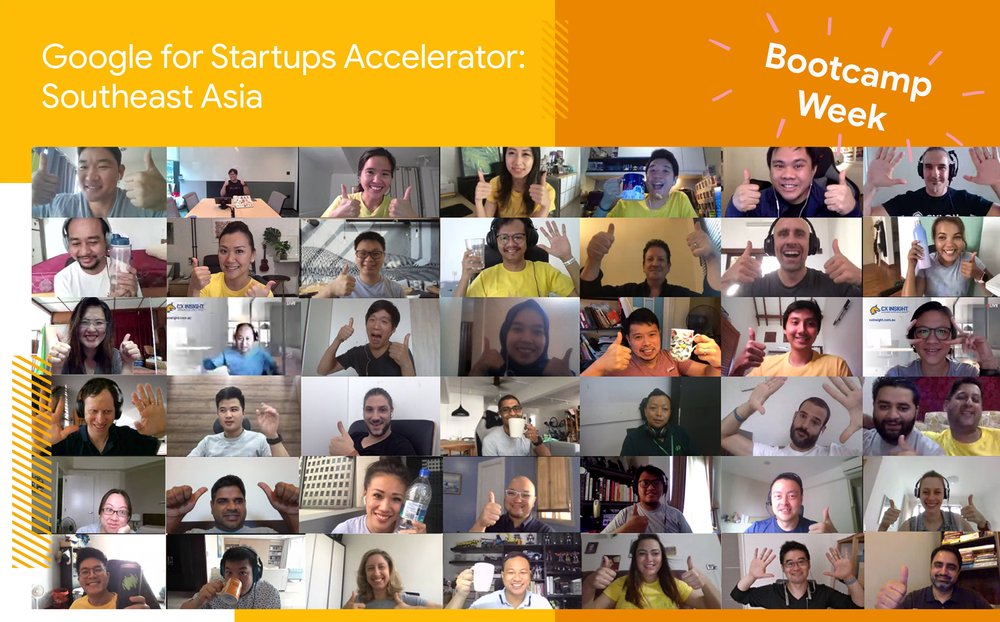
Southeast Asian startups with Google mentors during our inaugural regional accelerator program.
At this moment of possibility for Asian startups, we want to make sure founders across the region have all the opportunities they need to grow, thrive and shape technology for the region and the world.

L’Associazione Italiana Vele d’Epoca compie 40 anni
A Roma la presentazione del Calendario Regate 2022The Italian Vintage Boat Association turns 40.Venerdì 4 marzo 2022, nell’anniversario dei 40 anni della fondazione, l’AIVE (Associazione Italiana Vele d’Epoca) presenterà a…
L’articolo L’Associazione Italiana Vele d’Epoca compie 40 anni scritto da Paolo Brambilla proviene da Assodigitale.