Fedora 38: si valuta l’introduzione di edizioni dedicate ai device mobile
Fedora 38: i mantainer hanno proposto la realizzazione di alcune edizioni dedicate ai device mobile
Leggi Fedora 38: si valuta l’introduzione di edizioni dedicate ai device mobile

Supporting U.S. food banks to deliver 50 million meals
This week, we kicked off our annual holiday giving campaign. I always look forward to this time of year because it gives Googlers — our employees — a chance to amplify their generosity by directing some of the company’s funds to causes that are important to them and can make an impact in their communities. Every year, food banks, along with schools, are among the most popular recipients for giving back. Our employees have given more than $43 million to U.S. food relief organizations with Google.org’s gift match, as part of our $2 billion in giving since 2017.
This year, food insecurity remains a big challenge for many families across the United States. According to the U.S. Department of Agriculture, more than 10% of Americans were food-insecure at some time in 2021 — meaning they couldn’t be sure that they would have enough food for their family to eat.
One of the best ways to support families is to equip food banks, especially as increasing food prices and global supply chain issues stretch them thin. That’s why today we’re launching a new partnership with Feeding America and its network of local food banks and pantries. Our goal is to deliver 50 million meals, while strengthening food banks’ technical infrastructure for the longer term. We’re also launching new features in Search and Maps that make finding food support easier.
Helping Feeding America
Google.org will contribute $10 million to Feeding America and 32 of its member food banks to help deliver 50 million meals to communities most in need. We’ll partner with these food banks throughout the month to host more than 20 volunteering events in communities across the country, to raise awareness and encourage those who can to give back. In one of those communities, Mesa, Arizona, Google.org has joined forces with Waymo to expand their food rescue program, and Googlers will help load a Waymo Via semi truck full of food to deliver to local food banks. Since May, Waymo Vias have helped transport more than 44,000 pounds of bread on behalf of nonprofits’ food rescue efforts.

Volunteers at the local food bank in Fort Myers, Florida, help to unload fresh produce from a truck.
Google.org is also donating Search advertising to Feeding America and local food banks and pantries across the U.S. in order to connect them with people searching for resources or ways to give back.
Over the longer term, we’ll continue to partner with Feeding America on its food bank network’s technology infrastructure. This work will help improve things like inventory management tools — projects that are often deprioritized so food banks can meet immediate needs, yet are vital to ensuring that the right food gets to the right households at the right time. We’ll be lending our expertise to help close these gaps, creating volunteer opportunities for Googlers to put their skills to work.
Providing information through our products
One of the biggest ways we can make a difference is by helping people find information about food support in their communities. Last year, we launched Search and Maps features that make it easier to locate verified local food banks. These features also enabled people to find out more about Supplemental Nutrition Assistance Program (SNAP) benefits. And now if you search for “how to apply for SNAP” you can find information about milestones in the application process, including important details on eligibility and documents required.
Once approved for SNAP, many people use Electronic Benefit Transfers (EBT) as a payment method, and you can now search for “EBT” to find your local program’s website, check your balance and find contact information to get support. Searching on Google Maps for “grocery stores that accept EBT” surfaces more than 180,000 USDA-approved grocery stores, convenience stores, farmers’ markets and other nearby retailers that accept this payment method.
It will take a sustained and coordinated effort to address the challenge of food insecurity. Working with Feeding America and its partners, we’re committed to raising awareness of this ongoing crisis, and encourage others to help, this holiday season and all year round.
Questo compressore portatile è il tuo migliore amico per le emergenze stradali
<div>13 surprising ways we’ve collected Street View imagery around the world</div>
You’ve heard of Street View, but have you heard of Sheep View? As un-bahh-lievable as it may sound, these wooly creatures have helped us collect truly ewe-nique Street View imagery. That’s just one of the unexpected ways we’ve added imagery to our Street View collection. Through the years, we’ve captured images on remote islands, along rough terrain and underwater. Since we can’t reach all of those locations by car, we’ve naturally had to get creative. For a peek behind the curtain, here are 13 of the most creative ways we’ve collected Street View imagery — some of which have led to our favorite Street Views ever.
1. By trike
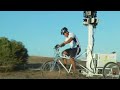
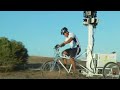
During a coffee run in 2010, one of Google’s senior mechanical engineers spotted a pedi-cab riding through Mountain View. Inspired, he got to talking with the owner, and the Google Trike was born. The Street View Trike allowed Google to map locations that were previously inaccessible to our fleet of cars, making its debut collecting off-road imagery at California’s LegoLand. Cyclists rode the modified pedicab in decorative Google jerseys through zoos, landmarks and universities.

We developed the Street View Trike to help us access off-road locations.
2. By boat
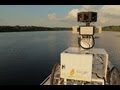
Next, the team wanted to capture the beauty of the Amazon, but you can’t exactly cycle down the world’s largest river. Our solution was to put the Street View Trike onto a boat and see what happened. We ended up collecting imagery of the Rio Negro, an Amazon Forest trail and five river communities. Weeks after, when program manager Karin Tuxen-Bettman reviewed the footage, she was surprised to find it was partially obscured by a frog that had perched itself on the lens.
“I wasn’t aware while it was happening, so there was nothing I could do to change it,” says Karin. “But I was delighted. It represents the unexpected, which we grew to expect on this imagery collection expedition.”

A frog landed on the lens during a Street View shoot of the Amazon, showing us it isn’t always smooth sailing.
3. By snorkelers and scuba divers

Boats are great, but what about taking Street View pictures underwater? We’ve done that, too. The ocean covers 71% of the Earth’s surface, yet only 5% has been explored. Over the years, our team has partnered with snorkelers and divers to bring underwater imagery to Street View. In ourGoogle Earth collection, you can swim by shipwrecks, reefs and coral gardens across the world.

Scuba diving and snorkeling allowed us to create underwater images.
4. By snowmobile

Another one of our Street View goals was to make imagery of the ski slopes in Vancouver globally accessible in time for the 2010 Winter Olympics. We achieved this by introducing the Street View Snowmobile. After customizing a snowmobile by attaching a pole-mounted camera, we took to the slopes.
“I am originally from Poland, and I love skiing,” says Magdalena Filak, one of the Googlers leading operations for our Street View Special Collects at the time. “It was so much fun to map the ski resorts with the snowmobile, and then share the captured imagery with my friends and family to plan our skiing trips. The imagery that we captured was just so serene, calm and beautiful.”

There was snow much fun to be had while collecting these cool pictures.
5. By backpack
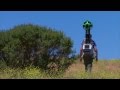
Even with trikes and snowmobiles, there continued to be locations and landmarks we couldn’t access. That’s where the Street View Trekker came in. Originally introduced in 2012, the first Trekker featured a 360-degree camera system mounted onto a wearable backpack. This allowed wearers to collect images on foot. In 2018, the device got an upgrade with 140-megapixel cameras and laser sensors that can quickly create a digital map of the area.

The backpack Trekker provided flexibility and freedom, expanding Street View’s reach.
6. By camel

The Trekker was fashioned onto a camel, gathering images as the animal walked through the desert.
Yes, you read that right. In order to capture the beauty of the Liwa desert, the Street View Trekker was mounted atop an Arabian one-humped camel, also known as a dromedary. Home to early settlers back in the Late Stone Age, the Liwa desert sand dunes reach a height of up to 131 feet. Using camels for the collection allowed us to collect authentic imagery and minimize our disruption of this fragile environment.
“I had never gone to a desert before, and although I adore animals, I had never been so fortunate to be near a camel,” says Valentina Frassi, a Googler who led some collections for the Middle East and North Africa region at the time. “Dealing with unconventional means of transport, like our stubborn camel friend Raffia, is not an everyday task.”
7. By sheep
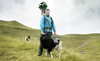
We worked with sheep, the local community and the Street View team to document the Faroe Islands.
Camels aren’t our only fuzzy photographer friends. Home to just 50,000 people, the Faroe Islands are an archipelago in the middle of the North Atlantic Ocean known for having more sheep than human residents. In 2016, a few of those sheep were equipped with solar powered cameras to collect Street View imagery, documenting the local islands.
8. By astronaut
Reaching for the stars, our team partnered with astronaut Thomas Pesquet to give a tour of the International Space Station. Because of the constraints of working in space (and the whole zero gravity thing), Thomas couldn’t use just any equipment. Our team worked with NASA at the Johnson Space Center in Houston and Marshall Space Flight Center in Huntsville, Alabama, to design a gravity-free solution that used DSLR cameras and equipment already on the ISS. Then Thomas sent the pictures down to Earth where we stitched them together to create panoramic 360-degree imagery.
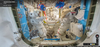
We worked with astronaut Thomas Pesquet, NASA and Marshall Space Flight Center to bring Street View to space.
9. By ATV
Made uninhabitable by its rough terrain and polar climate, Devon Island in Canada’s Arctic is an important site for researchers and scientists as its environment is the closest to Mars that can be found without leaving the planet. In 2019, we partnered with Dr. Pascal Lee, chairman of the Mars Institute and director of the Haughton-Mars Project, to get imagery on ATVs of “Mars on Earth.” Just like a trip to Mars, our trip to collect Street View imagery required careful planning and preparation. The team delegated tasks including leading explorations, packing supplies, cooking, handling ATV maintenance and collecting imagery. Dr. Lee’s dog even served as a lookout for polar bears.
10. By raft

Going with the flow, the Street View raft rode the tides of Atol das Rocas.
As part of a partnership with the federal institute for biodiversity in Brazil, ICMBio, we mounted a Street View camera onto a raft and floated out to a ring shaped island, or atoll, that is only accessible to crews with authorization from The Brazilian Navy and ICMBio. According to Tom Nora, a Googler who led the collection team, the raft was a useful solution to one of the team’s biggest challenges: the changing tides that caused the atoll to quickly fill and empty.
“Because of the tide changes, we had to stay in the atoll – which is pretty much an island without clean water – so no shower or sink,” says Tom. “The power on the island, coming from a local solar power plant, was not working. All three people that were living on the island were biologists, so they didn’t know how to fix it. Since I’m an electrical engineer and had experience with power electronics, I was able to fix it for them. It was a great win-win situation.”
11. By trolley
We created the Street View Trolley for art lovers with the goal of bringing the world’s most acclaimed museums to Maps. Since we can’t drive the Street View car indoors, our team designed a stable four-wheeled push cart that could bear a heavy load. We equipped it with a panoramic camera to collect 360-degree views, lasers to capture distances to walls, motion sensors to track Trolley’s position, a hard drive to store data and a laptop to operate the system.
12. By rappel
Sometimes the best shots require some extra work, like when New Zealand Googler Matthew Davison came up with the idea of taking a Street View Trekker inside an active volcano. Matthew and a team of explorers rappelled over 1,300 feet into the Marum crater in the South Pacific island nation of Vanuatu, suspending over a molten lava lake the size of two football fields!
“When I came up with the idea, my colleagues thought it was an elaborate prank,” says Matthew, who leads volcano expeditions around the world as a hobby. “When volcanoes aren’t impacting people, they’re a beautiful spectacle to look at. Capturing such a rare phenomenon and being able to share it with the world was a huge privilege.” It was also a huge responsibility, Matthew notes: “We had to use specialized heat suits to protect ourselves from the immense heat. Our most important priority was keeping everyone safe.”
13. By model train

We’d traveled far and wide, but a 2016 Street View project in Hamburg, Germany presented a new challenge: shrinking down. The Miniatur Wunderland attraction features the world’s largest model railway with over 42,000 feet of track. Our team partnered with Ubilabs, a data and location technology company, to create our own miniature vehicles that could drive over train tracks and down the streets of the fictional town Knuffingen, one of Miniatur Wunderland’s “theme worlds.” Miniatur Wunderland was crafted with an eye for detail, with thousands of tiny citizens going about their days. Our Street View collection allows you to explore a rowdy Oktoberfest celebration, replicas of several famous landmarks across the world and even some details not visible to museum visitors.
HUAWEI Mate 50 Pro, in Italia il nuovo top di gamma: caratteristiche e prezzi
How we designed Chrome to help businesses
Businesses all over the world rely on Chrome to get things done securely and collaboratively — both at home and in the office. And that’s due to the Googlers who work every day to make sure enterprise users stay safe online using Chrome.
We chatted with Robert Shield, a longtime Chrome Googler and the director of engineering on the Chrome Browser Enterprise team, to get an insider’s point of view on how Chrome evolved to become a secure browser for businesses.
Why did Chrome decide to invest in building a browser for businesses?
Early on, we realized that businesses had specific needs for managing Chrome to a large workforce. Shortly after Chrome’s initial launch, we added a variety of enterprise management capabilities like Chrome Browser Cloud Management, and zero trust solutions like BeyondCorp Enterprise, to help with added security controls, distributing software and supporting legacy browsers.
How have businesses’ browser security needs changed over the years?
The way we work has shifted quite drastically, from legacy systems connected over private networks to cloud-centric computing. Workers now need to access data from anywhere and on different types of devices. While this change brings more flexibility and productivity to organizations, it requires them to work even harder to secure their data.
What are some specific requests you get from IT and security professionals using Chrome in modern enterprise environments?
Customers tell us they have a growing need to secure access to data hosted in the cloud, so we provide tools to prevent data loss right in the browser. We also make it easy for businesses to integrate Chrome with popular security solution providers, like Splunk, CrowdStrike and Palo Alto Networks. This allows customers to gain a deeper understanding of potentially harmful threats their users face on the web and be more proactive in their remediation efforts.
What are you working on that excites you most?
We’re really focused on helping businesses safeguard their whole computing stack, from cloud services to the desktops, laptops and phones used by workers. With the move to cloud workloads accelerating over the coming years, we’re investing in tighter integrations between Chrome and the full slate of security tools and services that organizations use every day to provide complete end-to-end security for users and data. It’s exciting to see the browser evolve to play an active role in securing business environments.
Buon compleanno Alexa! L’assistente vocale di Amazon compie 4 anni in Italia
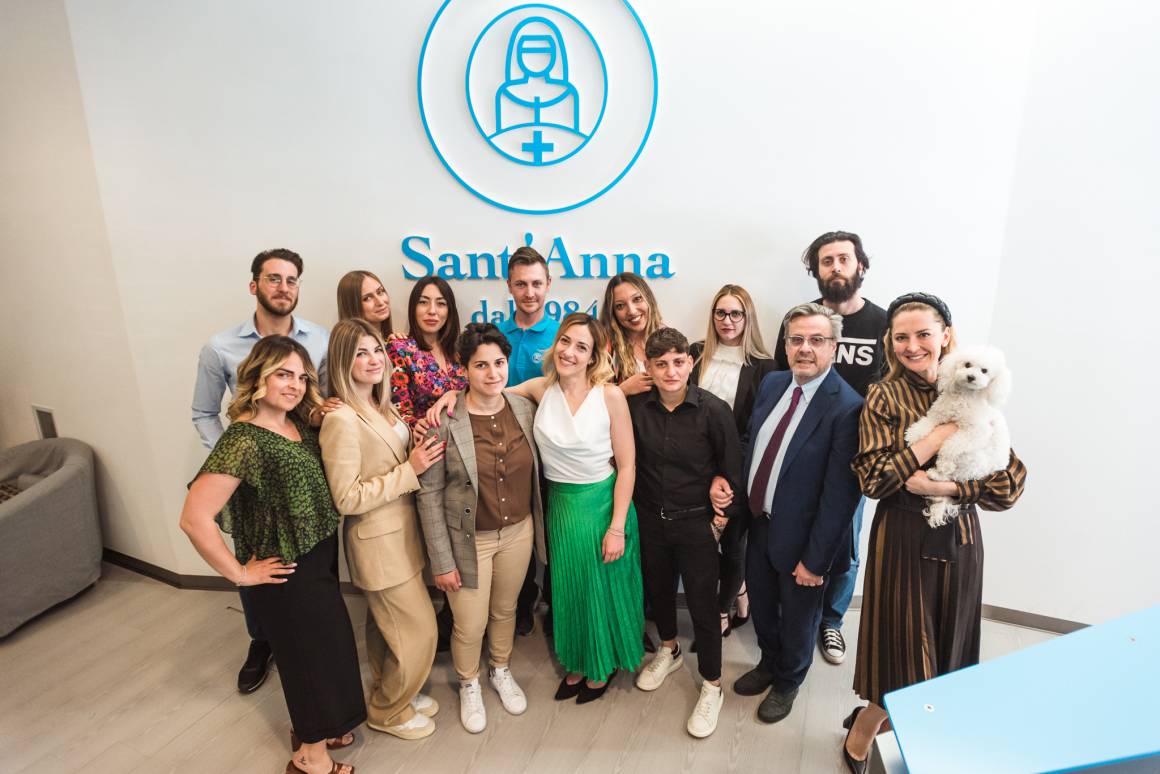
Sant’Anna 1984: l’importanza della cura dei piedi nella Terza Età
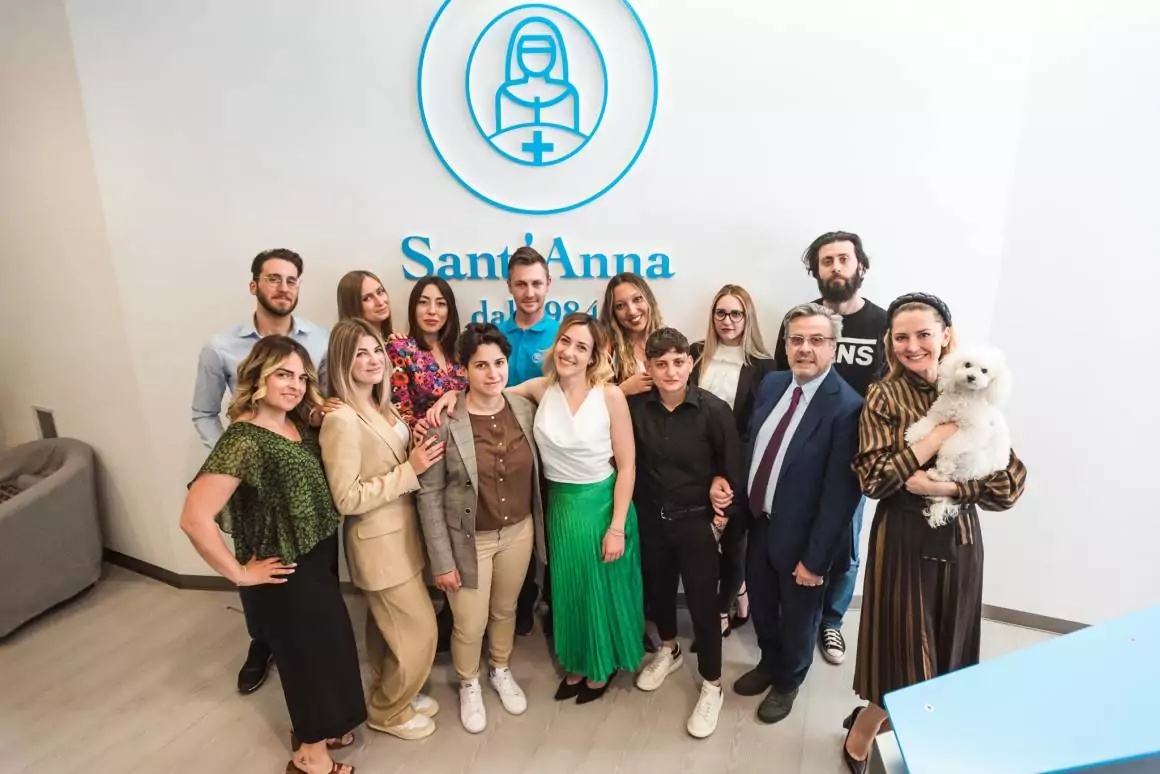 Presidente di Sant’Anna 1984 è Kristina Tatenko I piedi, che negli anni sopportano il peso del corpo e sono sottoposti a numerose tensioni, svolgono una fondamentale azione strutturale per la statica, la…
Caricatore super rapido per auto, doppia USB: l’OFFERTA a 4€ è incredibile
Activate your first-party data on connected TV
With total streaming usage taking 36% of overall TV share, you can be sure to find your audience on connected TV (CTV). We’re committed to helping you deliver high quality ad experiences to all streamers by bringing the best of digital ad technology — like delivering the right message to the right audience — to the TV screen. That’s why earlier this year, we introduced Google Audiences to CTV campaigns in Display & Video 360.
Successful businesses lean into existing customer relationships and the information they willingly share to drive performance. This information, known as first-party data, can be the basis for privacy-preserving, future-proofed ways to connect with customers. Today we’re announcing new features to let you reach your first-party audience on CTV devices and automatically find more users who look like your core audience.
Engage with people you know as they watch CTV in the U.S.
First, we’re making it possible for you to engage with your first-party audiences on connected TV devices. Now, when you select a first-party audience list for your Display and Video 360 campaign, the list will automatically be eligible to reach your most engaged customers as they stream connected TV content. This is an easy and effective way to ensure you reach people who already have a connection with your brand, on the device that they are using at the moment.
Let’s say you’re a cosmetic brand preparing for the holiday season and want to build on the direct relationship you have with customers who have downloaded your app. With Display & Video 360, you can now reach this first-party audience as they’re streaming their favorite shows on Disney, Tubi, or other premium publishers.
It’s easy to benefit from this new capability. All you have to do is select and add your first-party audience to your insertion order or line-item, in the same way you would have done for web and mobile devices. Display & Video 360 will automatically start reaching people who have an existing relationship with your brand when they are watching on CTV. This feature is available now to all advertisers in the United States, you can learn more about how it works by visiting our help center.
Reach more streamers similar to your first-party audience around the world
Once you have engaged with your first-party audience, reaching additional people who have similar behaviors or characteristics to your core audiences helps you boost campaign performance.
We are also launching audience expansion for CTV. Audience expansion makes it easy to reach more people that matter to your business and achieve your marketing goals. By utilizing contextual and geo signals, Display and Video 360’s algorithm will create a model to find CTV streamers who are similar to your core audience.
Let’s go back to the example of the beauty brand trying to reach relevant seasonal shoppers. You could now apply audience expansion to your first-party audience and show CTV ads to streamers who are similar to those who have downloaded your app.
You’ll be able to activate audience expansion across all regions globally in Display and Video 360 early next year via controls available in Display & Video 360’s TV insertion order.
These new features are just some of the ways we’re helping businesses connect with their most engaged audience while respecting people’s privacy. As we invent fundamentally new audience solutions, we’ll ensure they seamlessly work on CTV and allow you to make the most of the streaming boom.
A new way to control and optimize frequency on YouTube
Achieving the right video ad frequency for both viewers and advertisers has always been a juggling act.
That challenge has only increased as linear TV viewership in the US has dropped from 100 million households in 2014 to a forecast of just 44 million by 2025. As reach declines, the number of times the audience sees an ad on TV is increasing. Seeing the same ad repeatedly can be a frustrating experience for viewers and proves wasteful for advertisers. On average, TV advertisers’ return on investment (ROI) decreased by 41% when frequency exceeded 6+ weekly impressions — which represents 46% of TV impressions served, according to a MMM meta analysis commissioned with Nielsen
Almost half of the linear TV impressions in our study were considered waste but the same study from Nielsen shows that brands can increase their average weekly frequency from one to three on YouTube with a consistent ROI
At YouTube, we are helping advertisers deliver a better advertising experience for viewers without any compromise in ROI. Based on this commitment, earlier this year we announced our frequency management solution on Display and Video 360 that allows marketers to manage the number of times people see their ads across YouTube and third-party networks. We’re now taking that a step further to revolutionize reach and frequency-buying on YouTube.
To help marketers harness this impact, we’re announcing the launch of Target frequency globally for YouTube campaigns. This will help advertisers optimize towards more precise reach and frequency, while ensuring that we continue to provide a suitable advertising experience for viewers. Target frequency allows advertisers to select a frequency goal of up to four per week and our systems will optimize towards maximum unique reach at that desired frequency.
We recently partnered with Triscuit to see how the brand can drive incremental impact to its reach campaigns with a frequency target. Triscuit’s goal was to ensure that the brand stays top-of-mind with the consumer. The brand set up a Video experiment to determine the incremental ad recall that a weekly frequency of two could deliver. The Target frequency campaign achieved a 93% higher absolute ad recall lift compared to the non-frequency optimized campaign, at a 40% cheaper cost per lifted user.
We’re committed to improving the advertising experience for brands and viewers
Now advertisers can select the frequency target and our systems will optimize towards maximum unique reach at the frequency goal. With our built-in capping, campaigns deliver within a tight distribution range so viewers don’t see the ads too many times. In fact, over 95% of Target frequency campaigns on YouTube successfully achieved their frequency goals when set up following recommended best practices.
To start using a frequency optimized campaign, create a new video reach campaign with the Target frequency goal and select the desired weekly frequency.
Caricabatterie 2 porte USB-C per ricariche super veloci, prezzo AFFARE
Motherboard X670, ASUS accoglie i Ryzen 7000 con una gamma completa
Caricatore 4 porte USB a 0,29€: prezzo SHOCK, sbrigati finirà subito

SOLD-OUT L’EVENTO: Mondo Crypto + Metaverso: come evitare le strumentalizzazioni delle Fake News
 EVENTO UFFICIALE INSERITO NEL CARTELLONE DELLA MILANO DIGITAL WEEK PROMOSSA DAL COMUNE DI MILANO DATA & LOCATION: 10/11/2022 ORE 17:30 – 19:30 PALAZZO CUSANI MILANO BIGLIETTI GRATUITI CLICCA QUI:https://www.eventbrite.it/e/biglietti-la-strumentalizzazione-delle-fake-news-nel-mondo-crypto-e-metaverso-429716131517 DESCRIZIONE…