Hear what Google’s first Responsible Innovation intern learned
In 2018, we launched Google’s AI Principles to ensure we’re building AI that not only solves important problems and helps people in their daily lives, but also AI that is ethical, fair and safe. At the same time, we launched a central Responsible Innovation team to ensure the rest of Google is held accountable to these AI Principles. As the team grows, we continue to incorporate the perspectives and ideas of people from around the world — and this spring we welcomed our first intern, Lieke Dom. Lieke is based in Amsterdam, recently got her Master’s in Digital Business & Innovation, and is completing her Master’s in Applied Ethics.
I sat down with Lieke to learn more about her experience so far, including how her educational career led her here and what she’s learned from the internship.
Can you tell me a bit about your background?
In undergrad, I studied Communication Science and had some exposure to subjects like ethics and philosophy of technology. Studying at a technical university triggered my interest in this field, so I started a Masters in Philosophy of Science, Technology & Society. While I felt the tools and methodologies that you learn in philosophy are important to technology and business, I realized I didn’t want to go into pure philosophy as my main profession.
Why is that?
I think of ethical decision making as a skill that’s essential to most — if not all — professions. In order for a company, or a society, to truly build ethical technology, everyone involved in the research and product development process has to be equipped with ethical and responsible problem solving skills.
How did this thinking shape your educational focus?
I wanted to think about ethical problems with an emphasis on how we can apply methodologies from ethics and philosophy to contemporary issues. So, I pivoted to a Digital Business & Innovation degree followed by a Masters in Applied Ethics, both of which I’m completing during my internship. By combining these programs, I learned a lot about the opportunities technology provides businesses and the challenges that arise as a result of technological innovation.
Both of those degrees seem really well suited for the field of Responsible Innovation — did you know this was the field you wanted to go into when you chose those degrees?
While I knew I wanted to go into a field that combined ethics and technology, I didn’t know that a team like the Responsible Innovation team existed for most of my academic career. I chose studies based on my interests, but I wasn’t sure what it could bring me in my further career. Then, during my first Masters, a friend of mine gave me a book by Barbara Sher called Refuse to Choose!, which highlights the power of combining seemingly distinct fields. Reading about other people who didn’t choose a specific course and instead studied what interests them made me realize that the most important thing is that your journey makes sense to you. Although my degrees felt pretty haphazard (to others), it made sense to me how these areas complement each other. However, I was unsure about how these would come together in a professional career. So I was excited to find out about Google’s Responsible Innovation initiatives and AI Principles and eventually find a role on this team.
Did your understanding of tech ethics change during your internship?
During my internship I got to sit in on some AI Principles Reviews, a process that assesses proposals for new AI research and application for alignment with our Principles. I’m also working on expanding our body of external case studies so that we can share our learnings with AI practitioners everywhere — my colleague Dr. Molly FitzMorris recently published our team’s first business school case study in partnership with the Berkeley Haas School of Business. I’ve enjoyed working on these case studies because they show how our Principles are operationalized across the whole company.
These experiences deepened my belief that ethical decision making is an important skill for everyone to have, from developers, to designers, and researchers beyond teams like Responsible Innovation. Being on this team has also reinforced that it’s essential to have people tasked with taking deep dives into what the ethical development of technologies like AI should look like, ensuring that other people put those ideas into practice. Ethics aren’t defined or static, so it’s important to have people who devote themselves completely to it.
Can you share any key learnings and takeaways from your internship?
Stay eager to learn, and always ask a lot of questions. Find what genuinely interests you, and don’t be afraid if that strays from traditional or linear career paths; even if those areas don’t seem directly related, interdisciplinary skills and thinking are incredibly valuable.
And if you’re interested in going into tech, don’t limit yourself to purely technical fields. These days, technology is interwoven into almost all aspects of our everyday lives. Understanding the human and cultural components of new technology is essential to understanding its broader impact — and ensuring that it is really serving everyone.

How to Create More Authentic Influencer-Driven Content to Attract Qualified Prospects

When you think about who is influential in your industry, you likely think about professional influencers first. These are the consultants, public speakers and authors, the ones who give keynote speeches and have huge followings on social media.
These folks are absolutely essential as part of your influencer mix. Their reach, knowledge and professionalism are incredibly valuable.
However, you need more than just these folks for authentic and useful content. To create the kind of experience that earns the attention of qualified prospects, you need to expand your definition of what an influencer is — and what influencer content should look like.
Here’s how to optimize your influencer marketing to create authentic experiences that attract your most valuable audience.
#1 — Expand Your Definition of Influence
Who is an influencer? Now that Instagram models are using the word as a job title, it’s important not to forget the meaning of the word. Influencer (n.): One who has influence over a group of people. Someone whose opinion is trusted because of their experience and proven track record of success.
Some of the most influential people to your prospects don’t have a huge social media following or an outsized personality. They’re the ones who quietly build a reputation for excellence in your industry.
For example, the CEO of Coca-Cola might not have millions of followers. But you can bet that when he speaks, anyone in the beverage business listens.
The problem is that many influencer identification tools are focused on audience size more than this type of practical topical relevance. Tools like Traackr are getting better with it, but for now you may need to get creative. See who the executives at your most valued accounts are following on LinkedIn. Ask your customer contacts who they admire in the industry. See whose panel at the last industry conference had everyone talking, even though it was in the small conference room.
Our survey found that marketers are seeing the value of including these folks in their influencer mix. When we asked what qualities they look for in an influencer, follower count was 5th on the list. Relevance, trustworthiness and expertise all scored higher.
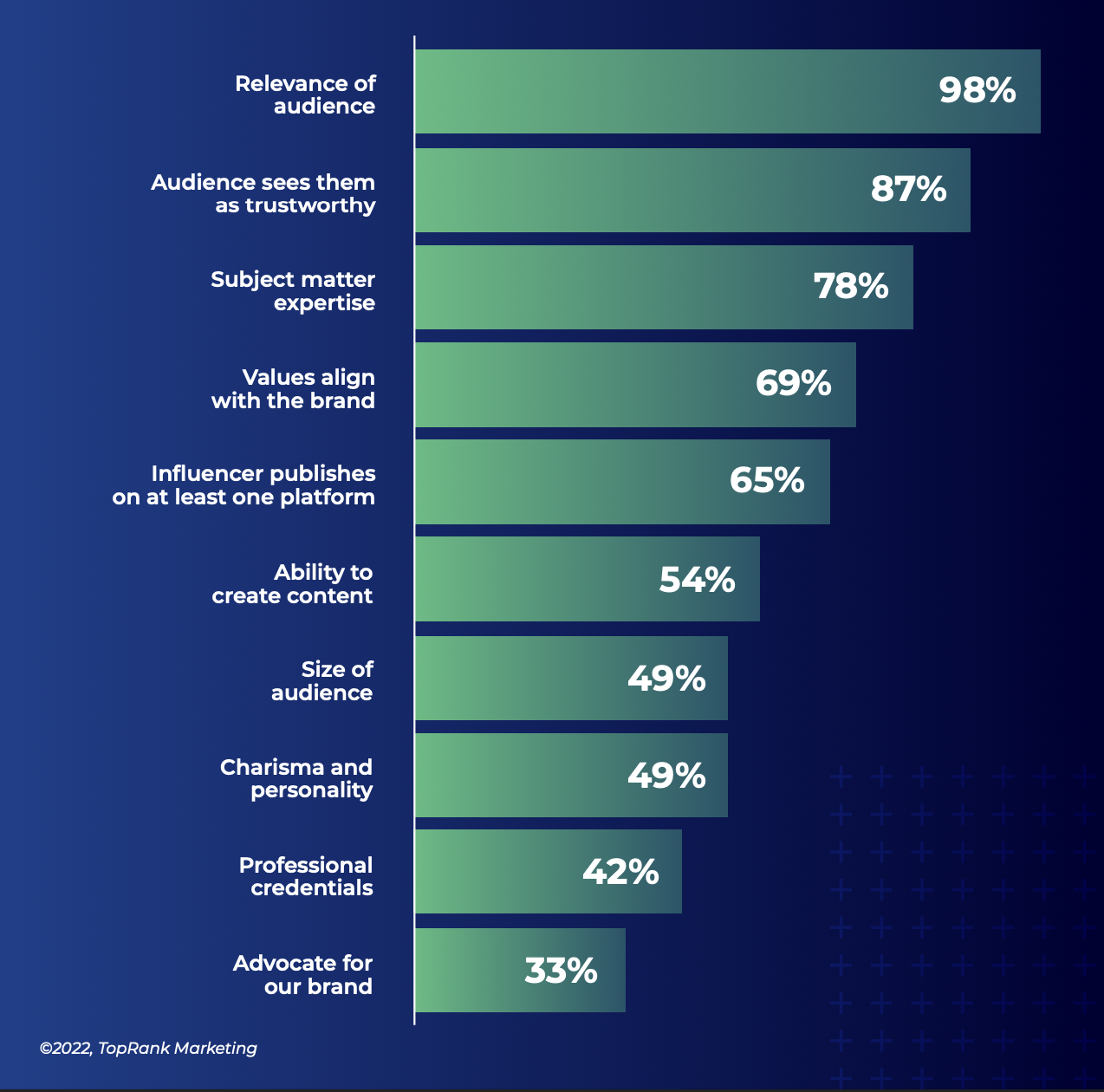
#2 — Look for Influence in Your Organization
When you’re looking for subject matter experts, you may find you don’t have to look too far from the office, either. Your executives and employees have practical experience that your most valued prospects want to hear.
It might be illuminating, for example, to hear a keynote speaker talk about how Red Bull built their media brand. Someone with a gift for storytelling could bring that tale to life and even mine deeper insight out of it, to boot. But someone who was in the room where these decisions were made, when Red Bull first built their content empire, could provide practical information that no one else would know.
Of course, your executives, managers and workers may not be natural born storytellers. That’s okay! You can interview them, tease out their stories and insights, and polish them up without sacrificing authenticity.
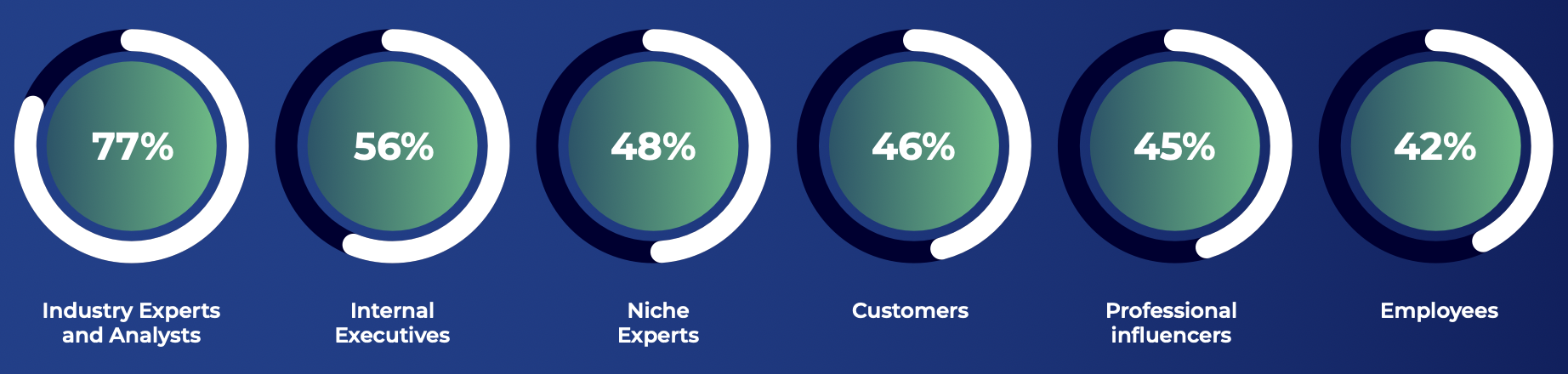
In our survey, over half of respondents said they included internal executives in their influencer content. Nearly half said they included their employees as well. This is a clear opportunity to create more valuable content and build your organization’s thought leadership at the same time.
#3 — Find Influential Customers (AND Prospects!)
Would you pass up a chance to praise, elevate, promote and otherwise butter up your most valuable customers? Of course not. Including your customers in your content is another win-win-win: You get more perspectives in your content, your customer gets recognized and flattered, and your audience finds your content more valuable.
Customer content doesn’t have to be limited to case studies — in fact, it shouldn’t be. Let your customers be the stars and talk about their business, the challenges they’ve faced and the successes they’ve achieved. Showcasing your happy customers as the industry experts they are will reflect well on your brand, even if they’re not making a sales pitch.
And finally, we have to talk about the most jaw-dropping stat from our recent report:
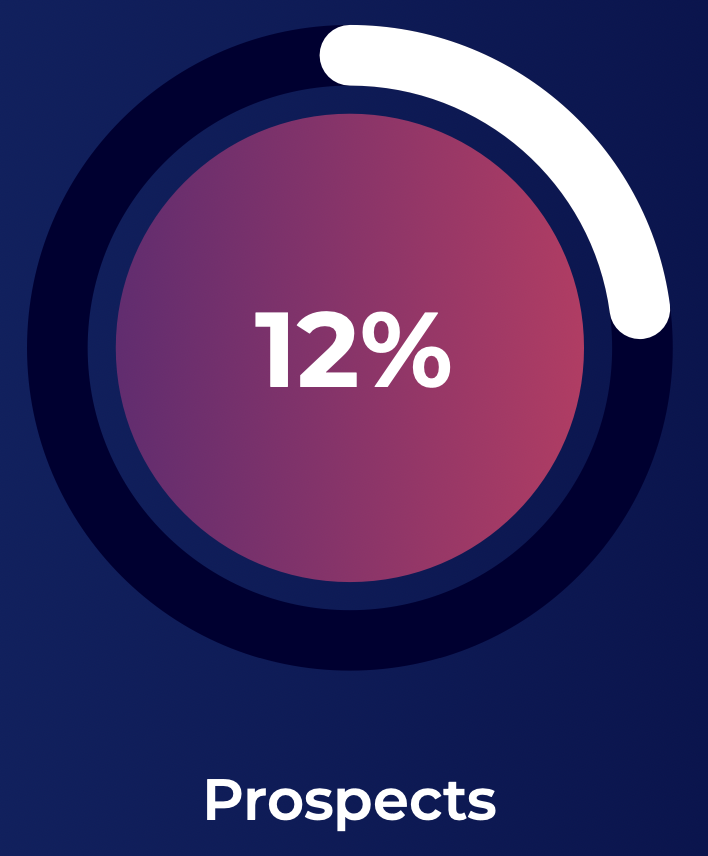
Only twelve percent of our respondents said they use prospects in their influencer marketing. If you asked 100 marketers: “Would you pass up a chance to interact with, build up, flatter, and build a relationship with your most valuable prospects?” How many would turn it down? How many would say, “Well, only if I can get them to give me content that will help attract even more prospects?”
Surely more than 12 out of 100 would see the value if you put it that way. Including prospects in your influencer marketing is such a colossal opportunity, triply so because so few folks are doing it. Treat your prospects like rock star influencers, promote their thought leadership, and good things will happen.
Think about it: How many times have you heard that your audience needs to see themselves in your content? Maybe it’s time to take that advice literally.
[bctt tweet=”“Including your customers in your content is another win-win-win: You get more perspectives in your content, your customer gets recognized and flattered, and your audience finds your content more valuable.” — Joshua Nite @NiteWrites” username=”toprank”]#4 — Create Valuable & Memorable Content
Now that you have the perfect mix of professional influencers, industry experts, your colleagues, customers and prospects, it’s time to create some great content experiences.
There’s nothing wrong with a classic PDF-based eBook (we put out one this year!), but you can earn more attention with jazzier content formats. The simplest would be a long-scroll web page with a few animated elements, like this one from our client Prophix. It splits the difference between an eBook and a website, borrowing the strengths from each.
To level up your content, an interactive and animated site (like this one from client Demandbase) is a good option. It offers your reader a more dynamic experience that compels them to spend more time with the asset.
Finally, think beyond text and into multimedia. Podcasts are a natural fit for influencer content. If you’re not ready for that level of commitment, however, consider a video (either a produced short video or a livestream). I love what our client LinkedIn is doing with their LinkedIn Collective Live! Series. The first episode is all about Cannes Lions, and features a Grand Prix winner and one of the jurors.
Industry Insiders bring Influence
As you plan your next influencer marketing campaign, it’s time to redefine influence. Your most valuable prospects are looking to industry leaders, practitioners and peers for advice. Your team can deliver all of the above with the right mix of influencers.
Check out our full 2022 B2B Influencer Marketing Report to learn more.
The post How to Create More Authentic Influencer-Driven Content to Attract Qualified Prospects appeared first on B2B Marketing Blog – TopRank®.
3 ways for hotels to maximize their presence on Google
In a typical month, Google sends hundreds of millions of website visits and phone calls to hotels around the world.
As a hotelier, you have an opportunity to ensure that potential customers on Google see you in the best light which will, in turn, help grow your business and get you free direct bookings. Here are 3 steps to help you optimize your presence on Google through the holiday season, and beyond.
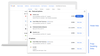
Free booking links provide a simple way for you to get more direct traffic across Google properties, without any charge from us. To participate, you’ll need to connect your rates with Google.
The best way to share your rates and keep them up-to-date is through a feed integration – either API or a third-party connectivity provider. If you don’t have a connectivity partner or prefer not to use one, we recently added the ability to share your rates via the new hotel rate editor on your Google Business Profile.
You can do the following to keep your hotel’s details current and ensure that customers view the most recent information about your hotel:
- Share what your hotel has to offer through uploading photos and videos, listing services, and calling out hotel highlights like “Pet Friendly,” “Free Wi-Fi,” and “Free Parking”. Additionally, you can now showcase eco-certifications or sustainability practices like waste reduction or water conservation.
- Respond to customer reviews which can help build customer trust.
- Share timely updates about your hotels with posts, including descriptions of special features, events or amenities that are uniquely offered at your hotel. Let’s say you added a new restaurant to your hotel: you can now include a photo or video, a description and an action button to drive reservations.


All these tools are part of our commitment to invest in features that help hotel partners tap into demand as the travel landscape continues to evolve. If you’re interested in driving free traffic to your website, learn how to get started or register for a Travel on Air webinar coming up on December 15. To stay up-to-date on our developments in this area, sign up for our travel partners newsletter.
AMD Radeon RX 7900: caratteristiche e architettura RDNA3
Windows: Microsoft corregge il bug di MoTW
Microsoft ha risolto un bug di Windows 11 e 10 relativo alla funzione di sicurezza Mark of the Web (MoTW) per i file provenienti da Internet.
Windows 11: Microsoft lavora già a Moment 3
Sono emersi i primi riferimenti riguardo l’aggiornamento Moment 3 per Windows 11 2022 Update (22H2), dovrebbe arrivare durante il 2023.
Windows 11: confermata la ricerca nel Task Manager
Microsoft ha confermato e annunciato ufficialmente l’implementazione della funzione di ricerca dei processi nel Task Manager di Windows 11.

GHEMME (NO): NASCE LA CANTINA LA PIEMONTINA, OLTRE 20 ETTARI DI VIGNETI E 7 ETICHETTE
 Un vero e proprio villaggio vitivinicolo Paolo Brambilla – 14/11/2022 11:51:31 La Piemontina — Sulle Colline Novaresi la viticoltura ha origini molto antiche che risalgono fino all’epoca pre-romana; è proprio tra i comuni…
Caso FTX: è la Lehman Brothers delle cripto?
 (Ma offre opportunità) Nel breve termine, fino a fine anno, dovremo aspettarci volatilità. Ma nel medio periodo le prospettive restano solide, perché lo sono i fondamentali. Il fallimento di un…
WUBEN L50, la potente torcia ricaricabile dey reparti speciali è a -42%
La torcia LED di tipo militare WUBEN L50, con 5 modalità di illuminazione, ricaricabile e impermeabile, OGGI su Amazon ti costa una miseria.
Leggi WUBEN L50, la potente torcia ricaricabile dey reparti speciali è a -42%
PipeWire 0.3.60: arrivato il supporto alla camera con OBS Studio
PipeWire 0.3.60: migliorato il supporto ai device Bluetooth ed a OBS Studio
Leggi PipeWire 0.3.60: arrivato il supporto alla camera con OBS Studio
Smetti di sbavare come un Rottweiler e sfrutta l’offerta: MacBook Air M1 a -230€
MacBook Air M1 SUBITO a casa tua con lo sconto pazzesco di Amazon che lo porta sotto ai mille euro. Non fartelo scappare.
Leggi Smetti di sbavare come un Rottweiler e sfrutta l’offerta: MacBook Air M1 a -230€
AlmaLinux 8.7: arrivati nuovi miglioramenti di sicurezza
AlmaLinux 8.7: il nuovo aggiornamento della distribuzione implementa delle migliorie di sicurezza
Leggi AlmaLinux 8.7: arrivati nuovi miglioramenti di sicurezza