Come scegliere la migliore VPN: sicurezza, velocità e prezzo giusto
Nella scelta della migliore VPN è necessario tenere in considerazione la velocità di connessione e la sicurezza oltre che il prezzo: ecco l’opzione giusta.
Leggi Come scegliere la migliore VPN: sicurezza, velocità e prezzo giusto
Apple Mac mini M1, occasione da non perdere: a queste cifre è un COLPACCIO
L’Apple Mac Mini è finalmente in sconto di oltre 150€ su Amazon dopo mesi. Approfittane subito prima che scada.
Leggi Apple Mac mini M1, occasione da non perdere: a queste cifre è un COLPACCIO
PMI: NASCE LA PIATTAFORMA SME CONNECT ITALIA
 SME CONNECT ITALIA Il 1° dicembre 2022, presso la Rappresentanza della Commissione Europea in Roma s’inaugura la piattaforma SME CONNECT ITALIA (SME = Small and Medium Enterprises), che promuove opportunità…
Compatta, modulare e versatile: DJI Action 2 è l’action cam da battere a questo prezzo
Python.NET ora in versione 3.0.0
Python.NET, package per l’integrazione tra Python e .NET, arriva alla versione 3.0.0 dopo ben 7 anni di attesa

A conversation with Thomas Friedman about AI
Technology has an unmistakable impact on society — the way we work, learn and play have all changed significantly over the past decade. As SVP of Technology and Society, part of my work at Google is connecting people and ideas to help shape the future of our most ambitious technology and its impact on society, and to do it responsibly.
An important part of that is talking to and learning from experts in a variety of fields and disciplines. Recently I sat down with a brilliant friend, New York Times columnist and author Thomas L. Friedman, to compare notes and discuss some big questions on our minds.

Thomas Friedman and James Manyika in conversation at Google’s Bay View campus.
We had a lot to cover, as it had been a couple of years since our last such in-person conversation due to the pandemic. Much of our discussion focused on AI and how it affects society, but we also discussed what Tom has been observing, how we as a society shape technology, and why we think this moment in time is an inflection point akin to the printing press or the industrial revolution.
To close our conversation, I asked Tom what keeps him optimistic about the future. His answer reinforces my belief that getting technology right is a collective responsibility involving the whole of society — from open, honest conversations like this to better understand the opportunities and challenges, to defining policy, and responsibly creating new and societally-beneficial applications.
I always learn something new when I have these conversations with Tom, and I’m excited to share more insights and dialogues on YouTube soon.
Visit YouTubeto see more of James’ conversation with Thomas Friedman.
Fire TV Cube (terza generazione) quasi a metà prezzo: folle offerta di Amazon
Here for a pun time: Meet the punniest Googler
In August 2022, a group of Googlers participated in the third (semi)-annual Arts at Google Pun Competition. They reeled off a cast of fish-themed jokes:
“This category really has me floundering.”
“If you can tune a piano, can you tuna fish?”
“I’m just here for the halibut.”
“Just gonna…perch right here, if that’s OK.”
“I feel like my ears are a little too big, I need to find a plastic sturgeon.”
“That one gave me a haddock.”
Their brains swimming with possibilities, one by one the competitors schooled (and delighted) their fellow Googlers with clever wordplay. The goal was to get the most eyerolls, groans and cheers.
The Google pun competition began in 2017. It grew out of an improv class hosted by Arts at Google, a workplace program to create spaces for Googlers to explore creativity through classes and workshops. Anna Botelho, who’s part of the Real Estate and Workplace team, started Arts at Google as a side project in 2011. “People were looking for ways to take a quick break to reset or re-energize themselves with creative outlets,” says Anna, who majored in music in college. The program grew over the years; today Googlers can, say, join a 90-person orchestra or try bookbinding courses.
There’s also the aforementioned improv class, which inspired the pun competition, both led by Arts at Google program manager Lindsay Alford and extended workforce member Maurissa Afanador. After its debut in 2017, the pun competition returned in 2019 and went on hiatus during 2020 and 2021; August 2022 marked its return.
This year, 16 contestants battled for punny glory in two rounds. In the first, the contestants went up to the mic round robin-style and each had one minute to come up with two fish-related puns. (They didn’t know the round topics beforehand.)
When the first round was up, the audience voted on who moved on by holding up color-coded cards to indicate which two players (who wore colored lanyards) should advance. Four punsters progressed to the second and final round; those who were eliminated joined the audience.
The final round, Maurissa (who also hosts the competition) says, is always “where it gets really impressive.” This time, the audience didn’t judge — the final four participants simply punned and punned and punned until they could pun no more. “They went until exhaustion,” Maurissa says. The round continued for nearly 30 minutes, with the last two participants punning back and forth for the final five.
The second-round topic was flowers. Neil Hendin, this year’s winner, describes himself as “cognitively exhausted” by the end of the contest. “I’m going to credit my wife for the win, because her name is IdaRose and she’s an avid gardener,” says Neil, a Bay Area-based hardware engineering manager. Doing well in the pun competition is about riffing on the fly but also having a backlog of information to work from, he says: “In my head, I was walking around our garden, remembering names of flowers.” His favorite of his puns from the round? “I made an AI to generate flower names. I call it ‘hiya-synth.’”
The pun competition and the improv class that sparked it have an impact beyond a trophy and bragging rights. Tyler Sellmayer, a Google engineer based in the Bay Area and 2022 pun competition participant, was able to lean on two punny friends for coaching. “They do puns all the time, and they would destroy me, they would make hundreds and hundreds of them and it would never end,” he says. But in trying to keep up with them, it worked the “pun” muscle. Soon enough, Tyler found himself on stage at the 2019 pun competition — which he went on to win.
“Doing something as silly as making puns, saying things that get eyerolls but also cheers, it’s very validating,” Tyler says. “It shows me that I don’t have to walk on eggshells all the time, I don’t have to carefully measure everything I say.” That realization has been monumental — his time as the contest’s champ was just the pun-derful cherry on top.

ITALIAN JAZZSONGS. AL TEATRO NO’HMA IL VIAGGIO MUSICALE TRA I GRANDI CANTAUTORI ITALIANI
 Teatro No’hma. Mercoledì 16 e giovedì 17 novembre – Stagione 2022/2023 – Armonie e Suoni Il trio jazz composto da Cinzia Tedesco, Roberto Guarino e Flavio Boltro apre la rassegna musicale…
La tua TV diventa SMART in un lampo con il Fire TV Stick 4K (27€)

IL NUOVO SUPPORTO ALLA FINANZA AZIENDALE PER LE PMI È TARGATO FINERA
 Presentata come la nuova era della finanza aziendale, Finera è l’evoluzione di CorporateCredit, società del gruppo Allcore SPA (già Soluzione Tasse), nata nel 2020 per supportare le aziende nell’accesso al credito. L’expertise, il know how…
4 ways to use Google Wallet around the world
When we launched Google Wallet earlier this year, we wanted to give as many people as possible access to a secure digital wallet. So today we’re bringing it to 12 more countries, making Wallet available in 57 countries total.
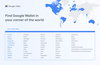
We’ve already seen how handy it’s been in all the usual places you’d use a digital wallet — plus some others, like attending concerts with friends. Let’s look at four different ways you can use Google Wallet around the world.
- Make quick, secure payments from your watch: Last month we added Wallet to the Google Pixel Watch so you can easily make contactless payments. And starting today, anyone with a Fitbit Sense 2 or Versa 4 can pay with just a tap of their wrist.
- Tap and pay on public transit: If you’re one of the millions of people who commute by public transportation, you can use Wallet to tap and pay in hundreds of cities around the world. In Japan, we recently added support for PASMO on mobile devices and launched Suica on the Google Pixel Watch.
- Save mobile tickets for events and shows: We’re partnering with many companies — including Ticketmaster, Thaiticketmajor in Thailand, Cinemaxx in Germany and Ticketek, Humanitix and Oztix in Australia — so Android users can add mobile event tickets to their Wallet. My daughters are big Taylor Swift fans, so I’ll be trying out this feature for her tour next year.
- Access boarding passes: There’s so much to keep track of before a flight. So we partner with airlines like AirAsia, Air France, China Air, Ryanair and United Airlines to help travelers easily save and access their mobile boarding passes in Wallet. You can even save multiple boarding passes if you’re traveling with family or friends. Pro tip: To quickly add your boarding pass, just take a screenshot of it on your Pixel phone and tap “Add to Google Wallet.”
These are just some ways you can use Google Wallet throughout your day. As Wallet expands to more places around the world, look out for even more features to easily access what you need.

ROUNDABOUT, la startup che guida le PMI nell’influencer marketing
 Intervista a Ilaria di Lecce, CEO di Roundabout Chi è Roundabout? Quale è il vostro target di clienti? Ho fondato Roundabout nel 2019 insieme ad Antonio Montemurro, con l’obiettivo di…
Apple iPad 9, il RE (dei tablet) è NUDO: sconto incredibile e prezzo che sprofonda
A Premium night’s rest with Google Pixel Watch
While everyone has different sleep needs and routines, there are clear patterns that we all fall into. After a decade of analyzing over 22 billion hours of sleep data and 1.87 million sleep logs, we wanted to share what we’ve found to not only help you learn more about your sleep, but give you the information and tools to make it better. That’s why we’re bringing Fitbit Premium’s Sleep Profile to the Google Pixel Watch, giving you more ways to understand your sleep information, get more insight into your sleep style over time – including how your routines and actions impact sleep – and find ways to improve to (hopefully) get a better night’s rest.
Now, Premium members can access their Sleep Profile in the Fitbit app with Google Pixel Watch in addition to Fitbit devices.
If you wore your Google Pixel Watch to sleep for at least 14 nights in October, you will receive your first Sleep Profile and animal on November 22. If you start wearing your watch to bed today, you’ll get your results for the month of November on December 1.
Since it launched earlier this year, we’ve released 6.35 million profiles to our users, showing us some interesting trends (July-November 2022). People who use Sleep Profile are most successful at hitting the ideal range of “Time Before Sound Sleep” (52%), REM sleep (49.7%) and deep sleep (49.5%). But they are the least successful at hitting the ideal range of “Nights with Long Awakenings” and “Sleep Schedule Variability” (14.6% and 23.2% respectively). The most common areas of improvement are Days with Naps (61.2%), Sleep Schedule Variability (52.7%) and Restorative Sleep (45.6%).
Sleep Profile is part of Fitbit Premium, which helps you better understand your body to take charge of your overall wellness. Every day, tens of thousands of people complete Premium sessions, from mindfulness exercises to cardio boxing, and taking advantage of personalized analytics and insights. Here are some tools you can try in Premium today:
- Optimize your day with Daily Readiness Score: This feature uses a variety of metrics to give you a daily score (1-100), helping you understand if your body is ready for a workout or if you should prioritize recovery instead.
- Break a sweat: Stay motivated and keep your fitness routine fun and fresh with access to more than 1,000 workouts from Fitbit trainers and your favorite brands like Aaptiv, barre3, Cyclebar, LES MILLS, obé and Row House.
- Keep a pulse on your stress: Receive a breakdown of your Stress Management Score with info on metrics like heart rate, heart rate variability, sleep patterns and activity impact.
- Take a mindful minute: Try hundreds of different mindfulness sessions from brands you love including Aura, Breethe, Calm and Ten Percent Happier to help reduce stress, relax and improve your sleep.
You can also check out Sleep Profile and other Fitbit Premium features on all our latest products, including Sense 2, Versa 4 and Inspire 3 — available at Fitbit.com, the Google Store and select global retailers.