The Secrets of Creating Inspired B2B Content Experiences, Revealed
Picture this:
It’s mid-December and you’re on a road trip through Florida. A man stands on the side of the highway, holding a sign and pointing his thumb skyward. “To Jacksonville,” it reads, plainly indicating his intentions. Without a second thought, you keep driving and think of the hitch-hiker not once again.
What if the scenario instead played out like this?
It’s mid-December and you’re on a road trip through Florida. A man stands on the side of the highway, holding a sign and pointing his thumb skyward. “To Mom’s for Christmas,” it reads. Suddenly your heart swells, filled with memories of your own cherished holidays past, and somber thoughts of families around the world kept apart.
Overcome by the emotion, you press the brakes and pull over on the side of the road, waving him in. Or maybe you still decide not to let a stranger in your car, but the memory of that man and his sign sticks with you long after.
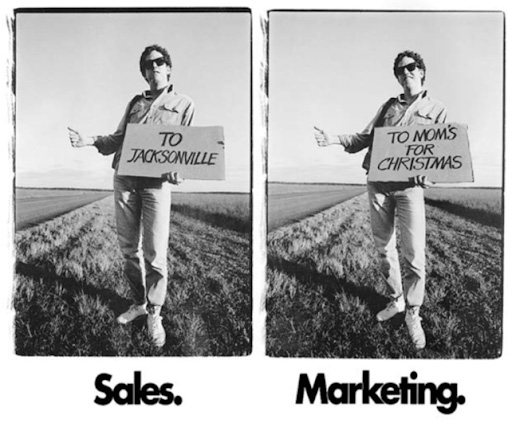
A few different word choices can make a massive difference in how your message or offer is perceived. This contrast, as depicted by a classic ad from Crispin Porter, highlights the tremendous impact of storytelling, even in its most minimal form. And it also points us toward unlocking the secrets of creating impactful B2B content experiences today.
Revealing these secrets was the subject of TopRank Marketing CEO Lee Odden’s recent session at Content Marketing World 2022 in Cleveland. Here’s a rundown of the recipe.
3 Secrets to Creating B2B Content Experiences that Connect
The good news is that it’s not so complicated. Mounting data surfaces three critical, and rather straightforward, priorities that must take center stage if you want your B2B content marketing programs and campaigns to thrive in the modern marketing environment.
Facts tell, stories sell
This is the core content marketing directive illustrated by our hitch-hiker sign dichotomy. B2B marketing has long been stuck in the mode of serious business: Selling with facts instead of stories. Pitching features instead of outcomes. Focusing on ourselves instead of our audience. We’re kidding ourselves if we think sales is the only side guilty of this.
There is of course a place for getting across the important details and promises of what your company provides, but in an ultra-crowded content environment (eMarketer once estimated there are 4.6 billion pieces of content created each day) you’ve got to earn the right to make buyers care, via experiences that break through.
Stanford University found that stories are 22 times more memorable than facts. Is it any wonder that, according to the latest Content Preferences Survey from Demand Gen Report, 41% of B2B buyers seek content to share that tells a strong story and will resonate with the buying committee?
Not only does using stories as the framework for your B2B content help make the substance more cohesive, memorable, and shareable, it also – when done well – helps your audience relate and connect to it. “Storytelling is the language of emotion,” wrote Rooster Punk founders Paul Cash and James Trezona at MarketingProfs recently. “When you tell a story, you invite audiences to be in touch with their feelings, to get personally invested and to be swept along in the narrative. Great brands, like great stories, explore what makes us human.”
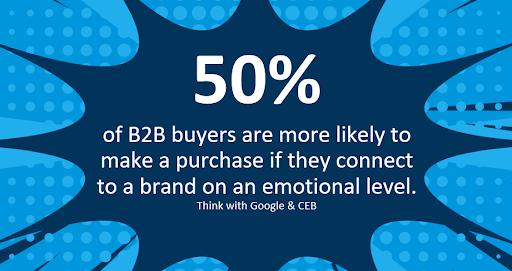
Indeed, research by Think with Google and CEB showed that B2B buyers are 50% more likely to make a purchase if they connect to a brand on an emotional level.
“Use emotion, storytelling, and soundtrack to grab attention in a way that will resonate with all category buyers and make the most of that earned attention by conveying a message that will link your brand to a specific buying situation,” advises LinkedIn’s Tyrona Heath*, whose B2B Institute has conducted eye-opening research and analysis around the measurable impact of emotional messaging in B2B marketing.
Third-party content can be extremely powerful for planning
When it comes to shifting focus from your brand’s solutions to your audience’s wants and needs, there are obvious challenges at play.
How do you truly know what they care about? How do you deliver legitimate value and add credibility to your message?
According to Lee, the key lies in OPC: Other People’s Content. Tap into existing tools, topics, and experts to elevate your brand beyond its own platform and resources. For example, you can:
- Find topics your customers care about with Semrush.
- Discover questions your customers want answered with StoryBase.
- Identify industry experts on those topics with Traackr.
- Partner with experts to answer buyer questions with Nimble.
- Create an experience combining expert and brand content with Ceros.
- Inspire experts to share stories where buyers are influenced with SparkToro.
Through the melding of your brand’s expertise with respected influencers already known to your audience, you can create easy-to-find best answer content that inspires. Best of all, you can do it scalably.
Without proper promotion and amplification, it’s all for naught
This doesn’t seem like much of a secret, but apparently it is — because too many marketers haven’t gotten hip: You’re wasting tons of energy and resources on content creation if you aren’t backing it with a sustained, strategic promotion plan.
Consider these findings, via the Converge B2B Content Amplification Report:
- 93% of B2B marketers say content amplification has had a positive impact on their content marketing strategy, BUT…
- 75% of B2B marketers say they don’t spend enough time on content amplification.
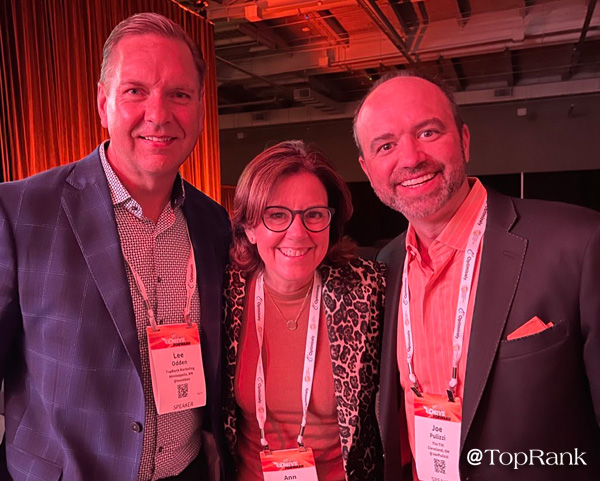
(Lee Odden, Ann Handley & Joe Pulizzi at #CMWorld22)
Jenn VandeZande, Head of Digital Engagement Strategy for SAP Customer Experience says: “The greatest content in the world won’t get clicks unless you consider ALL aspects of that content when it comes to organic sharing: The image, meta data/social copy, and of course, SEO for long-term views. (Assuming you’ve already made sure your content offers value and drives to a helpful next step for the reader).”
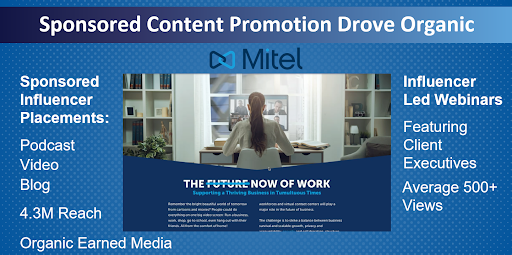
[bctt tweet=”“The greatest content in the world won’t get clicks unless you consider ALL aspects of that content when it comes to organic sharing.” — @jennvzande #B2Bcontent #amplification #CMworld” username=”toprank”]TopRank’s campaign with B2B telecommunications firm Mitel exemplifies the impact of a thoughtful promotional strategy behind valuable content. Boosted via sponsored influencer placements, their “The Now of Work” ebook reached millions through organic earned media.
Feeling inspired to learn more about the secrets to creating B2B content experiences that elevate your brand and forge lasting connections with your audience? You can click here to download Lee’s full CM World 2022 presentation, and we’ll even toss in the full 2022 B2B Influencer Marketing Report.
* Disclosure: LinkedIn Marketing Solutions is a longtime client of TopRank Marketing
The post The Secrets of Creating Inspired B2B Content Experiences, Revealed appeared first on B2B Marketing Blog – TopRank®.
Febbre da iPhone 14? Oggi puoi comprarlo a rate a tasso zero senza finanziaria
Peli ADDIO senza dolore: l’epilatore a luce pulsata di cui non fare a meno
Da avere sempre in casa: il saturimetro NON può mancare (-32%)
Amazfit GTR 3 con un coupon da 20€ su Amazon: acquistalo SUBITO
Mini proiettore portatile: il fenomeno di Tik Tok scontato al 41%
When the war in Ukraine started, these Googlers pitched in
The day Russia invaded Ukraine is seared into Agata’s memory. Compelled to act, the Warsaw-based Googler put her name into a Google Doc that listed employees offering their homes to those fleeing Ukraine. The next day, Agata’s household grew from six to 11 people. A Ukrainian Googler in the Czech Republic had gotten in touch about lodging for five loved ones who had escaped to Poland but were unable to find housing.
“You’re just so happy that you’re doing something because the feeling of helplessness is the worst,” Agata said. She not only spent the day before her guests arrived prepping the house but also found the time to buy a cake. “We wanted to celebrate; we wanted them to feel welcome.”
As Agata’s family settled into their new routine with 11 people under their roof, Russia’s war in Ukraine continued. Today, more than 7 million refugees have fled Ukraine — the majority of them women, children and the elderly — making this Europe’s biggest refugee crisis since World War II. Googlers like Agata have stepped up to help those affected by the war, from hosting refugees and transporting people across the border to providing supplies and starting aid organizations.
Initially, the most immediate need was to help people fleeing the country find a safe place to stay. Googlers were using Docs — like the one Agata put her name into — to connect those in need with those willing to help. Those connections helped Dublin-based Googler Olga get her mother, sister-in-law, nephew and niece out of Ukraine and into safety.
“When the war began, the hardest thing was convincing families to escape. Nobody wants to head into the unknown — they’re leaving everything behind and don’t know if they will come back,” said Olga, who has a brother who had to stay behind in Ukraine. “I needed them to know they had somewhere to go.”
Thanks to Mária, who was working for Google while based in Bratislava, Olga’s family did have somewhere to go once they’d made a harrowing, days-long drive to the Slovakian border. After other Googlers connected the two women, Mária arranged for her father to pick up Olga’s family at the border crossing with a cardboard sign and the promise of a place to sleep. Mária’s family hosted them until they were able to reunite with Olga in Dublin.
“I will always be grateful to Mária and her family,” said Olga. “It was so incredibly kind — far beyond the kindness you expect from strangers.”
The goodwill of strangers has been a running theme throughout the war, as was the case when a group of four Googlers based in Italy joined together with a desire to help. Giovanni, Federica, William and Jacopo funded and coordinated a multi-day mission to drive more than 40 hours to pick up a family of 10 at the Ukrainian border and unite them with their grandmother in Rome.
Federica helped drive from Venice to the refugee center at the Polish-Ukrainian border to meet the group. “These were two mothers leaving their kids with us, and they’d been traveling a week to get to this point. To watch them say goodbye — knowing that they were going back into a warzone and their kids were going away with people they had never met before — was an image that almost goes against nature,” she said. “Eventually, using Google Translate, the two mothers told us: ‘We are so happy you are bringing our kids to their grandma.’ Saying goodbye to these two women was the most difficult part of the whole journey.”
“When we were organizing and planning the trip, I was full of stress and fear. But once we started, that fear was replaced by energy,” said Giovanni. “When we got back to Rome, and I saw their grandmother opening the doors of this big house a friend had given her for the family to stay in, and the kids rushed to her and embraced — that was a different kind of energy. To see this human connection was so fulfilling. You feel like you did a little to help — you gave back.”
These four Googlers weren’t the only ones packing cars with people and supplies to help out. Warsaw-based Googler Slawek loaded groups of eight people — and their luggage and pets — into a borrowed station wagon multiple times while leading a convoy of five cars into Ukraine. Together, Slawek and the other volunteer drivers transported refugees stuck at the overcrowded railway stations in Lviv to border crossings.
The initial urge to support those affected by the war spread well beyond Googlers living in Europe. When the war broke out, Mike, a Polish-born Googler based in Michigan, felt pulled to return to his home country. After a month of fundraising, he spent April in Poland near the Ukraine border. There, Mike clocked over 6,000 miles of driving to deliver food, toiletries and other supplies to centers that needed them. And he always made room for sweets to cheer up the kids.
Early in his trip, Mike met a 14-year-old boy who had arrived in Poland a week earlier. The boy, whose dad stayed behind to fight, hadn’t heard from his father in days. “I had a soccer ball with me and gave it to him — his eyes absolutely lit up,” Mike said. “It wasn’t just food and water that was needed. Giving him something that brought joy and seeing how he reacted will stick with me forever.”
Beyond the initial support, some Googlers like Isa have focused on long-term rebuilding efforts. Isa, based in Germany, worked with a small Ukrainian-German team to create Lighthouse Ukraine. Lighthouse Ukraine hosts events that gather dozens of NGOs in one place to provide information and direct support for refugees. The first event was in Isa’s hometown of Berlin, and, in May, they took Lighthouse Ukraine global. Over the past few months Lighthouse Ukraine has reached more than 20,000 refugees.
For Ukraine-born and Berlin-based Googler Nina, the work to rebuild is deeply personal. Most of her family members were in the country when the invasion began, and many still are with no way out.
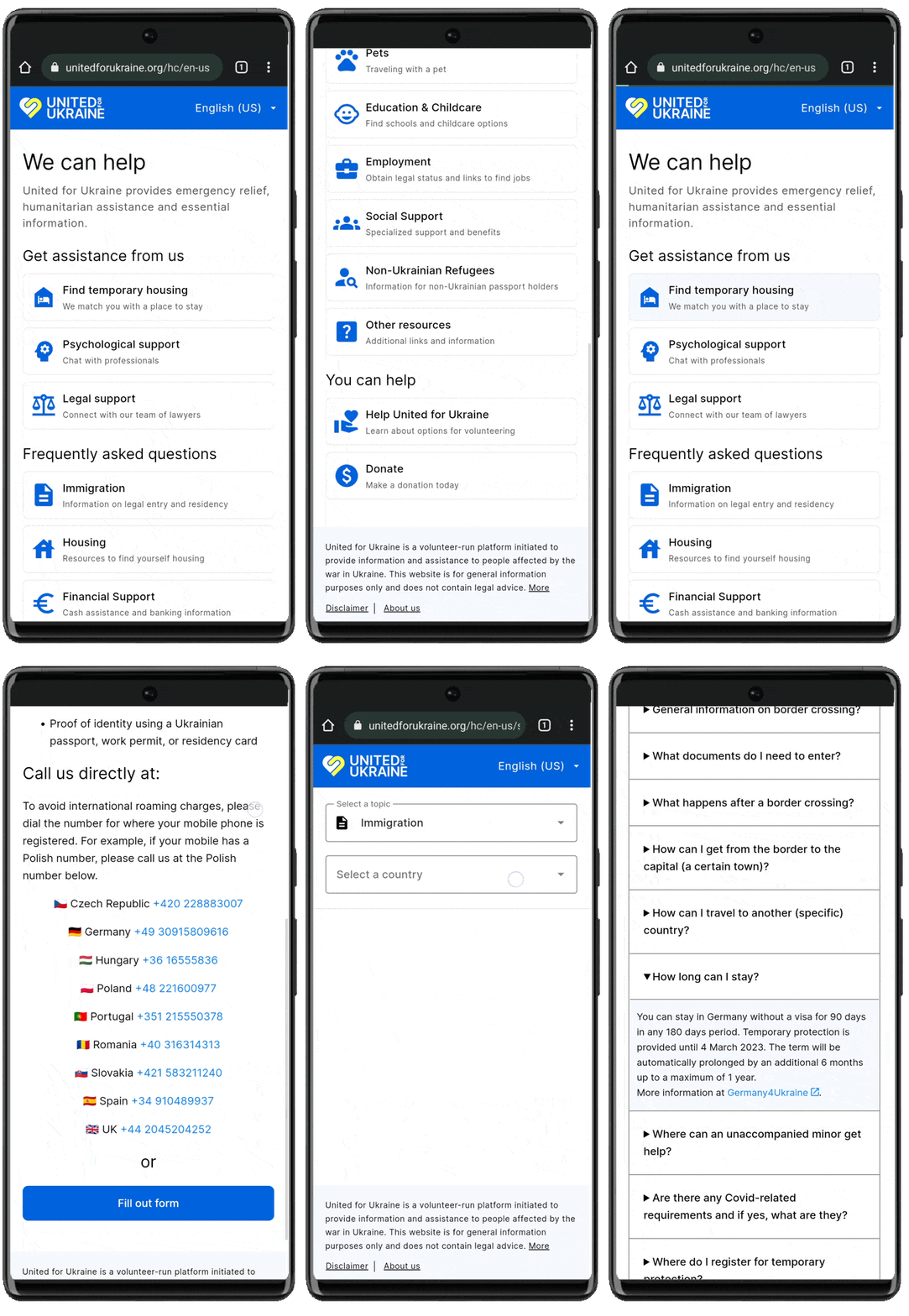
Just days after the invasion, Nina — alongside a group of volunteers — created United for Ukraine (UFU), a nonprofit that helps thousands of displaced people find services and support for things like temporary housing, legal aid and psychological support. Today, the nonprofit has grown to more than 150 volunteers and includes Googlers like Dublin-based, Ukraine-born Ella. By the end of summer, United for Ukraine had provided vital information to more than 200,000 people — helping over 10,000 people into temporary accommodations and supporting over 4,500 people with legal aid.
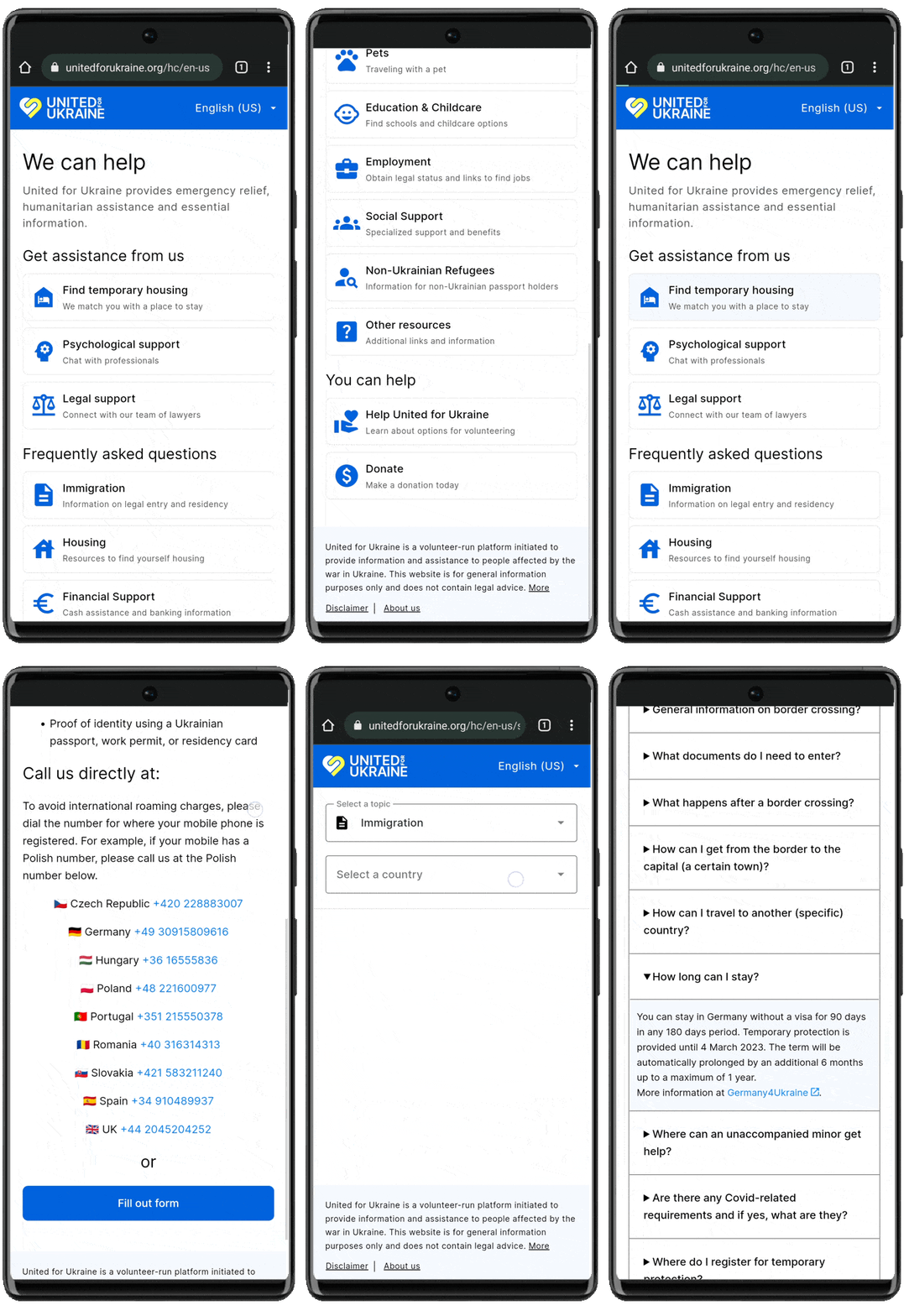
Resources on unitedforukraine.org, the site that gives people fleeing the Russian invasion access to trusted information and services when they enter a new country.
“We need to think beyond the important work of rebuilding the economy and helping displaced people. There will be a lot of trauma that people will be going through for years into the future,” Nina said. “I know this myself. My mom got out, but my stepfather, two brothers and grandparents are still there.”
While the effects are long-lasting, so are the stories that provide a beacon of hope and a reminder to act. As Agata learned, something as simple as putting your name in a Doc as someone willing to help can make all the difference.
“I understand we cannot stop the war, but we can do something for one person, for two people, for five people,” Agata said. “It matters what you do as an individual. Every one of us is making history with our choices.”
HONOR Magicbook X15: il notebook più BELLO costa una SCIOCCHEZZA
Windows 10 Release Preview: novità per la taskbar
Microsoft ha rilasciato una nuova build di Windows 10 per Insider sul canale di anteprima, è siglata come 19044.2075 e porta varie novità.
iWALK, il powerbank portatile magnetico per iPhone al miglior prezzo di sempre
iPad (2021) di Apple in offerta STREPITOSA solo su eBay: affare d’oro
App Python per Android con Chaquopy
Chaquopy è un SDK basato sul linguaggio Python per gli sviluppatori che desiderano realizzare applicazioni Android