
Building a private sector response to the global refugee crisis
Editor’s note: Tonight our CEO Sundar Pichai received a Global Citizen Awardfrom the Atlantic Council, recognizing Google’s response to the war in Ukraine and support of refugees and displaced people around the world. Below is a video and edited transcript of his remarks delivered in New York City.
I am truly humbled to receive this award. It’s even more meaningful to receive it alongside such an accomplished group of honorees — congratulations to you all.
Above all, tonight we’re here to honor another group that deserves our focus: the people of Ukraine who continue to face unspeakable hardship, and those working tirelessly to help them.
People like Dimitri, an entrepreneur I met based in Kyiv. In 2021, Dimitri founded a startup to provide online mental health services. When the war began, he committed to offer mental health care to all Ukrainians — especially those who can’t afford to pay for it. He’s now reinvesting 100% of his profit towards that goal.
Or people like Tomek, a Polish journalist who shares his passion for science through YouTube. Seeing the disruption the war was causing to kids’ education, he worked with a teacher and interpreter to launch a new, Ukrainian-language science channel. It has meant that children forced to leave Ukraine could use YouTube to keep learning in Poland.
I’m also thinking of 10-year-old Yana, who left Ukraine with her family and enrolled in school in Poland. With the help of Google Translate, she’s made a new best friend, despite the language barrier. Yana and her family are among the 7 million refugees from Ukraine in Europe today.
The need is unprecedented. So is the response. When I was in Warsaw last spring, I was struck by how many Google employees were hosting multiple families in their homes. That was typical in the region, and the generosity continues today.
In the U.S., I’m inspired by the effort to welcome Ukrainian and Afghan newcomers. And again, it’s led by everyday people who are stepping up to help. The private sector can scale these efforts, and fill gaps with technical expertise, resourcing and innovation.
Google has long supported immigrants, Dreamers and refugees. Since 2015, Google has provided more than $45 million in grants and 30,000 hours of our employees’ time to help refugees. We’ve also directly supported refugees and newcomers through our products.
This is a cause that is embedded in Google’s DNA, and it’s one I care deeply about. More than 20 years ago, I immigrated to the U.S. When I arrived, I was met with open-mindedness, tolerance and acceptance — all of which helped ease my path. Looking back on that period of my life, what I remember most are the people who made me feel welcome. Because of them, I started to feel as much a part of this country as I did growing up in India.
It was my choice to come to the U.S. For refugees it’s often not a choice at all. That’s why we need to work even harder to make sure they feel supported on their journey. The opportunity to help more people feel welcome is why I agreed to co-chair the CEO Council for Welcome.US. It’s a nonprofit focused on welcoming Afghan and Ukrainian newcomers to the U.S. And the Council is a broad base of businesses, like Accenture, Amazon, Manpower Group, Pfizer and more.
We’re focused on helping refugees with initial resettlement, matching people with jobs, and raising awareness via our megaphone as business leaders. The goal is to create solutions that can be repeated and scaled. It’s especially important at a time when there are more than 100 million people displaced from their homes, a number that will only grow as the threats of climate change, food security and economic uncertainty increase.
As we build that global response, we have a responsibility to ensure people everywhere can benefit from the opportunities technology creates, be it creating the infrastructure that widens access, advancing technologies that can enable progress, or making sure the internet remains free, open and safe — for everyone.
Across all of this work, it’s important that we are actively addressing the challenges of disinformation, cyber attacks and other harms. Equally, we must also remain optimistic about the power of technology to improve lives.
I’m excited about the partnerships we’ve formed to do that across business, government and civil society — and with the leadership of institutions like the Atlantic Council, those we’ll create in the future. Look forward to working with all of you to expand opportunities and help people feel welcome wherever they are. Thank you.

Cassa altoparlante portatile a conduzione ossea: la musica l’ascolti attraverso le OSSA
Questa chiavetta da 128GB è regalata su Amazon: corri a prendertela
Progettata per essere portata sempre con sé con il design tascabile consente un accesso facile e veloce a tutti i contenuti.
Leggi Questa chiavetta da 128GB è regalata su Amazon: corri a prendertela
Caricatore veloce doppia USB per auto: COLPO GROSSO a soli 6€
I cookies sono pericolosi per la nostra privacy?
OnePlus Nord CE 5G supera le tue aspettative con questo sconto CLAMOROSO
Windows 11 2022 Update è arrivato: tutte le novità dell’aggiornamento di Windows
Echo Show 5, lo smart speaker più venduto: il prezzo precipita definitivamente
Windows 11 2022 Update in download: le novità
Tutto sull’aggiornamento 2022 Update per Windows 11: le nuove funzionalità introdotte nel sistema operativo e la fase di rollout.
Non crederai al prezzo di questa chiavetta USB da 128GB neanche vedendolo
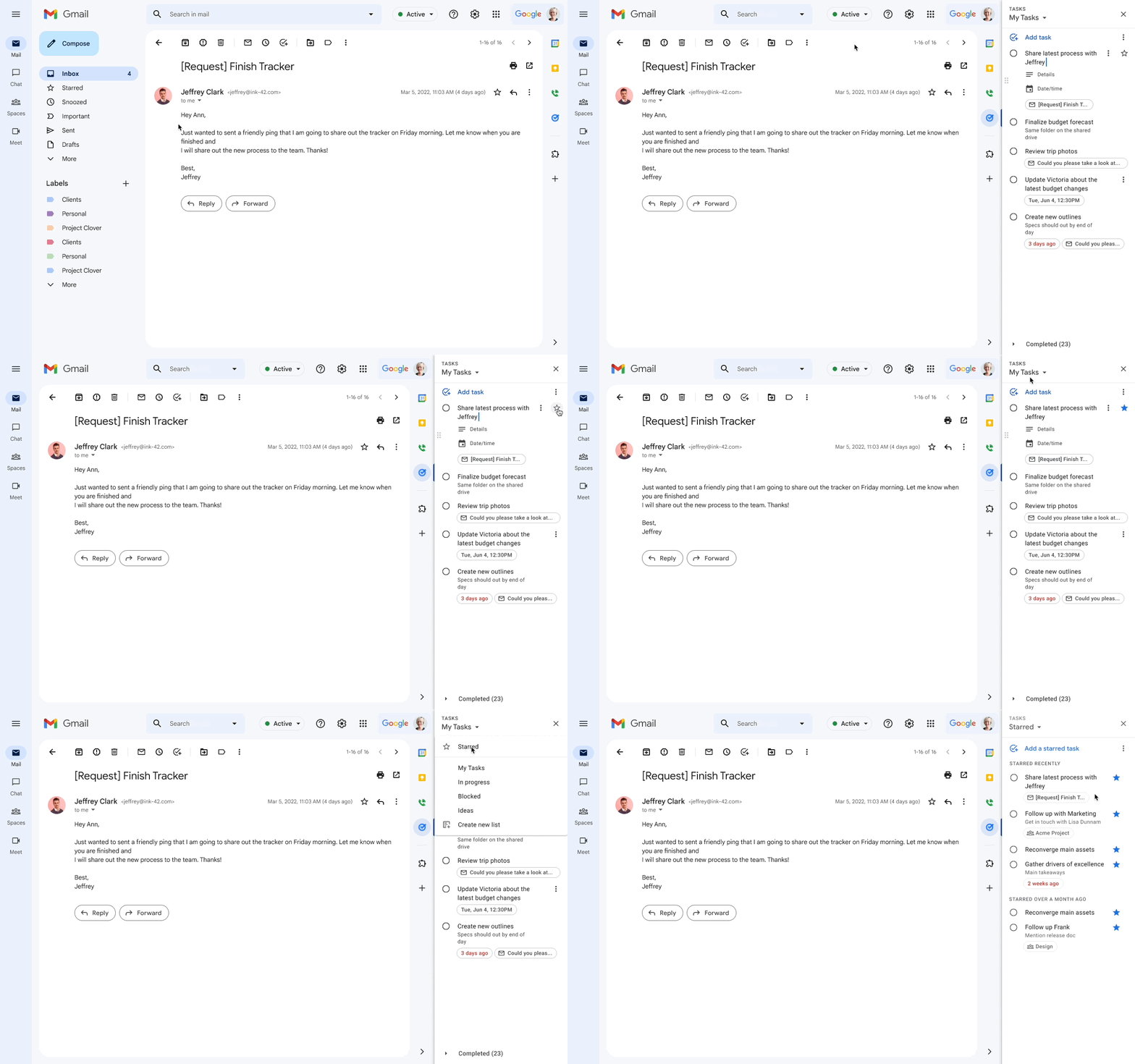
Making it even easier to manage your tasks
We all know how it feels to have countless to-dos, making it hard to know where to start. With all the daily demands, having a simple way to organize and keep track of various tasks helps you get one step closer to checking them off your list.
The ideal solution meets you where your thoughts and your productive moments happen — whether you’re in the midst of working on your laptop, making a to-do list on your phone, or just need a way to capture thoughts while on the go. This is why we’re making it easier for our products to work better together, no matter where or how you work.
Millions of people use Google to help them stay on top of their everyday to-dos across Google Assistant, Calendar and Tasks. Soon, we’ll be simplifying our task management solutions by migrating Assistant and Calendar Reminders to Google Tasks. This means you will now have an easy way to view and manage all your to-dos in one place through Google Tasks, regardless of whether you create them using Assistant or Calendar.
Get it all done with Google Tasks
Google Tasks helps users get stuff done with a simple and productive solution across their personal and professional lives. It can sync across your devices, so your lists and tasks go with you, wherever you are. Plus, you can easily access Tasks from your favorite Google Workspace apps like Gmail, Calendar and Chat.
Here are a few ways you can get more done with Google Tasks:
- Use the “Add to tasks” button in Gmail so important action items don’t get lost in your inbox
- Create tasks directly from Google Chat to turn a thought into a clear action
- Create a task in Google Calendar so you can pick the perfect time to get it done
- Sort the tasks you create into lists and star the ones that are most important to you
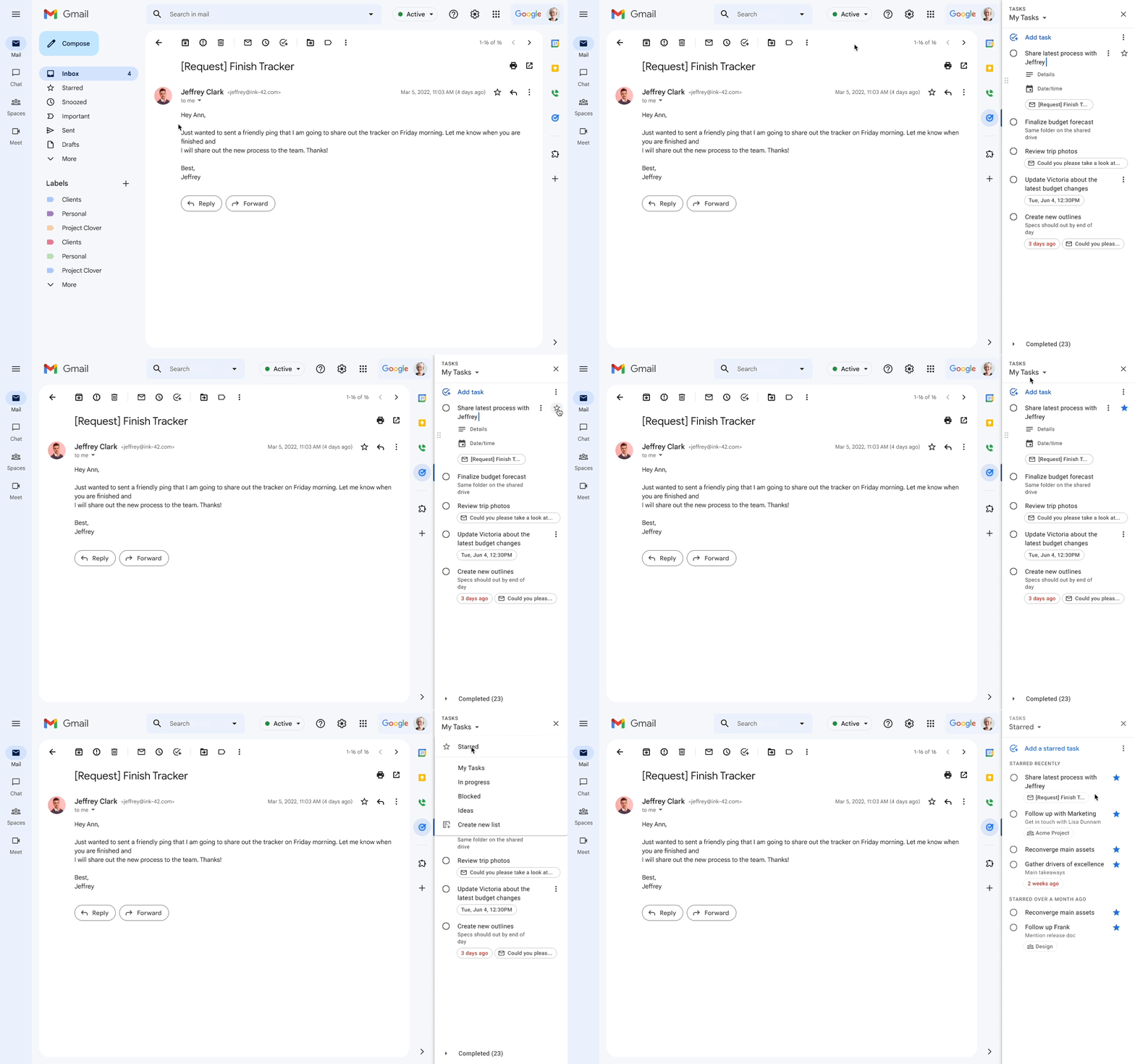
Once you’ve captured and organized your tasks, you can keep track of your progress by marking them as complete to show what you’ve accomplished.